Chengdu Hot Pot: The Definitive Guide to Restaurants, Ordering & Etiquette
Hot pot is not just a meal in Chengdu — it is the social ritual that defines the city's food culture. This guide covers the best restaurants for Sichuan hot pot, exactly how to order, what to expect on the bill, and how to handle the heat without ruining your evening.
Plan and book this trip
Tools from our partner Travelpayouts help you compare flights and hotels. If you book through them, we may earn a commission at no extra cost to you.
Flights
Hotels map
TL;DR
- Budget around ¥82–105 per person at mid-range spots; premium Michelin-listed restaurants cost considerably more — see our Chengdu budget guide for cost-saving strategies.
- Order a 鸳鸯锅 (yuānyāng guō) split pot if your group has mixed spice tolerances — half spicy, half clear broth, one table.
- The broth base, dipping sauce, tea, and packaged tableware are often charged separately — always check before you pay.
- Use 少辣 (shǎo là) for less spicy or 微辣 (wēi là) for mild when ordering; staff at tourist-facing restaurants usually understand these requests.
- Hot pot pairs naturally with a full Chengdu food crawl — the Chengdu street food guide covers what to eat before and after.
Why Chengdu Is the Home of Hot Pot
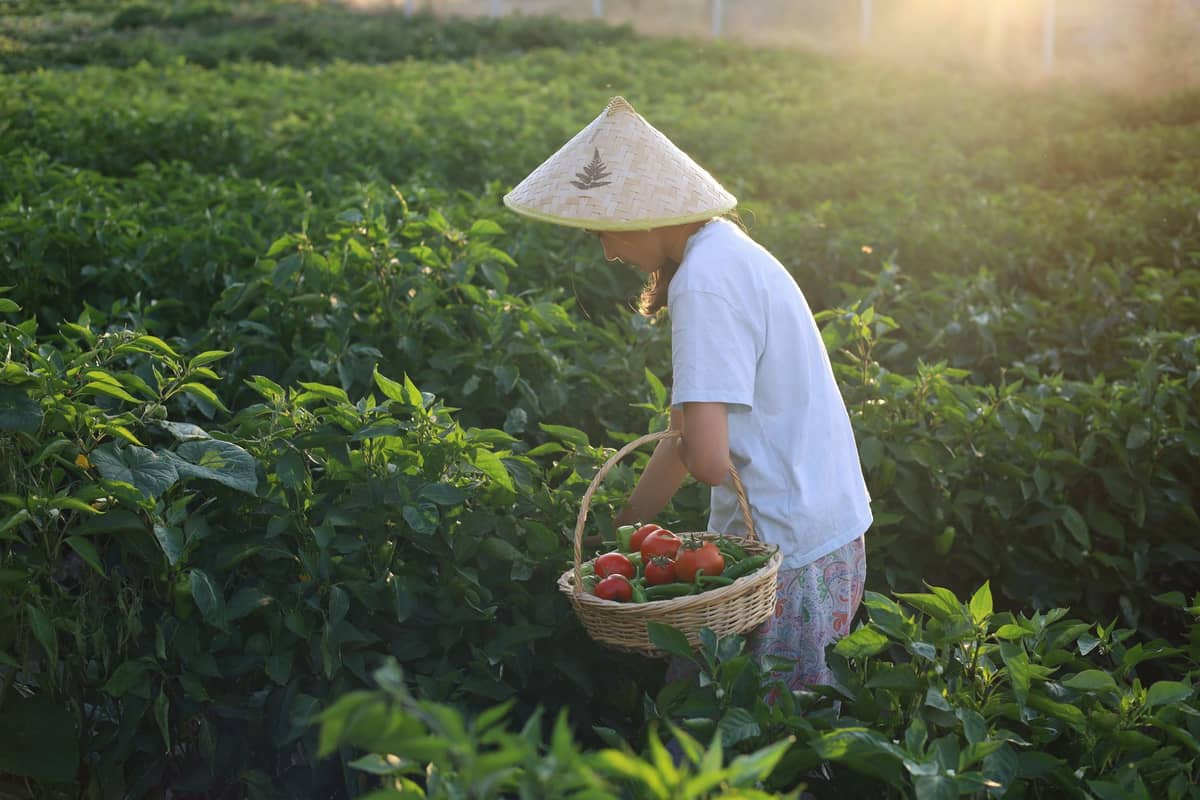
Chengdu sits at the center of Sichuan Province, a region whose cooking has been shaped for centuries by the local climate and its famous pepper crops. The Sichuan basin traps humidity, and the traditional explanation — widely repeated by locals — is that the region's characteristic spices evolved partly as a response to that damp climate. Whether or not the folk theory holds up, the result is undeniable: Sichuan hot pot is a fundamentally different dish from the milder broths you find in Beijing, Shanghai, or Guangzhou.
The defining ingredient is the Sichuan peppercorn (花椒, huājiāo), which produces the numbing, tingling sensation known as málà (麻辣) — a combination of heat from dried chilies and the mouth-numbing quality of the peppercorn. This is not just spice for spice's sake. The interplay of these two sensations is what makes Sichuan hot pot genuinely distinct, and what drives visitors to come back repeatedly. For a broader picture of Chengdu's culinary identity, the what to eat in Chengdu guide is the best starting point.
ℹ️ Good to know
Hot pot is a communal meal, not a fast one. Expect to spend 90 minutes to two hours at the table. Restaurants in Chengdu routinely operate past midnight — some until 03:00 or 04:00 — making it a natural late-night activity after sightseeing or a show.
Understanding the Broth: Spice Levels and Split Pots
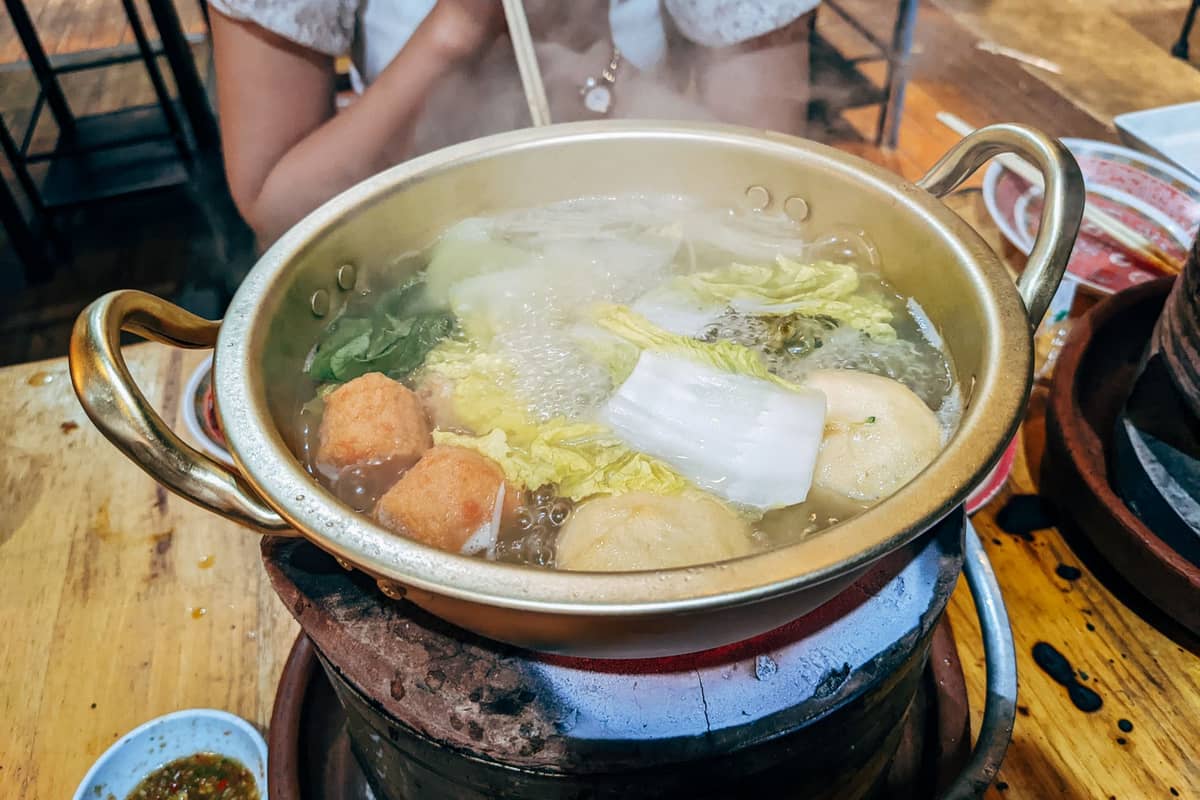
One of the most persistent misconceptions about Sichuan hot pot is that everyone at the table must endure the same extreme heat. That is not how it works. The 鸳鸯锅 (yuānyāng guō), often translated as the 'yin-yang pot,' divides a single pot down the middle: one half filled with the signature red málà broth, the other with a clear or mild stock. Both sides cook simultaneously on the same induction burner, so a group of four can have two people cooking in the spicy half and two in the mild half without changing tables or ordering separately.
If you do want the full spicy experience, broth intensity is typically labeled from mild (微辣, wēi là) through medium (中辣, zhōng là), spicy (辣, là), and extra spicy (特辣, tè là). First-timers almost always misjudge their tolerance — the heat builds slowly over the course of the meal and peaks well after you think you have peaked. Start one level below what you think you can handle.
- 微辣 (wēi là) Slightly spicy — a good entry point for those new to Sichuan food. Some heat is present but won't overwhelm.
- 少辣 (shǎo là) Less spicy than standard — a useful phrase to say directly to staff if you want the kitchen to dial it back further.
- 中辣 (zhōng là) Medium spicy — the default at many tables. Expect real heat and significant málà numbness.
- 特辣 (tè là) Extra spicy — reserved for those who have already worked up to it. Not a novelty challenge worth attempting on a first visit.
- 鸳鸯锅 (yuānyāng guō) The split pot — spicy on one side, mild on the other. The best option for groups with mixed preferences.
What to Order: Ingredients, Dipping Sauces, and Pacing
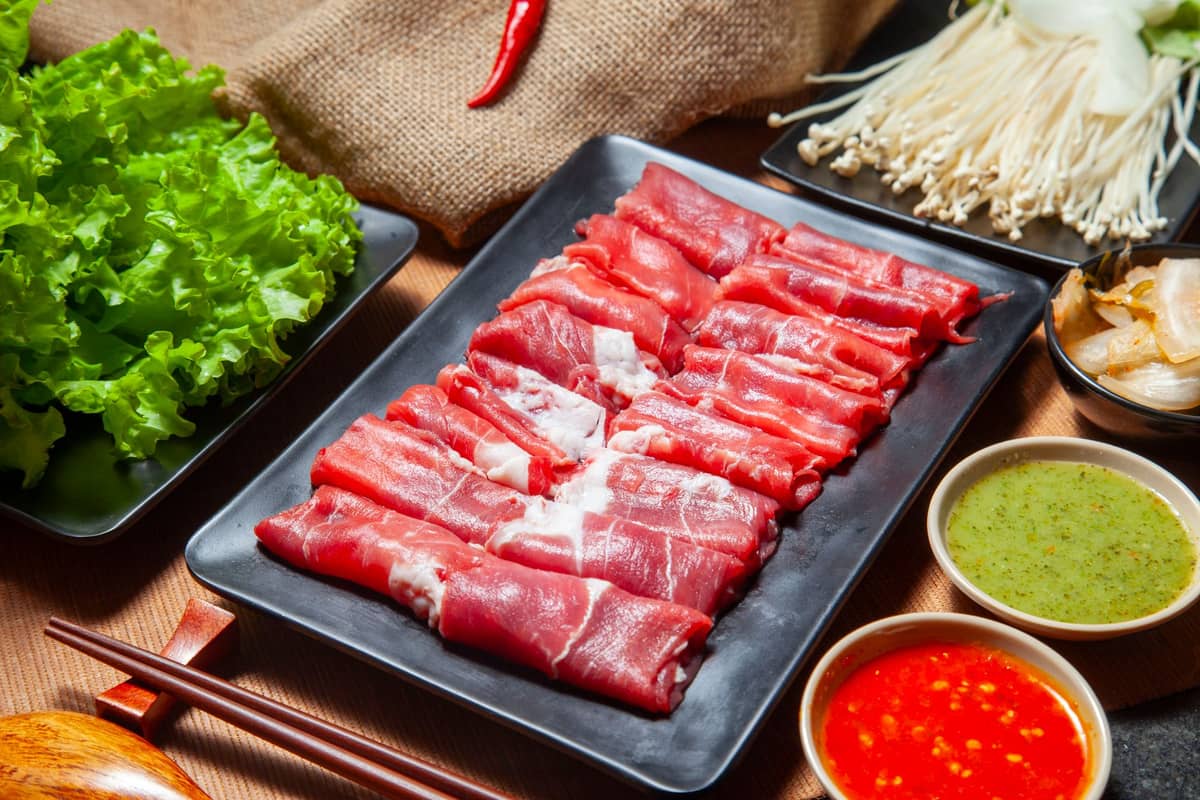
Most Chengdu hot pot restaurants operate on a self-selection model: you pick raw ingredients from a menu or a display counter, and they arrive at your table to be cooked in the simmering broth. Ordering too much at once is a common mistake — ingredients cook at different rates, and an overcrowded pot drops the broth temperature and makes it hard to track what is done. Order in rounds.
Beef and lamb are the most popular proteins, typically sliced paper-thin so they cook in 15 to 30 seconds in a rolling boil. Brain, tripe, and offal cuts are staples of authentic Sichuan hot pot menus and are worth trying if you are open to them — the texture of well-cooked tripe in spicy broth is unlike anything from the bland cuts. On the vegetable side, potato slices, lotus root, bamboo shoots, bean curd skin, and leafy greens are all reliable choices. Noodles and rice cakes go in toward the end of the meal.
The dipping sauce is a crucial and often overlooked part of the experience. At most restaurants you assemble your own from a sauce bar: the standard Chengdu combination is sesame oil, raw garlic, and sometimes a small amount of cilantro. The oil-based dip does double duty — it cools down the food slightly and carries the flavors from the broth. Do not skip this step.
⚠️ What to skip
Vegetarians and vegans should proceed carefully. Dishes labeled as tofu or vegetable are not automatically vegetarian — the broth almost always contains animal fat and bone stock, and shared cooking pots mean cross-contamination with meat is near-certain. Confirm ingredients and broth composition with staff before ordering, and do not assume.
Best Restaurants for Sichuan Hot Pot in Chengdu
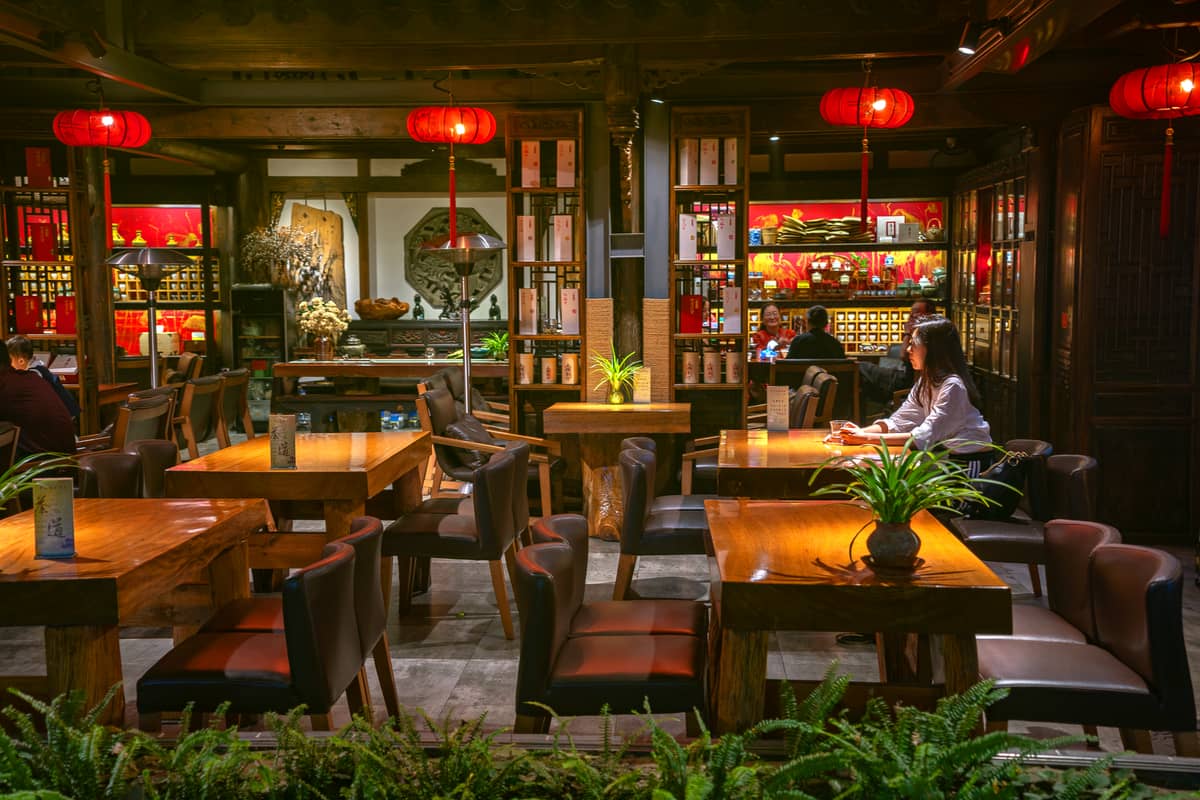
Chengdu's hot pot scene ranges from late-night street-level shops to Michelin-listed dining rooms. The neighborhoods around Wuhou Shrine and Wuhouci Street are among the most concentrated areas for established restaurants, as are the lanes near Kuanzhai Alley and the Chunxi Road precinct.
- China Samite Hot Pot (Wuhouci Street) Michelin-listed and one of the most recognized names in the city. Reservations are strongly recommended — contact the restaurant directly at +86 180 8110 9421. The presentation is more polished than a typical local shop, and prices reflect that.
- Haidilao (海底捞) The national chain that built its reputation on service as much as food — staff entertain waiting guests, noodle-pulling is performed tableside, and the broth quality is consistent. Worth experiencing at least once, though purists find it too theatrical. Multiple branches across central Chengdu.
- Shufeng Yuan (蜀风苑) A local favorite that leans toward traditional Sichuan flavors without the production-value add-ons. Better for understanding what the dish actually tastes like when it is not dressed up for tourists.
- Small neighborhood shops near Jinjiang District The most affordable and arguably the most authentic option. No English menus, no performance, just good broth and fresh ingredients at around ¥60–80 per person. Point-and-order with photos on the menu or bring a translation app.
For an overview of where to eat across the city more broadly, the things to do in Chengdu guide places the dining scene in context alongside the city's other draws.
✨ Pro tip
Go on a weeknight if you can. Weekends at well-known hot pot restaurants in Chengdu can mean a 30-to-60 minute wait, especially between 18:00 and 20:30. Many restaurants open for lunch from around 11:00 and see far shorter queues then. Some restaurants run until 03:00 or 04:00, so a late-night sitting after 21:30 is another way to avoid peak crowds.
Costs, Hidden Charges, and What to Watch For
The commonly cited range for a sit-down Sichuan hot pot meal in Chengdu is approximately ¥82–105 per person at mid-range restaurants. That figure covers a reasonable selection of ingredients but excludes several items that routinely appear on the final bill without being flagged at the time of ordering.
- The broth base itself is typically charged per pot, usually ¥10–30 depending on the type and restaurant.
- Dipping sauce from the sauce bar is sometimes included, sometimes charged per person — ask before you fill your bowl.
- Tea is frequently poured automatically and billed per person; this can be declined if you see it coming.
- Packaged tableware (disposable chopsticks, spoons, and sometimes a wet cloth) is a near-universal small charge of ¥1–3 per item — you can usually request the reusable version instead.
- Beverages, especially cold drinks, are marked up significantly at most restaurants. Buying from a nearby convenience store first is a practical workaround.
None of these charges are deceptive by local standards, but they can add 15–25% to a bill a visitor was not expecting. Scan the full itemized receipt before paying rather than accepting a rounded total. The phrase for requesting the bill is 买单 (mǎi dān), said to any staff member.
💡 Local tip
Payment is almost universally via Alipay or WeChat Pay at Chengdu restaurants. Most places will also accept cash (Chinese yuan). International credit cards are accepted at chain restaurants and Michelin-listed venues, but not reliably at smaller local spots. Sort out your payment method before you sit down, not after the meal.
Practical Ordering Guide: Phrases, Timing, and Etiquette
Mandarin is the working language of every restaurant in Chengdu. English menus exist at tourist-facing chains and some upscale restaurants, but are not the norm. A translation app with a camera function (Google Translate, Baidu Translate) will get you through most menus. Staff at well-known restaurants are usually patient with non-Chinese-speaking visitors, but having a few key phrases ready makes the experience significantly smoother.
- 鸳鸯锅 (yuānyāng guō) Split pot — spicy and mild. Say this when the server asks what broth you want.
- 微辣 / 少辣 (wēi là / shǎo là) Slightly spicy / less spicy. Use these to moderate the heat level.
- 不要太辣 (bù yào tài là) Not too spicy. A useful fallback phrase.
- 买单 (mǎi dān) The bill, please. Said to any staff member to initiate payment.
- 这个是什么?(zhège shì shénme?) What is this? Point at a menu item when you want clarification.
Hot pot restaurants in Chengdu are rarely silent or formal. Loud conversation, shared ordering, and reaching across the table are entirely normal. There is no set pace — you order as you go, the broth keeps simmering, and a meal stretches as long as the group wants it to. If you are visiting during winter, when Chengdu temperatures drop to around 5–12°C, the experience of sitting over a bubbling pot of málà broth is particularly satisfying. For the full context of planning a Chengdu trip around seasons, the best time to visit Chengdu guide has reliable climate data.
If hot pot is your primary reason for visiting, pair it with a walk through Jinli Ancient Street beforehand for snacks and atmosphere, or follow it with the city's tea house tradition — the Chengdu tea house guide explains where to go and what to order.
FAQ
How much does hot pot cost per person in Chengdu?
At mid-range restaurants, budget approximately ¥82–105 per person for a typical meal with a reasonable selection of ingredients. Premium or Michelin-listed restaurants will cost more. Factor in extra charges for the broth base, dipping sauce, tea, and packaged tableware, which can add 15–25% to the base figure.
Is Chengdu hot pot too spicy for foreigners?
Not necessarily. The 鸳鸯锅 (yuānyāng guō) split pot solves the problem for mixed groups by providing a mild broth alongside the spicy one. If you want the full málà experience, start at 微辣 (wēi là) — slightly spicy — rather than jumping to medium or higher. The heat from Sichuan peppercorns builds gradually through a long meal, and most people underestimate this.
Do Chengdu hot pot restaurants have English menus?
Major chains like Haidilao and Michelin-listed venues typically offer English menus or picture menus. Most local restaurants do not. A translation app with a camera function handles the gap at most places — photograph the menu and translate it before ordering.
Do I need to book a table in advance?
For well-known restaurants, especially on weekends between 18:00 and 20:30, a reservation or early arrival is advisable. Michelin-listed restaurants like China Samite Hot Pot on Wuhouci Street may require advance booking; confirm directly with the restaurant. For local neighborhood shops, walk-in is the norm. Late sittings after 21:30 generally see shorter queues at most places. For local neighborhood shops, walk-in is the norm. Late sittings after 21:30 generally see shorter queues at most places.
Is Sichuan hot pot suitable for vegetarians?
With significant caveats. The standard málà broth contains animal fat and bone stock. Cross-contamination in a shared pot is effectively unavoidable. Some restaurants offer a pure vegetable or mushroom broth option, but you need to request it explicitly and verify the ingredients. Dishes labeled as vegetable or tofu are not automatically meat-free — always confirm with staff.