People's Park Chengdu: Tea, Slow Time, and the City's True Rhythm
People's Park (成都市人民公园) is a free public park in central Qingyang District where Chengdu residents come to drink tea, dance, play mahjong, and arrange marriages. It offers an unfiltered look at daily life in one of China's most relaxed cities, and no tour guide is required.
Quick Facts
- Location
- No. 12 Shaocheng Road, Qingyang District, Chengdu
- Getting There
- People's Park Station, Metro Line 2, Exit A
- Time Needed
- 1.5 to 3 hours
- Cost
- Free entry (¥0). Tea and snacks extra.
- Best for
- Slow travel, people-watching, solo visitors, and anyone wanting unscripted Chengdu life
- Official website
- http://www.cdpeoplespark.cn
What People's Park Actually Is
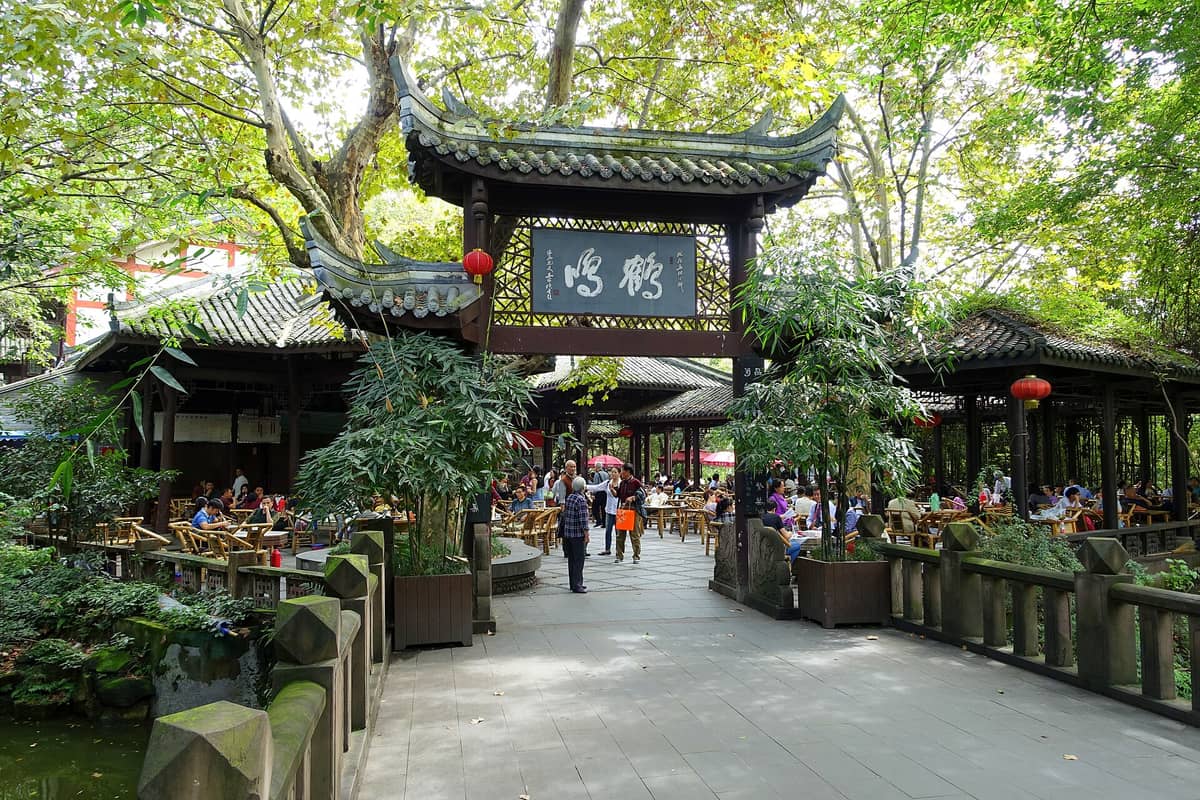
People's Park (成都市人民公园, Chéngdū Rénmín Gōngyuán) sits on roughly 112,639 square metres in Qingyang District, about a ten-minute walk from Tianfu Square. It is not a manicured botanical showcase or a ticketed heritage site. It is the place Chengdu goes to exhale. On any given weekday morning, retired residents are playing cards under the camphor trees, couples are sharing a flask of jasmine tea at lakeside bamboo chairs, and elderly men are singing Sichuan opera fragments to no particular audience. The park functions as the city's communal living room, and that is precisely why it belongs on your itinerary.
Unlike the heritage atmosphere at Wenshu Monastery or the dynasty-era drama of Wuhou Shrine, People's Park makes no formal claims on your attention. It is a green rectangle of ordinary life, and that ordinariness is the attraction.
💡 Local tip
Opening hours are generally 06:00–22:30 in summer and 06:30–22:00 in winter. These can vary around public holidays, so verify locally before planning an early-morning visit.
The Tea House Terrace: The Heart of the Park
The covered tea terrace near the park's central lake is one of the most photographed spots in Chengdu for good reason. Rows of bamboo recliner chairs face the water, and waitstaff in aprons move steadily between tables refilling gaiwan lids and topping up thermoses. The sound is a low, constant hum: ceramic clicking against ceramic, the rustle of newspapers, occasional bursts of laughter from a card game two tables over.
Tea is priced accessibly, typically a few yuan per person depending on the variety and whether you occupy the covered terrace or a more informal lakeside spot. You pay for the seat as much as the drink, and no one will hurry you. Settling in for an hour with a pot of Sichuan green tea and watching the park move around you is not wasting time. It is understanding Chengdu's famously unhurried tempo from the inside.
For context on the broader tea culture surrounding this habit, the Chengdu tea house guide covers styles, etiquette, and what to order if you are unfamiliar with gaiwan service.
Tickets & tours
Hand-picked options from our booking partner. Prices are indicative; availability and final rates are confirmed when you complete your booking.
Panda Base and city highlights private day tour in Chengdu
From 302 €Instant confirmationFree cancellationChengdu to Yibin private tour with Wuliangye Liquor Museum visit
From 300 €Instant confirmationChengdu private evening tour with hot pot dinner
From 247 €Instant confirmationFree cancellationGiant Buddha and Huanglongxi Old Town private day tour from Chengdu
From 368 €Instant confirmationFree cancellation
The Matchmaking Corner: Something You Won't Find at Any Other Landmark
Near the park's eastern section, a stretch of path is lined with handwritten notices on paper, laminated sheets, and small whiteboards leaning against the railings. This is the park's informal matchmaking area, a weekly gathering where parents post profiles of their adult children in the hope of arranging introductions. The notices typically list age, height, educational background, profession, and expected income.
The parents themselves are present most weekend mornings, browsing the boards like a slow-moving classifieds fair. They speak quietly to one another, exchange phone numbers, and sometimes share photos on mobile phones. It is one of the most candid sociological displays you will find at any public space in China, entirely unrehearsed and entirely authentic. Observe respectfully. Photographs of individuals require clear consent, and attempting to photograph people in close-up without asking is considered rude regardless of cultural context.
How the Park Changes Through the Day
Early morning, roughly 06:30 to 08:30, belongs to the regulars. Tai chi practitioners move through forms on the open grass areas. Groups of older women do coordinated fan dances near the central plaza. The air is cool and slightly damp, carrying the faint sweetness of the camphor and ginkgo trees that line many of the paths. This is the quietest and most atmospheric window for photography, with low-angle light and minimal crowds.
Mid-morning through early afternoon is when the park reaches full occupancy. The tea terraces fill, the mahjong tables behind the main pavilion see steady action, and the matchmaking corner is at its most active on weekends. Families with young children arrive. The paths become genuinely crowded near the lake on Saturdays and Sundays.
Late afternoon has a different quality. The light softens, the heat (in summer) eases slightly, and the pace of the card games slows. Small groups gather around spontaneous musical performances. Erhu players, occasional accordion players, and Sichuan opera amateur singers drift through. By early evening, the lakeside path becomes a circuit for leisurely walkers, and the tea house chairs thin out. The park closes between 22:00 and 22:30 depending on season, but the energy peaks well before then.
💡 Local tip
Visit on a Tuesday or Wednesday morning if you want the tea terrace to yourself. Weekend afternoons, particularly in spring and autumn, are the most crowded — enjoyable for atmosphere, less so if you want a quiet seat.
Practical Walkthrough: Getting There and Moving Around
The park is directly accessible from People's Park Station on Metro Line 2. Exit A leads toward the park's south gate. This is one of the easiest metro connections to any central Chengdu attraction, and the journey from Tianfu Square Station is a single stop. Bus routes 4, 5, 7, 13, 43, 47, 58, 64, 81, and 85 also serve the surrounding streets.
Inside, the park is flat and the paths are wide, which makes movement straightforward. The central lake is the natural anchor point: the tea terraces run along its northern and western edges, the main pavilion sits at the northern end, and the matchmaking section is to the east. The park's 112,639 square metres sounds large, but in practice a single loop around the lake with short diversions covers the main areas in under an hour. Allow more time if you plan to sit.
Detailed accessibility information for wheelchair users and those with mobility requirements is not published clearly in official sources. The paths appear largely level from available descriptions, but specific step-free routes and accessible toilet locations should be verified with the park directly before visiting.
ℹ️ Good to know
The park is entirely free to enter. Small charges apply for tea, boat rentals on the lake, and certain amusement rides near the children's area. Bring cash for smaller vendors and tea stalls, as not all accept mobile payments from foreign-linked accounts.
Weather, Seasons, and What to Wear
Chengdu's climate means the park experience shifts considerably across the year. Spring (March to May) offers mild temperatures in the 14 to 25°C range and the city's occasional burst of sunshine, making it the most popular season for outdoor tea drinking. The camphor trees are at their most visually impressive in late spring. Autumn (September to November) is similarly comfortable after the summer rains wind down.
Summer (June to August) is hot and humid, with temperatures regularly reaching 30°C or above. The covered tea terrace becomes even more appealing as shade rather than just atmosphere. Rain is common from June through September, so a small umbrella or packable rain layer is practical. Winter mornings are cool and often overcast, with temperatures typically between 6 and 12°C. The park does not close in cold weather, and there is something genuinely quiet and atmospheric about the tea house in January when tourists are few.
For a fuller breakdown of seasonal conditions across the city, the best time to visit Chengdu guide covers what each season means for outdoor activities and park visits.
What the Park Is Not, and Who Might Be Disappointed
People's Park is not a manicured botanical garden, does not have a strong architectural focal point, and will not fill an afternoon for travelers who prefer structured experiences with clear narratives. The pavilion and the small memorial area within the park have historical context, but signage in English is limited, and the park does not position itself as a historical destination. If your primary interest is dynastic history, Sichuan Opera performance, or curated cultural exhibits, the park will feel thin.
It also lacks the commercial density of nearby pedestrian areas. If you are hoping to combine green space with shopping and street food on the same circuit, the Kuanzhai Alley complex is better suited to that kind of half-day itinerary. People's Park rewards those who come deliberately to sit, observe, and do relatively little.
Insider Tips
- Arrive before 08:00 on a weekday to see the tai chi and fan dance groups at their most active. These informal exercise sessions typically wind down by 08:30 as the city gets to work.
- If you want a seat at the tea terrace, come before 10:00. By mid-morning on weekends, the lakeside chairs fill up and you may wait for a table.
- The matchmaking corner is most active on weekend mornings, particularly Saturdays. Weekday visits will show you the boards but far fewer participants.
- Ear-cleaning vendors sometimes operate near the tea terrace area. This is a traditional Chengdu street skill offered by professional practitioners using long metal tools. It is perfectly safe if you use a licensed vendor, but is an entirely optional and surprising experience for first-time visitors.
- The park is close enough to Qingyang Palace and the Sichuan Provincial Museum to combine in a single half-day on foot. A walk west from the main gate covers both within fifteen minutes.
Who Is People's Park For?
- Solo travelers who want unscripted interaction with everyday Chengdu life
- Couples looking for a quiet mid-trip pause away from tourist circuits
- Photographers interested in candid street-level portraits and documentary-style images
- Families with young children needing a relaxed outdoor break with minimal logistics
- Anyone traveling on a tight budget who wants a meaningful experience at no cost
Nearby Attractions
Other things to see while in Qingyang District:
- Chengdu Museum
Chengdu Museum sits directly west of Tianfu Square in Qingyang District and holds one of the most comprehensive collections of Sichuan civilization under one roof. Free to enter and easy to reach by metro, it covers everything from ancient Bronze Age artifacts to Sichuan opera costumes, across roughly 20,000 square meters of exhibition space. Whether you have two hours or a full day, this guide tells you exactly how to use your visit.
- Du Fu Thatched Cottage
The Chengdu Du Fu Thatched Cottage Museum preserves the site where Tang dynasty poet Du Fu lived and wrote during a period of exile in the 8th century. Set within a composed garden landscape in Qingyang District, it offers a reflective contrast to Chengdu's busier attractions — best suited to travelers who appreciate literary history, classical Chinese garden design, or simply a slower morning away from the crowds.
- Huanhua Creek Park
Huanhua Creek Park is a free, 32-hectare urban park in Qingyang District, woven around the historic creek that inspired Tang dynasty poet Du Fu. It offers shaded walkways, open lawns, lotus ponds, and a rare sense of calm within reach of central Chengdu.
- Wide and Narrow Alleys (Kuanzhai Alley)
The Wide and Narrow Alleys, known in Chinese as 宽窄巷子 (Kuanzhai Xiangzi), form one of Chengdu's most recognizable historic districts: three parallel Qing-dynasty lanes in Qingyang District packed with teahouses, Sichuan snack stalls, courtyard restaurants, and craft shops. Entry is free and the alleys are open around the clock, but the experience varies dramatically depending on when you arrive.