Huanhua Creek Park: Chengdu's Quietest Green Escape in the Heart of the City
Huanhua Creek Park is a free, 32-hectare urban park in Qingyang District, woven around the historic creek that inspired Tang dynasty poet Du Fu. It offers shaded walkways, open lawns, lotus ponds, and a rare sense of calm within reach of central Chengdu.
Quick Facts
- Location
- No. 9 Qinghua Road, Qingyang District, Chengdu (near Du Fu Thatched Cottage)
- Getting There
- Qingyanggong Station, Metro Line 5, Exit B (approx. 10–15 min walk); buses 19, 35, 58, 82, 165, 170, 309, 319 — alight at Songxianqiao
- Time Needed
- 1.5 to 3 hours (longer if combining with Du Fu Thatched Cottage)
- Cost
- Free admission; some on-site activities may charge separately
- Best for
- Morning walkers, families, literature and history enthusiasts, photographers
What Huanhua Creek Park Actually Is
Huanhua Creek Park (浣花溪公园) is a 32-hectare public green space in Qingyang District, developed at a cost of approximately CNY 120 million and now considered the core of the broader Huanhua Creek Historical and Cultural Scenic Area. The park takes its name from the creek that runs through it, the same waterway that Du Fu, one of China's most revered Tang dynasty poets, lived beside for nearly four years during the 8th century. That historical layer is not decorative — it is genuinely woven into the park's design, and it shapes the atmosphere of the entire visit.
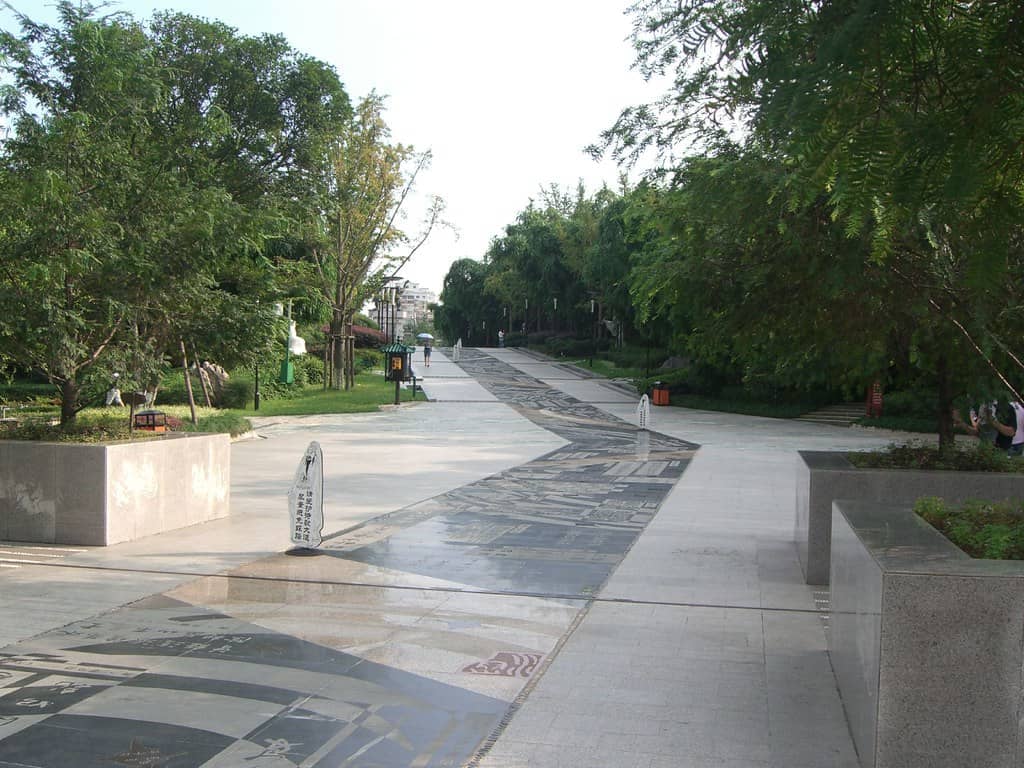
This is not a theme park or a manicured showpiece in the way that some Chinese urban parks can feel. The grounds include lotus ponds, bamboo groves, open lawns, stone-paved creek-side paths, classical pavilions, and a large decorative lake. The result is a park that works well for a slow, deliberate walk as much as for an active morning run or a family afternoon with children.
💡 Local tip
The park sits directly adjacent to Du Fu Thatched Cottage. Most visitors combine both in a single half-day outing. The cottage has a separate admission fee; the park itself is free. Plan at least 3 hours if you intend to visit both.
The Creek, the Poet, and the Cultural Context
The Huanhua Creek (浣花溪, literally 'flower-washing creek') carries a weight of literary history that most visitors from outside China may not immediately recognize. Du Fu (712–770 CE), considered alongside Li Bai as one of the twin pillars of classical Chinese poetry, settled beside this creek in 759 CE after fleeing civil war. He built a modest thatched dwelling on the bank and composed some of his most celebrated works here, including poems that described the surrounding landscape in precise, affecting detail.
For Chinese visitors, standing at this creek carries the same cultural resonance as visiting the house where a foundational author lived and wrote. The creek has been referenced, mythologized, and painted for over twelve centuries. Walking its bank is not merely pleasant — it connects the present to a specific, well-documented chapter of Chinese literary history.
Visitors with a serious interest in Du Fu's life and work will want to combine the park visit with a proper tour of Du Fu Thatched Cottage, which preserves the site of the original dwelling and houses substantial museum collections explaining the poet's biography and the historical period.
Tickets & tours
Hand-picked options from our booking partner. Prices are indicative; availability and final rates are confirmed when you complete your booking.
Panda Base and city highlights private day tour in Chengdu
From 302 €Instant confirmationFree cancellationFull day private tour Giant Panda Base and city highlights
From 365 €Instant confirmationFree cancellationChengdu to Yibin private tour with Wuliangye Liquor Museum visit
From 300 €Instant confirmationChengdu private evening tour with hot pot dinner
From 247 €Instant confirmationFree cancellation
Moving Through the Park: A Practical Walkthrough
The park's main entrance on Qinghua Road opens into a wide forecourt that transitions quickly into tree-lined paths heading toward the central lake. The paving underfoot shifts between smooth flagstone and rougher natural stone, so comfortable walking shoes are worth wearing — this is not a park designed for heels or dress shoes.
The largest open water feature is a broad ornamental lake ringed with weeping willows. Stone bridges cross the creek at several points, and the narrower waterways running between planted beds of lotus are particularly photogenic from late spring through late summer, when the flowers are in bloom. There are pavilions placed at intervals along the main paths, most with bench seating that invites sitting rather than just passing through.
On the northern side of the park, bamboo stands grow dense enough to create genuine shade even at midday. The air in these sections carries the faint clean smell of green bamboo, a noticeable contrast to the exhaust and food smells of the surrounding streets. This part of the park tends to be quieter and draws fewer casual visitors than the lake area.
The park is large enough that a single circuit of the main paths takes 45 to 60 minutes at a relaxed pace. There are secondary paths that double back through smaller gardens and more sheltered corners, and it is easy to spend two hours here without retracing your steps significantly.
ℹ️ Good to know
Opening hours are generally listed as 06:00–22:00 year-round.
How the Park Changes by Time of Day
Early morning, from around 06:30 to 08:30, is when Huanhua Creek Park belongs to local residents. Retired Chengdu residents gather in the open plazas and under the larger trees for group exercises, fan dancing, and slow individual tai chi practice. The sound of traditional music playing from portable speakers mingles with birdsong from the tree canopy overhead. The light is soft, the paths are cool, and the pace of movement across the whole park feels unhurried.
By mid-morning the character shifts. Families with young children arrive, couples walk the creek-side paths, and the occasional tourist group passes through the more photographed zones near the lake and pavilions. The park never becomes uncomfortably crowded in the way that central attractions like Kuanzhai Alley can feel on a weekend — the 32 hectares absorb visitors without generating the pressed, shoulder-to-shoulder density of busier sites.
Afternoons in summer can be warm and humid, and the shade of the bamboo groves becomes genuinely useful rather than merely picturesque. The lotus ponds catch afternoon light well from the western paths, which is worth knowing if you are carrying a camera. Evening visits, particularly in the hour before closing, return the park to something close to its morning quiet. The lake reflects the lights of surrounding pavilions, and the cooler air draws local families out for post-dinner walks.
Getting There and Practical Logistics
The most straightforward public-transit approach is to take Metro Line 5 to Qingyanggong Station and exit at Exit B. From there the park is approximately a 10 to 15-minute walk southwest. The walk passes through a residential and commercial area of Qingyang District that is worth the short journey on its own terms.
Multiple bus routes also serve the Songxianqiao stop near the park, including routes 19, 35, 58, 82, 165, 170, 309, 319, 1024, and 1031. The park is also accessible on foot from Caotang Road or Huanhua South Road if you are approaching from Du Fu Thatched Cottage or from the Qingyang area more broadly.
Didi ride-hailing is a practical option if you are already in central Chengdu. Fare and routing information is available through the app; see getting around Chengdu for a full breakdown of the city's transit options.
The park is an open-access urban space with multiple entry points. Verified information on step-free access, wheelchair-accessible toilets, or tactile paving is not currently available from authoritative sources, so visitors with mobility considerations should confirm on-site or contact the Qingyang District cultural authority before visiting.
Weather, Seasons, and When to Come
Chengdu's climate is humid subtropical with a rainy season running roughly June through September. The park's character changes meaningfully with the seasons, and the choice of when to visit affects what you see and how comfortable you are.
Spring, from March through May, brings the park to its most photogenic state. Temperatures are broadly in the 14 to 25°C range, the willows are fully leaved, and early lotus growth appears at the edges of the ponds. Autumn, September through November, offers similar comfort levels after the summer rains and tends to give clearer, less hazy light for photography.
Summer visits are entirely workable but require some tolerance for heat and humidity. The lotus flowers are at their peak in July and August, which is a real draw despite the weather. Bring water, stick to shaded paths, and visit in the early morning or late afternoon. Winter is mild by northern Chinese standards — typically 6 to 12°C — and the park stays open and quiet. The stripped-back winter landscape suits the contemplative mood of the site's literary associations.
⚠️ What to skip
Chengdu receives substantial rainfall during summer. The stone paths in the park can become slippery when wet. Avoid sandals or smooth-soled shoes if rain is forecast.
Who Should Skip This Park
Visitors looking for structured entertainment, interactive exhibits, or a defined highlight to photograph and leave will find Huanhua Creek Park underwhelming. There is no single iconic focal point — the park rewards slow movement and willingness to pay attention to details: a stone carving, a particular angle on the water, the texture of old bark. Travelers on a tight schedule who have already visited the adjacent Du Fu Thatched Cottage and are trying to cover as much of Chengdu as possible in one or two days may reasonably choose to spend their remaining time elsewhere.
For a fuller picture of how Huanhua Creek Park compares to other green spaces in the city, see the guide to Chengdu parks and outdoor spaces.
Insider Tips
- Enter from the Qinghua Road gate rather than the back entrances if this is your first visit. The main path from that gate gives the most coherent sense of the park's layout before you begin to explore the secondary paths.
- The lotus ponds are best photographed from the western-facing bank in the early afternoon when the light comes in low and lateral. Most visitors photograph from the bridges, which gives a less interesting angle.
- If you arrive during a weekday morning, you will likely find sections of the park occupied by informal music groups — erhu players, small choral groups, sometimes a full ensemble with brass. This is unrehearsed, unscheduled, and genuinely worth pausing for.
- The bamboo groves in the northern section of the park are noticeably cooler than the open areas, sometimes by several degrees in summer. They are also less visited, which makes them a practical retreat in hot weather.
- Combine the visit with nearby Qingyang Palace, a Taoist temple a short distance east, for a half-day that covers the park's literary history and an active religious site without requiring significant additional travel.
Who Is Huanhua Creek Park For?
- Travelers who want a genuine local-park experience rather than a curated tourist attraction
- Families with children who need open space and easy walking terrain
- Anyone with an interest in Tang dynasty poetry or the life of Du Fu
- Photographers working in natural light, particularly during lotus season (July to August)
- Visitors using the park as a calm counterweight to a packed day of sightseeing in central Chengdu
Nearby Attractions
Other things to see while in Qingyang District:
- Chengdu Museum
Chengdu Museum sits directly west of Tianfu Square in Qingyang District and holds one of the most comprehensive collections of Sichuan civilization under one roof. Free to enter and easy to reach by metro, it covers everything from ancient Bronze Age artifacts to Sichuan opera costumes, across roughly 20,000 square meters of exhibition space. Whether you have two hours or a full day, this guide tells you exactly how to use your visit.
- Du Fu Thatched Cottage
The Chengdu Du Fu Thatched Cottage Museum preserves the site where Tang dynasty poet Du Fu lived and wrote during a period of exile in the 8th century. Set within a composed garden landscape in Qingyang District, it offers a reflective contrast to Chengdu's busier attractions — best suited to travelers who appreciate literary history, classical Chinese garden design, or simply a slower morning away from the crowds.
- Wide and Narrow Alleys (Kuanzhai Alley)
The Wide and Narrow Alleys, known in Chinese as 宽窄巷子 (Kuanzhai Xiangzi), form one of Chengdu's most recognizable historic districts: three parallel Qing-dynasty lanes in Qingyang District packed with teahouses, Sichuan snack stalls, courtyard restaurants, and craft shops. Entry is free and the alleys are open around the clock, but the experience varies dramatically depending on when you arrive.
- People's Park
People's Park (成都市人民公园) is a free public park in central Qingyang District where Chengdu residents come to drink tea, dance, play mahjong, and arrange marriages. It offers an unfiltered look at daily life in one of China's most relaxed cities, and no tour guide is required.