Getting Around Chengdu: The Complete Transport Guide
Chengdu has two airports, an expanding metro network, and a ride-hailing app that works well once you set it up. This guide covers every transport option with real fares, practical route advice, and honest warnings about what to avoid.
Plan and book this trip
Tools from our partner Travelpayouts help you compare flights and hotels. If you book through them, we may earn a commission at no extra cost to you.
Flights
Hotels map
TL;DR
- Chengdu has two separate airports: Tianfu International (TFU), about 51 km from the city centre, and Shuangliu International (CTU), much closer. Check your ticket carefully before planning your transfer.
- The metro is the fastest, cheapest way to move around the urban core. Trains run roughly 06:00 to 23:00 and fares start at ¥2.
- Didi (China's ride-hailing app) is reliable for door-to-door trips, but foreign visitors need to set up payment in advance.
- For day trips to places like Dujiangyan or Mount Qingcheng, high-speed rail from Chengdu stations is far quicker than road travel.
- Always allow extra transfer time during Golden Week, Chinese New Year, and other major holidays when traffic and train bookings are severely affected.
Chengdu's Two Airports: Know the Difference Before You Arrive
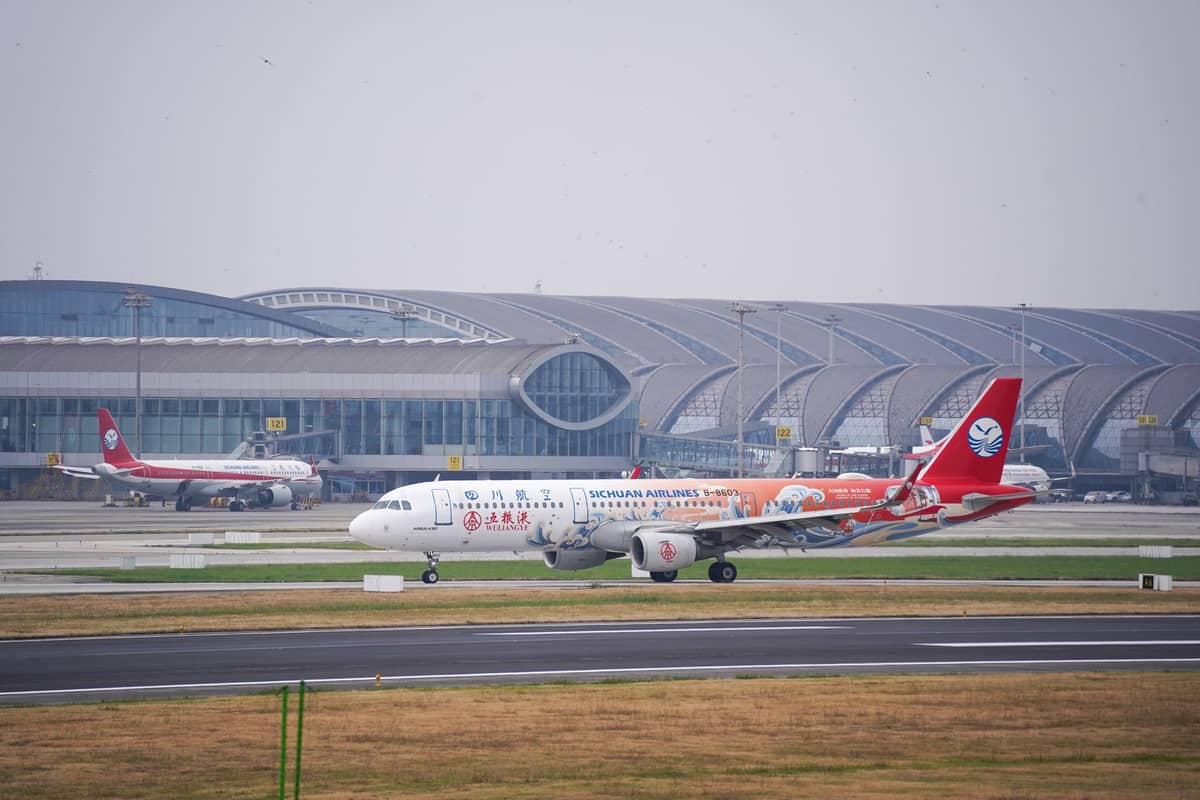
This is the single most important transport fact for visitors: Chengdu has two operational international airports, and they are not interchangeable. Tianfu International Airport (TFU) is the newer facility, located roughly 51 km southeast of the city centre in Jianyang. Shuangliu International Airport (CTU) is the older airport, situated in Shuangliu District and considerably closer to the urban core. Always check the airport code on your booking before planning your onward transfer.
⚠️ What to skip
Do not assume your flight uses CTU just because it's the airport you've seen mentioned in older guides. Major international carriers and many domestic routes now operate from TFU. Getting the wrong airport means arriving at the wrong metro line, a much longer journey, and potentially missing a connection.
From Tianfu Airport (TFU), Metro Line 18 is the primary public transport option, connecting TFU to Chengdu South Railway Station, where you transfer toward Tianfu Square and the rest of the city. Metro fares to central Chengdu destinations typically run around ¥10 to ¥15, though the journey takes 40 to 60 minutes on the metro alone. A taxi or Didi from TFU can cost approximately ¥150 to ¥200 depending on traffic and destination, and the road journey is 60 to 90 minutes under normal conditions. Airport shuttle buses also operate on several routes, with reported fares of around ¥15 in the day and ¥25 overnight, but schedules and stops should be verified at the airport information desks on arrival.
From Shuangliu Airport (CTU), the situation is more straightforward. Metro Line 10 or Line 19 connects the terminal to the city network, and fares to central stops typically range from ¥4 to ¥8. A taxi under normal traffic takes roughly 25 to 40 minutes. The proximity to the city makes CTU transfers noticeably less stressful, which is worth factoring in if you have any choice over routing.
- TFU to City Centre (Metro Line 18) Around ¥10–15, journey time 40–60 min. Most practical option for budget-conscious travelers.
- TFU to City Centre (Taxi or Didi) Around ¥150–200, journey time 60–90 min depending on traffic. Use the official taxi rank, not touts in the arrivals hall.
- CTU to City Centre (Metro Line 10) Around ¥4–8, journey time approximately 30–45 min. By far the cheapest and most reliable option from Shuangliu.
- CTU to City Centre (Taxi) Around 25–40 min by road. Flag at the official rank on the ground floor of arrivals.
Chengdu Metro: The Backbone of Urban Transport

For getting around central Chengdu, the metro is the clear first choice. The network covers most areas visitors want to reach: Tianfu Square, Chunxi Road, Wuhou Shrine, the Panda Base, and both airports. Trains operate from approximately 06:00 to 23:00 daily, and the frequency is high enough during the day that you rarely wait more than five minutes. Base fares start at ¥2 and increase with distance, making even cross-city trips very affordable.
Paying is straightforward. You can buy single-journey tickets at machines in every station (machines have English-language options), or use a Tianfu Tong transit card, which also works on buses and gives a small fare discount over time. WeChat Pay and Alipay are accepted at most ticket machines, which is useful if you have either set up on a foreign-linked card. Key interchange stations to know include Tianfu Square (Lines 1 and 2), Nijiaqiao (Lines 2 and 7), and Chunxi Road (Lines 2 and 3). For visiting Chengdu Panda Base, take Line 3 to Panda Avenue station.
💡 Local tip
Go to the Panda Base on Line 3 as early as possible, ideally on the first train. Pandas are most active in the morning, and the base gets crowded by mid-morning, especially on weekends. The metro is the only way to guarantee a predictable arrival time.
The metro has limits. It does not yet reach every popular destination directly. Wenshu Monastery is a short walk from a metro stop, but some ancient towns and scenic areas require a transfer to a bus or taxi. Peak hours (07:30 to 09:00 and 17:30 to 19:30 on weekdays) can make carriages uncomfortably packed. If you are carrying large luggage, early morning or mid-afternoon is a better time to travel.
Taxis and Didi: When to Use Each
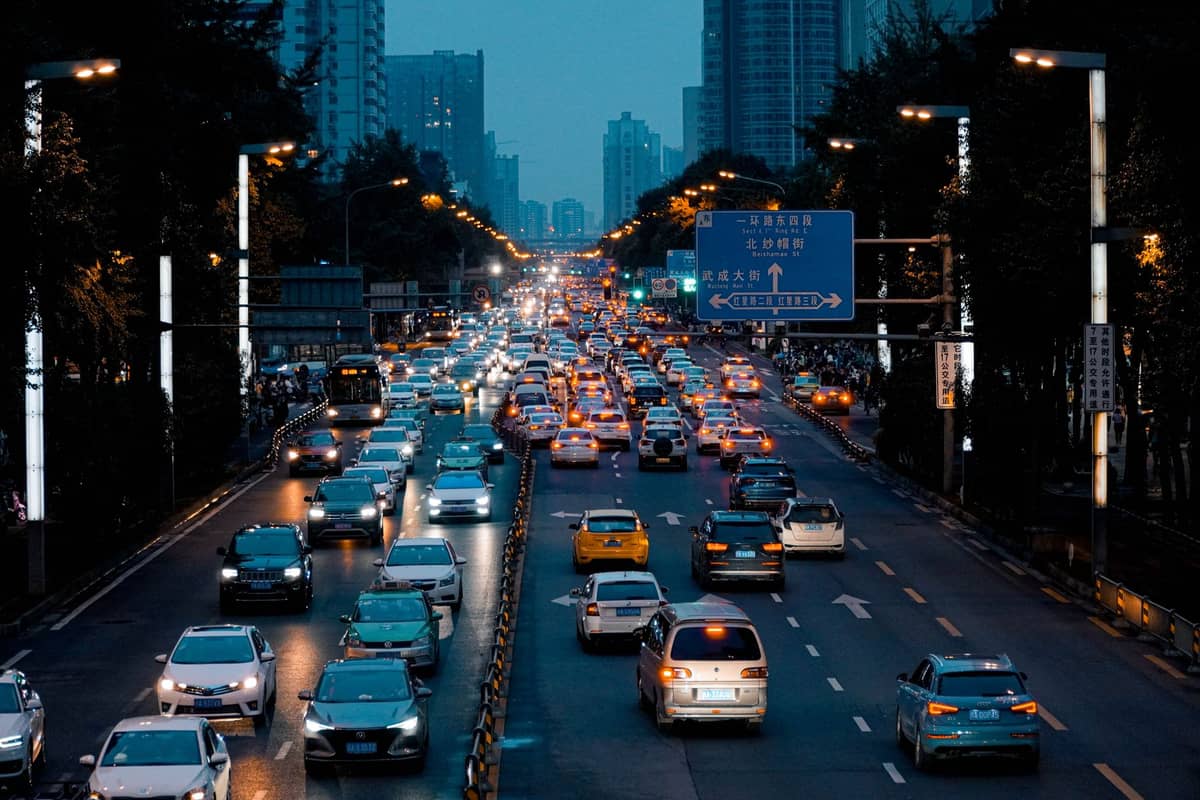
Regular street taxis in Chengdu use meters, which is reassuring. Flag-fall starts at around ¥8 to ¥10 for the first few kilometres, after which the per-kilometre rate applies. Highway tolls, if applicable to your route, are added at the end. The main issue is practical: hailing a taxi on a busy street during rain or at peak hours is unreliable. Taxi drivers in Chengdu generally do not speak English, so having your destination written in Chinese characters (or saved in a mapping app) is essential.
Didi Chuxing is the better option for most journeys once you have it working. The app shows fare estimates upfront, tracks your route, and the driver receives the destination via the app, removing any language barrier. The problem for foreign visitors is setup. Didi requires a Chinese mobile number for registration, and payment works most smoothly through WeChat Pay or Alipay. If you plan to use Didi extensively, sort out payment before you arrive, ideally by linking an international card to WeChat Pay in advance. Some hotels can assist with this. Once it is working, Didi is genuinely convenient for destinations the metro does not serve well.
⚠️ What to skip
At both airports, ignore anyone approaching you in the arrivals hall offering a taxi or private car. Use the clearly marked official taxi ranks outside the terminal, or book a Didi through the app while inside. Unofficial drivers operate at inflated fixed prices and occasionally change the agreed fare at the destination.
Trains and High-Speed Rail for Day Trips
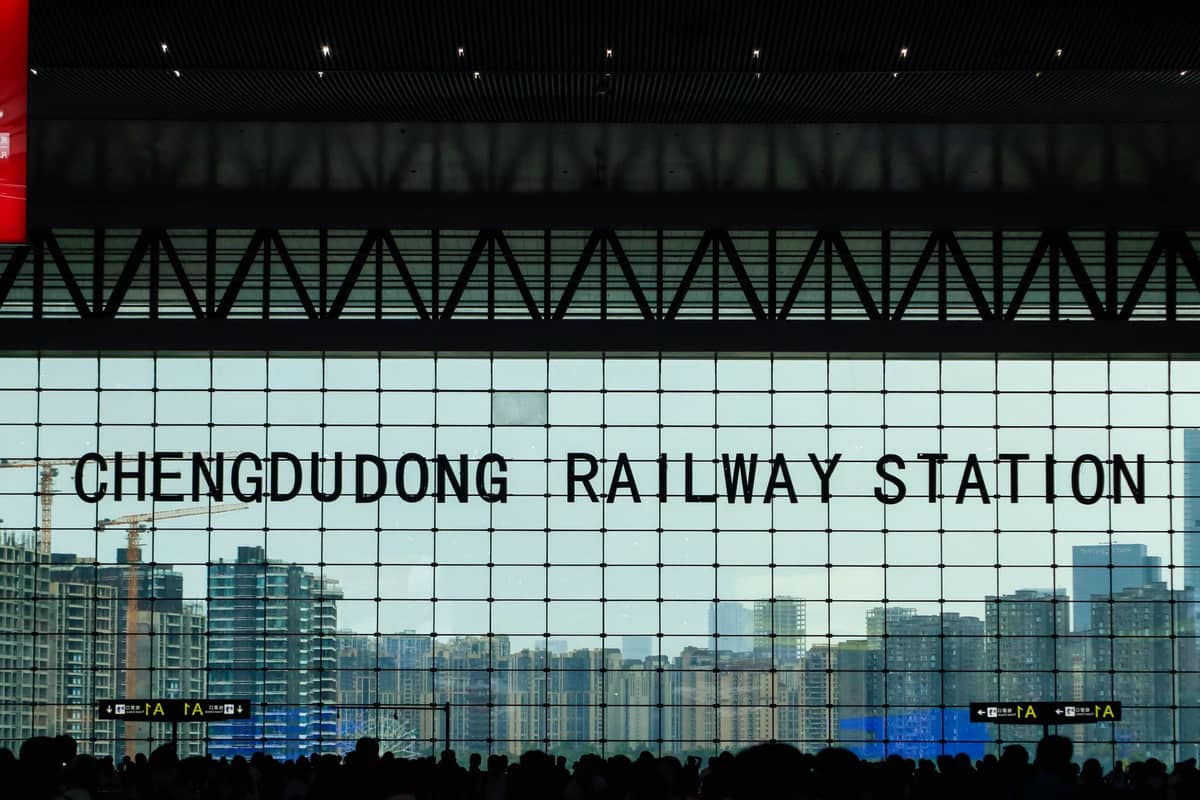
Chengdu is an excellent rail hub for day trips and short excursions, and high-speed trains make distances that would take hours by road manageable in under 30 minutes. The main station for high-speed departures is Chengdu East Railway Station, which is on Metro Lines 2 and 7. Chengdu West and Chengdu South stations serve additional routes. For day trips from Chengdu, trains are nearly always the right call over private cars or buses for destinations served by rail.
Dujiangyan, home to the UNESCO-listed Dujiangyan irrigation system and also the access point for Panda Valley, is about 30 minutes by high-speed train from Chengdu North station. Leshan, where the Leshan Giant Buddha is located, is around an hour by high-speed train. Chongqing is approximately 65 minutes away on the high-speed service, making a day trip to Chongqing entirely feasible.
Book train tickets through the official 12306 platform (en.12306.cn). Foreign passport holders can register on the English version and book directly. Seats on popular routes, particularly during Golden Week (early October) and the Spring Festival period, sell out days in advance. G-class (high-speed) trains are the fastest option; D-class intercity trains are slightly slower but still far quicker than road alternatives. Second-class seats are perfectly comfortable for journeys under two hours.
✨ Pro tip
Print or screenshot your booking confirmation before you arrive at the station. You will need to collect a physical ticket at the station using your passport at a self-service machine or staffed window. Allow at least 20 minutes for this process, and 30 to 40 minutes during holidays.
Buses, Bikes, and Getting to Specific Attractions
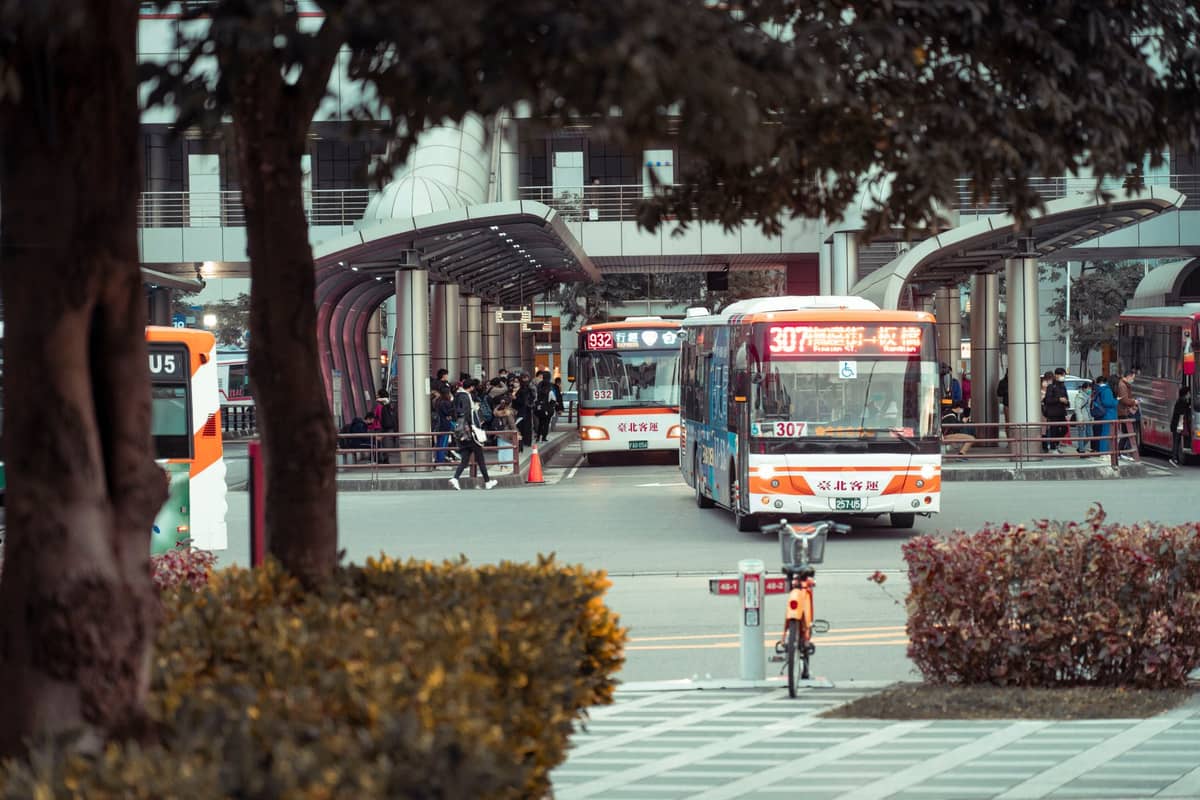
Chengdu's municipal bus network is extensive and cheap, with most rides costing ¥2. For visitors, buses are practical mainly when a specific route fills a gap the metro does not cover, such as connections between suburban attractions or ancient towns. The drawback is navigation: route information is mostly in Chinese, and stops are not always well-signed in English. Google Maps does not function in mainland China, so download a VPN if you rely on it, or use Baidu Maps or Amap (AutoNavi) instead. Amap has an English-language option and generally gives accurate bus and metro routing.
Cycling is increasingly viable within central Chengdu thanks to shared bike schemes from Meituan and Hello Bike. Bikes are unlocked via smartphone app and cost around ¥1.5 to ¥2 per 30 minutes. The flat terrain of the Chengdu Plain makes cycling around areas like People's Park, Jinli Ancient Street, and Kuanzhai Alley genuinely pleasant, provided you stick to designated lanes and paths. These apps also require Chinese payment setup, but this is the same prerequisite as Didi.
- Amap (AutoNavi) for navigation: more reliable than Baidu for English-language users and gives accurate public transport directions.
- WeChat Pay or Alipay: set these up before arrival to unlock Didi, shared bikes, metro QR ticketing, and most other transport apps.
- Download offline maps for Chengdu before you arrive. Mobile data can be unreliable in some underground stations.
- During major holidays, book all trains at least 5 to 7 days in advance. The 12306 platform opens bookings 15 days before departure.
- Keep a card with your hotel name and address in Chinese to show taxi and Didi drivers if the app is not working.
Practical Transport Tips for First-Time Visitors
Chengdu's transport infrastructure is genuinely good by any standard, but it rewards preparation. Foreign visitors who arrive with WeChat Pay working, a downloaded navigation app, and their train bookings sorted will have a smooth experience. Those who arrive expecting to figure it out on arrival may lose significant time. For a broader orientation to the city's layout and what requires the most travel time, the Chengdu first-timer guide covers how to sequence your days efficiently.
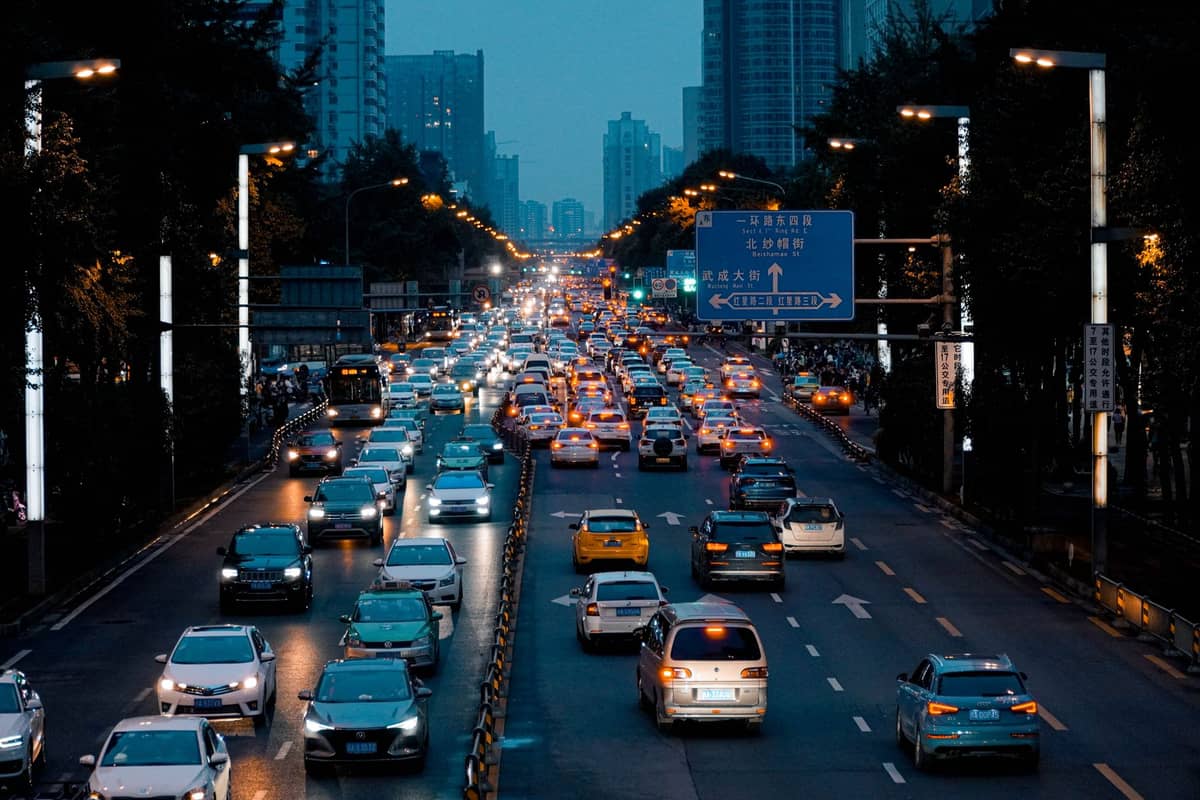
Traffic in Chengdu is heavy and unpredictable, particularly on the ring roads during peak hours and around major tourist areas on weekends. The metro almost always beats road-based transport for punctuality within the urban core. For specific neighbourhoods like Wuhou District where attractions cluster together, walking between sites is often faster than waiting for a taxi or bus.
- Best for short urban hops Metro. Fast, cheap, air-conditioned, and predictable. Use it whenever possible within the central districts.
- Best for door-to-door comfort Didi. More flexible than taxis once the app is working, with upfront fare estimates and no language barrier.
- Best for day trips High-speed rail. Book on 12306, depart from Chengdu East, and you can reach Leshan, Dujiangyan, or Chongqing and back in a full day.
- Best for scenic areas without rail access Hired car or organised tour. Mount Emei and some rural areas require road travel. Compare group tours against private car hire for cost and flexibility.
FAQ
Which airport should I fly into for central Chengdu?
If you have a choice, Shuangliu Airport (CTU) is significantly closer to the city centre and the metro connection is faster and cheaper. Tianfu Airport (TFU) is the newer facility roughly 51 km out, which means longer transfer times and higher taxi fares. Check the airport code on your booking before you choose your ground transport.
Can I use Google Maps to navigate Chengdu?
Google Maps is blocked in mainland China without a VPN. The most practical alternatives are Amap (AutoNavi), which has English-language support, and Baidu Maps. Amap is generally considered more accurate for public transport routing and is the preferred choice for most foreign visitors.
How do I pay for the metro and buses in Chengdu?
You can pay with cash at ticket machines, use a Tianfu Tong transit card loaded with credit, or scan a QR code through Alipay or WeChat Pay. The transit card is the most convenient for extended stays. Foreign-linked cards can be added to WeChat Pay with some setup steps, which is worth doing before you arrive.
Is Didi safe and practical for foreign tourists in Chengdu?
Didi is generally safe and widely used. The main challenge for foreign visitors is the payment setup, which requires either a Chinese bank card or linking an international card to WeChat Pay or Alipay. Once working, it removes the language barrier entirely because the driver receives your destination through the app. Avoid accepting ride offers from unlicensed drivers outside airports and train stations.
How far in advance should I book train tickets for day trips from Chengdu?
For weekday travel outside holidays, booking one to three days in advance is usually sufficient. For weekend travel, book at least three to five days ahead. During Golden Week (around 1 October) and Chinese New Year, trains on popular routes sell out quickly and booking a week or more in advance is strongly recommended. Use the official 12306 English platform and have your passport details ready.