Panda Valley (Dujiangyan): Giant Pandas in a Wilder Setting
Panda Valley, officially the Dujiangyan Field Research and Breeding Center, sits in the forested hills outside Dujiangyan city. With far smaller crowds than Chengdu's main panda base, it offers a calmer, more naturalistic encounter with giant pandas and a landscape that feels genuinely removed from urban Chengdu.
Quick Facts
- Location
- Dujiangyan, Sichuan Province (approx. 55 km northwest of central Chengdu)
- Getting There
- High-speed train from Chengdu to Dujiangyan, then taxi or local bus; no direct metro connection
- Time Needed
- 3–4 hours on site; allow a full day including travel from Chengdu
- Cost
- CNY 55 adults / CNY 27 students (verify current prices before visiting)
- Best for
- Panda enthusiasts wanting smaller crowds, families, photographers, and nature-focused travelers
- Official website
- www.panda.org.cn
What Panda Valley Actually Is
Panda Valley, formally named the Dujiangyan Field Research and Breeding Center (都江堰野放繁育研究中心), is a satellite facility of the Chengdu Research Base of Giant Panda Breeding. It was officially opened to the public on 20 April 2015 and focuses on giant panda conservation, prerelease training and reintroduction, nature education, and ecotourism.
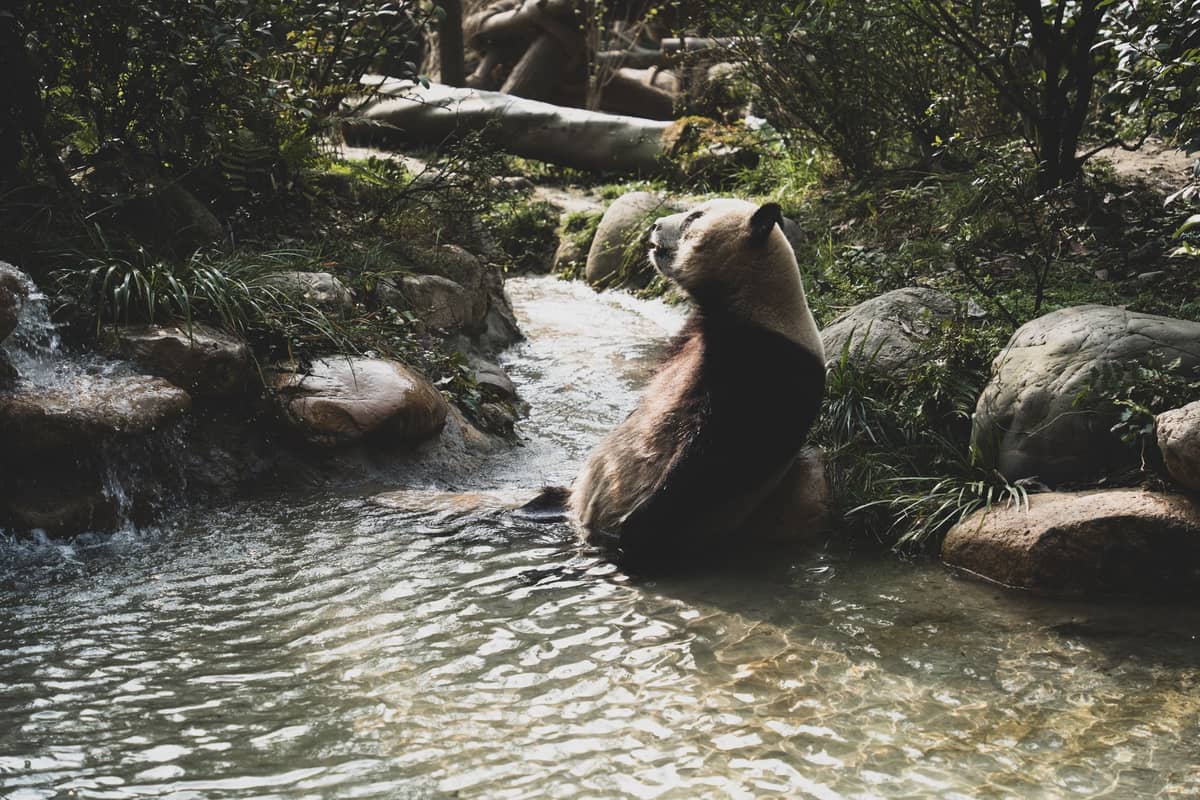
The distinction matters for a traveler deciding where to spend their time. Panda Valley sits in forested, hilly terrain on the edge of Dujiangyan, where the Chengdu Plain begins to rise toward the mountains. The enclosures are larger, the bamboo is denser, and the overall environment is closer to what wild panda habitat looks like than anything inside the city. You are watching pandas against a backdrop of real forest, not manicured lawns.
The number of pandas visible on any given day is smaller than at the main Chengdu base. This is not a shortcoming; it reflects the facility's research-first orientation. If you want guaranteed close-range views of many pandas at once, the main base serves that need. If you want a calmer, less staged encounter with fewer visitors around you, Panda Valley offers something the city cannot.
ℹ️ Good to know
Panda Valley requires real-name online ticket reservation through the official Chengdu Research Base system. Do not assume tickets will be available at the gate. Book in advance, especially on weekends and public holidays.
The Landscape and Setting
Arriving at Panda Valley, the first thing most visitors notice is how much cooler and greener it feels compared to central Dujiangyan. The facility occupies a forested valley where mature trees provide genuine canopy cover. The air smells of damp earth and bamboo, particularly in the mornings before the sun clears the ridgeline. In summer, the shade makes physical exploration far more comfortable than the exposed paths of the main urban panda base.
The terrain involves gentle elevation changes. Some paths slope upward toward the upper enclosures, and there are sections with uneven ground. Visitors who have difficulty with inclines or uneven surfaces should note this before planning. The official sources reviewed do not detail specific wheelchair-accessible routes, so anyone with mobility requirements should contact the facility directly before visiting.
In autumn, particularly from late September through November, the hillside foliage shifts color behind the enclosures. This is arguably the most photogenic season to visit, when orange and gold tones frame the panda viewing areas. Spring (March to May) brings new bamboo growth and mild temperatures, making it a close second for both photography and comfort.
Tickets & tours
Hand-picked options from our booking partner. Prices are indicative; availability and final rates are confirmed when you complete your booking.
Panda Base and city highlights private day tour in Chengdu
From 302 €Instant confirmationFree cancellationFull day private tour Giant Panda Base and city highlights
From 365 €Instant confirmationFree cancellationHalf-day Private tour amazing Panda Base trip
From 305 €Instant confirmationFree cancellationFull day private tour of Panda Base and Leshan Giant Buddha
From 495 €Instant confirmationFree cancellation
The Panda Experience: What to Expect
Giant pandas at Panda Valley are typically most active in the early morning, from opening time through approximately 10:00. This is when they eat, move between areas, and are generally alert. By late morning, most giant pandas have settled into their characteristic long rest periods, often sleeping in bamboo stands or on raised platforms. Arriving at 7:30 in the summer season or 8:00 in winter gives you the best chance of observing meaningful behavior.
The enclosures at Panda Valley are designed with the animals' behavioral needs in mind rather than maximizing visitor sightlines. This means that on some visits, a panda may be partially obscured by bamboo, resting in a shaded corner, or simply far from the viewing path. This is an honest characteristic of the facility. Visitors expecting zoo-style guaranteed close-up access may find it frustrating. Those who appreciate observing animals in conditions closer to their natural environment will find it rewarding.
Red pandas, which are entirely unrelated to giant pandas despite the name overlap, are also present at the facility. They tend to be active for longer periods during the day and are often visible exploring their enclosures well into the morning.
💡 Local tip
Arrive at or just after opening time. Giant pandas are most active in the first 90 minutes after the gates open. Midday visitors often find the animals asleep and largely motionless for hours.
Opening Hours, Tickets, and Getting There
Panda Valley operates on a seasonal schedule. From 1 May through 31 October, the facility typically opens at 07:30 and closes at 18:00, with last entry at 17:00. From 1 November through 30 April, opening time shifts to 08:00 and closing to 17:30, with last entry at 16:30. Confirm current hours on the official panda.org.cn page before travel.
Adult admission is CNY 55. Student admission is CNY 27 with a valid student identification document. Tickets must be reserved online using the real-name system on the Chengdu Research Base of Giant Panda Breeding website. The booking process requires identification details, so have your passport information available when reserving.
Getting to Panda Valley from Chengdu is a two-step journey. The most practical option for most visitors is the high-speed train from Chengdu to Dujiangyan, which takes approximately 40 minutes. From Dujiangyan station, a taxi or rideshare to Panda Valley takes around 15 to 20 minutes. If you are also planning to visit the Dujiangyan Irrigation System or Mount Qingcheng on the same trip, you can combine these efficiently since all three sites are in the same area. The official transit information from the Chengdu Panda Base website describes Metro Line 3 to Dongwuyuan Station as the route to the main Chengdu base, not to Panda Valley. Do not rely on that information for this site.
⚠️ What to skip
Panda Valley is in Dujiangyan, not in central Chengdu. Budget at least 1.5 hours each way for the full journey from central Chengdu, including the train and local transport. A round trip plus 3–4 hours on site means planning for a full day.
Photography and Practical Tips
The forested setting at Panda Valley creates genuine photography challenges. Light levels inside the enclosures are lower than in open-air zoo settings, particularly in the morning before the sun is overhead. A lens with good low-light performance or a camera that handles higher ISO settings well will produce sharper results. Telephoto capability matters here: because the pandas can be positioned far from the viewing barriers, a standard wide-angle phone shot may leave the animal as a small dot in a bamboo thicket.
Flash photography is not permitted near the animals. Tripods are generally impractical on the paths. The best practical approach is to arrive early, move slowly along the viewing paths, and wait quietly near an enclosure where a panda is visible and active. Patience produces better results than covering the entire site quickly.
Wear comfortable walking shoes with grip, particularly if visiting after rain when the paths can be slippery. Layers are useful in spring and autumn because the forested valley is noticeably cooler than Dujiangyan town, especially in the morning. Bring water; while there are facilities on site, options for food and drink within the facility are limited compared to the main Chengdu base.
How Panda Valley Fits into a Broader Dujiangyan or Chengdu Trip
Panda Valley works best as part of a dedicated Dujiangyan day rather than as a standalone city-center excursion. After visiting in the morning, the afternoon can be spent at the UNESCO-listed Dujiangyan Irrigation System, one of the world's oldest functioning irrigation networks, dating to approximately 256 BCE. Dujiangyan town itself has a walkable historic center worth an hour of exploration.
For those building a larger itinerary, the Chengdu panda guide covers the full range of panda-related facilities in the region and helps you decide which site best matches your expectations. If you are comparing Panda Valley against the main base, the key question is what you prioritize: volume and convenience (main base) versus setting and relative quiet (Panda Valley).
Visitors with children should note that Panda Valley's terrain and the less predictable panda sightlines can frustrate younger children who expect immediate, close-up animal interaction. The main Chengdu base may serve families with very young children better. For older children with a genuine interest in conservation or wildlife, Panda Valley's context and setting offer more substance. See the Chengdu with kids guide for broader family-planning advice.
Who Should Skip Panda Valley
Panda Valley is not the right choice for every visitor. If your time in Chengdu is limited to one or two days and you want to cover as many central attractions as possible, the journey to Dujiangyan eats a full day. The main Chengdu panda base is accessible by Metro and takes half the travel time. For travelers on a tight schedule, that efficiency matters.
Visitors who need guaranteed close-up panda views, or those bringing young children who are unlikely to appreciate a forested hike with potentially obscured sightlines, may leave disappointed. And anyone visiting primarily for a panda-and-human interaction experience should know that Panda Valley, with its conservation research focus, does not offer the kind of structured handler-led encounters that some commercial facilities provide.
Insider Tips
- Book tickets through the official Chengdu Research Base website well in advance for weekends and national holidays. The real-name system requires passport details, so have them ready when booking online.
- The high-speed train from Chengdu to Dujiangyan is the fastest and most reliable way to reach Dujiangyan. Trains run frequently from multiple Chengdu stations; confirm your departure station the evening before.
- Combine Panda Valley with the Dujiangyan Irrigation System on the same day. The irrigation site closes relatively early, so visit Panda Valley first thing in the morning and head to the irrigation system after lunch.
- Bring a telephoto lens or a phone with optical zoom. The enclosures are large, and pandas can position themselves 30 to 50 meters from the nearest viewing path. Standard phone cameras at wide angle will not capture usable images from that distance.
- Autumn mornings from late September through November offer the best combination of mild temperatures, smaller crowds, and attractive hillside foliage framing the enclosures. This window consistently produces the best visit conditions.
Who Is Panda Valley For?
- Panda enthusiasts who have already visited the main Chengdu base and want a different, quieter perspective
- Wildlife and nature photographers looking for a forested, less controlled setting
- Travelers combining with a Dujiangyan day trip to the irrigation system or Mount Qingcheng
- Families with older children interested in conservation rather than a theme-park-style animal encounter
- Visitors who find large crowds stressful and want a more relaxed panda experience
Nearby Attractions
Other things to see while in Dujiangyan:
- Dujiangyan Irrigation System
Built around 256 BC and still functioning today, the Dujiangyan Irrigation System is one of the oldest and most significant hydraulic engineering projects in the world. Inscribed as part of the Mount Qingcheng and Dujiangyan Irrigation System World Heritage property in 2000, it sits about an hour from central Chengdu and rewards visitors with river landscapes, ancient stonework, and a surprisingly moving sense of continuity between past and present., it sits about an hour from central Chengdu and rewards visitors with river landscapes, ancient stonework, and a surprisingly moving sense of continuity between past and present.
- Mount Qingcheng
Mount Qingcheng (青城山) is where Chinese Taoism took root nearly 2,000 years ago. A UNESCO World Heritage site paired with the Dujiangyan Irrigation System, it draws visitors with dense forest trails, ancient temple complexes, and a sensory atmosphere unlike any urban attraction in the region. This guide covers both Front Mountain and Back Mountain, with transit directions, ticket prices, and practical notes on what to expect.