Dujiangyan is a county-level city about 60 km northwest of central Chengdu, built around one of the ancient world's most ingenious engineering achievements. The 2,000-year-old Dujiangyan Irrigation System still channels the Min River today, and the surrounding parks, temples, and mountain scenery make this one of the most rewarding day trips from Chengdu.
Dujiangyan sits where the Min River spills out of the Sichuan mountains and onto the Chengdu Plain, a geographic drama that ancient engineers turned into one of history's great water-management feats. Unlike most day trips from Chengdu, this one delivers genuine historical weight alongside dramatic scenery: roaring water channels, cliff-carved temples, a swaying suspension bridge, and the pine-covered ridges of Qingcheng Mountain all within a few kilometers of each other.
Orientation
Dujiangyan is a county-level city administered by Chengdu Municipality, located approximately 60 km northwest of central Chengdu in the foothills where the Longmen Mountain range meets the Sichuan Basin. The Min River, coming down fast and cold from the Tibetan Plateau, passes directly through the town, and the entire visitor experience is organized around this river corridor.
There is no single formal boundary that visitors need to navigate. In practice, the action is concentrated in three zones: Lidui Park and the Dujiangyan Irrigation System scenic area at the heart of town, Yulei Mountain rising behind it to the north and east, and Qingcheng Mountain about 15 km to the southwest. Most travelers base themselves at the irrigation system area, which sits roughly between Gongyuan Road to the south and the river channels to the north.
Dujiangyan is most naturally treated as a full-day trip from Chengdu rather than a standalone base, though the town has its own accommodation if you want to combine it with a morning at Mount Qingcheng the following day. The two sites together form a single UNESCO World Heritage property and are often paired on one itinerary. Consult the day trips from Chengdu guide for combined itinerary options.
Character & Atmosphere
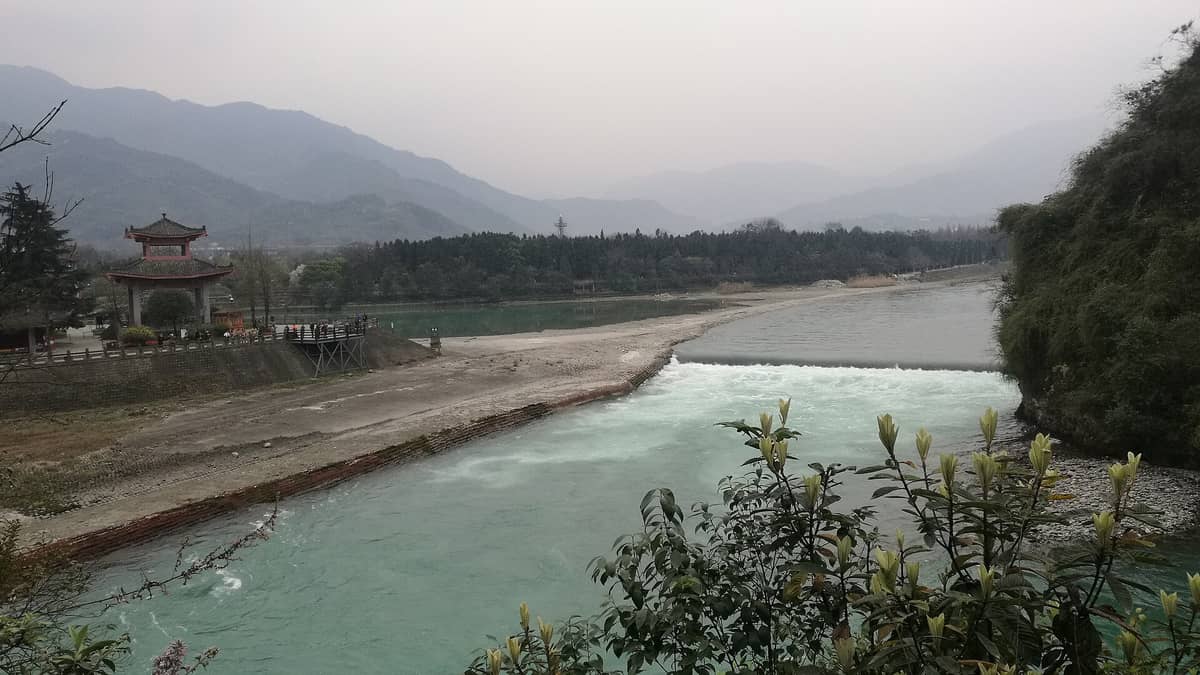
Dujiangyan does not feel like a theme park version of history. The irrigation works are genuinely operational, and the sound of fast water pushing through stone-lined channels is the constant background to everything here. In the early morning, when mist lifts off the Min River and the light is still flat, the Yuzui weir and the Feishayan spillway look much as they must have for centuries: functional, stone-grey, and quietly powerful.
By mid-morning, organized tour groups arrive from Chengdu, and the pathways around Lidui Park fill up quickly. The atmosphere around the main viewing platforms becomes lively and photogenic, with people crowding the Anlan Suspension Bridge and posing against the backdrop of the river divide. The energy is communal rather than hushed, which suits the site well. This is infrastructure that has fed a civilization for two millennia; celebration feels appropriate.
Away from the core scenic area, the streets of Dujiangyan's old town move at a slower pace. Small tea houses sit on corners near Erwang Temple, and local vendors sell dried river fish and Sichuan pickles along the market lanes. By mid-afternoon, the light turns golden through the ginkgo trees along the river banks, and if you walk south from the irrigation system entrance toward the town center, the tourist density drops off quickly. After dark, Dujiangyan is quiet by Chengdu standards. Most visitors have returned to the city, and the town reverts to local rhythms.
💡 Local tip
Arrive at Lidui Park as early as possible, ideally by 8am. The irrigation channels and suspension bridge are at their most atmospheric before the main tour groups arrive, and the morning light on the water is exceptional.
What to See & Do
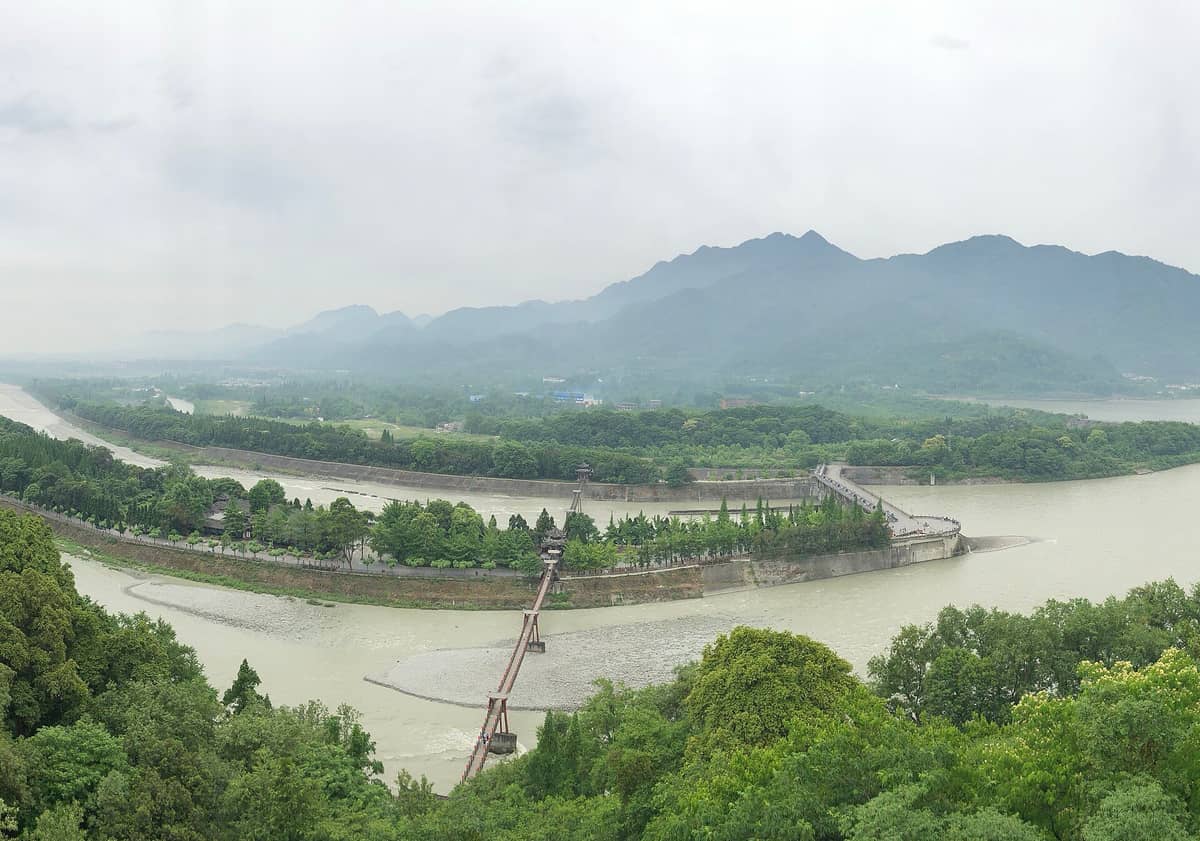
The centerpiece of any visit is the Dujiangyan Irrigation System, built by Qin Dynasty governor Li Bing and his son around 256 BCE. The system uses three ingenious structures: the Yuzui (Fish Mouth) bypass dike splits the Min River into inner and outer channels, the Feishayan (Flying Sand) floodgate controls silt and excess water, and the Baopingkou (Bottle-Neck Channel) regulates water flow onto the Chengdu Plain. What makes this extraordinary is that the historic works use no dams. They are entirely hydraulic, relying on the river's own current and the geometry of the channels. And they still work.
Lidui Park is the landscaped area immediately adjacent to the irrigation works and is the standard starting point for the full scenic area circuit. A network of raised walkways and stone paths connects all three hydraulic structures, with viewing platforms positioned over the main water flows. The circuit takes roughly two to three hours at a comfortable pace, including the main bridge crossing.
The Anlan Suspension Bridge crosses the Min River near the Yuzui weir and is one of the most photographed spots in the entire complex. The bridge was originally built from bamboo and rope, connecting the two sides of the divided river. The modern version preserves the character of the historic crossing, and the view over the water channels is dramatic. It is worth crossing to the far bank even if just to turn around and appreciate the full scale of the Yuzui from a distance.
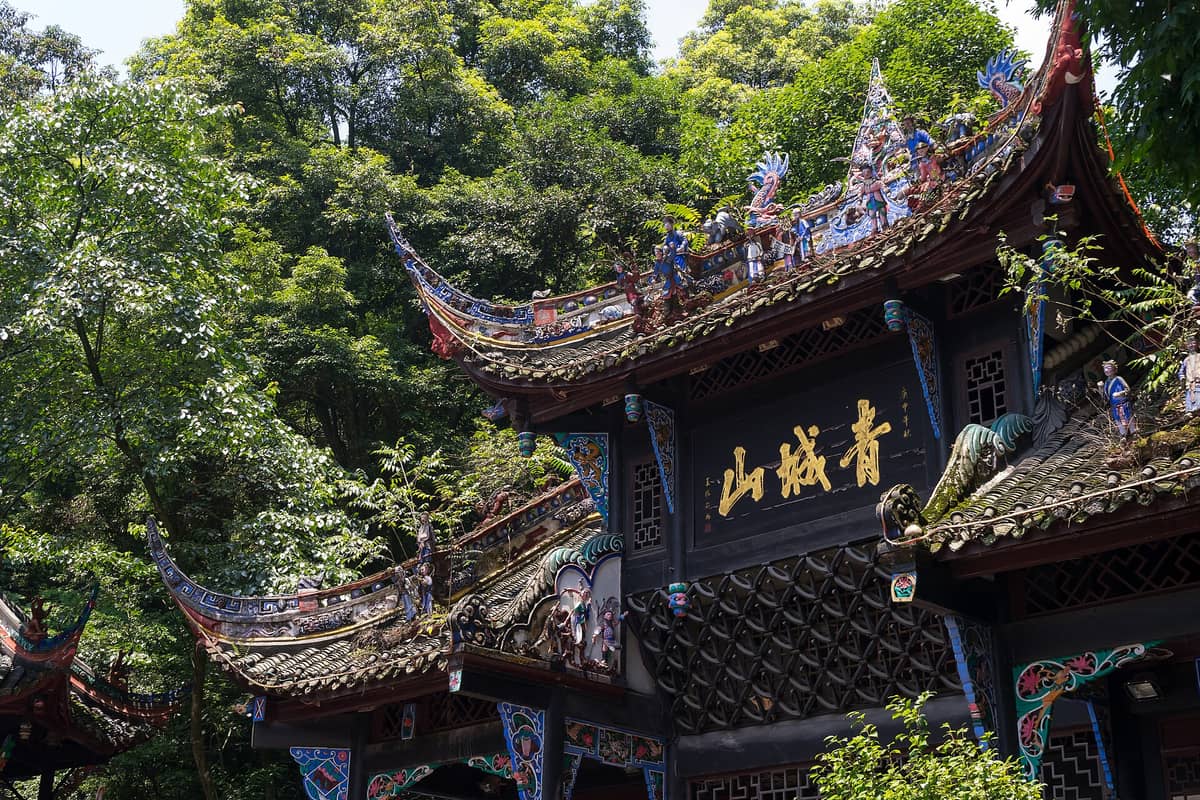
Erwang Temple stands on Yulei Mountain directly above the irrigation system. Built to honor Li Bing and his son, the temple complex is an active place of worship as well as a historic monument, with incense smoke drifting through timber pavilions and stone inscriptions recording hydraulic principles carved into the cliff walls. The walk up from the river level is steep in places but takes less than twenty minutes, and the view down over the water channels from the temple terraces justifies the climb.
Dujiangyan Irrigation System scenic area: core UNESCO site, allow 2-3 hours minimum
Anlan Suspension Bridge: cross both ways for the best river views
Erwang Temple: active Daoist temple on Yulei Mountain, 15-20 minute walk from the river
Lidui Park: landscaped grounds with river views and the main access routes
Qingcheng Mountain: 15 km southwest, best as a separate full-day or combined overnight trip
ℹ️ Good to know
The Dujiangyan Irrigation System and Qingcheng Mountain share a UNESCO World Heritage listing, designated in 2000. They are administered separately and have separate entrance fees. If you want to visit both, plan for two days or a very early start.
Eating & Drinking
Dujiangyan's food scene is rooted in Sichuan cooking, with a particular emphasis on the freshwater river fish and river crayfish that come from the Min River watershed. Grilled fish stalls and small riverside restaurants line the streets near the scenic area entrance, and the smell of doubanjiang and dried chili is everywhere from mid-morning onward.
Sichuan staples are well represented, and if you have not yet encountered the full range of what Sichuan cuisine offers, Dujiangyan is a solid introduction. Look for mapo tofu, dan dan noodles, and cold rabbit dishes. For a broader understanding of what to eat across the region, the guide to eating in Chengdu covers the core dishes and how to order them.
Around Erwang Temple and along the lanes leading toward the old town area, small tea houses offer a place to rest and recover between sites. A bowl of tea here, with roasted pumpkin seeds on the side, is the most natural break in a long day of walking. Prices are low: expect to pay a few yuan for a refillable pot of green or jasmine tea. These are genuine local establishments rather than tourist-facing operations, and the pace inside is unhurried.
The food stalls and casual restaurants near the main scenic entrance gates cater primarily to day-trip visitors. Prices are slightly elevated compared to the rest of town, and quality is variable. If you plan to eat a full meal in Dujiangyan, it is worth walking five to ten minutes away from the ticket gate area into the surrounding streets, where local lunch spots serve rice plates and noodle soups at honest prices.
⚠️ What to skip
Restaurants and food stalls directly adjacent to major scenic entrance gates in China tend to charge more and deliver less. Walk a short distance into the surrounding streets for better value and more authentic cooking.
Getting There & Around
The most practical route from central Chengdu is by intercity rail. Take Chengdu Metro Line 2 to Xipu Station, then transfer to an intercity train toward Dujiangyan. The intercity line has two relevant stops: Lidui Park Station, approximately 1.8 km from the irrigation system entrance, and Dujiangyan Station further into the city center. Lidui Park Station is the more convenient option for most visitors. The total journey from central Chengdu takes around 50 to 70 minutes depending on your starting point.
From Dujiangyan Station, local bus 4 runs to the irrigation system scenic area and the city center. Bus 1 also connects key points in Dujiangyan's urban area with the main scenic spot. The buses are inexpensive and functional, though scheduling can be irregular outside peak hours. Taxis and ride-hailing via Didi are available in Dujiangyan itself and are useful for getting between the irrigation system and Qingcheng Mountain without backtracking.
Once inside the scenic area, navigation is entirely on foot. The main circuit through the Lidui Park and irrigation works complex is well-signposted in both Chinese and English. The terrain is mostly flat to gently sloping along the river, with a steeper climb to Erwang Temple on Yulei Mountain. Comfortable walking shoes with grip are worth wearing, particularly if recent rain has made the stone paths slick.
Organized day tours from Chengdu that include Dujiangyan often combine it with Qingcheng Mountain on the same day. This is physically possible but makes for a long day, especially if you spend meaningful time at both sites. A private car hire from Chengdu gives the most flexibility for this kind of combined trip and is relatively affordable when split between a small group.
💡 Local tip
Purchase your intercity train tickets in advance through the 12306 app or website, especially on weekends and public holidays when trains to Dujiangyan fill up early. The journey itself is smooth and the ticket price is very low.
Safety & Practical Notes
Dujiangyan is a low-risk destination in terms of personal safety. The main hazards are environmental rather than social: the Min River carries a substantial volume of fast water, and the channels within the scenic area are unprotected in places. Stay on the marked pathways, respect any barriers near the water, and keep children well back from unfenced river edges. The current in the inner channel near Baopingkou is significantly stronger than it looks from the viewing platforms.
Mountain paths toward Yulei Mountain and in the surrounding area can become slippery after rain, and conditions can change quickly in the foothills. If you plan to hike beyond the main scenic circuit, check the weather forecast and wear appropriate footwear. Posted trail closures should be taken seriously, particularly after heavy rainfall, which is common between June and September.
Dujiangyan sits in Sichuan's seismically active zone: the 2008 Wenchuan earthquake was centered approximately 20 km away. The area has been substantially rebuilt and reinforced since then, but awareness of this context is relevant if you are traveling with anxiety about seismic risk. For more general safety planning in Chengdu, the Chengdu safety and scams guide covers practical precautions for the broader region.
Where to Stay
The vast majority of visitors to Dujiangyan come as day-trippers from Chengdu and return the same evening. Staying overnight in Dujiangyan itself makes most sense if you plan to visit both the irrigation system and Qingcheng Mountain over two days, since the early morning light and the absence of crowds at both sites reward an early start.
Accommodation in Dujiangyan ranges from budget guesthouses near the old town to mid-range hotels close to the scenic area. Standards are generally adequate but not exceptional. If comfort and amenities matter, you will find a broader and higher-quality range of options in central Chengdu, which remains easily accessible by rail. The where to stay in Chengdu guide covers the main neighborhoods and hotel categories across the city.
For travelers combining Dujiangyan with Qingcheng Mountain, staying in Dujiangyan or at a guesthouse closer to the mountain base gives access to both sites first thing in the morning before the day-trip crowds arrive from the city. This arrangement suits hikers and anyone prioritizing atmosphere over urban convenience.
Context: Why This Place Matters
The Dujiangyan Irrigation System is not just an engineering curiosity. It is the reason the Chengdu Plain became one of China's most productive agricultural regions, capable of supporting the population density that makes modern Chengdu possible. Without it, the Min River floods in wet season and dries to a trickle in dry season. Li Bing's solution, achieved without concrete or dams, turned a flood-prone plain into what the Chinese called the Land of Abundance. The system is listed alongside Qingcheng Mountain on the UNESCO World Heritage list, and the designation is well-justified.
Travelers with a serious interest in Chinese history and engineering will find Dujiangyan more intellectually rewarding than many more famous sites. It rewards careful observation and a bit of preparatory reading. For first-time visitors to Chengdu trying to build a coherent picture of the region, the Chengdu first-timer guide puts Dujiangyan in context alongside the city's other major draws.
TL;DR
Dujiangyan is one of the most historically significant day trips from Chengdu: a 2,000-year-old irrigation system that is still fully operational and UNESCO-listed.
Best suited to travelers with an interest in history, engineering, or natural landscapes, and anyone combining it with a hike on nearby Qingcheng Mountain.
Get there early: arrive by 8am to experience the irrigation works before tour groups fill the pathways and suspension bridge.
The intercity rail from Chengdu Metro Line 2's Xipu Station is the easiest route; alight at Lidui Park Station for the most direct access.
Not ideal for travelers with very limited time or those prioritizing city-based food and nightlife: Dujiangyan is quiet after 5pm and the restaurant scene is functional rather than exceptional.
Three days is enough time to cover Chengdu's essential experiences without rushing. This itinerary balances the panda base, historic streets, Sichuan cuisine, cultural landmarks, and a day trip option, with practical notes on logistics, timing, and what to skip.
Chengdu's museum scene spans 4,500 years of Sichuan history, from mysterious Bronze Age civilizations to Tang Dynasty poets and dinosaur fossils. This guide covers the standout institutions, what to expect inside each one, and how to plan your visits efficiently.
Chengdu's temple scene spans 1,400 years of Buddhist and Taoist history, from incense-filled city monasteries to sacred peaks rising above the clouds. This guide covers the best temples in Chengdu and beyond, with honest advice on what to expect at each one.
Chengdu rewards visitors year-round, but the timing of your trip makes a real difference. This guide breaks down every season by weather, crowd levels, panda activity, and practical logistics so you can choose the window that actually suits your plans.
Chengdu is surrounded by ancient towns that most visitors completely overlook. This guide covers the five best options — Huanglongxi, Luodai, Jiezi, Anren, and Pingle — with real transport details, honest assessments, and seasonal advice to help you choose the right one for your trip.
Chinese New Year transforms Chengdu into one of China's most atmospheric festival cities, with temple fairs, lantern displays, and Sichuan folk performances across the city. But the season also brings peak crowds, tight transport, and some genuine planning challenges. This guide tells you exactly what to expect and how to prepare.
Chengdu is the capital of Sichuan Province, home to 21 million people, giant pandas, and some of the most distinctive food in China. This guide covers the practical details that actually matter for a first visit: which airport you land at, when to go, what to eat, where to stay, and how to get around without confusion.
Chengdu has a slower, more sensory side that makes it genuinely rewarding for couples. This guide covers the most romantic experiences in the city — from dawn panda visits and teahouse afternoons to Sichuan opera nights and scenic day trips — with a clear take on what's worth your time.
Hot pot is not just a meal in Chengdu — it is the social ritual that defines the city's food culture. This guide covers the best restaurants for Sichuan hot pot, exactly how to order, what to expect on the bill, and how to handle the heat without ruining your evening.
Chengdu's after-dark scene runs deeper than the typical tourist circuit. This guide breaks down the city's main nightlife districts, what each one actually offers, realistic price ranges, and how to get around after the metro stops running.
Chengdu is one of China's most rewarding cities for budget travelers. From free parks and temples to street food that costs less than a coffee back home, here's how to experience the best of Chengdu without overspending.
Chengdu is the world's foremost destination for seeing giant pandas in a conservation setting. This guide covers the Chengdu Research Base of Giant Panda Breeding in detail, how to book tickets, the best time to arrive, how to get there, and what the experience is actually like — including what most visitors get wrong.
Chengdu rewards those who step outside. This guide covers the city's best parks, gardens, riverside walks, and natural escapes, from the teahouse-dotted paths of People's Park to the forested peaks of Mount Qingcheng, an hour from the city center.
Chengdu is one of China's safest major cities for visitors, but that doesn't mean you can skip due diligence. From airport taxi scams to tea house traps, here's everything you need to stay safe, avoid getting ripped off, and travel with confidence.
Chengdu is one of southwestern China's best cities for shopping, whether you're after luxury brands, handmade Shu brocade, panda merchandise, or bulk spices for your hotpot. This guide covers the top malls, local markets, souvenir picks, and practical advice to help you spend wisely.
Chengdu is a UNESCO Creative City of Gastronomy and one of the most rewarding cities in Asia for eating on foot. This guide covers the essential Sichuan dishes, the best street food districts, practical navigation tips, and honest notes on what lives up to the hype.
Tea houses are central to daily life in Chengdu in a way that few cities can claim. This guide covers the history, etiquette, best venues, what things cost, and exactly what to expect when you sit down for tea in one of China's most relaxed cities.
The Chengdu to Chongqing route is one of southwestern China's most popular day trips or short breaks. This guide covers every transport option, station logistics, fare breakdowns, and how to make the most of your time in both cities.
Two of southwestern China's most compelling cities, separated by roughly 300 km and connected by high-speed rail. This guide breaks down what each city does best, who each suits, and whether you should bother visiting both.
Chengdu's historic core is genuinely walkable, but only if you know which clusters of sights sit close together and which require transport. This guide maps out three practical self-guided walking routes, breaks down entry costs, and flags the common mistakes that turn a pleasant city walk into an exhausting detour.
Chengdu is one of China's most family-friendly cities, pairing iconic wildlife encounters with hands-on cultural experiences, open parks, and food kids actually enjoy. This guide covers the top activities for families, practical logistics, and practical notes on what works best with children in tow.
Chengdu sits at the center of one of China's richest regions for day-trip travel. Within two hours by rail or road, you can stand before a 71-meter Tang Dynasty Buddha, hike Taoist mountain trails, and explore a 2,300-year-old irrigation system still in use today. This guide covers the best day trips from Chengdu, organized by theme.
Chengdu has two airports, an expanding metro network, and a ride-hailing app that works well once you set it up. This guide covers every transport option with real fares, practical route advice, and honest warnings about what to avoid.
Chengdu is the capital of Sichuan Province and home to giant pandas, world-class spicy food, ancient heritage, and one of China's most livable urban cultures. This guide cuts through the hype to tell you exactly what to expect, what to skip, and whether Chengdu deserves a spot on your itinerary.
Sichuan Opera is one of Chengdu's most distinctive cultural experiences, but knowing where to go, what to expect, and how to book makes a real difference. This guide covers the top venues, ticket tiers, the truth about face-changing, and practical logistics to help you plan a show worth attending.
Chengdu is one of China's most rewarding cities to explore, with a lineup that runs from giant panda encounters and 2,300-year-old irrigation systems to fiery hot pot dinners and late-night tea houses. This guide covers the best things to do in Chengdu with specific advice on timing, tickets, transport, and what to skip.
Chengdu is one of China's great eating cities, and Sichuan cuisine is far more complex than its reputation for chili heat suggests. This guide covers the essential dishes, street snacks, hot pot etiquette, price ranges, and where to actually find the best food across the city.
Choosing where to stay in Chengdu is straightforward once you understand the city's layout and metro network. This guide breaks down the top neighbourhoods by location, price range, and what kind of trip they suit best, so you can book with confidence.