Chengdu to Chongqing: How to Get There, What to Expect, and What to Do
The Chengdu to Chongqing route is one of southwestern China's most popular day trips or short breaks. This guide covers every transport option, station logistics, fare breakdowns, and how to make the most of your time in both cities.
Plan and book this trip
Tools from our partner Travelpayouts help you compare flights and hotels. If you book through them, we may earn a commission at no extra cost to you.
Flights
Hotels map
TL;DR
- The Chengdu to Chongqing train takes roughly 1–2 hours by high-speed rail; it is faster door-to-door than flying for most travelers.
- Second-class fares run approximately CNY 85–237; first class is roughly CNY 135–380. Book via 12306 or Trip.com.
- Multiple stations serve both cities — Chengdu East, Chengdu West, Chongqing North, and Chongqing South are not interchangeable. Check your ticket carefully.
- Chongqing is dramatically hillier than Chengdu; map distances are misleading because of the city's vertical terrain.
- For a broader comparison of the two cities as destinations, see our Chengdu vs Chongqing guide.
Why This Route Deserves a Spot on Your Itinerary
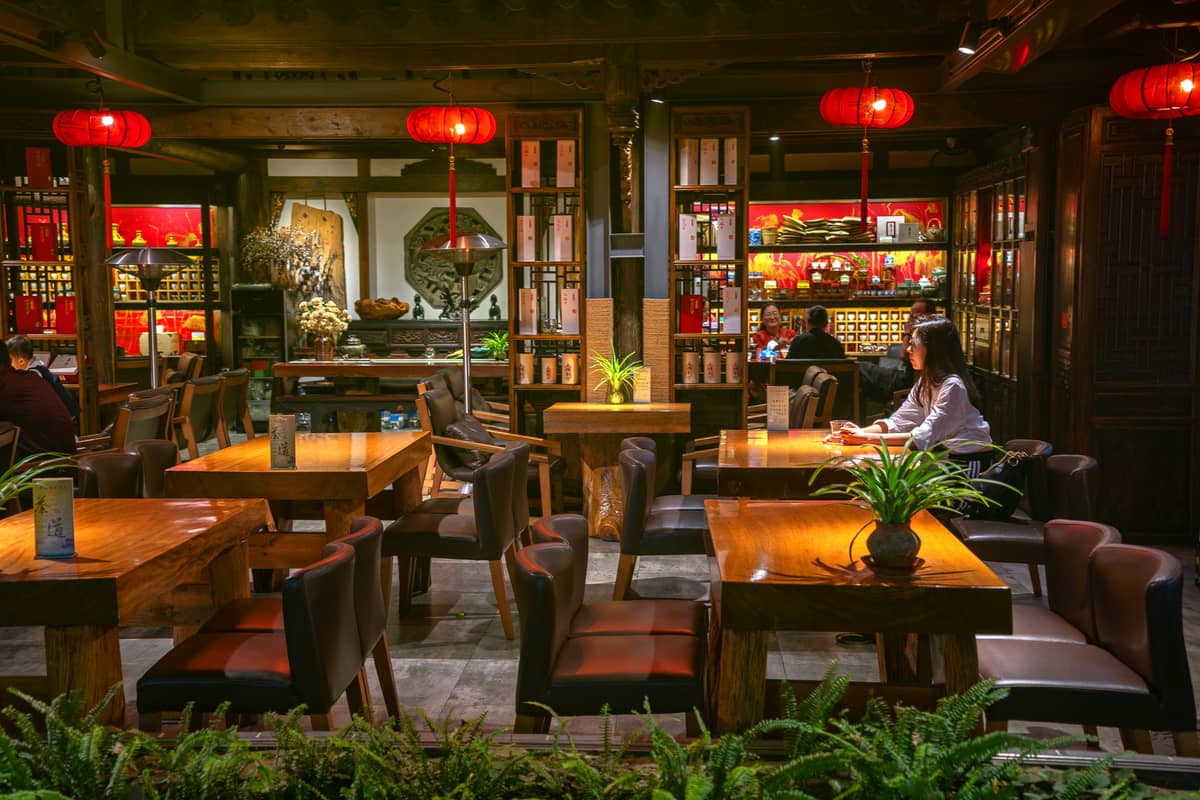
Chengdu and Chongqing sit roughly 300 km apart in southwestern China and are connected by some of the country's most frequent high-speed rail services. They are separate cities with distinct identities: Chengdu is the provincial capital of Sichuan, known for its panda research base, teahouses, and Sichuan opera; Chongqing is a province-level municipality perched on dramatic river bluffs where the Yangtze and Jialing rivers meet. Combining them in a single trip gives you a surprisingly complete picture of this corner of China — and the journey itself is fast enough that the train ride barely interrupts your day. If you are planning a broader Chengdu trip, our 3-day Chengdu itinerary shows how to slot this side trip in without losing a full sightseeing day.
The most common format is a day trip from Chengdu to Chongqing: take an early morning train, spend 6–8 hours exploring, and return in the evening. Alternatively, stay one or two nights in Chongqing and fly home from there, since Chongqing Jiangbei International Airport (CKG) has its own domestic and international connections. Both formats work well; the choice depends on how much time you want to spend on Chongqing's steep hillside streets.
Getting There: Transport Options Compared
High-speed rail is by far the most practical option for most travelers. The journey time between Chengdu East and Chongqing North — the most commonly used station pair — is typically around 1 hour 10 minutes to 1 hour 40 minutes depending on the specific service. Some trains stopping at more intermediate stations can take closer to 2 hours. Services run throughout the day at frequent intervals, so missing one train does not ruin your plans.
- High-Speed Rail (Recommended) Chengdu East to Chongqing North: roughly 1 hour 10 minutes to 1 hour 40 minutes. Second class approximately CNY 85–237; first class approximately CNY 135–380; business class approximately CNY 407–829. Book on 12306.cn or Trip.com. Trains are frequent throughout the day.
- Flight Flight time is under an hour, but airport transfers at both ends, check-in, and security typically make the total door-to-door time longer than the train. Flights are more expensive and less reliable for a short domestic trip. Not recommended unless you are combining with another destination.
- Long-Distance Bus Buses still operate on this route and are cheaper than rail, but journey times of 3–4 hours make them hard to justify when the train is this fast. Useful only if you miss a train connection or are traveling on an extreme budget.
- Private Car or Taxi A private transfer takes around 3 hours depending on traffic and is expensive relative to rail. Only makes sense for groups with a lot of luggage or very specific routing needs.
⚠️ What to skip
Do not assume 'Chengdu station' means one place. Chengdu has multiple rail terminals: Chengdu East (成都东), Chengdu West (成都西), and others. Similarly, Chongqing is served by Chongqing North (重庆北) and Chongqing South (重庆南). The station shown on your ticket determines which metro line you need — double-check before leaving your hotel.
Booking Your Train Ticket: Practical Steps
China Railway's official booking platform is 12306.cn (also available as an app). It accepts foreign passport registration, though the interface can be tricky for first-time users. Trip.com is the most commonly used English-language alternative and charges a small service fee per ticket. Either option works for foreigners; just ensure the name on the booking matches your passport exactly, as your passport is used at the ticket gates.
At busy periods — Golden Week (early October), Chinese New Year, the May Day holiday, and summer weekends — seats can sell out several days in advance. For a flexible day trip, buying your ticket the evening before is usually fine outside of peak holiday windows, but if your travel dates coincide with a national holiday, book as early as possible. Second-class seats are comfortable for a journey of this length and rarely justify upgrading to first class unless you want a wider seat and more legroom.
💡 Local tip
Take the earliest train you can manage — an 8am departure gets you into Chongqing by 10am and gives you a full day before the return journey. Trains back to Chengdu run until late evening, so you have flexibility on the return. Aim to leave Chongqing no later than 8pm to avoid arriving back in Chengdu very late.
Station Logistics: What to Know Before You Board
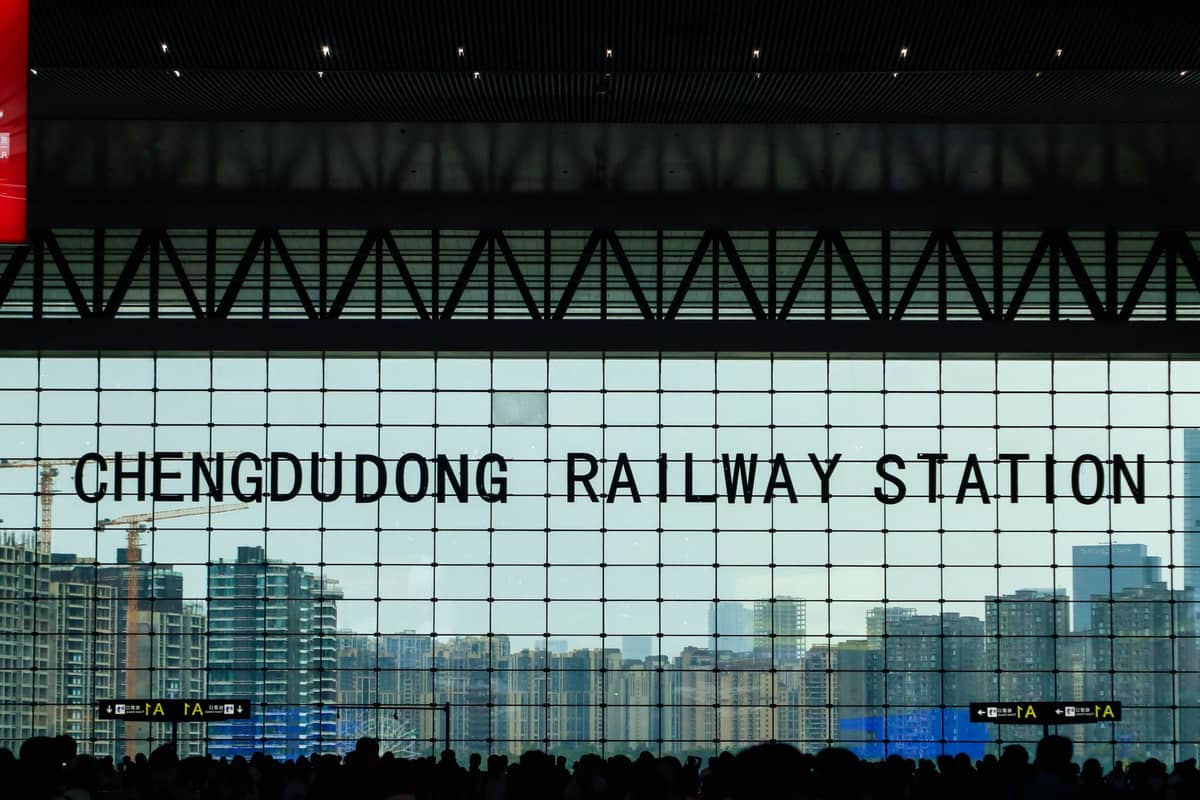
Chengdu East Railway Station (成都东站) is the main departure point for most Chongqing-bound high-speed trains. It sits on Metro Line 2 and Metro Line 7, making it straightforward to reach from central Chengdu. Allow at least 30 minutes before departure to clear the security check and find your platform — Chinese high-speed rail stations are large, and the entrance queues can build up in the morning rush.
On the Chongqing side, most trains arrive at Chongqing North (重庆北站), which is connected to the Chongqing metro network. Depending on the station square, Lines 3, 4, 10, and the Loop Line provide access to the city’s central areas. Chongqing South (重庆南站) serves a smaller number of services and is less central — worth checking if your ticket specifies it.
✨ Pro tip
Store your luggage at the station if you are doing a day trip. Both Chengdu East and Chongqing North have left-luggage facilities (行李寄存), typically charging CNY 10–15 per bag per day. Hauling luggage up Chongqing's steep streets is genuinely exhausting and completely avoidable.
What to Do in Chongqing: A Focused Day Plan
Chongqing rewards walking but punishes poor route planning. The city is built on ridges between two rivers, and the elevation changes are real: a metro stop that looks 500 meters away on a map may involve a significant staircase or an escalator ride down multiple levels. Factor this into your schedule and wear comfortable shoes.
For a one-day visit, most travelers focus on three areas: the Jiefangbei (解放碑) pedestrian zone in the city center, the Hongya Cave (洪崖洞) riverside complex whose illuminated tiers are one of China's most photographed structures, and the Ciqikou ancient town (磁器口) on the western edge of the Shapingba district. These three spots are distinct enough to hold your attention without requiring transport between each, since Jiefangbei and Hongya Cave are within walking distance of each other. For a broader look at how Chongqing compares as a base, read the full Chengdu vs Chongqing comparison.
- Hongya Cave (洪崖洞): Stacked riverside galleries built into the cliff face. Daytime is quieter; the structure is more dramatic at night when illuminated, but if you are catching an evening train back, the late afternoon light is a good compromise.
- Jiefangbei CBD: Chongqing's commercial core. The Liberation Monument (解放碑) is the symbolic center; surrounding streets have food courts, local snacks, and shopping. Useful for lunch and a short walk.
- Ciqikou Ancient Town: A relatively preserved riverside district with old architecture, local snack vendors, and handicraft stalls. More relaxed than central Chongqing. Allow 1.5–2 hours.
- Eling Park: An elevated park with panoramic views over both rivers. Less visited by short-stay tourists but one of the best spots to understand the city's unusual geography. About 30–40 minutes by metro from Jiefangbei.
- Chongqing Hot Pot: The city is considered the originator of the spicy red-broth hot pot style. Budget CNY 80–150 per person for a proper meal. Ask the restaurant to specify the spice level — Chongqing hot pot is genuinely much spicier than most visitors expect.
If you are traveling with children or planning a longer stay in the region, the Chengdu with kids guide has logistics advice for family travel that also applies when extending into Chongqing. And if you are in Chengdu for more than a few days, the day trips from Chengdu guide covers Dujiangyan, Mount Emei, and Leshan as alternatives to Chongqing for a different kind of excursion.
When to Go and What to Watch Out For
Spring (March to May) and autumn (September to November) are the most comfortable windows for this trip. Temperatures in both cities are moderate and outdoor walking is pleasant. Summer (June to August) brings high humidity, heat above 30°C in both cities, and the added factor that Chongqing is one of China's 'furnace cities' — it retains heat in ways that Chengdu, surrounded by plains, does not. If you go in summer, start very early and plan indoor breaks around midday.
The Golden Week holiday in early October and the Chinese New Year period (usually January or February) both create serious demand for train seats and hotel rooms in Chongqing. Popular spots like Hongya Cave can be genuinely overcrowded during these periods. The same applies to the May Day holiday (late April to early May). If you have flexibility, travel mid-week during non-holiday periods for a noticeably better experience.
For seasonal planning specifically around Chengdu, the best time to visit Chengdu guide provides a month-by-month breakdown including crowd patterns and weather considerations that apply equally when planning a Chongqing day trip.
FAQ
How long is the Chengdu to Chongqing train journey?
Most high-speed services between Chengdu East and Chongqing North take around 1 hour 10 minutes to 1 hour 40 minutes. Some services with more intermediate stops can take closer to 2 hours. Exact times vary by train code — check the specific service when booking on 12306 or Trip.com.
How much does the Chengdu to Chongqing train cost?
Second-class seats cost approximately CNY 54–237 depending on the train and route. First class is roughly CNY 85–380. Business class (reserved for the fastest services) runs approximately CNY 407–829. Second class is perfectly comfortable for this journey length and is what most travelers book. Business class (reserved for the fastest services) runs approximately CNY 407–829. Second class is perfectly comfortable for this journey length and is what most travelers book.
Is it better to fly or take the train from Chengdu to Chongqing?
For most travelers, the train is better. Once you add airport transfers, check-in time, and security at both ends, a flight rarely saves time over the high-speed rail option. The train also deposits you much closer to Chongqing's city center than Jiangbei Airport. Flying makes more sense only if you are continuing to a third destination from Chongqing.
Can I do Chongqing as a day trip from Chengdu?
Yes, and it is one of the most common formats. Take a train before 9am, spend 7–8 hours in Chongqing, and return on an evening service. You will have time for Jiefangbei, Hongya Cave, one local meal, and a secondary attraction if you plan your metro routes in advance. Chongqing's hills mean you cover less ground than expected, so prioritize rather than trying to see everything.
Which Chengdu station should I use for trains to Chongqing?
Chengdu East (成都东站) handles the majority of high-speed departures toward Chongqing and is well-connected to the Chengdu metro. Some services depart from Chengdu West (成都西站) or Chengdu Station (成都站). Always check the specific station listed on your ticket and allow extra time if your hotel is far from the departure terminal.