Chengdu vs Chongqing: Which City Should You Visit?
Two of southwestern China's most compelling cities, separated by roughly 300 km and connected by high-speed rail. This guide breaks down what each city does best, who each suits, and whether you should bother visiting both.
Plan and book this trip
Tools from our partner Travelpayouts help you compare flights and hotels. If you book through them, we may earn a commission at no extra cost to you.
Flights
Hotels map
TL;DR
- Chengdu is the calmer, more walkable city: ideal for pandas, teahouses, Sichuan cuisine, and day trips like Dujiangyan or Mount Qingcheng.
- Chongqing is a vertical, chaotic megacity built on river cliffs: known for its dramatic skyline, spicier hot pot, and photogenic hillside neighborhoods.
- The Chengdu to Chongqing train takes around 65 minutes on the fastest high-speed services; fares run approximately CNY 55–465 (roughly US$7.82–US$67.08) depending on class and train type. Check live schedules at our Chengdu to Chongqing travel guide.
- If you only have 3-4 days, pick one city and do it well. If you have 6-7 days, the train connection makes a two-city trip genuinely practical.
- Chengdu edges ahead for first-time visitors to the region: it's easier to navigate, has more internationally recognized attractions, and offers better English-language support.
The Core Difference: Two Cities, Two Personalities
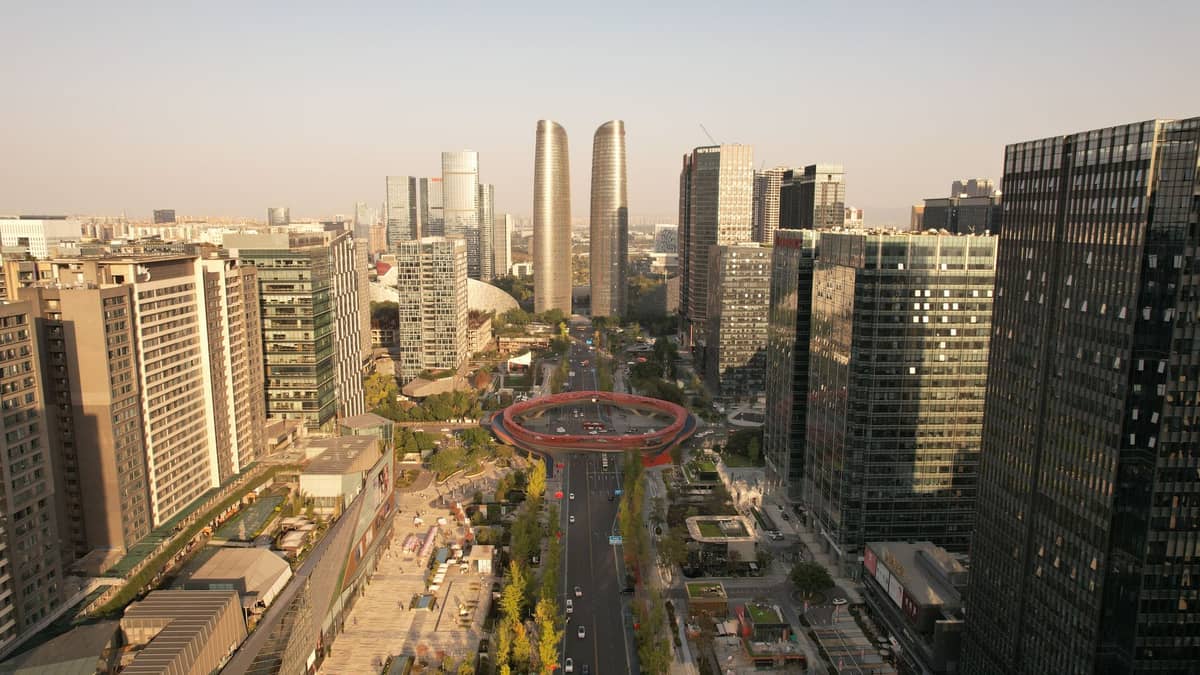
Chengdu and Chongqing are frequently lumped together as a southwestern China double act, but spending a day in each makes the contrast obvious. Chengdu is flat, planned, and comparatively relaxed. It sits on the Chengdu Plain at around 485 m above sea level, and its grid-based center means getting around on foot or by metro is straightforward. The city has a reputation, earned over centuries, for leisure: teahouses, mahjong in the parks, and long lunches are woven into daily life in a way that's immediately apparent to visitors.
Chongqing is something else entirely. It's a province-level municipality of over 30 million people built on steep ridgelines above the confluence of the Yangtze and Jialing rivers. Streets climb vertically, monorail lines pass through apartment buildings, and neighborhoods stack on top of each other in ways that make conventional city maps nearly useless. The energy is louder, faster, and more intense. That can be exhilarating or exhausting, depending on your tolerance for sensory overload.
ℹ️ Good to know
Administrative note: Chengdu is the capital of Sichuan Province, while Chongqing is one of China's four province-level municipalities, administratively separate from Sichuan. They share cultural roots, including the Sichuan dialect and a love of chili and Sichuan peppercorn, but they are distinct cities with distinct identities.
What Chengdu Does Better

The most obvious answer is pandas. The Chengdu Research Base of Giant Panda Breeding is the world's leading giant panda conservation and breeding facility, and it's genuinely worth the CNY 55 adult admission. Morning entry slots (7:30 from March to October, 8:00 from November to February) give you the best chance of seeing active animals before the afternoon heat settles in. Book your time slot in advance through the official website: walk-up availability is limited during peak periods, and the base operates morning and afternoon entry windows, not free-roaming access throughout the day.
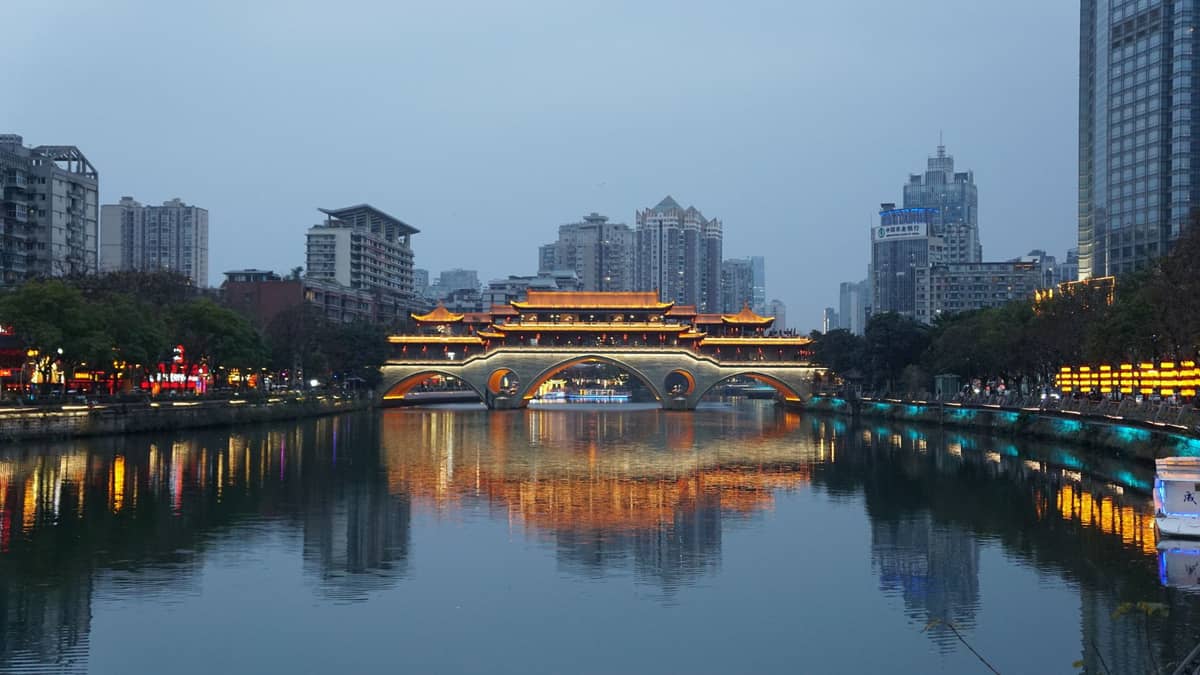
Beyond pandas, Chengdu's cultural attractions are dense and well-connected. The Wuhou Shrine and adjacent Jinli Ancient Street sit in the same complex; the Kuanzhai Alley precinct is a 10-minute metro ride away. The Du Fu Thatched Cottage offers a quieter, more contemplative alternative for those interested in Tang Dynasty poetry and classical Chinese garden design. None of these require significant planning or physical effort, which matters if you're combining Chengdu with a longer China itinerary.
- Giant Panda Base The definitive panda experience. CNY 55 adult admission. Book morning entry slots in advance. Hours vary by season.
- Sichuan cuisine Chengdu is the origin city for dishes like mapo tofu, dan dan noodles, and rabbit head. The food culture here is more diverse and refined than Chongqing's narrower hot-pot focus.
- Day trips Dujiangyan (UNESCO-listed irrigation system), Mount Qingcheng, Sanxingdui Museum (Bronze Age archaeological site), and Leshan Giant Buddha are all reachable in under 2 hours.
- Teahouse culture Sitting in a teahouse in People's Park for an afternoon costs almost nothing and is one of the more authentic urban experiences available to visitors in any Chinese city.
- Navigability Chengdu's metro is clean, cheap, and labeled in English. Most central attractions are within a few stops of each other.
What Chongqing Does Better
Chongqing wins on spectacle. The city's geography is genuinely unlike anything in mainland China: at night, the illuminated towers cascading down the cliffsides above the river are a legitimate visual event. The Hongyadong stilted buildings, the Liziba monorail station where the train appears to pass through a residential block, the cable cars crossing the Yangtze, all of these are photogenic in a way Chengdu simply cannot match.
Hot pot is also a legitimate reason to choose Chongqing. While Chengdu has excellent hot pot, Chongqing's version is historically distinct: the broth is heavier on tallow (beef fat), deeper red, and packs more heat. If you're a serious hot-pot eater, the argument for spending at least one meal in Chongqing is real. The city also has strong credentials in Sichuan opera performances, night cruises on the Yangtze, and a gritty urban energy that some travelers find more interesting than Chengdu's comparatively polished tourist infrastructure.
⚠️ What to skip
Chongqing's topography is not friendly to people with mobility limitations or anyone who dislikes steep stairs. Many neighborhoods involve significant climbing, and some of the most photographed spots require navigating uneven hillside paths. Factor this in if traveling with older family members or young children.
The Train Between Them: Practical Details
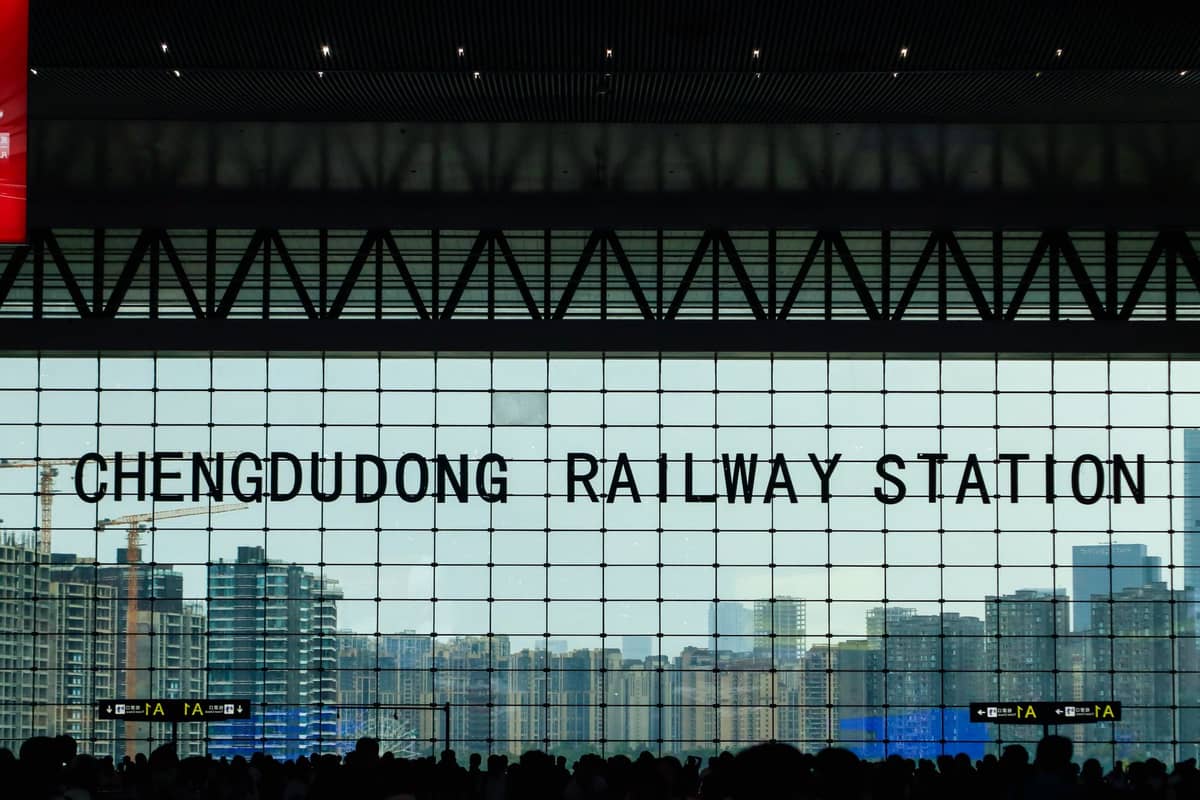
The Chengdu to Chongqing train is one of the more impressive pieces of transport infrastructure in China. The fastest high-speed services (G-class trains on the dedicated intercity line) cover the roughly 300 km journey in around 62 minutes. Slower D-class and older services take longer, often 1.5 to 2 hours, and are considerably cheaper. Fares range from approximately CNY 55 for second class on a slower service to CNY 465 for first class on a top-speed G train, equivalent to roughly US$7.82 to US$67.08 at recent exchange rates. Verify current pricing and book through China Railway 12306 or a platform like Trip.com, as fares and schedules change.
Chengdu has multiple railway stations: Chengdu East (成都东站) is the principal hub for high-speed departures to Chongqing. Confirm your departure station when booking, as Chengdu North and Chengdu South serve different routes and different destinations. In Chongqing, trains typically arrive at Chongqing North (重庆北站) or Chongqing West (重庆西站), both of which have metro connections into the city center.
✨ Pro tip
If you're doing a Chengdu-to-Chongqing day trip, the math works in your favor: leave Chengdu East around 8:00, arrive in Chongqing by 9:15, spend the day, and return by early evening. But a day trip from Chongqing to Chengdu is less efficient because most of Chengdu's best experiences, including the panda base and the teahouse parks, work better with an overnight stay.
Head-to-Head: Food, Cost, and Crowd Levels
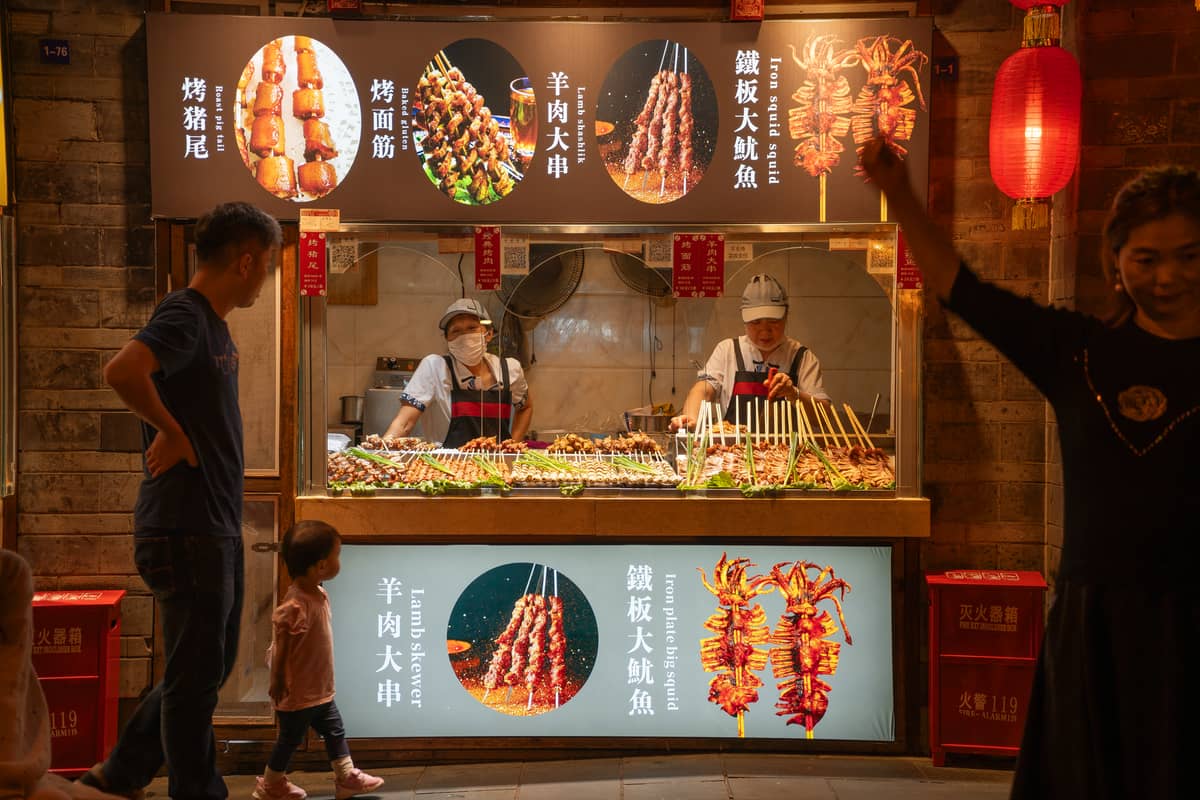
On food, Chengdu has the edge in variety. The city is a UNESCO Creative City of Gastronomy, and its food culture extends well beyond hot pot: you'll find excellent street food in Chengdu's street food scene, refined Cantonese-influenced dining, and regional specialties from across Sichuan. Chengdu hot pot differs from Chongqing's mainly in the broth base: Chengdu versions tend to use more clear or mildly spiced broths alongside the red oil variety, and often incorporate more vegetable-forward options.
On cost, both cities are affordable by international standards. Budget travelers can eat well for CNY 20-40 per meal at local restaurants, metro rides cost a few yuan, and mid-range hotels in both cities run CNY 200-500 per night in central locations. Chongqing may edge slightly cheaper on accommodation outside peak periods, but the difference is not dramatic enough to be a deciding factor.
On crowd levels, both cities attract large numbers of domestic Chinese tourists, particularly during Golden Week (early October) and Chinese New Year. Chengdu's panda base can feel genuinely overcrowded on public holidays regardless of your entry slot time. Chongqing's popular spots like Hongyadong are similarly packed on weekends. For either city, weekday visits in March-May or September-November represent the best balance of good weather and manageable crowds.
- Chengdu: better for first-time visitors, easier navigation, stronger English-language support, more varied day trips, the panda base
- Chongqing: better for dramatic urban photography, Yangtze river geography, heavier hot-pot tradition, a rawer city experience
- Both cities: affordable, excellent food, well-connected by high-speed rail, best visited in spring or autumn
- Neither city: particularly well-suited to beach tourism, alpine hiking (those require separate trips to Emei or Qingcheng), or travelers wanting minimal spice in their food
Who Should Choose Which City
Choose Chengdu if this is your first time in southwestern China, if pandas are on your list, if you want strong day-trip options, or if you're using the city as a base for Sichuan Province more broadly. A 3-day Chengdu itinerary covers the highlights without rushing, and most travelers find 4-5 days gives enough time to include one meaningful day trip. For a full overview of what the city offers, the Chengdu first-timer guide is the right starting point.
Choose Chongqing if you're a repeat visitor to China who's already seen Chengdu's main circuit, if urban photography and dramatic cityscapes are your primary interest, or if you're traveling the Yangtze River route (Chongqing is the usual embarkation point for Yangtze gorge cruises). If you have the time and inclination for both, the Chengdu-to-Chongqing train makes it practical. Check the full Chengdu to Chongqing travel guide for logistics on combining both cities.
💡 Local tip
If your itinerary is tight and you're flying into one city and out of the other, the two-city trip becomes highly efficient: fly into Chengdu, spend 3-4 days, take the high-speed train to Chongqing, spend 2-3 days, and fly out. Both cities have international and domestic airports, and the train connection is fast enough that you lose very little time in transit.
FAQ
How long does the Chengdu to Chongqing train take?
The fastest G-class high-speed trains cover the journey in around 62 minutes. Slower D-class services take 1.5 to 2 hours. Most departures are from Chengdu East Station. Always confirm your specific station when booking, as Chengdu has several railway stations serving different routes. Slower D-class services take 1.5 to 2 hours. Most departures are from Chengdu East Station. Always confirm your specific station when booking, as Chengdu has several railway stations serving different routes.
Is Chengdu or Chongqing better for food?
Both cities are exceptional for Sichuan food, but they have different strengths. Chengdu offers broader variety across Sichuan cuisine styles, street food, and a UNESCO-recognized food culture. Chongqing is most celebrated for its distinctive hot pot, which uses a tallow-based broth and tends to be spicier and heavier than Chengdu versions. Serious hot-pot enthusiasts often say Chongqing's version is the original.
Can I visit both Chengdu and Chongqing on the same trip?
Yes, and it's a practical itinerary. The high-speed train takes about 65 minutes on the fastest services. A sensible split is 3-4 nights in Chengdu and 2-3 nights in Chongqing. If time is very limited, a Chongqing day trip from Chengdu is possible, though an overnight stay gives a much better sense of the city, especially for the evening skyline views.
Which city is easier for first-time visitors to China?
Chengdu is generally easier to navigate: it has a flat, grid-based center, a well-labeled metro system with English signage, and more developed tourist infrastructure for international visitors. Chongqing's hilly terrain and complex layout can be disorienting initially, and English support is somewhat more limited outside major hotels and tourist sites.
What is the best time of year to visit Chengdu or Chongqing?
March to May and September to November are the recommended planning windows for both cities. Summers (June to August) are hot and rainy; Chongqing is notably hotter than Chengdu in summer, earning its reputation as one of China's 'furnace cities.' Both cities are packed during Chinese national holidays, particularly Golden Week in early October.