First Time in Chengdu: Everything You Need to Know
Chengdu is the capital of Sichuan Province, home to 21 million people, giant pandas, and some of the most distinctive food in China. This guide covers the practical details that actually matter for a first visit: which airport you land at, when to go, what to eat, where to stay, and how to get around without confusion.
Plan and book this trip
Tools from our partner Travelpayouts help you compare flights and hotels. If you book through them, we may earn a commission at no extra cost to you.
Flights
Hotels map
TL;DR
- Chengdu has two international airports (TFU and CTU) — check which one your flight uses before booking transport or accommodation.
- Spring (March–May) and autumn (September–November) offer the most comfortable temperatures; summer is hot and rainy, winter is mild but overcast. See the best time to visit Chengdu for a full seasonal breakdown.
- The Chengdu Research Base of Giant Panda Breeding charges CNY 55 for adults; tickets are session-based and must be booked in advance with valid ID.
- China's visa rules vary significantly by nationality — some travelers qualify for 30-day visa-free entry, others need a visa in advance. Verify with the National Immigration Administration before booking.
- Sichuan food is central to the Chengdu experience: spicy, numbing, and varied. Budget travelers can eat extremely well for under CNY 50 per meal at street stalls and local noodle shops.
What Kind of City Is Chengdu?
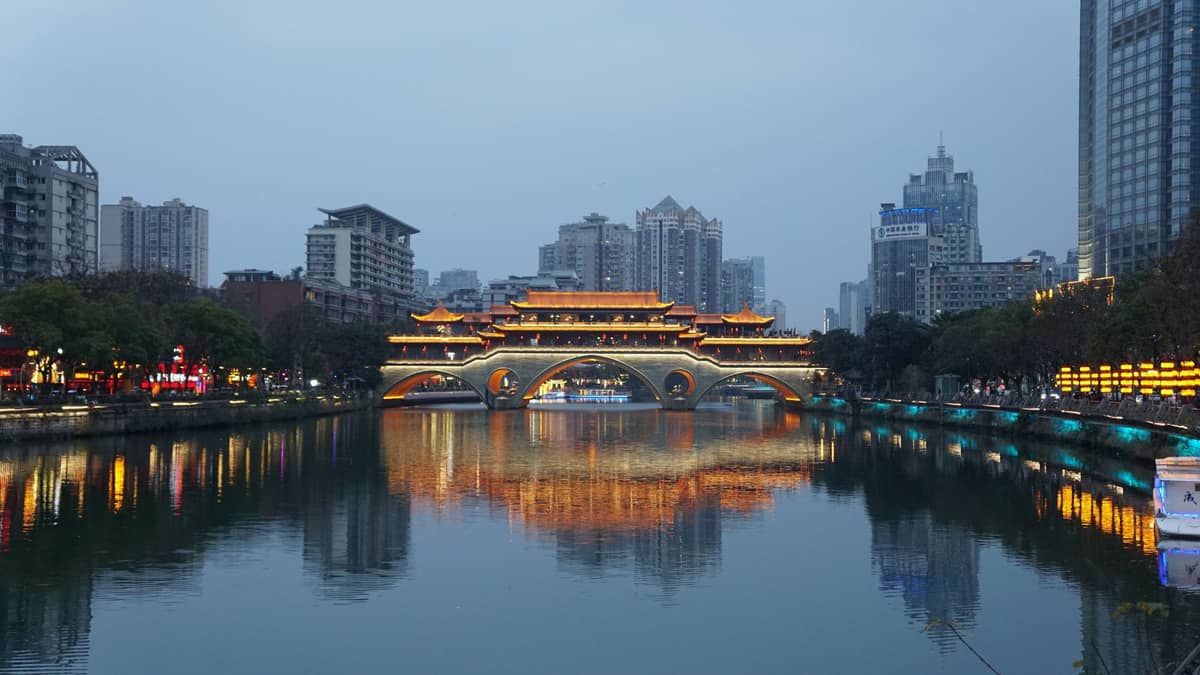
Chengdu (成都市, Chéngdū Shì) is the provincial capital of Sichuan Province in southwestern China, with a population of approximately 21.47 million at the end of 2024. It sits on the Chengdu Plain at roughly 485 meters above sea level, inside the broader Sichuan Basin. Geographically, it is surrounded by mountains on multiple sides, which contributes to its overcast, humid climate and its relative isolation from northern China's weather patterns. Culturally, that isolation also helped shape one of China's most distinctive regional identities: Sichuanese food, dialect, opera, teahouse culture, and a famously relaxed pace of life.
For first-time visitors coming with a checklist of "see pandas, eat spicy food, visit a teahouse," Chengdu delivers efficiently. But the city rewards those who go deeper. The Sanxingdui Museum (technically a day trip, about 40 km north) holds Bronze Age artifacts that predate recorded Chinese history and challenge standard narratives about early Chinese civilization. The city's ancient-town districts, temple complexes, and urban parks fill out a visit well beyond the panda base. If you are wondering whether the city justifies the trip at all, the honest answer is yes — but your experience will be shaped heavily by how much time you spend outside the tourist circuit.
ℹ️ Good to know
Chengdu and Chongqing are frequently confused — they are entirely separate cities. Chengdu is the capital of Sichuan Province. Chongqing is a province-level municipality about 300 km to the east. High-speed rail connects them in roughly 1–1.5 hours, making a combined trip feasible. But they are not the same destination.
When to Go: Climate and Seasonal Realities
Chengdu has a humid subtropical monsoon climate (Köppen Cwa), with mild winters and warm, wet summers. Average temperatures range from about 6–12°C in winter (December–February) to 23–31°C in peak summer (June–August). The rainy season runs roughly June through September, accounting for around half of the annual 1,000 mm of precipitation. Snow in the urban core is uncommon but not impossible in winter.
- Spring (March–May) Temperatures climb from roughly 14°C to 25°C. Flowers bloom in the city's parks. Crowds build toward May's Labour Day holiday holiday. Generally the most reliably pleasant window for sightseeing.
- Summer (June–August) Hot and humid, with July typically the warmest month at up to 31°C. Afternoon thunderstorms are common. Not ideal for outdoor hiking, but cultural attractions and panda visits are still fully operational.
- Autumn (September–November) Temperatures cool from around 28°C in September to 16°C by November. The heavy rains ease after September. October's Golden Week brings significant domestic tourism crowds — book accommodation early.
- Winter (December–February) Cool and frequently overcast, around 6–12°C. The city sees far fewer international tourists. Pandas are more active in cooler temperatures, making winter panda visits genuinely rewarding despite the shorter afternoon entry window.
💡 Local tip
The panda base adjusts its entry schedule seasonally: March–October entry slots run 07:30–12:00 and 12:00–17:00; November–February slots run 08:00–12:00 and 12:00–16:30. If you are visiting in winter, book the morning slot and arrive at opening time — pandas are most active in cooler morning hours regardless of season.
Getting to Chengdu: Airports, Trains, and Entry Requirements
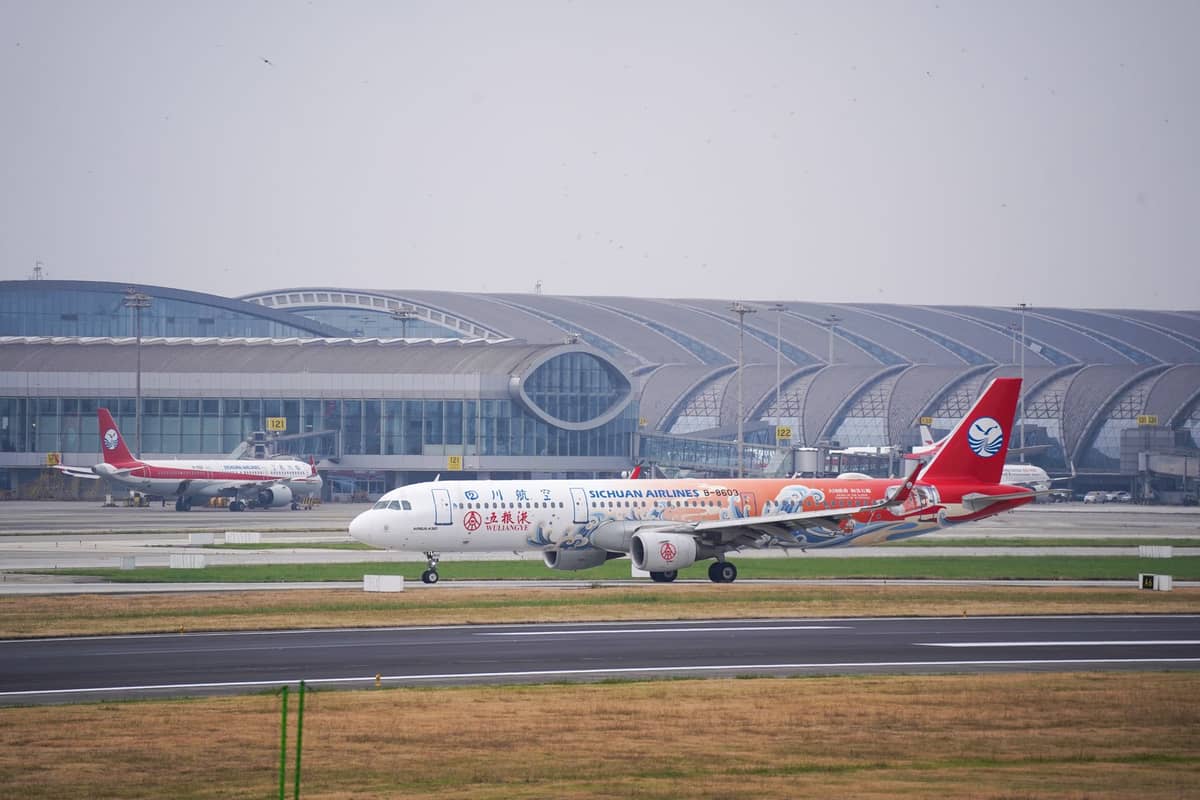
Chengdu has two operational international airports, and this causes genuine confusion for first-time visitors. Chengdu Tianfu International Airport (IATA: TFU) is the newer facility, located approximately 51 km southeast of the city center. It is connected to the city via Metro Line 18. Chengdu Shuangliu International Airport (IATA: CTU) is the older airport, situated much closer to the urban core in Shuangliu District, and is served by Metro Line 10. Always check your ticket to confirm which airport you are arriving at and which you are departing from — they are not interchangeable without significant travel time between them.
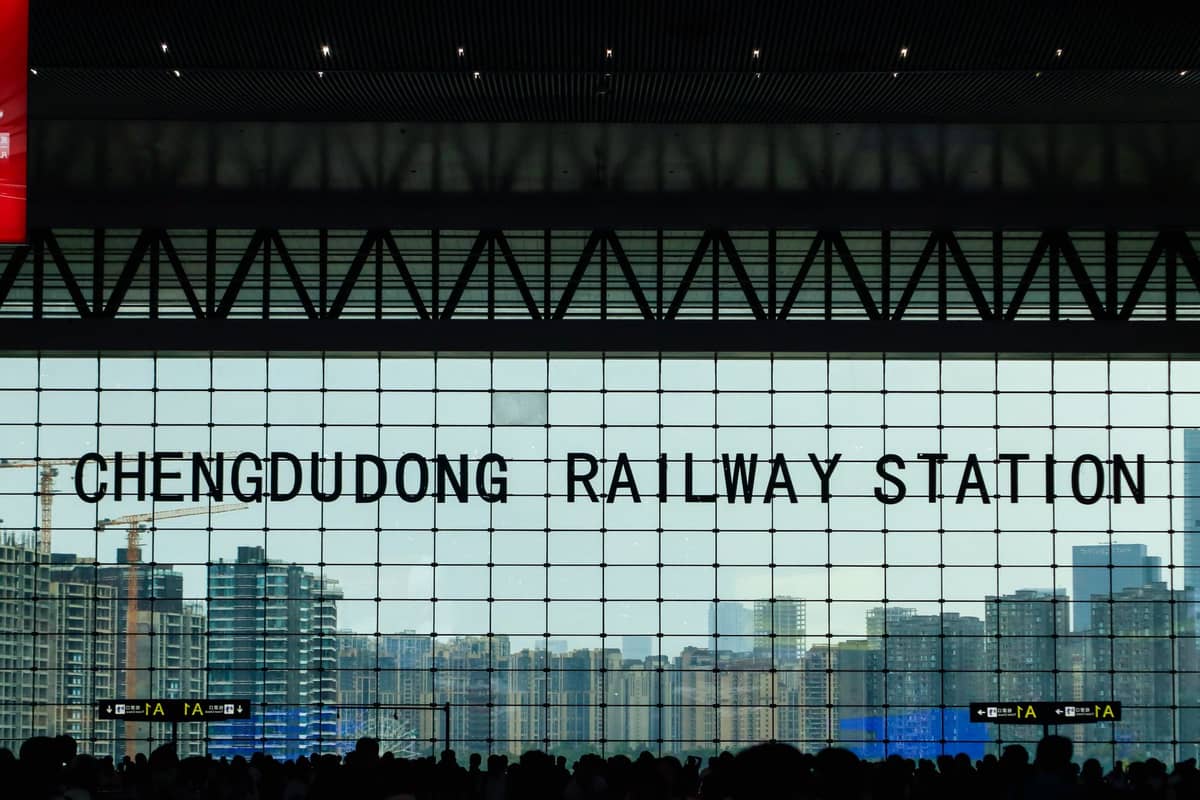
High-speed rail is a competitive option for reaching Chengdu from other major Chinese cities. Chengdu East Railway Station is the principal hub for high-speed services. The journey from Chongqing takes around 1–1.5 hours; from Xi'an, roughly 3.5–4 hours; from Beijing, around 7–8 hours on the fastest services. If you are planning a broader China itinerary, check our guide to traveling from Chengdu to Chongqing for logistics.
On entry requirements: China does not operate a broadly applicable tourist visa-on-arrival system. Nationals of countries covered by China's unilateral visa exemption policy may enter for tourism for up to 30 days without a visa. Separately, travelers transiting onward to a third country or region may qualify for a transit without visa program, with eligible stays now reaching up to 240 hours (10 days) under the expanded policy. Both programs are nationality-specific, route-specific, and subject to change. Verify your eligibility with the National Immigration Administration of China or a Chinese embassy before booking flights.
⚠️ What to skip
Do not assume visa-free transit applies to your situation without checking. Eligibility depends on your passport nationality, your onward destination, your entry point, and the purpose of travel. Rules have changed multiple times in recent years. The official source is the National Immigration Administration of China (en.nia.gov.cn).
Getting Around the City
Chengdu Metro is the cleanest, cheapest, and most reliable way to navigate the city. Fares start at CNY 2 and increase with distance. The network covers most major tourist areas and both airports. For a practical overview of all transport options including metro maps and ride-hailing setup, see the guide to getting around Chengdu.
Didi Chuxing is the dominant ride-hailing app in Chengdu, equivalent to Uber in function. Foreign visitors may encounter friction setting up payments, as Didi primarily works through WeChat Pay or Alipay. Some international cards now link to these platforms, but setup requires time. Your hotel concierge can often assist, or help you hail a metered taxi at the door. Taxis in Chengdu are metered and generally reliable, though drivers rarely speak English — having your destination written in Chinese characters is strongly recommended.
Neighborhoods: Where to Base Yourself
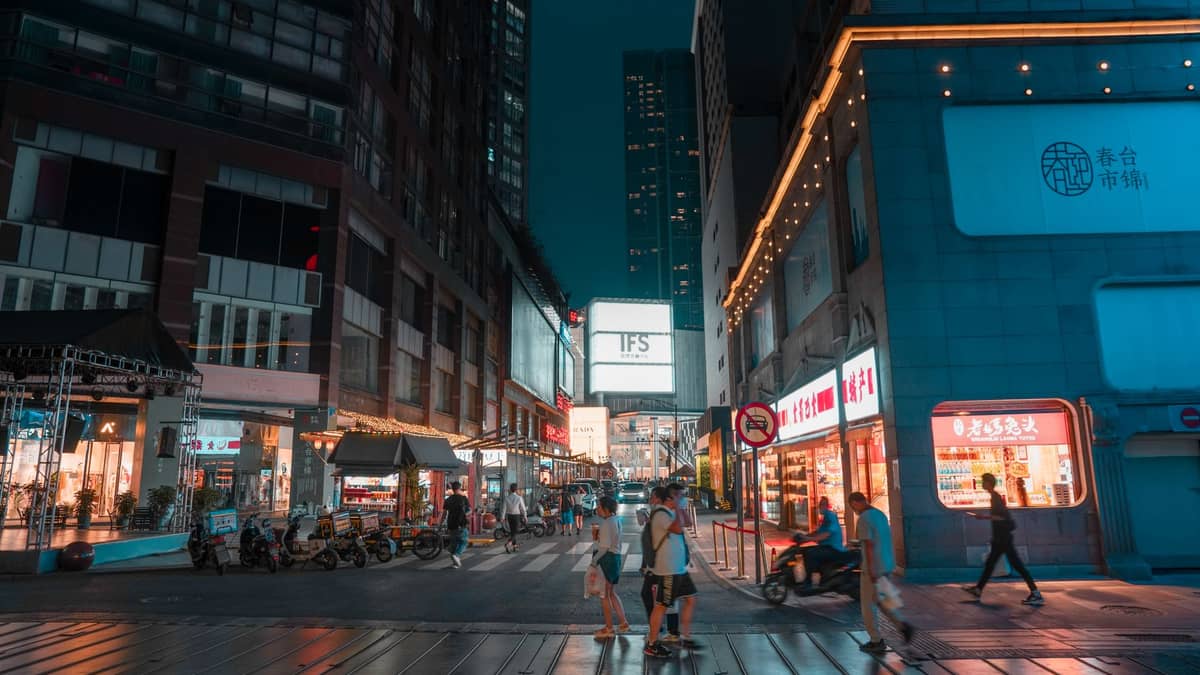
Most first-time visitors stay in or near Jinjiang District or Qingyang District, which between them contain the majority of Chengdu's central attractions, restaurants, and transport connections. Chunxi Road and the adjacent Taikoo Li complex anchor the commercial center of Jinjiang District, with hundreds of restaurants, shops, and direct metro access.
Wuhou District is the area to prioritize if you want to be close to the Wuhou Shrine and Jinli Ancient Street. It has a strong concentration of mid-range guesthouses and boutique hotels popular with independent travelers. The city center areas are also within 20–30 minutes by metro.
- Jinjiang District Central location with Chunxi Road, Taikoo Li, and Daci Temple. Best transport links. Higher hotel prices than surrounding areas.
- Qingyang District Home to Tianfu Square, the Sichuan Provincial Museum, Qingyang Palace, and Du Fu's Thatched Cottage. Good for culture-focused travelers.
- Wuhou District Contains Wuhou Shrine, Jinli, and a relaxed restaurant and bar scene. Slightly further from the panda base but popular with independent travelers.
- Near the panda base (Chenghua District) If seeing pandas is your primary goal and you want an early start, staying near the base in Chenghua District cuts travel time on the morning of your visit.
What to Do: The Essential Attractions
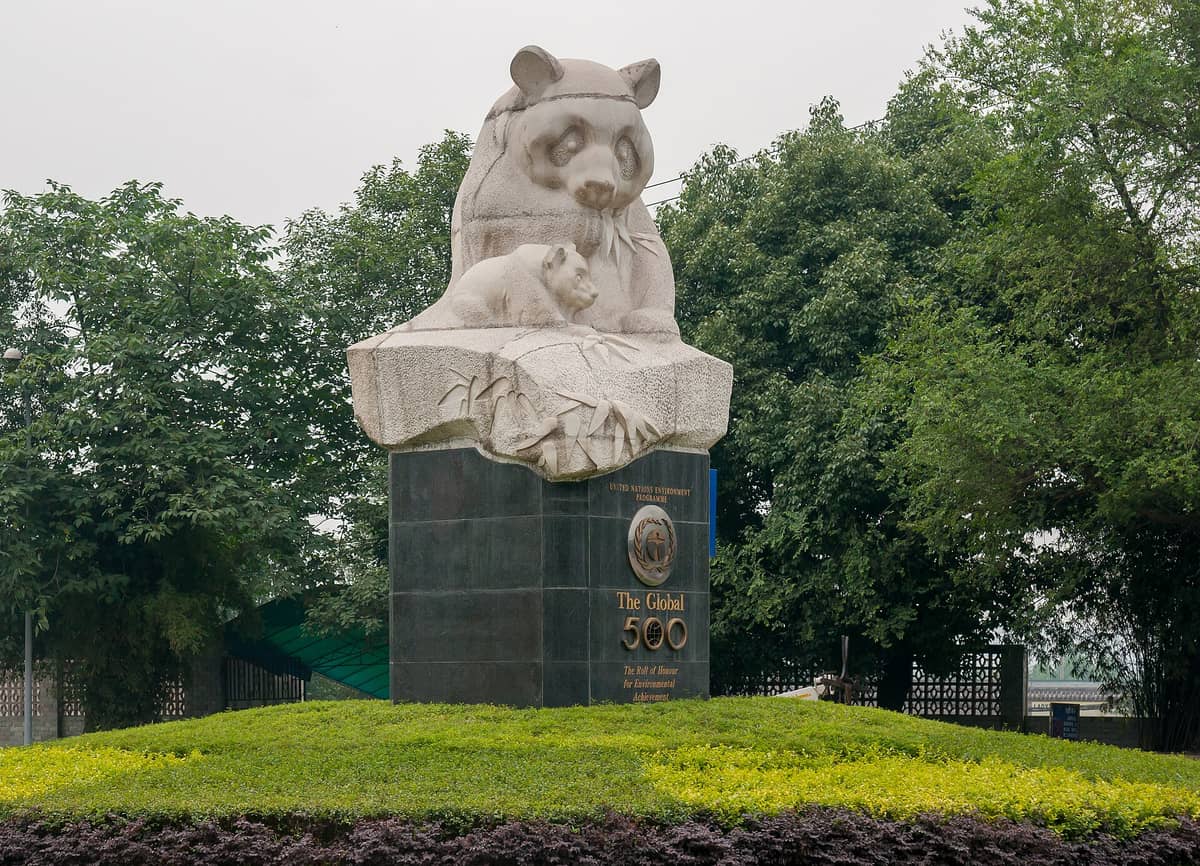
The Chengdu Research Base of Giant Panda Breeding is the city's single most-visited attraction and the reason many international travelers come at all. Adult admission is CNY 55; eligible students pay CNY 27. Tickets are booked online in advance and tied to a morning or afternoon entry session and your identification document. Arrive at opening time for the morning session — pandas are fed early and are most active before 10:00. For a full strategy on visiting, including what to expect, how to book, and which facilities to skip, read the dedicated Chengdu panda guide.
Beyond the pandas, Chengdu rewards visitors who engage with its history. The Wuhou Shrine is a well-preserved memorial complex dedicated to figures from the Three Kingdoms period (220–280 CE). Kuanzhai Alley is often cited as a top attraction, but honest advice: it has become heavily commercialized and is best treated as an evening food-and-drink stroll rather than a historical experience. The Du Fu Thatched Cottage is more genuinely atmospheric, set in a garden complex and dedicated to one of China's most revered Tang Dynasty poets.
Day trips expand the options considerably. Dujiangyan Irrigation System is a UNESCO World Heritage Site about 60 km northwest of central Chengdu, still functional after more than 2,000 years. Mount Qingcheng, adjacent to Dujiangyan, is a Taoist mountain with hiking trails and historic temples. The Leshan Giant Buddha, the largest stone Buddha in the world at 71 meters, is roughly 120 km south and fully manageable as a long day trip. See the day trips from Chengdu guide for logistics.
Food, Drink, and the Sichuan Palate
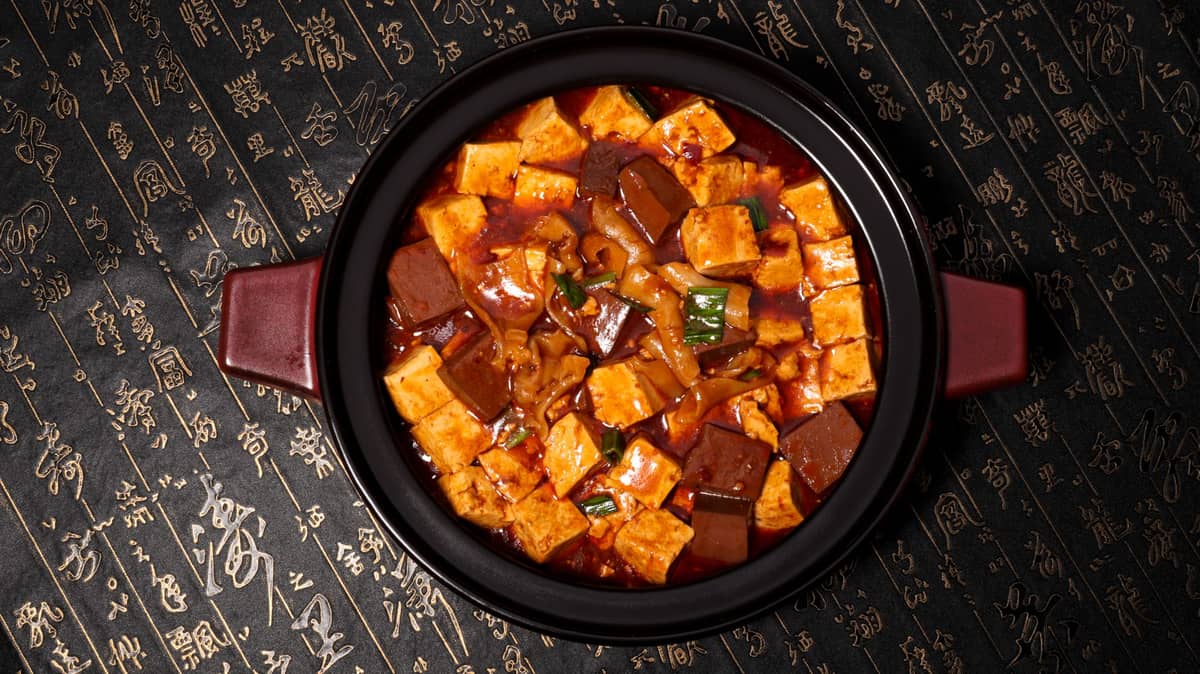
Sichuan cuisine is built on two defining flavors: là (辣, spicy heat from chili) and má (麻, the numbing tingle of Sichuan peppercorn). The combination is called málà, and it appears in everything from hot pot to cold noodles to braised tofu. This is not optional seasoning — it is structural to the cuisine. If you cannot tolerate any spice, Chengdu kitchens will accommodate you, but you will be working against the grain of the food culture. The Chengdu food guide covers dishes, neighborhoods, and specific recommendations.
Hot pot is the social eating format of choice, and Chengdu hot pot differs from Chongqing-style in ways locals will be quick to explain. The Chengdu hot pot guide covers how to order, what to cook, and which type of broth is appropriate for your spice tolerance. Street food is another strength of the city: dan dan noodles (担担面), zhong dumplings (钟水饺), and mapo tofu (麻婆豆腐) are all available cheaply at local restaurants throughout the central districts. Budget CNY 20–50 for a filling street-food meal; a sit-down restaurant meal for two with drinks typically runs CNY 100–250 depending on the venue.
✨ Pro tip
Chengdu's teahouse culture is genuinely worth your time and is one of the more authentic experiences available to tourists. People's Park (Renmin Gongyuan) has traditional teahouses where locals spend hours playing cards, chatting, and getting their ears cleaned by itinerant cleaners. Tea costs around CNY 20–40 per person. There is no time limit. Sit, observe, and stay as long as you like.
Practical Basics: Money, Connectivity, and Safety
The currency is the Chinese yuan, officially the renminbi (RMB), currency code CNY. Cash is still accepted widely, but mobile payments via WeChat Pay and Alipay dominate day-to-day transactions including street food stalls, taxis, and small shops. Foreign visitors can now link international Visa and Mastercard cards to these apps with some friction — set this up before you leave home, or use your hotel as a cash fallback. ATMs accepting foreign cards are available at major banks (ICBC, Bank of China, China Construction Bank) and at airports.
China's internet is filtered, meaning Google, WhatsApp, Instagram, and most Western social platforms are inaccessible without a VPN. Download and test your VPN before entering China, as VPN apps themselves are blocked on the App Store and Google Play within the country. WeChat is the dominant messaging platform locally. Tipping is not customary in mainland China — do not leave cash on restaurant tables, as it can cause confusion.
- Emergency contacts: Police 110, Ambulance 120, Fire 119. Country code: +86.
- Electricity: 220V / 50Hz. Socket types A, C, and I are common. Bring a suitable travel adapter.
- Tap water: Treated but not recommended to drink untreated. Use bottled, filtered, or boiled water.
- Language: Mandarin is the official language. Sichuanese dialect is widely spoken informally. English is limited outside major hotels and airports.
- Dress: No citywide code for tourism. Modest clothing (covered shoulders and knees) is appropriate at temples and memorial sites.
Chengdu is generally a safe city for tourists, but first-timers should be aware of a few common situations. For a frank overview of scams and situations to watch for, the Chengdu scams and safety guide covers tea ceremony scams, inflated taxi fares, and the art student hustle that operates in several tourist districts.
FAQ
Do I need a visa to visit Chengdu?
It depends on your nationality. China offers a unilateral visa exemption for nationals of certain countries, allowing stays of up to 30 days for tourism without a visa. Travelers transiting to a third country may qualify for a transit without visa program of up to 240 hours (10 days). Nationals not covered by these programs need to obtain a visa before travel, as China does not offer a broadly available tourist visa on arrival. Always verify your eligibility with the National Immigration Administration of China (en.nia.gov.cn) or a Chinese embassy before booking.
Which airport should I fly into for Chengdu?
Chengdu has two international airports. Chengdu Tianfu International Airport (TFU) is the newer facility, about 51 km from the city center, connected by Metro Line 18. Chengdu Shuangliu International Airport (CTU) is closer to the urban core and served by Metro Line 10. Check your flight booking carefully, as both airports handle international flights. Factor in transport time and cost when choosing your accommodation.
How do I book panda tickets in Chengdu?
Tickets for the Chengdu Research Base of Giant Panda Breeding must be reserved online in advance through the base's official WeChat account, mini program, or officially authorized platforms. Adult tickets cost CNY 55; eligible students pay CNY 27. You book a specific entry session (morning or afternoon), and your ticket is linked to your identification document. From March to October, sessions run 07:30–12:00 or 12:00–17:00. From November to February, sessions run 08:00–12:00 or 12:00–16:30. Arrive at the start of the morning session for the best chance of seeing active pandas.
Is Chengdu suitable for first-time visitors to China?
Yes, and it is often a better entry point than Beijing or Shanghai for travelers who want a genuine immersion in Chinese regional culture without the intensity of China's largest cities. The pace is slower, the food scene is extraordinary, and the panda base is uniquely compelling. The main practical challenge is language — English is limited outside hotels and tourist sites — so having key destinations written in Chinese characters, and setting up mobile payment apps in advance, will significantly improve your experience.
How many days do I need in Chengdu?
A minimum of 3 full days covers the panda base, one or two central cultural sites (Wuhou Shrine, Du Fu's Thatched Cottage, or Kuanzhai Alley), and enough meals to get a real sense of Sichuan food. Five days allows you to add a day trip to Dujiangyan and Qingcheng Mountain, or to Leshan for the Giant Buddha. Seven days or more gives you time to slow down, visit teahouses, explore local neighborhoods, and potentially reach the Sanxingdui Museum. See the suggested itinerary in the 3 days in Chengdu guide for a structured starting point.