Wuhou District sits southwest of Chengdu's city center and holds the densest concentration of Three Kingdoms heritage and classical street life in the city. From the solemn courtyards of Wuhou Shrine to the lantern-lit lanes of Jinli, the district layers history, food culture, and daily neighborhood rhythms into a single walkable area. It is the district most first-time visitors end up spending a full day in, often without planning to.
Wuhou District is where Chengdu's historical identity is most legible: a southwestern urban district anchored by Wuhou Shrine, the country's only site jointly commemorating a ruler and his prime minister, and flanked by the stone-paved commercial lanes of Jinli Ancient Street. It covers roughly 77 square kilometers and absorbs everything from morning tai chi in quiet residential blocks to late-night skewers and baijiu in crowded courtyards.
Orientation
Wuhou District occupies the southwestern quadrant of Chengdu's urban core, roughly between 30°34' and 30°39' north latitude. Its eastern boundary brushes Jinjiang District, its northern edge meets Qingyang District near the cultural axis running through Tianfu Square, and its western and southern reaches extend into more residential and university-dominated territory before blending into Shuangliu District.
The main commercial and visitor spine runs along Renmin South Road, one of Chengdu's widest central avenues, which cuts through the district from north to south. Wuhou Avenue, running east to west, connects the shrine complex to the broader ring-road network. Kehua North Road and Yulin North Road define quieter inner corridors populated by cafés, small restaurants, and apartment blocks serving the large student population from nearby universities.
The district sits roughly 3 to 5 kilometers southwest of Tianfu Square, Chengdu's geographic and symbolic center, making Wuhou easily reachable on foot or by a single metro stop from the central interchange. For visitors already staying in Jinjiang District near Chunxi Road, Wuhou is a 20-minute metro ride or a 30-minute walk along Renmin South Road.
Character and Atmosphere
Early mornings in Wuhou belong to local residents. By 7am, the side streets around Yulin North Road fill with the clatter of breakfast stalls: large steel pots of congee, vendors folding dan bing on flat griddles, and tea houses opening their wooden shutters. The air carries chili oil and steam. At this hour the neighborhood feels entirely unperformative, a working-class and student district going about its day.
By mid-morning the character shifts. Tour coaches begin depositing groups at the Wuhou Shrine entrance on Wuhou Temple Street, and the flagstone lanes of Jinli Ancient Street transition from quiet cleaning crews to the first vendors arranging their snack stalls. Afternoon light in this part of the city tends to be diffuse rather than sharp, filtered through the subtropical haze and the dense canopy of camphor trees lining the shrine's approach road. The air holds the faint smoke of incense from the shrine's inner courtyards.
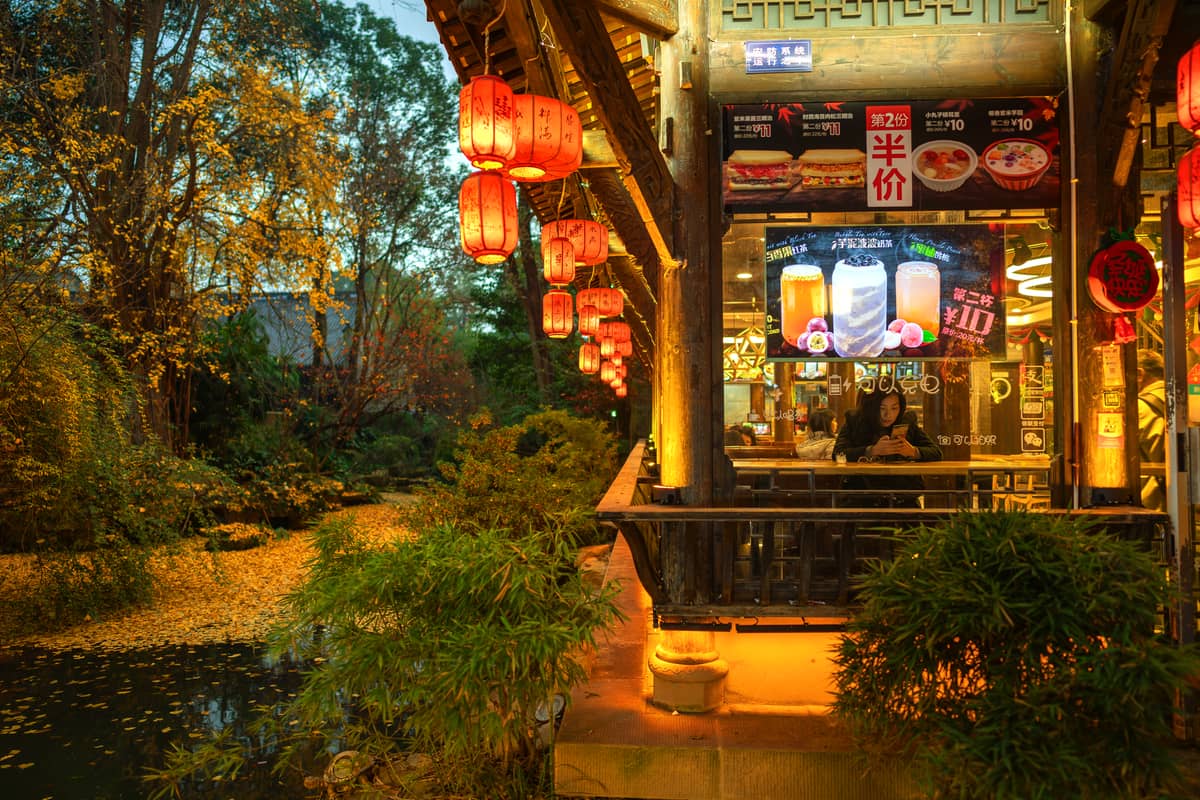
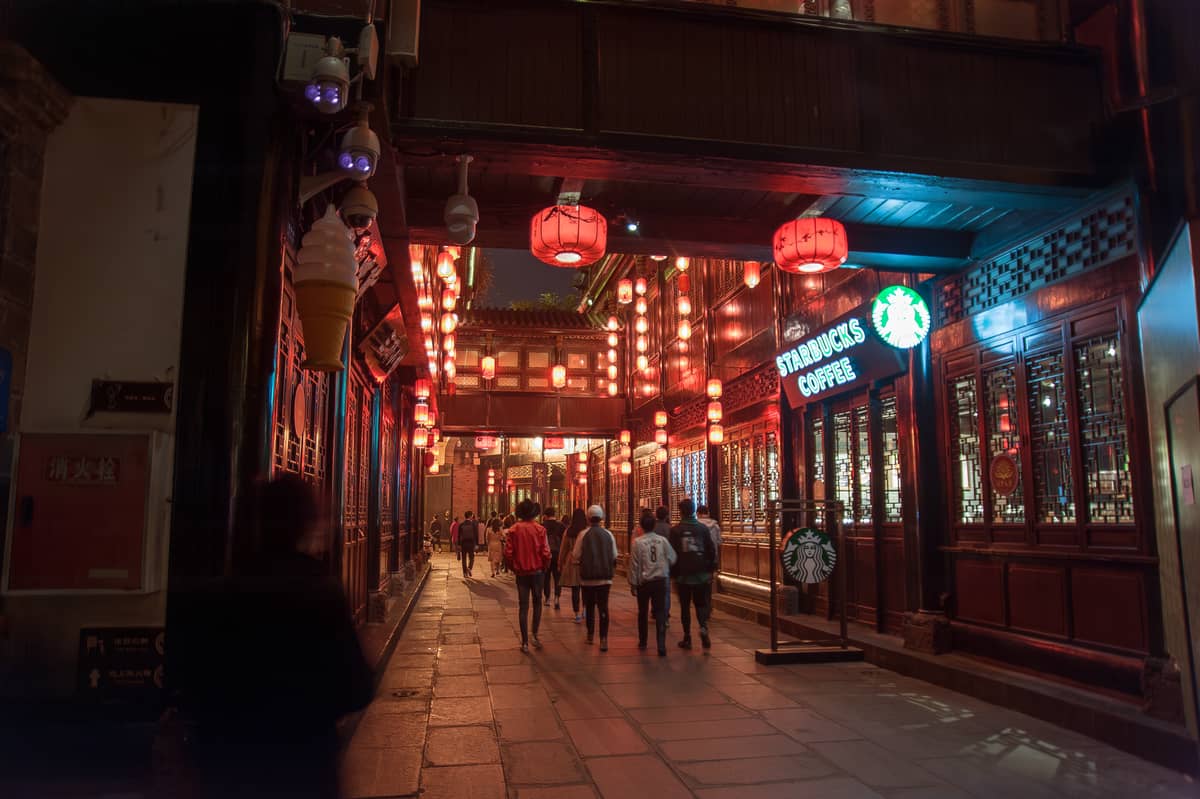
After dark, Jinli becomes the most photogenic few hundred meters in the district: red lanterns glow above the stone walkways, the smell of grilled skewers and Sichuan rabbit head drifts between the wooden storefronts, and the crowd thickens considerably. It is genuinely lively at night but also genuinely crowded, and the commercial pitch is high. Travelers who prefer a quieter evening will find the residential lanes around Yulin to be a more honest reflection of how the district actually lives after sundown.
💡 Local tip
The area immediately around Wuhou Shrine is at its quietest on weekday mornings before 9am. If you want the courtyards without the crowds, arrive when the gates open and work backward from the deeper halls toward the main entrance as groups begin to arrive.
What to See and Do
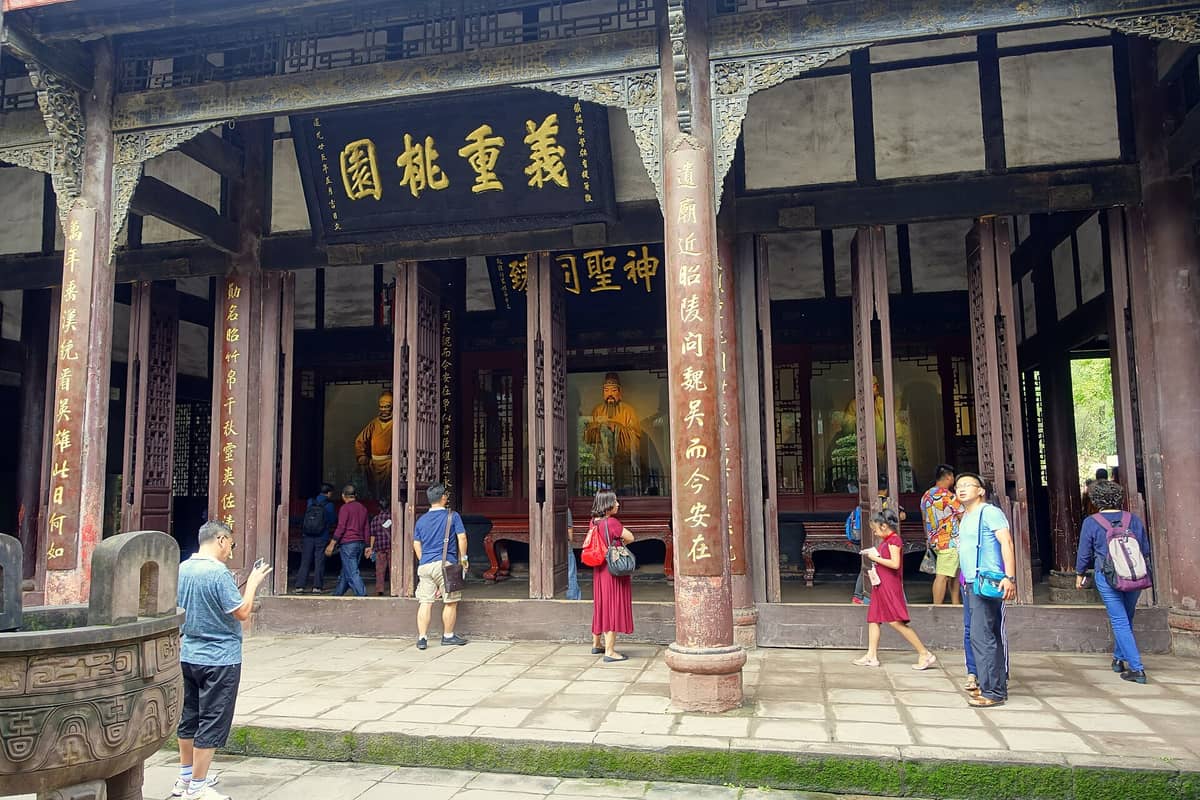
The district's most significant single site is Wuhou Shrine, a National Key Cultural Relics site honoring Zhuge Liang, the strategist of the Shu Han kingdom, and Liu Bei, the kingdom's founding ruler. The two are commemorated on the same grounds, which is unusual in Chinese memorial culture. The complex includes ancestral halls, stone stelae, and a large burial mound overgrown with trees, all set within walled gardens that manage to feel composed even on busy afternoons.
Directly adjacent to the shrine's east wall is Jinli Ancient Street, a reconstructed Qing-dynasty commercial lane that now functions primarily as a food and souvenir destination. It is explicitly commercial and crowded, and it is worth knowing that before you arrive. That said, the layout is attractive, the lanterns are photogenic after dark, and several of the snack vendors sell things worth eating: sweet glutinous rice rolls, fried dough twists, and variations on Sichuan street food that are more accessible here than in the city's less tourist-oriented markets.
About 2 kilometers northwest of Wuhou Shrine, in the direction of Qingyang District, stands Du Fu Thatched Cottage sits just north of the district line in Qingyang, a memorial park and museum on the site where the Tang Dynasty poet Du Fu lived in exile for nearly four years. The complex is far less visited than Wuhou Shrine and considerably more contemplative. Narrow paths wind between reconstructed thatched buildings and mature bamboo groves, and the museum sections display poetry manuscripts and contextual material on Tang literati culture.
Wuhou Shrine: Three Kingdoms memorial complex with ancestral halls, sculpture galleries, and Liu Bei's burial mound
Jinli Ancient Street: Qing-style commercial lane best visited at dusk for lantern atmosphere and street food
Du Fu Thatched Cottage: Tang Dynasty poet memorial park with bamboo groves and manuscript displays
Yulin residential area: Neighborhood blocks with independent cafés, local restaurants, and everyday Chengdu street life
Sichuan Opera performances: Several venues near the shrine district offer evening shows with face-changing and fire-breathing acts
Travelers who want to understand what else Chengdu's cultural landscape includes can read the best temples in Chengdu guide or the broader things to do in Chengdu overview to compare Wuhou's offerings against attractions in other districts.
Eating and Drinking
Wuhou District rewards travelers who are willing to walk two or three blocks away from Jinli. The streets around Yulin North Road and the residential corridors feeding off Wuhou Avenue have a high density of small local restaurants serving the kind of food that does not adjust its seasoning for outside visitors: mala hotpot, dan dan noodles in shallow bowls of chili oil, husband-and-wife beef in aromatic cold sauce, and mapo tofu made with actual quantities of Sichuan pepper.
For a methodical introduction to the food culture, the Chengdu street food guide and the Chengdu hot pot guide cover the key dishes, ordering conventions, and what separates a good version of each from a mediocre one. Both guides are useful before your first meal in the district.
Inside Jinli, food is priced for tourists: expect to pay two to three times the going rate for snacks compared to the surrounding streets. The quality is variable, and the experience is more about atmosphere than culinary depth. A few items are genuinely worth trying here, particularly the gingko and red bean glutinous cakes sold at the stalls near the central archway.
The district also has a well-developed tea house culture, with several establishments near the shrine operating in traditional courtyard settings. These are not tourist reconstructions but functioning tea houses where local retired residents spend afternoons playing mahjong and reading newspapers. The Chengdu tea house guide explains how these spaces work and what to order if you want more than a pot of green tea.
ℹ️ Good to know
Wuhou District has a large student population due to nearby universities, which keeps café prices competitive and means there are more independent coffee shops and low-key bars than you might expect in an area dominated by a heritage attraction. The streets around Kehua North Road are the best place to find this layer of the neighborhood.
Getting There and Around
The most direct metro access to Wuhou Shrine is via Gaoshengqiao station, served by Lines 3 and 5, within walking distance of the shrine complex. From Tianfu Square (Lines 1 and 2), travelers can transfer to Line 3 or Line 5 at nearby central stations.
Several bus routes serve the Wuhou Temple area, including routes 1, 8, 21, 57, 82, 109, 334, and 335, depending on origin point and direction. Bus travel is cheap and covers corridors the metro does not, but frequency and routing details should be confirmed on the day through local apps or at bus stop information panels, as schedules and routes are subject to change.
Didi ride-hailing works well throughout Wuhou District and is the most practical option for reaching the area late at night or when arriving with luggage from another part of the city. For general guidance on moving around Chengdu, the getting around Chengdu guide covers metro maps, Didi setup for foreign visitors, and practical advice on using public buses.
Within the district, most of the key attractions are walkable from each other once you are in the area. The walk from Wuhou Shrine to Du Fu Thatched Cottage is approximately 2 kilometers along Qinghua Road and takes around 25 minutes on foot. Jinli sits immediately east of the shrine's main gate, reachable in under 5 minutes on foot from the shrine entrance.
⚠️ What to skip
Renmin South Road carries heavy vehicle traffic throughout the day and is a wide, fast-moving corridor. Crossing on foot requires using designated pedestrian crossings and observing signal timings carefully. The entrance lanes to Jinli Ancient Street become extremely congested on weekend evenings, particularly around national holidays. If you are arriving by rideshare, ask the driver to drop you on a side street rather than on the main approach road.
Where to Stay
Wuhou District has a wide range of accommodation options, from international business hotels on Renmin South Road to smaller guesthouses and boutique properties tucked into the residential lanes around Yulin and Kehua. The southern section of Renmin South Road in particular has a concentration of mid-range and upscale hotels that position guests within 15 minutes of both the Wuhou Shrine complex and the commercial center near Tianfu Square.
Staying close to Jinli and Wuhou Shrine puts you in the most atmospheric part of the district, but it also means accepting more ambient noise at night, particularly on weekends when Jinli stays active until late. The Yulin neighborhood, a 10-minute walk from the shrine, offers a quieter base with better access to everyday local restaurants and less tourist-facing pricing.
For a full comparison of Chengdu's accommodation zones and advice on which district best suits different travel styles, the where to stay in Chengdu guide covers Wuhou alongside Jinjiang, Qingyang, and the newer Tianfu New Area options.
Practical Notes and Honest Drawbacks
Wuhou District is one of Chengdu's most visited areas, and the infrastructure around Jinli and Wuhou Shrine reflects that. Signage is bilingual, staff at major attractions often speak basic English, and the area is well-lit and well-policed. Standard urban precautions apply in crowded spaces: keep bags zipped and wallets in front pockets, particularly in the dense pedestrian areas of Jinli during peak hours.
Wuhou Shrine and Jinli draw enormous crowds during Golden Week holidays in early October and around Chinese New Year. If your travel dates fall in these windows, the Chengdu Chinese New Year guide is worth reading before finalizing plans, as queues and capacity limits at major sites can significantly affect how the day works.
The district is not particularly suited to travelers whose primary interest is contemporary urban culture, modern architecture, or high-end shopping. Those experiences sit in Jinjiang District, around Chunxi Road and Taikoo Li, or in the newer Tianfu New Area. Wuhou's strength is in historical depth, street-level food culture, and the specific atmosphere that comes from a neighborhood that has been continuously inhabited and commercially active for centuries.
TL;DR
Wuhou District is best for travelers who want Chengdu's historical and cultural core: Wuhou Shrine and Jinli are here, and Du Fu Thatched Cottage is a short trip north in Qingyang District.
Jinli Ancient Street is commercially oriented and crowded but genuinely atmospheric after dark; approach it as an experience rather than an authentic market.
The residential streets around Yulin and Kehua offer a more honest version of daily Chengdu life, with better food prices and fewer tourist-facing adjustments.
Metro Lines 3, 5, and 10 all serve the district; most major sights are walkable once you arrive.
Not the right base for visitors prioritizing modern shopping or nightlife; those experiences are better accessed from Jinjiang or central Tianfu Square area.
Three days is enough time to cover Chengdu's essential experiences without rushing. This itinerary balances the panda base, historic streets, Sichuan cuisine, cultural landmarks, and a day trip option, with practical notes on logistics, timing, and what to skip.
Chengdu's museum scene spans 4,500 years of Sichuan history, from mysterious Bronze Age civilizations to Tang Dynasty poets and dinosaur fossils. This guide covers the standout institutions, what to expect inside each one, and how to plan your visits efficiently.
Chengdu's temple scene spans 1,400 years of Buddhist and Taoist history, from incense-filled city monasteries to sacred peaks rising above the clouds. This guide covers the best temples in Chengdu and beyond, with honest advice on what to expect at each one.
Chengdu rewards visitors year-round, but the timing of your trip makes a real difference. This guide breaks down every season by weather, crowd levels, panda activity, and practical logistics so you can choose the window that actually suits your plans.
Chengdu is surrounded by ancient towns that most visitors completely overlook. This guide covers the five best options — Huanglongxi, Luodai, Jiezi, Anren, and Pingle — with real transport details, honest assessments, and seasonal advice to help you choose the right one for your trip.
Chinese New Year transforms Chengdu into one of China's most atmospheric festival cities, with temple fairs, lantern displays, and Sichuan folk performances across the city. But the season also brings peak crowds, tight transport, and some genuine planning challenges. This guide tells you exactly what to expect and how to prepare.
Chengdu is the capital of Sichuan Province, home to 21 million people, giant pandas, and some of the most distinctive food in China. This guide covers the practical details that actually matter for a first visit: which airport you land at, when to go, what to eat, where to stay, and how to get around without confusion.
Chengdu has a slower, more sensory side that makes it genuinely rewarding for couples. This guide covers the most romantic experiences in the city — from dawn panda visits and teahouse afternoons to Sichuan opera nights and scenic day trips — with a clear take on what's worth your time.
Hot pot is not just a meal in Chengdu — it is the social ritual that defines the city's food culture. This guide covers the best restaurants for Sichuan hot pot, exactly how to order, what to expect on the bill, and how to handle the heat without ruining your evening.
Chengdu's after-dark scene runs deeper than the typical tourist circuit. This guide breaks down the city's main nightlife districts, what each one actually offers, realistic price ranges, and how to get around after the metro stops running.
Chengdu is one of China's most rewarding cities for budget travelers. From free parks and temples to street food that costs less than a coffee back home, here's how to experience the best of Chengdu without overspending.
Chengdu is the world's foremost destination for seeing giant pandas in a conservation setting. This guide covers the Chengdu Research Base of Giant Panda Breeding in detail, how to book tickets, the best time to arrive, how to get there, and what the experience is actually like — including what most visitors get wrong.
Chengdu rewards those who step outside. This guide covers the city's best parks, gardens, riverside walks, and natural escapes, from the teahouse-dotted paths of People's Park to the forested peaks of Mount Qingcheng, an hour from the city center.
Chengdu is one of China's safest major cities for visitors, but that doesn't mean you can skip due diligence. From airport taxi scams to tea house traps, here's everything you need to stay safe, avoid getting ripped off, and travel with confidence.
Chengdu is one of southwestern China's best cities for shopping, whether you're after luxury brands, handmade Shu brocade, panda merchandise, or bulk spices for your hotpot. This guide covers the top malls, local markets, souvenir picks, and practical advice to help you spend wisely.
Chengdu is a UNESCO Creative City of Gastronomy and one of the most rewarding cities in Asia for eating on foot. This guide covers the essential Sichuan dishes, the best street food districts, practical navigation tips, and honest notes on what lives up to the hype.
Tea houses are central to daily life in Chengdu in a way that few cities can claim. This guide covers the history, etiquette, best venues, what things cost, and exactly what to expect when you sit down for tea in one of China's most relaxed cities.
The Chengdu to Chongqing route is one of southwestern China's most popular day trips or short breaks. This guide covers every transport option, station logistics, fare breakdowns, and how to make the most of your time in both cities.
Two of southwestern China's most compelling cities, separated by roughly 300 km and connected by high-speed rail. This guide breaks down what each city does best, who each suits, and whether you should bother visiting both.
Chengdu's historic core is genuinely walkable, but only if you know which clusters of sights sit close together and which require transport. This guide maps out three practical self-guided walking routes, breaks down entry costs, and flags the common mistakes that turn a pleasant city walk into an exhausting detour.
Chengdu is one of China's most family-friendly cities, pairing iconic wildlife encounters with hands-on cultural experiences, open parks, and food kids actually enjoy. This guide covers the top activities for families, practical logistics, and practical notes on what works best with children in tow.
Chengdu sits at the center of one of China's richest regions for day-trip travel. Within two hours by rail or road, you can stand before a 71-meter Tang Dynasty Buddha, hike Taoist mountain trails, and explore a 2,300-year-old irrigation system still in use today. This guide covers the best day trips from Chengdu, organized by theme.
Chengdu has two airports, an expanding metro network, and a ride-hailing app that works well once you set it up. This guide covers every transport option with real fares, practical route advice, and honest warnings about what to avoid.
Chengdu is the capital of Sichuan Province and home to giant pandas, world-class spicy food, ancient heritage, and one of China's most livable urban cultures. This guide cuts through the hype to tell you exactly what to expect, what to skip, and whether Chengdu deserves a spot on your itinerary.
Sichuan Opera is one of Chengdu's most distinctive cultural experiences, but knowing where to go, what to expect, and how to book makes a real difference. This guide covers the top venues, ticket tiers, the truth about face-changing, and practical logistics to help you plan a show worth attending.
Chengdu is one of China's most rewarding cities to explore, with a lineup that runs from giant panda encounters and 2,300-year-old irrigation systems to fiery hot pot dinners and late-night tea houses. This guide covers the best things to do in Chengdu with specific advice on timing, tickets, transport, and what to skip.
Chengdu is one of China's great eating cities, and Sichuan cuisine is far more complex than its reputation for chili heat suggests. This guide covers the essential dishes, street snacks, hot pot etiquette, price ranges, and where to actually find the best food across the city.
Choosing where to stay in Chengdu is straightforward once you understand the city's layout and metro network. This guide breaks down the top neighbourhoods by location, price range, and what kind of trip they suit best, so you can book with confidence.