Is Chengdu Worth Visiting? A Candid Assessment
Chengdu is the capital of Sichuan Province and home to giant pandas, world-class spicy food, ancient heritage, and one of China's most livable urban cultures. This guide cuts through the hype to tell you exactly what to expect, what to skip, and whether Chengdu deserves a spot on your itinerary.
Plan and book this trip
Tools from our partner Travelpayouts help you compare flights and hotels. If you book through them, we may earn a commission at no extra cost to you.
Flights
Hotels map
TL;DR
- Chengdu is genuinely worth visiting for first-timers and repeat China travelers alike, offering depth that few Chinese cities can match in a similar time frame.
- The panda base, Sichuan food scene, and historic sites like Wuhou Shrine and Kuanzhai Alley are legitimate highlights, not just tourist checkboxes.
- Spring (March to May) and autumn (September to November) offer the most comfortable conditions; summers are hot and wet, winters are mild but grey.
- Three days covers the core; five or more days opens up day trips to Dujiangyan and Mount Emei.
- Chengdu is not the right trip for travelers who want beaches, dramatic night skylines, or a heavily English-speaking environment outside major hotels.
What Chengdu Actually Offers
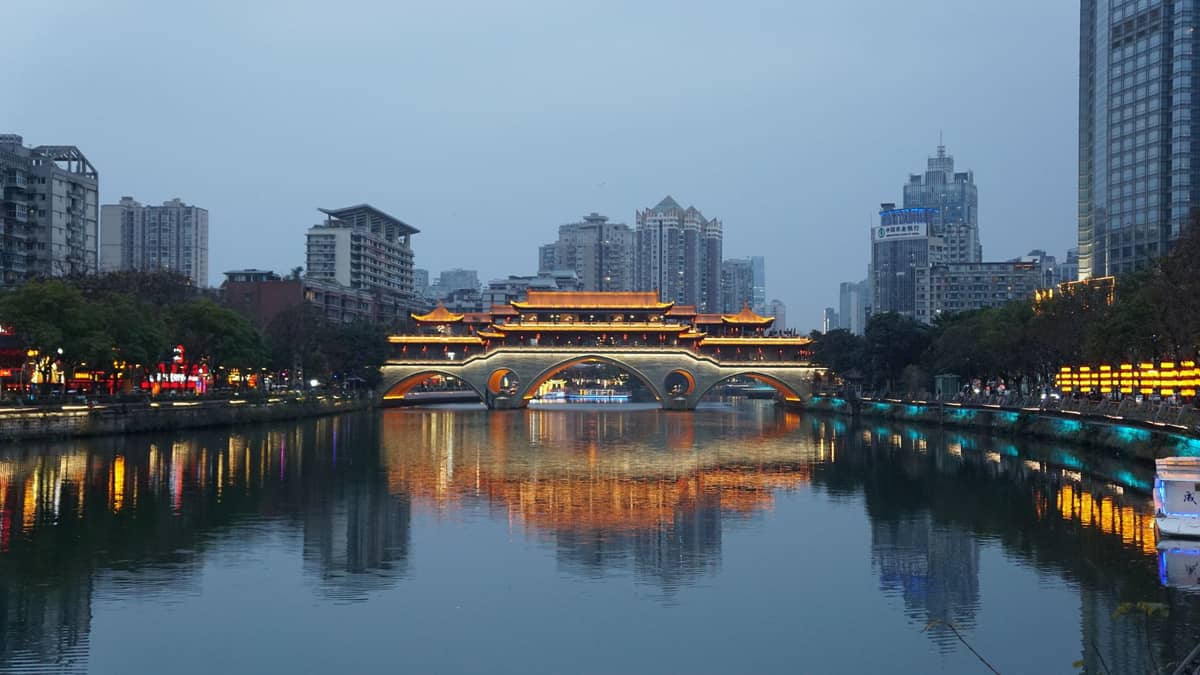
Chengdu is a prefecture-level city and the provincial capital of Sichuan Province in southwestern China, with a population of approximately 21.47 million across the municipality. It sits on the Chengdu Plain, with the central urban area at around 485 metres above sea level, while the municipality extends from roughly 387 to 5,364 metres in elevation, and is surrounded by mountains on three sides.. That geography shaped everything: the culture, the food, the pace, and the reason this city developed one of China's most distinctive regional identities.
The city's reputation rests on a few pillars. Giant panda conservation is the most internationally recognized, centered on the Chengdu Research Base of Giant Panda Breeding. Sichuan cuisine, with its numbing heat from Sichuan peppercorns and dried chilies, draws serious food travelers. A layered cultural heritage spans the Three Kingdoms period, Taoist and Buddhist temples, and a thriving contemporary arts and music scene. None of these are manufactured. They are organic to the city.
What distinguishes Chengdu from other large Chinese cities is its unhurried tempo. The city consistently ranks among the most livable in China. Teahouses fill with locals playing mahjong at 10am on a Tuesday. Parks overflow with retirees doing tai chi, ballroom dancing, or simply sitting. This is not a city that performs for tourists; it has its own rhythm, and visitors are welcome to join it.
The Highlights That Justify the Trip
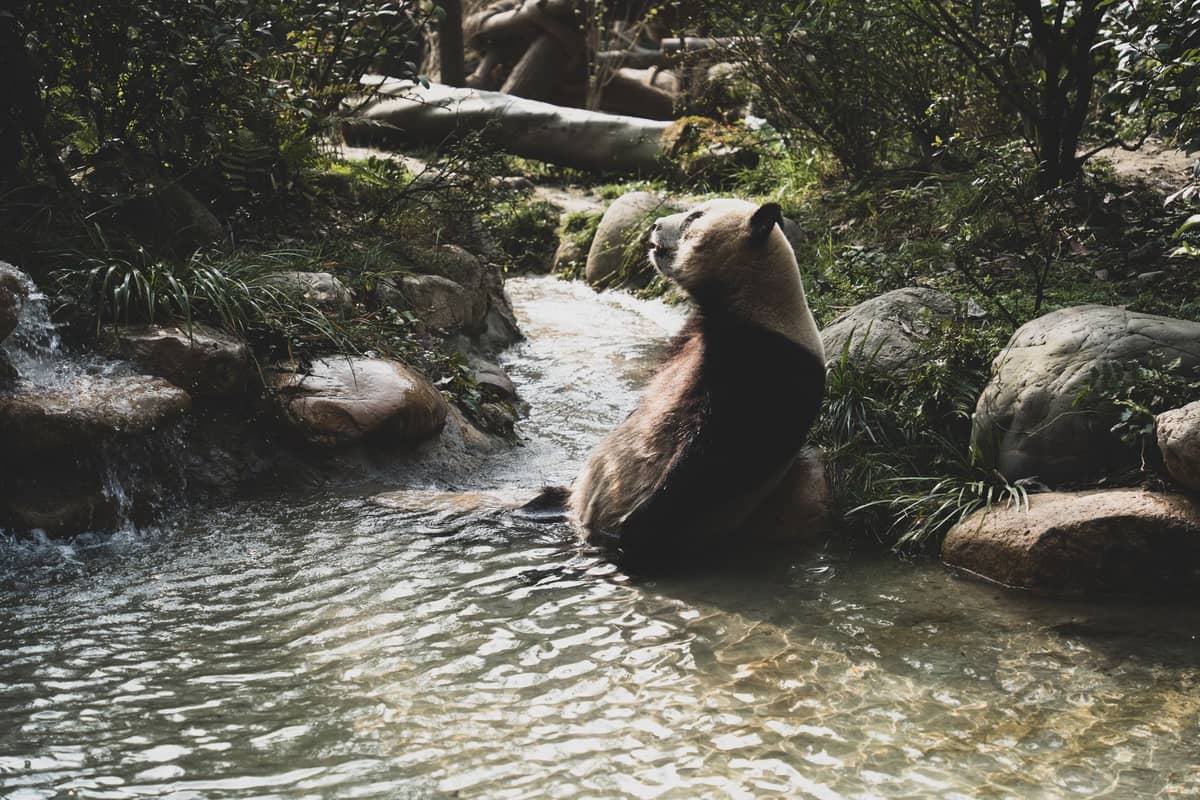
The panda base is the single biggest draw for international visitors. Adult tickets cost CNY 55 (approximately USD 7-8 at current rates), with reduced pricing for students and free admission for visitors aged 60 and over. From March to October, the first entry slot opens at 07:30 and runs to 12:00; the afternoon slot runs 12:00 to 17:00. Arriving at opening gives you the best chance of seeing the animals active before the midday heat encourages napping. Read the full logistics breakdown in our Chengdu panda guide before booking.
⚠️ What to skip
Pandas are not guaranteed to be active or outdoors. Natural resting patterns and weather affect behavior. Morning visits in cooler months tend to offer more activity, but there are no guarantees. Don't build your entire trip schedule around a specific experience with any individual animal.
Food is the second reason to come. Sichuan cuisine is one of China's eight recognized culinary traditions, and Chengdu is its epicenter. Hot pot, mapo tofu, dan dan noodles, and rabbit dishes prepared in dozens of ways are everyday staples here, not novelty items. The city was designated a UNESCO Creative City of Gastronomy in 2010. Chengdu's hot pot scene alone warrants a dedicated evening. For a broader food overview, what to eat in Chengdu covers the essential dishes and where to find them.
The historic districts hold up well. Wuhou Shrine is one of China's best-preserved memorial complexes dedicated to the Three Kingdoms period, adjacent to the reconstructed Jinli Ancient Street. Kuanzhai Alley (Wide and Narrow Alley) is more polished and tourist-oriented but still worth an hour or two, especially the western Narrow Alley section which retains more local food stalls. The Du Fu Thatched Cottage is quieter and genuinely moving for anyone interested in Tang Dynasty poetry and classical Chinese garden design.
- Chengdu Research Base of Giant Panda Breeding The world's leading panda conservation facility. Book timed entry in advance, arrive at opening, and allocate 2-3 hours minimum.
- Wuhou Shrine and Jinli Combined site in Wuhou District covering Three Kingdoms history and traditional street food in a single visit. Allow a half day.
- Sichuan cuisine Not a single attraction but a defining experience. Eat at local restaurants away from main tourist streets for more honest pricing and cooking.
- Sichuan Opera The face-changing (bianlian) performances are legitimately impressive as craft. Evening shows run regularly at several dedicated venues.
- Sanxingdui Museum About 40km from central Chengdu in Guanghan, this Bronze Age archaeological site is one of the most significant in East Asia. It requires a day trip but rewards it.
What Chengdu Is Not Good For
Honesty matters here. Chengdu does not offer the futuristic skyline drama of Shanghai or Shenzhen. It lacks a coastline and has no significant beach culture. The city sits in a basin that traps haze, so clear blue-sky days are fewer than in Beijing or Kunming. If dramatic mountain vistas are a priority within the city limits, you will be disappointed; those require day trips or multi-day excursions to nearby ranges.
English proficiency outside major international hotels, airport services, and a handful of tourist-facing businesses is limited. This is not unique to Chengdu, but it is worth factoring in. Navigation apps with offline maps, translation tools, and basic Mandarin phrases for food ordering and directions will improve daily quality of life significantly. The local dialect, Sichuanese, differs meaningfully from standard Mandarin, though most younger residents are fully comfortable in Putonghua.
ℹ️ Good to know
Tipping is not customary in mainland China. Leaving cash on a restaurant table may cause confusion. Some international hotels and private guides add service charges or accept gratuities, but this is not the norm. Budget accordingly and don't feel obligated.
Best Time to Visit Chengdu
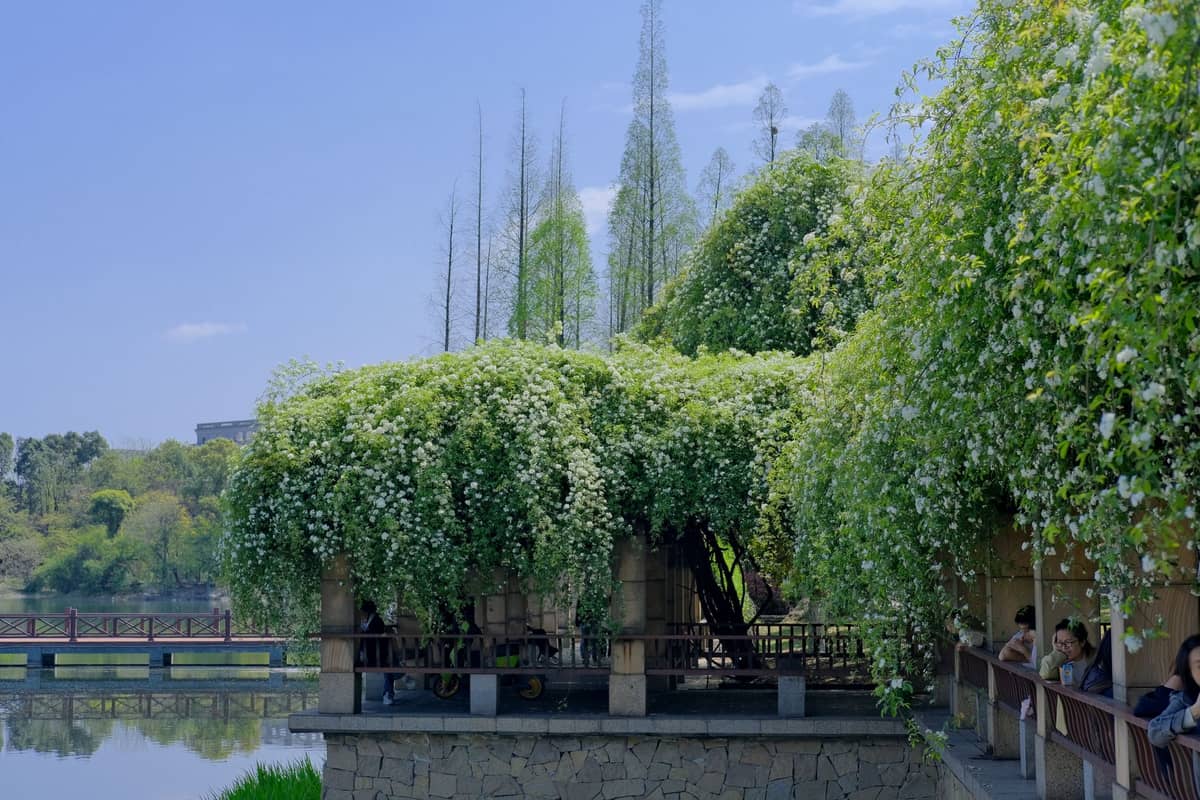
Chengdu has a humid subtropical monsoon climate (Köppen Cwa), meaning warm, wet summers and mild, dry winters. The practical planning windows are spring (March to May) and autumn (September to November). Temperatures in spring range roughly 14-25°C and in autumn roughly 16-28°C in the earlier months, cooling through November. The city's famous overcast skies are present year-round, but cloud cover is heaviest from November through February. For a full seasonal breakdown, see the guide on the best time to visit Chengdu.
Summer (June to August) brings temperatures around 23-31°C with July as the hottest month. About half of the annual rainfall of roughly 1,000mm falls between June and September. Visiting in summer is manageable but expect heat, afternoon downpours, and larger domestic tourist crowds, particularly during the July-August school holiday period. Winter (December to February) is cool at 6-12°C, rarely sees snow in the city itself, and has the advantage of smaller crowds and lower accommodation prices.
💡 Local tip
September and October offer the strongest combination of post-rain freshness, comfortable temperatures, and manageable crowds. The autumn foliage around nearby mountain areas also peaks in October, making day trips particularly rewarding during this window.
Getting There and Around
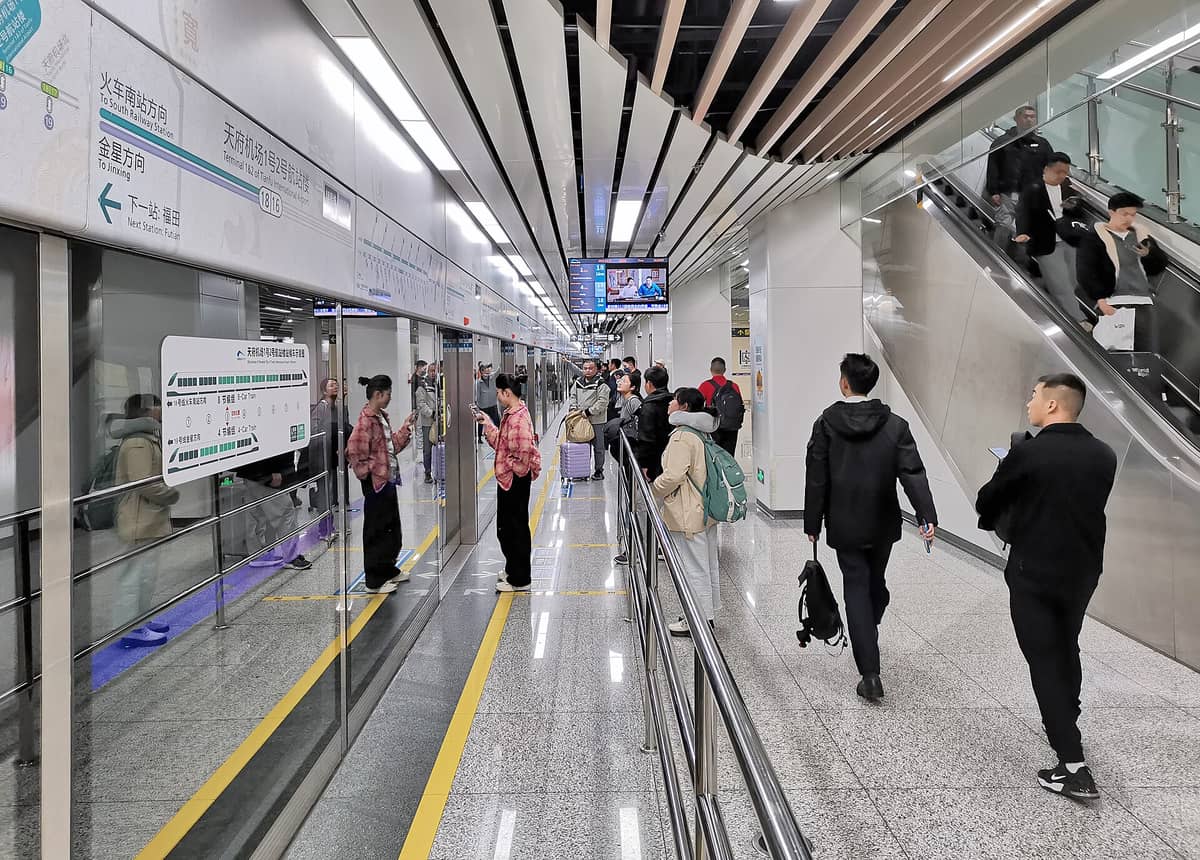
Chengdu has two separate international airports. Chengdu Tianfu International Airport (TFU) is the newer facility, located approximately 51km from the urban core and connected to the city by Metro Line 18. Chengdu Shuangliu International Airport (CTU) is the older airport, positioned much closer to the city center and served by Metro Line 10. Check your ticket carefully: TFU and CTU are not interchangeable, and confusing them has derailed more than a few itineraries.
Within the city, the Chengdu Metro is the most reliable and affordable way to move around. Fares start at CNY 2 for journeys up to 4km and increase with distance. The network covers all major tourist areas including Tianfu Square, the area around Wuhou Shrine, and transport hubs. Didi Chuxing handles ride-hailing, though foreign visitors may need to set up a compatible payment method before relying on it independently. For a full breakdown of how to move around the city, getting around Chengdu covers metro routes, taxis, and transport card options.
- Always verify which airport (TFU or CTU) your flight uses before choosing a transit route to the city.
- Metro Line 18 and 19 serve Tianfu International Airport (TFU); Metro Line 10 serves Shuangliu Airport (CTU).
- Metro fares start at CNY 2; an airport rail link from Chengdu South Railway Station to Tianfu Airport costs CNY 10.
- Didi requires setup before arrival if you plan to use it without hotel assistance; install the app and link a payment method in advance.
- High-speed rail connects Chengdu East Railway Station to most major Chinese cities; Chongqing is under 70 minutes away.
How Long to Spend and How to Structure Your Time
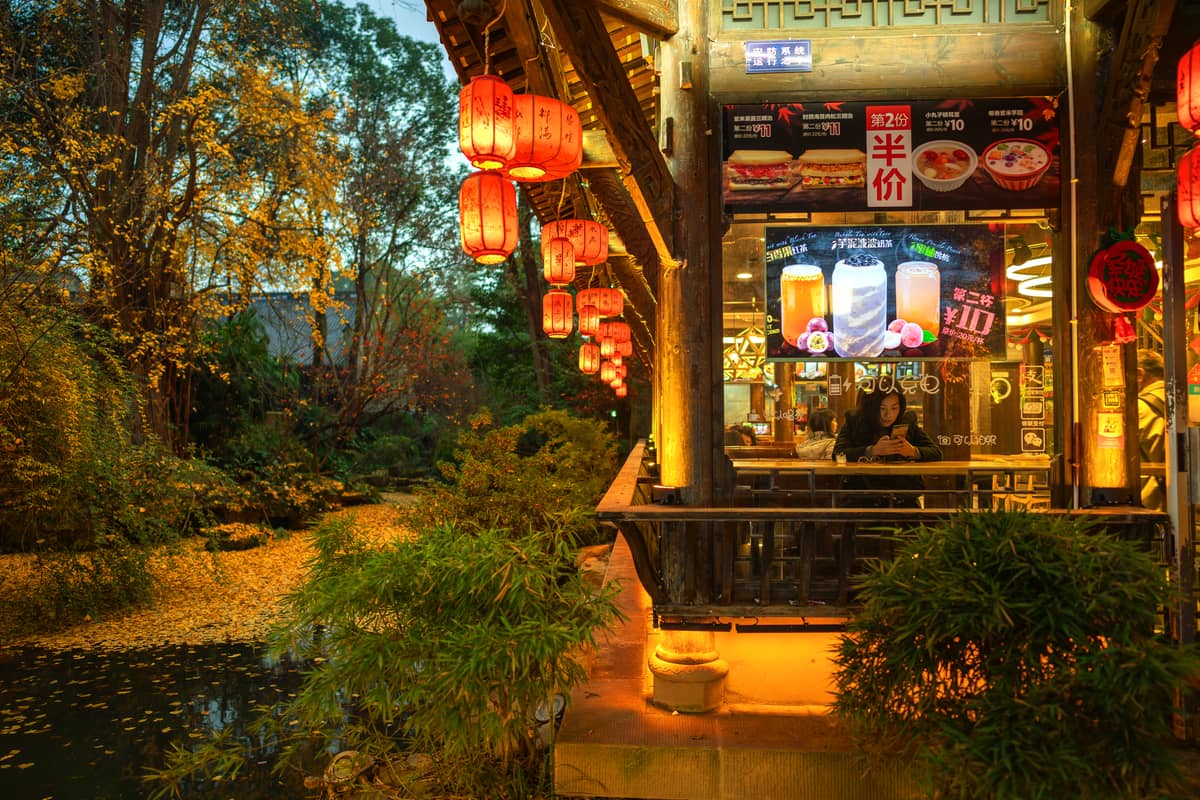
Three days is enough to cover the panda base, the main historic districts, and a solid cross-section of the food scene. A structured 3-day Chengdu itinerary will keep you from wasting time on logistics. Five days opens up day trips to Dujiangyan, Mount Qingcheng, or the Sanxingdui Museum. A week allows for Leshan's Giant Buddha and potentially Mount Emei, both of which are among the most impressive heritage sites in all of China.
First-time visitors should read the Chengdu first-timer guide for practical orientation on neighborhoods, scams to avoid, and how to structure the first 24 hours. Budget travelers will find Chengdu one of China's more affordable major cities for food, transport, and accommodation. Street food meals can cost CNY 10-20; sit-down local restaurants rarely exceed CNY 60-80 per person without alcohol. For cost-focused planning, visiting Chengdu on a budget has current benchmarks.
FAQ
Is Chengdu worth visiting for non-panda travelers?
Yes. The food scene, historic sites, temples, teahouse culture, and access to outstanding day trip destinations like Dujiangyan and Leshan make Chengdu worth the trip even if giant pandas are not your priority. The panda base is the most famous attraction but not the only reason to come.
How many days do you need in Chengdu?
Three days covers the core highlights including the panda base, Wuhou Shrine, Jinli, and several quality meals. Five days allows for at least one day trip. A week gives you room for Mount Emei or Leshan's Giant Buddha, both significant undertakings.
Is Chengdu safe for solo travelers and first-timers?
Chengdu is generally considered safe for solo travelers. Petty theft exists in crowded tourist areas as in any large city, but violent crime targeting tourists is uncommon. Common issues include overpriced 'tea ceremony' invitations from friendly strangers and inflated taxi fares from unmarked vehicles near tourist sites. Stick to metered or app-based taxis and book accommodation in central, well-reviewed areas.
Do I need a visa to visit Chengdu?
Visa requirements depend entirely on your nationality, travel purpose, and entry date. China's visa-free policies change regularly and vary by passport. Some nationalities qualify for unilateral visa-free entry or transit-without-visa arrangements; others must obtain a visa before travel. Check current requirements with the Chinese embassy or consulate for your country, or the National Immigration Administration of China, before booking.
Is Chengdu worth visiting compared to other Chinese cities?
Chengdu offers a distinctly different experience from Beijing or Shanghai. It is less international in feel, less frenetic in pace, and more rooted in regional culture. For travelers who have already seen China's major eastern cities, Chengdu often feels like a genuine discovery. For first-time China visitors, it is a strong choice because it is manageable in size, rich in accessible culture, and offers exceptional food at low prices.