Shenzhen Architecture Guide: Skyscrapers, Design & Urban Form
Shenzhen built more supertall skyscrapers in 40 years than most cities manage in a century. This guide covers the key landmarks, the best districts for architectural exploration, observation decks, design culture, and practical tips for getting around the skyline.
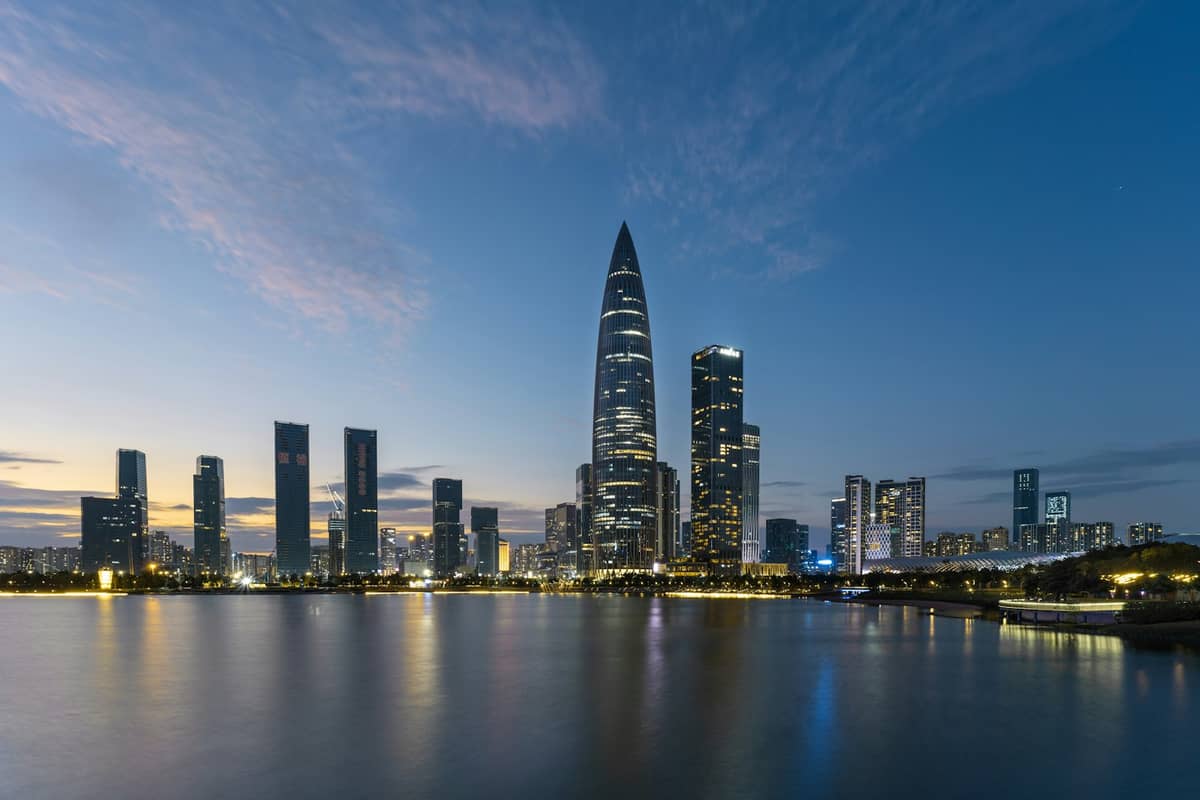
Plan and book this trip
Tools from our partner Travelpayouts help you compare flights and hotels. If you book through them, we may earn a commission at no extra cost to you.
Flights
Hotels map
TL;DR
- Shenzhen has about 200 completed buildings above 200 m, with the Ping An Finance Centre topping out at 599.1 m — one of the tallest buildings on earth.
- The best districts for architecture are Futian (CBD towers and civic buildings) and Nanshan (tech campus architecture and waterfront design).
- Almost all of Shenzhen's skyline was built after 1980 — the city's architectural identity is overwhelmingly a product of the Special Economic Zone era.
- October to December offers the clearest skies for skyline photography; summer haze and monsoon cloud frequently obscure the upper floors of supertall towers.
- Pair an architecture walk with a visit to OCT-LOFT or Nantou Ancient City for contrast between Shenzhen's modernist ambitions and its older urban fabric.
Why Shenzhen's Architecture Is Unlike Any Other City
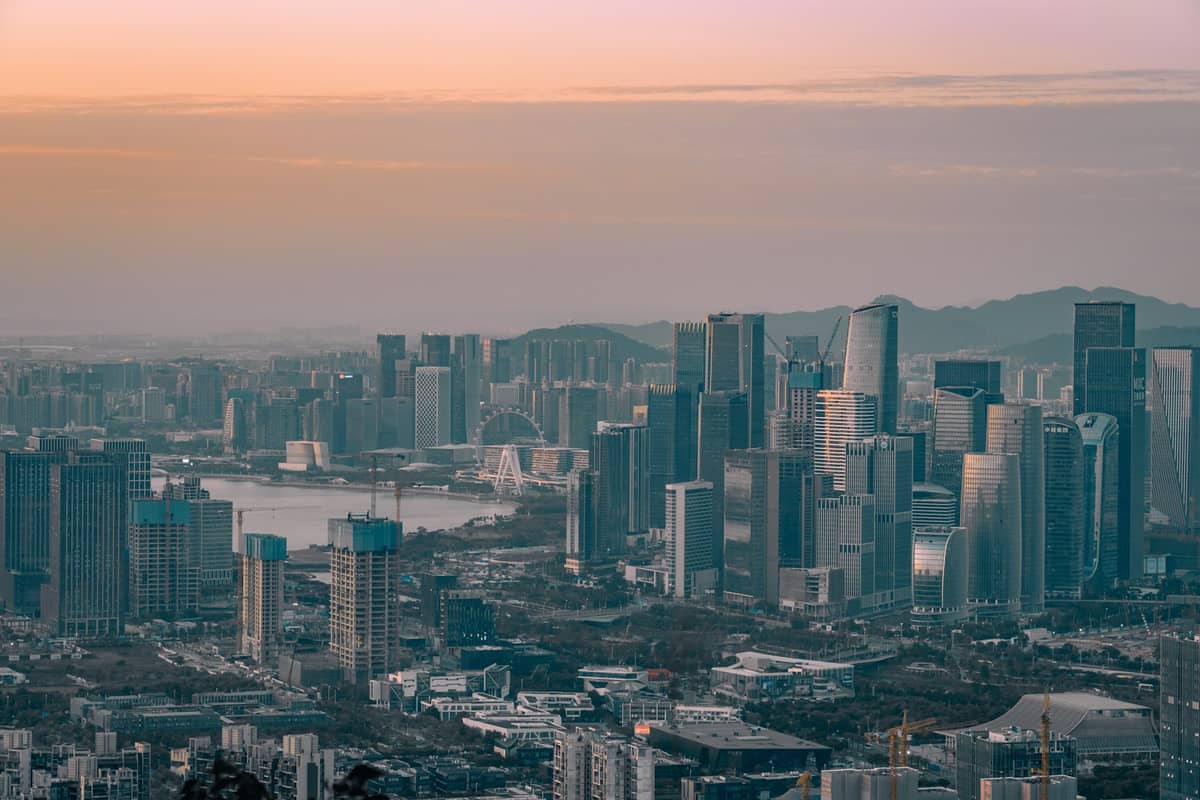
Most major cities layer centuries of architectural styles on top of each other. Shenzhen does not. Before 1979, what is now a city of roughly 18 million people was a collection of fishing villages and farmland in Guangdong Province. When Beijing designated Shenzhen as China's first Special Economic Zone in 1980, construction began almost immediately and barely stopped for four decades. The result is a skyline that reads less like an urban evolution and more like a compressed architectural exhibition spanning roughly 1980 to the present.
This is worth understanding before you visit. You will not find a medieval quarter, a colonial boulevard, or a pre-industrial civic centre. What you will find is one of the highest concentrations of supertall buildings anywhere on the planet, alongside experimental civic architecture, technology-company campuses designed by globally recognized firms, and pockets of preserved older fabric that feel genuinely incongruous against the surrounding glass towers. That contrast is part of what makes exploring Shenzhen architecturally interesting.
ℹ️ Good to know
Rankings for 'most skyscrapers' vary by the threshold used. Shenzhen ranks first or second globally for buildings above 200 m, but falls lower when the threshold drops to 150 m. The CTBUH (Council on Tall Buildings and Urban Habitat) Skyscraper Center is the most reliable public source for verified height data.
The Landmark Towers: Shenzhen's Defining Skyscrapers
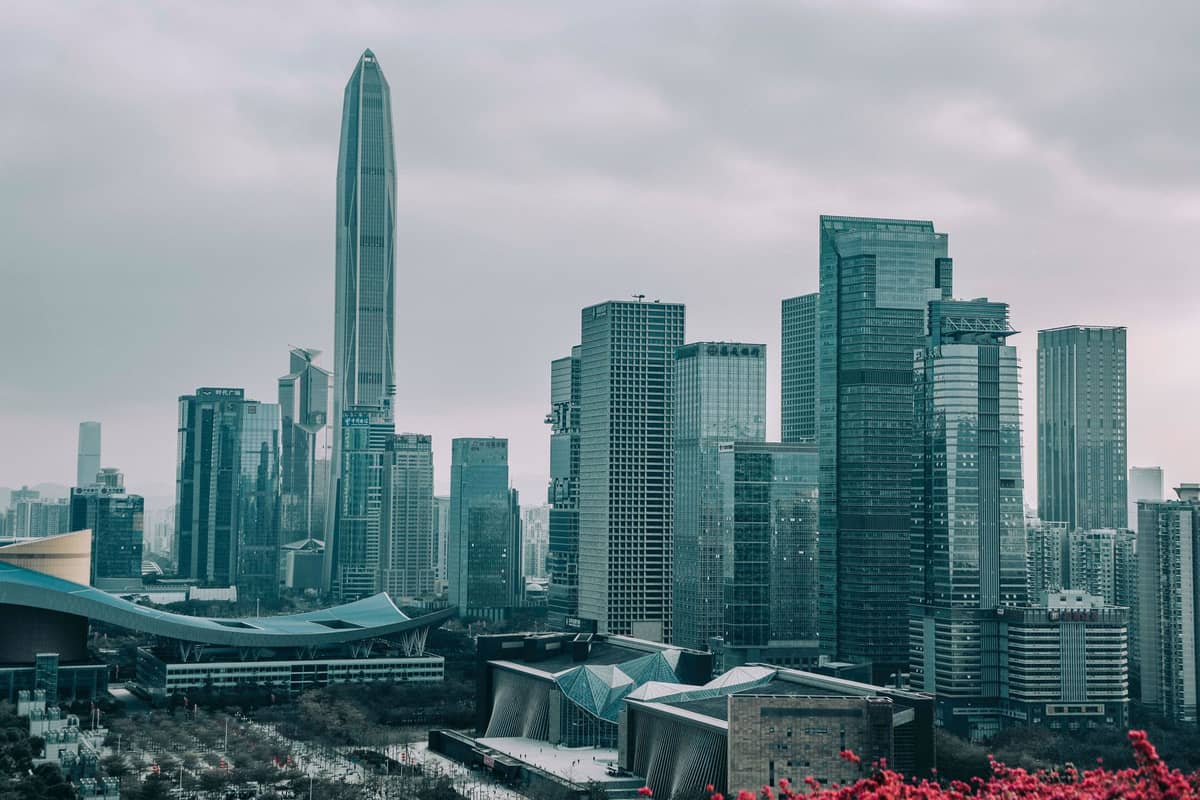
The Ping An Finance Centre in Futian is the city's defining structure. At 599.1 m, it ranks among the five tallest buildings in the world. Designed by Kohn Pedersen Fox Associates and completed in 2017, its tapered form with four diagonal cuts near the summit is instantly recognizable from across the city. An observation deck occupies the upper floors — verify current opening hours and ticket prices on the official venue website before visiting, as these change periodically.
- Ping An Finance Centre (599.1 m) Futian CBD. KPF-designed supertall with observation deck. One of the tallest buildings globally. Metro: Chegongmiao or Shenzhen Convention & Exhibition Center stations.
- KK100 (441.8 m) Luohu district. Completed 2011, designed by TFP Farrells. Distinctive tapered spire profile. Previously housed a public observation deck — verify current access before visiting.
- Shun Hing Square (384 m) Luohu CBD. Completed 1996 and long the city's dominant tower. Steel structure with a stepped crown. Now dwarfed by newer towers but historically significant as an early emblem of Shenzhen's ambition.
- Shenzhen Stock Exchange (250 m) Futian. Designed by Rem Koolhaas/OMA and completed in 2013. The elevated podium cantilevered above a public plaza is one of the most architecturally discussed buildings in the city.
- Tencent Headquarters (Binhai) Nanshan/Binhai district. Two towers linked by sky bridges, designed by NBBJ. Represents the tech-campus generation of Shenzhen architecture. Not publicly accessible inside, but visible from the waterfront.
The Shenzhen Stock Exchange building by OMA deserves special attention even for visitors with only a passing interest in architecture. The building's signature move is a large public plaza at ground level, with the main trading floors elevated in a cantilevered box above it. The intention was to create publicly accessible urban space at the base of a financial institution — an unusual statement in a city that frequently prioritizes car access over pedestrian life. The exterior is visible without entry.
💡 Local tip
For skyline photography, the elevated walkway around Lianhuashan Park gives a clear north-facing view across the Futian CBD towers. Early morning on a dry winter day (October to December) produces the sharpest visibility. Summer haze and monsoon cloud regularly obscure upper floors of buildings above 300 m.
District-by-District: Where to Explore Architecture on Foot
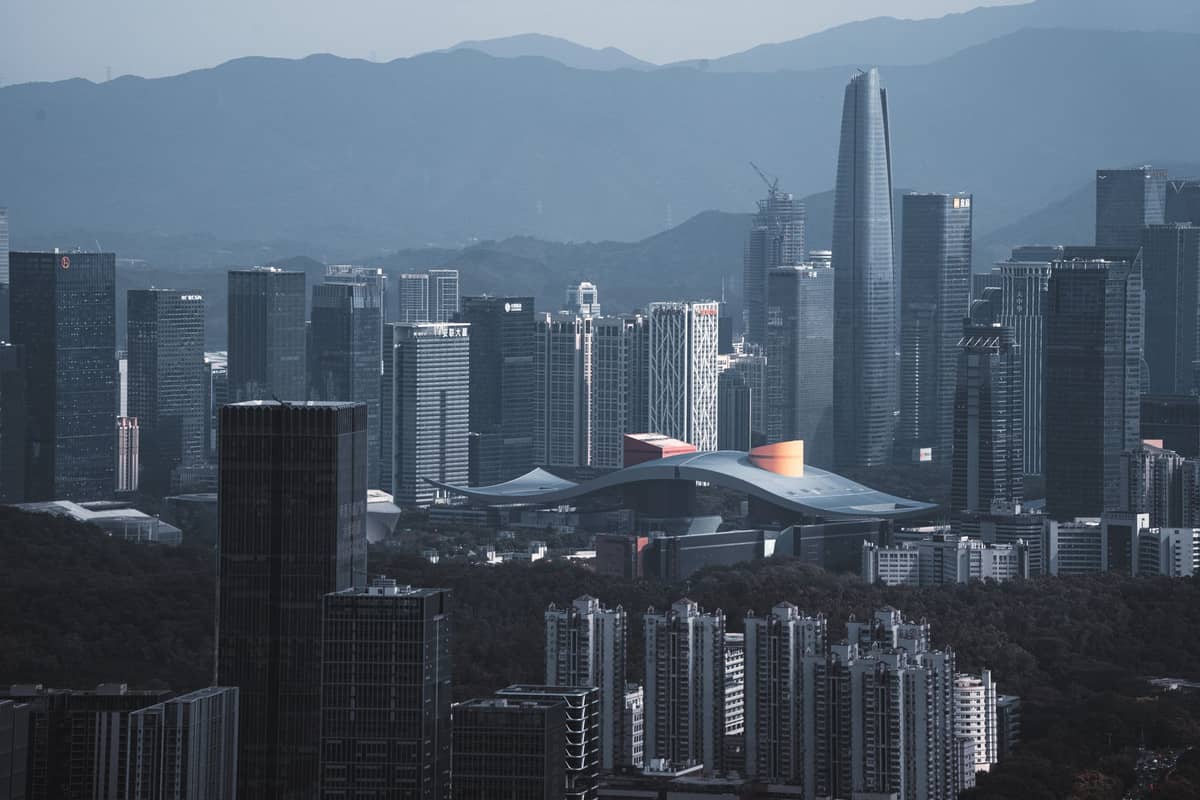
Futian is Shenzhen's municipal and financial centre, and the most concentrated zone for ambitious civic and commercial architecture. The Shenzhen Civic Center, a large civic complex with a distinctive curving roof spanning across a central axis, anchors the northern edge of the CBD. Just to the south, the high-rise density of the Futian central business district gives the area a canyon-like quality on the ground. The Shenzhen Civic Center itself is flanked by major cultural institutions and opens onto an axis that runs toward Lianhuashan Park — it is worth walking the full length for scale.
LuohuLuohu is the older commercial core near the Hong Kong border and contains the towers from Shenzhen's first generation of high-rise construction — Shun Hing Square being the most iconic. Walking through Luohu today, you can see an earlier, slightly denser and more chaotic urban texture beneath more recent redevelopment. It lacks the polished civic planning of Futian but gives a better sense of how Shenzhen's urban form actually grew.
In Nanshan, the architecture shifts from financial towers to technology campuses. The Tencent headquarters in the Binhai district, the cluster of tech-company offices around the High-Tech Park, and the waterfront development at Sea World Plaza in Shekou represent a different phase of Shenzhen's urban ambition: design-conscious corporate architecture aimed at attracting global talent rather than projecting financial power.
For a complete change of register, Nantou Ancient CityNantou Ancient City in Nanshan is a partially preserved historical settlement that dates back over 1,600 years. It now sits almost completely surrounded by modern high-rises, creating a disorienting juxtaposition that has attracted significant interest from architects and urbanists. The area has been partially renovated with creative tenants and cultural spaces while retaining its historic lane structure — it is not a theme park recreation but an actual functioning old settlement inside a modern megacity.
Design Culture: OCT, Museums, and the Creative Districts
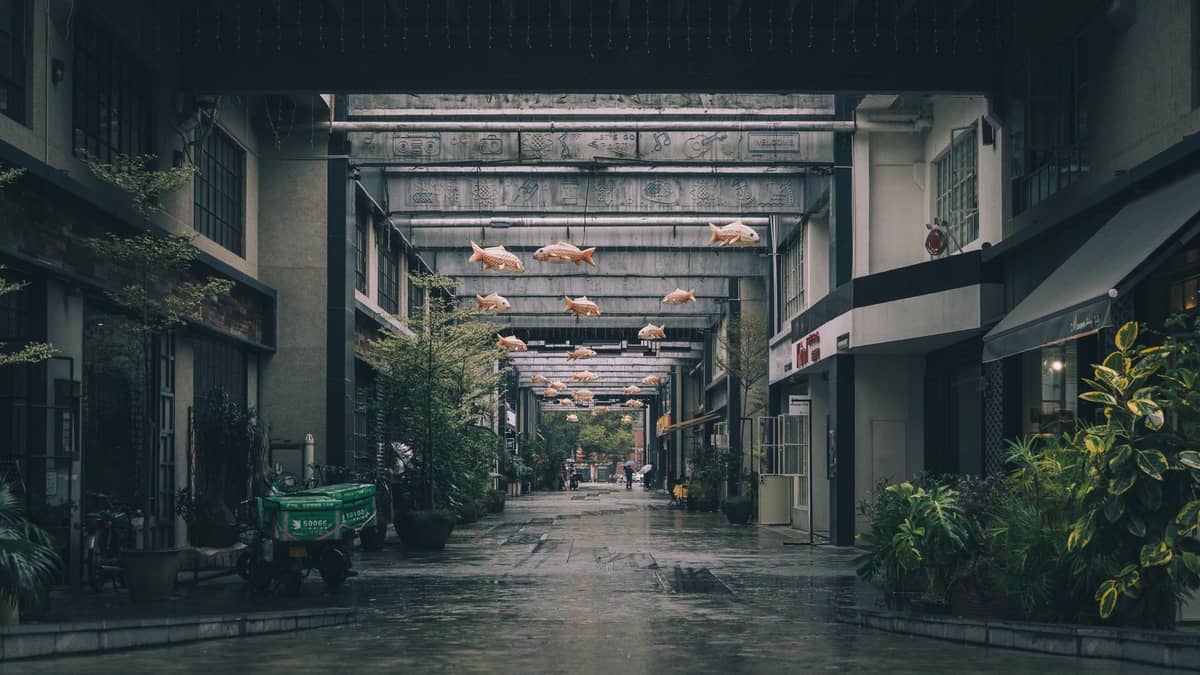
Shenzhen was designated a UNESCO Creative City of Design in 2008, a status that has shaped investment in cultural infrastructure significantly. The OCT-LOFT creative district in the Overseas Chinese Town area is the most tangible expression of this: a series of renovated industrial buildings from the 1980s repurposed into galleries, design studios, cafes, and arts venues. The architecture itself is not dramatic, but the complex is well-curated and provides a readable contrast to the tower-dominated city around it.
The Shenzhen Contemporary Art Museum (also known as MOCAPE, designed by Coop Himmelb(l)au) is one of the more architecturally significant cultural buildings in the city. Located in Futian, its angular deconstructivist form is deliberately confrontational. Combined with the nearby Shenzhen Civic Center and the city library, the cultural cluster in northern Futian represents the most cohesive example of planned civic architecture in Shenzhen.
✨ Pro tip
The Shenzhen Biennale of Urbanism/Architecture (UABB) is held periodically (roughly every two years) and transforms various city sites into architecture and urban design exhibitions. If your visit coincides with a Biennale year, it significantly expands what is accessible and visible across the city. Check the official UABB website for current scheduling.
- OCT-LOFT creative district: renovated industrial complex with galleries and design culture, best on weekends
- MOCAPE (Coop Himmelb(l)au): one of the most architecturally ambitious cultural buildings in the city
- Nantou Ancient City: historic lane settlement surrounded by modern high-rises, a genuine urban anomaly
- Shenzhen Civic Center axis: the clearest example of planned monumental civic architecture in Shenzhen
- Dafen Oil Painting Village: not high design, but a fascinating example of small-scale art-production urbanism in Longhua
Practical Tips for Exploring Shenzhen's Architecture
Shenzhen's Shenzhen Metro system connects the major architectural districts efficiently. Futian CBD stations (Shenzhen Convention & Exhibition Center, Chegongmiao, Civic Center) give access to the main tower clusters. For Nanshan and OCT, the metro reaches both Shekou and the OCT area directly. A single journey costs a few CNY depending on distance — check the Shenzhen Metro app or official website for current fares. For a broader orientation, the guide to getting around Shenzhen covers all transport options in detail.
Most of the significant buildings are not publicly accessible inside, which is worth knowing before you plan. The Ping An Finance Centre observation deck is the main exception and requires a ticket purchased in advance or on-site. The OMA Stock Exchange building and Tencent headquarters are viewable from outside but not open to the public for general visits. For broader orientation on what is worth your time overall, the guide to things to do in Shenzhen helps place the architecture within the wider city itinerary.
⚠️ What to skip
Security restrictions at many high-profile buildings in Shenzhen mean photography from street level is generally fine, but attempting to enter lobbies for photography without authorization can result in being turned away by security. This applies especially to financial and government buildings. Stick to public plazas and pavements for exterior shots.
If you are visiting specifically for architecture, allocate at least two full days. One day for Futian (towers, civic axis, MOCAPE, Stock Exchange) and one for Nanshan/Shekou (Tencent campus exterior, Nantou Ancient City, OCT-LOFT, Sea World Plaza waterfront). A two-day Shenzhen itinerary can realistically cover the highlights if you start early. See the 2 days in Shenzhen guide for a workable framework.
- Best months for clear skyline views: October, November, December
- Avoid: July and August (heavy monsoon rain, persistent haze, poor upper-floor visibility)
- Start early: major tower plazas are quieter before 9am and light is better for photography
- Wear comfortable shoes: distances between buildings in the CBDs are longer than they appear on maps
- Use the Shenzhen Metro: it is the most reliable way to move between Futian, Luohu, and Nanshan without getting caught in traffic
FAQ
What is the tallest building in Shenzhen?
The Ping An Finance Centre in Futian district, at 599.1 m. It is one of the tallest buildings in the world and has a public observation deck in the upper floors. Check the official venue website for current ticket prices and opening hours before visiting.
Can you go up the Ping An Finance Centre?
Yes, there is a public observation deck. Tickets can typically be purchased on-site or in advance. Opening hours and pricing change periodically, so verify on the official Ping An Finance Centre website or a current travel booking platform before your visit.
What is the best area in Shenzhen to see architecture?
Futian is the most concentrated area for major civic and commercial architecture, including the Ping An Finance Centre, the Shenzhen Stock Exchange (OMA), and the Civic Center. Nanshan is better for tech-campus architecture and the contrast at Nantou Ancient City. Both are easily reached by metro.
How old is Shenzhen's skyline?
Almost entirely post-1980. Before Shenzhen was designated a Special Economic Zone, the area had very little urban infrastructure. Most of the high-rise buildings visible today were completed between the mid-1990s and 2020. This makes Shenzhen unusual — its skyline has very limited 19th or early 20th century built heritage.
Is Shenzhen worth visiting just for architecture?
For architecture enthusiasts, yes. The density of supertall towers, the civic design quarter in Futian, the OMA Stock Exchange building, the OCT-LOFT creative district, and the contrast of Nantou Ancient City surrounded by modern towers provide genuine architectural range. That said, the city rewards more if you combine architecture with its food scene, tech culture, or day trips to the coast.