Shenzhen Museum of Contemporary Art and Urban Planning (MoCAUP): Art, Architecture, and the City's Future in One Building
The Shenzhen Museum of Contemporary Art and Urban Planning (MoCAUP) occupies one of the most architecturally distinctive buildings in Futian, combining a contemporary art museum with a detailed urban planning exhibition under a single free-entry roof. It is one of the few places in the city where Shenzhen's rapid transformation is presented as both data and art.
Quick Facts
- Location
- No. 184 Fuzhong Road, Lianhua Street, Futian District, Shenzhen
- Getting There
- Metro Line 4, Children's Palace Station, Exit A2
- Time Needed
- 1.5 to 3 hours
- Cost
- Free entry (verify before visiting, as policies can change)
- Best for
- Architecture enthusiasts, art explorers, urban planning interests, solo travelers
- Official website
- http://www.i-mad.com
What Is MoCAUP and Why Does It Exist?
The Shenzhen Museum of Contemporary Art and Urban Planning sits at the intersection of two ideas that rarely share a roof: art as creative expression and urban planning as civic discipline. The building opened to the public in 2016, part of a major cultural infrastructure push under Shenzhen's 12th Five-Year Plan. It operates from No. 184 Fuzhong Road, in the heart of Futian, Shenzhen's administrative and commercial centre.
The museum is often abbreviated as MoCAUP, and its Chinese name, 深圳市当代艺术与城市规划馆, reflects the dual mandate directly. Two institutions coexist within the structure: one focused on contemporary visual art, the other dedicated to presenting how Shenzhen was planned, built, and continues to evolve. For a city that grew from a small fishing town to a metropolitan area of roughly 18 million people in the span of four decades, that second function carries particular weight.
ℹ️ Good to know
Opening hours are Tuesday to Sunday, 10:00–17:30. The museum is closed on Mondays. Entry is free, but verify this before visiting as policies can be updated without notice.
The Building Itself: Architecture Worth Examining Before You Go Inside
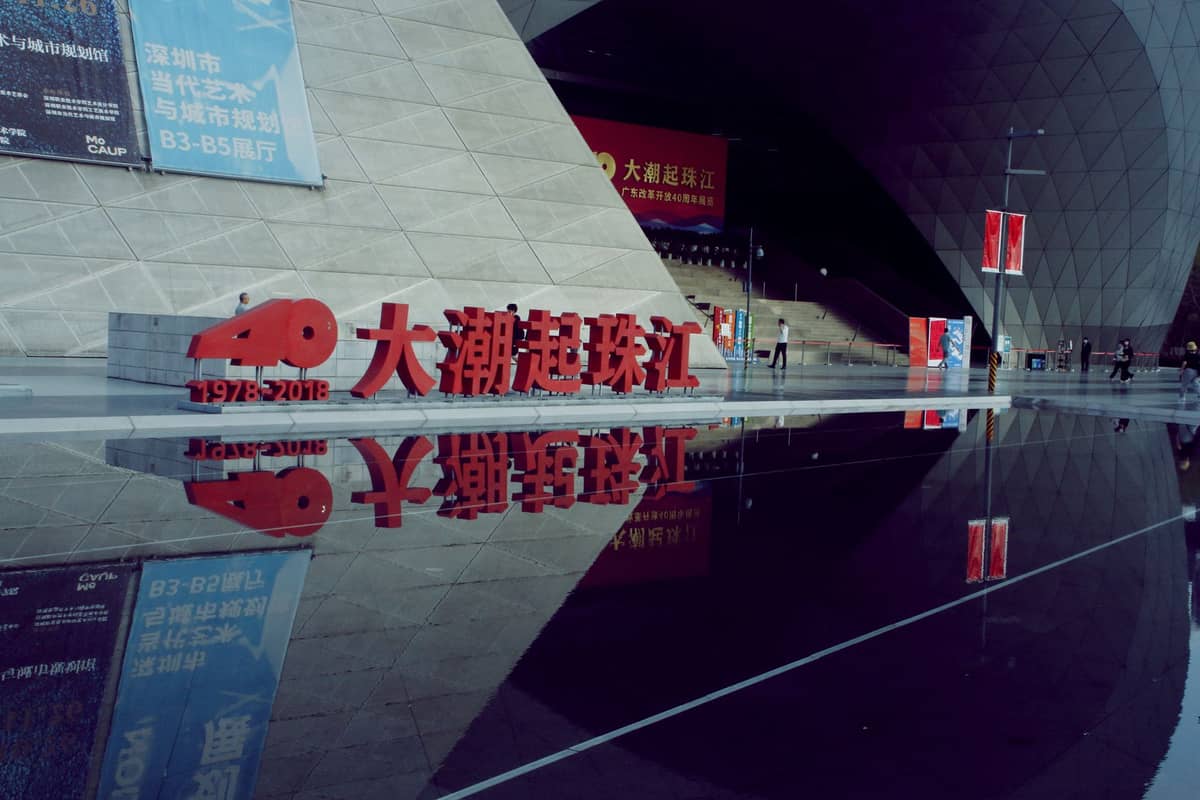
The MoCAUP building is one of the more visually arresting structures in central Shenzhen, which is saying something in a city that treats architecture as a form of civic statement. The exterior features an irregular, layered form that stands in deliberate contrast to the grid-like office towers surrounding it. Approaching from Children's Palace Metro Station, the building comes into view across an open plaza, which gives you enough distance to read the full profile before entering.
The design emerged from an international architectural competition, reflecting the city's ambition to position itself alongside Shanghai and Beijing as a serious cultural destination. For visitors interested in how Shenzhen thinks about itself, the building is part of the argument.
The museum sits adjacent to theShenzhen Civic Centercomplex, which anchors this part of Futian with a concentration of civic and cultural institutions. Walking between the two gives a clear sense of how the district presents public life in Shenzhen's administrative core.
Inside the Museum: Two Floors of Very Different Experiences
The contemporary art wing presents rotating exhibitions. The programming tends toward Chinese and international artists working in installation, video, photography, and mixed media. Because exhibitions change, it is worth checking current programming before your visit, as the quality and scale of individual shows can vary considerably. Some exhibitions fill multiple large gallery rooms; others occupy only a portion of the available space.
The urban planning exhibition is the more consistently rewarding half for most visitors. It traces Shenzhen's development with maps, scale models, demographic data, and documentary materials. The centrepiece is typically a large-scale architectural model of the city, the kind of overhead view that makes the density and geometry of Shenzhen's districts legible in a way that street-level experience does not allow. Seeing Futian, Luohu, Nanshan, and the broader urban fabric laid out in miniature helps place every other thing you visit into geographic context.
If you are trying to understand Shenzhen's urban structure before or during a trip, the planning exhibition pairs well with a visit to theShenzhen Museum, which provides historical depth from the pre-reform era through to the early Special Economic Zone period.
💡 Local tip
Spend time with the large city-scale model in the urban planning section. It is one of the most practical orientation tools available anywhere in Shenzhen, especially for first-time visitors who want to understand how the city's districts relate to each other spatially.
How the Experience Changes by Time of Day
Arriving close to the 10:00 opening means you will likely have the galleries largely to yourself for the first hour. The lighting in the planning exhibition section is consistent throughout the day since it relies almost entirely on controlled interior light, but the contemporary art galleries can feel quite different in quality of atmosphere depending on how many other visitors are present. Midday on weekdays tends to bring in small groups of students and school parties, which can add noise to the art wing but rarely disrupts the planning section.
Weekend afternoons see higher attendance, particularly from families, as the museum sits close to several other cultural venues in Futian. If you are visiting for the art rather than the planning content, a weekday morning is the better window. Photography of the scale models works best in the quieter morning sessions, when other visitors are not filling the sight lines.
Getting There and Navigating the Area
Metro Line 4 stops at Children's Palace Station, which is the designated access point. Exit A2 places you within a short walk of the museum entrance across the plaza.
Futian is Shenzhen's administrative centre, and the surrounding blocks hold a concentration of cultural and civic venues. A visit to MoCAUP fits naturally into a broaderFutian Districtitinerary, particularly for travelers interested in architecture and public institutions.
If you are coming from Hong Kong, the museum is reachable via the Futian Port or Lok Ma Chau border crossing, making it a realistic half-day destination on a day trip, particularly if combined with one or two nearby attractions.day trip from Hong Kong, particularly if combined with one or two nearby attractions.
Photography, Practical Logistics, and What to Expect on Arrival
Photography policies in Chinese museums can vary by exhibition. The permanent urban planning section is generally permissive for personal photography, but temporary contemporary art exhibitions may restrict photography of individual works. Look for posted signs at each gallery entrance or ask staff. The lobby and exterior plaza are open to photography without restriction.
The building is air-conditioned, which matters considerably if you are visiting during Shenzhen's warm months. Between May and September, Shenzhen's humid subtropical climate makes outdoor exploration tiring by late morning, so a museum visit works well as a midday activity when heat and humidity peak. Bring a light layer if you find heavily air-conditioned interiors uncomfortable.
There is no specific dress code. The museum building has elevators and wide corridors, though no specific accessibility information has been published through official English-language sources. If you have specific accessibility requirements, contact the museum directly before visiting.
⚠️ What to skip
The museum is closed every Monday. This detail catches visitors out more often than it should, particularly travelers following weekend itineraries built around Saturday or Sunday openings who assume Monday operates the same way.
Who This Is For, and Who Might Leave Underwhelmed
MoCAUP is a serious cultural venue, not an entertainment attraction. The urban planning exhibition rewards curiosity and some prior interest in cities, development economics, or Shenzhen's history. For visitors who want to understand why Shenzhen looks and functions the way it does, this is one of the most directly useful places in the city.
The contemporary art programme is harder to evaluate in advance because it depends entirely on what is showing. Shenzhen has a growing art scene, and the museum has hosted notable exhibitions, but it is worth checking current programming before making it the centrepiece of your visit. For a broader picture of Shenzhen's contemporary art context, theOCT-LOFT Creative Culture Parkin Nanshan operates as a more consistently active art district with multiple galleries and event spaces.
Travelers primarily interested in markets, street food, or outdoor activities may find the museum less compelling than other parts of Futian. In that case,Lianhua Mountain Parksits nearby and offers a completely different kind of afternoon.
For those building a wider Shenzhen itinerary, theShenzhen contemporary art guideprovides useful context on how MoCAUP fits into the broader cultural landscape.
Insider Tips
- The urban planning model hall is the museum's most distinctive feature and often quieter than the art galleries. Give it at least 30 minutes, even if you came primarily for the art.
- Check the museum's official social media before visiting to confirm current exhibitions. Temporary shows occasionally require separate reservation even if base admission remains free.
- The plaza between MoCAUP and the Civic Center is a useful orientation point for the Futian civic district. Early morning, before the museum opens, the plaza is empty enough to appreciate the architectural scale of both buildings.
- If you want to visit multiple free museums in Futian in a single day, the Shenzhen Museum is reachable by metro and pairs well with MoCAUP without significant travel time.
- Weekday mornings in October through December are the sweet spot: mild weather, low crowds, and consistent natural light in the exterior plaza for photography.
Who Is Shenzhen Museum of Contemporary Art and Urban Planning (MoCAUP) For?
- Architecture and design enthusiasts who want to see how Shenzhen thinks about its built environment
- First-time visitors to Shenzhen who want spatial and historical context before exploring the city
- Contemporary art followers tracking China's evolving cultural institutions
- Travelers on a budget, as free entry makes it easy to include without planning around ticket costs
- Day-trippers from Hong Kong looking for a substantive cultural stop in Futian
Nearby Attractions
Other things to see while in Futian:
- Lianhuashan Park
Lianhuashan Park sits at the geographic and symbolic center of Futian, Shenzhen's administrative core. Free to enter and open from early morning to late evening, it draws everyone from tai chi practitioners at dawn to families flying kites on weekend afternoons, all beneath a hilltop view of one of China's most recognizable modern skylines.
- Ping An Finance Centre
The Ping An Finance Centre is Shenzhen's tallest tower and one of the tallest buildings on Earth, rising 599.1 metres across 115 floors in the Futian district. Its Free Sky observation deck offers a panoramic sweep of the Pearl River Delta on clear days. Here is everything you need to decide if the climb is worth it.
- Shenzhen Civic Center
Shenzhen Civic Center (深圳市民中心) is the administrative and symbolic centerpiece of Futian District, combining a striking modernist building with a vast public square open around the clock. Free to visit and easily reached by metro, it offers a compelling window into how Shenzhen deliberately designed itself as a city from scratch.
- Shenzhen Museum
Shenzhen Museum, located at the Civic Center in Futian District, is one of the city's main public museums covering ancient history, folk culture, and modern urban development. Admission is free, the permanent collections are substantial, and it offers a grounding in Shenzhen's past that no theme park or shopping district can provide.