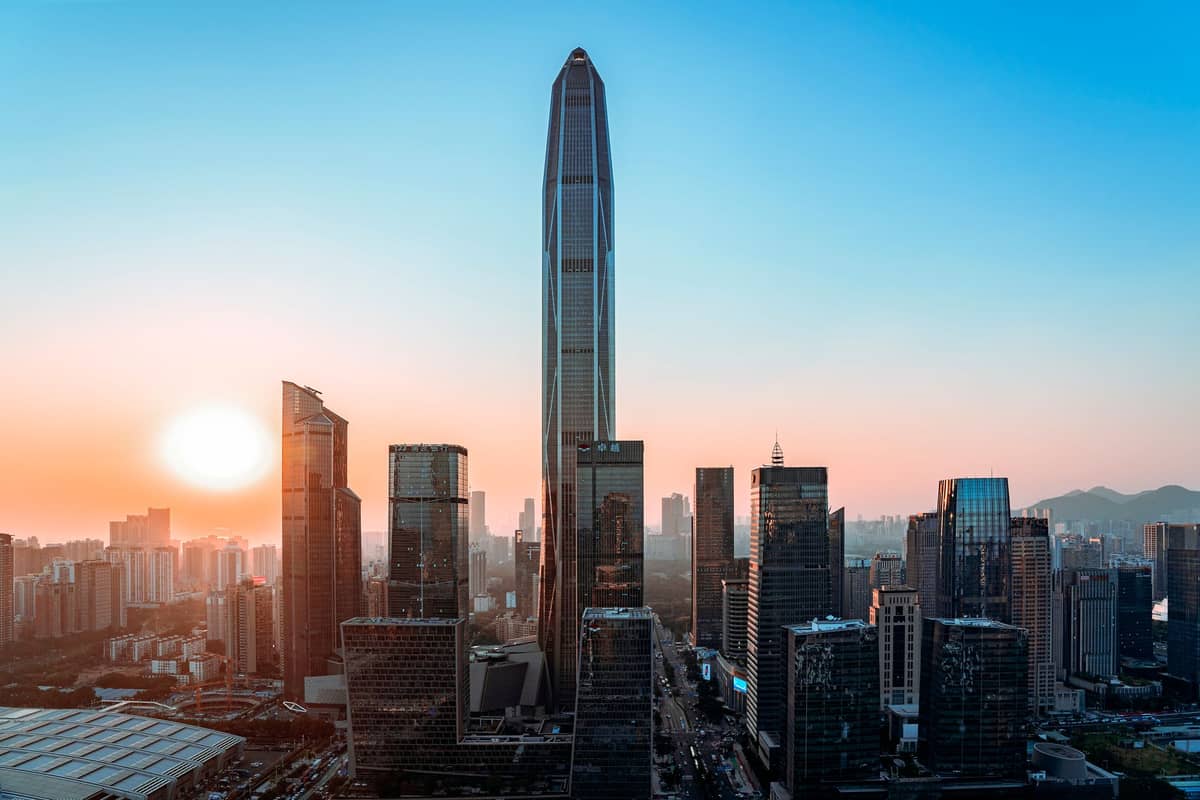
Futian is Shenzhen's central business and administrative district, home to the city's tallest skyscraper, major government institutions, and the best-connected transport hub in the region. It sits at the geographic and functional core of Shenzhen, making it the natural base for visitors who want efficient access to the rest of the city.
Futian is where Shenzhen governs itself, does its biggest deals, and shows its most polished face to the world. This is the district of soaring finance towers, manicured civic plazas, and metro lines that fan out to every corner of the city. It isn't the grittiest or most characterful part of Shenzhen, but for orientation, convenience, and a clear-eyed look at what this city has become in four decades, nowhere is more instructive.
Orientation
Futian occupies the south-central portion of Shenzhen, and understanding its position helps you navigate the entire city. To the east lies Luohu, Shenzhen's older commercial core and the district closest to the original Hong Kong border crossing. To the west stretches Nanshan, Shenzhen's technology and university district. To the north, Longhua connects Futian to the mid-city residential belt and onward to the airport corridor.
The district's boundaries run broadly from the north down to Shennan Avenue along the southern edge, and from west to east across the district. Shennan Avenue itself is one of Shenzhen's great urban spines, a wide boulevard that cuts east-west across the city and passes through Futian's commercial core. The Shenzhen River marks the southern edge of the broader district, forming the border with Hong Kong's New Territories.
The CBD cluster concentrates around the area between Civic Square and the Ping An Finance Centre. North of this, the urban texture shifts toward mid-rise residential blocks, local wet markets, and neighborhood-scale commerce. South of Shennan Avenue, the Futian Port and Huanggang Port provide two major land border crossings into Hong Kong. Keeping these zones in mind makes it much easier to understand why Futian feels so different block by block.
ℹ️ Good to know
Futian is the official municipal seat of Shenzhen, meaning city-level government offices, courts, and administrative bodies are concentrated here alongside private-sector finance and commerce.
Character & Atmosphere
Early mornings in Futian have a particular quality that the afternoon erases completely. Before 8am, the wide plazas around the Civic Center are occupied by retirees doing tai chi, couples walking dogs, and workers eating breakfast from small stalls near the metro exits. The scale of the buildings is already apparent, but without the midday glare and foot traffic, the district feels almost contemplative.
By mid-morning, the CBD transforms. Office workers stream out of metro stations at Civic Center, Children's Palace, and Huaqiangbei. The streets around the financial towers fill with suited professionals, delivery riders, and the occasional tour group angling cameras up at the Ping An Finance Centre. Shennan Avenue hums with traffic. The light in the afternoon is harsh and flat, bouncing off glass facades, which is part of why Lianhuashan Park to the north becomes so appealing at that hour: it offers shade, elevation, and a view back over the towers that frames exactly how quickly this city built itself.
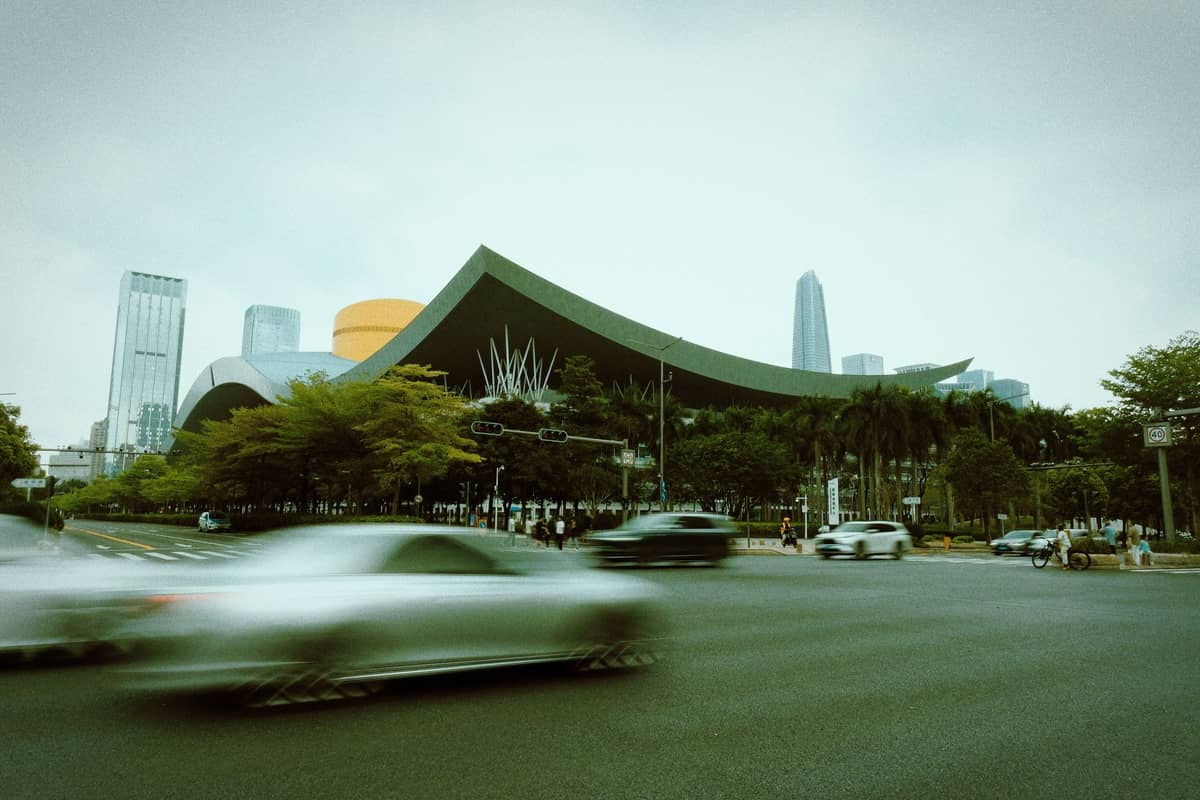
After dark, the character splits by zone. The CBD plazas quiet down on weeknights, but the shopping streets around Huaqiangbei and the malls near Gangxia stay active well into the evening. The areas around Civic Square take on a slightly formal, lit-monument quality at night, worth a walk if you want to see the Civic Center's arching roof structure illuminated. Compared to Luohu's late-night energy or Shekou's bar-lined waterfront, Futian after 10pm is quiet. That's not a flaw so much as a signal about who lives and works here.
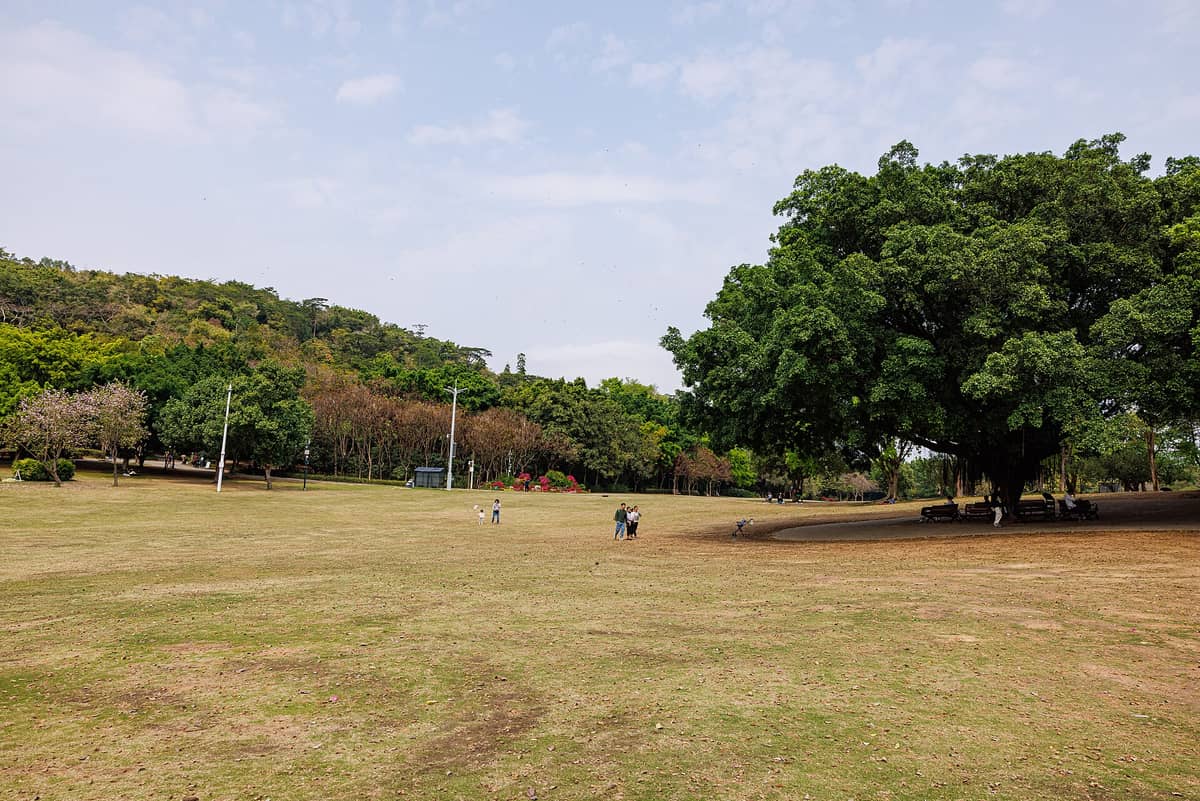
One thing that surprises most visitors is how much green space exists within the district. Lianhuashan Park alone covers a substantial area north of the CBD, and the streets around it are planted with mature tropical trees that soften the otherwise hard urban geometry. This is deliberate city planning, not accident, and it gives Futian a more livable quality than its tower-dominated skyline photographs suggest.
What to See & Do
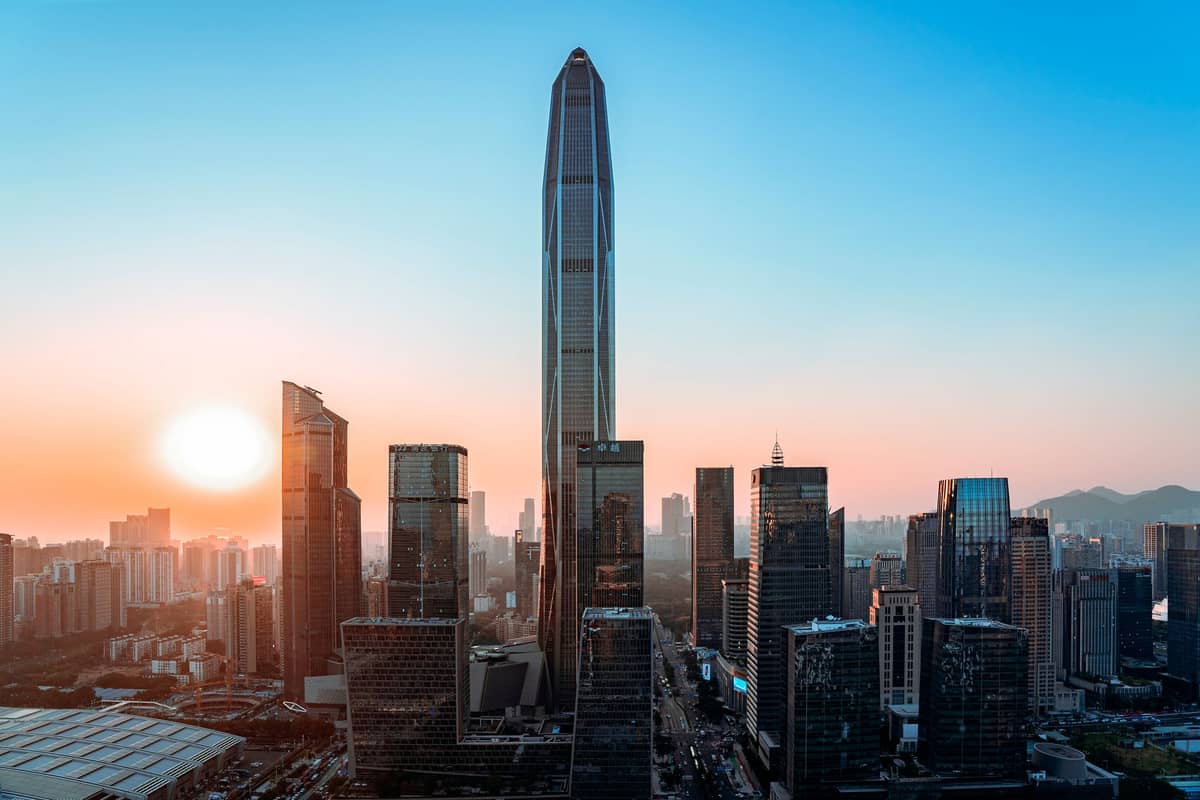
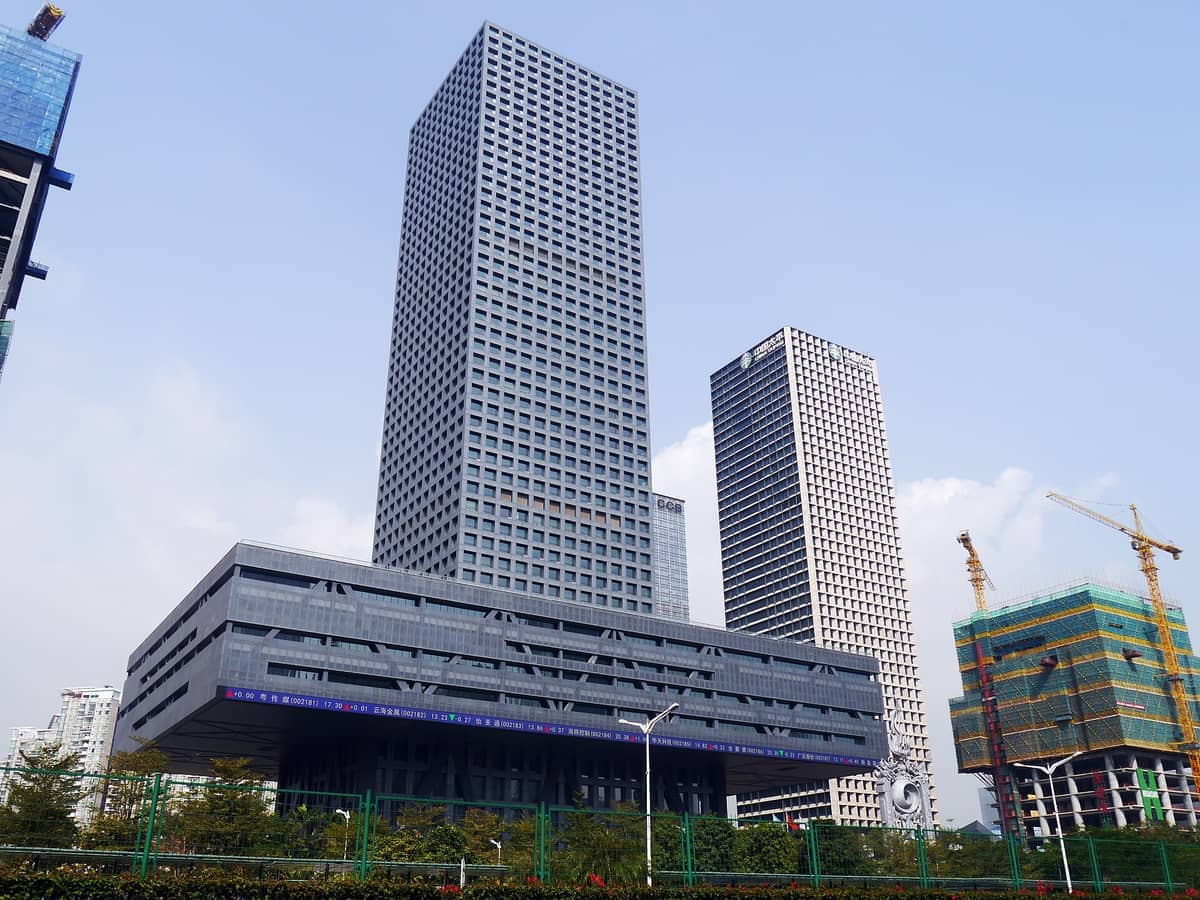
The Ping An Finance Centre is the unavoidable reference point for the whole district. At 599 meters, it is one of the tallest buildings in the world and visible from almost anywhere in central Shenzhen. The observation deck offers a vertiginous view across the Pearl River Delta on clear days. Mornings and late afternoons tend to offer the best visibility before haze builds. Even if you skip the observation deck, the tower's base and surrounding plaza are worth a walk.
Just north of the CBD cluster, Lianhuashan Park is the district's best open-air space. The park rises to a hilltop viewpoint where a famous bronze statue of Deng Xiaoping stands looking south over the city he effectively authorized into existence. It's one of those places where Shenzhen's compressed history becomes tangible: a city that built its entire skyline within living memory, visible in a single glance.
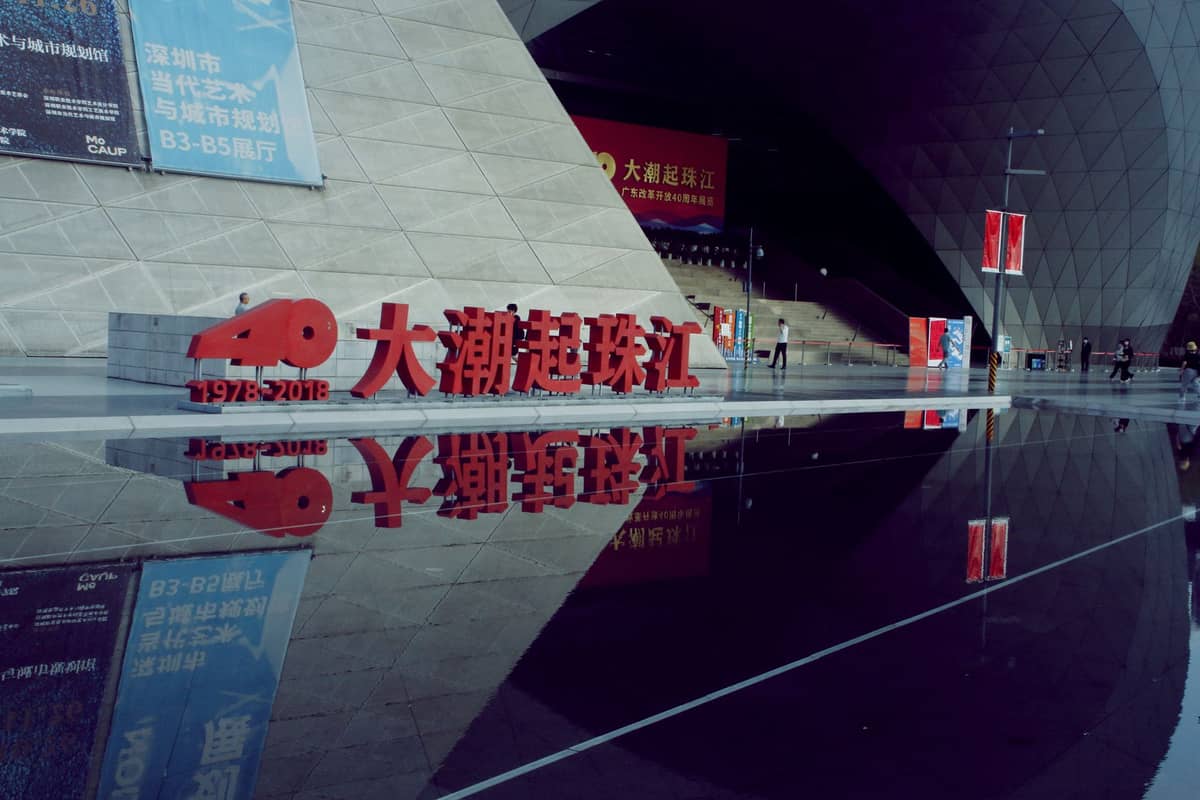
The Shenzhen Civic Center anchors the southern edge of Lianhuashan Park and represents the civic ambition of the city's planners. The complex houses the municipal government, the Shenzhen Concert Hall, and the Shenzhen Library within a unified architectural statement. The roofline is a distinctive arched structure designed to be viewed from the hill above.
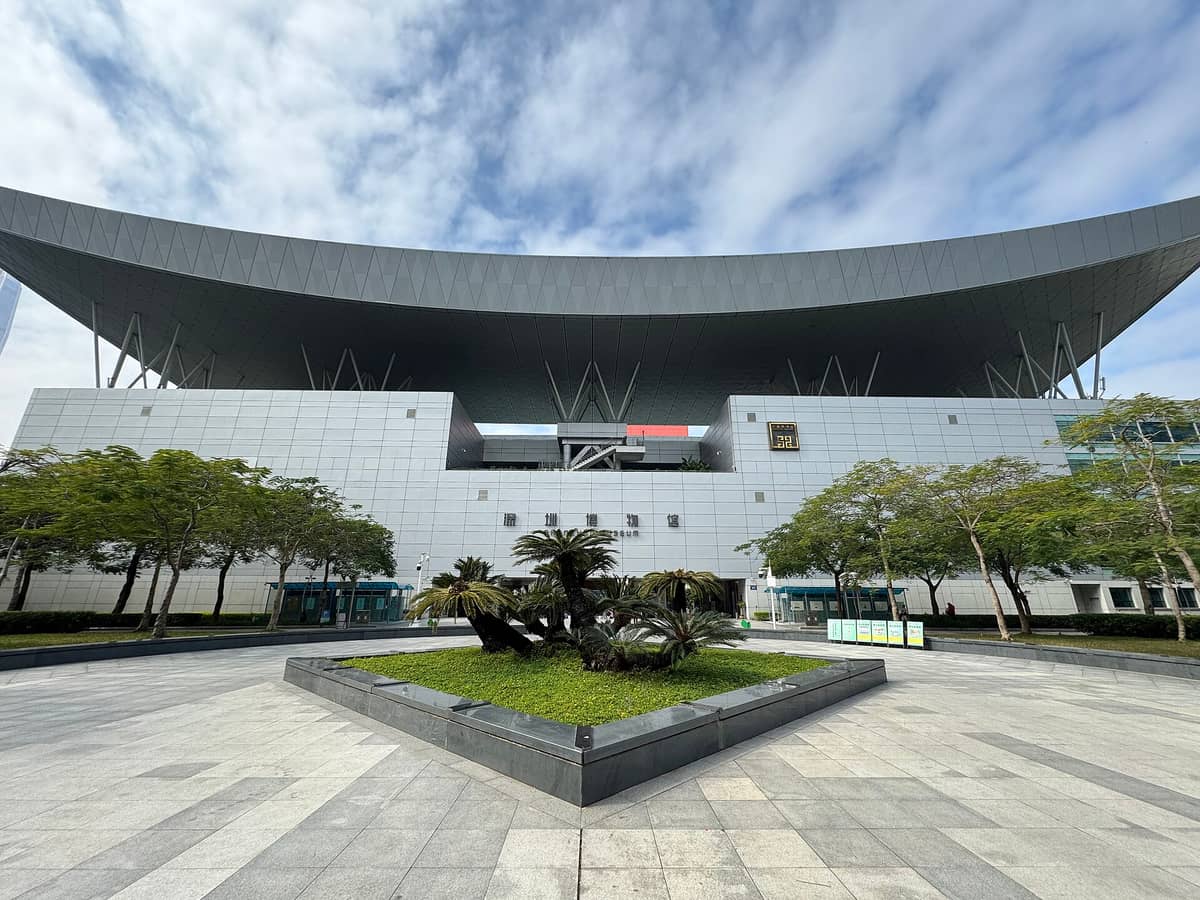
The Shenzhen Museum sits within the civic complex and offers the clearest single account of the city's history: from ancient Cantonese fishing settlements through the Special Economic Zone designation in 1980 to the present metropolis. The exhibition is well-organized and partially translated into English. It's free to enter and makes an excellent orientation point for first-time visitors.
Futian borders the electronics district of Huaqiangbei to the northeast, and a short walk or single metro stop connects you to one of the most concentrated consumer electronics markets in the world. If you're interested in the tech-manufacturing culture that defines Shenzhen's global identity, Huaqiangbei is a short detour from Futian's civic core.
Ping An Finance Centre observation deck: full-city and Pearl River Delta panoramas
Lianhuashan Park: hilltop views, morning tai chi culture, Deng Xiaoping statue
Shenzhen Museum: free entry, strong English signage, essential city history
Shenzhen Civic Center: architectural landmark and evening light show
Huaqiangbei electronics district: adjacent neighborhood, walkable from Futian's eastern edge
💡 Local tip
The view from Lianhuashan Park's hilltop is best in the late afternoon when the sun is behind you and the CBD towers catch the light. Arrive by 4pm on a clear day for the best photography conditions.
Eating & Drinking
Futian's food scene is wide rather than deep. Because the district contains both high-end office workers and a large resident population, the range of options runs from rooftop hotel restaurants charging serious money to basement canteens where a full lunch costs under 30 yuan. What it lacks compared to Luohu or the older neighborhoods is street-food spontaneity: the CBD zone is polished and mall-oriented, and the most interesting eating often happens a few blocks back from the main commercial streets.
The shopping malls concentrated around the CBD, including the complexes around Civic Square and Gangxia, contain reliable food court options covering Cantonese dim sum, Sichuan hot pot, Japanese ramen, and Korean barbecue. These aren't destination meals, but they're consistent and convenient, especially for travelers on a schedule. Prices in mall restaurants typically range from 50 to 150 yuan per person depending on cuisine type.
For more local eating, the residential streets north of Hongli Road reward exploration. This is where you find the kind of Cantonese roast meat shops, congee stalls, and small noodle houses that attract office workers who live in the neighborhood rather than pass through it. Morning is the best time to catch the wet market energy near local residential blocks, where produce vendors, tofu sellers, and small breakfast stalls set up from around 6:30am.
Futian also sits close enough to the wider city that a short metro ride takes you to more specialized food neighborhoods. The Shenzhen food guide covers the full spectrum of the city's dining scene, from the seafood villages in the east to the international restaurants of Shekou in the west, but Futian itself serves as a practical, central base for eating your way outward.
Cantonese dim sum: available at mall restaurants from late morning, expect 80-150 yuan per person
Roast meat and noodles: residential streets north of the CBD, 25-50 yuan per person
Hot pot: multiple chain options in major malls, 80-180 yuan per person
Coffee and cafes: concentrated near metro exits and in office lobbies, international chains and local brands both present
Breakfast stalls: near residential metro stations from 6:30am, under 20 yuan
Getting There & Around
Futian is the best-connected district in Shenzhen for transit. The Shenzhen Metro serves the district with multiple lines, including interchanges at major stations like Civic Center, Huaqiangbei, Children's Palace, and Gangxia. From these points, you can reach virtually any other district in the city without a transfer, making Futian the natural base for anyone planning to move around a lot.
Futian Railway Station, located at the intersection of Shennan Road and Yitian Road, is a key high-speed rail hub connecting Shenzhen to Guangzhou, Hong Kong, and destinations further north. Trains to Guangzhou South take around 30 minutes. The station also connects to Hong Kong via the Guangzhou-Shenzhen-Hong Kong Express Rail Link, with services running to Hong Kong West Kowloon Station. This makes Futian the practical starting point for day trips to both cities.
For Hong Kong crossings by land, Futian Port and Huanggang Port are both within the district. Futian Port (Lok Ma Chau Spur Line on the Hong Kong side) operates specific crossing hours, while Huanggang Port is known for 24-hour operation, which is useful for late arrivals or early departures. Check current operating hours before relying on either crossing. The Hong Kong to Shenzhen guide covers all border crossing options in detail.
Within Futian, walking works well between major attractions in the civic core: the distance from Lianhuashan Park's hilltop to the Shenzhen Museum is a relaxed 15-minute walk downhill. For longer cross-district journeys, the metro is almost always faster than surface transport during peak hours. Didi ride-hailing is also widely available, useful for late-night or luggage-heavy trips. The Shenzhen transit guide explains metro apps, card payment, and navigation tips for non-Mandarin speakers.
⚠️ What to skip
Futian Railway Station is not the same as Shenzhen North Station or Shenzhen Station. When booking high-speed rail or checking connections, confirm you have the correct station name, as each serves different routes and is located in a different district.
Where to Stay
Futian is the strongest all-around base for first-time visitors to Shenzhen. The combination of central geography, metro access in every direction, and the high-speed rail connection to Hong Kong and Guangzhou means you lose very little time in transit. For a full overview of how Futian compares to other district options, the Shenzhen accommodation guide breaks down the trade-offs between districts.
The CBD cluster around Civic Square and the Ping An tower contains the highest concentration of business hotels: large international chains that cater primarily to corporate travelers. These are reliable and well-maintained, with English-speaking front desks, but they carry a premium price and a somewhat impersonal atmosphere. Rooms in this zone tend to be among the more expensive in the city.
Mid-range options exist in the residential areas north of Hongli Road and along the streets near Huaqiangbei. These neighborhoods are quieter at night than the CBD, closer to local food and daily commerce, and still very well connected by metro. For travelers who want Futian's convenience without the corporate hotel atmosphere, these pockets are worth seeking out. Budget travelers will generally find better value in Luohu or the areas around Huaqiangbei itself.
One practical consideration: streets near the Futian and Huanggang border crossings can be noisy in the early morning as cross-border transport ramps up. If you are a light sleeper, ask for a room facing away from the main border road corridors when booking hotels in the southern part of the district.
Practical Notes for Visitors
Payment across Futian is dominated by mobile apps: WeChat Pay and Alipay handle almost everything from convenience stores to restaurants to metro top-ups. Cash (Chinese yuan, CNY) is accepted but increasingly less common in modern mall environments. International credit cards are accepted at large hotels and some mall restaurants, but should not be relied upon for daily expenses. For a broader picture of managing money and time in the city, the Shenzhen budget guide covers practical cost-saving strategies.
Mandarin is the working language of Futian. Because this is primarily a business and government district rather than a tourist one, English-language signage is present at major transit hubs and hotels but sparse at local restaurants and shops. Translation apps handle most daily interactions reliably. Emergency numbers in China are 110 (police), 120 (ambulance), and 119 (fire).
Visitors planning to combine Futian with day trips elsewhere in the region will find the district's transport infrastructure makes this straightforward. The coastal areas of eastern Shenzhen, the cultural villages in Longhua, and the tech campus routes through Nanshan are all accessible without a hotel change. The 2-day Shenzhen itinerary uses Futian as its base precisely because of this central positioning.
TL;DR
Futian is Shenzhen's administrative and financial center, the most transit-connected district in the city and the most logical base for first-time visitors.
Key draws include the Ping An Finance Centre, Lianhuashan Park, the Shenzhen Museum, and easy access to Huaqiangbei's electronics district.
Futian Railway Station connects directly to Hong Kong and Guangzhou by high-speed rail, and two land border crossings to Hong Kong operate within the district.
The atmosphere is polished and corporate rather than gritty or street-level: ideal for travelers who prioritize convenience and infrastructure, less suited to those seeking raw local character.
Best for: business travelers, first-time visitors to Shenzhen, travelers combining the city with Hong Kong or Guangzhou day trips, and anyone wanting central metro access to the entire city.
Two days in Shenzhen is enough to move through its most distinct neighbourhoods, from the electronics labyrinth of Huaqiangbei to the coastal parks of Nanshan and the art spaces of OCT Loft. This itinerary is built around the metro, keeps mornings efficient, and leaves room for the food and nightlife that most guides gloss over.
Shenzhen's climate is subtropical and unforgiving in summer. This guide breaks down every season clearly, from the ideal October–December window to the typhoon risks of July–September, so you can plan your trip around real conditions rather than brochure weather.
Shenzhen sits at the centre of one of the most connected corners of Asia. Within a few hours, you can reach Hong Kong, Guangzhou, Zhuhai, Macau, and the coastal villages of Dapeng. This guide covers the best day trips from Shenzhen with realistic travel times, transport logistics, and clear assessments of what each destination actually offers.
Shenzhen delivers far more than its reputation as a tech-and-shopping city. From coastal greenways and hilltop parks to art districts and Ming Dynasty fortresses, a remarkable amount of the city costs nothing to explore. This guide covers the best free attractions across every district.
Shenzhen has one of the most extensive metro systems in China, plus buses, taxis, and ride-hailing to fill the gaps. This guide breaks down every transport option, from airport arrival to cross-city metro trips, so you can move around confidently from day one.
Getting from Hong Kong to Shenzhen is straightforward once you know which crossing suits your itinerary. This guide covers every route — high-speed rail, MTR foot crossings, and 24-hour options — with realistic queue times, operating hours, and practical advice for first-timers.
Shenzhen is one of China's most misunderstood cities. It's not just a tech showcase or a shopping stopover from Hong Kong. This guide cuts through the clichés to help you decide if Shenzhen belongs on your itinerary, and what to prioritize if it does.
Shenzhen built more supertall skyscrapers in 40 years than most cities manage in a century. This guide covers the key landmarks, the best districts for architectural exploration, observation decks, design culture, and practical tips for getting around the skyline.
Chinese New Year in Shenzhen is neither a ghost town nor a nonstop party — it's something more interesting than either. This guide covers the real rhythm of the city during Spring Festival: which events are worth your time, how crowds shift, what actually closes, and how to make the most of one of China's most distinctive holiday periods.
Shenzhen has built one of China's most serious contemporary art ecosystems in under four decades. This guide covers the key museums, gallery districts, and creative spaces — from OCAT Shenzhen to Dafen Oil Painting Village — with practical details on getting there, what to expect, and when to visit.
Huaqiangbei is the world's largest electronics market district, but navigating it without a plan is a recipe for overpaying or leaving empty-handed. This guide covers which buildings to visit, realistic price expectations, negotiation strategy, payment methods, and practical advice on what is cheap versus what only looks like a deal.
Shenzhen's food scene reflects its identity as a migrant city: no single ancient cuisine, but an extraordinary range of Cantonese, Hakka, Teochew, Hunan, Sichuan, and international cooking all under one roof. This guide covers the dishes worth seeking out, the neighborhoods to find them in, and the practical details that make eating here genuinely easy.
Shenzhen is far more than tech malls and theme parks. This guide takes you to the ancient fortresses, artist communities, coastal trails, and architectural wonders that most visitors walk straight past.
Shenzhen surprises most visitors with the quality and variety of its hiking. Within the city limits you'll find a 944-meter mountain summit, a 15-kilometer coastal greenway, dramatic clifftop sea trails, and forested urban parks. This guide covers the best of all of them.
Shenzhen at night is more varied than most visitors expect. This guide breaks down the city's top nightlife districts by vibe and budget, covering rooftop bars, live music venues, megaclubs, and late-night food streets — with metro directions, realistic price ranges, and clear notes on what's worth your time.
Shenzhen is one of the most affordable major cities in Asia for travelers who know where to look. This guide breaks down realistic daily costs, the cheapest transport options, free and low-cost attractions, and the neighborhoods that give you the best value without sacrificing convenience.
Shenzhen takes its reputation as a City of Parks seriously. This guide covers the best parks in Shenzhen across every type, from hilltop viewpoints and wetland boardwalks to beach trails and sprawling botanical gardens.
Shenzhen is China's most concentrated hub of consumer tech, hardware manufacturing, and innovation showrooms. This guide covers the best stops, realistic routes, logistics, and practical advice for planning your own tech tour across Nanshan, Futian, and Huaqiangbei.
Shenzhen is far more than a tech hub. It has world-class theme parks, wildlife reserves, natural history museums, and coastal beaches that make it a genuinely rewarding destination for families. This guide covers the best of it, organized by what works for different ages and energy levels.
Shenzhen is one of Asia's great shopping cities, but it rewards those who know where to go. This guide breaks down the best markets, malls, and districts by category, with clear advice on prices, bargaining, and what's worth buying.
Shenzhen rewards visitors who look beyond the shopping malls. This guide covers the city's best experiences across parks, coastlines, heritage districts, and skyline viewpoints — organized by what kind of traveler you are, with practical details on getting there, what to expect, and what to skip.
Shenzhen has 10 districts and no single obvious center, which makes choosing where to stay genuinely confusing. This guide breaks down the best neighborhoods by trip type, with clear price ranges, metro access notes, and practical trade-offs for each area.