Shenzhen Museum: The City's History, Culture, and Context in One Place
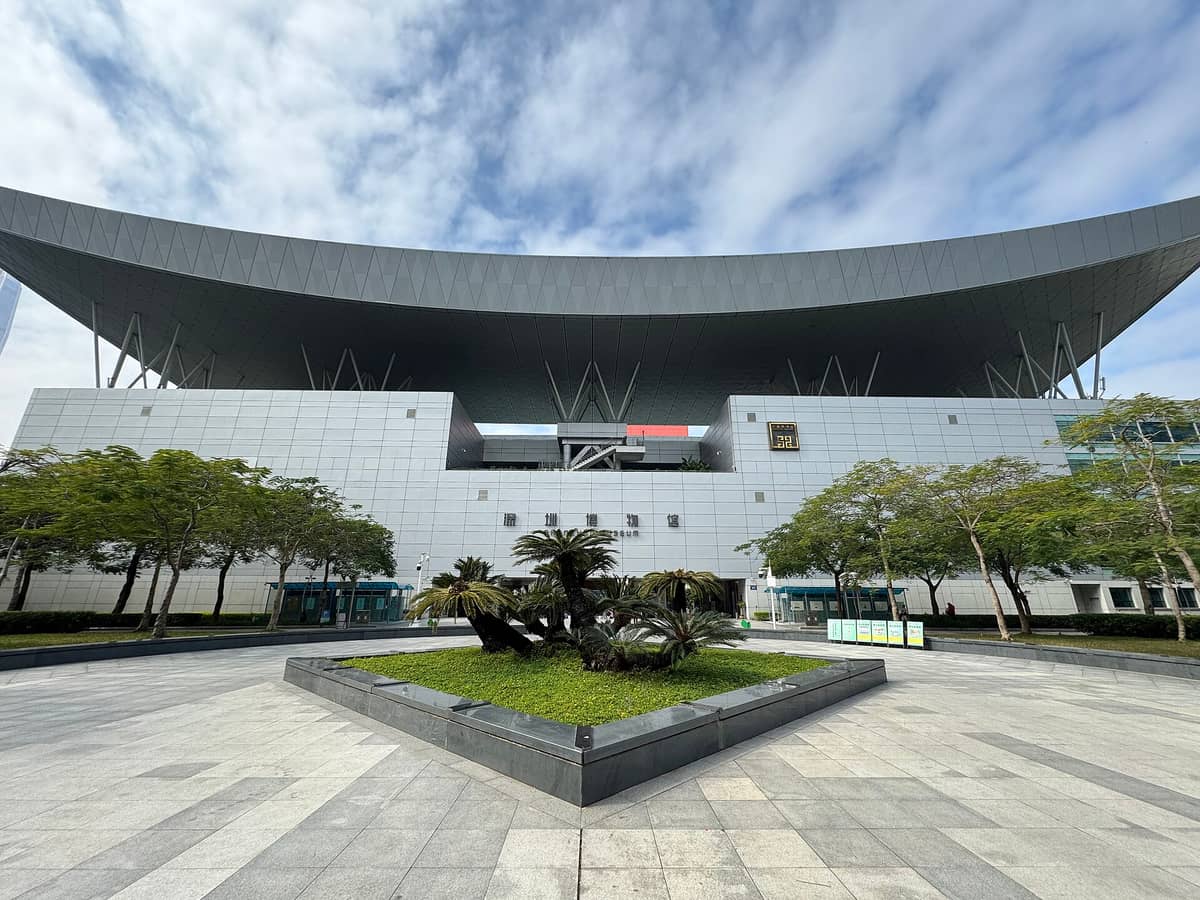
Shenzhen Museum, located at the Civic Center in Futian District, is one of the city's main public museums covering ancient history, folk culture, and modern urban development. Admission is free, the permanent collections are substantial, and it offers a grounding in Shenzhen's past that no theme park or shopping district can provide.
Quick Facts
- Location
- Area A, Civic Center, Fuzhong Road, Futian District, Shenzhen
- Getting There
- Metro Line 2 or 4, Civic Center Station, Exit B
- Time Needed
- 2 to 3 hours for the main halls; allow more if browsing temporary exhibitions
- Cost
- Free general admission
- Best for
- History buffs, first-time visitors wanting context for the city, families, rainy-day plans
- Official website
- www.shenzhenmuseum.com
Why Shenzhen Museum Is Worth Your Time
Shenzhen has a reputation as a city with no past, a concrete grid that appeared almost overnight after 1980. That narrative is compelling but incomplete. Shenzhen Museum exists precisely to complicate it. The institution traces human settlement in the Pearl River Delta back roughly 5,000 years, covering Neolithic cultures, the Qin and Han dynasties, the maritime Silk Road, and the layered folk traditions of the Guangdong coast. Then, in its modern history hall, it documents the transformation into a Special Economic Zone with enough candor to make the place feel like more than a promotional display.
The museum's main visitor facility, the History and Folk Culture Hall, sits inside the Civic Center complex on Fuzhong Road, one of Futian's widest ceremonial boulevards. The building is part of a civic ensemble that also includes the Shenzhen Concert Hall and the Shenzhen Library, all flanking the broad Civic Center plaza. If you arrive by Metro Line 2 or 4 at Civic Center Station and use Exit B, the museum is a short walk across the plaza — shaded colonnades help on hot days, though the open approach can feel exposed in the midday summer sun.
💡 Local tip
The museum is closed every Monday and on the first day following a national statutory holiday. It opens at 10:00 and stops admitting visitors at 17:30. Plan your arrival before 16:00 if you want to move through the galleries without rushing.
What the Collections Actually Cover
The permanent exhibition occupies multiple floors and is organized chronologically. The ancient history section opens with archaeological finds from the Xiantouling and Xiantou Reservoir sites, documenting Neolithic settlements whose pottery and stone tools predate any recognizable Chinese state. Subsequent galleries trace the region through the Bronze Age, through incorporation into the Qin empire in 214 BCE, and into the long stretches of the Han and Tang dynasties when the Pearl River Delta served as a staging point for oceanic trade.
The folk culture wing is the section that tends to surprise visitors most. It examines the distinct communities that historically inhabited the region: Cantonese-speaking Punti, Hakka settlers who arrived later from the north, and the Tanka boat-dwelling people who rarely appear in conventional Chinese history narratives. The displays include traditional clothing, domestic objects, festival items, and reconstructed architectural models of local vernacular buildings. The craftsmanship on display, including embroidery and lacquerware, is genuinely fine and not the kind of thing you will find in a theme park recreation like those near Window of the World.
The modern history hall documents Shenzhen's post-1980 development as China's first Special Economic Zone. Photography, documents, and scale models trace the city's rapid expansion district by district. For visitors interested in how urban planning and economic policy interact, this section pairs well with a broader read through theShenzhen architecture guide, which covers the physical consequences of that expansion on the skyline.
How the Experience Changes by Time of Day
Morning visits, particularly on weekdays, are the quietest. The galleries receive natural light through high windows in some sections, and the air conditioning is at its most comfortable before the afternoon crowds arrive. School groups tend to visit in the late morning, particularly on weekdays during the school term, so the ancient history galleries can become noisier and more crowded between 10:30 and 12:00. If you are visiting with young children, this overlap can make the experience more dynamic rather than disruptive.
Weekend afternoons draw the largest general visitor crowds. The folk culture section, with its tactile displays and visual richness, tends to hold families the longest. By 15:00 on a Saturday, the ground-floor lobby can feel congested near the information desk. The upper floors, particularly galleries devoted to less photogenic subjects like administrative history or demographic records, stay calm throughout the day. If you want to move at your own pace and read panel text properly, these upper sections are reliably uncrowded regardless of when you visit.
ℹ️ Good to know
The museum operates multiple venues across Shenzhen. The Civic Center site is the main hub for general visitors. Confirm which branch is showing any temporary exhibition you specifically want to see before you travel.
Practical Walkthrough: Getting There and Moving Through the Building
Metro Line 2 is by far the most reliable option. From Luohu border crossing, the ride to Civic Center Station takes roughly 20 minutes. From the Shenzhen North railway station hub, Line 4 connects to Line 2 with a transfer at Children's Palace Station. Metro Line 2 or 4 is by far the most reliable option. From Luohu border crossing, the ride to Civic Center Station takes roughly 20 minutes. From the Shenzhen North railway station hub, Line 4 connects to Line 2 with a transfer at Children's Palace Station. Exit B from Civic Center Station deposits you on the eastern side of the Civic Center plaza, with clear sight lines to the museum entrance.
Taxis and ride-hailing via Didi are straightforward from most parts of Futian. The Civic Center address is well-known to local drivers. For visitors arriving from the Nanshan tech corridor, the direct route along Shennan Boulevard is efficient. If you are combining the museum with other Futian destinations, note thatLianhuashan Parkis within walking distance to the north, a useful combination for a half-day itinerary.
Inside the building, floor plans are available in English at the information desk near the main entrance. Audio guides exist but availability and language options should be verified on arrival. Gallery labels are bilingual in Mandarin and English throughout the permanent collection, though the quality of translation varies. The core object descriptions are clear; the more contextual interpretive panels occasionally require patience with awkward phrasing.
⚠️ What to skip
Photography policies within the museum should be confirmed on arrival, as rules can differ between permanent and temporary exhibitions. Large bags may need to be checked at the cloakroom near the entrance.
How This Fits into Shenzhen's Broader Cultural Landscape
Shenzhen is not a city short of new cultural infrastructure. TheShenzhen Contemporary Art Museumtargets a very different audience and aesthetic register. But the Museum fills a gap that purely contemporary institutions cannot: it provides the historical bedrock without which the speed of Shenzhen's transformation loses its full meaning. Knowing that the ground you are standing on was Hakka farmland and coastal fishing territory two generations ago changes how you see the glass towers around the Civic Center.
For visitors curious about the deeper history of the region beyond city limits, the museum's context pairs well with a trip to theDapeng Fortressin the eastern Dapeng New District, a Ming dynasty garrison settlement that survived into the modern era with its walls intact. The museum's coverage of Ming and Qing-era coastal defense makes Dapeng considerably more legible as a physical site.
Visitors interested in folk traditions specifically may also find value in pairing the museum with a visit toNantou Ancient Cityin Nanshan, which served as the administrative seat of the entire region for centuries and is now an unusual hybrid of preserved historical fabric and contemporary urban life.
Who Will Get the Most From This Place (And Who Might Not)
The museum rewards visitors who arrive with at least some curiosity about Chinese history, regional folk culture, or urban development. You do not need specialist knowledge. The English-language labels are sufficient to follow the main narrative threads. But visitors who find museum formats inherently slow or who struggle with lengthy panel reading may find the pacing frustrating, particularly in the modern history section, which relies heavily on text and archival photography.
Children under ten may engage well with the folk culture section, which has visual and material richness, but the ancient history and modern development halls are text-heavy and offer fewer interactive elements. Visitors primarily interested in Shenzhen's tech industry or contemporary architecture are unlikely to find this collection directly relevant to their interests, though the modern history section does document the economic and policy conditions that produced the city's tech ecosystem.
If your primary interest is Shenzhen's electronics and technology scene rather than its history, theShenzhen tech tour guideand theHuaqiangbei electronics marketin the Huaqiangbei district will be a better use of your time.
Insider Tips
- Arrive by 10:15 on a weekday morning to have the ancient history galleries largely to yourself. The light in those ground-floor rooms is best in the first two hours after opening.
- The Civic Center plaza itself is worth a few minutes of attention. The ensemble of public buildings around it was designed as a statement about Shenzhen's aspiration to be a fully-formed Chinese metropolis, not just a manufacturing zone, and the scale of the space is impressive from ground level.
- Bring a water bottle. The walk across the Civic Center plaza from the metro exit can be significant in Shenzhen's summer heat, and while the museum interior is air-conditioned, the approach is not shaded the entire way.
- If you read any Mandarin, the original Chinese text on the interpretive panels is consistently more detailed than the English translation. The English versions summarize rather than translate, so bilingual visitors will get a meaningfully richer experience.
- The museum hosts rotating temporary exhibitions that can be of high quality. Check the official website at shenzhenmuseum.com before your visit to see what is current. Occasionally these exhibitions involve objects loaned from major national collections and are worth planning around.
Who Is Shenzhen Museum For?
- First-time visitors to Shenzhen wanting historical and cultural context before exploring the rest of the city
- Travelers interested in Chinese folk traditions, Hakka culture, or Pearl River Delta history
- Families with school-age children looking for an educational, free, and air-conditioned half-day activity
- Anyone traveling from Hong Kong to Shenzhen who wants to understand the regional continuities beneath the political boundary
- Architecture and urbanism enthusiasts interested in the civic planning philosophy of Shenzhen's Futian center
Nearby Attractions
Other things to see while in Futian:
- Lianhuashan Park
Lianhuashan Park sits at the geographic and symbolic center of Futian, Shenzhen's administrative core. Free to enter and open from early morning to late evening, it draws everyone from tai chi practitioners at dawn to families flying kites on weekend afternoons, all beneath a hilltop view of one of China's most recognizable modern skylines.
- Ping An Finance Centre
The Ping An Finance Centre is Shenzhen's tallest tower and one of the tallest buildings on Earth, rising 599.1 metres across 115 floors in the Futian district. Its Free Sky observation deck offers a panoramic sweep of the Pearl River Delta on clear days. Here is everything you need to decide if the climb is worth it.
- Shenzhen Civic Center
Shenzhen Civic Center (深圳市民中心) is the administrative and symbolic centerpiece of Futian District, combining a striking modernist building with a vast public square open around the clock. Free to visit and easily reached by metro, it offers a compelling window into how Shenzhen deliberately designed itself as a city from scratch.
- Shenzhen Museum of Contemporary Art and Urban Planning (MoCAUP)
The Shenzhen Museum of Contemporary Art and Urban Planning (MoCAUP) occupies one of the most architecturally distinctive buildings in Futian, combining a contemporary art museum with a detailed urban planning exhibition under a single free-entry roof. It is one of the few places in the city where Shenzhen's rapid transformation is presented as both data and art.