Best Time to Visit Shenzhen: A Month-by-Month Guide
Shenzhen's climate is subtropical and unforgiving in summer. This guide breaks down every season clearly, from the ideal October–December window to the typhoon risks of July–September, so you can plan your trip around real conditions rather than brochure weather.
Plan and book this trip
Tools from our partner Travelpayouts help you compare flights and hotels. If you book through them, we may earn a commission at no extra cost to you.
Flights
Hotels map
TL;DR
- The best time to visit Shenzhen is October to December, when temperatures drop to comfortable levels and rainfall is minimal.
- March to mid-April is a solid secondary window: warm but not brutal, and relatively dry before the monsoon arrives.
- June through September brings heavy rain, oppressive humidity, and real typhoon risk. Outdoor plans will be disrupted.
- Chinese New Year (January–February) and Golden Week (first week of October) spike crowds and hotel prices significantly.
- Shenzhen is humid for most of the year. There is no mild, dry, all-season climate here — plan accordingly.
Understanding Shenzhen's Climate
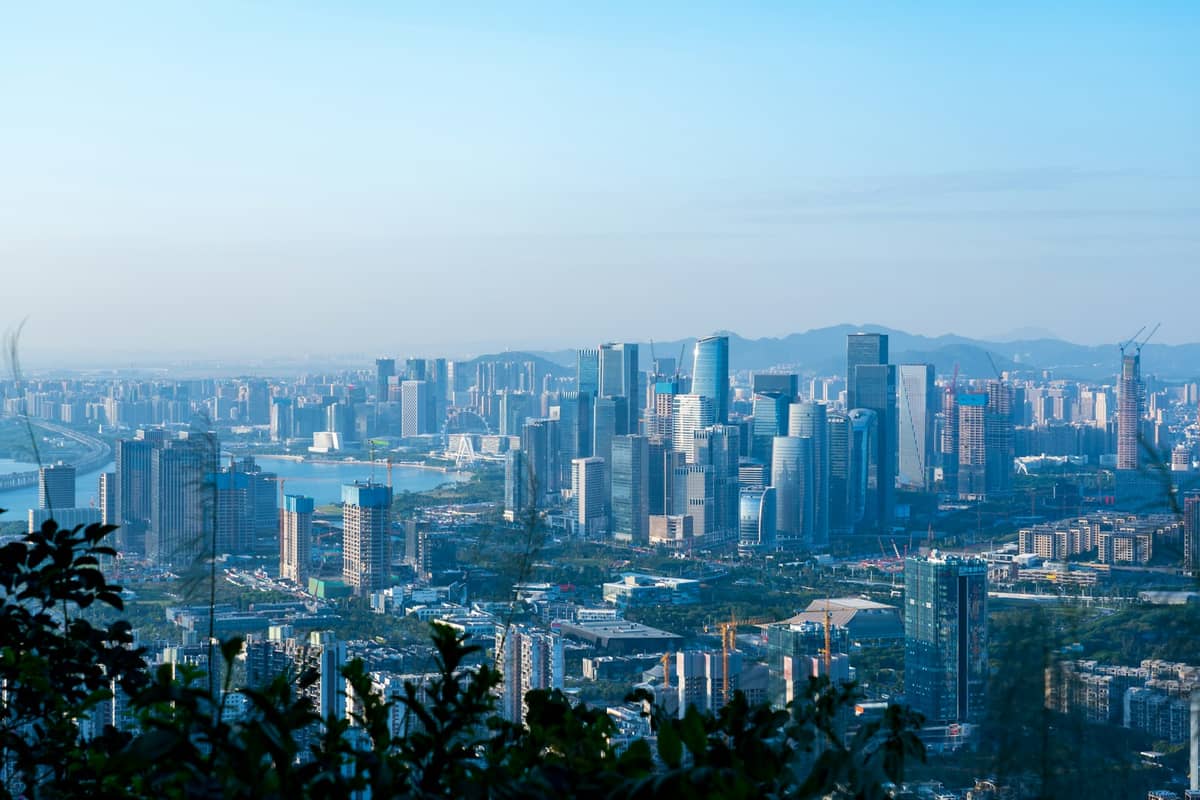
Shenzhen sits at roughly 22°N latitude in coastal Guangdong Province, giving it a humid subtropical climate with a strong monsoon influence (Köppen Cwa). In practice, this means long, hot, wet summers and short, mild, comparatively dry winters. The city does not experience the bitter cold of northern China, but it compensates with humidity levels that make summer temperatures feel significantly higher than the thermometer suggests.
The rainy season runs from late April through September, with peak rainfall typically in May, June, and August. Typhoons are a genuine risk from June through October, with the most active period being July to September. When a typhoon hits, flights from Shenzhen Bao'an International Airport (SZX) can be disrupted, metro services may be suspended, and outdoor attractions can close without much notice. This is not abstract weather risk — it is a concrete logistical disruption.
⚠️ What to skip
Typhoon season runs June to October, with peak intensity in July–September. Check the Hong Kong Observatory and the China Meteorological Administration for real-time tropical storm tracking if you are travelling during these months. Travel insurance that covers weather-related cancellations is strongly recommended.
The Best Months: October to December
October through December is the most consistently recommended period to visit Shenzhen, and for good reason. The monsoon retreats, typhoon frequency drops sharply after mid-October, and daytime temperatures settle into a genuinely comfortable range. You can spend full days outside without arriving at every destination soaked in sweat.
Late October through November is the sweet spot within this window. Golden Week (the first week of October) ends, crowds thin out, and prices for the best hotels in Shenzhen return to normal levels after the national holiday surge. November in particular offers blue skies, low humidity, and daytime temperatures typically in the low-to-mid 20s Celsius — conditions that make long walks around Shenzhen Bay Park or a full day at the coast enjoyable.
December remains comfortable, though evenings can get noticeably cooler. A light jacket is useful after dark. This is also an excellent time to tackle the hiking trails around Shenzhen, including the routes on Wutong Mountain and the Xichong to Dongchong coastal trail, which are punishing in summer heat but rewarding in clear winter conditions.
- October (late) Post-Golden Week calm. Typhoon risk fading. Humidity dropping. One of the best weeks of the year.
- November Peak visiting conditions. Low humidity, minimal rain, comfortable temperatures, normal crowd levels.
- December Still pleasant. Evenings are cooler. Hiking and outdoor coastal trips are ideal. Fewer tourists than November.
Spring: March to April
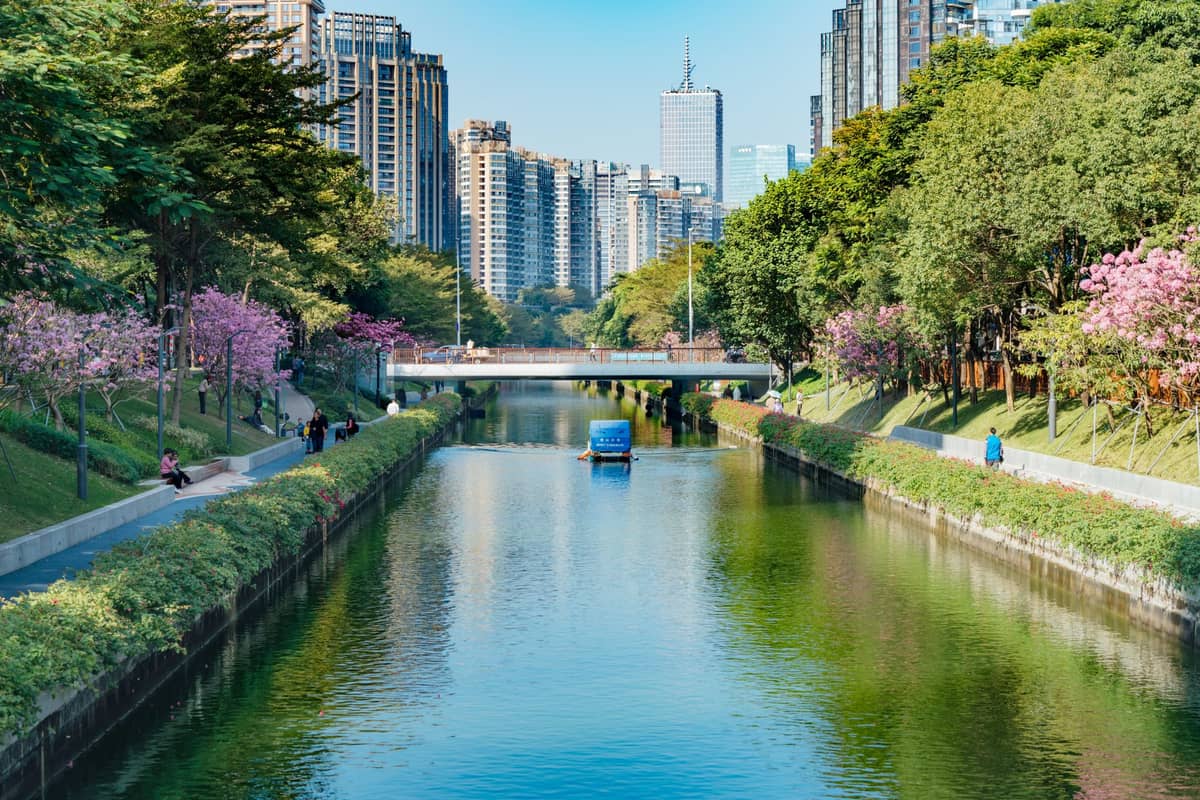
Mid-March to mid-April is the second-best time to visit Shenzhen. Temperatures are warm without being extreme, and rainfall is lower than the summer months, though it starts climbing toward the end of April. Parks and outdoor attractions are at their greenest, and the city has a livelier atmosphere as the year gets going after the Chinese New Year lull.
One practical advantage of visiting in spring: the Lianhuashan Park and Fairy Lake Botanical Garden are particularly worth visiting when the vegetation is fresh. The trade-off is that humidity is already building by April, and rain becomes increasingly likely as May approaches. Book the second half of March if you can.
💡 Local tip
If you are coming from Hong Kong to Shenzhen specifically for a day trip or short stay, the spring and autumn windows align well. Crossing on a weekday in November or March means shorter queues at immigration checkpoints and better conditions on both sides of the border.
Summer: May to September (Approach with Caution)
May through September is the least comfortable period for most visitors. This is not an exaggeration for effect. Temperatures regularly push into the mid-30s Celsius with humidity that makes the heat feel considerably worse. Afternoon thunderstorms are common in May and June, and by July and August the combination of typhoon risk, heavy rain, and heat means that any itinerary built around outdoor attractions will face repeated disruption.
That said, summer is not without logic as a travel window. If your trip centres on indoor experiences — shopping at Huaqiangbei Electronics Market, exploring OCT-LOFT's galleries, or visiting museums — the heat is manageable if you use the metro and air-conditioned spaces strategically. Prices are sometimes lower mid-week in July and August outside of public holidays, and flight availability from some international hubs is higher.
- Beaches like Xichong and Dongchong are popular in summer but can be dangerously crowded on weekends, with water quality varying after heavy rain.
- Typhoon warnings (Signal 3 and above in the Hong Kong system, or equivalent Shenzhen alerts) can ground flights, close metro lines, and shut attractions with almost no warning.
- Air conditioning is everywhere indoors, but the transition between cold interiors and extreme heat outside is uncomfortable and can cause real fatigue over a multi-day trip.
- School holidays in July and August mean domestic tourism peaks, so theme parks like Happy Valley fill quickly even on weekdays.
Winter: January to February
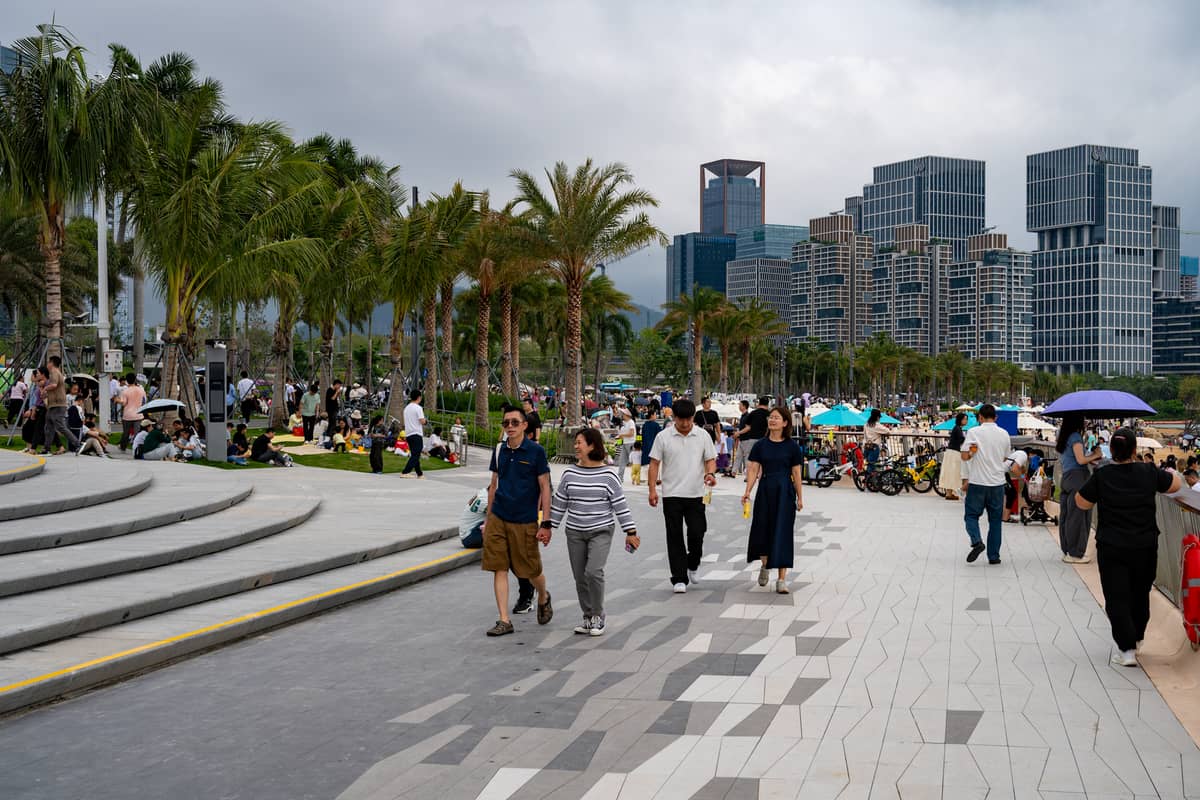
Shenzhen's winter is mild by any northern standard. Daytime temperatures are generally pleasant, humidity is lower than in summer, and rain is infrequent. January and February are comfortable for walking around and exploring the city's neighbourhoods without weather interference.
The significant caveat is Chinese New Year, which falls in late January or February depending on the lunar calendar. This is China's largest annual holiday, and its effect on travel in Shenzhen is substantial. Read the full picture in the Shenzhen Chinese New Year guide before booking. In short: many restaurants and smaller shops close for a week or more, transport becomes heavily booked as migrant workers travel home, and hotels in the city either empty out or fill with domestic tourists depending on the specific days. Prices spike around the festival itself.
✨ Pro tip
If you are visiting Shenzhen primarily for electronics shopping or business in Huaqiangbei, avoid the two weeks around Chinese New Year. Many component and accessory stalls close entirely, and restocking takes time after suppliers return from the holiday.
Crowds, Prices, and Public Holidays
Shenzhen's crowd patterns are driven as much by China's public holiday calendar as by weather. The two periods that cause the most disruption for international visitors are Chinese New Year (January–February) and Golden Week (1–7 October). During Golden Week, domestic tourists fill theme parks, coastal areas, and shopping malls to capacity. Hotels raise rates significantly, and transport between cities is heavily booked.
For visitors focused on seeing Shenzhen's tech and innovation side, including a walk around Tencent's headquarters in Nanshan or the Ping An Finance Centre in Futian, the quieter stretches of November and early December are ideal. The city's business districts feel more authentic when they are not dominated by holiday crowds, and weekdays in these months offer a more genuine read on what Shenzhen actually is: a working, forward-looking city rather than a tourist attraction.
- Golden Week (1–7 October) Avoid if possible. Major attractions are packed, prices are elevated, and transport books out early. The week immediately after is excellent.
- Chinese New Year (January–February) Interesting culturally but logistically complex. Many businesses close. Good for atmosphere, poor for shopping or business travel.
- Labour Day Golden Week (1–5 May) A shorter holiday but still busy. Coincides with the start of the rainy season, making it doubly difficult for outdoor plans.
- November–early December Low crowds, fair prices, excellent weather. The most straightforward time to book for first-time visitors.
ℹ️ Good to know
Hotel rates in Shenzhen are generally competitive outside of public holidays. Business-oriented hotels in Futian and Nanshan sometimes offer lower weekend rates because their primary clientele is corporate. If your travel dates are flexible, mid-week in late October or November often offers the best combination of weather, availability, and price.
For a practical breakdown of what to see in the city across any season, the 2-day Shenzhen itinerary provides a structured starting point, and the Shenzhen on a budget guide covers how to manage costs during peak periods.
FAQ
What is the best time to visit Shenzhen for good weather?
October to December is the most reliable window. Temperatures are comfortable, humidity is lower than in summer, and typhoon risk has passed. November is widely considered the single best month. March to mid-April is a strong second choice if you cannot travel in autumn.
Is Shenzhen hot all year round?
No, but it is hot for most of the year. Summer (May–September) is intense, with heat and high humidity. Winter (December–February) is mild and sometimes described as cool by local standards, though visitors from temperate climates will likely find it comfortable rather than cold. Spring and autumn offer the most moderate conditions.
When should I avoid visiting Shenzhen?
July and August are the hardest months: peak heat, peak humidity, and the most active part of typhoon season. The first week of October (Golden Week) and the Chinese New Year period (late January or February) bring significant crowd and price pressure. If you need flexibility, those windows are worth avoiding.
Does it snow in Shenzhen?
Snow is extremely rare in Shenzhen given its latitude and coastal position. Winter temperatures occasionally drop toward 5–10°C at night during cold spells, but prolonged frost or snow accumulation essentially does not happen. Pack a light jacket for evenings in December and January, but leave the heavy winter gear at home.
Is it worth visiting Shenzhen during Chinese New Year?
It depends entirely on your priorities. The festival atmosphere is genuine and interesting, with decorations, markets, and family celebrations visible across the city. However, many smaller restaurants and shops close for a week or more, transport is heavily booked, and the city has a different energy as millions of migrant workers travel home. It is not ideal for first-time visitors or those focused on shopping and business.