Fairy Lake Botanical Garden, Shenzhen: A Serious Green Space Worth Your Time
Spread across 588 hectares in Liantang, Luohu District, Fairy Lake Botanical Garden is one of the largest botanical gardens in southern China.
Quick Facts
- Location
- No. 160, Fairy Lake Botanical Gardens Road, Luohu District, Shenzhen
- Getting There
- Metro Line 2/8, Xianhu Road Station, Exit C2
- Time Needed
- 2 to 4 hours; longer if you explore the full trail network
- Cost
- 15 CNY (regular); free for children under 6 or under 1.2 m, and adults over 60 with valid ID. Free entry 06:00–08:00 and 18:00–21:30; ticketed entry 08:00–18:00
- Best for
- Nature walkers, families, plant enthusiasts, and anyone wanting a slow morning away from the city grid
- Official website
- www.szbg.org/english/index.html
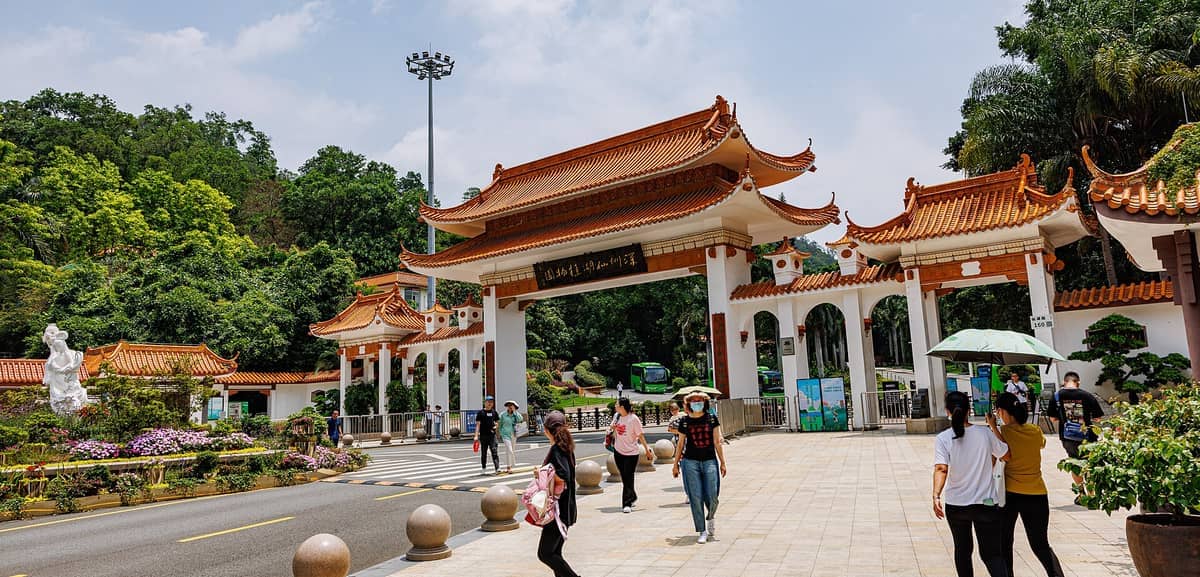
What Fairy Lake Botanical Garden Actually Is
Fairy Lake Botanical Garden, officially named 深圳市仙湖植物园 and operated in partnership with the Chinese Academy of Sciences, is not a decorative city park with a few labeled flower beds. It is a working research institution that also happens to be open to the public. Covering roughly 588 hectares in Luohu, it holds specialized collections of cycads, palms, succulents, bonsai, and fossil plants, alongside natural secondary forest and a series of linked lakes that give the garden its name.
The garden opened in 1988. Given that Shenzhen itself only began rapid urban development in the early 1980s, the garden has grown alongside the city and now represents something the urban core rarely offers: genuine ecological depth in a place that has had decades to mature.
💡 Local tip
Free public access is available 06:00–08:00 and 18:00–21:30. The early morning slot is particularly valuable: you walk through cool air, hear birds before the crowds arrive, and pay nothing. Bring a reusable bottle — the heat builds quickly once the sun clears the ridge.
The Experience by Time of Day
Arriving in the 06:00 free window means sharing the paths almost exclusively with local residents doing tai chi, stretching by the lakeside, or walking dogs on leads. The main lake reflects the tree canopy in near-stillness at that hour, and the calls of resident birds, including various bulbuls and kingfishers near the water, are audible without strain. The air carries the faint sweetness of flowering shrubs, particularly noticeable near the Arboretum section, mixed with the earthier smell of damp soil in shaded areas.
Between roughly 09:00 and 11:00, school groups and weekend families begin to arrive. Paths near the main lake and around the Children's Plant Science area fill up at weekends. Midday in summer is uncomfortable due to Shenzhen's humid subtropical climate: temperatures above 32°C with high humidity are standard from June through September. If you are visiting in summer, the 06:00 window or a late afternoon arrival before 17:30 is the practical choice.
The evening access window (18:00–21:30) transforms the atmosphere. Lighting along the main paths creates a different garden entirely, cooler and quieter, with local families strolling rather than tourist groups moving in formation. The lake surface catches the ambient light. It is one of the more unexpectedly pleasant free experiences in Luohu, and most guidebooks ignore it entirely.
What to See Inside: Collections and Zones
The cycad collection is the one that specialists travel to see. Cycads are among the oldest seed plants on Earth, with a lineage stretching back to the Permian period, and the garden's collection is considered one of the most significant in China. The plants themselves look almost sculptural: thick, armored trunks topped with feathery crowns, sitting in beds that have the unhurried quality of plants that have outlasted dinosaurs. Even if paleobotany is not your interest, the visual weight of the cycad section is striking.
The Fossil Forest area features reconstructed ancient plant specimens and educational displays that bridge the gap between the living collections and deep geological time. It is one of the more unusual features of any botanical garden in the region. Nearby, the succulent greenhouse houses an impressive range of cacti and drought-adapted plants from multiple continents, with specimens large enough to create a genuinely dramatic interior space.
The bonsai garden requires slower movement. The specimens are aged and curated with visible care, displayed in a courtyard setting that rewards the kind of attention most visitors are moving too fast to give. Plan at least 20 minutes here if you have any interest in the form. The palm collection lines broader paths near the lake and gives the middle section of the garden a distinctly tropical character.
ℹ️ Good to know
Ticketed entry runs 08:00–18:00, and the admission fee is 15 CNY. Children under 6 or under 1.2 m tall enter free, as do adults over 60 with a valid ID or senior card. Verify current pricing at the gate or on the official site before your visit, as policies can update.
Getting There and Navigating the Site
Shenzhen Metro Line 2/8 to Xianhu Road Station, Exit C2 is the most direct transit approach. From the exit, the garden entrance is a short walk. Taxis and Didi ride-hailing are also practical options if you prefer door-to-door arrival. For context on moving around Luohu more broadly, theShenzhen transit guidecovers metro routes and ride-hailing in detail.
Inside the garden, the site is large enough that walking the full circuit takes a committed 3 to 4 hours. Trail maps are available at the main entrance. The terrain is mostly gentle but includes some moderate inclines toward the forested hillside sections. Footwear with grip is sensible if you plan to go beyond the paved main paths. Flat sandals will limit you to the lake-level areas, which are worthwhile but represent only a portion of the garden.
Official sources do not confirm detailed accessibility features such as wheelchair ramps or accessible restrooms throughout the site. Visitors with mobility considerations should contact the garden directly or arrive at the main entrance and assess conditions in person before committing to the full circuit.
⚠️ What to skip
The garden is large and the internal signage, while improving, mixes Chinese and limited English. Download or photograph the printed map at the entrance gate before heading in. Mobile signal can be patchy in the forested hillside sections.
Historical and Scientific Context
The garden's joint operation with the Chinese Academy of Sciences elevates it above a simple public green space. Active botanical research is conducted on-site, particularly around plant conservation for species under pressure in Guangdong Province and across southern China. This institutional backing means the collections are maintained to a higher standard than many public gardens, and the labeling, particularly in the specialist sections, carries taxonomic accuracy.
Luohu District, where the garden sits, is the older commercial heart of Shenzhen, known for its rail connections to Hong Kong and its dense urban core. Finding a site of this ecological scale within that district gives the garden an unusual character: you can move from the compressed street grid ofLuohuto forest cover and birdsong within a single metro ride. The contrast is not subtle.
If you want to understand Shenzhen's relationship with its natural landscape more broadly, the garden pairs well with a visit toWutong Mountain, which rises to the northeast. The mountain represents a more demanding physical experience, while Fairy Lake offers a curated and more accessible version of the region's ecological character. Together they make a strong case for why Shenzhen's green cover is one of its most underappreciated qualities.
Photography and Practical Preparation
The main lake provides the garden's most photogenic moments: early morning mist, reflections, and the occasional heron standing on a rock at the water's edge. The cycad collection photographs well in diffused light rather than harsh midday sun, when the textures of the trunks and fronds read clearly without blown-out highlights. The succulent greenhouse is a controlled-light environment where a phone camera handles the conditions well.
Wear comfortable walking shoes with some grip. Sunscreen and a hat are not optional from April through October given Shenzhen's humidity and UV index. A light rain jacket is worth carrying from April through September, when afternoon showers arrive with little warning. For the broader context of when to visit Shenzhen, thebest time to visit Shenzhenguide covers seasonal conditions in detail.
Water and snacks are available at vendors near the main entrance area, but options deeper in the garden are limited. Carrying water is advisable, particularly in summer. There is a cafe and restaurant area near the main entrance that serves as a reasonable base for families with younger children who need rest stops.
Who Should Consider Skipping This
Travelers whose Shenzhen time is entirely focused on technology, shopping, or urban architecture may find the time investment here difficult to justify against other options. The garden is not a quick 45-minute walk-through; doing it properly requires two to four hours and a tolerance for terrain. Visitors who find large green spaces without significant architectural drama or street-food culture less engaging will likely find other parts of the city more rewarding.
Similarly, if your interest is in Shenzhen's creative and industrial identity rather than its ecological side, theOCT-LOFT creative districtor aShenzhen tech district tourwill be a better use of limited time. The botanical garden rewards people who want green space, not those checking boxes.
Insider Tips
- The 06:00 free entry window is worthwhile, not just a budget trick. The atmosphere before 08:00 is fundamentally different from the busier ticketed hours, and the cool air in summer makes it the most physically comfortable version of the visit.
- The evening access window (18:00–21:30) is almost entirely ignored by tourists. It is cooler, quieter, and free. If you are staying in Luohu and want a low-effort evening walk, this is one of the best options in the district.
- The cycad collection is the scientific centerpiece of the garden. Even visitors with no botanical background tend to find the scale and strangeness of the largest specimens worth a closer look. Set aside time here rather than treating it as a walkthrough.
- Pick up a paper map at the main entrance gate rather than relying on navigation apps. The internal paths are not consistently mapped in standard apps, and losing your orientation in the forested upper sections adds unnecessary time.
- Weekday mornings during school terms are the least crowded windows for ticketed entry. Saturday afternoons, especially in spring when flowers are at their peak, are the busiest and should be avoided if crowds affect your enjoyment.
Who Is Fairy Lake Botanical Garden For?
- Nature lovers and anyone who wants a genuine forest-and-lake escape without leaving the urban metro network
- Families with children who need space to move and an outdoor science context
- Plant enthusiasts, particularly those with an interest in cycads, palms, or succulents
- Early risers who want a quiet, cost-free morning experience in Shenzhen
- Visitors staying in Luohu who want a half-day green counterbalance to the district's dense commercial core
Nearby Attractions
Other things to see while in Luohu:
- Dafen Oil Painting Village
Dafen Oil Painting Village (大芬油画村) is a compact art district in Shenzhen's Longgang District where hundreds of studios produce oil paintings at every scale and price point. Founded in 1989, it grew into one of the world's largest commercial painting centers. Entry is free, the atmosphere is unlike anywhere else in China, and the experience raises genuine questions about art, labor, and value.
- Dongmen Pedestrian Street
Stretching across 176,000 square metres in Luohu District, Dongmen Pedestrian Street is Shenzhen's oldest commercial area, tracing its roots to the mid-Ming Dynasty. Free to enter and open daily, it layers street food stalls, fashion markets, and local snack culture on top of centuries of trading history.
- Luohu Commercial City
Luohu Commercial City (罗湖商业城) is a five-story shopping complex directly above Shenzhen's Luohu border crossing, packed with hundreds of vendors selling clothing, accessories, tailored goods, electronics, and more. It's the most convenient shopping destination for day-trippers from Hong Kong, though it demands patience, a tolerance for persistent sales tactics, and solid bargaining skills.
- Wutong Mountain
At 943.7 meters, Wutong Mountain (梧桐山) is the tallest peak in Shenzhen and one of the few places in the city where the urban grid genuinely disappears. A free, well-maintained scenic area spanning Luohu, Yantian, and Longgang districts, it rewards hikers with dense forest cover, cool air, and panoramic views that stretch toward Hong Kong on clear days.