Luohu Commercial City: The Original Shenzhen Border Shopping Experience
Luohu Commercial City (罗湖商业城) is a five-story shopping complex directly above Shenzhen's Luohu border crossing, packed with hundreds of vendors selling clothing, accessories, tailored goods, electronics, and more. It's the most convenient shopping destination for day-trippers from Hong Kong, though it demands patience, a tolerance for persistent sales tactics, and solid bargaining skills.
Quick Facts
- Location
- 25 Guangchang Road, Luohu District, Shenzhen
- Getting There
- Luohu Station, Shenzhen Metro Line 1 (Exit B); or walk directly from Lo Wu/Luohu Port border crossing
- Time Needed
- 2 to 4 hours, depending on how seriously you shop
- Cost
- No entrance fee; bring cash in CNY for best results
- Best for
- Bargain hunters, fabric and tailoring shoppers, Hong Kong day-trippers
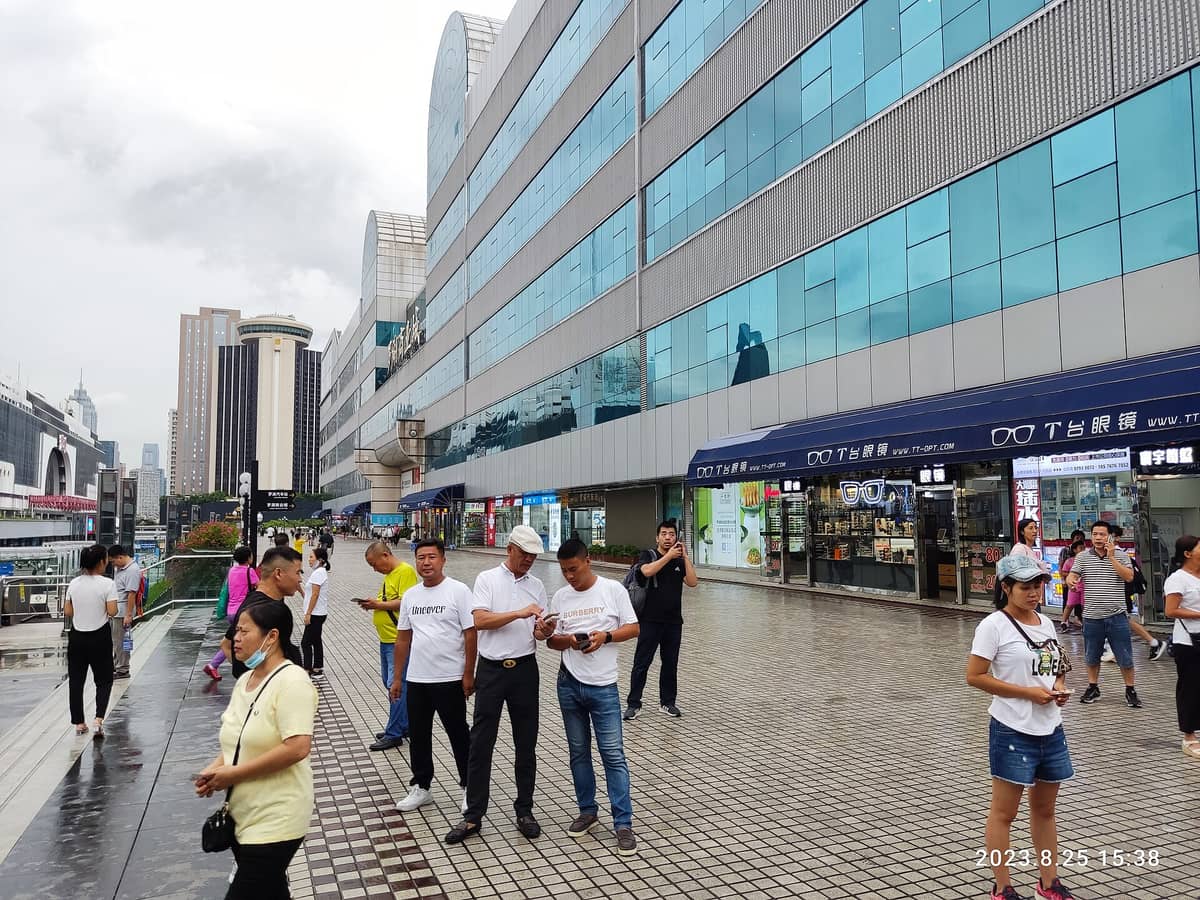
What Is Luohu Commercial City?
Luohu Commercial City (罗湖商业城) is a large, enclosed multi-storey shopping complex that sits directly above Shenzhen's Luohu border crossing, making it one of the most geographically accessible markets in China for visitors arriving from Hong Kong. It has long been known as a major shopping hub with multiple floors of vendors selling clothing, accessories, tailoring services, and more. The complex is not a curated retail centre in any polished sense — it operates more like a concentrated indoor bazaar, with narrow stalls crammed together and vendors calling out to anyone who slows down.
The building's position above the border infrastructure gives it an almost surreal quality. Walk through customs, follow the exit signs, and within minutes you are surrounded by stalls selling everything from tailored suits and handbags to jade jewellery, Chinese tea, and knock-off sportswear. For visitors arriving from Hong Kong for the first time, the transition from the ordered formality of a border checkpoint to the sensory intensity of the market floor is abrupt and occasionally overwhelming.
ℹ️ Good to know
Opening hours are commonly reported as 10:00–22:00, though some sources suggest the complex opens a little earlier or closes a little later. Hours vary by floor and individual stall. Verify on the day, especially if you are planning a very early or very late visit.
What You'll Find Inside
Each floor of Luohu Commercial City tends to cluster specific categories of goods. The lower floors are dominated by clothing, sportswear, and accessories. Upper floors lean toward tailoring services, fabrics, traditional Chinese medicine, tea, and beauty treatments. The mix shifts over time as vendors cycle in and out, so there is no guarantee that the stall you read about online will still be there.
Tailoring is one of the most legitimate reasons to visit. Numerous vendors offer custom-made suits, shirts, dresses, and qipaos at prices that are competitive compared to Hong Kong or Western tailors. Turnaround times can be as short as 24 to 48 hours for simpler garments if you are staying overnight, though complex orders require longer. Bring reference photos, be precise about measurements, and request a fitting before paying in full.
The market is also well-known for selling goods that replicate luxury brand designs. Replica handbags, watches, and clothing are openly displayed on some floors, particularly in back sections and upper levels. Buyers should understand that importing counterfeit goods can create legal problems at customs in many countries, including Hong Kong. This is not a risk the guide can assess for your specific nationality or destination — research your own country's import rules before buying.
⚠️ What to skip
Customs officials on the Hong Kong side do inspect purchases. Importing counterfeit goods may result in confiscation or fines depending on your home country's laws. Know your limits before you buy.
The Bargaining Reality
Fixed pricing does not exist at Luohu Commercial City. Every price is a starting number, and vendors routinely open at three to five times what they expect to accept. If you are not comfortable negotiating, you will overpay. The process is not aggressive by the standards of some markets in Southeast Asia, but it is persistent. Vendors who quote you a price and see hesitation will immediately start discounting on their own. Walk away slowly and a lower number will often follow.
A practical approach: decide what you are willing to pay before you ask the price. Counter at roughly 30 to 40 percent of the opening quote and work upward from there. Use a calculator or phone screen to show numbers if language is a barrier. Mandarin phrases help, but most vendors on the lower floors are experienced with non-Chinese speakers and will switch to gesture-and-screen communication without complaint.
Cash in Chinese yuan (CNY/RMB) gives you the most negotiating leverage. Some vendors accept WeChat Pay or Alipay, and a few will take Hong Kong dollars, but the exchange rate they apply will not be in your favour. ATMs that accept foreign cards are available at or near Luohu Station if you need to withdraw yuan on arrival.
How It Changes Through the Day
The market is at its calmest in the first hour or two after opening. Foot traffic from Hong Kong builds from mid-morning onward, and by midday on weekends the corridors between stalls become genuinely crowded. The air inside is conditioned but the combination of bodies, perfume samples, and cooking smells from food stalls creates a dense atmosphere that some visitors find claustrophobic. If you are sensitive to crowds or enclosed spaces, a weekday morning is significantly more comfortable.
Afternoons bring the heaviest foot traffic and the most energetic vendor attention. Late afternoon and early evening, particularly on weekdays, see the crowds thin out and some vendors become more willing to negotiate simply to close a sale before the day ends. The light inside the building is consistent and artificial throughout the day, so there is no particular photography advantage to visiting at any specific hour.
If you want to combine the market with a broader look at Luohu's older commercial streets, theDongmen Pedestrian Streetis a 10 to 15 minute walk or one metro stop away and offers a very different atmosphere, with outdoor stalls, local snack vendors, and a mix of chain stores alongside independent shops.
Getting There: From Hong Kong and Within Shenzhen
From Hong Kong, the easiest approach is the East Rail Line to Lo Wu station, then walk through Luohu Port immigration. Once you exit the Chinese customs and immigration hall, Luohu Commercial City is directly in front of you. The journey from central Hong Kong to the market floor typically takes about an hour, depending on your starting point.
From within Shenzhen, takeShenzhen Metro Line 1Line 1 to Luohu StationLuohu Station and use Exit B. The metro journey from Shenzhen's Futian CBD takes around 20 minutes. Taxis and Didi are also practical if you are coming from a district not well-served by Line 1.
💡 Local tip
If you are crossing from Hong Kong, go on a weekday. The Lo Wu crossing is one of the busiest land border crossings in the world and weekend queues through immigration can add significant time to your trip each way.
Is It Worth Your Time?
Luohu Commercial City delivers on its core purpose: concentrated, low-cost shopping within immediate reach of the Hong Kong border. For visitors who are comfortable bargaining, reasonably patient with vendor pressure, and clear about what they want to buy, it is an efficient use of a few hours. The tailoring services in particular offer genuine value that is difficult to replicate at this price point elsewhere in the region.
That said, the market has aged. The product mix is less distinctive than it was a decade ago, and much of what is sold on the lower floors — fast-fashion clothing, generic accessories, mass-produced souvenirs — is available online or in malls across the region. Visitors expecting a culturally rich or aesthetically interesting shopping environment will likely be disappointed. The building itself is functional and unglamorous, the lighting is harsh, and the sales pressure is relentless on busy days.
Travellers looking for a more polished version of Shenzhen's commercial culture might prefer the organised electronics floors ofHuaqiangbei Electronics Marketin Futian, which has its own intensity but a more specialist focus. For broader shopping context, theShenzhen shopping guidecovers how different parts of the city compare.
Travellers with limited mobility should be aware that the building has multiple floors and the internal layout involves frequent stairwells and uneven transitions between vendor sections. Lifts are reported to exist, but navigating the complex in a wheelchair or with significant mobility limitations would be challenging. No verified accessibility statement was available at the time of writing.
Who Will Not Enjoy This
If you dislike bargaining, find sales pressure stressful, or are uncomfortable with replica goods culture, this market will frustrate rather than satisfy you. Visitors hoping for authentic local food, cultural immersion, or architectural interest will also find little here. The market is fundamentally a commercial exercise, and it works best for people who approach it with that expectation.
Families travelling with young children may find the crowds and narrow stall corridors difficult to navigate. For a Luohu experience better suited to families or general tourism, the broaderLuohu districthas parks, restaurants, and cultural sights within easy reach.
Insider Tips
- Bring a specific shopping list rather than browsing openly. Vendors read indecision as an invitation to escalate, and having a clear target helps you move through the building with purpose.
- The tailoring floors are better value than the clothing stalls for most buyers. A made-to-measure shirt or suit costs more upfront than off-the-rack items but is meaningfully better quality. Budget at least two visits: one for measurements and one for fitting.
- If you need yuan and do not have a Chinese bank account, the Bank of China branch near Luohu Station typically offers competitive exchange rates for Hong Kong dollars. Avoid changing money inside the market building.
- Stalls near the entrance and ground floor tend to have the highest opening prices because foot traffic is highest. Vendors on upper floors often offer more realistic starting points and slightly less pressure.
- Visit on a Tuesday, Wednesday, or Thursday if possible. Monday sees a surge from people who planned the trip over the weekend; Friday afternoons are heavy with early-weekend cross-border traffic from Hong Kong.
Who Is Luohu Commercial City For?
- Hong Kong residents and visitors making a day trip across the border
- Shoppers seeking affordable custom tailoring for suits, shirts, or traditional Chinese garments
- Experienced bargain hunters who enjoy the negotiation process
- Travellers with limited time who want concentrated shopping immediately after crossing the border
- Budget travellers looking to stock up on clothing and accessories at low price points
Nearby Attractions
Other things to see while in Luohu:
- Dafen Oil Painting Village
Dafen Oil Painting Village (大芬油画村) is a compact art district in Shenzhen's Longgang District where hundreds of studios produce oil paintings at every scale and price point. Founded in 1989, it grew into one of the world's largest commercial painting centers. Entry is free, the atmosphere is unlike anywhere else in China, and the experience raises genuine questions about art, labor, and value.
- Dongmen Pedestrian Street
Stretching across 176,000 square metres in Luohu District, Dongmen Pedestrian Street is Shenzhen's oldest commercial area, tracing its roots to the mid-Ming Dynasty. Free to enter and open daily, it layers street food stalls, fashion markets, and local snack culture on top of centuries of trading history.
- Fairy Lake Botanical Garden
Spread across 588 hectares in Liantang, Luohu District, Fairy Lake Botanical Garden is one of the largest botanical gardens in southern China.
- Wutong Mountain
At 943.7 meters, Wutong Mountain (梧桐山) is the tallest peak in Shenzhen and one of the few places in the city where the urban grid genuinely disappears. A free, well-maintained scenic area spanning Luohu, Yantian, and Longgang districts, it rewards hikers with dense forest cover, cool air, and panoramic views that stretch toward Hong Kong on clear days.