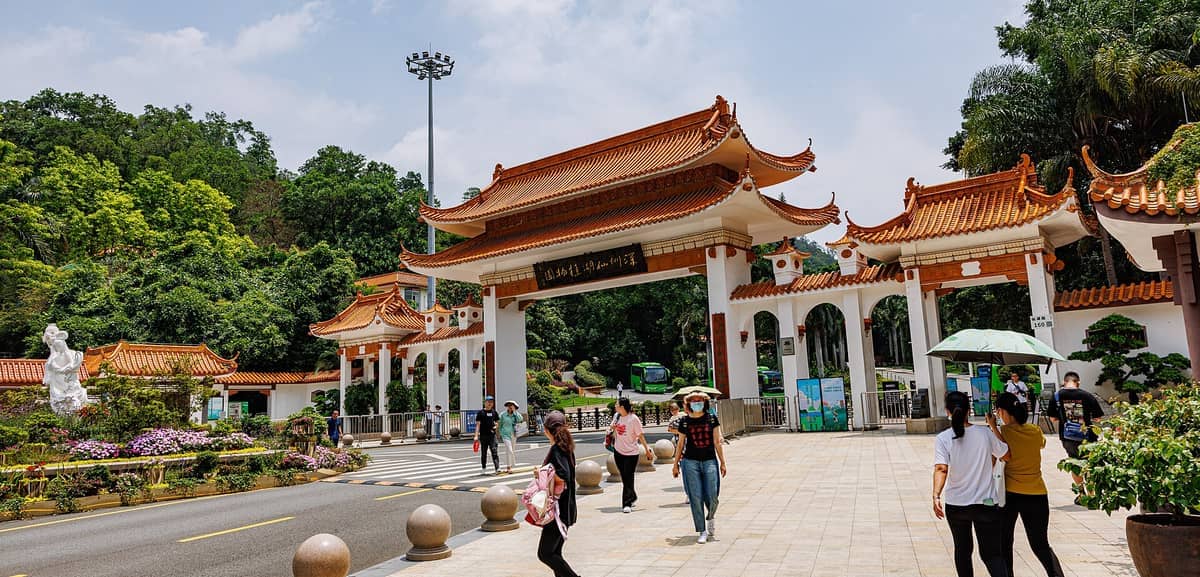
Luohu is Shenzhen's oldest and most historically layered district, sitting directly on the Hong Kong border and serving as the city's commercial and financial heartland for decades. From the frenetic Luohu Commercial City to the sprawling Dongmen pedestrian shopping area, this is the part of Shenzhen that formed before the gleaming towers of Futian and Nanshan existed. It rewards travelers who want to see how the city actually works at street level.
Luohu is where Shenzhen began. Anchored by the Lo Wu border crossing and the Dongmen commercial district, this eastern-central district carries decades of urban layering that newer parts of the city simply don't have. It's dense, commercial, occasionally chaotic, and entirely authentic.
Orientation
Luohu sits in the central and southern part of Shenzhen's urban core, bounded roughly by the Shenzhen River to the south and the east side of the city to the north and east. Futian District begins just to the west. To the south, across the Shenzhen River, is the New Territories of Hong Kong.
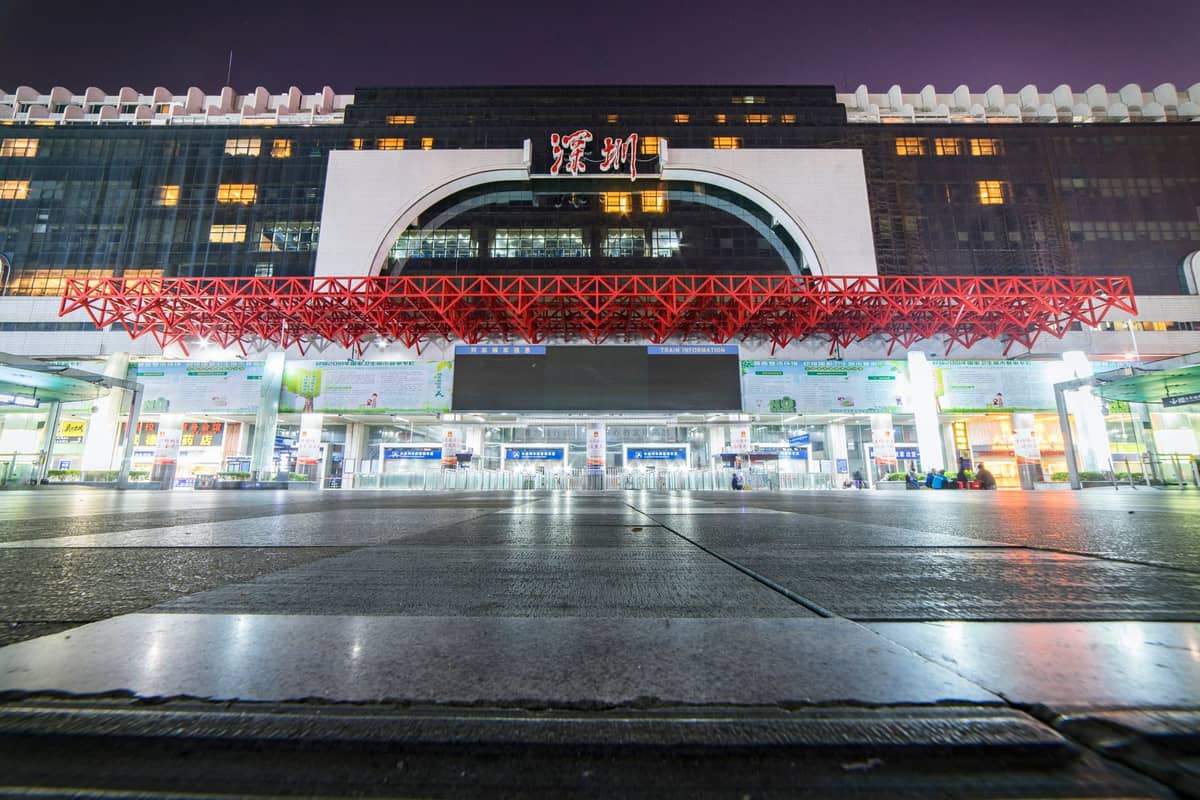
The southern edge of Luohu is dominated by the Luohu Port checkpoint, one of the busiest land border crossings between mainland China and Hong Kong. This single crossing shapes much of the district's identity: hotels, currency exchange booths, markets, and transport infrastructure all cluster within walking distance of it. The Dongmen commercial area sits a short metro ride or moderate walk northwest of the border, forming the district's other gravitational center.
Luohu Metro Station is the southeastern terminus of Metro Line 1, which runs all the way west through Futian and into Nanshan District. This single line connects Luohu to the rest of the city and makes the district far more accessible than its older street grid might suggest. Wutong Mountain, one of Shenzhen's most significant natural landmarks, rises at the district's eastern edge and is reachable from stations on Line 5.
Character & Atmosphere
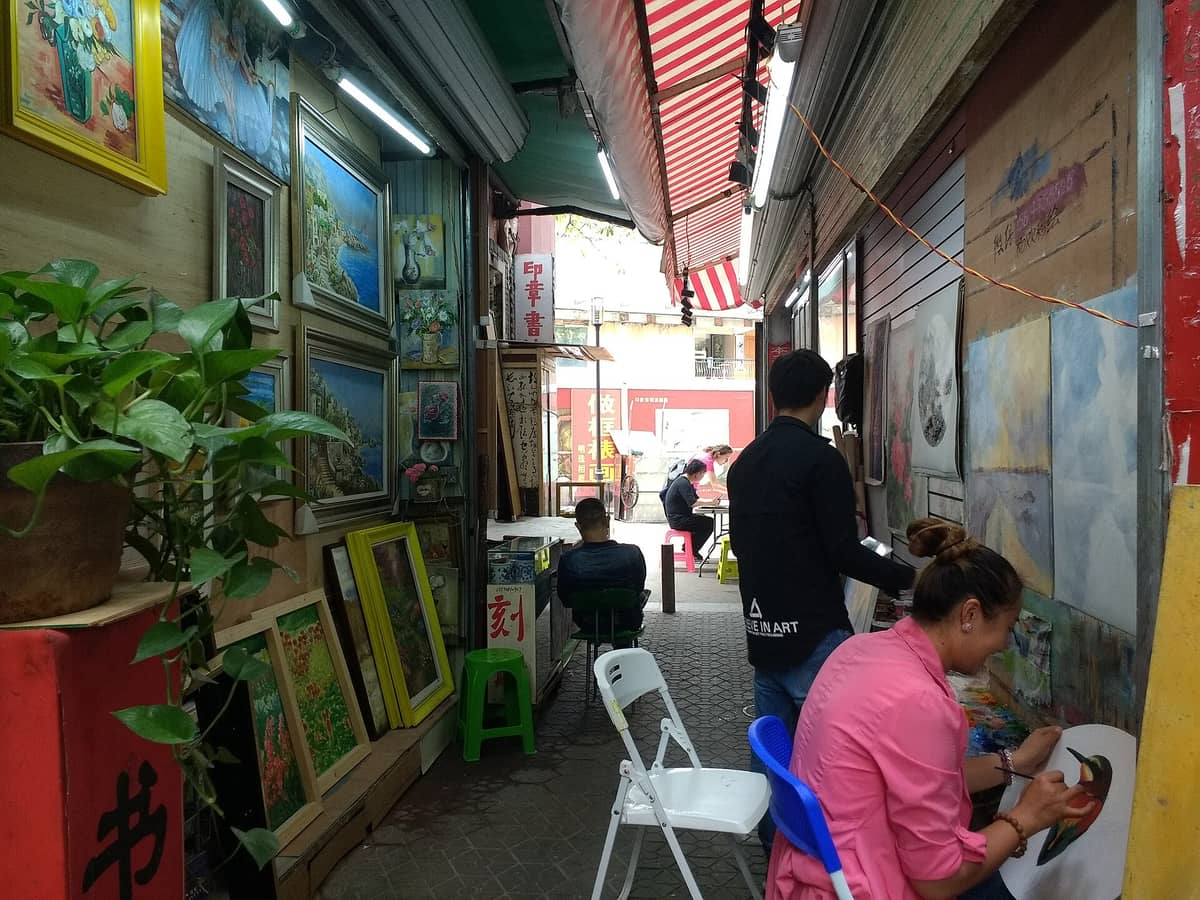
Luohu feels older than the rest of Shenzhen, and that is its defining quality. Walk a few blocks back from the main commercial arteries and you encounter residential blocks with low-rise apartment buildings, covered wet markets with vegetable sellers arranging produce at dawn, and barbershops where the same customers have been coming for twenty years. The streets are narrower here than in Futian, the signage more weathered, and the rhythm of daily life more visible at pavement level.
Mornings in the residential pockets start early. By seven o'clock, markets are in full swing, the smell of fresh tofu and steamed bao mixing with the exhaust of delivery scooters. Cantonese is as common as Mandarin in these early hours, a reminder that Luohu's original population drew heavily from Guangdong Province. The pace around the Dongmen area picks up significantly by midmorning as shoppers arrive, and by the afternoon the pedestrian street is packed with a cross-section of Shenzhen's population: families, young people, and cross-border traders carrying rolling luggage.
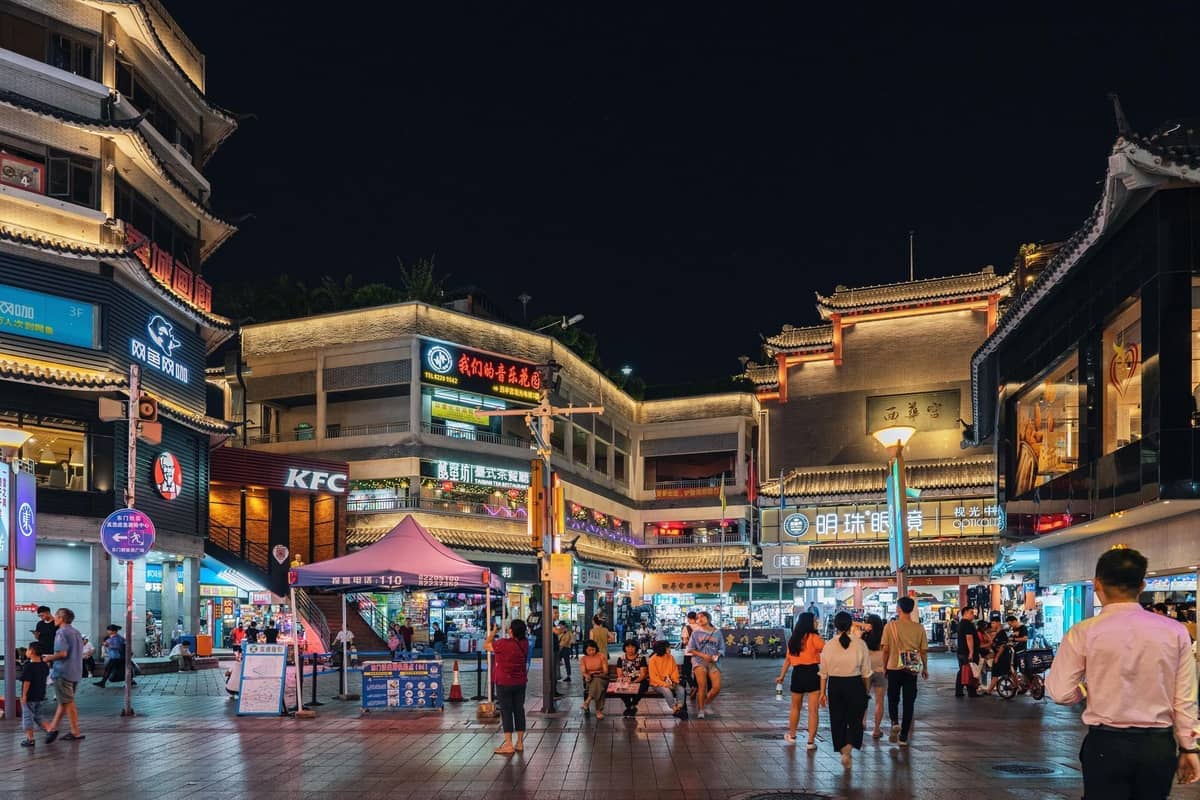
The area around Luohu Port has its own distinct character. Day-trippers and cross-border shoppers from Hong Kong pour through the checkpoint on weekends, making the streets immediately north of the border loud, congested, and commercially aggressive. Vendors and touts compete for attention near Luohu Commercial City. After dark, the border zone quiets considerably once the checkpoint traffic slows, but the Dongmen area keeps a certain energy until late evening, with street food stalls lighting up and younger crowds taking over the pavements.
⚠️ What to skip
The Luohu Port checkpoint area gets extremely congested on weekend afternoons and during public holidays as cross-border traffic peaks. If you are crossing to or from Hong Kong, aim for early weekday mornings when wait times are significantly shorter.
What to See & Do
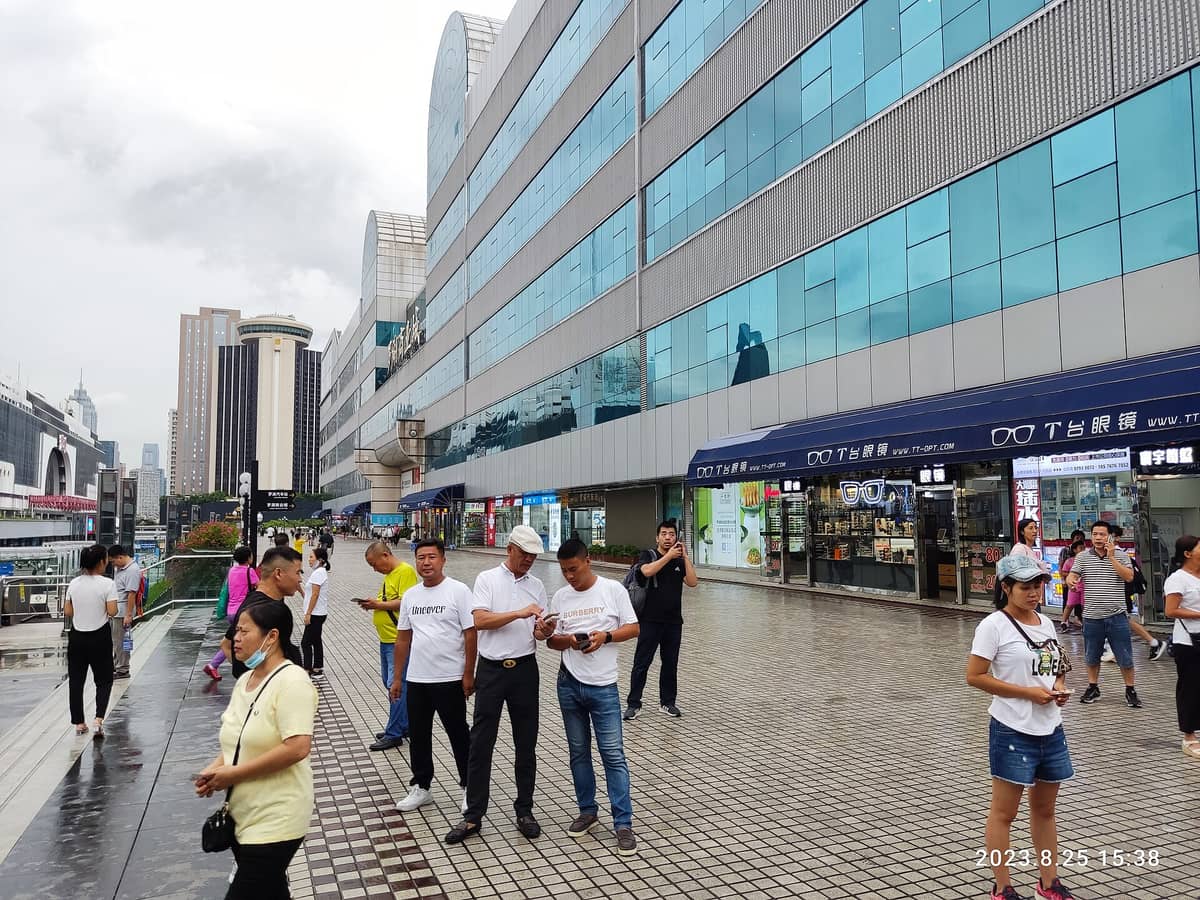
The most immediately recognizable landmark for first-time visitors is Luohu Commercial City, a large multi-storey mall attached directly to the border crossing that has been famous for decades as a destination for clothes, electronics, bags, tailoring, and imitation goods. It is not a typical shopping mall experience: floors are divided into stalls rather than branded shops, haggling is standard, and the scale and density are overwhelming at first. Whether you buy anything or not, it is a legitimate piece of Shenzhen commercial history.
A few metro stops north of the border, the Dongmen Pedestrian Street is a different kind of retail experience. Dongmen is one of the oldest commercial areas in Shenzhen and is widely described as the earliest business district in the city. Today it is a mix of indoor malls, outdoor pedestrian lanes, fast food outlets, clothing stalls, and occasional street performers. It is primarily a local shopping destination rather than a tourist attraction, which gives it an authenticity that some of the more curated commercial zones in newer districts lack.
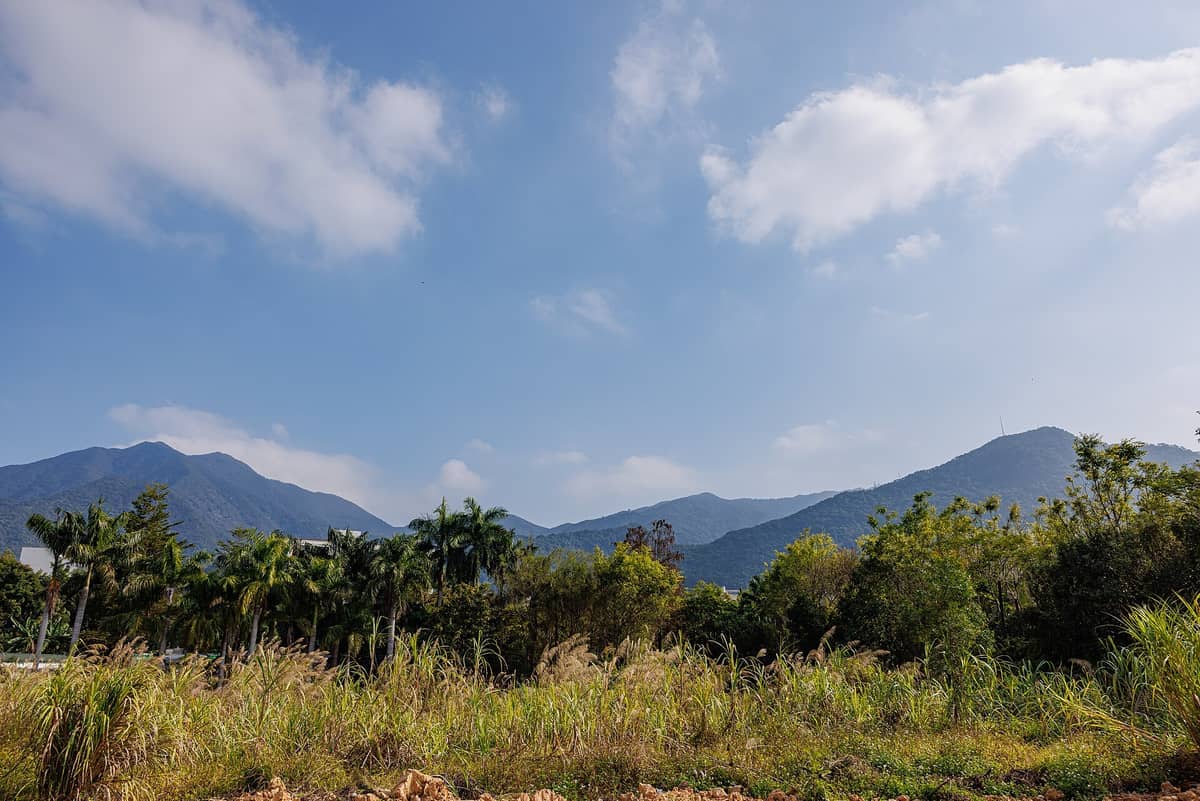
At the eastern edge of the district, Wutong Mountain offers the sharpest possible contrast to Luohu's commercial density. At roughly 943.7 meters, it is the highest peak in Shenzhen's urban districts. Multiple trail systems begin from the base, ranging from paved paths suitable for casual walkers to steeper routes up the main ridge. Reaching the summit on a clear day gives a panoramic view that takes in Shenzhen's urban sprawl to the west, the South China Sea to the south, and the forested hills of the New Territories across the border.
Luohu Commercial City: dense stall-based shopping and tailoring across several floors directly at the border
Dongmen Pedestrian Street: the district's sprawling historic shopping area, busiest on weekends
Wutong Mountain: Shenzhen's highest urban peak, accessible from Wutong Mountain Station on Metro Line 5
Ai Lian Lake and Renmin Park: a green breathing space in the mid-district, useful for morning walks
Luohu Port itself: architecturally interesting as one of the busiest land border crossings between Hong Kong and mainland China, even if you are not crossing
For a broader sense of how Luohu fits into Shenzhen's culture and development, the Shenzhen Museum in adjacent Futian has exhibitions specifically covering the city's origins as a border trading post and its transformation after 1980. Luohu's own history is well represented there, making it useful context before or after exploring the district.
Eating & Drinking
Luohu's food scene is defined by its density and its diversity. Because the district has been urban for longer than most of Shenzhen, it has accumulated the kind of layered food culture that comes with decades of migration: Cantonese roast meat shops, Sichuan hotpot restaurants, Chaoshan beef hotpot, Hunan-style stir-fry, and the full range of northern Chinese noodle and dumpling shops all exist within a few blocks of each other in the Dongmen area.
The streets around Dongmen are particularly good for cheap, fast eating at any time of day. Skewers, fried tofu, rice noodle rolls, and steamed dumplings are all sold from stalls along the pedestrian lanes. Prices at street level and in the smaller restaurant units off the main drag are very reasonable by any standard, with filling meals available for well under 30 CNY. Moving further from the main pedestrian strip and into the surrounding residential blocks, small family-run restaurants offer even better value and almost no English menus.
The area nearest Luohu Port is less interesting for eating. Restaurants here cater primarily to cross-border travelers and tourists passing through, which means higher prices and less local character. The closer you get to the checkpoint, the more generic the options become. Walk ten minutes north from the port toward the mid-district and the food quality improves noticeably.
💡 Local tip
For morning dim sum, look for traditional teahouses in the residential streets west of Dongmen rather than the main pedestrian strip. These places fill up with local families early on weekends and serve the kind of unhurried, trolley-cart dim sum that has largely disappeared from more commercial districts.
Bar culture in Luohu is modest compared to Futian or the Shekou waterfront. There are bars in and around the Dongmen area catering to a younger local crowd, as well as a handful of KTV establishments throughout the district. Travelers looking for a sophisticated cocktail bar scene will find more options in other parts of the city. What Luohu does have is a good supply of late-night tea houses and snack shops that stay open well past midnight.
Getting There & Around
The most important transit hub in Luohu is Luohu Station, which serves simultaneously as a metro station on Line 1 and the processing point for the Luohu Port border crossing into Hong Kong. Travelers arriving from Hong Kong via the Lo Wu MTR station step directly into this complex. For a full overview of the crossing process, see the guide on getting from Hong Kong to Shenzhen.
Metro Line 1 is the primary way to move between Luohu and the rest of Shenzhen. From Luohu Station westbound, the line passes through Laojie Station (the stop for Dongmen), then continues into Futian and west through Nanshan toward Airport East in Bao'an, covering the city's main east-west corridor. The journey from Luohu to Futian Central takes roughly 20 to 25 minutes. Metro Line 5 provides access to Wutong Mountain in the east and connects northward toward Longhua.
Within the district, most of the key areas are walkable from their respective metro stations. The walk from Luohu Station to the Dongmen area takes about 20 to 25 minutes on foot, or it is two stops on Line 1 to Laojie Station. Taxis and Didi ride-hailing are readily available throughout the district and are the most practical option for moving between areas not directly served by the metro, particularly for reaching Wutong Mountain's trailheads or the residential neighborhoods in the mid-district.
ℹ️ Good to know
Shenzhen's metro uses a contactless payment system. You can pay with Alipay, WeChat Pay, or a physical metro card purchased at station machines. Some machines at Luohu Station have English-language options, which is useful for first-time arrivals crossing from Hong Kong.
For travelers planning to use Luohu as a base for day trips, the national rail connection at Luohu Station makes it straightforward to reach Guangzhou and other Pearl River Delta cities. Within Shenzhen, the metro gives reasonable access to most districts, though reaching the western areas around Shekou or Bao'an from Luohu involves a 45-minute or longer metro ride. See the full guide to getting around Shenzhen for route planning details.
Where to Stay
Luohu has a wide range of accommodation, from budget guesthouses to mid-range business hotels, concentrated most heavily around the Luohu Port area and the Dongmen district. The border crossing location makes it a logical first-night choice for travelers arriving from Hong Kong who want to settle in before navigating the broader city. Hotels here are generally competitive on price, often offering better value per room than equivalent properties in Futian or Nanshan.
The trade-off for staying near Luohu Port is noise and traffic. The streets around the border complex are active from early morning and the surrounding roads carry significant commercial vehicle traffic. Travelers who are light sleepers or who prioritize a quieter environment may prefer hotels in the Dongmen area or further into the mid-district residential streets. For a broader overview of where to stay in Shenzhen and how Luohu compares to other districts, the complete Shenzhen accommodation guide breaks down the options by traveler type.
Business travelers and those visiting specifically for trade or commercial purposes will find Luohu's hotel stock well suited to their needs. The district has historically served cross-border business visitors and the hotel infrastructure reflects that: reliable Wi-Fi, early breakfast service, and locations within walking distance of the border crossing are standard features rather than selling points. Luxury options are fewer here than in Futian, but mid-range comfort is easy to find.
Who Luohu Is For
Luohu is not Shenzhen's most polished neighborhood and it doesn't try to be. The streets near the border can feel relentless, the touts around Luohu Commercial City are persistent, and the mid-district residential areas have none of the architectural spectacle you find in Futian or the creative energy of the OCT-LOFT area. Travelers arriving with expectations shaped by images of Shenzhen's gleaming skyline will need to recalibrate.
What Luohu offers instead is a genuine slice of how a Chinese border city at the edge of Hong Kong actually functions day to day. The commercial culture is raw and real. The food is good and cheap. The metro connections are excellent. And Wutong Mountain provides a serious natural escape within the district boundaries. For travelers coming specifically from Hong Kong on a short visit, Luohu is both the entry point and, for many, a complete destination in itself. A two-day Shenzhen itinerary could reasonably use Luohu as a base while visiting other districts for their specific strengths.
TL;DR
Luohu is Shenzhen's oldest urban district, anchored by the Lo Wu border crossing and the Dongmen commercial area, with a street-level authenticity that newer districts lack.
Best suited to: travelers arriving from Hong Kong, cross-border shoppers, budget-conscious visitors, and anyone wanting to see Shenzhen's commercial roots rather than its polished face.
Key transit asset: Luohu Station sits at the intersection of Metro Line 1, national rail services, and the Hong Kong border crossing, making it one of the most connected points in the city.
Main drawback: the area immediately around Luohu Port is congested and commercially aggressive, particularly on weekends and public holidays.
Wutong Mountain, at the district's eastern edge, offers the most dramatic contrast: within Luohu's boundaries, you can move from dense urban commerce to Shenzhen's highest peak in under an hour.
Two days in Shenzhen is enough to move through its most distinct neighbourhoods, from the electronics labyrinth of Huaqiangbei to the coastal parks of Nanshan and the art spaces of OCT Loft. This itinerary is built around the metro, keeps mornings efficient, and leaves room for the food and nightlife that most guides gloss over.
Shenzhen's climate is subtropical and unforgiving in summer. This guide breaks down every season clearly, from the ideal October–December window to the typhoon risks of July–September, so you can plan your trip around real conditions rather than brochure weather.
Shenzhen sits at the centre of one of the most connected corners of Asia. Within a few hours, you can reach Hong Kong, Guangzhou, Zhuhai, Macau, and the coastal villages of Dapeng. This guide covers the best day trips from Shenzhen with realistic travel times, transport logistics, and clear assessments of what each destination actually offers.
Shenzhen delivers far more than its reputation as a tech-and-shopping city. From coastal greenways and hilltop parks to art districts and Ming Dynasty fortresses, a remarkable amount of the city costs nothing to explore. This guide covers the best free attractions across every district.
Shenzhen has one of the most extensive metro systems in China, plus buses, taxis, and ride-hailing to fill the gaps. This guide breaks down every transport option, from airport arrival to cross-city metro trips, so you can move around confidently from day one.
Getting from Hong Kong to Shenzhen is straightforward once you know which crossing suits your itinerary. This guide covers every route — high-speed rail, MTR foot crossings, and 24-hour options — with realistic queue times, operating hours, and practical advice for first-timers.
Shenzhen is one of China's most misunderstood cities. It's not just a tech showcase or a shopping stopover from Hong Kong. This guide cuts through the clichés to help you decide if Shenzhen belongs on your itinerary, and what to prioritize if it does.
Shenzhen built more supertall skyscrapers in 40 years than most cities manage in a century. This guide covers the key landmarks, the best districts for architectural exploration, observation decks, design culture, and practical tips for getting around the skyline.
Chinese New Year in Shenzhen is neither a ghost town nor a nonstop party — it's something more interesting than either. This guide covers the real rhythm of the city during Spring Festival: which events are worth your time, how crowds shift, what actually closes, and how to make the most of one of China's most distinctive holiday periods.
Shenzhen has built one of China's most serious contemporary art ecosystems in under four decades. This guide covers the key museums, gallery districts, and creative spaces — from OCAT Shenzhen to Dafen Oil Painting Village — with practical details on getting there, what to expect, and when to visit.
Huaqiangbei is the world's largest electronics market district, but navigating it without a plan is a recipe for overpaying or leaving empty-handed. This guide covers which buildings to visit, realistic price expectations, negotiation strategy, payment methods, and practical advice on what is cheap versus what only looks like a deal.
Shenzhen's food scene reflects its identity as a migrant city: no single ancient cuisine, but an extraordinary range of Cantonese, Hakka, Teochew, Hunan, Sichuan, and international cooking all under one roof. This guide covers the dishes worth seeking out, the neighborhoods to find them in, and the practical details that make eating here genuinely easy.
Shenzhen is far more than tech malls and theme parks. This guide takes you to the ancient fortresses, artist communities, coastal trails, and architectural wonders that most visitors walk straight past.
Shenzhen surprises most visitors with the quality and variety of its hiking. Within the city limits you'll find a 944-meter mountain summit, a 15-kilometer coastal greenway, dramatic clifftop sea trails, and forested urban parks. This guide covers the best of all of them.
Shenzhen at night is more varied than most visitors expect. This guide breaks down the city's top nightlife districts by vibe and budget, covering rooftop bars, live music venues, megaclubs, and late-night food streets — with metro directions, realistic price ranges, and clear notes on what's worth your time.
Shenzhen is one of the most affordable major cities in Asia for travelers who know where to look. This guide breaks down realistic daily costs, the cheapest transport options, free and low-cost attractions, and the neighborhoods that give you the best value without sacrificing convenience.
Shenzhen takes its reputation as a City of Parks seriously. This guide covers the best parks in Shenzhen across every type, from hilltop viewpoints and wetland boardwalks to beach trails and sprawling botanical gardens.
Shenzhen is China's most concentrated hub of consumer tech, hardware manufacturing, and innovation showrooms. This guide covers the best stops, realistic routes, logistics, and practical advice for planning your own tech tour across Nanshan, Futian, and Huaqiangbei.
Shenzhen is far more than a tech hub. It has world-class theme parks, wildlife reserves, natural history museums, and coastal beaches that make it a genuinely rewarding destination for families. This guide covers the best of it, organized by what works for different ages and energy levels.
Shenzhen is one of Asia's great shopping cities, but it rewards those who know where to go. This guide breaks down the best markets, malls, and districts by category, with clear advice on prices, bargaining, and what's worth buying.
Shenzhen rewards visitors who look beyond the shopping malls. This guide covers the city's best experiences across parks, coastlines, heritage districts, and skyline viewpoints — organized by what kind of traveler you are, with practical details on getting there, what to expect, and what to skip.
Shenzhen has 10 districts and no single obvious center, which makes choosing where to stay genuinely confusing. This guide breaks down the best neighborhoods by trip type, with clear price ranges, metro access notes, and practical trade-offs for each area.