Tencent Seafront Towers: Inside Shenzhen's Most Striking Tech Landmark
Tencent Seafront Towers (腾讯滨海大厦) is the global headquarters of one of the world's largest technology companies, rising from the Nanshan coastline as two interconnected skyscrapers. While the complex is not open to the public, its architecture and seafront setting make it a compelling stop for anyone exploring Shenzhen's tech corridor.
Quick Facts
- Location
- Binhai and Nanhai Boulevards, Houhai, Nanshan District, Shenzhen
- Getting There
- Houhai Station, Shenzhen Metro Line 2
- Time Needed
- 30–60 minutes (exterior and surroundings)
- Cost
- Free to view from outside; no public interior access
- Best for
- Architecture enthusiasts, tech industry visitors, urban photographers
- Official website
- www.tencent.com
What Tencent Seafront Towers Actually Is
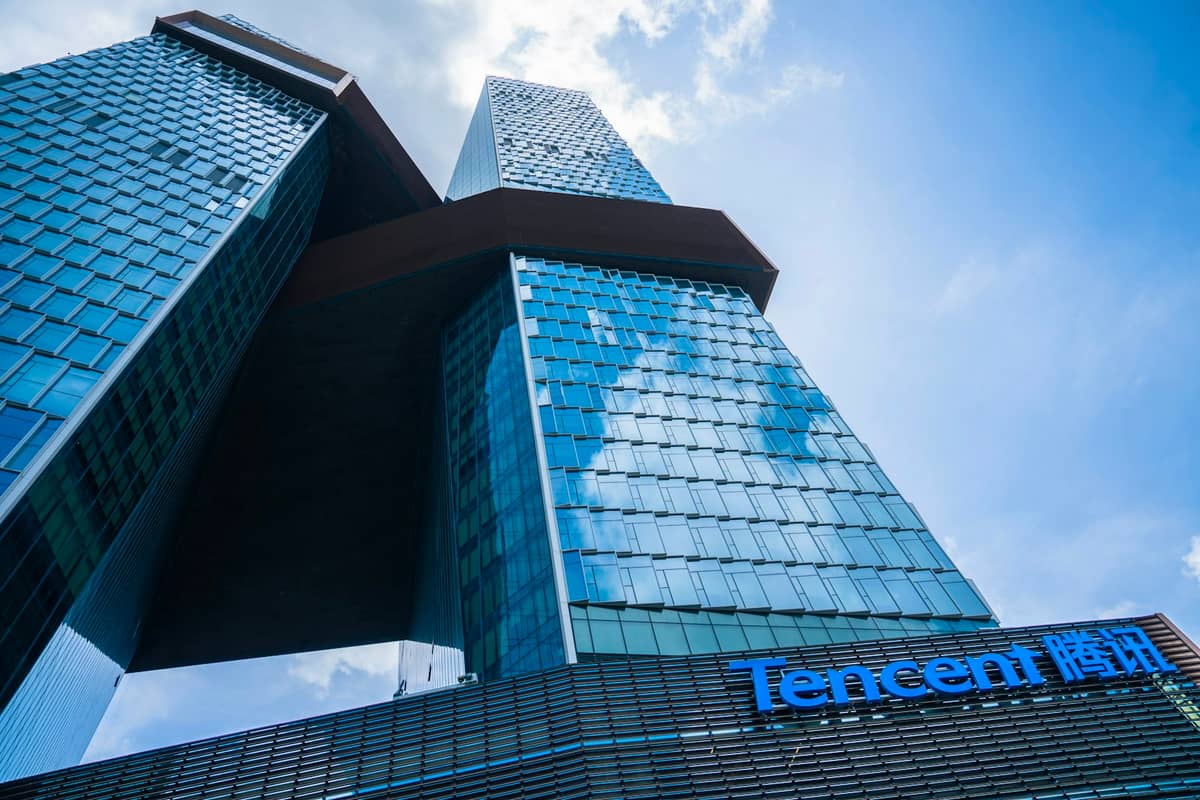
Tencent Seafront Towers, known in Chinese as 腾讯滨海大厦 (Téngxùn Bīnhǎi Dàshà) and sometimes rendered as Tencent Binhai Mansion, is the corporate headquarters of Tencent, the Chinese technology conglomerate behind WeChat, QQ, and a vast portfolio of gaming, fintech, and media products. The complex consists of two towers connected by sky bridges: Tower 1 rises to approximately 248 meters and Tower 2 to 194 meters. Both were completed in 2017.
This is not a museum, theme park, or observation deck. The towers are a working office campus, and the interior is off-limits to general visitors. What draws architects, urbanists, and tech-curious travelers here is the building itself: a unusual piece of design that repays careful observation from the street and the nearby waterfront promenade.
⚠️ What to skip
There is no public entrance, no visitor center, and no ticketing. Do not plan a trip expecting interior access. The experience here is entirely about architecture, context, and the surrounding seafront area.
The Architecture: A Vertical Campus Above the Bay
The towers were designed by NBBJ, an American architecture and design firm, with collaborating architecture and engineering support from Tongji and WSP. The brief was unusual: Tencent wanted a headquarters that functioned less like a conventional office tower and more like a horizontal campus stacked vertically. The solution was two towers connected by three sky bridges at different heights, each bridge housing shared amenities including a running track, a basketball court, a swimming pool, and dining facilities.
From the street, the sky bridges read as thick horizontal bands interrupting the verticality of the glass facades. The towers are clad in a curtain wall of low-reflectance glass, and the stepped profiles of the upper floors create a silhouette that shifts noticeably depending on your angle of approach.
The podium at ground level is landscaped with open plazas and planted terraces, though access closer to the building entrance is restricted to Tencent employees and authorized visitors. You can approach the perimeter and read the architecture clearly from nearby public streets and the seafront promenade.
For deeper context on how this building fits into Shenzhen's broader architectural evolution, theShenzhen architecture guidecovers the city's development from early Special Economic Zone pragmatism to contemporary landmark ambition.
Visiting From Outside: What the Experience Is Like
The most straightforward approach is on foot from Houhai Station (Line 2), a walk of roughly 10 to 15 minutes depending on your exact exit. The route takes you through the Houhai financial and tech sub-district, where a cluster of corporate towers from the past decade sits alongside retail streets and riverside parks. The density here is high, but the streets are wide and there is consistent shade from building overhangs.
Once you reach Haitian 2nd Road, the Tencent Seafront Towers come into full view. The glass facades catch the light and the reflections shift quickly as the sun rises.
The seafront promenade to the west of the complex, running along Shenzhen Bay, gives unobstructed long-distance views of the towers against the water. At dusk, the towers are lit from within and the sky bridges glow distinctly.
💡 Local tip
For the cleanest exterior photography, aim for a weekday morning between 7:30am and 8:30am, or a weekend morning when the surrounding roads are nearly empty. The towers face roughly southwest, so late afternoon light on clear days is also strong.
Location and What Surrounds It
The towers sit in the Houhai area of Nanshan District, close to the northern edge of Shenzhen Bay. This part of Nanshan has developed significantly since 2010 and now functions as a major tech and financial district.
TheShenzhen Bay Parkis the most practical complement to a visit here. The park stretches along the coastline just south and west of the towers, offering flat walking and cycling paths, mangrove sections, and unobstructed views of the bay toward Hong Kong. It is a genuinely pleasant place to spend an hour after walking the towers' exterior.
If you are planning a broader day in Nanshan that combines tech landmarks with older history,Nantou Ancient Cityis about 4 kilometers north and provides sharp contrast: a partially preserved walled town that predates the Special Economic Zone by over a thousand years, now surrounded by urban density.
Tencent as a Company: Why This Building Matters
Understanding who built this complex adds real weight to the visit. Tencent was founded in Shenzhen in 1998 and has grown into one of the largest technology companies in the world by market capitalization. Its products, particularly WeChat, are embedded into daily life across China. WeChat functions simultaneously as a messaging platform, payment system, and social network.
The decision to build a campus in Nanshan rather than relocate to Beijing reflects Shenzhen's identity as China's technology and innovation hub. The city attracted Tencent early precisely because it was new, relatively regulation-light, and geographically close to the engineering and manufacturing talent clusters of the Pearl River Delta. The Seafront Towers are in some ways a monument to that origin story: a company that began in a modest office park has built one of the most architecturally distinctive corporate headquarters in Asia, on land overlooking the bay.
If the story of Shenzhen's technology industry interests you more broadly, theShenzhen tech tour guidemaps out a day-long route connecting the city's major tech landmarks, fromHuaqiangbei Electronics Marketin the east to the Nanshan corridor in the west.
Who This Attraction Is For, and Who It Is Not
Tencent Seafront Towers rewards a specific type of visitor: someone interested in architecture, corporate urbanism, or the physical manifestation of China's technology sector. If you study or work in architecture, engineering, urban planning, or tech business, the building is worth your time on its own merits. The sky bridge concept is executed at a scale rarely seen outside China, and the engineering involved in spanning two towers at height is visually legible from the outside.
Travelers looking for interactive experiences, cultural immersion, or historical depth should adjust expectations clearly. This is a corporate headquarters. You will not go inside, you will not meet Tencent employees, and there is no interpretive signage for visitors. The payoff is entirely visual and contextual.
Families with children, travelers with very limited time in Shenzhen, and anyone expecting a traditional attraction will likely find the exterior visit underwhelming. A 30-minute stop combined with time in Shenzhen Bay Park makes sense; building an entire day around the towers does not.
ℹ️ Good to know
Photography note: the towers and their surroundings are public space, so exterior photography is generally possible. Pointing a camera directly at the entrance or security areas may draw attention from security staff. Keep a respectful distance from the building entrance.
Getting There and Practical Notes
The most straightforward route is Shenzhen Metro Line 2 to Houhai Station. The walk along Haitian 2nd Road takes about 10 to 15 minutes. Taxis and ride-hailing via Didi are reliable in this area and may be preferable if you are combining the visit with other Nanshan stops or carrying luggage.
There are no entrance fees and no need to book ahead. Parking may be available in the surrounding area for drivers, though traffic on weekday mornings can be heavy as office workers arrive. Nearby convenience stores and coffee options are concentrated around Houhai Station.
If you are arriving from Hong Kong and entering via Lo Wu or Futian border crossings, allow travel time to cross Nanshan by metro. TheHong Kong to Shenzhen crossing guidecovers the main border options and onward transit connections.
Nanshan District deserves more than a single stop. For a fuller picture of what the area offers beyond its corporate face, theNanshan neighborhood guidecovers the district's range from tech landmarks to coastal parks and the old Shekou waterfront.
Insider Tips
- The seafront promenade west of the towers connects south to Shenzhen Bay Park with no interruption. If you walk it at low tide in the early morning, you will often see grey herons and egrets working the mudflats immediately below the modern skyline: a striking visual contrast that is easy to photograph.
- The towers are best appreciated from a distance of 200 to 400 meters rather than from directly below. Walk west toward the bay and look back for the most complete view of both towers and the sky bridges in profile.
- On clear winter days (October to December), the air quality in Shenzhen is significantly better than in summer. The towers photograph crisply against a blue sky rather than haze, and the Hong Kong hills across the bay are visible.
- Weekends see far fewer people in the Houhai office district than weekdays. If your goal is architectural photography with minimal pedestrian interference, Saturday morning before 9am is the most practical window.
- The Shenzhen Stock Exchange building by Rem Koolhaas/OMA is a short taxi ride away in Futian. Pairing the two buildings in a single afternoon gives a strong overview of how China has used marquee architecture to signal institutional confidence in the twenty-first century.
Who Is Tencent Seafront Towers For?
- Architecture students and professionals wanting to study vertical campus design at full scale
- Tech industry visitors on business trips who want to see Shenzhen's corporate geography firsthand
- Urban photographers looking for modern skyline compositions against a coastal backdrop
- Travelers building a half-day Nanshan itinerary that combines contemporary landmarks with Shenzhen Bay Park
- Anyone curious about the physical footprint of China's largest technology companies
Nearby Attractions
Other things to see while in Nanshan:
- Shenzhen Bay Mangrove Nature Reserve
The Futian Mangrove Nature Reserve sits on the northeast shore of Shenzhen Bay, offering free access to boardwalks, bird observation platforms, and one of China's most unusual ecological spaces: a protected national nature reserve embedded inside a major city. It is quiet, photogenic, and worth a morning.
- Nantou Ancient City
Nantou Ancient City (南头古城) is Shenzhen's oldest surviving urban settlement, with roots stretching back to the Eastern Jin Dynasty in 331 A.D. Today this 70,000-square-meter walled district in Nanshan blends Ming-era gates and ancestral halls with independent cafes, galleries, and street food — offering a rare counterpoint to Shenzhen's reputation as a city with no past.
- Shenzhen Bay Park
Stretching along the southwestern shoreline of Nanshan District, Shenzhen Bay Park is a free, 13-kilometre coastal park where mangrove wetlands meet bay views toward Hong Kong. It is one of the few places in the city where the pace drops, the air moves, and the skyline stops competing for attention.
- Shenzhen Safari Park
Shenzhen Safari Park (深圳野生动物园) is one of the largest wildlife parks in southern China, spreading across roughly 1.2 million square meters in the Xili area of Nanshan District. Open since 1993, it draws families and animal lovers looking for a full-day outing away from the city's tech corridors.