Shenzhen Bay Mangrove Nature Reserve: Urban Wetland, Migratory Birds, and Coastal Calm
The Futian Mangrove Nature Reserve sits on the northeast shore of Shenzhen Bay, offering free access to boardwalks, bird observation platforms, and one of China's most unusual ecological spaces: a protected national nature reserve embedded inside a major city. It is quiet, photogenic, and worth a morning.
Quick Facts
- Location
- No.1 Mangrove Road, Futian District, Shenzhen (northeast shore of Shenzhen Bay)
- Getting There
- Mangrove Bay Station or Shawei Station (Shenzhen Metro)
- Time Needed
- 1.5 to 3 hours for the boardwalk and observation areas
- Cost
- Free for boardwalk and observation platforms; a permit is required to enter the reserve interior
- Best for
- Birdwatchers, early-morning walkers, photographers, and anyone needing a break from city noise
What Makes This Place Unusual
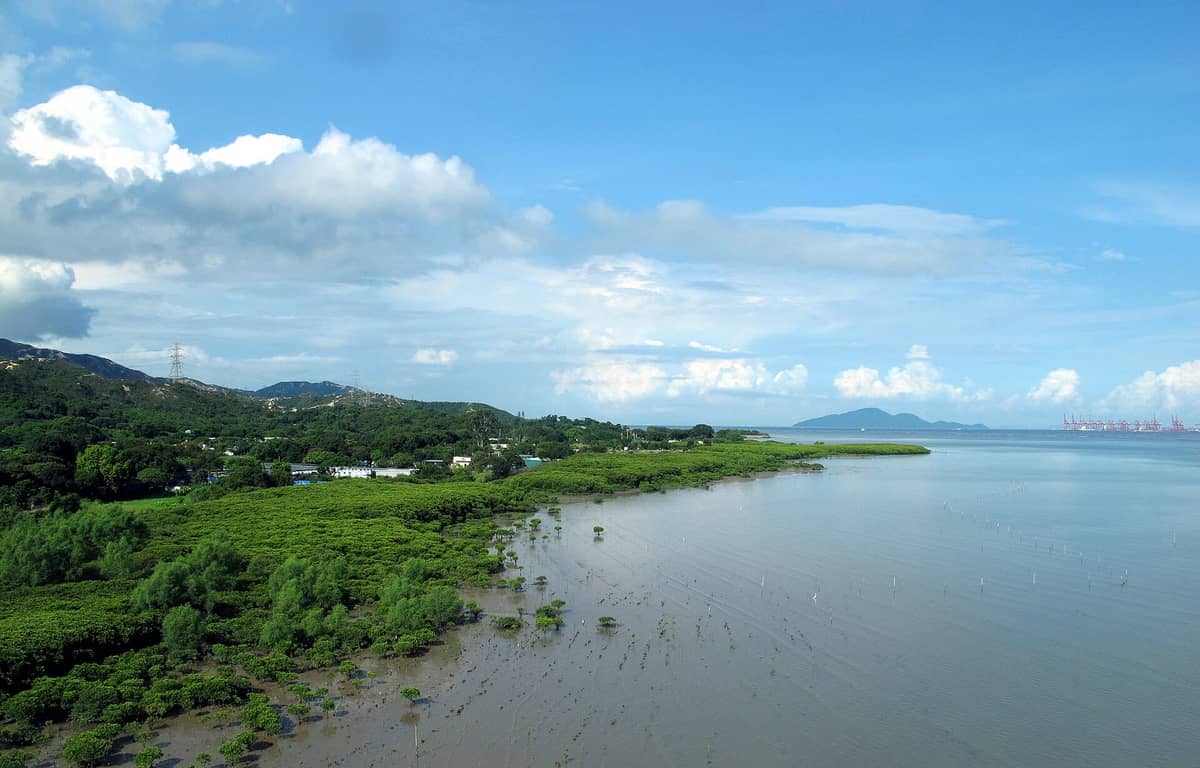
The Futian Mangrove Nature Reserve, officially part of the Guangdong Neilingding-Futian National Nature Reserve, holds a distinction that sounds almost impossible: it is the only national nature reserve located inside a city's downtown in China, and also the country's smallest national reserve, covering approximately 367.64 hectares. Stand at the observation boardwalk on a clear morning and you can see Hong Kong's New Territories across Shenzhen Bay. Behind you, the glass towers of Futian and Nanshan catch the early sun. The contrast is not subtle.
The reserve was established in 1984 and upgraded to national-level status in 1988. Its core purpose is protecting a 9-kilometer stretch of coastal mangrove forest that serves as a critical stopover and wintering ground for migratory birds along the East Asian-Australasian Flyway. About 189 species of birds have been recorded here, including internationally threatened shorebirds that pass through in significant numbers each autumn and spring.
ℹ️ Good to know
Permit note: The reserve interior is not open to casual visitors. Public access is limited to the observation platforms and boardwalk sections adjacent to Shenzhen Bay Park, which are free to enter.
What You Actually See and Hear
From the publicly accessible boardwalk, you look out across a dense mat of grey-green mangrove canopy, the trees tangled and low, their prop roots visible at low tide. The mudflats exposed at low water are where the birds concentrate: small waders picking through the surface, egrets standing still at the water's edge, cormorants drying their wings on exposed root clusters. At high tide the scene shifts — water covers the mudflats and bird activity moves closer to the boardwalk's edge.
The smell is distinctly tidal: salt, wet mud, and the faint organic scent of decomposing plant matter. It is not unpleasant, but it signals that you are in a working ecosystem rather than a manicured park. The sounds are a mix of distant city traffic, the occasional metro train nearby, and, if you arrive early enough and stay still, the calls of birds in numbers that feel disproportionate to the city surrounding them.
The boardwalk sections are easy to walk, making the route suitable for many visitors. Benches are spaced along the path, and the shade from the mangroves reduces direct sun exposure considerably compared to the open promenade sections of the adjacent Shenzhen Bay Park.
The Best Time to Visit and Why It Matters
Arrive before 8 a.m. if you want the boardwalk to yourself. After 9 a.m. on weekends, the adjacent Shenzhen Bay Park fills quickly with cyclists, joggers, and families, and the transition spills into the mangrove-adjacent paths. The birds are also more active and visible in the early morning before foot traffic increases.
October through March is the strongest window for birdwatching. Migratory species arrive from their breeding grounds in Siberia and northeast China from around September, with peak numbers in late autumn and winter. During this period, the mudflats in front of the reserve can hold hundreds of shorebirds at low tide. Spring migration, roughly March to May, brings a second flush of activity as birds move north again.
Summer visits, from June through August, are possible but hot and humid. Shenzhen's rainy season peaks in this period and afternoon thunderstorms are common. If you do visit in summer, early morning is the only practical window. For a broader look at how Shenzhen's seasons affect outdoor activities, see thebest time to visit Shenzhen guide.
💡 Local tip
Tide timing matters as much as the clock. Low tide exposes the mudflats and concentrates bird activity close to the viewing platforms. High tide pushes birds back into the vegetation and reduces what you can see. Check a tide table for Shenzhen Bay before you plan your visit — a low-tide morning in October or November is the reserve at its best.
Getting There and Moving Around
The reserve sits along the Futian side of Shenzhen Bay, and metro access is straightforward from central Shenzhen. Mangrove Bay Station and Shawei Station on the Shenzhen Metro both place you within walking distance of the boardwalk entrance. Verify current metro line numbers and transfer requirements before travel, as the network has expanded in recent years.
The reserve's location on the western side of Futian District makes it convenient to combine with other Nanshan or Futian attractions.Shenzhen Bay ParkShenzhen Bay Park runs directly alongside the mangrove area — the two share a continuous waterfront and many visitors walk between them on the same trip. If you are coming from central Nanshan, a taxi or Didi ride is often the simplest option given luggage or timing constraints.
Cycling is also practical. The Bay Park has paths that run parallel to the mangrove boardwalk, and rental bikes are available in the area. This is a popular combination for local residents on weekend mornings.
Photography Conditions and Practical Advice
The light quality between 7 and 9 a.m. is consistently strong for photography, with soft directional light across the mudflats and occasional mist over the bay in cooler months. The Hong Kong hills visible on the far side of the water make for a useful background when shooting birds or landscapes at the wider end of a focal length.
For birdwatching with a camera, a 400mm or longer lens is the practical minimum if you want frame-filling shots of waders on the mudflats. Binoculars are more versatile for most visitors and considerably lighter to carry. The observation platforms have open railings that allow for a stable shooting position if you are using a monopod.
What to bring: sun protection is important even in cooler months because the boardwalk sections over water have limited shade at midday. Comfortable walking shoes are sufficient — no specialist footwear is needed for the accessible paths. Insect repellent is worth having in warmer months, particularly near the denser mangrove sections.
⚠️ What to skip
Do not attempt to enter the reserve interior without an official permit. The mangrove ecosystem is genuinely sensitive to disturbance, particularly during the bird breeding and migration periods. The accessible boardwalk areas provide good observation without compromising the habitat.
Fitting This Into a Shenzhen Itinerary
The reserve works well as a morning anchor before moving on to other parts of western Shenzhen. From the bay, you are well-positioned to head towardNanshan Districtfor lunch or to explore the Shekou waterfront area. TheSea World Plazain Shekou is about 20 minutes by taxi and offers a strong contrast: dense with restaurants and afternoon activity.
For visitors focused on green spaces, the mangrove reserve pairs naturally with a second visit toLianhuashan Parkin Futian, which is larger and better suited to longer walks. Alternatively, theShenzhen parks guidecovers the city's main green spaces with practical detail on distances and transport.
If you are a serious birdwatcher or ecologist, allow a full morning and bring reference material. The reserve is small enough that you can cover the accessible viewing areas in 90 minutes, but the value is in waiting and watching rather than walking. Settling at one platform for 30 to 45 minutes during a low-tide window will show you more than covering the full path at pace.
Who Will Not Enjoy This
The reserve is not a theme park and it is not a conventional tourist attraction. Visitors expecting manicured gardens, interpretive signage in multiple languages, or a visitor center with facilities will be disappointed. The publicly accessible areas are relatively simple: a boardwalk, observation platforms, and open views across a tidal ecosystem. The absence of English-language information on-site is a genuine gap.
Families with young children can visit, but the interest level for children under 8 who are not already engaged with wildlife watching is limited. The path has no play equipment or interactive elements. For family-oriented nature visits with broader activities, Shenzhen has better-suited alternatives.
Insider Tips
- Check a Shenzhen Bay tide table before you go. Low tide in the morning during October to January is the single most reliable combination for seeing large numbers of birds on the mudflats — more important than any other timing variable.
- The observation platforms are quietest on weekday mornings between 7 and 9 a.m. Weekend afternoons bring significantly more pedestrian traffic from the adjacent bay park, which reduces bird activity near the boardwalk.
- If you want to enter the reserve interior for research, photography, or guided ecological visits, contact the Futian District authorities in advance. The permit process exists specifically to limit disturbance during sensitive periods.
- The section of boardwalk closest to the Shenzhen Bay Bridge tends to offer the widest unobstructed views across the tidal flats. This is the most reliable spot for scanning large sections of mudflat with binoculars.
- The reserve's proximity to the Hong Kong border means it sits within a zone occasionally affected by air quality from regional weather patterns. On clear days with northerly winds in autumn and winter, visibility across the bay is sharp and the Hong Kong peaks are clearly defined — worth timing for photography.
Who Is Shenzhen Bay Mangrove Nature Reserve For?
- Birdwatchers and wildlife photographers who can time a visit around low tide in the migratory season
- Early risers who want a peaceful, car-free waterfront walk before the city wakes up
- Visitors interested in urban ecology and the tension between development and conservation
- Cyclists combining a bay loop with the Shenzhen Bay Park cycle route
- Travelers on a tight budget who want a meaningful outdoor experience without spending money
Nearby Attractions
Other things to see while in Nanshan:
- Nantou Ancient City
Nantou Ancient City (南头古城) is Shenzhen's oldest surviving urban settlement, with roots stretching back to the Eastern Jin Dynasty in 331 A.D. Today this 70,000-square-meter walled district in Nanshan blends Ming-era gates and ancestral halls with independent cafes, galleries, and street food — offering a rare counterpoint to Shenzhen's reputation as a city with no past.
- Shenzhen Bay Park
Stretching along the southwestern shoreline of Nanshan District, Shenzhen Bay Park is a free, 13-kilometre coastal park where mangrove wetlands meet bay views toward Hong Kong. It is one of the few places in the city where the pace drops, the air moves, and the skyline stops competing for attention.
- Shenzhen Safari Park
Shenzhen Safari Park (深圳野生动物园) is one of the largest wildlife parks in southern China, spreading across roughly 1.2 million square meters in the Xili area of Nanshan District. Open since 1993, it draws families and animal lovers looking for a full-day outing away from the city's tech corridors.
- Tanglang Mountain Park
Tanglang Mountain Country Park (塘朗山郊野公园) is a free, 10-square-kilometer nature reserve in Nanshan District. Shaded trails, sweeping views over Shenzhen's tech corridor, and easy metro access make it the most practical urban hike on the west side of the city.