Xichong–Dongchong Coastal Hiking Trail: Shenzhen's Most Rewarding Coastal Walk
The Dongchong–Xichong Coastal Hiking Route in Dapeng New District traces the wild southeastern edge of Shenzhen, linking two pristine bays across roughly 6 to 10 kilometres of cliff paths and granite headlands. It is free to hike, takes most walkers three to five hours, and delivers the kind of landscape that feels far removed from the city that built it.
Quick Facts
- Location
- Dapeng New District, Shenzhen, Guangdong Province
- Getting There
- Bus M231 to Dongchong Village Committees Station; arrange return from Xichong or reverse
- Time Needed
- 4–5 hours one way; allow a full day if swimming at either beach
- Cost
- Free (trail itself); CNY 50 may apply to certain Dapeng Geopark sections — verify on arrival
- Best for
- Hikers, nature lovers, photographers, weekend escapes from the urban core
What the Trail Actually Is
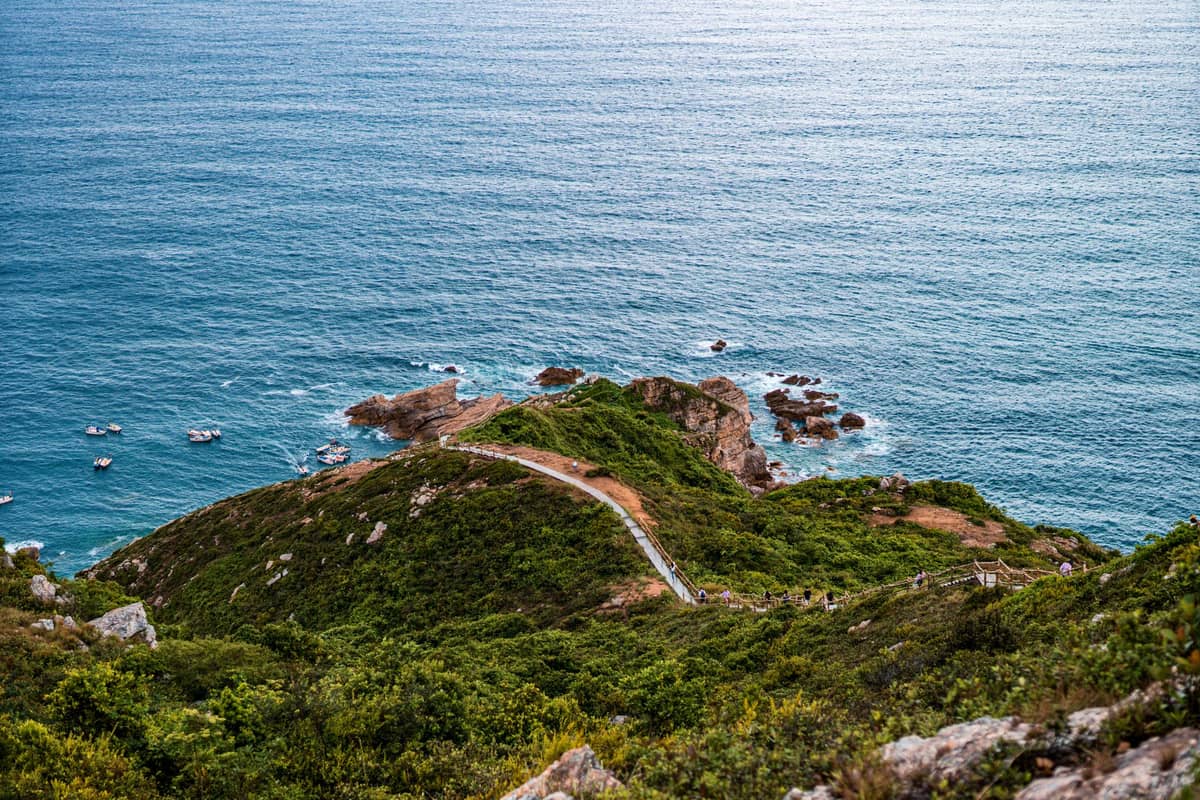
The Dongchong–Xichong Coastal Hiking Route, locally known as Dongxichong (东西涌), runs along the southeastern coastline of Dapeng New District. The trail connects Dongchong (东涌) in the northeast to Xichong (西涌) in the southwest, threading across a stretch of coast that was once recognised as one of China's most beautiful hiking routes. The landscape is granite, subtropical scrub, and open sea — with almost nothing between you and the South China Sea horizon.
Route lengths vary in different sources between 6 and 8 kilometres one way, depending on which access paths you use and how much time you spend on the beaches at either end. The terrain combines gentle coastal paths with steep, rocky sections over headlands, so the official difficulty rating of moderate should be taken seriously. Fit walkers with no hiking experience sometimes underestimate the exposed ridge sections.
ℹ️ Good to know
The trail runs one way between two separate villages. Most hikers start at Dongchong and finish at Xichong. Plan your return transport before you set off — there is no loop option, and taxis are scarce at the Xichong end on busy weekends.
The Experience: What You See, Hear, and Feel
Starting from Dongchong Village, the first stretch follows a concrete path past fishing shacks and small food stalls. The smell here is salt, dried seafood, and faintly diesel from the small boats. Within fifteen minutes the path climbs and the village drops away entirely. From that point on, the dominant sounds are wind, breaking surf below the cliffs, and birds.
The middle section crosses several rocky headlands with exposed drops to the sea on one or both sides. The granite underfoot is rough and sun-heated, and on clear days the water below runs from pale turquoise in the shallows to deep blue further out. On clear autumn mornings, visibility reaches far enough that the silhouettes of distant islands are visible to the south.
Xichong Beach, at the western end, is a long stretch of open sand in Shenzhen. Arriving at it after three or four hours of hiking gives it a reward quality that a simple beach visit never quite replicates. The beach is wide and relatively clean, and there are basic changing facilities and food vendors near the main access area.
Morning vs Afternoon: How the Trail Changes by Time of Day
A sensible hiking window for the Dongchong-to-Xichong direction is early morning to early afternoon. That guidance exists for good reason. Starting early means the steepest ridge sections are walked in morning light rather than peak afternoon heat. Shadows from the coastal hills also keep parts of the trail cooler for the first two hours.
By late morning on weekends, the Dongchong end fills with day-trippers, many of whom walk a short section and turn back. The further you push past the first headland, the thinner the crowd gets. By the time you reach the midpoint ridges, it is common to have stretches of path entirely to yourself, even on a Saturday in October.
Afternoon light hits the cliffs from the west and makes the sea colour dramatically richer for photography. However, afternoon also brings stronger UV exposure on the open ridges and, in summer, the genuine risk of afternoon thunderstorms rolling in from the Pearl River Delta. The trail offers almost no shelter once you are on the exposed sections.
⚠️ What to skip
Avoid this hike from June through September unless you start before 8 a.m. and monitor weather closely. The summer monsoon season brings heavy rain, high humidity, and occasional typhoon-related trail closures. October to December is the most reliable window.
Historical and Ecological Context
Dapeng New District occupies the southeastern arm of Shenzhen, the part that protrudes into the South China Sea between Daya Bay and Dapeng Bay. The peninsula has remained comparatively undeveloped because large sections were designated as ecological protection zones, sparing them from the industrial and residential construction that transformed most of Shenzhen after 1980. The Dapeng Geopark, of which the coastal zone forms a part, protects significant geological formations including volcanic rock outcrops and ancient sea-cliff erosion features.
The area around Dongchong and Xichong has a much longer human history than the Shenzhen metropolitan area. The Dapeng Fortress nearby, a Ming-dynasty military installation dating to around 1394, is evidence of coastal defence activity that predates the modern city by six centuries. For more on that side of the peninsula, theDapeng Fortressis worth combining with a hiking day trip if you have time the evening before or after.
The coastal vegetation on the trail is subtropical coastal scrub: low-growing, wind-shaped shrubs, occasional pandanus, and patches of native grasses on the sheltered slopes. Bird life includes cormorants on the offshore rocks and various migratory species passing through in October and November. The sea below the cliffs is part of a marine ecological zone, and the water clarity on calm days reflects that protection.
Getting There and Practical Logistics
Dapeng New District is roughly 50 to 70 kilometres from central Shenzhen. Getting there from the urban core takes time by public transport. The most straightforward route is Bus M231 to Dongchong Village Committees Station. Check current bus schedules before travel, as service frequency can vary. For a broader overview of navigating the city's transit network,getting around Shenzhencovers the key options in detail.
Driving or taking Didi to Dongchong Village gives more flexibility, particularly for timing the return. Parking near the Dongchong trailhead is available but limited on weekends. If you hire a car or use ride-hailing, agree on drop-off at Xichong Beach for the return, or arrange for someone to pick you up there — the two villages are not walkable back-to-back.
Bring more water than you think you need. There are no reliable water sources on the trail between the two villages, and the physical exertion combined with coastal sun depletes hydration faster than an urban walk. A minimum of 2 litres per person is sensible. Sunscreen, a hat, and shoes with grip on wet rock are non-negotiable; trainers with flat soles become genuinely risky on the steeper granite sections.
💡 Local tip
Mobile signal is patchy across the mid-trail ridges. Download an offline map of the route before you leave Dongchong Village, and screenshot the return bus schedule. WeChat navigation works reasonably well near both endpoints but can drop in the middle sections.
Photography Notes
The best photographic positions on this trail are from the first and second major headlands, where you can frame both Dongchong Bay behind you and the open sea ahead simultaneously. Polarising filters, or their phone-camera equivalent in post-processing, make a significant difference to water colour in the mid-morning light. The cliffs glow a warm orange in low winter sun, which makes the October to December window particularly rewarding for landscape photography.
Wide-angle lenses capture the scale of the headland drops. Telephoto or portrait-length focal lengths work well at Xichong Beach where the mountain backdrop rising behind the sand creates a compressed landscape effect. Avoid scheduling photography around midday if colour saturation matters — the flat overhead light drains contrast from both the rock and the water.
Who Will Not Enjoy This Trail
This route is not suitable for anyone with limited mobility or a dislike of sustained physical effort. The trail is not wheelchair accessible and has no formal accessibility provisions. Families with very young children face real challenges on the exposed rocky sections, thoughShenzhen with kidssuggests alternatives more suited to younger visitors. Travellers seeking a quick half-hour walk for photos will find the logistics of reaching Dapeng disproportionate to a short visit. If you want accessible coastal scenery closer to central Shenzhen,Shenzhen Bay Parkor theMangrove Nature Reserverequire far less travel time.
Anyone visiting Shenzhen for only a day or two faces a difficult tradeoff: the travel time to and from Dapeng New District eats a significant portion of a short trip. This trail earns its reputation, but only if you have a full day to dedicate to it.
Insider Tips
- Start no later than 8:30 a.m. to complete the mid-section ridges before the sun is overhead. The descent into Xichong Beach is far more comfortable when you are not fighting both heat and fatigue simultaneously.
- Pack a small dry bag or waterproof phone case. Spray from the waves reaches the path in places, and if you swim at Xichong Beach at the end, you will be glad your documents and electronics are protected.
- The food stalls at Xichong Beach serve basic hot meals and cold drinks at reasonable prices. The seafood dishes made from the morning's local catch — particularly the steamed clams and grilled fish — are worth sitting down for after the hike rather than rushing for transport.
- Weekdays in October and November offer near-solitude on the mid-trail sections. If your schedule allows, a weekday visit transforms the experience compared to a crowded Saturday.
- Combine the hike with an overnight stay in Dapeng to visit Dapeng Fortress in the morning before the coastal walk. The Dapeng peninsula rewards a slow visit far more than a rushed day trip from central Shenzhen.
Who Is Xichong–Dongchong Coastal Hiking Trail For?
- Experienced day hikers looking for genuine coastal terrain within a major city
- Photographers seeking dramatic cliff and sea compositions unavailable in urban Shenzhen
- Travellers who want a full rest day from the city with physical activity built in
- Anyone visiting Shenzhen for more than three days and willing to dedicate a full day to the eastern peninsula
- Nature-focused visitors interested in subtropical coastal ecology and geological landscape
Nearby Attractions
Other things to see while in Dapeng Peninsula:
- Dapeng Ancient Fortress
Dapeng Fortress (大鹏所城) is the most intact Ming Dynasty military garrison in southeastern China, sitting on Shenzhen's eastern coast with over 600 years of layered history. Free to enter and a world away from the city's glass towers, it rewards anyone willing to make the journey east.
- Dongchong Beach
Dongchong Beach (东冲海滩) sits at the far eastern edge of Shenzhen in Dapeng New District, offering clear water, coarse sand, and a raw coastal atmosphere that the city's more developed beaches simply don't have. It's best reached by public bus and pairs naturally with the famous coastal hiking trail to Xichong.
- Xichong Beach
Xichong Beach sits at the southern tip of the Dapeng Peninsula in Longgang District, offering some of the clearest water accessible from central Shenzhen. With dramatic rocky headlands, open sands, and a connected coastal hiking trail, it rewards the extra travel time it takes to reach it.