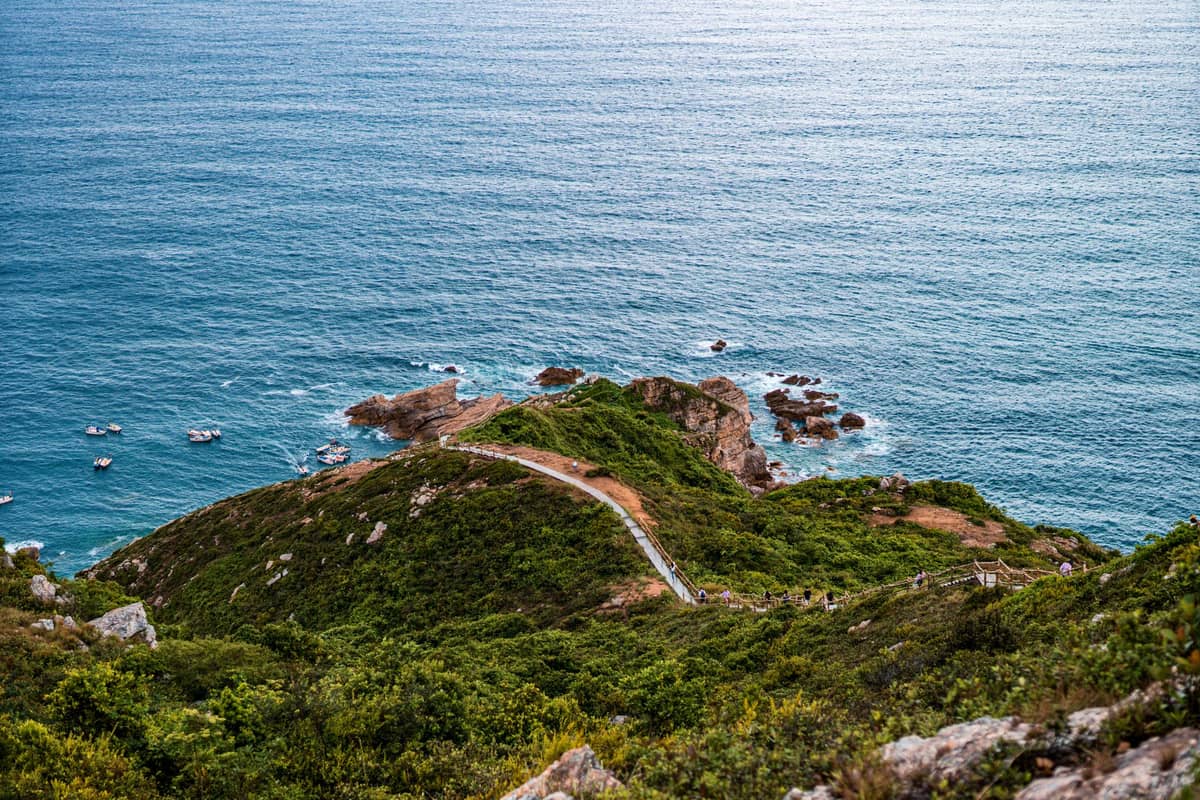
Dapeng Peninsula is Shenzhen's eastern coastal edge, a scenic coastal zone of volcanic rock beaches, forested ridgelines, and historic garrison towns sitting between Daya Bay and Dapeng Bay. It moves at a completely different pace from central Shenzhen, rewarding visitors who make the hour-long journey east with scenery and quiet that feels worlds away from the metro network.
Dapeng Peninsula is where Shenzhen's urban energy runs out and the South China Sea takes over. Administered as part of Dapeng New District, this coastal zone holds some of Shenzhen's best beaches, its only national geopark, and a remarkably intact Ming-dynasty fortress garrison that most visitors to the city never find.
Orientation
Dapeng Peninsula occupies the far southeastern corner of Shenzhen, jutting southward into the sea between Daya Bay to the east and Dapeng Bay (also called Mirs Bay) to the west. The city of Huizhou borders the peninsula to the north, and on a clear day from the higher coastal trails you can see the open South China Sea to the south. The peninsula is administered as Dapeng New District, subdivided into three subdistricts: Kuichong in the north, Dapeng in the center, and Nan'ao at the southern tip.
Think of the peninsula as a long finger of land, with a spine formed by a chain of low coastal mountains. The main road runs down the western flank through Dapeng town and continues to Nan'ao, which serves as the gateway to the most visited beaches and the national geopark. The eastern side of the peninsula, facing Daya Bay, is quieter and less developed, with smaller fishing communities and stretches of coast that see almost no tourist traffic.
The peninsula sits well outside Shenzhen's metro network, which is a deliberate function of its protected-area status. From Luohu or Futian, getting to Dapeng by road takes roughly 60 to 90 minutes depending on traffic, which is exactly why the peninsula still feels like a different world.
Character & Atmosphere
Dapeng operates on a rhythm that has nothing to do with Shenzhen's corporate clock. Mornings on the peninsula start early and quietly: fishing boats are already back at the small harbors around Nan'ao before the first hikers reach the trailheads, and the old streets inside the Dapeng Fortress are still cool and mostly empty until mid-morning. The light at this hour comes in low from the east, catching the gray roof tiles of the garrison town in a way that makes the restored Ming-dynasty walls look genuinely old, which in Shenzhen is a notable achievement.
Midday brings heat and beach crowds, particularly on weekends when city residents make the drive out in significant numbers. The main beach areas around Xichong and Dongchong fill up from late morning onward, and the seafood restaurants along the Nan'ao waterfront do loud, busy business. This is also when the coastal trails become hot and exposed, so most serious hikers start before 8am or wait for late afternoon.
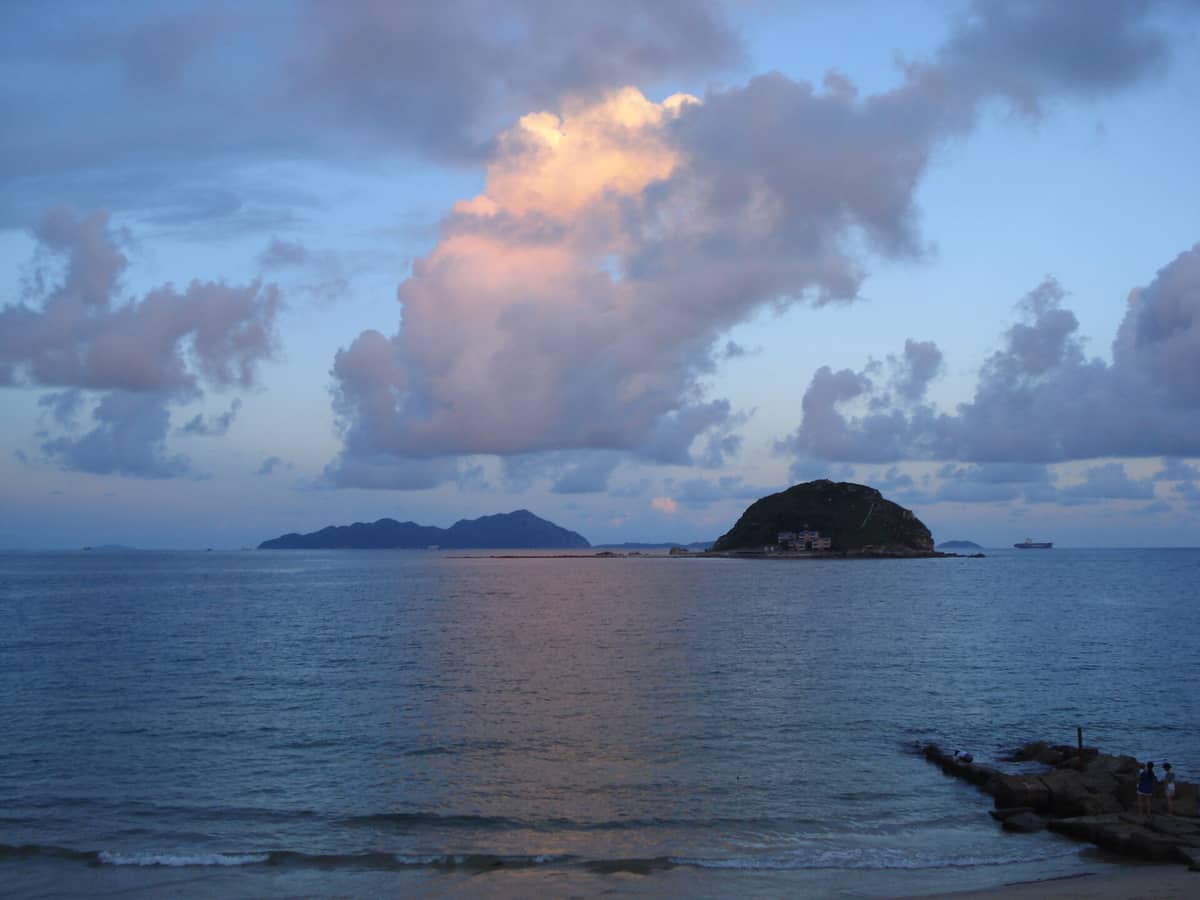
By late afternoon the light turns golden over the water and the beach crowds thin. Evenings on the peninsula are quiet: there is no nightlife strip, the fortress streets empty out after dark, and the restaurants close earlier than anything you would find in the city center. If you stay overnight, the silence is one of the reasons to do so. The sky over Dapeng at night is noticeably darker than anywhere inside the urban core.
Weekdays are dramatically calmer than weekends. On a Tuesday morning in November, the beach at Xichong can feel nearly empty and the hiking trails are yours alone. On a Saturday in October, those same places hold thousands of visitors. If you have flexibility, a midweek visit transforms the experience entirely.
💡 Local tip
The peninsula is most crowded on weekend mornings from October through February, when Shenzhen's cooler, drier weather sends half the city looking for an outdoor escape. Arriving Friday evening or leaving by Sunday afternoon avoids the worst of the bus and road congestion on the main Nan'ao route.
What to See & Do
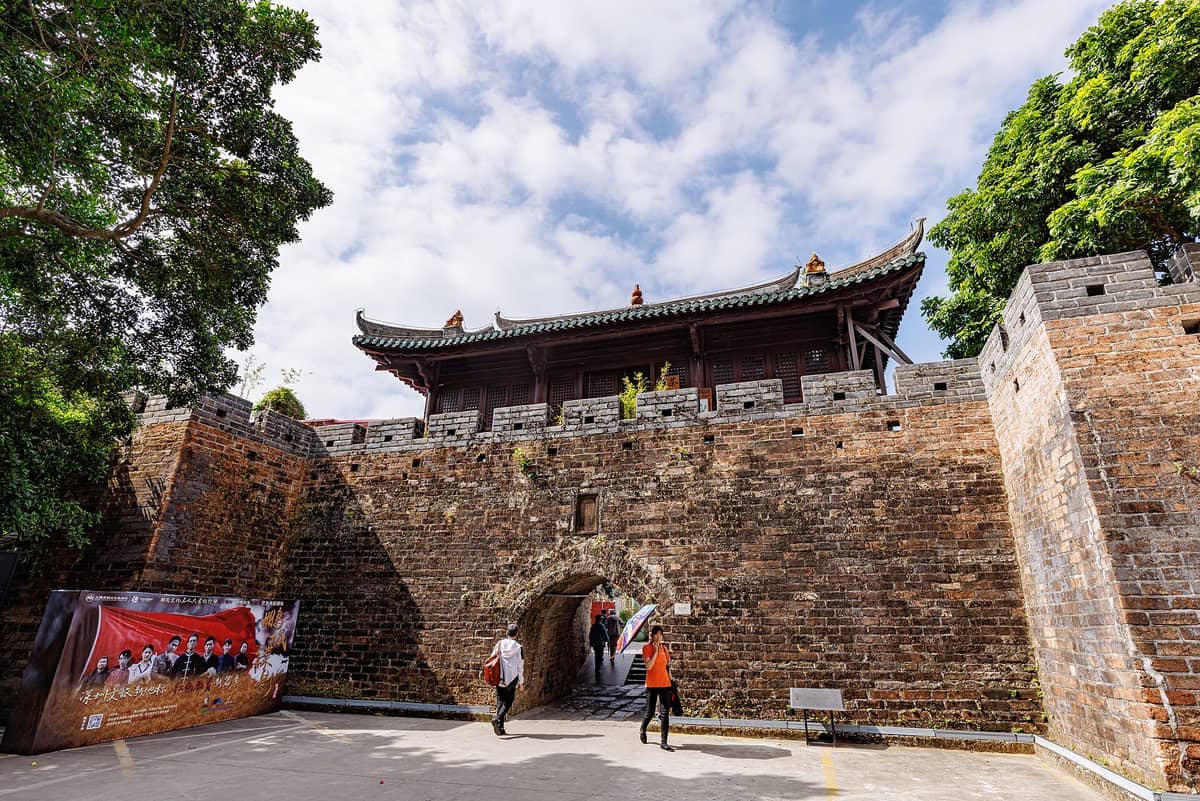
The single most important historical site on the peninsula is Dapeng Fortress, a Ming-dynasty garrison town established in 1394 to defend the coast against piracy. The walled town survives in remarkable condition, with original gate towers, ancestral halls, and narrow stone-paved streets still forming the bones of a living community. Walking through the fortress in the early morning, before the souvenir stalls fully open, gives you a real sense of how old coastal Guangdong actually looked. The fortress sits in Dapeng subdistrict, roughly at the geographic center of the peninsula.
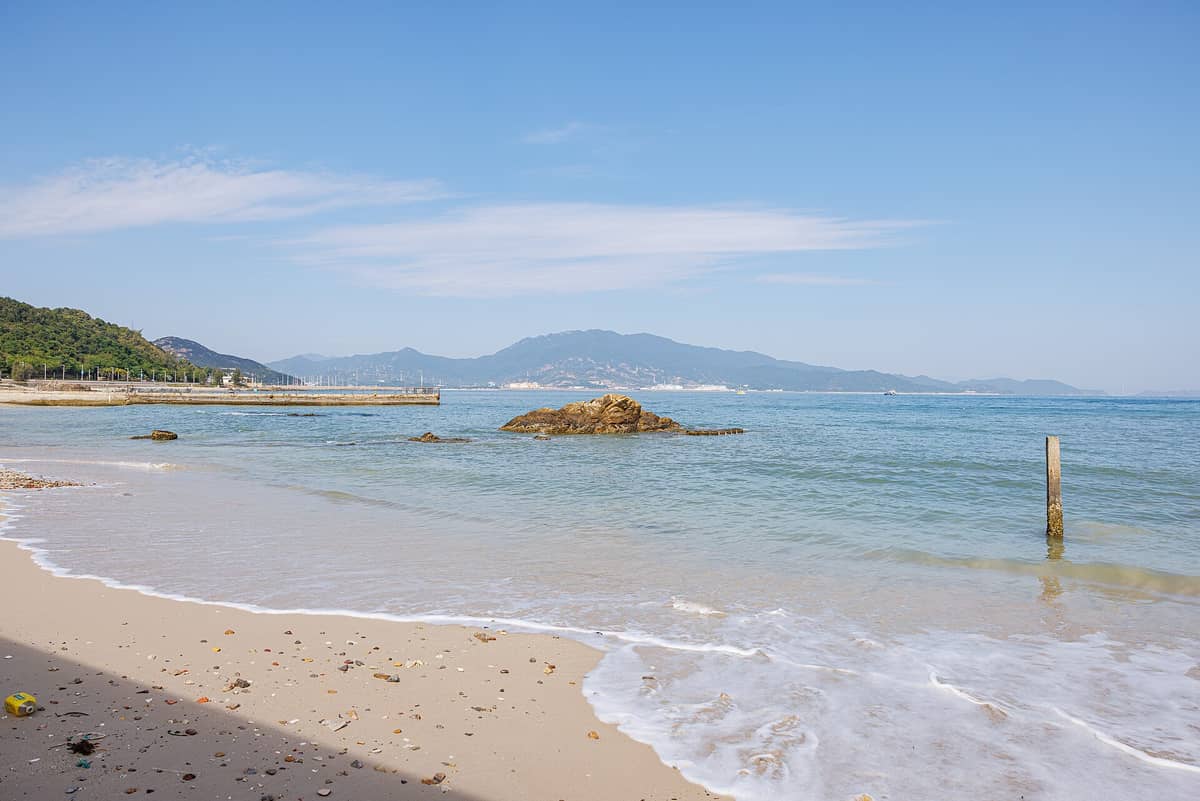
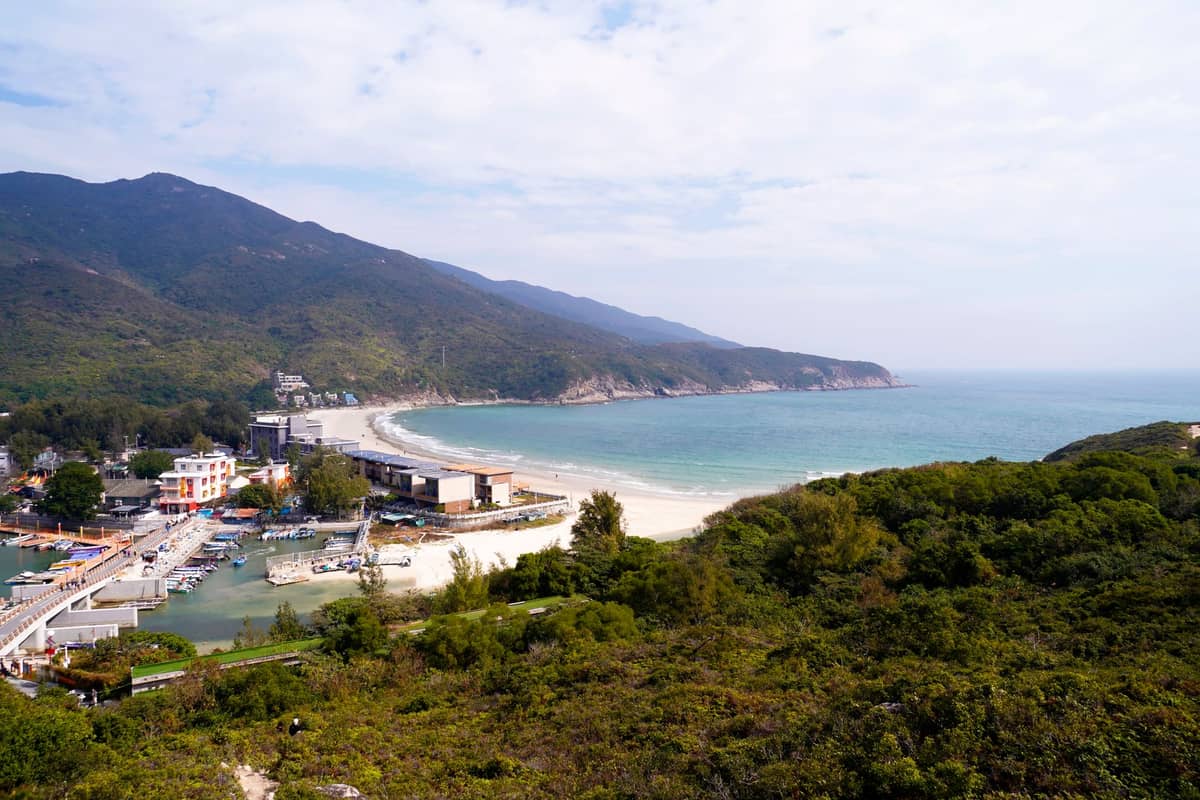
The natural anchor of the Nan'ao end of the peninsula is the Dapeng Peninsula National Geopark, Shenzhen's only national-level geological nature reserve, covering 46 square kilometers. Its address is at 1 Dizhi Gongyuan Road in Xinda Community, Nan'ao Subdistrict. The park protects Cretaceous-era volcanic rock formations, sea cliffs, and coastal landforms that were shaped by the same tectonic activity that formed much of eastern Guangdong. Within and adjacent to the geopark are the two beaches that draw the most visitors: Xichong Beach and Dongchong Beach. Xichong is longer and more accessible; Dongchong is narrower and wilder, backed directly by forested hills.
The coastal trail connecting Xichong and Dongchong is one of Shenzhen's finest walks, a roughly 10-kilometer route over rocky headlands with continuous sea views. It is part of a longer network described in the Xichong-Dongchong Coastal Trail guide, and is considered the best day hike accessible from the city. The trail passes through sections of the geopark and over volcanic formations that are noticeably different in texture and color from the granite hills typical of western Shenzhen. Allow four to five hours for the full route.
Beyond the main beaches, the Yangmeikeng and Egong Bay areas on the western coast offer quieter coves with small fishing communities and views across Dapeng Bay toward the Sai Kung peninsula in Hong Kong. For more context on the broader outdoor landscape of Shenzhen, the Shenzhen hiking guide covers the peninsula's trails alongside routes elsewhere in the city.
Dapeng Fortress: Ming-dynasty garrison town, best in early morning before crowds
Xichong Beach: wide sandy beach within the national geopark, facilities available
Dongchong Beach: wilder, less developed, backed by forested hills
Xichong-Dongchong Coastal Trail: 10km clifftop route, volcanic rock formations
Dapeng Peninsula National Geopark: 46 sq km protected reserve at Nan'ao
Yangmeikeng fishing village: low-key waterfront, local seafood boats
Nan'ao town center: gateway hub with buses, restaurants, and coastal access
⚠️ What to skip
Swimming conditions at Xichong and Dongchong vary significantly by season. Typhoon swells between June and September can make the water dangerous even when it looks calm. Check posted beach safety flags and never swim when red flags are displayed. The jellyfish season peaks in late summer.
Eating & Drinking
The food scene on Dapeng Peninsula is built entirely around the sea, which is both its greatest strength and its entire identity. The restaurants clustered along the Nan'ao waterfront and around the main beach access roads specialize in the kind of Cantonese seafood cooking that requires very fresh ingredients and very little intervention: whole steamed fish, stir-fried clams with black bean sauce, braised mantis shrimp, and congee made with whatever came off the boats that morning.
Prices at the waterfront restaurants range from moderate to quite high depending on the species you order. Lobster and large grouper are market-priced and can add up quickly if you are not paying attention. The safer strategy is to ask what is fresh and local that day rather than ordering from the live tanks, where the markup tends to be significant. The smaller, less decorated places off the main waterfront strip often have better value and more authentic cooking than the large restaurants that cater specifically to tour groups.
Inside Dapeng Fortress town there are smaller tea houses and casual local restaurants serving Hakka-influenced dishes, a reminder that this part of eastern Guangdong has strong Hakka cultural roots alongside the dominant Cantonese tradition. Braised pork belly with preserved vegetables, salt-baked chicken, and tofu with minced fish are all dishes you might find here that you would not easily encounter in the seafood-forward restaurants at the beach.
There are no craft cocktail bars or late-night venues on the peninsula. A few small guesthouses and beach hotels have outdoor seating where you can drink beer and watch the water, but the drinking scene is essentially social and casual rather than nightlife-oriented. The peninsula closes early and that is part of the point.
ℹ️ Good to know
Cash and mobile payments (WeChat Pay and Alipay) are both widely accepted at seafood restaurants on the peninsula. Some of the smaller vendors and fishing village eateries prefer cash. International credit cards are not reliably accepted outside larger hotels, so carry some Chinese yuan (CNY) when visiting.
Getting There & Around
The Dapeng Peninsula has no metro connection. The nearest metro stations are in the urban core of Longgang or Pingshan districts, both still a significant distance from the peninsula itself. The practical options are public bus, private car, or ride-hailing via Didi. For a full overview of how Shenzhen's transit network operates, the getting around Shenzhen guide is the best starting point.
Public buses operate from several points in central Shenzhen to Nan'ao, the main hub on the peninsula's southern end. Journey times by bus are typically 90 minutes to two hours from the urban core, and services become less frequent in the evening. From Nan'ao, local buses and minivans serve the beach areas, the national geopark entrance, and the road toward Dongchong.
Ride-hailing via Didi is the most convenient option for groups or for anyone carrying beach gear. The drive from Futian district takes roughly 60 minutes in light traffic, longer during weekend morning rush periods when the main coastal road fills with leisure traffic. Taxis are available in Nan'ao town but can be harder to find at the beaches themselves, so having the Didi app set up before you arrive is strongly recommended.
Within the peninsula, the distances between the main areas require transport. Dapeng Fortress town and the Nan'ao beach zone are separated by around 15 kilometers of coastal road. Local buses run this route, and transferring between beach entrances is easier by road than by bike, especially because the hills between Xichong and Dongchong are steep enough that most visitors opt for the hiking trail rather than cycling between them.
Where to Stay
Staying overnight on the peninsula completely changes the experience. The morning light on the beaches before the day-trippers arrive, the quiet of the fortress streets after the last bus back to the city has gone, and the genuine darkness of a coastal night with no urban glow, these are things you cannot experience on a day trip. The accommodation supply is limited and oriented toward weekenders rather than business travelers.
The main concentration of guesthouses and small hotels is around Xichong Beach and the Nan'ao town area. These range from basic family-run guesthouses charging modest nightly rates to boutique beach resorts with sea-view rooms priced at a significant premium for weekends. Booking well in advance is essential for any visit between October and February, when weekend availability can disappear weeks ahead.
A smaller cluster of accommodation exists in and around Dapeng Fortress town, which suits travelers more interested in the history and the quieter northern end of the peninsula than in beach activity. These places tend to be quieter and smaller, and the surrounding streets at night feel authentically like a small coastal town rather than a resort area.
For context on where Dapeng fits within Shenzhen's overall accommodation picture, the where to stay in Shenzhen guide covers all the major districts and helps you decide whether basing yourself on the peninsula versus the urban core makes more sense for your itinerary.
Practical Notes
The best months to visit Dapeng Peninsula are October through December, when temperatures drop to a comfortable range for hiking and swimming, rainfall is low, and visibility across the water is typically excellent. The best time to visit Shenzhen page explains the full seasonal pattern in detail, but the short version for Dapeng is: avoid the June-to-September typhoon and rain season for coastal activities, and avoid Chinese national holidays if you want any degree of solitude.
The national geopark and beach areas may operate with access controls at certain points. Ticketing arrangements can change seasonally, so checking current requirements before traveling is worthwhile. The geopark's main entrance is at 1 Dizhi Gongyuan Road, Nan'ao Subdistrict, Dapeng New District.
Dapeng Peninsula works well as a standalone overnight trip from central Shenzhen or as part of a broader itinerary that includes the city's other natural areas. For a two-day Shenzhen itinerary that balances urban and coastal experiences, see the 2 days in Shenzhen itinerary. The peninsula is also a natural starting or ending point for hiking routes described in the Shenzhen hiking guide.
Mobile signal is generally adequate throughout the main tourist areas of the peninsula, but can drop on more remote sections of the coastal trail. Download offline maps and trail GPX files before you leave the city. The standard China practical notes apply: tap water is not for drinking, tipping is not customary, and emergency numbers are 110 for police, 120 for ambulance, and 119 for fire.
TL;DR
Dapeng Peninsula is Shenzhen's most rewarding natural destination: volcanic beaches, a 600-year-old fortress town, and a national geopark with serious coastal hiking.
It is not for travelers who want urban convenience: there is no metro access, limited nightlife, and the journey from central Shenzhen takes 60 to 90 minutes each way.
Best visited on weekdays in autumn or early winter, when the beaches are uncrowded and the hiking conditions are ideal.
Overnight stays are strongly recommended: the experience is categorically different from a day trip, and the accommodation scene is growing to match the demand.
Ideal for outdoor-focused travelers, photographers, history enthusiasts, and anyone who wants to understand what Shenzhen looks like when it stops performing as a megacity.
Two days in Shenzhen is enough to move through its most distinct neighbourhoods, from the electronics labyrinth of Huaqiangbei to the coastal parks of Nanshan and the art spaces of OCT Loft. This itinerary is built around the metro, keeps mornings efficient, and leaves room for the food and nightlife that most guides gloss over.
Shenzhen's climate is subtropical and unforgiving in summer. This guide breaks down every season clearly, from the ideal October–December window to the typhoon risks of July–September, so you can plan your trip around real conditions rather than brochure weather.
Shenzhen sits at the centre of one of the most connected corners of Asia. Within a few hours, you can reach Hong Kong, Guangzhou, Zhuhai, Macau, and the coastal villages of Dapeng. This guide covers the best day trips from Shenzhen with realistic travel times, transport logistics, and clear assessments of what each destination actually offers.
Shenzhen delivers far more than its reputation as a tech-and-shopping city. From coastal greenways and hilltop parks to art districts and Ming Dynasty fortresses, a remarkable amount of the city costs nothing to explore. This guide covers the best free attractions across every district.
Shenzhen has one of the most extensive metro systems in China, plus buses, taxis, and ride-hailing to fill the gaps. This guide breaks down every transport option, from airport arrival to cross-city metro trips, so you can move around confidently from day one.
Getting from Hong Kong to Shenzhen is straightforward once you know which crossing suits your itinerary. This guide covers every route — high-speed rail, MTR foot crossings, and 24-hour options — with realistic queue times, operating hours, and practical advice for first-timers.
Shenzhen is one of China's most misunderstood cities. It's not just a tech showcase or a shopping stopover from Hong Kong. This guide cuts through the clichés to help you decide if Shenzhen belongs on your itinerary, and what to prioritize if it does.
Shenzhen built more supertall skyscrapers in 40 years than most cities manage in a century. This guide covers the key landmarks, the best districts for architectural exploration, observation decks, design culture, and practical tips for getting around the skyline.
Chinese New Year in Shenzhen is neither a ghost town nor a nonstop party — it's something more interesting than either. This guide covers the real rhythm of the city during Spring Festival: which events are worth your time, how crowds shift, what actually closes, and how to make the most of one of China's most distinctive holiday periods.
Shenzhen has built one of China's most serious contemporary art ecosystems in under four decades. This guide covers the key museums, gallery districts, and creative spaces — from OCAT Shenzhen to Dafen Oil Painting Village — with practical details on getting there, what to expect, and when to visit.
Huaqiangbei is the world's largest electronics market district, but navigating it without a plan is a recipe for overpaying or leaving empty-handed. This guide covers which buildings to visit, realistic price expectations, negotiation strategy, payment methods, and practical advice on what is cheap versus what only looks like a deal.
Shenzhen's food scene reflects its identity as a migrant city: no single ancient cuisine, but an extraordinary range of Cantonese, Hakka, Teochew, Hunan, Sichuan, and international cooking all under one roof. This guide covers the dishes worth seeking out, the neighborhoods to find them in, and the practical details that make eating here genuinely easy.
Shenzhen is far more than tech malls and theme parks. This guide takes you to the ancient fortresses, artist communities, coastal trails, and architectural wonders that most visitors walk straight past.
Shenzhen surprises most visitors with the quality and variety of its hiking. Within the city limits you'll find a 944-meter mountain summit, a 15-kilometer coastal greenway, dramatic clifftop sea trails, and forested urban parks. This guide covers the best of all of them.
Shenzhen at night is more varied than most visitors expect. This guide breaks down the city's top nightlife districts by vibe and budget, covering rooftop bars, live music venues, megaclubs, and late-night food streets — with metro directions, realistic price ranges, and clear notes on what's worth your time.
Shenzhen is one of the most affordable major cities in Asia for travelers who know where to look. This guide breaks down realistic daily costs, the cheapest transport options, free and low-cost attractions, and the neighborhoods that give you the best value without sacrificing convenience.
Shenzhen takes its reputation as a City of Parks seriously. This guide covers the best parks in Shenzhen across every type, from hilltop viewpoints and wetland boardwalks to beach trails and sprawling botanical gardens.
Shenzhen is China's most concentrated hub of consumer tech, hardware manufacturing, and innovation showrooms. This guide covers the best stops, realistic routes, logistics, and practical advice for planning your own tech tour across Nanshan, Futian, and Huaqiangbei.
Shenzhen is far more than a tech hub. It has world-class theme parks, wildlife reserves, natural history museums, and coastal beaches that make it a genuinely rewarding destination for families. This guide covers the best of it, organized by what works for different ages and energy levels.
Shenzhen is one of Asia's great shopping cities, but it rewards those who know where to go. This guide breaks down the best markets, malls, and districts by category, with clear advice on prices, bargaining, and what's worth buying.
Shenzhen rewards visitors who look beyond the shopping malls. This guide covers the city's best experiences across parks, coastlines, heritage districts, and skyline viewpoints — organized by what kind of traveler you are, with practical details on getting there, what to expect, and what to skip.
Shenzhen has 10 districts and no single obvious center, which makes choosing where to stay genuinely confusing. This guide breaks down the best neighborhoods by trip type, with clear price ranges, metro access notes, and practical trade-offs for each area.