Sichuan Opera in Chengdu: Shows, Venues & Tips
Sichuan Opera is one of Chengdu's most distinctive cultural experiences, but knowing where to go, what to expect, and how to book makes a real difference. This guide covers the top venues, ticket tiers, the truth about face-changing, and practical logistics to help you plan a show worth attending.
Plan and book this trip
Tools from our partner Travelpayouts help you compare flights and hotels. If you book through them, we may earn a commission at no extra cost to you.
Flights
Hotels map
TL;DR
- Shufeng Yayun at Chengdu Culture Park is the most established tourist-friendly venue, with nightly shows at 20:00 and tickets ranging from roughly ¥80 to ¥260.
- Face-changing (bianlian) is just one element of Sichuan Opera. Most visitor-oriented shows are curated variety programs, not full traditional performances.
- Shorter teahouse-style performances exist near Jinli Ancient Street and Kuanzhai Alley, but quality and schedules vary widely.
- Book tickets in advance during Chinese public holidays. Holiday periods sometimes add afternoon shows, but these are not guaranteed year-round.
- Read our Sichuan Opera show overview alongside this guide for attraction-specific details.
What Sichuan Opera Actually Is
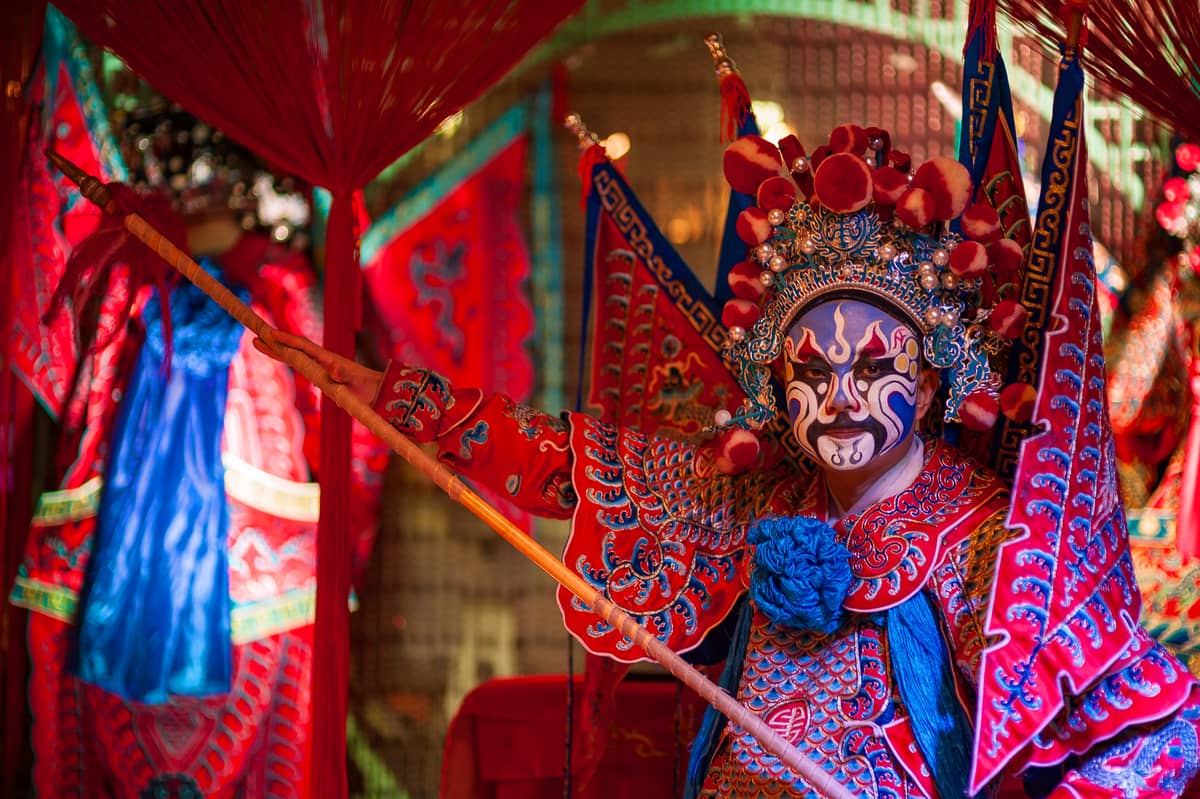
Sichuan Opera (川剧, Chuānjù) is a regional performing tradition with roots going back several hundred years in Sichuan Province. It draws on earlier operatic styles that arrived in Sichuan during population migrations and blended with local folk performance. The result is a genre distinct from Beijing Opera in language, melodic style, and staging conventions. Performances combine sung narrative, spoken dialogue, physical movement, and specialized techniques that vary by performer and school.
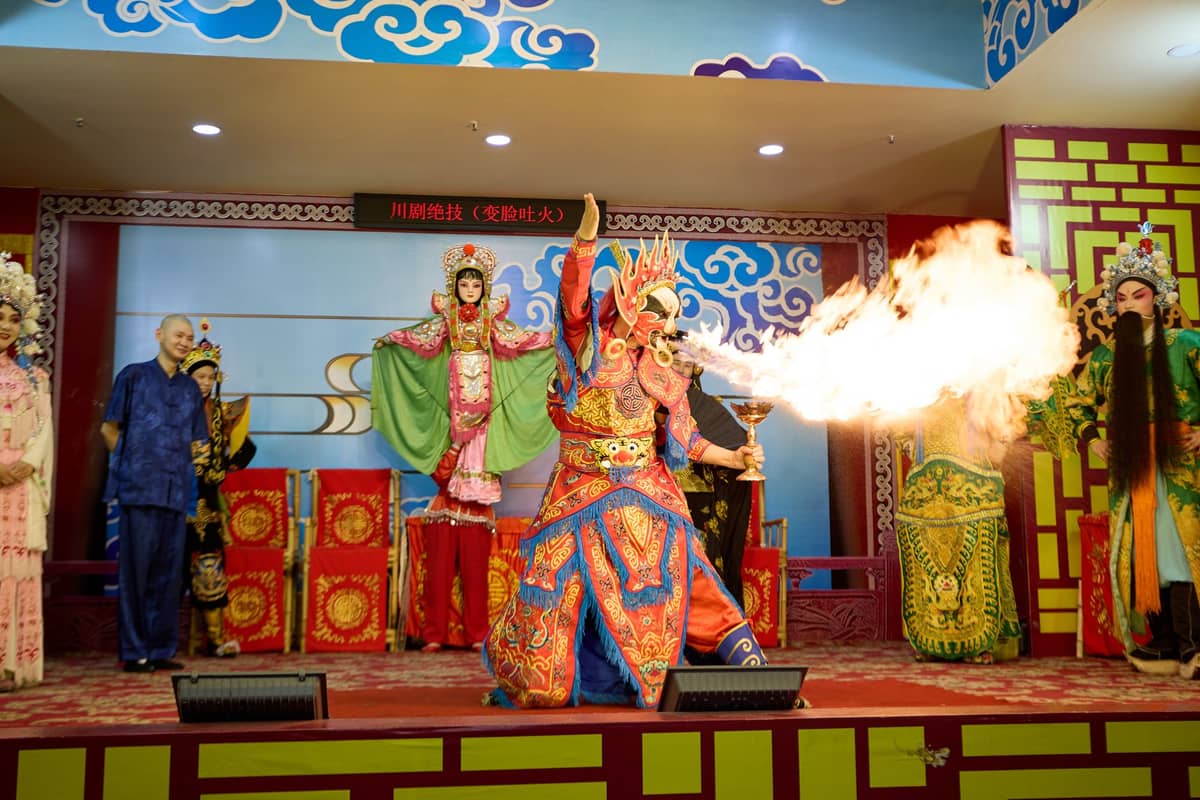
The element most visitors associate with Sichuan Opera is bianlian (变脸), literally 'face-changing', in which a performer rapidly swaps vividly colored masks or dramatically altered painted faces, sometimes in under a second. The technique is closely guarded within performance lineages and remains genuinely impressive regardless of how many times you have seen it described online. That said, bianlian is a single specialty act within a broader tradition that also includes fire-breathing, singing, acrobatics, puppetry, and shadow play. A two-hour show at a tourist-oriented venue is not a traditional opera in the full sense. It is a curated variety program designed to showcase the most spectacular elements to an audience that may not speak Sichuanese. That distinction matters when you are choosing a venue and setting your expectations.
ℹ️ Good to know
Sichuan Opera is performed in the Sichuan dialect, not Mandarin. Tourist venues compensate with projected subtitles in Mandarin and English, or by selecting acts that are visually self-explanatory. You do not need to understand Sichuanese to enjoy a well-produced tourist performance.
The Best Venues in Chengdu
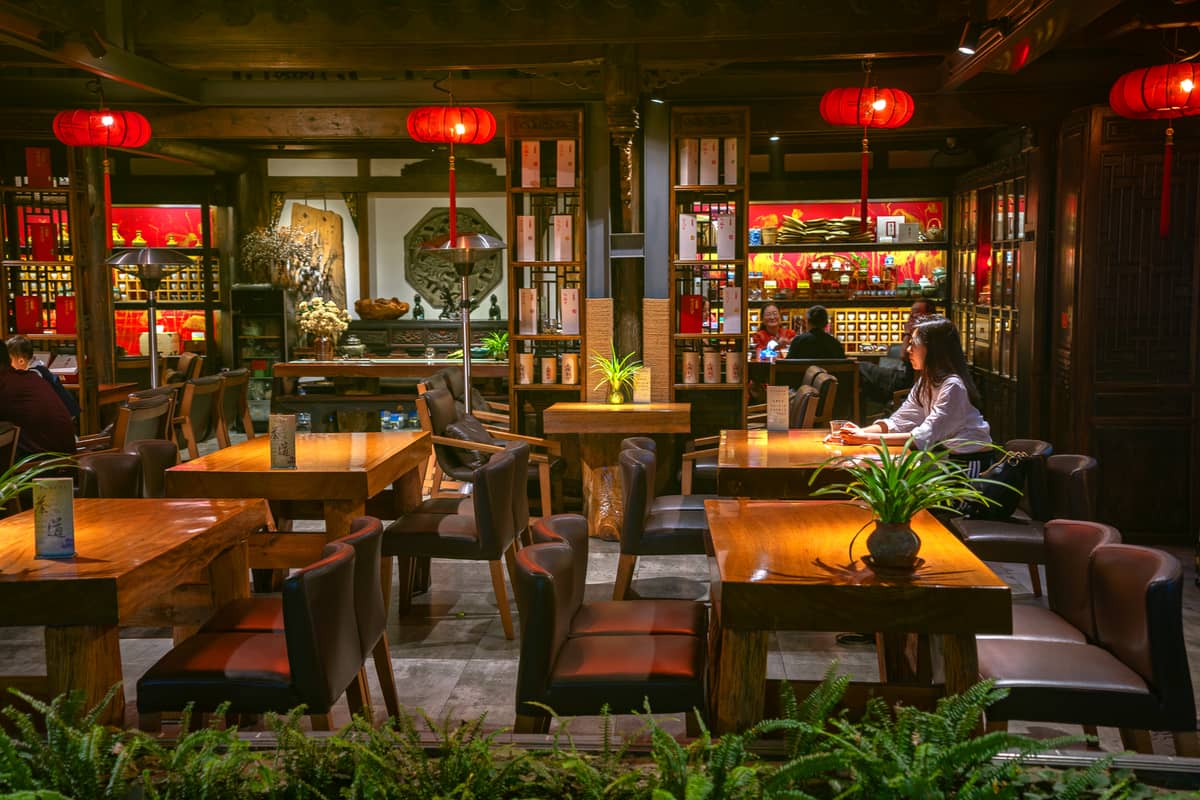
Chengdu has several venues catering to different audiences and budgets. The three main categories are dedicated performance theaters, teahouse-integrated shows, and cultural-district pop-ups near major tourist streets. Each offers a different tradeoff between production quality, atmosphere, and price.
- Shufeng Yayun (蜀风雅韵) at Chengdu Culture Park The benchmark tourist venue. Nightly shows at 20:00, with doors and tea service typically opening around 19:30. Tickets run approximately ¥80 to ¥260 depending on seating tier, usually including tea. Located near Tonghuimen Station on Metro Line 2, a short walk from the Qintai Road and Culture Park area. Reliable production values, consistent scheduling, and genuine artistry. Book in advance on weekends and during Chinese holidays.
- Furong Guocui (芙蓉国粹) at Sichuan Opera Theatre Associated with the Sichuan Opera Theatre, this venue tends to attract a mix of domestic and international visitors and is known for a somewhat more theatrical staging. Schedules and pricing differ from Shufeng Yayun, so check the current listing before booking.
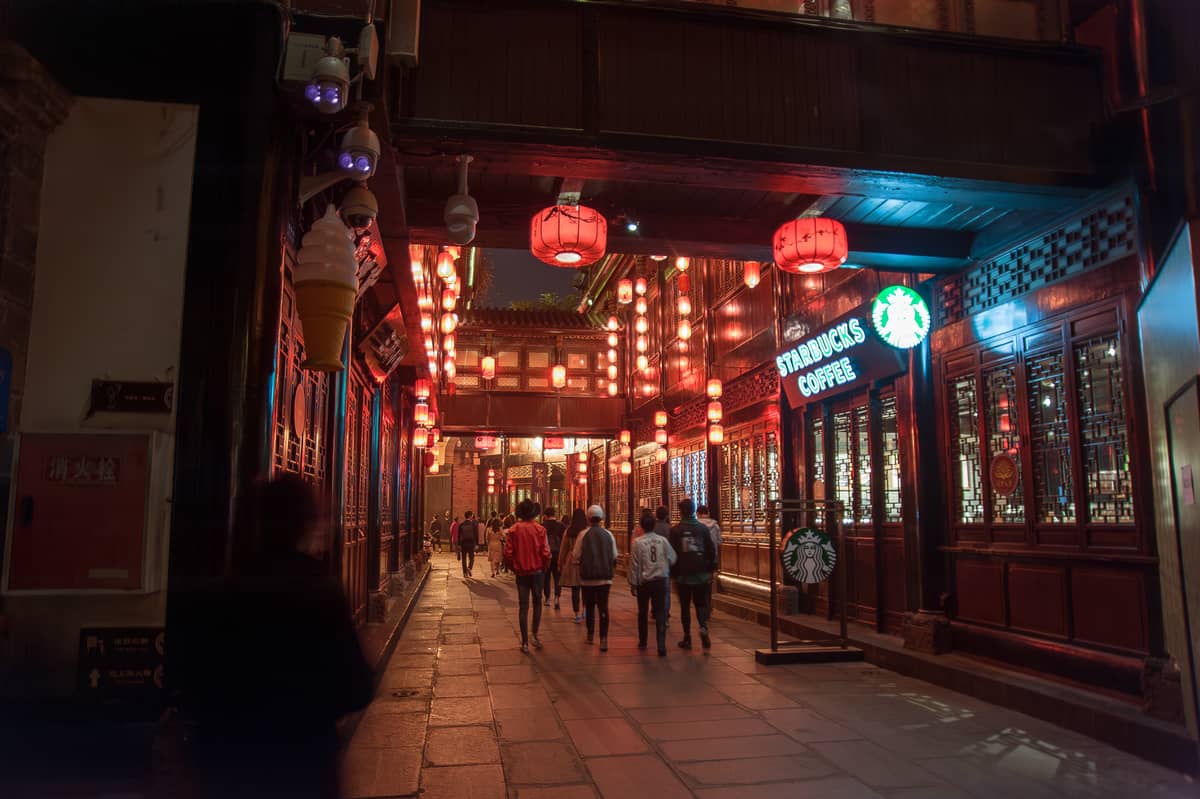
- Teahouse Shows near Jinli and Kuanzhai Alley Shorter, lower-cost performances integrated into traditional teahouse settings. The atmosphere can be charming, but production quality varies significantly by operator. These are better suited to visitors who want a casual sample rather than a full-length show. Confirm the current schedule at the venue directly since these are the least consistent in terms of programming.
⚠️ What to skip
Avoid unmarked 'opera shows' sold by street touts near Jinli or Kuanzhai Alley at unusually low prices. These are often low-effort productions with little connection to genuine Sichuan Opera tradition. Booking directly with a named venue or through a reputable platform is always safer.
For first-time visitors building a broader Chengdu itinerary, Shufeng Yayun pairs well with an evening stroll along Jinli Ancient Street or a visit to Wuhou Shrine in the same district during the daytime. The Culture Park area also has its own evening character worth exploring before showtime.
Tickets, Seating, and What Is Included
At Shufeng Yayun, seating is tiered, with higher-priced sections positioned closer to the stage and sometimes offering better sightlines for the face-changing segments. The ¥80 to ¥260 range (as of 2026 listings) spans the full spectrum from rear gallery seating to front-section seats. Most ticket tiers include tea, which is served throughout the performance in the traditional Chengdu teahouse fashion. This is not incidental: the combination of a live show and shared tea service is part of what makes the format distinctive.
During Chinese national holidays, such as Golden Week in October or the Spring Festival period, some venues add afternoon performances at 14:00, 16:00, or 18:00 in addition to the standard 20:00 show. These are temporary additions and are not consistently available. Always verify the schedule directly with the venue or your booking platform close to your intended visit date, rather than relying on a fixed schedule listed months in advance.
✨ Pro tip
If you have flexibility on which seat tier to choose, mid-range seating at Shufeng Yayun often represents the best value. The stage is not enormous, and even central mid-section seats give a clear view of the face-changing moments. Front-row seating is close but can sometimes create an awkward vertical angle for some stage elements.
How to Get There and When to Arrive
Shufeng Yayun is the most straightforward venue for logistics. Take Chengdu Metro Line 2 to Tonghuimen Station and walk toward Chengdu Culture Park and the Qintai Road area. Shufeng Yayun is the most straightforward venue for logistics. Take Line 2 to Tonghuimen Station and walk toward Chengdu Culture Park and the Qintai Road area. Taxis and Didi rides are also practical options if you are coming from a district not well-served by the relevant metro line.Taxis and Didi rides are also practical options if you are coming from a district not well-served by the relevant metro line.
Arrive at least 30 minutes before showtime. Tea service begins before the performance, and arriving early lets you settle in, order your tea, and orient yourself in the space. Walking in after the show has started disrupts other audience members and means missing context that frames the opening acts. For the 20:00 show, aim to be in your seat by 19:40 at the latest.
- Metro Line 2 to Tonghuimen Station is the most reliable option from central Chengdu.
- Didi works well if you are coming directly from a hotel in Wuhou or Jinjiang district.
- Traffic near the Culture Park and Qintai Road area can build up on weekend evenings, so allow extra time if arriving by car.
- Photography policies vary by venue. Many shows allow photography without flash during certain acts but prohibit it during others. Follow signage and staff instructions.
Sichuan Opera in Context: Culture, Not Just Entertainment
Watching Sichuan Opera fits naturally within a broader exploration of the city's cultural depth. Chengdu is not just a gateway to pandas or Sichuan cuisine. The city has a long tradition of leisurely cultural participation: teahouses, storytelling, street performance, and opera have been part of daily life here for generations. The teahouse-opera format specifically reflects a Chengdu habit of combining social gathering with artistic performance rather than treating them as separate activities.
If you want to understand the broader historical and cultural setting of what you are watching, the Chengdu Museum near Tianfu Square has exhibits on regional folk arts and the performing traditions of Sichuan. It is free to enter and pairs well with a daytime itinerary that ends with an evening opera show. The Sichuan Provincial Museum is another option for deeper cultural context.
For visitors planning their full schedule, the opera fits cleanly into a 3-day Chengdu itinerary as an evening anchor on day one or two, particularly if you pair it with afternoon time in the Wuhou or Qingyang districts. The show typically ends by around 22:00, leaving time to explore the surrounding streets or head back to your accommodation without a late night.
Common Mistakes and Honest Caveats
The most common mistake first-timers make is booking the cheapest teahouse show they can find because they assume all Sichuan Opera experiences are roughly equivalent. They are not. A ¥50 teahouse show in a tourist lane and a ¥160 seat at Shufeng Yayun are meaningfully different experiences in terms of production quality, performance skill, and the authenticity of the surrounding atmosphere. If this is the only Sichuan Opera performance you are likely to see, spend appropriately.
A second misconception is that face-changing is the entire show. It is not. The bianlian segments are typically the most visually arresting, but a well-produced variety show will also include fire-breathing, acrobatic sequences, singing, and comedic dialogue. If you leave the moment the face-changing segment ends, you miss much of what makes the full program interesting. Expect a total runtime of roughly 90 minutes to two hours at a full venue production.
Sichuan Opera is not for everyone in the sense that it requires patience and an openness to theatrical conventions you may not be familiar with. The singing style can sound unfamiliar to ears accustomed to Western music, and some comedic dialogue scenes will not translate without subtitles or cultural context. The face-changing and acrobatics are universally accessible; the operatic elements are more of an acquired taste. That is fine. You do not need to love every element to find the overall experience worthwhile.
💡 Local tip
If you are traveling with children, the face-changing, fire-breathing, and acrobatic segments are generally a big hit with kids. The longer sung operatic segments can lose younger attention spans. Choosing a teahouse-format show with a shorter runtime may work better for families than a full two-hour theater production. See our guide to visiting Chengdu with kids for more age-appropriate planning advice.
FAQ
Do I need to book Sichuan Opera tickets in advance?
For the standard 20:00 show at Shufeng Yayun on a weekday, walk-in tickets are often available, but availability is not guaranteed. On weekends and during Chinese public holidays (especially Golden Week in October and Chinese New Year), shows regularly sell out. Booking at least a few days ahead through the venue website or a reputable booking platform removes the risk of missing out.
How long does a Sichuan Opera show last?
Full-length tourist productions at dedicated venues like Shufeng Yayun typically run around 90 minutes to two hours, including multiple acts. Teahouse-integrated shows are usually shorter, around 45 to 60 minutes. The face-changing segments themselves are only a portion of the total runtime.
Is Sichuan Opera worth it if I don't speak Chinese?
Yes, for most visitors. The most visually spectacular elements, face-changing, fire-breathing, and acrobatics, require no language knowledge. Major venues provide English subtitles or program notes. The sung operatic sections are harder to follow without language context, but they are only part of the show. Most non-Chinese-speaking visitors report the experience as worthwhile.
What is the difference between bianlian and Sichuan Opera?
Bianlian (face-changing) is a specific performance technique within Sichuan Opera, not a separate art form. It involves performers rapidly changing vividly colored masks or dramatically altered painted faces, often in under a second. The technique is closely guarded and is just one element of a broader tradition that also includes singing, acrobatics, puppetry, shadow play, and spoken dialogue. Many tourist venues market their shows primarily around bianlian because it photographs well and requires no cultural background to appreciate, but a genuine Sichuan Opera experience encompasses much more.
Where is the best area to stay in Chengdu to be close to an opera venue?
Staying in Wuhou District or Qingyang District puts you within easy reach of both Shufeng Yayun and the broader cluster of cultural sites in central Chengdu. The Tonghuimen metro connection on Line 2 makes the Culture Park area accessible from most central neighborhoods within 20 to 30 minutes. See our guide on where to stay in Chengdu for neighborhood-by-neighborhood advice.