Peking Opera in Beijing: Where to Watch, What to Expect, and How to Book
Peking Opera is one of China's most elaborate performing arts, and Beijing is the best city in the world to see it. This guide covers the top venues, ticket prices, what actually happens during a performance, and practical tips for first-time visitors.
Plan and book this trip
Tools from our partner Travelpayouts help you compare flights and hotels. If you book through them, we may earn a commission at no extra cost to you.
Flights
Hotels map
TL;DR
- Peking Opera (京剧, Jīngjù) is Beijing's signature performing art, combining acrobatics, singing, elaborate costumes, and stylized movement.
- The most accessible venue for visitors is Liyuan Theatre in Xicheng District, which stages roughly one-hour excerpt performances starting at 7:30 p.m.
- Tickets range from around ¥120 to ¥580 depending on venue and seat category; book in advance during peak tourist season.
- Performances staged for visitors typically include English subtitles and program notes, so language is not the barrier most people assume.
- For context on Beijing's broader cultural scene, see the Beijing first-timer guide.
What Is Peking Opera, Exactly?
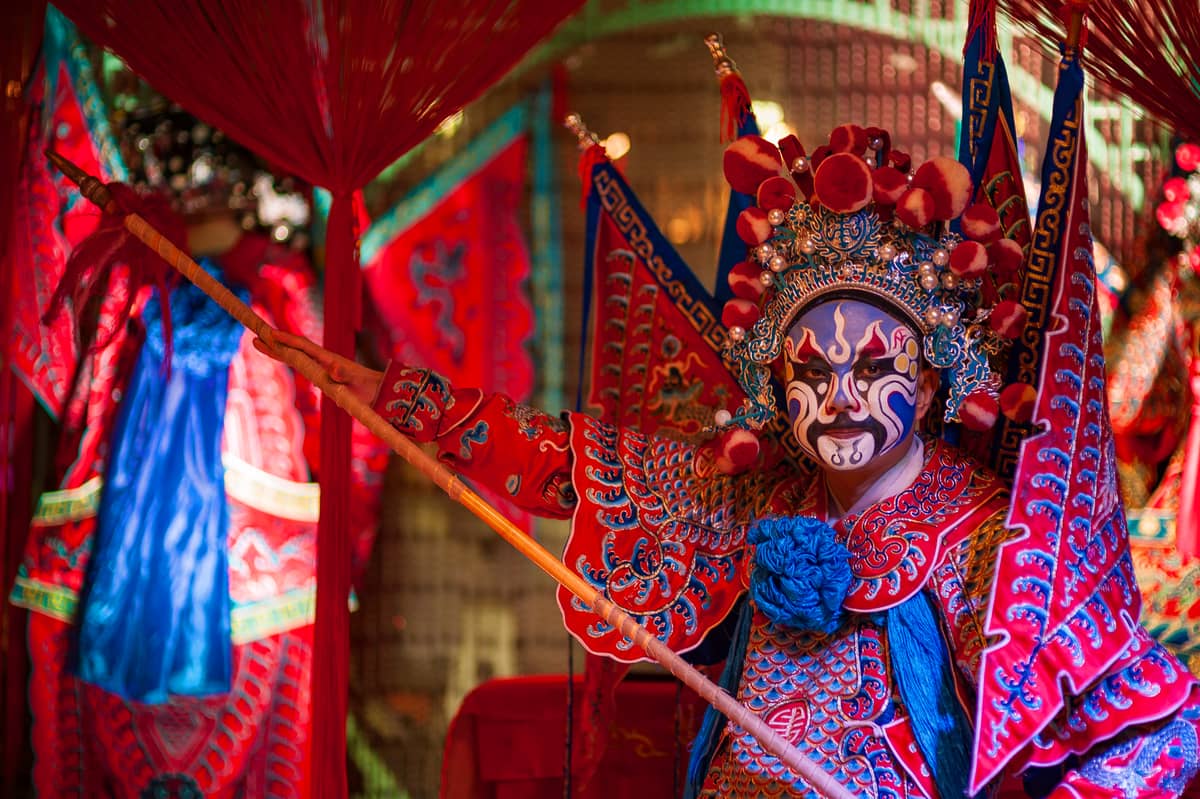
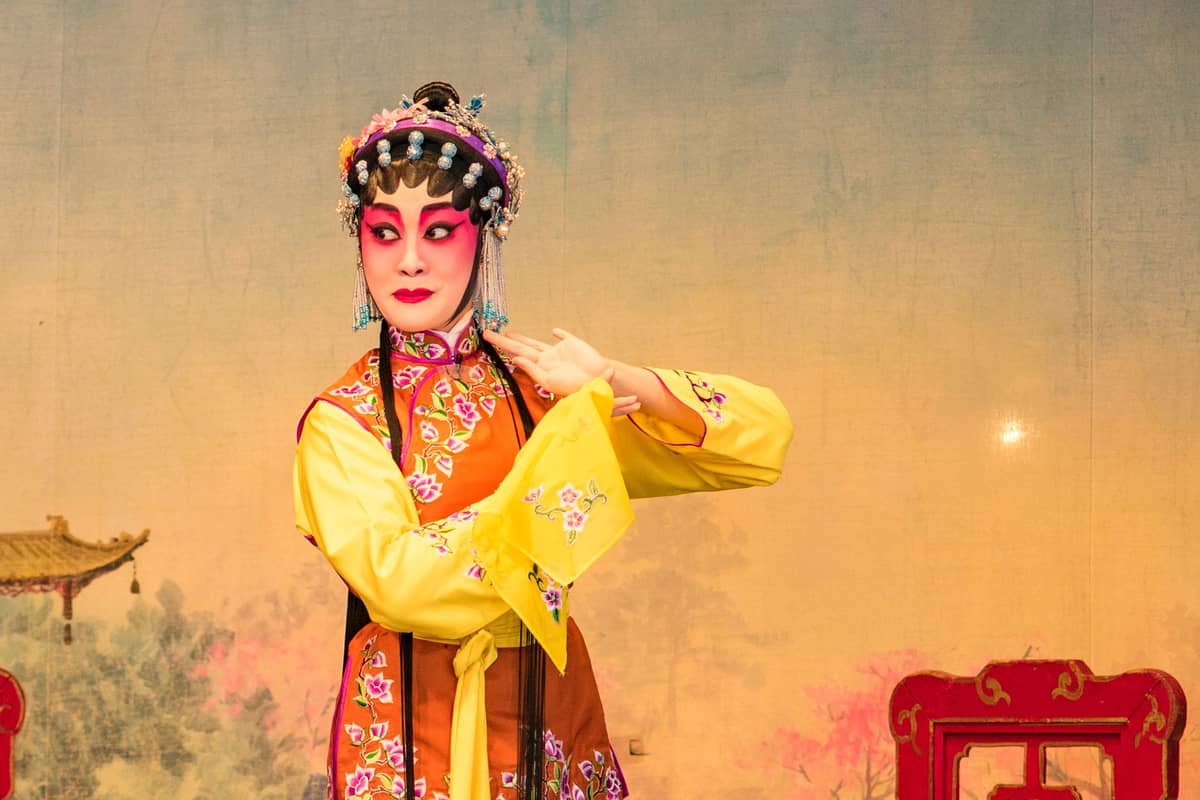
Despite the name, Peking Opera has almost nothing in common with Italian or German opera. It is a distinct theatrical tradition that took its current form in Beijing during the late 18th century, synthesizing elements from regional Chinese performance styles. The art form combines stylized singing in a high, resonant vocal style, elaborate painted face makeup (臉譜, liǎnpǔ) that signals character type and moral standing, acrobatic combat sequences, orchestral accompaniment dominated by percussion and the erhu fiddle, and codified movement vocabulary where every gesture carries meaning.
A full traditional production can last three to four hours and requires serious familiarity with classical Chinese literary conventions to follow in detail. This is why venues catering to visitors almost universally present curated excerpts rather than complete operas: you see the most visually spectacular scenes, the acrobatic combat sequences, and the signature arias, without needing to understand archaic Chinese verse. Think of it less as sitting through a Wagner cycle and more like watching a highlights reel from a centuries-old tradition that was doing wirework long before Hollywood discovered it.
ℹ️ Good to know
Peking Opera was inscribed on the UNESCO Representative List of the Intangible Cultural Heritage of Humanity in 2010. The art form has four primary role categories: Sheng (male roles), Dan (female roles), Jing (painted-face roles), and Chou (clown roles). Each category has its own vocal and movement style trained over years of conservatory study.
Where to Watch Peking Opera in Beijing
Beijing has a range of venues, from purpose-built tourist theatres to authentic repertory companies that primarily perform for Chinese audiences. The right choice depends on whether you want a frictionless introduction or a more demanding, authentic experience.
- Liyuan Theatre (梨园剧场) Located inside the Qianmen Jianguo Hotel at 175 Yongan Road, Xicheng District. Performances start at 7:30 p.m. and run approximately one hour. Tickets range from ¥280 to ¥580 for standard bookings, with some discount tiers listed at ¥120, ¥180, and ¥280 through third-party platforms. Teahouse-style seating with light snacks available. English subtitles projected above the stage. Best suited for first-time visitors who want a polished, low-friction experience. Verify the schedule before booking as off-peak performances may run Wednesday through Saturday only.
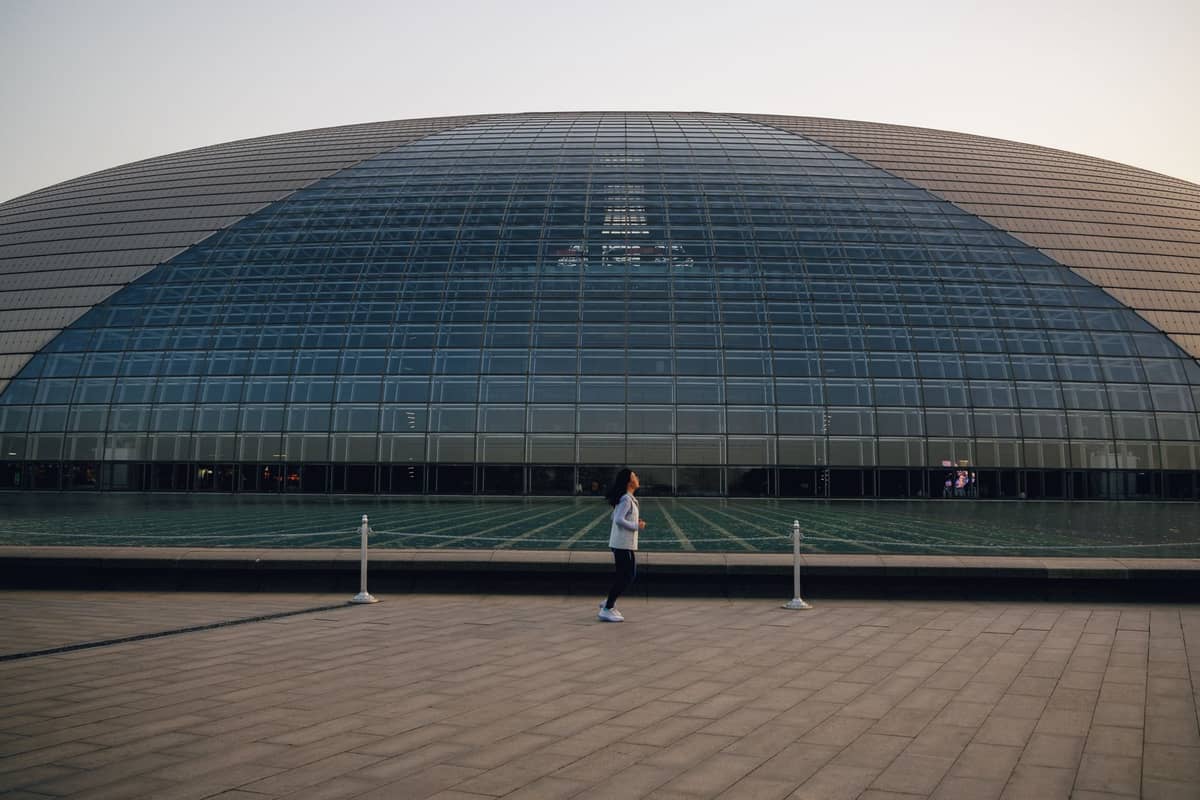
- National Centre for the Performing Arts (国家大剧院) The landmark titanium-and-glass building west of Tiananmen Square programs full-length Peking Opera productions by top-tier companies, including the National Peking Opera Company. Performances here are more serious affairs aimed at Chinese audiences, with fewer concessions to newcomers. Ticket prices vary widely by production and seating. Worth checking if you want to see a full professional production rather than tourist excerpts.
- Chang'an Grand Theatre (长安大戏院) A well-regarded mid-scale venue in the Jianguomen area of Chaoyang District with a long history of staging both visiting troupes and resident companies. Scheduling is less predictable than Liyuan but the programming tends toward authentic repertory rather than tourist packages.
- Huguang Huiguan (湖广会馆) A restored Qing Dynasty guild hall near Hufangqiao with a small traditional stage. Performances here lean into the historical setting, though the program is tailored toward visitors. Check current scheduling as programming can be inconsistent.
⚠️ What to skip
Online listings for Peking Opera venues in Beijing are frequently out of date or inconsistent across booking platforms. Before purchasing tickets, confirm the exact performance date, start time, seat zone, and refund policy directly with the venue or through a recognized ticketing platform. What you see on aggregator sites may reflect outdated pricing tiers or lapsed schedules.
Tickets: Pricing, Booking, and What to Know
Pricing at visitor-oriented venues like Liyuan Theatre is tiered by seat location. Published prices for 2026 range from around ¥280 to ¥580 at the ticket window, while discounted online prices are listed separately. The cheaper seats are usually further from the stage or in less central positions in the teahouse layout. For a first-time visitor, a mid-range ticket typically offers a reasonable view without overpaying for marginally better sightlines.
At venues like the National Centre for the Performing Arts, ticket prices depend heavily on the specific production and company. Full-length productions by top-tier troupes can command prices comparable to major concert tickets. You can browse schedules and book directly through the venue's official website or check Beijing's top cultural institutions for programming context. For the National Centre specifically, booking well in advance is advisable during Golden Week (early October) and the Lunar New Year period.
✨ Pro tip
If you book through Liyuan Theatre directly, some listings advise arriving at the Qianmen Jianguo Hotel lobby at least 30 minutes before the performance start time to collect tickets and be seated. Factor this into your evening schedule, especially if you are combining the show with dinner elsewhere in the Qianmen area.
For first-timers building a broader Beijing evening itinerary, the Liyuan Theatre sits conveniently close to Qianmen Street and the surrounding hutong neighborhoods, making it straightforward to combine with dinner before the 7:30 p.m. show. If you want a traditional teahouse experience before or after, Lao She Teahouse is a short walk away in the same district.
What Actually Happens During a Visitor Performance
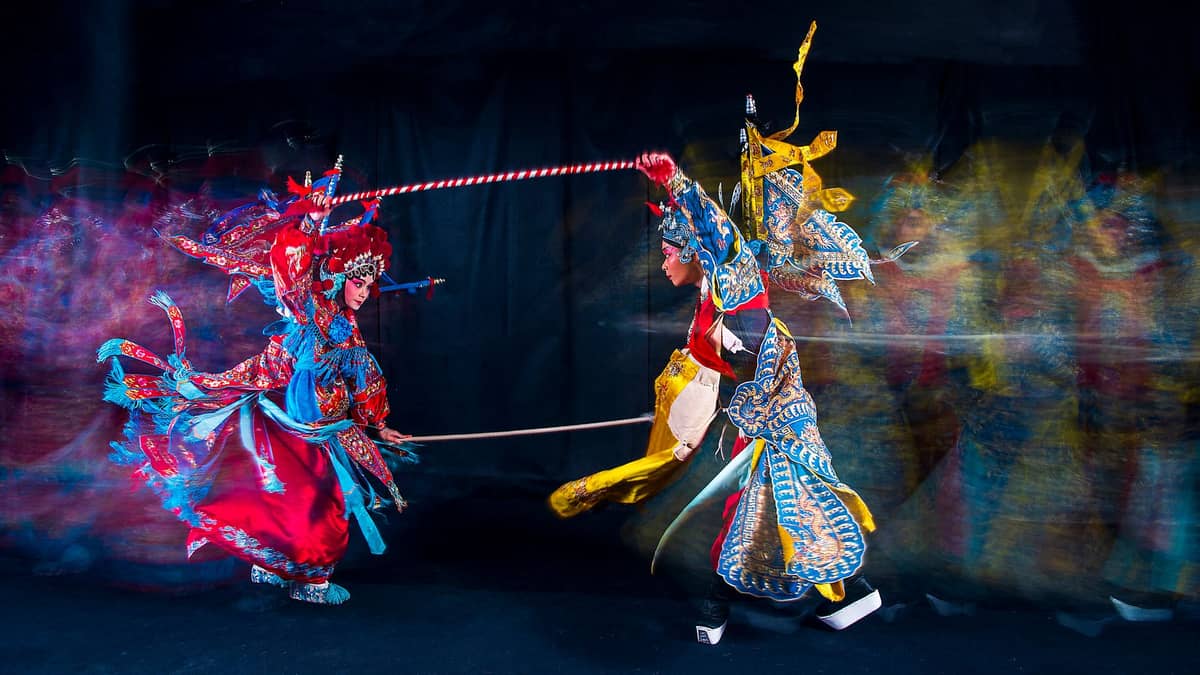
A visitor-oriented excerpt program typically runs 60 to 90 minutes and presents four to six scenes from different operas rather than a single continuous narrative. You might see an acrobatic combat sequence from a military opera, a lyrical aria scene showcasing the Dan (female) vocal style, a Jing role entrance featuring the most elaborate face painting, and a comedic Chou scene. The scenes are selected for visual impact rather than narrative coherence, which is entirely the right call for a first-time audience.
Most venues catering to international visitors project English surtitles above the stage. Program notes in English are usually provided at the door, explaining the plot context and character types for each excerpt. This matters more than people realize: understanding that the red-faced warrior is loyal and righteous while the white-faced character is treacherous and cunning transforms what might look like abstract visual spectacle into something dramatically legible.
The orchestral accompaniment is performed live by a small ensemble positioned at stage right. The dominant instruments are percussion (particularly the bangu drum, which cues the performers), the jinghu fiddle, and various gongs and cymbals. The sonic experience is striking and unlike anything in Western performing arts: the singing style projects over the percussion with a technique that prioritizes tonal resonance over the bel canto ideals of European opera.
- Arrive at least 20-30 minutes early: seating procedures at teahouse-style venues take time, and late arrivals disrupt other guests.
- Photography policies vary: some venues allow photography during certain scenes but prohibit flash and video. Check when you collect your ticket.
- The teahouse seating at Liyuan means you can order tea and light snacks during the performance. This is traditional, not disrespectful.
- Applause timing follows Chinese stage convention: audiences applaud at the end of a particularly well-executed vocal passage or acrobatic sequence, not just at scene breaks.
- Children over 8 or so can genuinely enjoy the acrobatic sequences; younger children may find the percussion volume and performance length challenging.
Authentic vs. Tourist Performances: An Honest Assessment
The question of whether to seek out an 'authentic' performance aimed at Chinese audiences or attend a tourist-packaged excerpt show is worth addressing directly. The excerpt shows at Liyuan and similar venues are not somehow fraudulent or inferior: they were designed to make the art form accessible, and they succeed at that. The costumes, performers, and live music are genuinely professional. What you give up is narrative depth and the atmosphere of a Chinese audience that knows what they are watching.
If you want to experience a full production with a predominantly Chinese audience, the National Centre for the Performing Arts is the most practical option. It programs regular full-length works by top-tier troupes and the production values are exceptional. The experience is closer to attending a serious opera performance than a cultural tourism activity. Combine a visit with a look at the extraordinary building itself, which is worth seeing even from the outside near Tiananmen Square.
One option that often goes overlooked: the Beijing Peking Opera Theatre and the National Peking Opera Company both perform regular repertory seasons at various venues around the city. Tickets for these productions are often cheaper than tourist packages and the experience is unmediated. The practical challenge is that scheduling information and online booking are primarily in Chinese. If you read Chinese or are traveling with someone who does, this is the route worth taking.
💡 Local tip
Some hutong courtyard venues and cultural centers in Dongcheng and Xicheng offer informal demonstrations of face painting, costume, and basic movement techniques alongside short performances. These are not high-art experiences, but as introductions to the craft they can be genuinely illuminating, especially if you are visiting Beijing with children. Check listings for the Nanluoguxiang area for current offerings.
Planning Your Visit: Practical Logistics
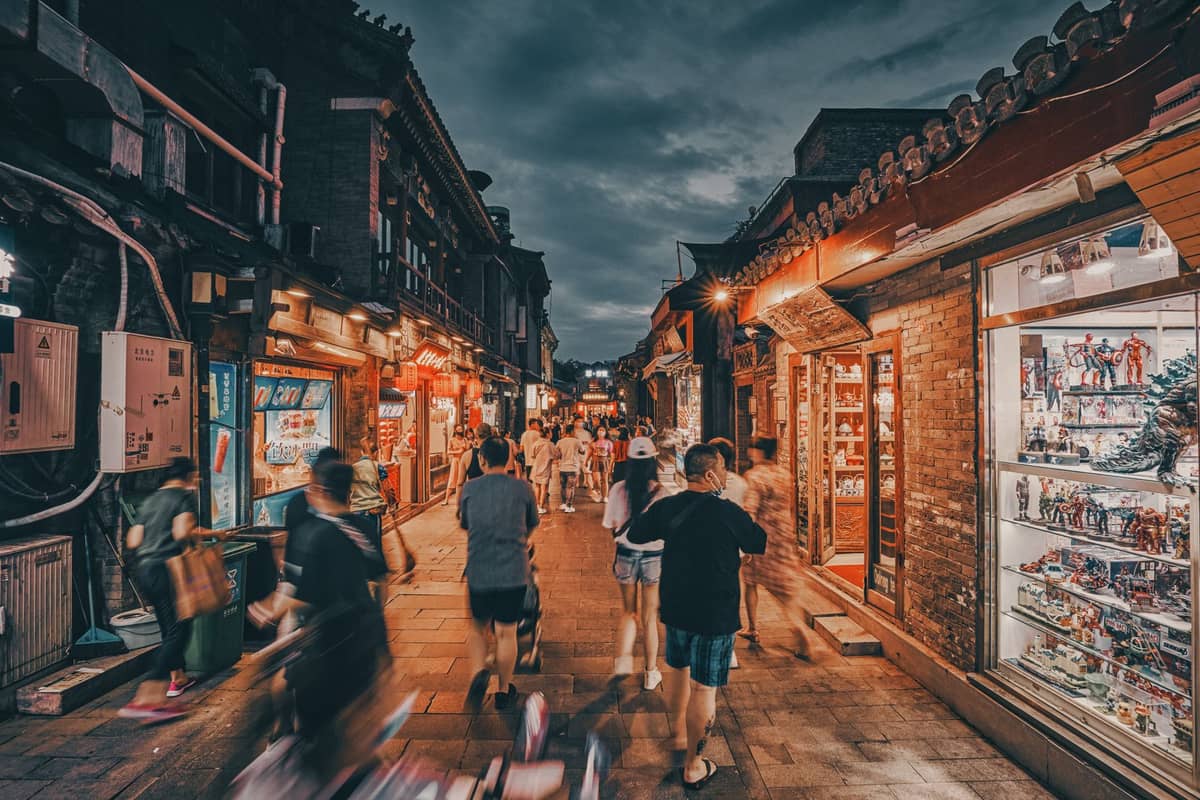
Liyuan Theatre is located in Xicheng District, convenient to Hufangqiao metro station on Line 7. The surrounding neighborhood around Dashilar Street and the broader Qianmen area offers plenty of dinner options before an evening show, including several restaurants serving Peking duck within a short walk.
For visitors building a broader itinerary around Beijing's imperial and cultural heritage, Peking Opera fits naturally into an evening following daytime visits to the Forbidden City or the Temple of Heaven. Both are within reasonable distance of the Xicheng and Dongcheng venues. See the 3-day Beijing itinerary for a practical schedule that incorporates an evening performance.
Seasonality matters for scheduling. During peak tourist periods (Golden Week in early October, the summer school holiday months of July and August, and Chinese New Year) extra performances may be added at Liyuan and similar venues. During quieter winter months, particularly January and February outside New Year, the schedule may reduce to fewer nights per week. Always verify the calendar for your specific travel dates rather than assuming a standard weekly schedule applies.
- Book tickets at least a few days in advance during peak season (July–August, early October, Chinese New Year).
- Liyuan Theatre: 175 Yongan Road, Xicheng District, inside the Qianmen Jianguo Hotel. Nearest metro: Hufangqiao (Line 7, Exit C).
- Dress code: smart casual is appropriate; there is no strict formal requirement at visitor-oriented venues.
- Payment: major credit cards and WeChat Pay or Alipay are accepted at most venues; carry some cash as a backup.
- Accessibility: check directly with the venue for wheelchair access and other requirements, as older theatre buildings vary significantly.
FAQ
Do I need to speak Chinese to enjoy Peking Opera in Beijing?
No. Visitor-oriented performances at venues like Liyuan Theatre typically provide English surtitles projected above the stage and English program notes explaining each excerpt. Even without subtitles, the visual language of costume color, face paint patterns, and movement style conveys a great deal. A red face signals loyalty; white signals treachery. Acrobatic combat scenes require no translation at all.
How long does a Peking Opera performance last?
Visitor-oriented excerpt performances at places like Liyuan Theatre run approximately 60 to 90 minutes. Full-length traditional productions, as staged at the National Centre for the Performing Arts or by professional repertory companies, can run three to four hours with intervals.
How much do Peking Opera tickets cost in Beijing?
At Liyuan Theatre, published 2026 ticket-window prices range from approximately ¥280 to ¥580, with discounted online prices available depending on the seat tier. Mid-range seats typically offer a good view. Full-length productions at major venues like the National Centre for the Performing Arts vary by production. Always confirm prices directly with the venue or through a recognized ticketing platform before purchasing, as third-party listings are not always consistent.
When is the best time to see Peking Opera in Beijing?
Performances run year-round, but schedules can thin out during quieter winter periods outside of Chinese New Year. The highest availability is during the main tourist seasons (April to May and September to October) when extra performances may be added. If you are visiting during Golden Week (October 1–7) or Chinese New Year, book well in advance as both tourists and local audiences compete for tickets.
Is Peking Opera suitable for children?
The acrobatic combat sequences and elaborate costumes are genuinely spectacular for older children. The percussion instruments are loud, and a 90-minute seated performance can test the patience of younger children. Most families find that children aged 8 and above can engage meaningfully with an excerpt performance; for younger children, a shorter informal demonstration at a hutong cultural venue may work better.