Lao She Teahouse: Beijing's Stage for Tea, Opera, and Old-World Ceremony
Lao She Teahouse is one of Beijing's most accessible windows into traditional performing arts and tea culture, combining live Peking Opera, acrobatics, and folk performances with a working teahouse atmosphere. Located steps from Qianmen, it draws both curious first-timers and dedicated culture-seekers looking for something more substantive than a souvenir shop.
Quick Facts
- Location
- Building 3, Zhengyang Market, Qianmen West Street, Xicheng District, Beijing
- Getting There
- Qianmen Station (Line 2), then walk west; buses 22 and 48 also stop at Qianmen
- Time Needed
- 2–3 hours for an evening performance with tea; 30–60 minutes for daytime teahouse visit
- Cost
- Main performance tickets: ¥100, ¥200, ¥300, ¥400, or ¥500 per person; other programs may have different prices. Big Bowl Tea (daytime): separate pricing. Prices in CNY.
- Best for
- First-time visitors to Beijing, cultural immersion, evening entertainment, tea enthusiasts
- Official website
- www.laosheteahouse.com
What Is Lao She Teahouse?
Lao She Teahouse, known in Chinese as 老舍茶馆 (Lǎoshě Cháguǎn), is a multi-story cultural venue in the Qianmen area of Xicheng District that serves as both a traditional Chinese teahouse and a performance hall. Named after the celebrated Beijing-born author Lao She, whose novels chronicled the city's working-class culture in the early 20th century, the institution has become a deliberate archive of performance arts that were once part of everyday street and courtyard life in the capital.
The teahouse traces its origins to 1979, when a predecessor enterprise called Qianmen Big-Bowl Tea began serving tea from open-air stalls near the old city gate. By 1988, it had evolved into the Lao She Teahouse under its current name and format. That means the institution is now several decades old, enough to have developed genuine institutional memory while remaining adapted for contemporary visitors.
For travelers building a first itinerary, Lao She Teahouse fits naturally into the southern historic axis that includes Tiananmen Square, Qianmen Street, and Dashilar Street. Spending a daytime afternoon in that corridor and then ending with an evening performance here is a sensible, walkable sequence.
The Daytime Experience: Big Bowl Tea and the Teahouse Floors
During daytime hours, roughly 10:00 to 16:00, the teahouse operates its Big Bowl Tea service. This is a deliberately old-fashioned format: large ceramic bowls of tea served simply, echoing the street-side tea stalls that existed in Beijing during the early Republican era. The price point is accessible and the atmosphere is considerably less formal than the evening performance sessions.
The building itself is organized across multiple floors, with different spaces dedicated to tea drinking, private meeting rooms, and performance areas. The interior design leans heavily into late-Qing and early Republican-era aesthetics: carved wooden screens, lanterns, and painted decorative panels. The smell of tea is immediate and genuine, not synthetic, which is one small but honest marker of the place's legitimacy as a working teahouse rather than a themed restaurant.
💡 Local tip
If you visit during the day, arrive before 15:00 to catch the Big Bowl Tea service in full swing. The upper floors tend to be quieter and offer better views of the surrounding Qianmen area through the windows.
Mornings on weekdays are the calmest period. By midday on weekends and during national holidays, the ground floor fills with tour groups and the noise level rises noticeably. If you want to sit quietly with a bowl of tea and absorb the surroundings, aim for a weekday morning in the shoulder seasons of spring or autumn.
Tickets & tours
Hand-picked options from our booking partner. Prices are indicative; availability and final rates are confirmed when you complete your booking.
Small group tour of Tian'anmen Square and the Forbidden City
From 43 €Instant confirmationFree cancellationBeijing Summer Palace Entrance Ticket
From 7 €Instant confirmationFree cancellationMutianyu Great Wall and Summer Palace small-group tour from Beijing
From 171 €Instant confirmationFree cancellationPrivate Guided Tour to Temple of Heaven, Panda House and Summer Palace
From 67 €Instant confirmationFree cancellation
Evening Performances: What to Expect
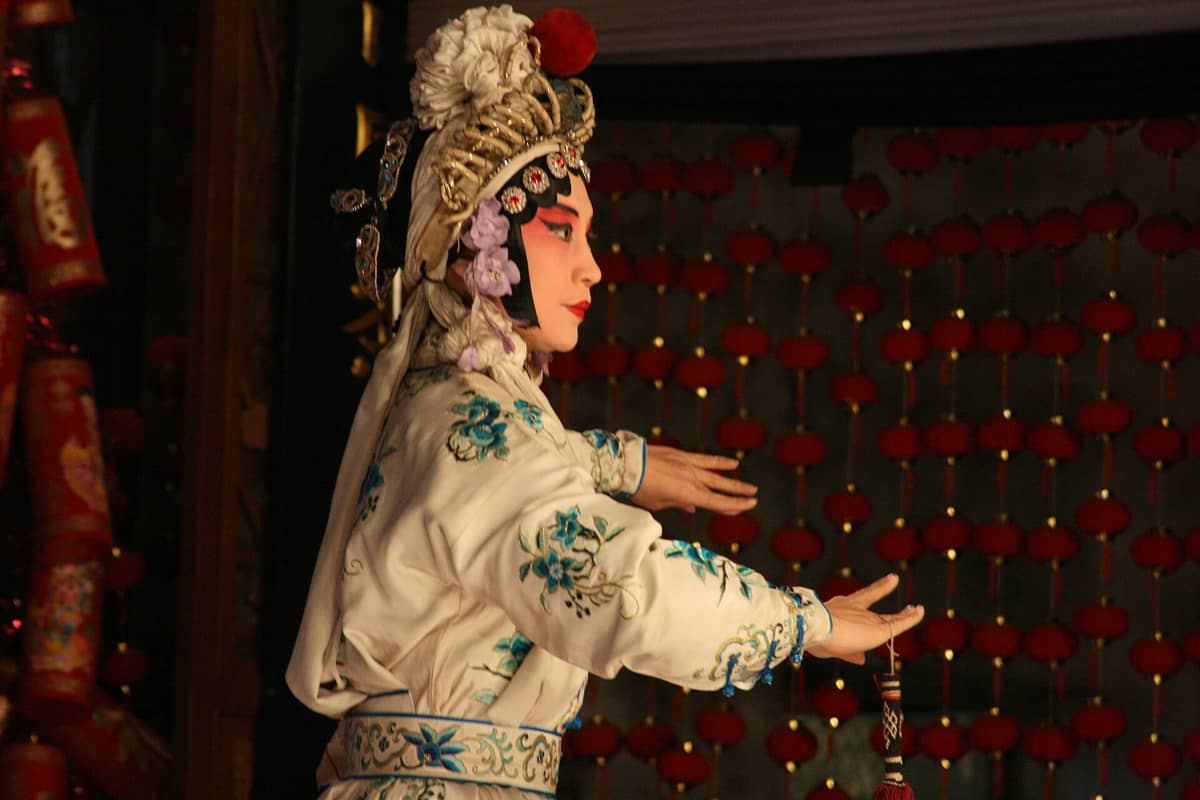
The centerpiece of Lao She Teahouse is its evening variety show, which typically runs in a dedicated performance hall. The program is a curated mix of traditional arts: excerpts from Peking Opera, acrobatics, face-changing from Sichuan opera, magic, shadow puppetry, and folk music. No single art form dominates for too long. Acts rotate at a pace that keeps audiences engaged even if they have no prior knowledge of Chinese performing arts.
For context on what you are seeing, Peking Opera, known as Jingju, combines stylized movement, distinctive vocal techniques, and elaborate painted makeup that codes character type immediately. If you want to go deeper into that tradition before or after your visit, the Beijing Opera guide covers the major performance venues and what differentiates them.
Tea and snacks are served during performances. Seating is tiered, and ticket pricing reflects how close you sit to the stage. The ¥100 tier places you farther back; the ¥300 to ¥500 tiers put you closer with better sightlines. If you are traveling with older family members or anyone with hearing limitations, the closer tiers are worth the premium. Sound systems in traditional performance halls vary in quality, and nuance in the vocal sections can get lost at distance.
ℹ️ Good to know
The main evening performance is priced at ¥100, ¥200, ¥300, ¥400, or ¥500 per person (CNY). Book in advance, particularly for weekends and the Golden Week holidays in early October and early May, when demand is high. Verify current schedules on the official site at laosheteahouse.com.
The performance hall seats fill from around 19:00 onward. The atmosphere before the show starts has a distinct social character: tea is poured, servers in traditional costume move efficiently between tables, and conversation in several languages happens at a moderate volume. The transition when the lights dim and the first performer enters is genuinely sharp.
Historical and Cultural Context
The choice of name is significant. Lao She (1899–1966) was one of modern China's most important literary figures. His novel Teahouse, written in 1957 and set across three historical periods in a single Beijing teahouse, is widely considered a masterwork of 20th-century Chinese drama. Naming this institution after him places it in explicit conversation with that legacy. The teahouse does not dramatize Lao She's work directly, but the cultural aspiration is clear: to preserve and transmit the texture of Beijing life that his writing documented.
The arts presented in the evening program belong to a tradition of entertainment that was once delivered in the city's tea houses, opera gardens, and street corners. Many of these forms faced disruption during the Cultural Revolution (1966–1976). The teahouse's founding in the late 1970s and formal establishment in 1988 places it squarely within the post-reform period when many traditional cultural institutions were being reconstructed or newly institutionalized.
This broader effort to document and preserve Beijing's intangible heritage is worth reading about before your visit. The Beijing imperial history guide provides useful context on how the city's cultural identity was shaped and reshaped across different political eras.
Getting There and Practical Logistics
The address is Building 3, Zhengyang Market, Qianmen West Street, Xicheng District. The most direct public transit option is Beijing Subway Line 2 to Qianmen Station, then a walk west along Qianmen West Street. The walk takes roughly 5 to 10 minutes depending on your pace. Bus lines 22, 44, and 48 also serve the Qianmen stop. Taxis and ride-hailing via DiDi are straightforward given the prominence of the location.
Opening hours for the teahouse are 10:00 to 22:00 daily. The Big Bowl Tea daytime service runs from 10:00 to 16:00. Note that the teahouse is located in Xicheng District, even though it sits just west of the Qianmen area commonly associated with Dongcheng. This distinction matters if you are navigating by district maps or using ride-hailing apps where the address input affects routing.
⚠️ What to skip
Accessibility information for this venue is not publicly specified by the official or municipal listings. Visitors requiring step-free access, wheelchair seating, or other accommodations should contact the teahouse directly before booking.
Photography policies inside the performance hall are worth confirming at the entrance. As a general Beijing rule, flash photography during live performances is unwelcome and often prohibited. The teahouse interiors during daytime, however, are generally photogenic and photography-friendly.
Who This Attraction Suits, and Who Might Pass
Lao She Teahouse works particularly well for first-time visitors who want a structured introduction to traditional performing arts without needing to navigate a specialist venue in Mandarin. The staff are experienced with international visitors, and programs are designed to be visually engaging even without language comprehension. Families with older children tend to respond well to the acrobatics and face-changing segments.
Travelers who have already spent significant time in China and seen multiple Peking Opera or variety performances may find the content familiar rather than revelatory. The format is curated for accessibility, which means it trades depth for breadth. If you want a full, unabridged Peking Opera performance in a specialist venue, this is not the place for that.
Visitors who prioritize independent exploration over programmatic experiences might find the evening show format a bit rigid. If that describes you, the surrounding Qianmen and Dashilar neighborhood offers street-level texture that complements or replaces a structured venue visit.
Budget travelers should weigh whether the ¥200 to ¥300 performance tier fits their overall spend. At that price in Beijing's current context, you are getting a ticketed cultural performance in a purpose-built hall with table service. It is not a budget activity, but it is competitively priced for what it delivers compared to international equivalents.
Insider Tips
- Book performance tickets online in advance rather than at the door. The official site at laosheteahouse.com allows reservation. Walk-in availability on weekends and during Golden Week is unreliable, and the most accessible seating tiers sell out first.
- The ¥300 tier generally offers the best balance of sightlines and cost. The ¥100 seats are genuinely far from the stage in a hall that is deeper than it looks from the entrance level.
- Arrive 20 to 30 minutes before the performance starts. Tea is poured as soon as you are seated, and watching the hall fill is part of the experience. Rushing in at curtain time means you miss the pre-show atmosphere and may be seated noisily during the first act.
- If you want to sample the Big Bowl Tea culture without committing to an evening ticket, the daytime service is a legitimate standalone visit. The ground-floor seating area on a quiet weekday morning gives you the teahouse atmosphere with no performance pressure.
- The streets immediately west of the teahouse, toward the old Zhengyang Gate, are considerably quieter than Qianmen Pedestrian Street. Walking that way before or after your visit gives a sense of scale of the old outer city wall corridor without the souvenir-shop density.
Who Is Lao She Teahouse For?
- First-time visitors to Beijing seeking a structured introduction to traditional performing arts
- Families with older children who will engage with acrobatics and visual spectacle
- Travelers interested in Republican-era Beijing culture and the literary legacy of Lao She
- Tea culture enthusiasts who want a historically grounded daytime tasting context
- Evening plans that combine the Qianmen area sightseeing with a ticketed cultural experience
Nearby Attractions
Other things to see while in Qianmen & Dashilar:
- Dashilar Street
Stretching roughly 275 metres west from Qianmen Street, Dashilar Street (大栅栏街) is one of Beijing's oldest continuously operating commercial districts. Free to enter and pedestrianized, it combines century-old brand-name shops with renovated hutong lanes and a history stretching back to the Ming dynasty.
- Qianmen Street
Stretching 840 metres south from the iconic Zhengyangmen gate tower, Qianmen Street is a pedestrianized avenue with more than 570 years of commercial history. Free to enter and accessible directly from Qianmen subway station, it mixes rebuilt Qing-era shopfronts with modern retail and some of Beijing's most recognizable restaurants. It rewards visitors who look past the chain stores and explore the lanes branching east and west.