Beijing's Imperial History: A Traveler's Guide to the Dynasties That Built a Capital
Beijing served as the imperial capital of China for more than 500 years across the Ming and Qing dynasties. This guide covers every major imperial site, how to visit them efficiently, what to skip, and the historical context that makes it all make sense.
Plan and book this trip
Tools from our partner Travelpayouts help you compare flights and hotels. If you book through them, we may earn a commission at no extra cost to you.
Flights
Hotels map
TL;DR
- The Forbidden City (Palace Museum) is the centerpiece of Beijing's imperial history — book tickets in advance through the official site; walk-ins are not available.
- Imperial Beijing spans multiple sites across the city: the Forbidden City, Temple of Heaven, Summer Palace, and the Ming Tombs each require separate visits and separate admission.
- Autumn (September to October) and spring (April to May) are the best seasons for sightseeing — cooler, drier weather and manageable crowds.
- The Great Wall sections near Beijing — especially Mutianyu — are part of the Ming-era defensive system and directly tied to the imperial legacy.
- Plan at least 3 full days to do Beijing's imperial heritage justice; 5 days is more comfortable if you want depth rather than box-ticking.
Why Beijing Became the Imperial Capital
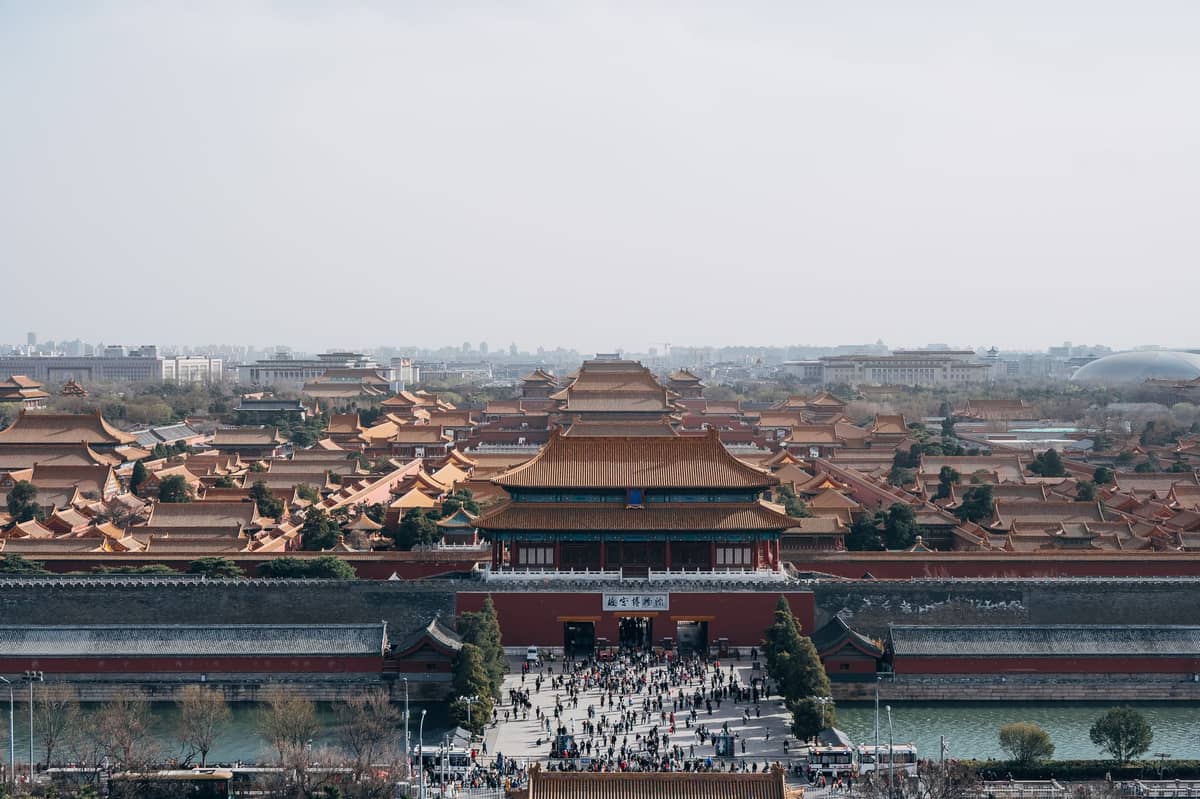
Beijing's role as an imperial capital is not accidental geography. The city sits at the northern edge of the North China Plain, flanked by mountains to the north and west, which made it both a strategic defensive position and a natural gateway for controlling the northern frontier. The Jurchen Jin dynasty established a capital here in the 12th century, and Kublai Khan rebuilt it as Khanbaliq (Dadu) in the 13th century as the seat of the Yuan dynasty. But the transformation that shaped the city visitors see today came with the Ming dynasty. The Yongle Emperor moved the capital from Nanjing to Beijing in 1420 and commissioned the construction of the Forbidden City, the Temple of Heaven, and much of the city's foundational urban layout along a strict north-south central axis.
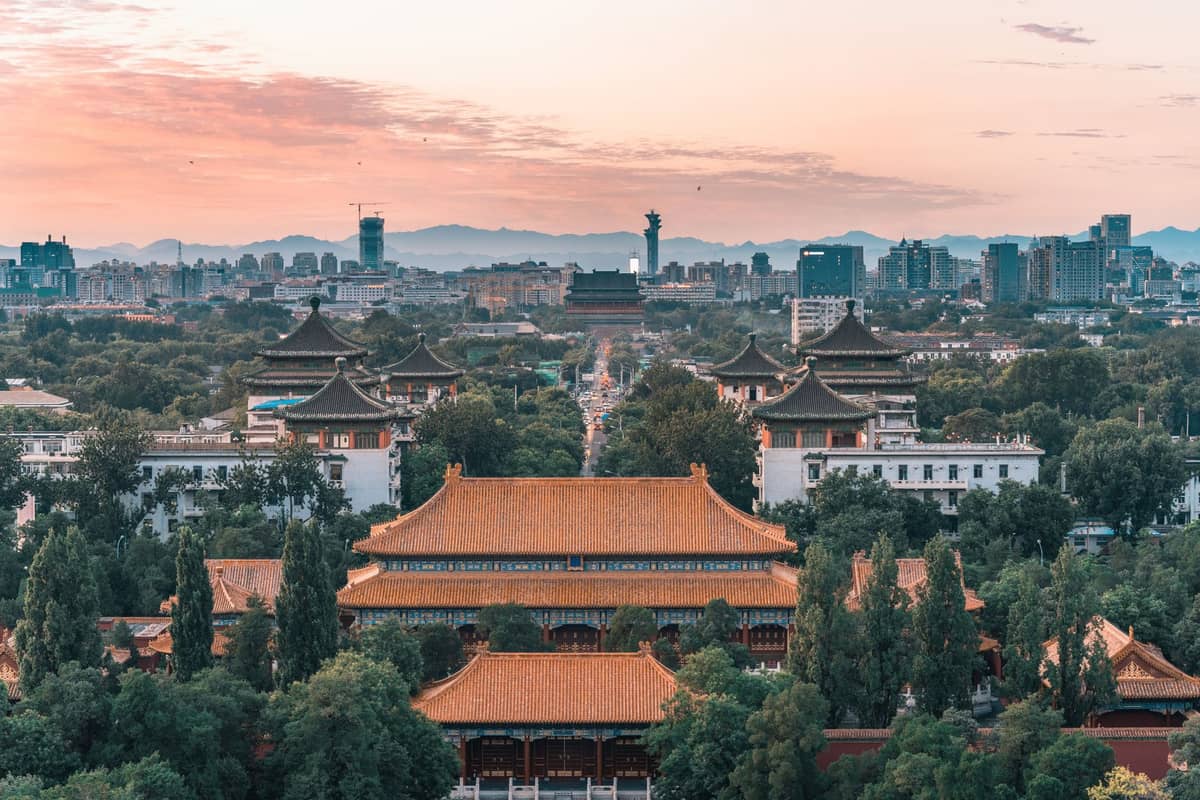
That axis still defines the city. If you stand on Jingshan Park's hilltop and look south, you are looking directly along the spine of imperial Beijing: through the Forbidden City, across Tiananmen Square, and down toward Yongding Gate. The Qing dynasty, which followed the Ming in 1644, kept Beijing as its capital and expanded many existing structures, particularly at the Summer Palace and the temples on the western hills. The result is a layered imperial city where Ming foundations frequently underlie Qing embellishments.
ℹ️ Good to know
Beijing is a municipality directly under China's central government, not part of any province. When planning visits to outer sites like Mutianyu or the Ming Tombs, note that these are in Huairou and Changping districts respectively — both within Beijing Municipality, but 60–90 minutes from the city center by car or bus.
The Forbidden City: Where to Start and What to Prioritize
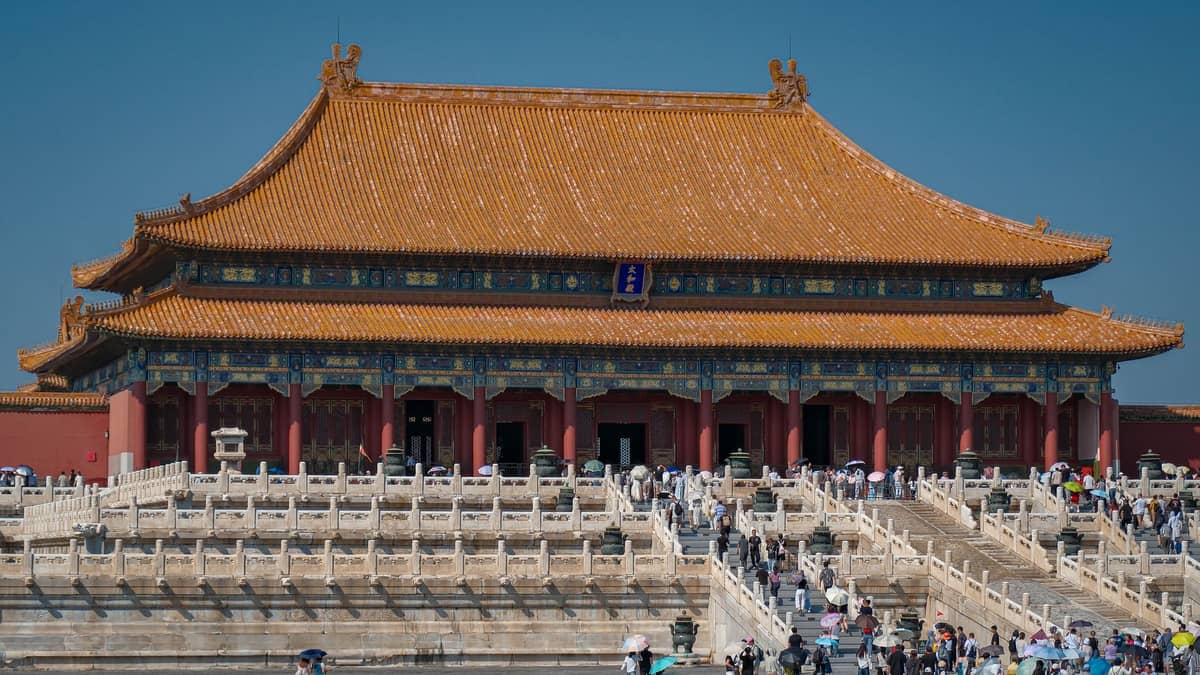
The Palace Museum (Gugong) is the former imperial palace of the Ming and Qing dynasties and covers roughly 720,000 square meters across nearly 1,000 buildings. It held the imperial court from 1420 until 1912. Visitor access now requires advance real-name booking through the official Palace Museum reservation systemofficial Palace Museum website — you cannot simply show up and buy a ticket at the gate. Availability sells out days or weeks ahead, particularly during national holidays and peak autumn season.
The standard south-to-north route through the Meridian Gate, across the Golden Water Bridges, through the Three Great Halls, and out the Gate of Divine Prowess takes most visitors 2 to 3 hours at a brisk pace. Budget 4 to 5 hours if you plan to enter any of the smaller side palaces, the Treasure Gallery (Zhenbaoguan), or the Clock Exhibition Hall, which have separate admission fees of ¥10 each on top of the standard entry ticket. Both the Treasure Gallery and the Clock Hall are worth the extra cost: the timepieces gifted by European missionaries to the Qing court are genuinely surprising.
- Avoid midday on summer weekdays The outer courtyards have almost no shade. Heat combined with dense crowds between 10:00 and 14:00 makes the experience miserable. Arrive at opening (08:30) or book the latest afternoon slot.
- Enter from the south, exit north into Jingshan Walking through from Tiananmen to the north gate and immediately ascending Jingshan Park gives you the best overhead view of the palace complex. The climb is short and the perspective is worth it.
- The Treasure Gallery and Clock Hall need separate tickets Factor in an extra ¥10–¥20 per gallery on top of the standard admission. Prices are time-sensitive; verify at booking.
- Photography restrictions apply in certain halls Interior photography is restricted in some exhibition rooms. Signage is clear; respect it.
Temple of Heaven, Jingshan, and the Central Axis Sites
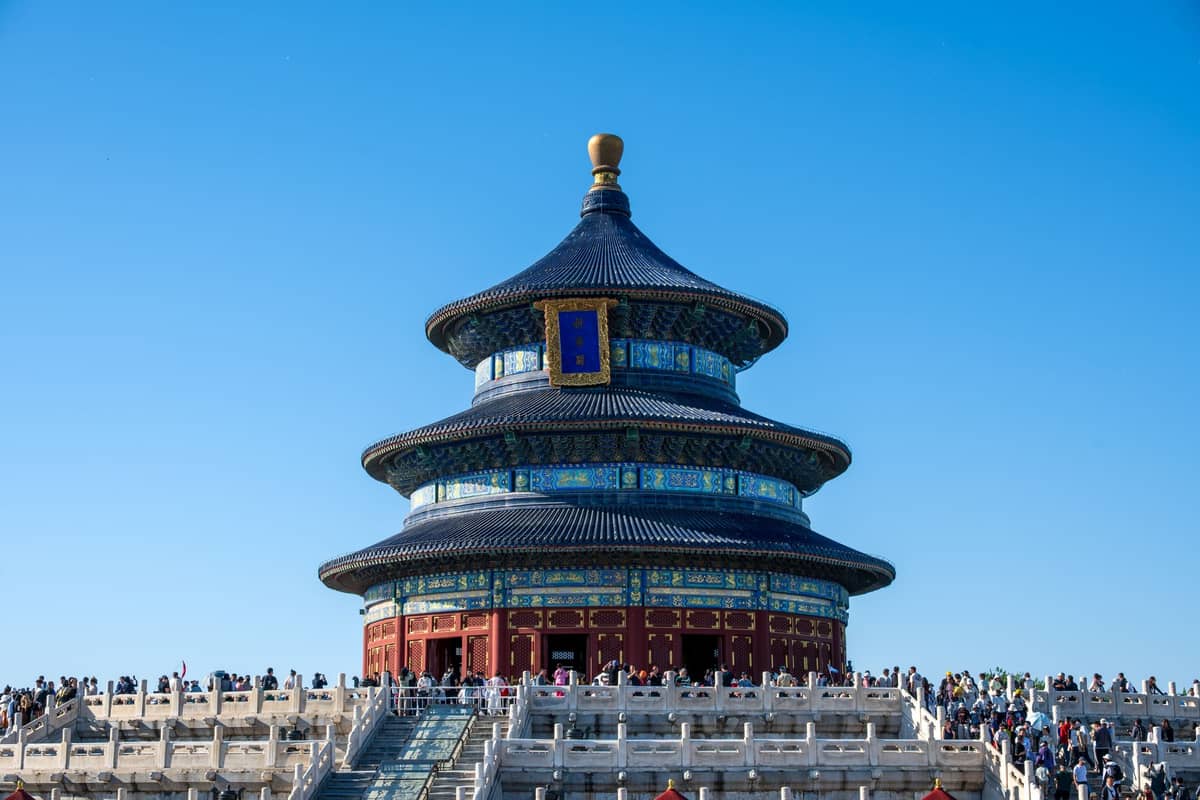
The Temple of Heaven is architecturally one of the most refined imperial structures in China. Built in the early 15th century and expanded under the Qing, it served as the site where the emperor performed annual rituals to pray for a good harvest and to communicate with heaven on behalf of the empire. The Hall of Prayer for Good Harvests (Qiniandian) — the circular blue-roofed structure that appears on every travel poster — is the centerpiece, but the complex is vast. Allow at least two hours; the surrounding park is enormous and genuinely pleasant outside peak hours.
Two sites that often get skipped but repay the effort: Jingshan Park directly north of the Forbidden City, and the Ming City Wall Relics Park near the southeastern corner of the old city. Jingshan is where the last Ming emperor, Chongzhen, is said to have hanged himself in 1644 as rebel forces entered Beijing. The hilltop pavilion offers the clearest panoramic view of the Forbidden City's yellow rooftops. The City Wall Relics Park preserves the only remaining above-ground section of the Ming outer wall — rough, unrestored brick that gives a more honest sense of historical scale than the polished reconstruction at sites like Qianmen.
💡 Local tip
Jingshan Park charges a very modest entry fee (around ¥2–¥5; verify before visiting) and is almost always far less crowded than the Forbidden City. Visit late afternoon, after leaving the palace, for the best light on the rooftops below.
Summer Palace, Old Summer Palace, and Western Imperial Retreats
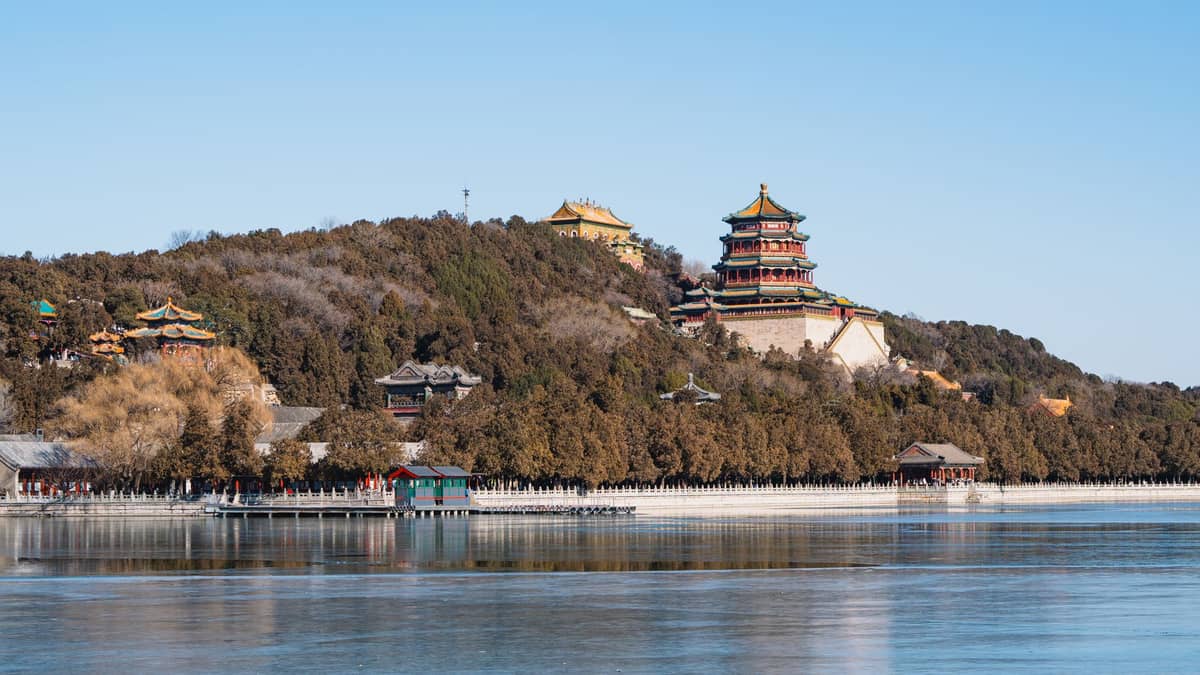
The Summer Palace (Yiheyuan) in Haidian District was the primary imperial retreat from the heat of central Beijing. The Qing empress dowager Cixi is most associated with its current form; she controversially diverted funds earmarked for the Qing navy to finance a major renovation in the 1880s and 1890s. The result is an extraordinary landscape: Kunming Lake covers about three-quarters of the 290-hectare site, and the Long Corridor — a 728-meter covered walkway with more than 14,000 painted scenes — runs along the northern lakeshore. Plan at least half a day. The boat across the lake and the walk up to the Tower of Buddhist Incense are the two elements most worth the time.
The Old Summer Palace (Yuanmingyuan) is a different experience entirely. It was the larger, earlier imperial retreat, devastated by British and French forces during the Second Opium War in 1860. What remains are extensive ruins, particularly the European-style baroque fountains and palace structures commissioned by Qing emperors who were fascinated by Western architecture. The ruins carry enormous weight in Chinese historical memory. The site is large and not entirely well-maintained, but the contrast with the polished grandeur of the Summer Palace makes it thought-provoking. Less visited, more reflective.
The Great Wall and the Ming Tombs: Imperial Power Beyond the City
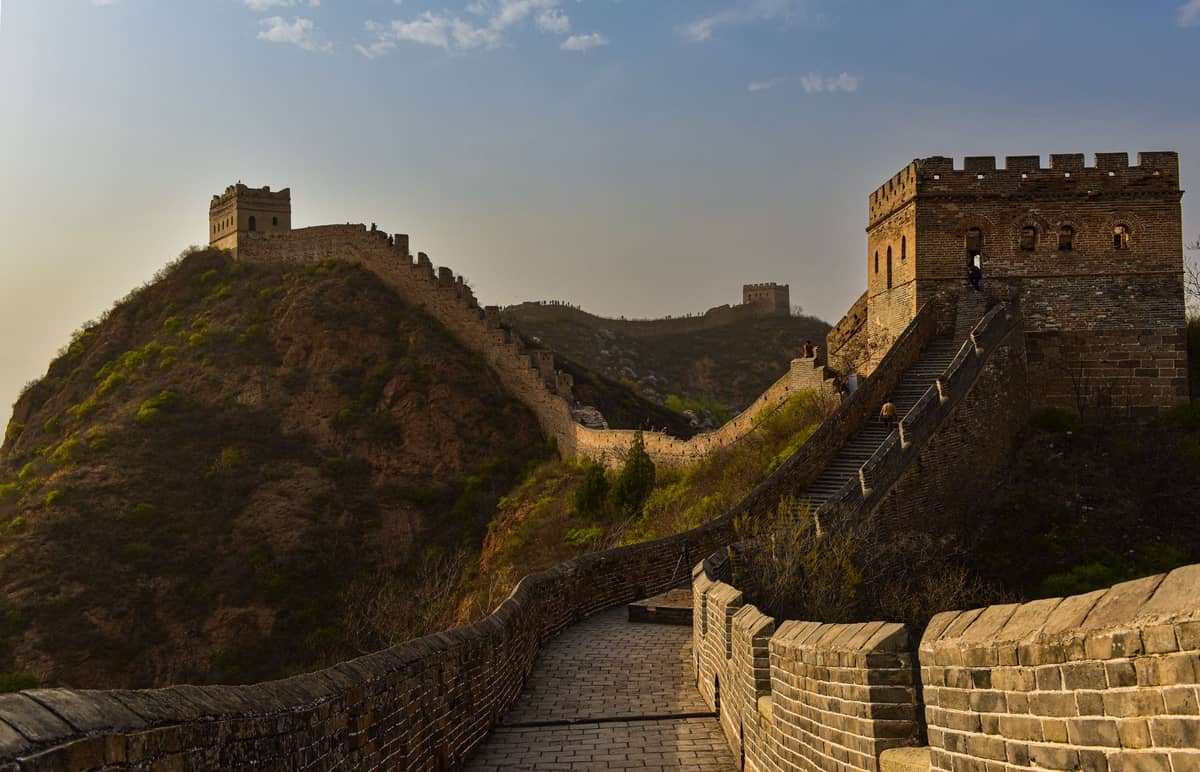
The Great Wall sections accessible from Beijing are part of the Ming-era defensive system, built to protect the capital and the northern frontier from incursion. They are inseparable from the imperial story. The wall is not a single continuous structure from one period; it was built, rebuilt, and extended over centuries by multiple dynasties, and Beijing-area sections largely reflect Ming construction and Qing-era maintenance.
For most first-time visitors, Mutianyu in Huairou District is the most practical choice: restored but not overcrowded, well-maintained infrastructure including a cable car and toboggan run, and genuine mountain scenery. From March 16 to November 15, regular operating hours are 07:30–18:00 on weekdays and 07:30–18:30 on weekends; from September 25 to October 6, 2026, the scenic area stays open until 20:00. Ticket sales end one hour before regular closing. Official tourist buses run from Qianmen (departures 07:00–11:00) and from Dongzhimen (09:10 from Exit H) and Shaoyaoju (09:30 from Exit E), with return services generally 13:00–16:00. Children 1.2 meters tall or below ride the shuttle bus and cable car free. Book tickets through the official Mutianyu website rather than third-party resellers.
The Ming Tombs (Shisanling) in Changping District are the burial complex for 13 of the 16 Ming emperors. Three tombs are open to visitors: Changling (the largest, built for the Yongle Emperor who constructed the Forbidden City), Dingling (the only excavated tomb, with underground burial chambers open to view), and Zhaoling. The Spirit Way, a 7-kilometer ceremonial road lined with stone figures of animals and officials, is the most atmospheric part of the complex and often less visited than the tombs themselves. Pair a Ming Tombs visit with Badaling or Mutianyu in a single day trip if logistics allow — both are in the same general northern direction from the city center.
⚠️ What to skip
Badaling is the most visited Great Wall section in the world and gets genuinely overwhelming on weekends and national holidays. If you value the experience over convenience, choose Mutianyu or consider Jinshanling for a less-restored, more dramatic alternative. Badaling's crowds are not a minor inconvenience — on peak days they make meaningful exploration difficult.
Practical Planning: Sequencing Imperial Beijing Over Multiple Days
Most visitors underestimate the time and physical effort required to do Beijing's imperial sites properly. Each major site — the Forbidden City, the Temple of Heaven, the Summer Palace, the Ming Tombs, and the Great Wall — takes at minimum half a day and involves substantial walking. A 3-day Beijing itinerary can cover the core imperial highlights, but a 5-day visit gives you room to slow down and absorb context rather than rushing between gates.
- Day 1: Central axis Tiananmen Square at opening, Forbidden City, Jingshan Park in the afternoon. These are adjacent and walkable.
- Day 2: Southern and eastern imperial sites Temple of Heaven in the morning (it opens early and locals use the park before tourists arrive), Lama Temple in the afternoon for Qing-era Tibetan Buddhist context, then the Bell Tower and Drum Tower area at dusk.
- Day 3: Western retreats Summer Palace takes a full morning. Old Summer Palace in the afternoon if you have appetite for it. Both are in Haidian and can be combined without backtracking.
- Day 4: Northern day trip Mutianyu Great Wall and Ming Tombs in the same direction. Take the morning bus from Qianmen, spend 3 hours on the wall, then stop at Changling or Dingling on the return drive.
- Day 5: Fill gaps and neighborhoods Revisit anything that felt rushed. The hutong neighborhoods around the Drum Tower and Nanluoguxiang offer a street-level view of the city that developed in the shadow of the imperial court.
For getting between sites, the Beijing Subway covers Tiananmen, the Temple of Heaven, Wangfujing, the Lama Temple, the Drum Tower area, and the Olympic Park with reasonable efficiency. The Summer Palace, Old Summer Palace, and Ming Tombs require either a bus or a taxi or ride-hailing via DiDi. Full practical details are in the getting around Beijing guide. For accommodation strategy near the imperial core, staying in Dongcheng or Xicheng puts you within walking distance or a short metro ride of the main central axis sites.
Seasonal timing matters more than most guides acknowledge. September and October are the most popular months for good reason: temperatures drop to comfortable levels (roughly 8–25°C), rainfall is low, and autumn foliage adds color to the Summer Palace gardens and Xiangshan Park. But they are also the busiest months. The week around China's National Day (October 1–7) is particularly overwhelming at all major imperial sites. April and early May offer similar temperature advantages with somewhat lower crowds, though spring dust and wind are a factor. See the best time to visit Beijing for a full seasonal breakdown.
✨ Pro tip
Book Forbidden City tickets the moment your travel dates are confirmed. Slots for peak dates (especially October) sell out weeks in advance. The official booking platform requires a passport or ID number for real-name registration. Have your document details ready when you book, and double-check that the date on your ticket matches your planned visit exactly — tickets are non-transferable.
FAQ
Can I visit the Forbidden City without booking in advance?
No. The Palace Museum uses a mandatory real-name advance booking system and does not sell tickets at the gate. Book through the official Palace Museum website (en.dpm.org.cn) as early as possible. Slots for weekends and national holidays sell out weeks ahead.
How many days do I need to see Beijing's main imperial sites?
Three full days is the minimum to cover the Forbidden City, Temple of Heaven, and Summer Palace without feeling rushed. Five days allows you to add the Ming Tombs, a Great Wall section, Jingshan Park, and the Old Summer Palace at a more considered pace.
Is the Great Wall part of Beijing's imperial history or a separate attraction?
It is directly part of the imperial story. The sections accessible from Beijing are primarily Ming-dynasty construction, built to protect the capital. The Yongle Emperor who built the Forbidden City also ordered major wall construction in this region. Visiting the wall and the Ming Tombs on the same day reinforces this connection.
What is the best Great Wall section for first-time visitors interested in history?
Mutianyu offers a good balance of accessibility, restoration quality, and scenery. Badaling is the most convenient but is also the most crowded section in the world. Jinshanling is less restored and more demanding but gives a rawer sense of the original structure. Your choice should match your tolerance for crowds and physical effort.
Are there imperial sites in Beijing beyond the Forbidden City and Great Wall?
Yes, several. The Temple of Heaven, Summer Palace, Old Summer Palace, Ming Tombs, Lama Temple, Confucius Temple, Beihai Park, and the Bell and Drum Towers are all imperial-era sites with distinct historical roles. The Forbidden City and Great Wall are the most famous, but the full imperial landscape of Beijing takes days to properly explore.