Mutianyu Great Wall: The Definitive Visitor Guide
Mutianyu is one of Beijing's best-preserved and most rewarding Great Wall sections, offering Ming-dynasty watchtowers, forested ridgelines, and a cable car option. Roughly 70 km north of central Beijing in Huairou District, it draws serious walkers and first-timers alike.
Quick Facts
- Location
- Mutianyu Village, Bohai Town, Huairou District, Beijing
- Getting There
- Bus 916 from Dongzhimen to Huairou Beidajie, then transfer to H23
- Time Needed
- 4–6 hours including travel from central Beijing
- Cost
- Entrance ¥45 (adult); cable car, toboggan, and shuttle buses priced separately
- Best for
- Families, photographers, first-time Wall visitors wanting fewer crowds
- Official website
- en.mutianyugreatwall.com
What Mutianyu Actually Is
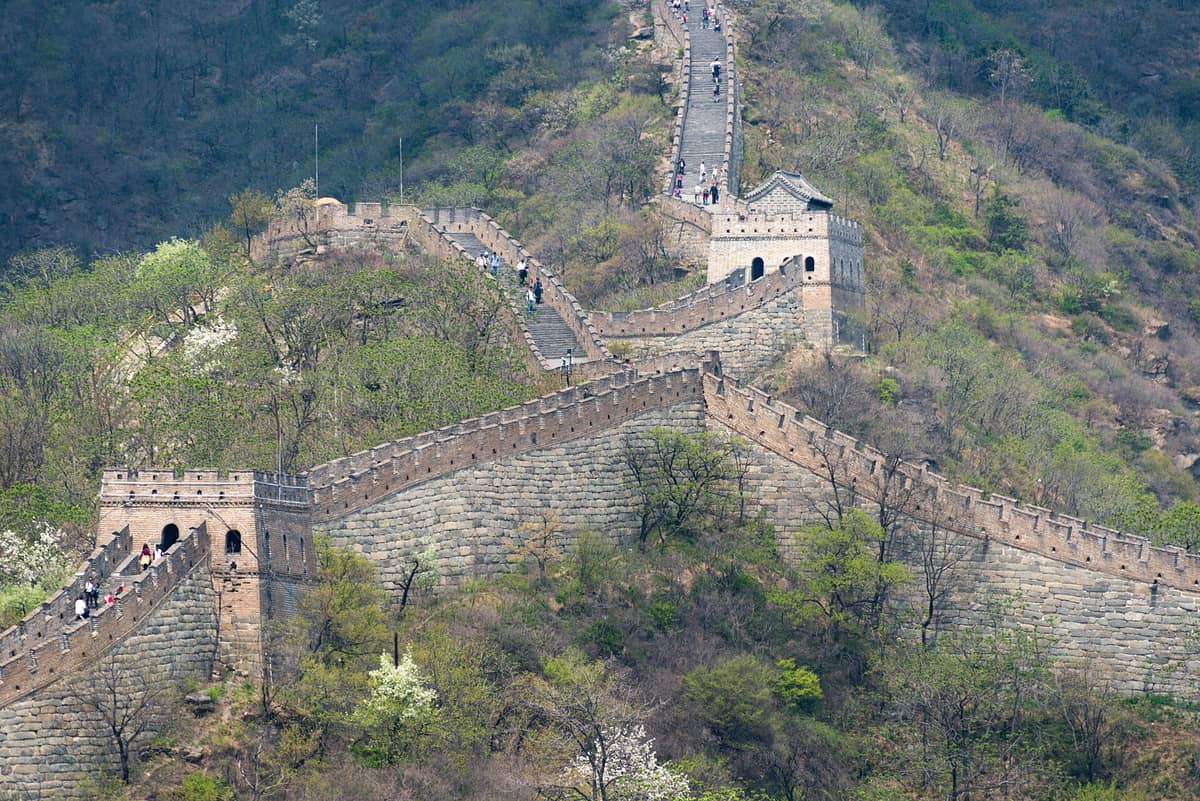
The Mutianyu Great Wall (慕田峪长城, Mùtiányù Chángchéng) is a 2-kilometer section of the Great Wall located in Huairou District, roughly 70 kilometers north of central Beijing. The section sits on a sharp granite ridgeline between 400 and 600 meters above sea level, and on a clear day the wall visibly curves in both directions into dense forest, giving photographs a depth and wildness that flatter sections cannot match.
Construction here began during the Northern Qi dynasty (550–577 CE), making this among the older settled sections in the Beijing region. The fortifications travelers walk today are overwhelmingly Ming dynasty work, with significant rebuilding completed in 1568 under a military reorganization overseen by the general Qi Jiguang. The wall at Mutianyu stands 7–8 meters high and 4–5 meters wide at the walkway, wide enough to walk three abreast with ease.
Compared to the Badaling Great Wall, Mutianyu handles visitor numbers more comfortably. Badaling is closer to the city and attracts vastly larger crowds, particularly on public holidays. Mutianyu is the better choice for visitors who want to walk a meaningful stretch of wall without being pressed forward by the people behind them. That said, it is not quiet on weekend mornings in October. For genuine solitude, consider Jinshanling or Simatai, both of which require considerably more effort to reach.
💡 Local tip
Arrive before 09:00 on weekdays to walk the most popular central towers in relative quiet. By 10:30, tour groups from Beijing fill the cable-car queues and the main walkable stretch near towers 14–20.
The Physical Experience: What You See and Feel
The moment the cable car or chairlift deposits you on the wall, the scale is immediately physical. The stone underfoot is worn and uneven in places, the original Ming paving still intact in sections but scoured smooth by decades of foot traffic. Handrails exist on steep pitches but not everywhere. The air at this elevation carries a distinct coolness even in July, and in autumn the surrounding hardwood and conifer forest turns orange and rust-red in a way that makes the grey stone look freshly quarried by contrast.
The section between towers 6 and 23 is the fully restored and walkable stretch. Towers here are enclosed, with arrow slits, internal stairs, and defensive parapets that let you understand the wall not just as scenery but as a military structure. The asymmetric crenellations face outward, toward the northern approaches. Standing inside tower 14 at mid-morning, with light cutting through the arrow slits and the smell of warm stone around you, the engineering intent becomes legible in a way no museum panel can replicate.
The eastern end of the walkable section, around towers 20–23, is steeper and less trafficked than the middle. Visitors who push to this end are rewarded with fewer people, better photographic angles back along the wall, and the quiet of forest on both sides. The footing here demands attention: the steps are original Ming-era stone, some with a 40-degree pitch and no railing. Wear footwear with grip.
Tickets & tours
Hand-picked options from our booking partner. Prices are indicative; availability and final rates are confirmed when you complete your booking.
Mutianyu Great Wall and Summer Palace small-group tour from Beijing
From 171 €Instant confirmationFree cancellationSmall Group Tour to Mutianyu Great Wall with Lunch
From 101 €Instant confirmationFree cancellationPrivate day tour at Mutianyu Great Wall with VIP perks
From 220 €Instant confirmationFree cancellationEarly start guided tour to the Great Wall at Mutianyu
From 355 €Instant confirmationFree cancellation
Getting There: Routes and Realistic Travel Times
The official public transport route from central Beijing uses bus 916 from Dongzhimen Transport Hub to Huairou Beidajie Station, then a transfer to H23 to reach the scenic area. Allow at least 2 to 2.5 hours door-to-gate on this route, more during morning rush hour. The buses are inexpensive and the H23 connection drops you within walking distance of the ticket gate.
The official scenic area also operates an organized shuttle from the Beijing Hub for Tour Dispatch, priced at approximately ¥80 for a round trip. This is the most straightforward option for visitors unfamiliar with Beijing's suburban bus network. Taxis and ride-hail services via DiDi can reach Mutianyu directly, but factor in toll costs and the possibility that drivers unfamiliar with the route may misread the destination. Confirm the full address: Mutianyu Village, Bohai Town, Huairou District.
If you are combining Mutianyu with other attractions in the northern suburbs, pairing it with the Ming Tombs is a logical day out. Both sites sit north of the city and can be managed in a single long day with a hired vehicle, though that requires an early start.
ℹ️ Good to know
Opening hours: Peak season (March 16–November 15) Mon–Fri 07:30–18:00, Sat–Sun 07:30–18:30. Off-peak (November 16–March 15) daily 08:00–17:30. An extended schedule of 07:30–20:00 applies September 25–October 6. Ticket sales close one hour before the scenic area closes, and ticket inspection closes 30 minutes before. Verify times at en.mutianyugreatwall.com before your visit, as hours are revised seasonally.
Cable Car, Chairlift, and the Toboggan: Choosing How to Ascend
Three ascent options exist, each with a separate fee on top of the ¥45 entrance ticket. The cable car (gondola style) is the fastest and most comfortable option, appropriate for visitors with mobility constraints, young children, or anyone who wants to save energy for the wall itself. The open chairlift is slower, more scenic, and lets you look directly down through the forest canopy on the way up. Some visitors find the chairlift exposure uncomfortable; others consider it one of the more pleasurable parts of the day.
The toboggan slide is the descent option that tends to surprise first-time visitors: a metal channel running down the hillside on which riders control a small sled. It is quick, well-maintained, and popular with families. The toboggan is not available in wet conditions or during heavy maintenance periods, so do not count on it if rain is forecast. Descending on foot via the marked path is always available and takes around 25–35 minutes.
Best Time to Visit and How Weather Changes the Experience
October is the month most photographers target: the autumn foliage peaks sometime between early and mid-October depending on the year, and the light in the afternoon is lower and warmer than in summer. The wall itself is grey-brown stone, and the surrounding color at peak autumn makes the whole ridge look composed. The trade-off is crowds. The October Golden Week holiday (roughly October 1–7) brings the largest visitor numbers of the year. If foliage is your goal, aim for the second or third week of October on a weekday.
Spring (April to early May) offers fresh greenery and mild temperatures, though visibility can be limited by haze or dust blown in from Inner Mongolia. Summer mornings are pleasant before 09:00, but humid heat builds quickly after 11:00. Afternoons in July and August can be genuinely uncomfortable for sustained walking. If visiting in summer, plan to finish your wall time by midday.
Winter visits between November and early March mean bare trees, sometimes snow on the battlements, and very low crowds. The wall looks starkly beautiful in snow. The cold at elevation is significant, well below central Beijing temperatures: dress in proper layers, including a windproof outer layer, gloves, and footwear with ankle support. The off-peak admission hours apply from November 16, and some facilities may be reduced.
⚠️ What to skip
Air quality in Beijing and surrounding areas varies considerably by season and weather pattern. Hazy days reduce long-distance views along the wall significantly. Check Beijing air quality data the day before your visit and consider rescheduling if AQI is above 150. Clear days after rain or a northern wind offer the sharpest visibility.
Photography at Mutianyu
For photographers, the most useful information is directional. The cable car deposits visitors near tower 14, and most people walk west toward towers 6–10 first, making these the busiest. Walk east toward towers 20–23 instead, then shoot back west with the wall curving away from you. Morning light (before 09:30) hits the north-facing side of the wall from tower 14 eastward; afternoon light falls on the southern battlements. For the classic sweeping wall-in-forest composition, towers 4 and 23 offer the best vantage points from either end. For more guidance on capturing Beijing's landmarks, the Beijing photography guide covers gear, timing, and permit considerations.
A standard wide-to-short telephoto zoom (24–70mm equivalent) handles most wall photography well. The scale of the towers rewards a tighter focal length for details: the textures of the Ming-era brick, the worn inscriptions on some stones, the wooden beams inside the tower interiors. A polarizing filter helps cut the haze on marginally clear days and saturates the foliage in autumn.
Accessibility and Who Should Reconsider This Visit
The Mutianyu Great Wall is not accessible to wheelchair users. The wall surface includes uneven stone, steep pitches with gradients exceeding 40 degrees, and sections without handrails. The cable car reduces the approach distance, but several steps remain between the cable car exit and the wall walkway, and the wall itself presents ongoing physical challenges. Visitors with significant mobility impairment will find the experience frustrating rather than rewarding.
Visitors seeking a purely passive tourist experience, where you walk a level path between clear signposted stops, will likely be underwhelmed. This is an outdoor physical site with genuine terrain. Equally, travelers who have already visited the wall at Badaling and found it satisfying may find Mutianyu feels broadly similar. Those wanting a wilder, longer, or more adventurous experience should look at Jinshanling or Huanghuacheng, both of which offer less restored, more demanding walks.
Before or after Mutianyu, the surrounding Great Wall area has its own appeal. The village at Mutianyu has several restaurants and guesthouses for travelers who want to overnight and walk the wall at dawn before the day-trippers arrive.
Insider Tips
- Buy your entrance ticket online through the official Mutianyu website before you travel: the online ticket system allows you to skip the ground-level ticket queue, which can run 20–30 minutes long on busy weekend mornings.
- The section between towers 20 and 23 at the eastern end is steeper but significantly less crowded than the central towers, and offers cleaner photographic lines back along the wall with no tour groups in frame.
- If you take the toboggan down, remove anything loose from outer pockets before you board. The sled accelerates faster than most first-timers expect on the steeper sections.
- The small restaurants in Mutianyu village at the base of the site serve locally sourced trout and walnuts alongside standard Chinese dishes. The food is unremarkable but adequate; bring snacks and water for the wall itself, as prices at the top are higher.
- A northern wind the day before your visit often clears the air and brings exceptional long-distance visibility along the ridgeline. Check the Beijing air quality forecast the evening before; a post-frontal day is worth rescheduling around.
Who Is Mutianyu Great Wall For?
- First-time Great Wall visitors who want a genuine experience without overwhelming crowds
- Families with children old enough for uneven terrain (roughly age 6 and up), especially for the toboggan descent
- Photographers targeting autumn foliage, ideally mid-October on a weekday
- Travelers with moderate fitness who want a 2–3 hour walk on a historically significant section
- Visitors combining a Beijing itinerary of 3 or more days who want one full day outside the city center
Nearby Attractions
Other things to see while in Great Wall Area:
- Badaling Great Wall
The Badaling Great Wall is the most visited section of the Great Wall near Beijing, sitting in Yanqing District about 80 km northwest of the city center. Fully restored, highly accessible, and genuinely impressive in scale, it rewards early arrivals and punishes late ones. Here is everything you need to visit well.
- Gubei Water Town
Gubei Water Town (古北水镇) is a large resort village built around Mandarin Duck Lake Reservoir at the foot of the Simatai Great Wall in Miyun District, roughly 120 km northeast of central Beijing. Covering around 9 square kilometres, it blends reconstructed Qing-era canal architecture with modern hotels and evening light shows, making it a popular overnight destination for city residents who want Wall access combined with water scenery.
- Huanghuacheng Lakeside Great Wall
At Huanghuacheng, sections of a Ming-dynasty Great Wall built in 1404 descend directly into a reservoir, creating a landscape found nowhere else on the wall. This guide covers what to expect on the ground, how to get there, and whether it belongs on your Beijing itinerary.
- Jinshanling Great Wall
Jinshanling Great Wall is one of the best-preserved and least-crowded sections of the Ming-dynasty wall. Located in Hebei's Luanping County and easily reached from Beijing, it rewards those willing to make the journey with dramatic ridge-top scenery, original battlements, and a genuine sense of the wall's scale and age.