Badaling Great Wall: What to Know Before You Go
The Badaling Great Wall is the most visited section of the Great Wall near Beijing, sitting in Yanqing District about 80 km northwest of the city center. Fully restored, highly accessible, and genuinely impressive in scale, it rewards early arrivals and punishes late ones. Here is everything you need to visit well.
Quick Facts
- Location
- Jundu Mountain, Yanqing District, Beijing
- Getting There
- S2 suburban railway to Badaling Station; buses from Deshengmen area
- Time Needed
- 2.5 to 4 hours on site
- Cost
- ¥40 peak season / ¥35 off-season; discounts available for under-18s, over-60s, and people with disabilities
- Best for
- First-time visitors, families with older children, travelers with limited mobility seeking some wall access
- Official website
- http://ticket.badaling.cn
What Badaling Actually Is
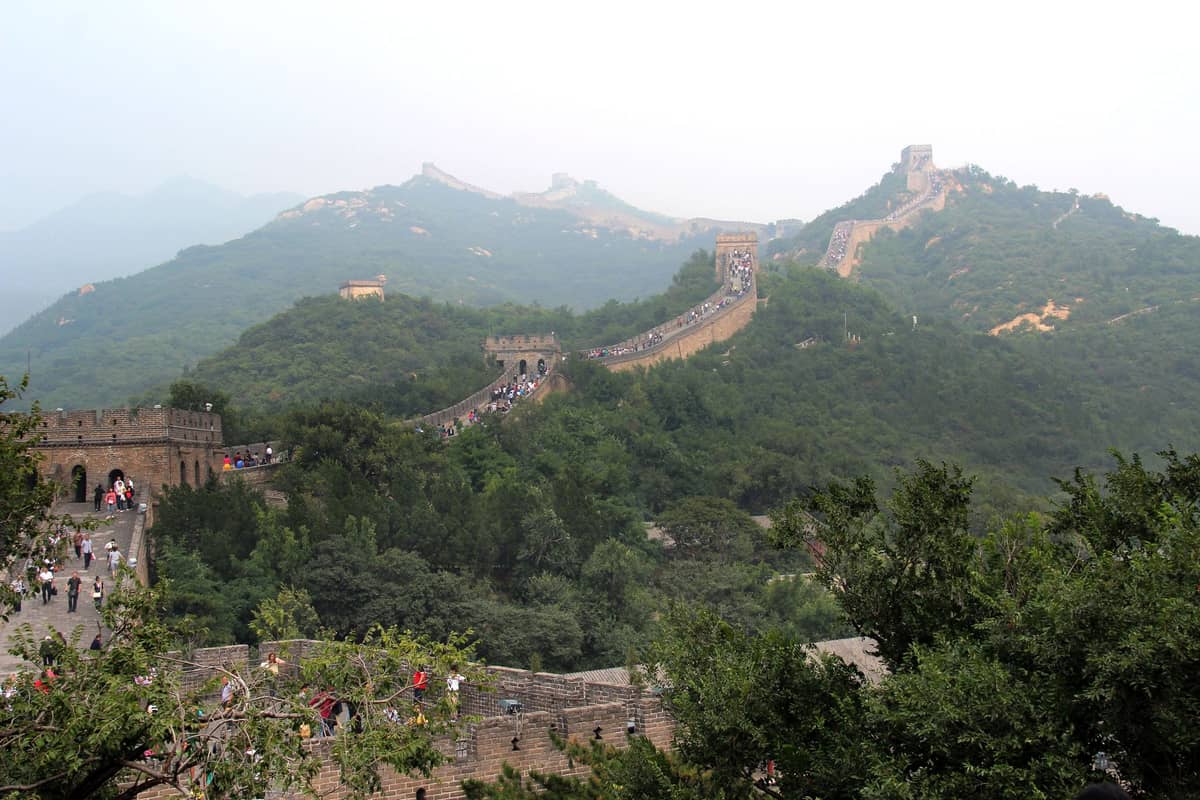
The Badaling Great Wall (八达岭长城, Bādálǐng Chángchéng) is a fully restored Ming-dynasty section of the Great Wall located in Beijing's Yanqing District, roughly 80 kilometers northwest of central Beijing. It sits at an elevation of around 1,015 meters along the Jundu Mountain ridge, which means the wall here does not merely run flat, it climbs and dips steeply, with towers perched at commanding heights above forested valleys.
The Great Wall as a whole was constructed across roughly 2,000 years, from the 3rd century BCE through the 17th century CE, reaching a total system length exceeding 20,000 kilometers. The Badaling section dates primarily from the Ming dynasty (1368 to 1644) and was among the first sections to be restored and opened to visitors in the 1950s. It has since welcomed more foreign heads of state than any other stretch of the wall. That heritage matters if you are weighing whether the crowds are worth it: this is not a ruin or a wilderness experience. It is the Great Wall at its most formal, most accessible, and most crowded.
ℹ️ Good to know
Badaling is listed as part of the UNESCO World Heritage Site 'The Great Wall' (inscribed 1987). If authenticity is your priority and you are comfortable with more physical terrain, consider comparing it with alternatives such as Mutianyu or Jinshanling before booking.
For first-time visitors to Beijing who want a reliable, well-maintained wall experience without needing a private car or guide, Badaling is the practical default. It is also a reasonable choice for families with children aged 8 and older. Those seeking solitude, raw landscape, or an unrestored atmosphere should read the Great Wall sections comparison guide before deciding.
The Experience: What You Will See and Feel
Arriving at Badaling on a clear morning, the first impression is scale. The wall does not sit at the bottom of a gentle hill. It rises sharply above the car parks and ticket gates, with crenellated battlements climbing the ridgeline at angles that seem almost theatrical. The stone underfoot is worn smooth in places and rough in others, the kind of texture that reminds you millions of feet have crossed these same slabs.
The main visitor area is divided into two directions from the central access point: north and south. The northern section climbs more steeply to a high point with panoramic views over forested ridges. The southern section is slightly gentler but still has sections where the gradient exceeds 45 degrees. Both directions offer watchtowers at intervals, each large enough to shelter a dozen people and cool enough on hot days to encourage a stop.
By mid-morning on any summer weekend or national holiday, the central section between the entry and the first major watchtower is dense with visitors moving in both directions simultaneously, a slow-moving queue rather than a walk. This is not an exaggeration. If you arrive at or after 10:00 on a peak-season Saturday, expect the narrower rampart sections to be shoulder-to-shoulder. The experience changes dramatically if you arrive before 08:00: the light is lower and more golden, the air is noticeably cooler, and the upper towers can feel almost private.
Tickets & tours
Hand-picked options from our booking partner. Prices are indicative; availability and final rates are confirmed when you complete your booking.
Badaling Great Wall online reservation with driver service
From 120 €Instant confirmationFree cancellationBadaling Great Wall VIP access with guided tour and transfer
From 236 €Instant confirmationFree cancellationMutianyu Great Wall and Summer Palace small-group tour from Beijing
From 171 €Instant confirmationFree cancellationSmall Group Tour to Mutianyu Great Wall with Lunch
From 101 €Instant confirmationFree cancellation
Opening Hours, Tickets, and Entry
The site operates on seasonal hours. From April 1 through October 31 (peak season), gates open at 06:30 and close at 16:30. From November 1 through March 31 (off-season), hours are 07:30 to 16:00. Note that these are last-entry times, not departure times, but the site does close, so do not arrive in the final hour expecting a full circuit.
Adult admission is ¥40 in peak season and ¥35 in off-season. Discounted tickets at ¥20 and ¥17.50 respectively are available to qualifying visitors. Minors under 18, visitors aged 60 or older, and people with disabilities qualify for free admission on presentation of the required identification or documentation. Prices were confirmed as of September 2026 but should be verified before your visit, as pricing for major Beijing attractions is subject to periodic review.
💡 Local tip
Tickets can be purchased on-site, though checking the official Badaling ticketing information before visiting is advisable during Golden Week and summer weekends, when queues may be long.
Getting There: Transit and Practical Routes
The S2 suburban railway is the most straightforward public transport option. Trains run from Huangtudian Station (accessible via Beijing North Station) to Badaling Station. The journey takes roughly 1 hour and passes through scenic mountain terrain, including a stretch through the Guangou valley. Check current S2 timetables before you go, as frequency is limited and schedules do change.
Buses from the Deshengmen area in central Beijing (Xicheng District) also serve Badaling directly and are a popular budget option. Journey times vary depending on traffic, which can be significant on weekend mornings when many visitors depart at similar times. Private transfers and organized tour coaches are also widely available from central hotels and are worth considering if you are traveling with young children or heavy bags.
Driving independently is possible but parking near the site fills quickly. For general orientation around Beijing's transport options, the guide to getting around Beijing covers subway, bus, and ride-hailing in more detail.
Accessibility and Physical Demands
Badaling has made more accessibility investment than most Great Wall sections. An accessible ramp of approximately 180 meters connects Wangjing Square near the North Wall with the East Platform, giving visitors with limited mobility a genuine section of wall to experience. However, this is a small portion of the overall site. The main rampart sections involve steep, uneven stone staircases with significant elevation change. Some steps have no handrail on one side.
Comfortable, closed-toe walking shoes with grip are essential. The stone can be slippery when wet, and mornings in spring and autumn can be cold enough on the exposed ridge to require a windproof layer even if the city below feels warm. Sunscreen and water are non-negotiable in summer, when the exposed stone radiates heat and there is little shade on the ramparts themselves. Snacks sold at the base are overpriced; bring your own.
Best Times to Visit and Weather Considerations
September and October offer the most consistently good conditions: temperatures on the ridge typically range from 8 to 20°C, skies are often clear, and the surrounding hills begin to show autumn color from mid-October. This is deservedly peak season, so book tickets early and arrive before 08:00.
April and May are the second-best window. Temperatures are milder and spring foliage gives the valleys a green backdrop that makes photography rewarding. Late July and August are the warmest and wettest months; rain does not necessarily ruin the visit, but fog and mist can obscure the ridge views that make the site worth climbing to. Winter visits (November through February) offer the dramatic and photogenic possibility of snow on the wall, far smaller crowds, and genuinely cold conditions: temperatures on the exposed ridgeline regularly drop below freezing. Dress in layers and expect the off-season hours to limit your time.
Air quality at Badaling is generally better than in central Beijing due to its elevation and distance from the urban core, but hazy days do occur. For general seasonal planning, see the best time to visit Beijing guide.
Photography at Badaling
The most photographed view at Badaling is the wall curving away along the ridgeline toward the northern watchtowers, with forested valleys falling steeply on either side. This shot is best from the upper towers of the northern section, and it requires arriving early enough that the ramparts are not crowded. Golden-hour light in the morning strikes the wall from the east and catches the crenellations in long shadow, which produces far more texture and depth than midday light.
For composition guidance on capturing Chinese landmarks effectively, the Beijing photography guide includes tips on timing, positioning, and managing crowds in frame.
Wide-angle lenses work well on the open ramparts. A telephoto is useful for compressing the wall's receding curves from a distance. Drone flight is prohibited in the Badaling scenic area without prior authorization from the relevant Chinese aviation authority; do not assume otherwise.
Who Should Consider an Alternative
Badaling is honest about what it is: a heavily visited, well-maintained, tourist-facing attraction. If you are the kind of traveler who finds the Great Wall more interesting as a historical artifact than as a spectacle, the restored sections here can feel more like a theme park than a monument. The wall itself is impressive regardless, but the experience of standing on it surrounded by souvenir stalls and tour group flags is not for everyone.
The Mutianyu section offers a similar level of restoration with a smaller crowd footprint and a cable car option. The Jinshanling section is significantly wilder and more demanding, suited to those who want a hiking-focused experience on partially unrestored wall. Both require more effort to reach but reward it.
Insider Tips
- The site opens at 06:30 in peak season. Arriving at opening means you will share the first tower with a handful of people rather than hundreds. The difference between 07:00 and 10:00 arrival is not marginal, it is a completely different experience.
- The northern rampart section climbs to a higher elevation and offers better ridge-line views than the southern section. Most casual visitors turn back earlier on the south side, so the north rewards those willing to push further up.
- Yanqing District sits at higher elevation than central Beijing and is noticeably cooler, especially in the morning. Even on a warm Beijing day in April or October, bring an extra layer for the ridge.
- The S2 train has limited departures. Check the exact timetable the day before your visit and plan your return journey before you go, especially if you need to connect to an evening flight or train out of Beijing.
- On-site cable cars and the toboggan slide are available for an additional fee and popular with families; queues build from mid-morning. If you plan to use them, factor in the wait time when estimating your total visit duration.
Who Is Badaling Great Wall For?
- First-time visitors to Beijing wanting the iconic Great Wall experience without complex logistics
- Families with children aged 8 and older who can manage uneven stone stairways
- Visitors with limited mobility who want access to at least a portion of the wall via the accessible ramp
- Travelers combining the wall with a day trip that also takes in the Ming Tombs in Changping District
- Photographers who can arrive at opening time and work in early-morning light before crowds build
Nearby Attractions
Other things to see while in Great Wall Area:
- Gubei Water Town
Gubei Water Town (古北水镇) is a large resort village built around Mandarin Duck Lake Reservoir at the foot of the Simatai Great Wall in Miyun District, roughly 120 km northeast of central Beijing. Covering around 9 square kilometres, it blends reconstructed Qing-era canal architecture with modern hotels and evening light shows, making it a popular overnight destination for city residents who want Wall access combined with water scenery.
- Huanghuacheng Lakeside Great Wall
At Huanghuacheng, sections of a Ming-dynasty Great Wall built in 1404 descend directly into a reservoir, creating a landscape found nowhere else on the wall. This guide covers what to expect on the ground, how to get there, and whether it belongs on your Beijing itinerary.
- Jinshanling Great Wall
Jinshanling Great Wall is one of the best-preserved and least-crowded sections of the Ming-dynasty wall. Located in Hebei's Luanping County and easily reached from Beijing, it rewards those willing to make the journey with dramatic ridge-top scenery, original battlements, and a genuine sense of the wall's scale and age.
- Ming Tombs (Shisanling)
The Ming Tombs, officially 明十三陵, spread across a valley at the foot of Tianshou Mountain in Changping District, roughly 50 km north of central Beijing. Thirteen Ming-dynasty emperors were buried here between 1409 and 1644, making this one of the largest and best-preserved imperial burial complexes in the world. Several tombs plus the Sacred Way are open to visitors, with Changling, Dingling, Zhaoling, and the Sacred Way serving as the regular open attractions; other tombs may require advance reservation., each offering a distinctly different experience.