Getting Around Beijing: The Complete Transport Guide
Beijing's transport network is extensive and affordable, but it rewards those who understand how it works. This guide covers the subway, taxis, DiDi, airport connections, intercity rail, and everything in between, with straightforward guidance on what to use when.
Plan and book this trip
Tools from our partner Travelpayouts help you compare flights and hotels. If you book through them, we may earn a commission at no extra cost to you.
Flights
Hotels map
TL;DR
- The Beijing Subway is the fastest, cheapest way across the city: fares start at ¥3 and the network covers most tourist sites. See our first-timer guide to Beijing for orientation.
- Subway fares are distance-based, not zone-based: ¥3 for journeys within 6 km, rising in increments. Most lines run approximately 05:00–23:00, but last-train times vary by line.
- DiDi is the dominant ride-hailing app. Taxis are plentiful but require either Mandarin or a written address. Neither accept tips.
- Airport Express (PEK) costs around ¥25 and connects to central interchange stations in roughly 30 minutes. Daxing Airport (PKX) has its own rail link to Caoqiao.
- For intercity travel, book high-speed rail through China Railway's 12306 platform well in advance. Your passport is required.
Beijing Subway: The Backbone of City Travel
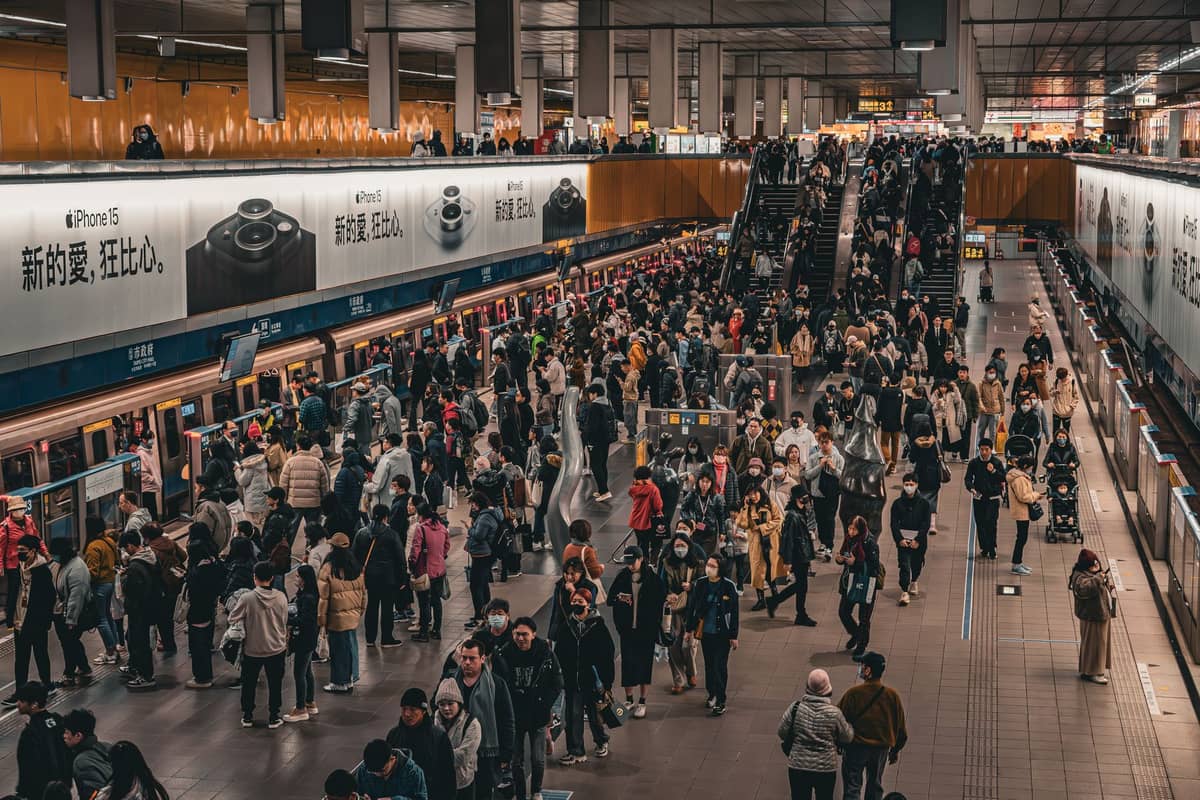
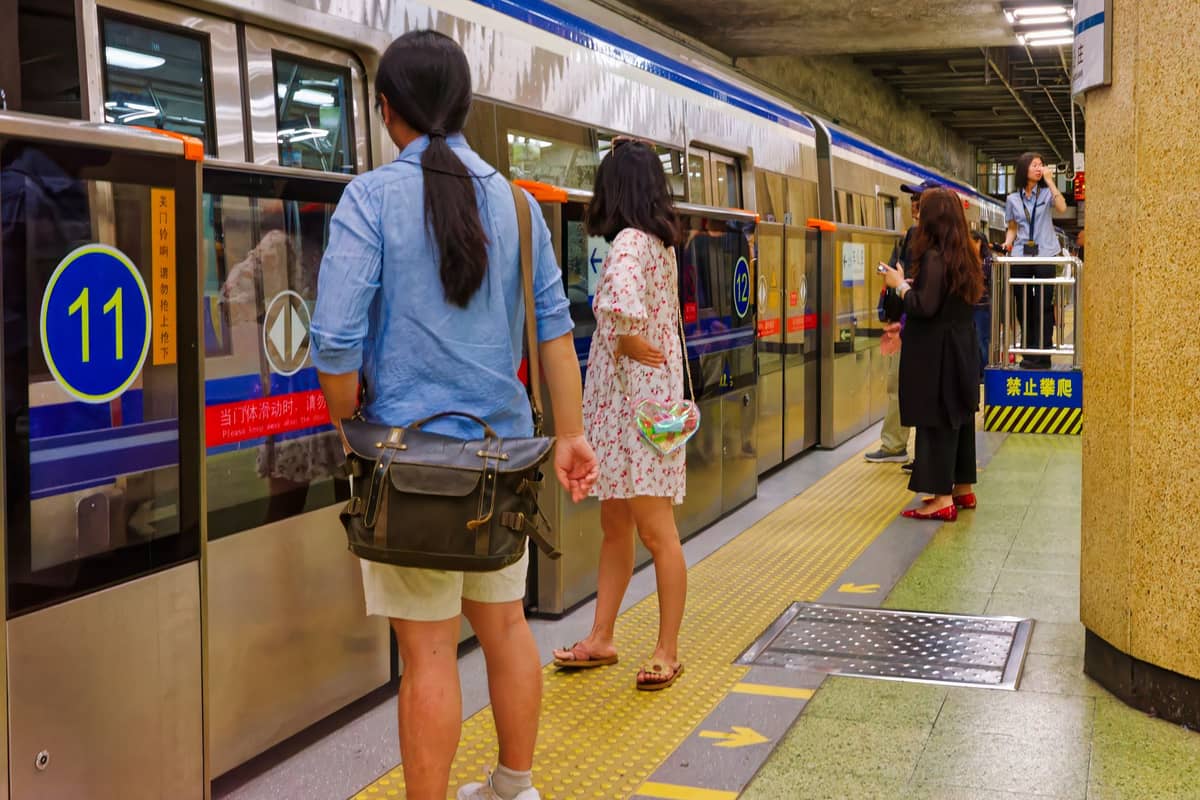
With a permanent population of 21.8 million and a sprawling municipal area of around 16,410 km², Beijing needs serious infrastructure. The subway delivers it. The Beijing Subway is one of the largest metro systems in the world by total length, and for visitors it is almost always the smartest way to move between major sights, neighborhoods, and transport hubs. Trains are frequent, air-conditioned, and relatively uncrowded outside of peak commute hours (roughly 07:30–09:30 and 17:30–19:30 on weekdays).
Fares are calculated by distance, not by zone, which is a common point of confusion. The structure works like this: The structure works like this: ¥3 for journeys within 6 km, ¥4 for 6–12 km inclusive, ¥5 for 12–22 km inclusive, ¥6 for 22–32 km inclusive, and then ¥1 added for every additional 20 km beyond 32 km. For most tourist journeys within central Beijing, you will pay ¥3 or ¥4. Trips to outlying areas, such as the Olympic Park or further suburban districts, can reach ¥6–¥8. The fare is calculated automatically when you tap out, so you simply add credit to an IC card or use a QR code on the platform app.
💡 Local tip
Get a Beijing Yikatong transit card (一卡通) at any subway station service desk. It works on the subway, city buses, and some taxis. Loading ¥100–¥150 is enough for a few days of intensive sightseeing. Foreign visitors can also link WeChat Pay or Alipay to subway QR scanners at most stations, which eliminates the card entirely.
Most lines operate from approximately 05:00 to 23:00, but the first and last train times differ by line and station, sometimes by 30 minutes or more. Do not assume the last train leaves at 23:00 everywhere. Check the posted schedule at your departure station or the official subway app before a late night out. During major public holidays and peak summer travel weeks, the Beijing Subway sometimes extends service hours to accommodate demand. The Beijing nightlife scene clusters around Sanlitun and Houhai, both of which have nearby subway stations, but the last trains do not align with bar closing times on weekends. Factor in a DiDi ride home.
- Line 1 and Line 2 The two original lines form an east-west spine and a loop around the city core. Line 1 stops at Tiananmen East, Tiananmen West, and Wangfujing. Line 2 hits the main train station and key interchange points.
- Line 10 A large loop covering Chaoyang, Haidian, and Fengtai. Useful for Sanlitun (via Tuanjiehu), Workers' Stadium, and Olympic Park connections.
- Airport Express (Line AE) Runs between Terminal 2 and Terminal 3 at PEK and Dongzhimen in central Beijing. Approximately 30 minutes, around ¥25. Operates on a separate fare structure.
- Daxing Airport Express Links PKX (Daxing Airport) with Caoqiao, where you transfer to Line 10 for central Beijing. Faster than taking a taxi in traffic.
- Line 8 and Line 15 Useful for reaching Olympic Park and the National Stadium area in northern Chaoyang and Haidian.
Taxis and DiDi: When the Subway Is Not Enough
Beijing has abundant taxis, and metered fares are regulated. The starting fare is typically around ¥13 for the first 3 km, then roughly ¥2.3 per km after that, with a nighttime surcharge after 23:00. Tolls on expressways are added to the fare. The main issue for foreign visitors is communication: most taxi drivers speak little or no English, and the app-based dispatch system defaults to Mandarin. The practical solution is to have your destination written in Chinese characters, either on paper or on your phone screen. Many hotels provide destination cards for common tourist sites.
DiDi (滴滴) is China's equivalent of Uber and is far more practical for non-Mandarin speakers. The app has an English interface, allows you to enter destinations by name or address, and shows the estimated fare before you confirm the ride. Payment links to WeChat Pay or Alipay, both of which now support international credit cards for setup. Surge pricing applies during peak hours and bad weather. For areas the subway does not cover well, such as Nanluoguxiang on a rainy afternoon or the quieter hutong streets near Houhai, DiDi is the sensible choice.
⚠️ What to skip
Avoid unlicensed 'black cabs' (黑车, hēichē) that approach you at airports, train stations, and popular tourist spots. They do not use meters, overcharge routinely, and have no regulatory accountability. Always use the metered taxi queue or DiDi.
Getting to and from Beijing's Two Airports
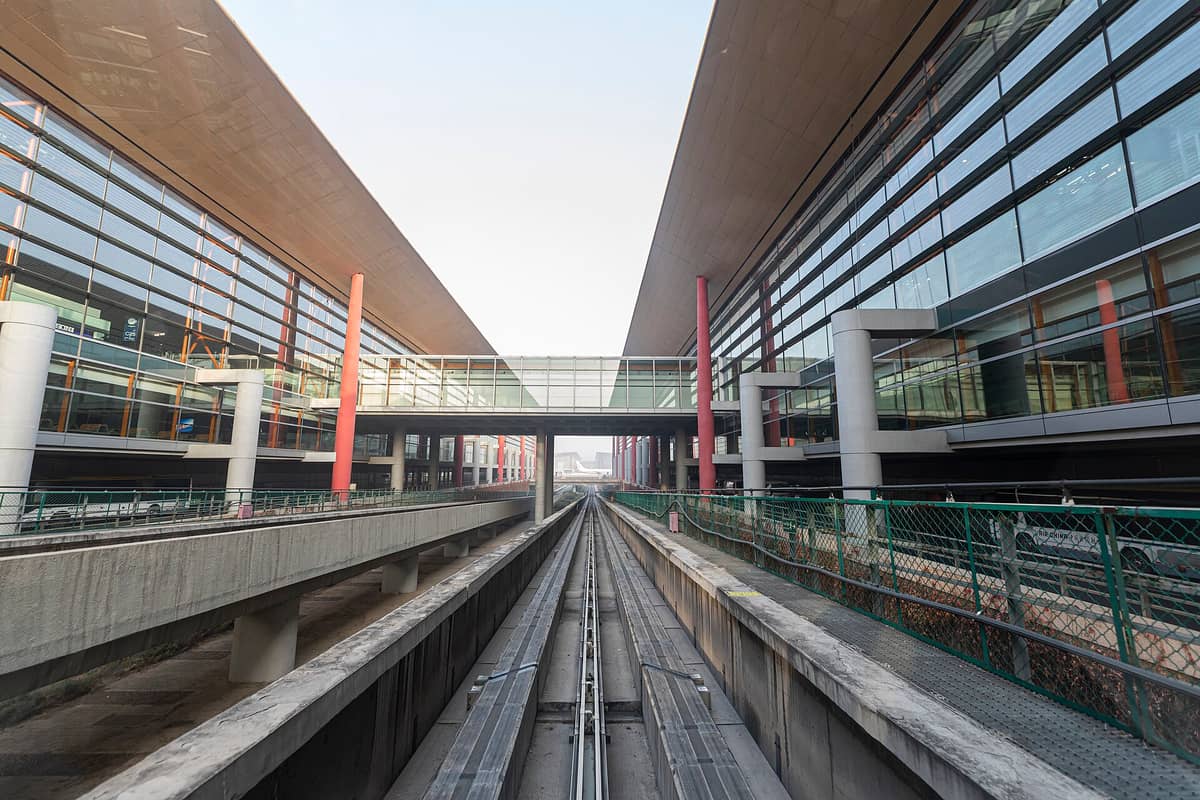
Beijing is served by two major international airports: Beijing Capital International Airport (PEK), located about 25–30 km northeast of the city center in Shunyi District, and Beijing Daxing International Airport (PKX), approximately 45 km south of central Beijing near the Beijing-Hebei boundary. Which airport you use depends entirely on your airline and route, but the transport options differ significantly.
From PEK, the Airport Express train is the cleanest option for most travelers. It runs direct to Dongzhimen (Line 2 interchange) and Sanyuanqiao (Line 10 interchange), with a journey time of around 30 minutes from Terminal 3. The fare is around ¥25, though verify current pricing before travel. Airport buses serve various districts at lower cost but take significantly longer in traffic. Taxis and DiDi rides to central Beijing from PEK typically cost ¥100–¥150 depending on destination, traffic, and any expressway tolls. Late-night arrivals or early-morning departures often make a taxi or private transfer more practical than waiting for the first Airport Express. Check our Beijing airport guide for terminal-by-terminal detail.
From PKX, the Daxing Airport Express rail connects to Caoqiao station, where you transfer to Beijing Subway Line 10. The combined journey to central Chaoyang or Dongcheng takes around 45–60 minutes depending on your final destination. Taxis from PKX to central Beijing cost more than from PEK due to the greater distance, often ¥150–¥250 or higher with tolls. Private airport transfers booked in advance offer predictability in price and pick-up, which is worth considering if you are traveling with luggage or arriving late.
✨ Pro tip
If you are connecting to another Chinese city by high-speed rail, it may make more sense to take the subway to Beijing South Station directly rather than transiting through the city center. Plan your route based on your onward destination, not just which station is closest to your hotel.
Intercity Rail: High-Speed Trains Out of Beijing
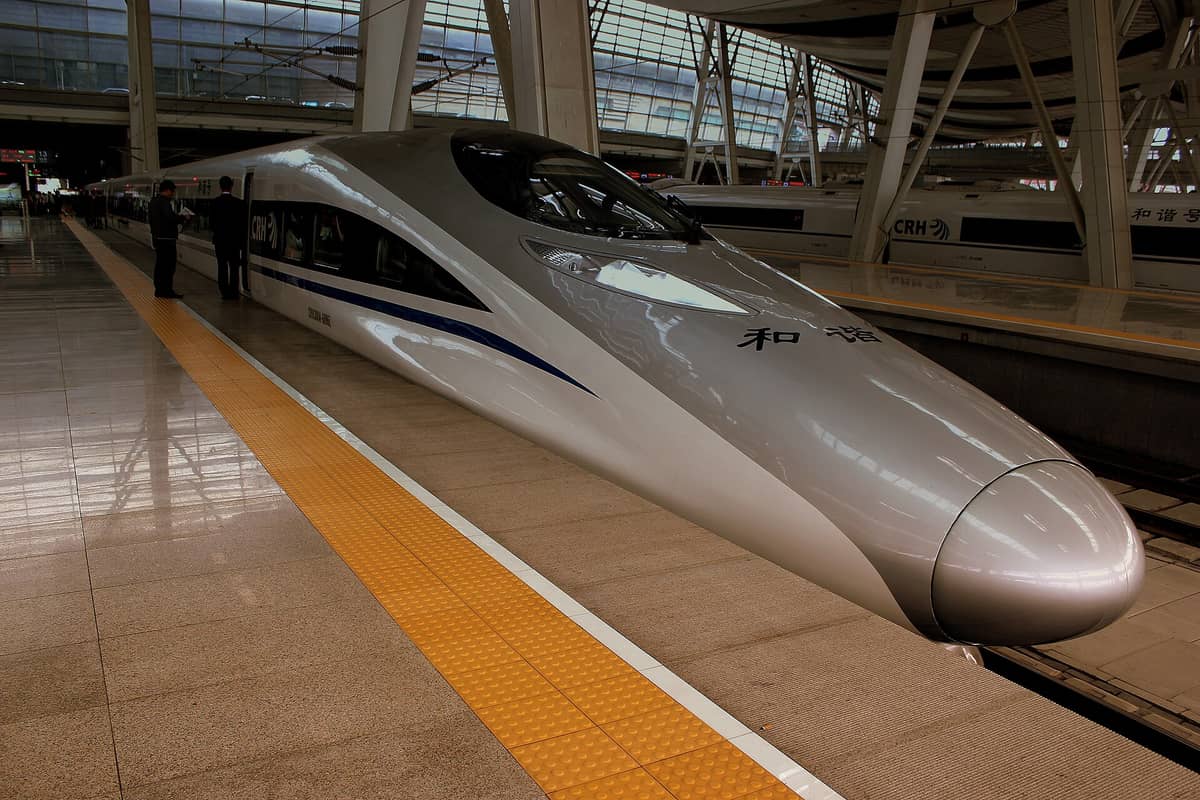
Beijing sits at the center of China's high-speed rail network, which is one of the most extensive in the world. For trips to Shanghai, Xi'an, Tianjin, or dozens of other cities, high-speed rail is faster than flying when you factor in airport check-in times, and usually more comfortable. The key booking platform is China Railway's official 12306 system, covered in our Beijing to Shanghai travel guide, which requires your passport details to register and book tickets.
Beijing has four major railway stations: Beijing Station (handles some intercity and international services), Beijing West (major hub for trains to southern and western China), Beijing South (the primary high-speed hub, with G-trains to Shanghai in around 4.5 hours), and Beijing North (for services toward Yanqing and the northwest). Getting to the right station matters: check your ticket carefully, as the stations are spread across different districts and are not interchangeable. Allow at least 45 minutes before departure for security checks and finding the correct platform.
- Beijing South (北京南站): Book G-trains to Shanghai, Nanjing, and Tianjin here. Served by subway Lines 4 and 14.
- Beijing West (北京西站): Trains to Xi'an, Chengdu, Guangzhou, and southwestern China. Served by subway Lines 7 and 9.
- Beijing Station (北京站): Older Z and T trains plus international services. Served by subway Lines 2.
- Beijing North (北京北站): Regional services including Yanqing and some Hebei routes. Near subway Line 4 (Xizhimen).
City Buses and Other Options
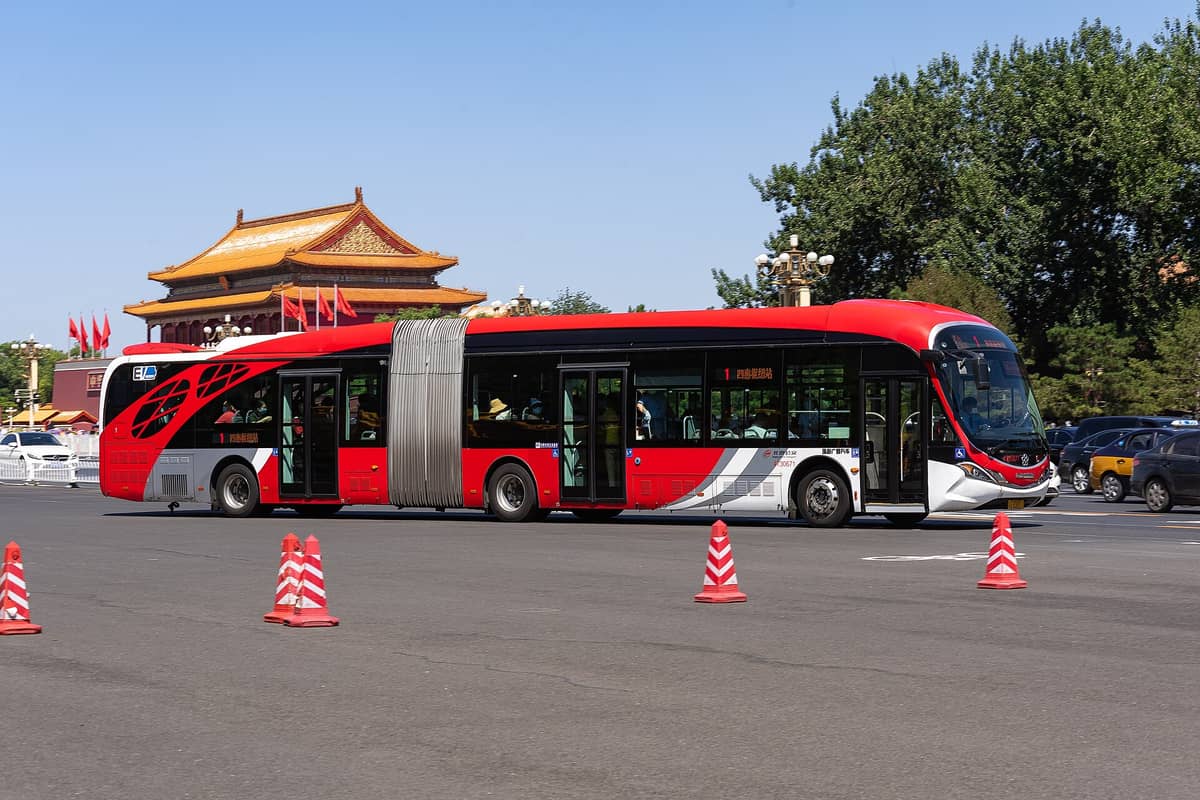
The Beijing Public Transport Corporation runs a comprehensive bus network, with fares starting at around ¥2 and accepting the Yikatong transit card. Buses are cheap but slow in traffic and difficult to navigate without Mandarin. For travelers on a tight budget who are comfortable with navigation apps, certain bus routes provide access to neighborhoods and outer sights that the subway does not reach efficiently. That said, DiDi has largely replaced bus travel as the practical fallback for most visitors who find the subway insufficient for a particular trip.
Cycling is increasingly viable in central Beijing thanks to a growing network of protected lanes and the widespread availability of shared bikes through apps like Meituan and Hello Bike. Scan a QR code, pay a small deposit, and ride to any designated parking zone. This works well for short hops around Dongcheng or Xicheng where hutong streets are too narrow for taxis and too short to justify the subway. A Beijing-wide ban on riding e-bikes on certain roads applies to rental bikes in some zones, so check the app for restricted areas.
ℹ️ Good to know
Winter conditions, particularly snow and ice, can significantly affect walking and cycling safety. The Beijing Municipal Government advises commuters not to step off curbs while subway doors are operating, and recommends extra caution on icy surfaces near station exits. In January and February, factor in slower travel times across all transport modes.
Transport Tips for Outer Sights and Day Trips
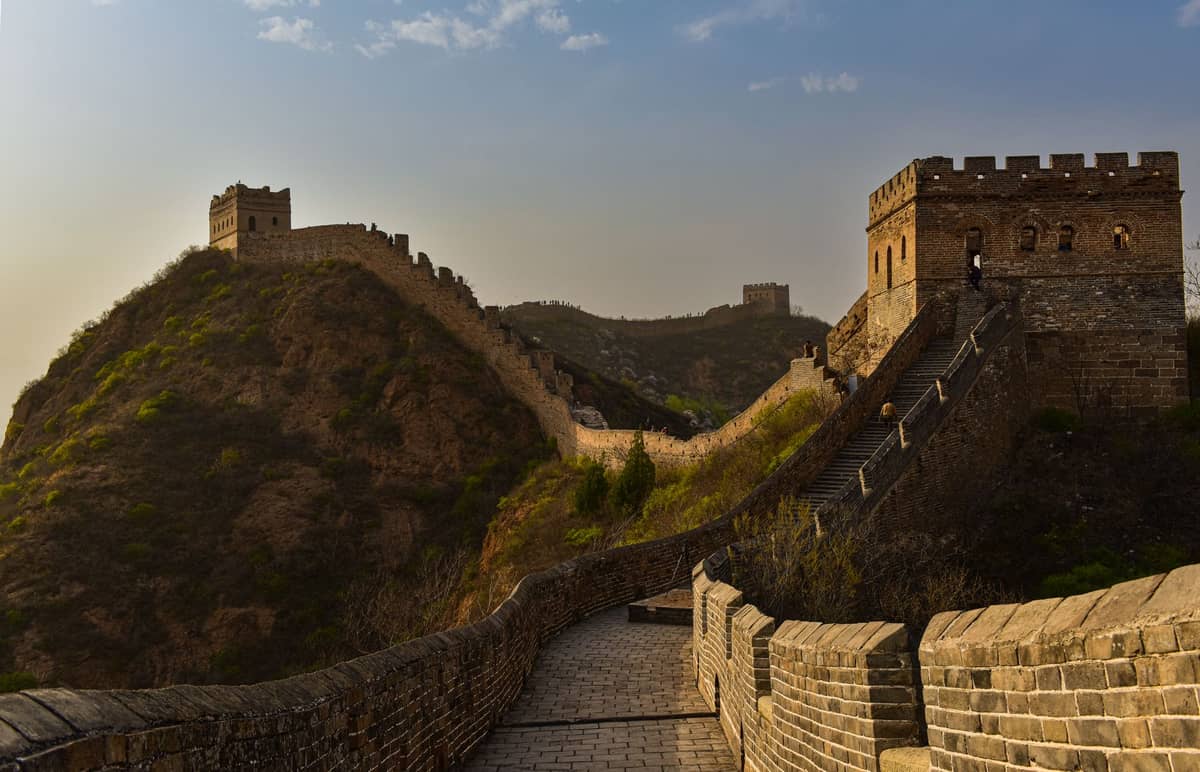
Several of Beijing's most significant attractions sit well outside the subway network's practical reach. The Mutianyu section of the Great Wall in Huairou District, for instance, is about 70 km from central Beijing. Options include organized tour buses, private car hire, or a combination of subway and local bus. The subway to Dongzhimen or Wudaoying, followed by a tourist shuttle bus, is a viable budget route, but the journey takes 2–3 hours each way. A private car or booked tour reduces that to around 90 minutes. See the Great Wall sections guide for transport comparisons to Badaling, Jinshanling, and Simatai.
For the Ming Tombs in Changping District and other northern sights, subway Line 8 reaches Changping in around 50 minutes from the city center, with local buses or DiDi covering the last stretch. The day trips from Beijing guide covers these routes in full, including realistic journey time estimates and timing recommendations to avoid bottlenecks at popular sites.
FAQ
Is the Beijing subway easy to use as a tourist?
Yes, with some preparation. Station signs, platform announcements, and route maps are available in both Mandarin and English at most central stations. The main challenges are crowding during peak hours and the fact that some interchange stations involve long underground walks. Download an offline metro map before you arrive and load your Yikatong card (or set up Alipay or WeChat Pay) on your first day.
How do I pay for the Beijing subway?
You can pay with a Yikatong transit card (buy and top up at station service desks), a WeChat Pay or Alipay QR code via in-app scan at platform gates, or a single-journey token purchased at vending machines using cash or card. The Yikatong card is the fastest option for multiple journeys.
How long does it take to get from PEK airport to central Beijing?
The Airport Express train takes approximately 30 minutes from Terminal 3 to Dongzhimen, where you can transfer to subway Line 2. A taxi or DiDi takes 40–75 minutes depending on traffic, and can stretch significantly longer during rush hour or adverse weather. The train is almost always faster during peak travel times.
Can I use Uber or Google Maps for transport in Beijing?
Uber does not operate in mainland China. Use DiDi instead, which has an English-language interface and accepts international payment methods through WeChat Pay or Alipay. Google Maps is blocked in China; use Baidu Maps (Chinese) or Apple Maps (which uses local data and works reasonably well for navigation in Beijing).
What is the cheapest way to get from central Beijing to the Great Wall?
The budget route to Badaling runs via subway to Qinghuayuan or Shatan, then a transfer to dedicated tourist coaches or Line S2 (Yanqing). Mutianyu on a budget means subway plus a tourist shuttle from Dongzhimen or Wudaoying bus hub. Both routes take 2–3 hours each way and cost under ¥50 in total transit fares, but organized tours or private cars save significant time and complexity.