Beijing to Shanghai: High-Speed Train vs Flight (The Complete Comparison)
Choosing between the Beijing to Shanghai train and a flight comes down to more than just ticket prices. This guide breaks down total journey times, costs, booking logistics, and seasonal factors so you can make the right call for your trip.
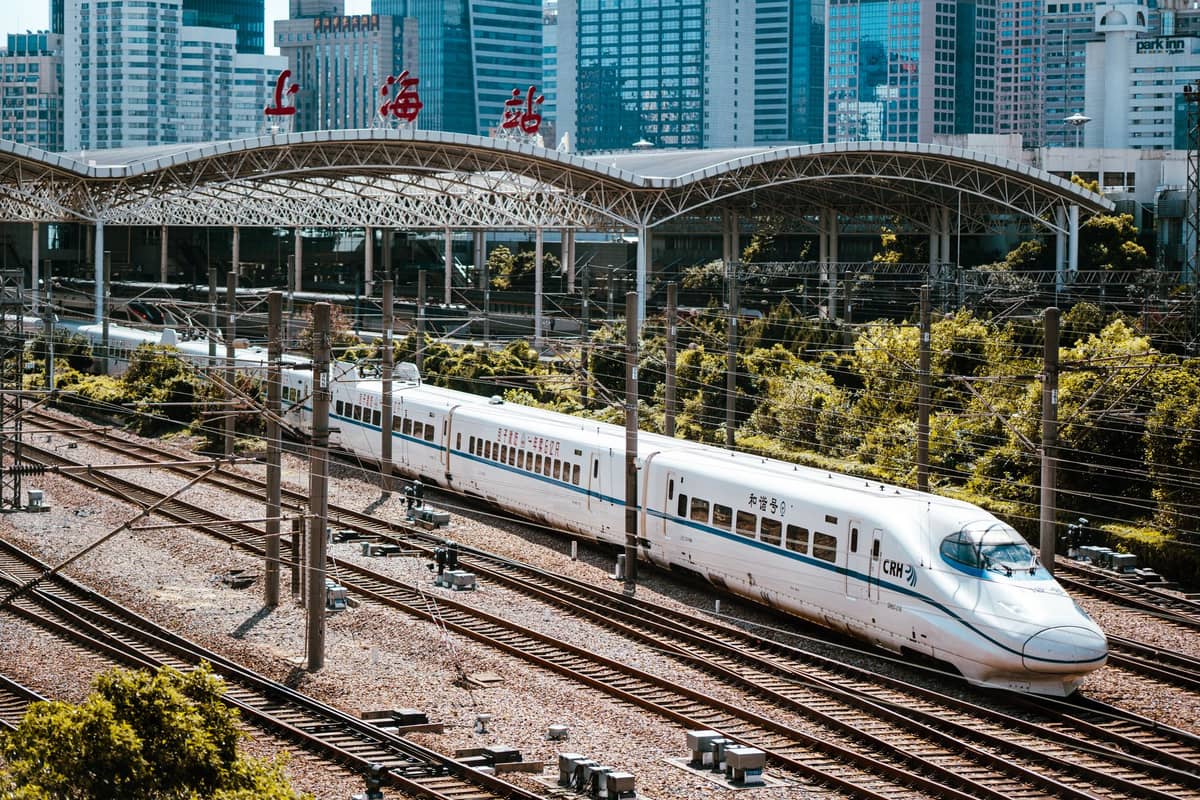
Plan and book this trip
Tools from our partner Travelpayouts help you compare flights and hotels. If you book through them, we may earn a commission at no extra cost to you.
Flights
Hotels map
TL;DR
- The Beijing to Shanghai high-speed G-train (Beijing South to Shanghai Hongqiao) takes roughly 4 hours 18 minutes on the fastest services; total flight time is about 2–2.5 hours in the air, but door-to-door the gap narrows significantly.
- Second-class rail fares are around US$98; promotional airfares can start lower but rise sharply during Golden Week and Spring Festival.
- For most travelers staying centrally in both cities, the train wins on total convenience: no airport security queues, no baggage drama, and a city-center-to-city-center route.
- Book trains on China Railway's official 12306 platform or through Trip.com if you need to enter a foreign passport. Tickets open roughly 15 days before departure — verify this on 12306 directly.
- See our guide to getting around Beijing for how to reach Beijing South station from the city center.
Understanding the Route: What You're Actually Comparing
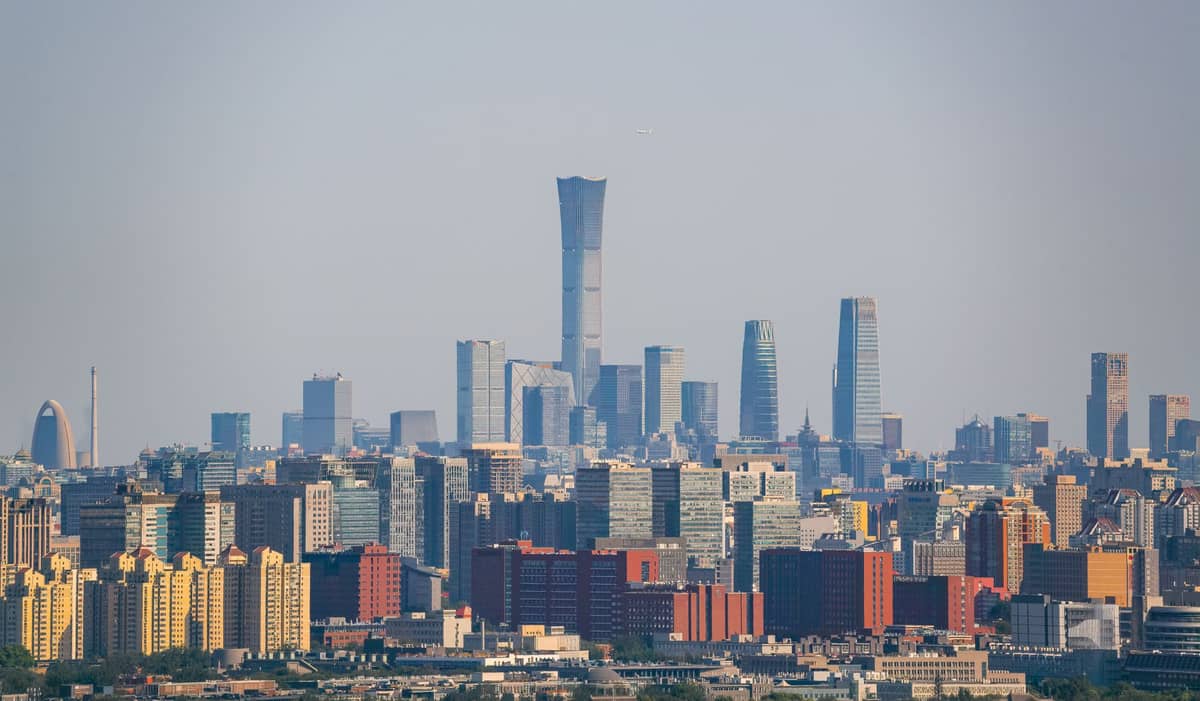
Beijing and Shanghai are roughly 1,300 km apart, making this one of the world's most traveled intercity corridors. The comparison between flying and taking the Beijing to Shanghai train is not simply about in-transit time. It's about the full door-to-door experience: how far your hotel is from the departure point, how early you need to leave, what the transfer looks like at the other end, and how much time you lose to queues.
On the rail side, G-trains depart from Beijing South station and arrive at Shanghai Hongqiao, both of which are well-connected to metro networks. On the air side, Beijing operates two international airports: Capital (PEK) in Shunyi District, about 25–30 km northeast of central Beijing, and Daxing (PKX), about 45 km south of the city center near the Beijing-Hebei boundary. Shanghai is served by Hongqiao (SHA) and Pudong (PVG). The airport pair you use changes the door-to-door equation significantly.
ℹ️ Good to know
Beijing South station is directly served by Metro Line 4 and the Beijing-Shanghai high-speed line. From central Dongcheng or Xicheng districts, allow 30–45 minutes to reach the station. From Chaoyang's CBD or Sanlitun area, factor in 45–60 minutes depending on traffic and metro connections.
The Beijing to Shanghai Train: Schedules, Classes, and Real Journey Times
The high-speed G-train service between Beijing South and Shanghai Hongqiao is the benchmark for this route. Fastest services cover the distance in approximately 4 hours 18 minutes. There are also slightly slower G-trains in the 4.5–5.5 hour range, and older D-train services that take longer. Overnight conventional trains exist but are rarely the right choice for leisure travelers who value time.
- Second Class (二等座) Around US$98 on fastest G-trains. Comfortable reclining seats, reasonable legroom — comparable to European high-speed second class. Adequate for a 4-hour journey.
- First Class (一等座) Wider seats with more recline, fewer seats per car. Price is typically 1.3–1.5x the second-class fare. Worth it if you're working or want more space.
- Business Class (商务座) Lie-flat seats at the front of the train. Significantly pricier — often US$300+ — but includes a meal service and USB power. Overkill for most travelers on a 4-hour trip.
One practical advantage often overlooked: the train has a dining car, power sockets at most seats in second and first class, and no restriction on liquids. You can board 20–30 minutes before departure rather than two hours early. Shanghai Hongqiao station connects directly to the metro, so you can be at a Puxi hotel within 45–60 minutes of stepping off the train. For a breakdown of what to do once you arrive in Beijing, the 3 days in Beijing itinerary covers the key stops near central transport hubs.
⚠️ What to skip
Tickets on the 12306 platform accept valid foreign passport numbers. International travelers can book directly on 12306 or use Trip.com or similar platforms if they encounter issues with 12306's foreign-passport verification. Availability tightens significantly during Golden Week (early October) and Spring Festival — book as early as the window allows.
Flying Beijing to Shanghai: What the Ticket Price Doesn't Include
Promotional airfares between Beijing and Shanghai can start from around US$66–69 on selected dates, which looks cheaper than the train at first glance. But the sticker price rarely reflects the full cost. Budget airlines and promotional fares often exclude checked baggage, seat selection, and airport transfer costs. Add those in, and the economics shift.
The bigger issue is time. A Beijing Capital (PEK) to Shanghai Pudong (PVG) flight takes about 2–2.5 hours in the air, but PEK is 25–30 km from central Beijing and most airlines recommend arriving 2 hours before domestic departure. PVG is about 30 km from central Shanghai, and the Maglev plus metro connection adds another 45–60 minutes. In practice, a flight from central Beijing hotel to central Shanghai hotel can easily take 5.5–7 hours total. That's not necessarily faster than the train.
Flying makes more sense in specific scenarios: if you're already near Daxing or Capital airport for other reasons, if you find a significantly cheaper promotional fare and are traveling light, or if you're connecting onward internationally from Pudong. Flying from PEK to SHA (Hongqiao) cuts the Shanghai-side transfer substantially and is worth prioritizing if you do choose to fly.
- PEK to SHA (Hongqiao): Best airport combination for minimizing total travel time if flying
- PKX to PVG: Long transfers on both ends — only logical if your hotels or onward plans align
- PEK to PVG: Common on international connections; Maglev from PVG is fast but adds cost
- PKX to SHA: Daxing Airport Express connects to the Beijing subway, reasonable if staying in southern Beijing
✨ Pro tip
Beijing Daxing International Airport (PKX) serves several budget carriers. If you're departing from PKX, the Daxing Airport Express links to Caoqiao station where you can transfer onto the main Beijing subway network. Allow at least 75 minutes from central Dongcheng or Chaoyang to PKX.
Beijing vs Shanghai: Does the Travel Method Change What You Do There?

The Beijing versus Shanghai comparison isn't just about transit logistics — it shapes how you plan your overall China itinerary. Beijing is the historical and political capital, home to the Forbidden City, the Temple of Heaven, and multiple sections of the Great Wall within day-trip distance. Shanghai is a commercial and financial center with a distinct urban character shaped by its colonial-era waterfront, contemporary art scene, and international food culture.
If you're splitting a China trip between both cities, the train is the default choice for most itineraries. It deposits you at Hongqiao, which is in western Shanghai and well-positioned for exploring Puxi (the older, non-Pudong side of the city). Travelers spending 5 days in Beijing before heading south can time their departure to catch a morning G-train and arrive in Shanghai in time for lunch.
One practical note on luggage: Chinese high-speed trains have overhead racks and small vestibule storage areas near the doors. Large suitcases can be awkward, particularly on busy trains where space fills quickly. If you're carrying substantial luggage, stow it before settling in rather than trying to rearrange mid-journey.
Booking Strategy: Timing, Platforms, and Avoiding Peak Periods
China Railway's official platform is 12306.cn, which has an English-language interface for international travelers. Foreign passport holders can register and book directly. Check 12306 directly for the current ticket-release window, which may vary with railway timetable and sales-policy changes. Trip.com is an alternative for international travelers who want English-language support and additional booking assistance.
For flights, compare prices across airline websites and booking platforms such as Trip.com or Traveloka. Check both Beijing airports against both Shanghai airports to find the combination that minimizes total journey time for your specific hotel locations. Prices on the Beijing to Shanghai air route fluctuate significantly — what looks like a bargain often disappears once baggage fees are added. On the seasonal side, the best time to visit Beijing guide covers how Golden Week and Spring Festival affect availability and pricing across all transport modes.
💡 Local tip
For Golden Week (October 1–7) and Spring Festival travel, book train tickets the moment they become available in the 12306 window. These are the two most heavily congested travel periods in China — second-class seats on popular G-trains sell out within hours of release. If you miss the window, check back regularly as cancellations do appear.
Which Option Should You Choose? A Practical Verdict
For most travelers doing a Beijing-Shanghai trip as part of a broader China itinerary, the high-speed train is the stronger choice. The city-center-to-city-center routing, the lack of airport overhead, the ability to arrive 20–30 minutes before departure, and the consistent pricing make it the default for anyone who isn't locked into flying for cost or schedule reasons.
Flying makes sense if: you find a genuinely cheap fare that includes baggage, you're already near an airport at departure or arrival time, or your onward journey involves an international connection at Pudong. If you're doing a broader trip, the day trips from Beijing guide is worth reading before you book your departure date — some travelers underestimate how much there is within range of the capital.
If this is your first visit to China, also read the Beijing first-timer guide before finalizing your itinerary. Knowing how Beijing's districts are laid out will help you choose accommodation close to Beijing South station if you're planning an early train departure.
FAQ
How long does the Beijing to Shanghai train take?
The fastest G-trains on the Beijing South to Shanghai Hongqiao route take approximately 4 hours 18 minutes. Other G-train services take between 4.5 and 5.5 hours depending on the number of stops. Older D-train services and overnight conventional trains take significantly longer and are rarely the right choice for time-conscious travelers.
Is the train or flight faster from Beijing to Shanghai?
In the air, a flight takes about 2–2.5 hours, which is shorter than the train. But door-to-door, the total journey time is often comparable or longer by plane when you factor in airport transfers (25–45 km from central Beijing), check-in, security, and the arrival transfer at the Shanghai end. For travelers staying centrally in both cities, the train is frequently faster in total elapsed time.
How do I book Beijing to Shanghai train tickets as a foreigner?
The official platform is 12306.cn, which has an English interface and accepts foreign passport registration. Alternatively, Trip.com is widely used by international travelers and provides English-language support. Check the current ticket-release window on 12306 directly, as this policy can change. During peak periods like Golden Week and Spring Festival, book immediately when tickets open.
What is the cheapest way to travel from Beijing to Shanghai?
Promotional airfares can start around US$66–69 on off-peak dates, which can undercut second-class rail fares of around US$98. However, cheap airfares often exclude baggage and require transfers to/from airports far from city centers, adding cost and time. Overnight conventional trains are the cheapest option in terms of ticket price but consume a full night. For most travelers, second-class G-train is the best value when total time and convenience are considered.
Which Beijing airport should I use for Shanghai flights?
If flying, the PEK (Capital) to SHA (Hongqiao) combination minimizes total transfer time on both ends, since Hongqiao is in western Shanghai and connects directly to the metro. PEK to PVG (Pudong) is common on international carriers but adds significant transfer time on the Shanghai side. PKX (Daxing) is farther from central Beijing and mainly used by budget carriers — factor in the longer transfer when comparing total journey time.