Getting Around Shanghai: Metro, Taxis, and Airport Transfers Explained
Shanghai has one of the world's most extensive metro systems, official taxi tariffs, a record-breaking Maglev train, and two major international airports. This guide breaks down every transport option with real fares, journey times, and what actually works best for travelers.
Plan and book this trip
Tools from our partner Travelpayouts help you compare flights and hotels. If you book through them, we may earn a commission at no extra cost to you.
Flights
Hotels map
TL;DR
- The Shanghai Metro covers the city comprehensively, with distance-based fares starting at ¥3 for up to 6 km — the cheapest and most reliable way to get around.
- Metro Line 2 connects Pudong Airport (PVG) to central Shanghai in around 60 minutes for roughly ¥7-10 — the best value airport transfer. See the full Shanghai Maglev Train details below.
- The Pudong Maglev covers the airport-to-Longyang Road segment in 7-8 minutes (¥50) at a regular commercial speed of 300 km/h, but you still need a metro transfer to reach most hotels.
- Official taxis start at ¥14 for standard vehicles covering the first 3 km; a ride from Pudong Airport to central Shanghai typically runs ¥160-250 depending on traffic and time of day.
- Didi Chuxing is the go-to ride-hailing app, but setup requires a China-compatible payment method — sort this before you land. Fares and surcharges change; verify with official sources before travel. Also check our Shanghai travel tips for practical pre-trip prep.
The Shanghai Metro: Your Default Way to Get Around
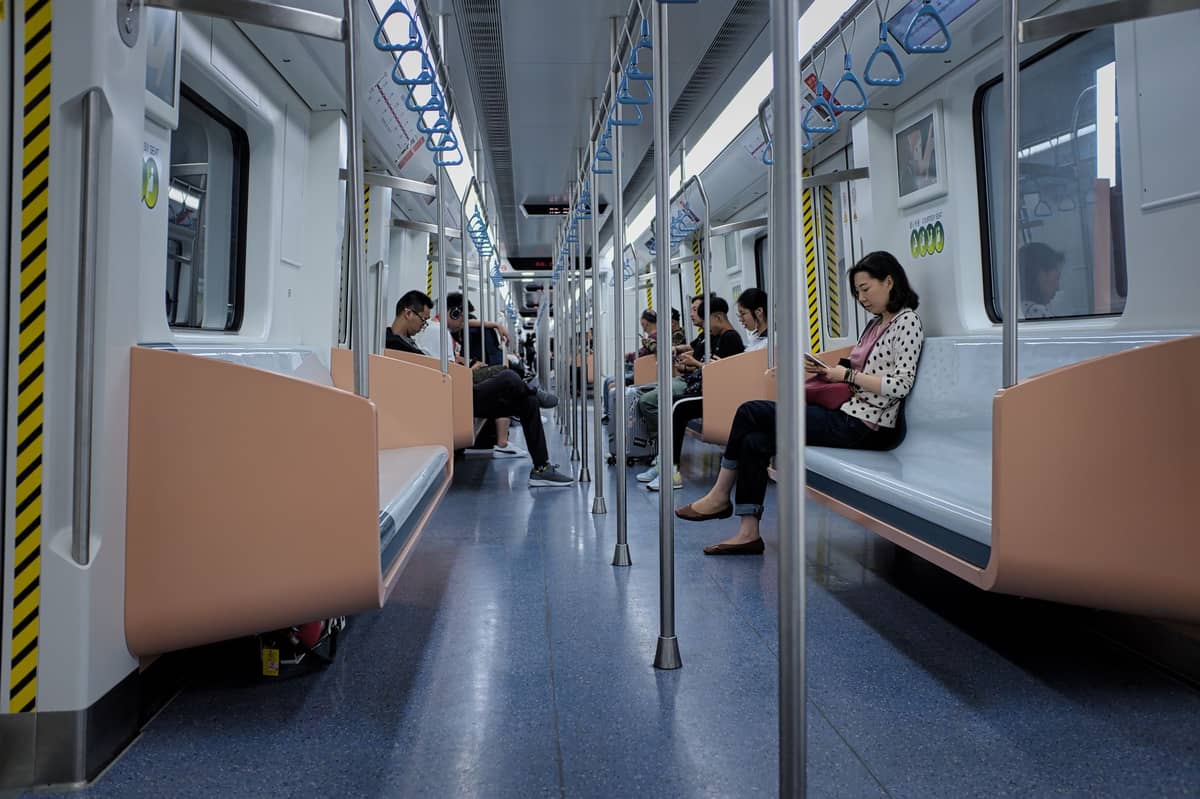
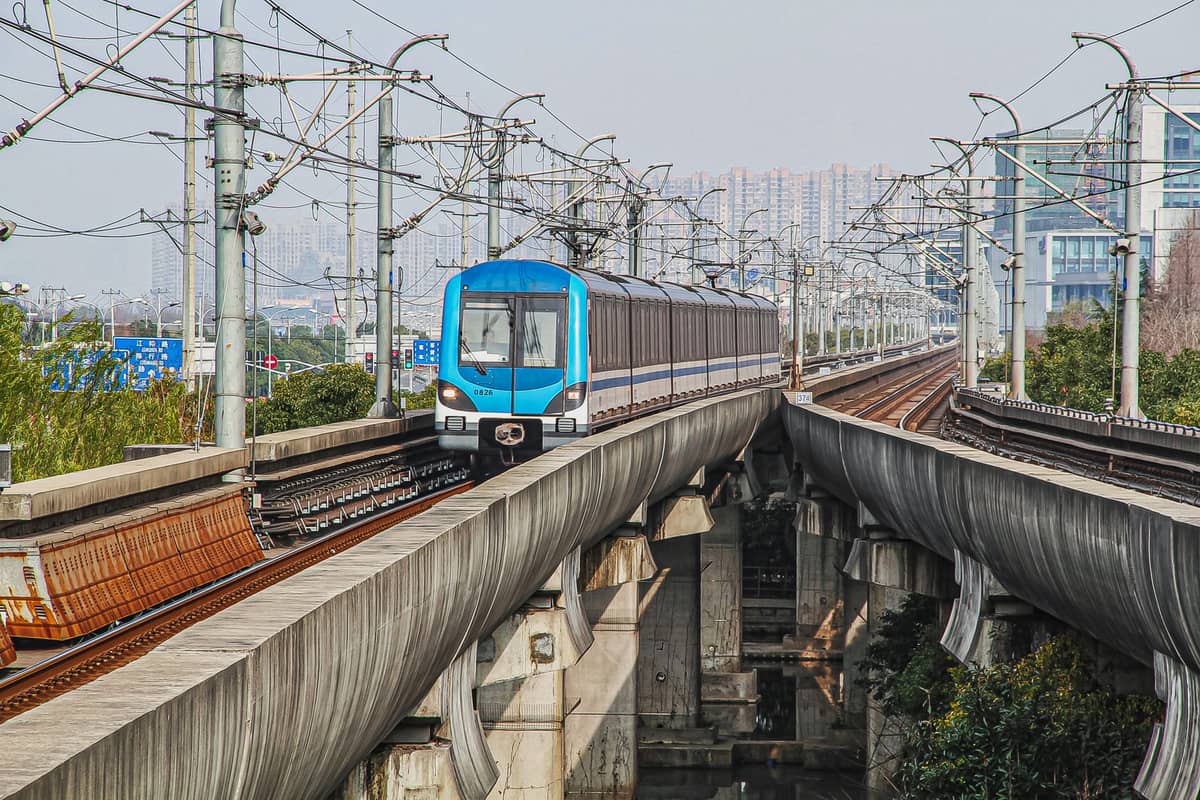
The Shanghai Metro is one of the largest rapid transit networks on the planet, with 20+ lines covering the urban core and extending into suburban districts. For most journeys within the city, it is the fastest, cheapest, and most predictable option. Stations have bilingual signage in both Chinese and English, and the system runs from roughly 05:30 to 23:00, with exact hours varying by line and terminus. Trains on central corridors run every 2-5 minutes during peak hours.
Fares use a distance-based structure. Trips up to 6 km cost ¥3, then ¥1 for every additional 10 km. A crosstown journey from, say, Jing'an Temple to Lujiazui rarely exceeds ¥5. For airport runs, expect to pay around ¥7-10 from Pudong Airport to People's Square on Line 2. You can pay with a Shanghai Public Transportation Card (rechargeable, available at station service windows), or via Alipay and WeChat Pay on the automatic fare gates at most stations. Foreign credit cards are not reliably accepted at gates, so have a backup payment method ready.
💡 Local tip
If you plan to use public transport heavily, load a Shanghai Public Transportation Card (交通卡) on arrival. It works on metro, buses, and some taxis. Tourists can also link international Visa/Mastercard to the Alipay Metro function, though setup takes a few minutes — do it before your first ride.
Key lines for visitors: Line 2 is the east-west backbone, connecting Pudong Airport through Lujiazui, People's Square, and Jing'an Temple all the way to Hongqiao Airport and railway hub. Line 1 runs north-south through the Former French Concession and down toward the South Railway Station. Line 10 serves Xintiandi and Yuyuan Garden areas. Line 11 reaches Disneyland, though it requires a transfer. Knowing these three lines covers the majority of tourist-relevant journeys.
Taxis in Shanghai: Official Tariffs and How to Avoid Problems
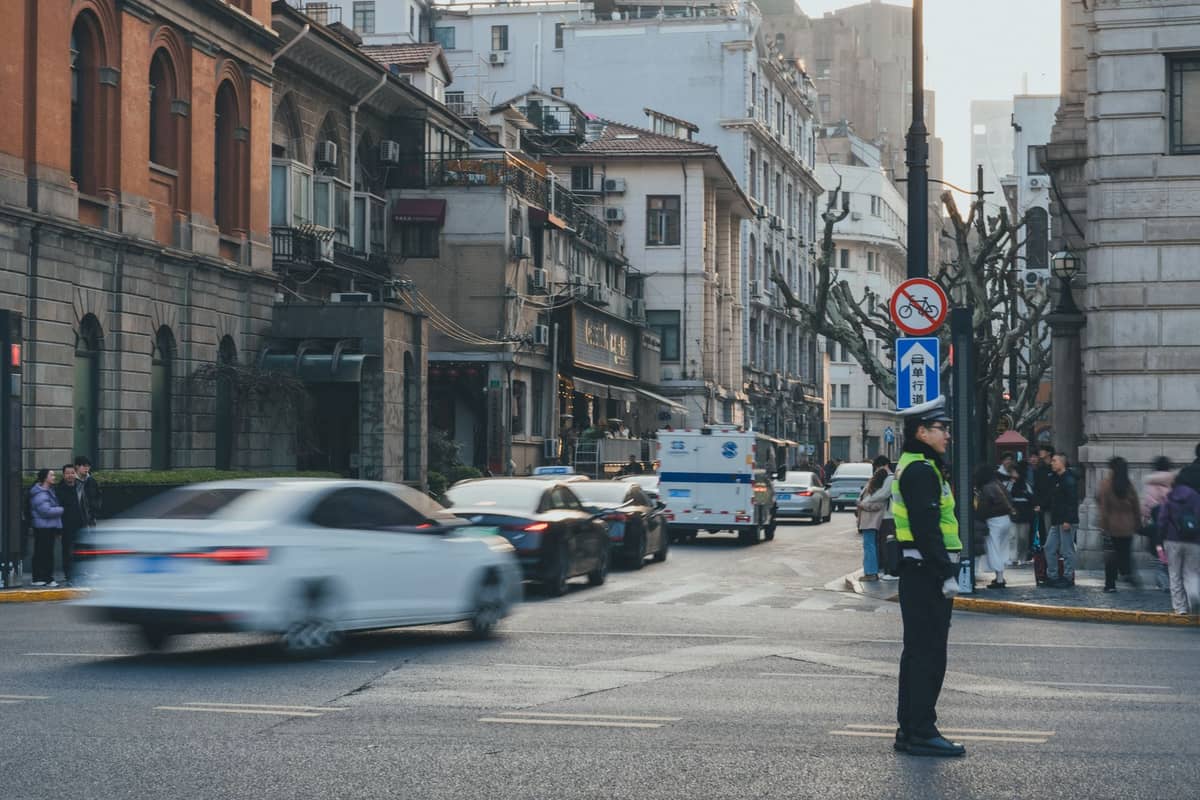
Shanghai has a regulated taxi system with published official tariffs. Standard vehicles (non-electric) charge a flagfall of ¥14 for the first 3 km, then about ¥2.70 per km beyond that. Electric and TuAn vehicles have a slightly higher flagfall of ¥16. Night pricing applies between 23:00 and 05:00, and surcharges apply, so a late-night airport run will cost noticeably more than the same trip at noon. Always use the meter — if a driver suggests a flat rate, exit and take the next cab.
Legitimate taxis in Shanghai are metered, display the driver's license and fare card visibly, and issue printed receipts. The main licensed fleets operate blue-and-white, gold, or turquoise-colored vehicles depending on the company. The queues at major hotels, attractions, and transport hubs are generally reliable. Street hails work fine in most areas, though it gets harder during rain or right after rush hour (17:30-19:30). Tipping is not expected and most drivers will not accept it.
⚠️ What to skip
Avoid unofficial taxis near both airports and at major tourist spots like Yu Garden and the Bund. These are unlicensed and charge arbitrary fares. If a driver approaches you inside the arrivals hall rather than at the official taxi rank outside, walk away. Always join the official metered taxi queue, which is clearly signed at both PVG and SHA.
- Standard taxi flagfall ¥14 for the first 3 km (non-electric), ¥16 for electric/TuAn vehicles
- Per-km rate ¥2.70/km beyond the included distance
- Night surcharge hours 23:00 to 05:00 — fares increase meaningfully; budget more for late arrivals
- Highway tolls Passenger pays tolls on top of the metered fare; common on airport routes, typically ¥15-20 extra
- Receipts Always take your receipt — it includes the vehicle registration number, useful if you leave something behind
Didi and Ride-Hailing: Convenient but Requires Preparation
Didi Chuxing is China's dominant ride-hailing platform and works well in Shanghai once your account is set up. The app is available in English. The issue for international travelers is payment: Didi requires either a Chinese bank card, WeChat Pay, or Alipay. Linking a foreign card directly is not straightforward, though Alipay now supports international card binding with some limitations. Set this up before you land rather than at midnight in arrivals.
Fares from Didi for economy-class vehicles are comparable to metered taxis for most city journeys, and the app removes the language barrier when giving directions. For airport transfers from Pudong, expect ¥150-250 depending on vehicle class and traffic. Premium options (Didi Express Plus, Premier) cost more but can be worth it for late-night runs or with heavy luggage. Surge pricing applies during rain and peak periods, so a 17:00 Friday Didi from the Bund to Pudong can be notably pricier than a taxi at the same moment.
Getting from Pudong Airport (PVG) to the City
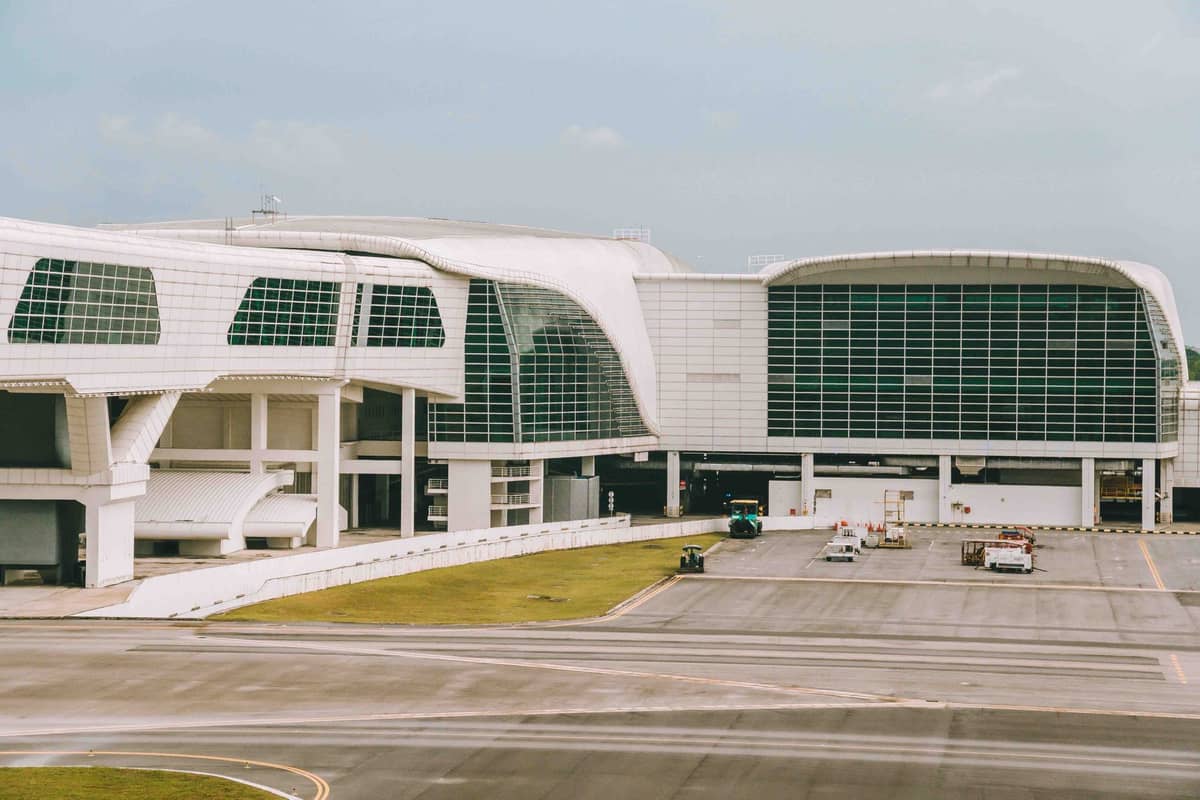
Pudong International Airport sits around 30-40 km east of central Shanghai, in Pudong New Area. It is the main gateway for long-haul international flights. You have four practical options: Metro Line 2, the Maglev train plus metro transfer, taxi, or Didi. Each suits a different situation.
- Metro Line 2 (cheapest) Runs from PVG Terminal 1 and 2 directly through Lujiazui, People's Square, and Jing'an Temple to Hongqiao. Journey to People's Square: about 60-75 minutes. Cost: approximately ¥7-10. Best for budget travelers or those staying near a Line 2 station.
- Maglev + Metro (fastest with transfer) The Maglev covers PVG to Longyang Road Station in 7-8 minutes at a regular commercial speed of 300 km/h. Fare: ¥50 standard, ¥40 with same-day boarding pass, ¥80 return. Then transfer to Line 2 metro for ¥3-5 more. Total time to central Shanghai: around 35-55 minutes. Good for those who want speed without taxi cost, and who are connecting onward quickly.
- Taxi (most convenient with luggage) Join the official metered queue outside arrivals. Journey to People's Square or the Bund: ¥160-250 typically, plus ¥15-20 highway tolls. Travel time: 45-70 minutes in normal traffic, potentially much longer during peak hours or rain.
- Didi (convenience with app setup) Similar pricing to taxis, ¥150-250+ depending on class. Pick-up from the designated ride-hailing zone at the airport, not the taxi rank. Requires working app and payment method.
- Airport buses (cheapest after metro) Multiple routes connect PVG to districts including Shanghai Railway Station, Hongqiao, and Pudong. Fares are low but journey times are long, especially in traffic. Check current routes on the official Shanghai Airport Group site before relying on this option.
✨ Pro tip
The Maglev is impressive, but it only saves meaningful time if you are staying near Longyang Road or catching a quick connection at Line 2. If your hotel is in Jing'an or the French Concession, the extra cost over Metro Line 2 buys you maybe 20-25 minutes. For most travelers, the metro alone is sufficient. Take the Maglev as an experience, not necessarily as a time-saver over the full journey.
Getting from Hongqiao Airport (SHA) and Railway Hub
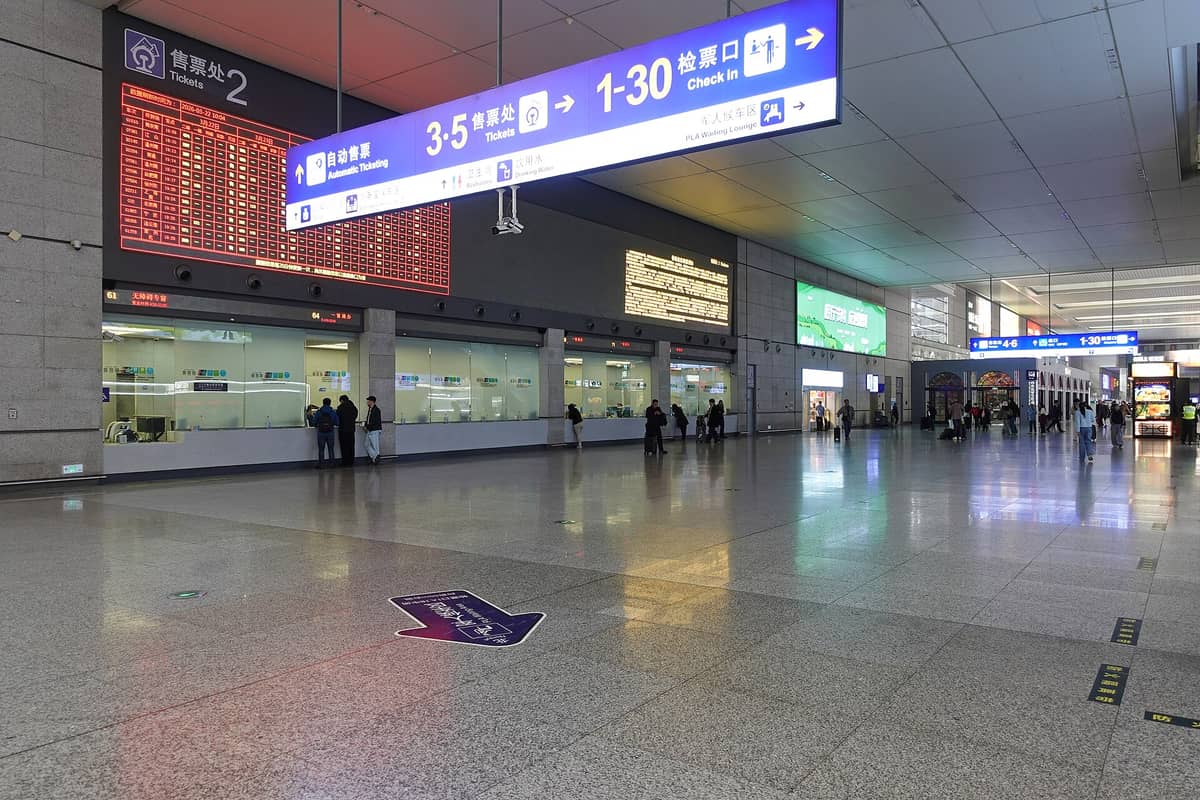
Hongqiao International Airport handles primarily domestic routes and some regional international services. It is integrated with Hongqiao Railway Station, one of China's busiest high-speed rail terminals, connecting Shanghai to Beijing, Nanjing, Hangzhou, and dozens of other cities in under four hours. If you are arriving from elsewhere in China on high-speed rail, you will likely arrive here.
Metro Line 2 and Line 10 both serve the Hongqiao transport hub. Line 2 connects directly to central Shanghai, reaching People's Square in about 40-50 minutes for roughly ¥5-6. Taxis from Hongqiao to central districts cost ¥70-120 depending on destination and traffic. The overall setup is more straightforward than Pudong, since Hongqiao is closer to the city. If you are arriving at Hongqiao and heading toward the Former French Concession or Jing'an, the metro is fast and direct.
Buses, Ferries, and Other Ways to Move Around
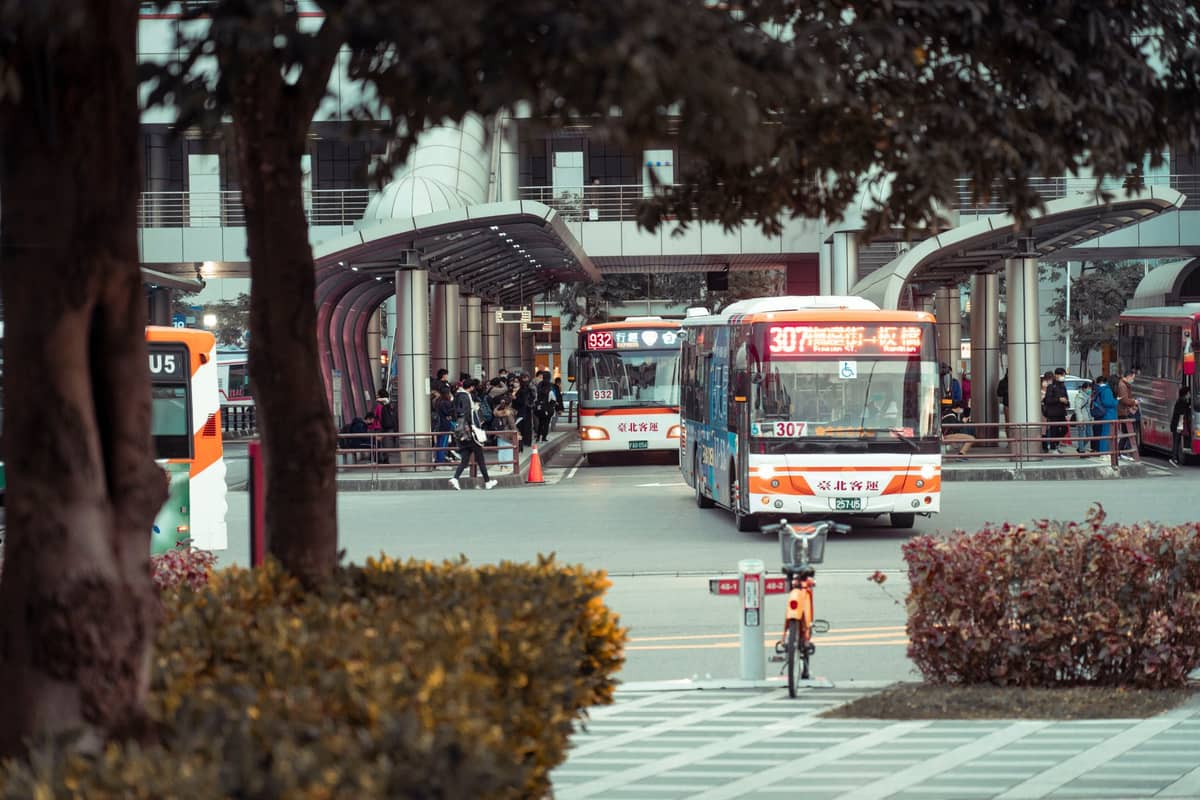
Shanghai's urban bus network is extensive, with hundreds of routes covering areas the metro does not reach. Fares are typically ¥2 flat, paid with transport card or exact change. For most visitors, buses are not the go-to option: routes require more local knowledge, there is limited English signage on individual vehicles, and traffic makes journey times unpredictable. That said, certain buses are genuinely useful for specific corridors that lack nearby metro stations.
The Huangpu River ferry crosses between Puxi (west bank) and Pudong (east bank) at several points, with a crossing near the Bund to Lujiazui. The fare is minimal and the crossing takes about 10 minutes, making it a practical and atmospheric way to get between the Bund waterfront and the Pudong financial district instead of doubling back through the metro. It is worth doing at least once. For the full river experience, a Huangpu River cruise is the evening alternative.
FAQ
How much does the Shanghai Metro cost per trip?
Shanghai Metro uses distance-based pricing. Trips up to 6 km cost ¥3. Beyond that, it is ¥1 for every additional 10 km. Most city-center journeys fall in the ¥3-6 range. The airport run from Pudong Airport to People's Square is around ¥7-10. Verify current rates with the Shanghai Metro official site before travel, as fares are updated periodically.
Is the Pudong Maglev worth taking for airport transfers?
It depends on your priorities. The Maglev covers the 30 km between Pudong Airport and Longyang Road in 7-8 minutes at a regular commercial speed of 300 km/h, which is still a distinctive ride. But it terminates at Longyang Road, not at any major hotel district. You still need a metro transfer, making total journey time roughly 35-55 minutes to central Shanghai. That is faster than Metro Line 2 alone (60-75 minutes) but costs considerably more (¥40-50 vs ¥7-10). It is worth taking for the experience; it is not automatically the smart commuter choice.
Can I use a foreign credit card to pay for transport in Shanghai?
Not reliably at metro gates. Most Shanghai Metro fare gates accept the Shanghai Public Transportation Card, WeChat Pay, and Alipay. International credit cards are not widely accepted at gates. Alipay has improved support for foreign cards linked via the app, but setup takes time. The easiest approach is to get a transport card on arrival or set up Alipay before your trip. Taxis accept cash (Chinese yuan) and some accept payment via app; always carry small bills as backup.
What is the cheapest way to get from Pudong Airport to the city center?
Metro Line 2 is the cheapest option, costing around ¥7-10 to People's Square with a journey time of 60-75 minutes. Airport buses are comparable in price but slower in traffic and less predictable. If you are traveling in a group with luggage, a taxi becomes more competitive in value even at ¥160-250, since the cost splits and you avoid hauling bags through metro transfers.
Do Shanghai taxis speak English?
Most drivers do not speak English conversationally. The practical workaround is to show your destination written in Chinese characters (hotels and major attractions will have this on their business cards or websites), or use the Didi app, which handles the destination routing digitally. Google Translate's camera function also works for quick real-time communication. Didi is genuinely easier than street taxis for non-Mandarin speakers.