Shanghai Travel Tips: Essential Advice for First-Time Visitors
Shanghai is a city of 24.8 million people, 20 metro lines, and a learning curve that catches most first-timers off guard. This guide cuts through the noise with practical, specific advice on getting around, choosing the right season, understanding the neighborhoods, and avoiding the mistakes that waste your time and money.
Plan and book this trip
Tools from our partner Travelpayouts help you compare flights and hotels. If you book through them, we may earn a commission at no extra cost to you.
Flights
Hotels map
TL;DR
- April–May and late September–November are the best months to visit: mild temperatures, lower humidity, and reduced typhoon risk compared with midsummer.
- The metro is cheap (¥3–10 for most journeys) and covers every major attraction — get a transit card from day one. See our guide to getting around Shanghai for full route and fare details.
- Tipping is not expected in local restaurants or taxis. Service charges appear in upscale hotel restaurants.
- Tap water is treated but not recommended for drinking — stick to boiled or bottled water.
- Visa rules change frequently, including 24-hour and 240-hour (10-day) transit visa-free policies. Always verify entry requirements before booking. Shanghai's internet restrictions mean you should prepare VPN access and payment methods before you arrive — see our Shanghai scams and safety tips for what to watch out for.
Essential Facts About Shanghai
Shanghai is a provincial-level municipality directly under China's central government, not a province. It comprises 16 administrative districts, covers 6,340.5 km², and had a permanent resident population of 24.8 million at the end of 2024. The city sits at the mouth of the Yangtze River delta on China's eastern coast, at approximately 31.23°N, 121.47°E. Its low-lying terrain averages about 4 metres above sea level across most of the urban core.
The official language of China is Standard Mandarin (Putonghua), used in government, education, and media. In practice, many long-term Shanghai residents speak Shanghainese, a Wu dialect that is mutually unintelligible with Mandarin. For visitors, this rarely matters: metro signage, airport announcements, and most tourist-area staff operate in Mandarin and English. English literacy is noticeably higher in Jing'an, the Former French Concession, and Lujiazui than in outer districts. Currency is the Chinese yuan (renminbi), code CNY. Shanghai runs on China Standard Time, UTC+8 — there is no daylight saving time.
- Emergency numbers Police: 110 | Fire: 119 | Medical: 120 | Traffic accidents: 122
- Country dialing code +86 (China)
- Electricity 220V, 50Hz. Plug types A, I, and C. Most hotels have multi-standard sockets.
- Tap water Treated to national standards but generally not drunk straight — boil it or use bottled water.
- Tipping Not traditional in local restaurants or taxis. Upscale international hotels may add a service charge.
⚠️ What to skip
Internet access in China is restricted. Google, WhatsApp, Instagram, Gmail, and most Western social platforms are blocked. Download a VPN before you arrive — installing one after you land is significantly harder. Also set up offline maps (Maps.me or Apple Maps offline), and link a payment method to WeChat Pay or Alipay, since cash and foreign cards are accepted in fewer places than you might expect.
When to Visit Shanghai: Seasons and Crowd Patterns
Shanghai has a humid subtropical climate (Köppen Cfa) with four distinct seasons, and the difference between them matters more than in many cities. For a detailed month-by-month breakdown, see our guide to the best time to visit Shanghai.
Spring (March–May) brings daily means climbing from around 10°C in March to 20°C by May, with cherry blossoms and warm afternoon light. It is widely regarded as one of the two best windows to visit. The catch: March is still damp and unpredictable, so late April through May is the sweet spot. Autumn (September–November) is the other peak period. October is the single most comfortable month: daily temperatures run 18–25°C, humidity drops sharply from the summer peak, and the city looks its best. The first week of October (Golden Week national holiday) brings enormous domestic crowds and higher hotel rates — plan around it or book early.
Summer (June–August) is genuinely difficult for pedestrian-heavy sightseeing. The plum rain season (meiyu) typically runs through June into early July, bringing concentrated rainfall. August adds typhoon risk, occasional flooding, and temperatures that regularly exceed 32°C with high humidity. Visiting in summer is manageable if you structure mornings outdoors and afternoons in museums or air-conditioned spaces, but it is not the optimal experience. Winter (December–February) means daily means of 4–7°C, frequent rain or drizzle, and January cold snaps. The city does not shut down, and hotel rates are lower, but sustained walking itineraries require real preparation for damp, grey conditions.
💡 Local tip
If visiting in autumn, aim for mid-October onward to clear the Golden Week holiday rush. Hotel rates drop noticeably after the first week of October, and popular spots like the Bund and Yu Garden become significantly easier to navigate.
Getting to Shanghai and Around the City
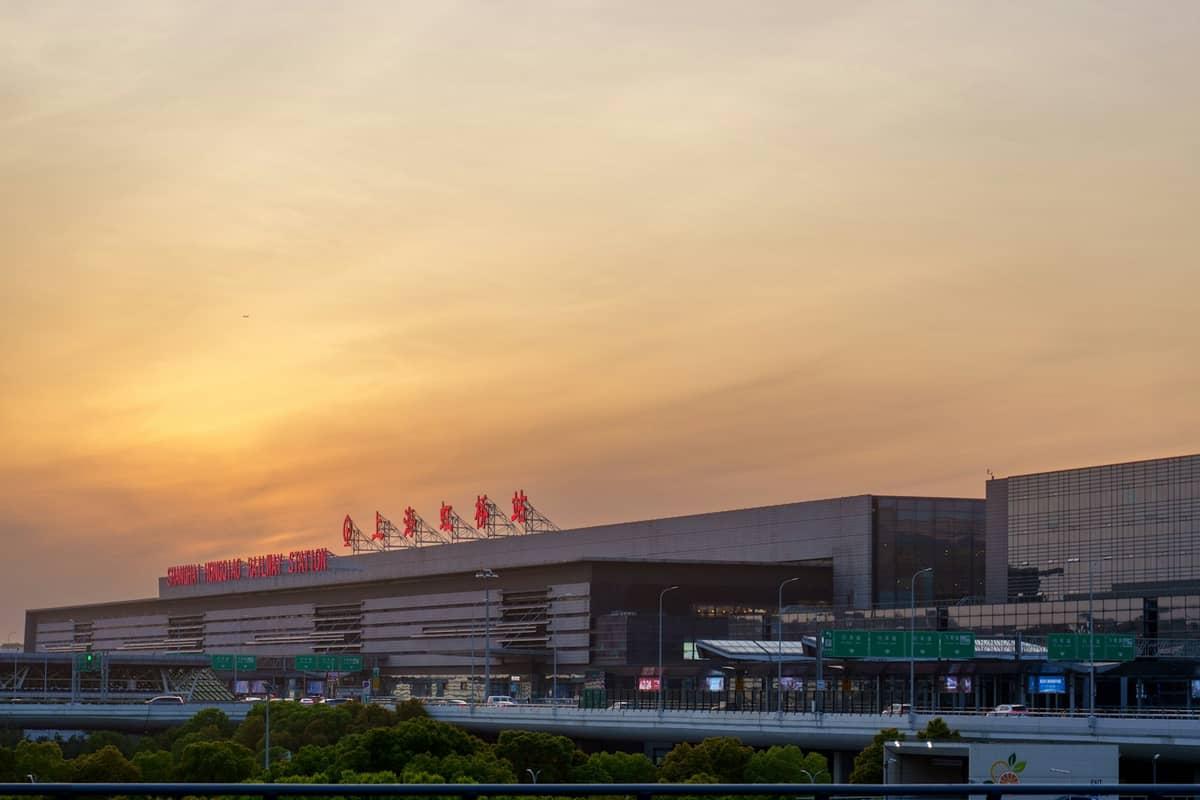
Shanghai has two airports. Pudong International Airport (PVG) handles most long-haul international flights and sits roughly 35–45 km east of central districts like People's Square, depending on your destination. Hongqiao International Airport (SHA) is the main domestic hub and handles some regional international routes; it integrates directly with Hongqiao Railway Station, making it convenient if you are connecting onward by high-speed rail.
From Pudong Airport, you have three realistic options. Metro Line 2 runs from PVG through Longyang Road, Lujiazui, People's Square, and Jing'an Temple in around 60–75 minutes for approximately ¥7–10. It is slow but cheap and deposits you directly at major central stations. The Maglev train covers PVG to Longyang Road in 7–8 minutes (standard fare ¥50, discounted to ¥40 with a same-day boarding pass), where you transfer to Line 2 for the rest of the journey — total door-to-door time roughly 35–55 minutes into central areas. A dedicated Airport Link Line also connects PVG and Hongqiao Airport directly across 7 stations in around 40 minutes for a flat ¥26 fare. Taxis and Didi rides from PVG to central Shanghai typically run ¥150–250 depending on traffic, time of day, and tolls of around ¥15–20.
- Metro Line 2 (PVG to centre) 60–75 minutes | ¥7–10 | Best for budget travellers with manageable luggage
- Maglev + Metro Line 2 35–55 minutes | ¥50–55 total | Best if you want speed at a moderate cost
- Airport Link Line (PVG to SHA) Under 40 minutes | ¥26 flat | Best for connecting to Hongqiao rail or that airport
- Taxi or Didi from PVG 45–70 minutes | ¥150–250 + tolls | Best with heavy bags or travelling in a group
Once in the city, the Shanghai Metro is how most visitors get around. It is one of the world's largest rapid transit systems, with distance-based fares starting at ¥3 for trips under 6 km and capping around ¥15 for long outer-district journeys. Most tourist routes across central Shanghai cost ¥3–7. Get a Shanghai Public Transportation Card (available at airports and major metro stations) or use Alipay/WeChat Pay at the gates. For a full breakdown of routes and transfers, the getting around Shanghai guide covers everything including bus and ferry options.
✨ Pro tip
Didi Chuxing is Shanghai's dominant ride-hailing app and works similarly to Uber. Setting it up requires a Chinese phone number and a linked payment method (Alipay or WeChat Pay). Do this before you need it — the airport taxi queue can be long, and having Didi as a backup is valuable, especially late at night or in rain.
Shanghai's Key Neighborhoods: Where to Focus Your Time
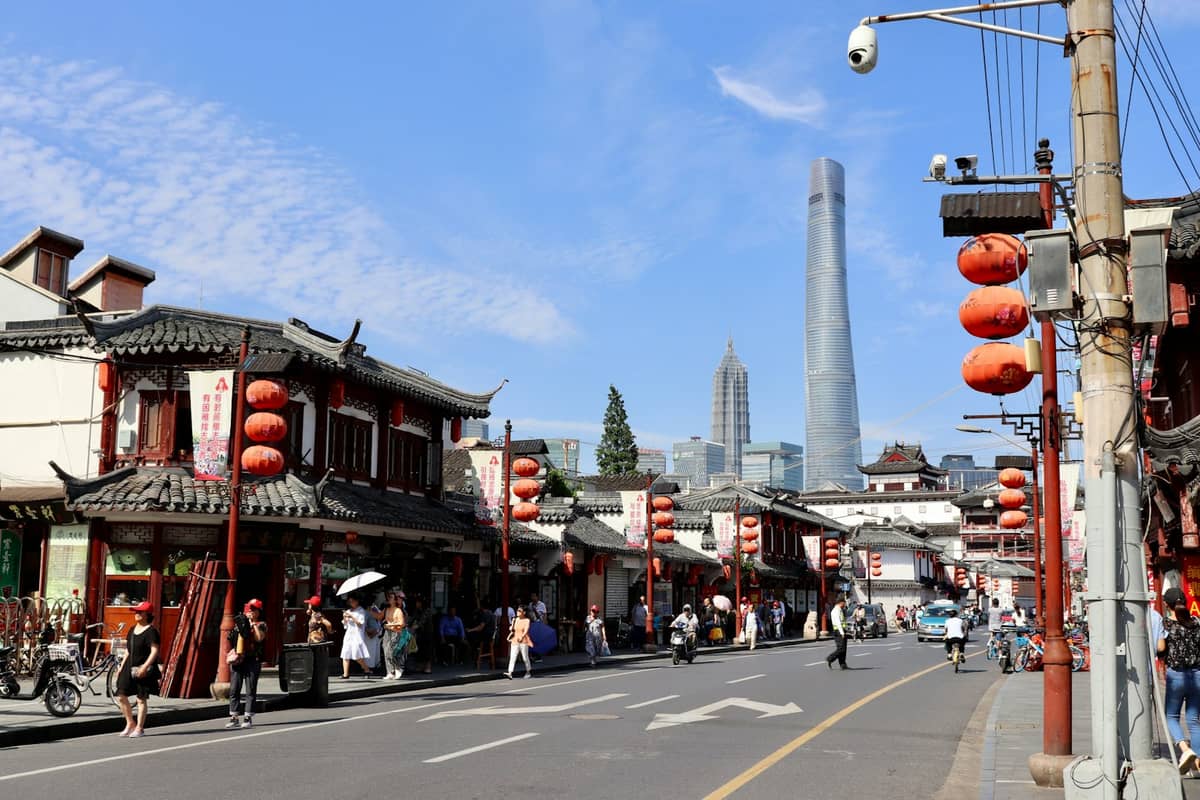
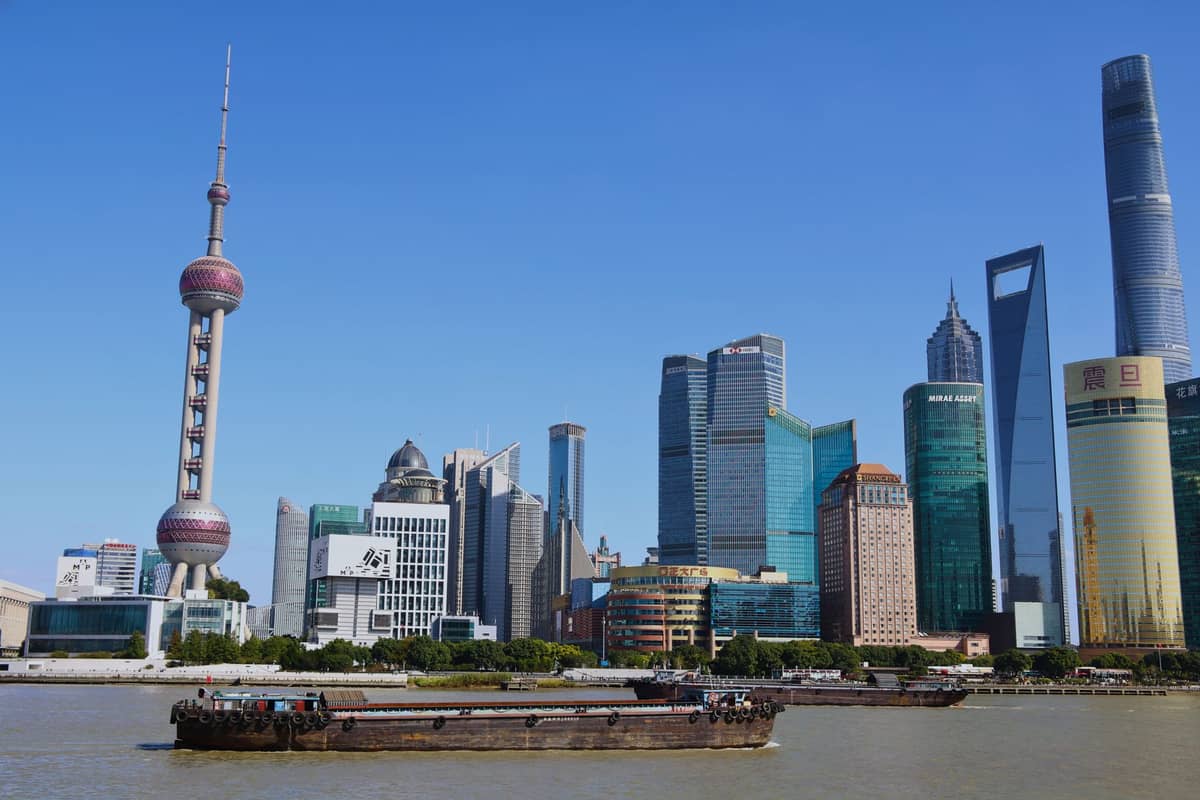
Shanghai's 16 administrative districts contain dramatically different atmospheres. Most first-time visitors spend the bulk of their time in five zones: the Bund and Huangpu District, Pudong's Lujiazui, Jing'an, the Former French Concession, and the Old Town. The the Bund and its riverfront promenade anchor the historical and photographic highlight of any visit — the 1920s and 1930s colonial-era buildings on the west bank face Pudong's skyscraper skyline across the Huangpu River. It is most atmospheric at dusk and in the early morning before tour groups arrive.
Pudong is where the Shanghai Tower (632 metres, China's tallest building), the Jin Mao Tower, and the Oriental Pearl Tower are located. It reads as ultramodern and somewhat corporate — impressive for its architecture and views but lacking the street-level texture of Puxi (the west bank). The Former French Concession is the opposite: tree-lined avenues, art deco apartment blocks, independent restaurants, and cafes that reward slow walking. Jing'an blends shopping along Nanjing West Road with the quieter lanes behind the Jing'an Temple. The Old Town (Nanshi), centred on Yu Garden, is the most tourist-dense area — the bazaar around it can feel overwhelming, but the garden itself and the nearby City God Temple have genuine historical weight.
For travellers with more time, the West Bund in Xuhui has become Shanghai's contemporary art district, with the Long Museum, Power Station of Art, and several galleries along the riverside. It is quieter than central Shanghai and gives a more accurate picture of where the city's cultural energy currently sits. If you have a free afternoon, the Suzhou Creek area north of the Bund and the M50 Creative Park offer a similar shift in register.
Visas, Entry, and Practical Formalities
Most foreign nationals require a visa issued by a Chinese consulate before arrival. However, Shanghai participates in China's transit visa-free policies, which allow eligible passport holders to stay under visa-free transit for periods such as 24 hours at open ports and up to 240 hours (10 days) under the updated long-stay scheme, provided they arrive and depart from specified ports in the Yangtze River Delta region and remain within the permitted geographic area. The 240-hour option is the most useful for travellers connecting through Shanghai on longer itineraries. Eligible nationalities and exact conditions are updated by China's National Immigration Administration and change without much notice — treat any published list as a starting point and verify directly with official sources before booking.
⚠️ What to skip
Visa and entry rules for China are among the most frequently updated travel requirements of any major destination. Always check the National Immigration Administration website (en.nia.gov.cn) and your country's Chinese consulate within 4–6 weeks of travel. Rules around transit visa-free stays, permitted areas, and eligible nationalities can shift with little public notice.
Money, Payments, and Common First-Timer Mistakes
China runs heavily on mobile payments. WeChat Pay and Alipay handle the majority of transactions across restaurants, shops, street food stalls, and transport. Foreign visitors can now link international cards (Visa, Mastercard) to Alipay's international version or use WeChat Pay's foreign card feature — set this up before you arrive rather than on-the-ground. Cash (Chinese yuan) is still accepted broadly but increasingly less so in younger, trendier areas. ATMs that accept foreign cards exist at airports, major banks (ICBC, Bank of China), and international hotels, but network availability in outer districts is uneven.
First-timers consistently make a handful of the same avoidable errors. One of the most common: assuming a taxi from Pudong Airport is cheaper and faster than the metro. It rarely is. In normal traffic the taxi saves you comfort but not necessarily time, and costs 15–30 times more. Another frequent mistake is over-scheduling. Shanghai's major districts each warrant half a day to a full day of unhurried exploration — trying to see the Bund, Yu Garden, Pudong, and the French Concession in a single day produces a rushed itinerary and misses the texture that makes the city interesting. For a realistic pace, the 3-day Shanghai itinerary offers a practical starting structure.
- Do not skip the metro in favour of taxis for airport transfers — it is cheaper, often comparably fast, and runs reliably.
- Download offline maps before you arrive. Google Maps works inconsistently in China; Apple Maps offline or Baidu Maps work better.
- Shanghai is not uniformly smoggy — the bigger seasonal issue for most visitors is heat and humidity in summer, not air quality.
- Shanghainese and Mandarin are different languages. A phrasebook of Mandarin basics will be understood everywhere; Shanghainese will not help you in Pudong or tourist areas.
- Many museums in Shanghai offer free entry or reduced rates on specific days — check attraction websites before buying tickets. Several top museums are free year-round.
For budget-focused visitors, Shanghai is more affordable than its reputation suggests if you eat where locals eat and use the metro exclusively. Street-level noodle shops and dumplings cost ¥15–35 per person. The metro keeps most tourist journeys under ¥10. Many of the city's best experiences are free: the Bund promenade, the French Concession's streets, the riverside parks. See the free things to do in Shanghai guide and the Shanghai on a budget guide for a fuller breakdown.
FAQ
Do I need a visa to visit Shanghai?
Most foreign nationals need a Chinese visa obtained before arrival. However, Shanghai participates in China's updated long-stay visa-free transit policy, which allows eligible passport holders to enter without a visa for up to 240 hours (10 days) if arriving and departing through specified Yangtze River Delta ports and staying within the permitted area, alongside a separate 24-hour transit visa-free option for same-day onward travel. Eligible nationalities and conditions change frequently — verify with the National Immigration Administration (en.nia.gov.cn) and your local Chinese consulate before travel.
What is the best time of year to visit Shanghai?
April to May and October to November are the two most comfortable windows. Autumn — especially mid-to-late October — offers the best combination of mild temperatures (18–25°C), low humidity, and clear skies. Avoid Golden Week (first week of October) if possible due to domestic crowds and elevated hotel prices. Summer brings intense heat, humidity, and typhoon risk. Winter is cold and damp but cheaper.
How do I get from Pudong Airport to central Shanghai?
Metro Line 2 is the cheapest option: around ¥7–10 and 60–75 minutes to People's Square or Jing'an Temple. The Maglev to Longyang Road (7–8 minutes, ¥40–50 with boarding pass discount) connects to Line 2 for a faster but more expensive combined journey of around 35–55 minutes total. Taxis and Didi rides cost ¥150–250 depending on traffic plus highway tolls, and are best for groups with heavy luggage.
Can I use my phone and apps normally in Shanghai?
No. Google, WhatsApp, Instagram, Facebook, and most Western platforms are blocked in China. Download a VPN before you arrive, as installing one after landing is significantly harder. Set up WeChat and Alipay (with linked foreign payment cards) before your trip for payments and messaging. Apple Maps offline downloads work in China; Google Maps does not function reliably.
Is it safe to drink tap water in Shanghai?
Shanghai's tap water is treated to national standards, but drinking it unboiled is generally not recommended. Most residents boil tap water or use bottled and filtered water. Hotels typically provide bottled water or electric kettles. Bottled water is widely available and inexpensive throughout the city.