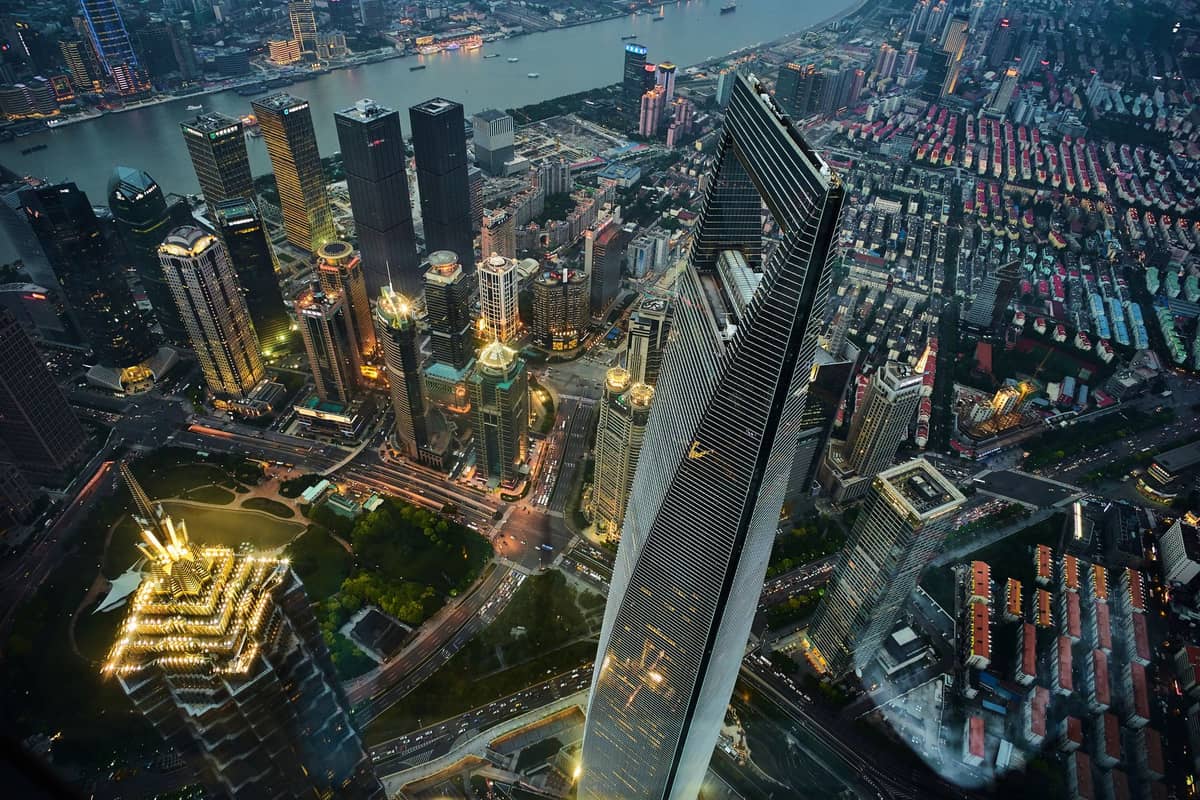
Pudong New Area is Shanghai's most dramatic quarter, a district that transformed from farmland to global financial powerhouse in just three decades. Home to the city's most recognizable skyline, major museums, and Pudong International Airport, it rewards visitors who look beyond the towers.
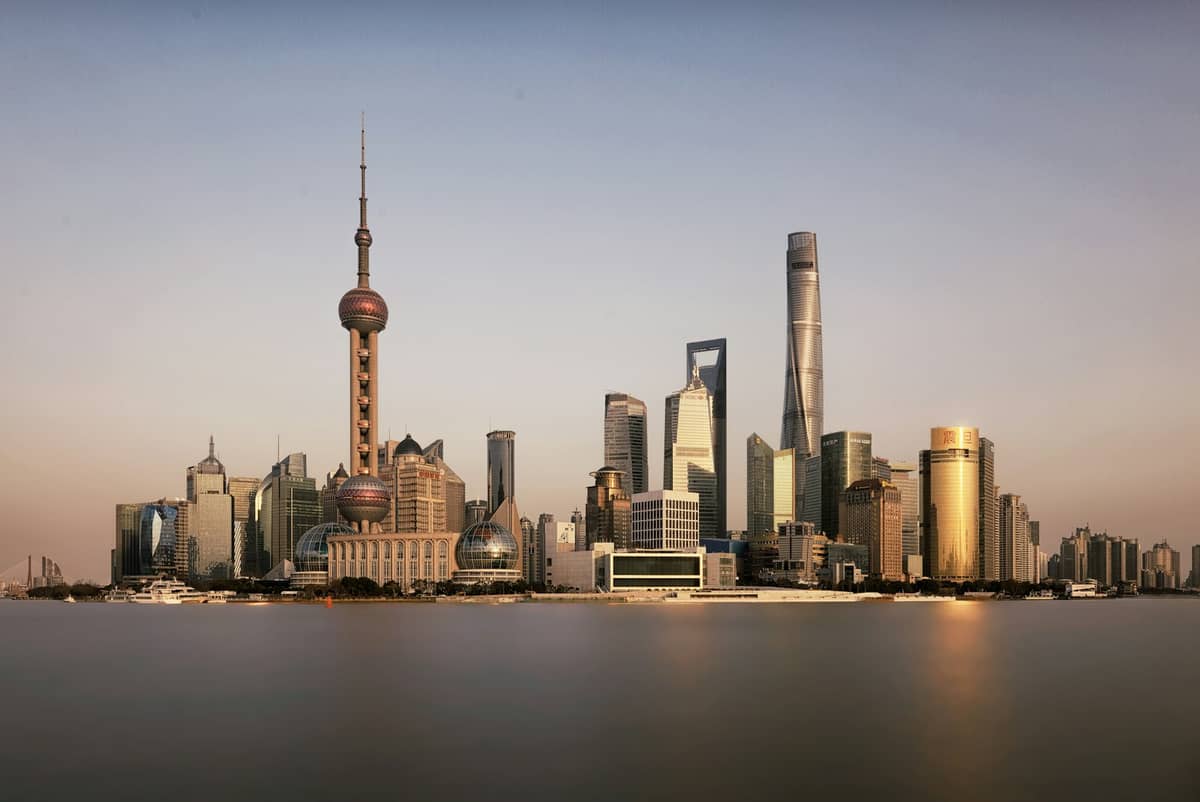
Pudong New Area sits east of the Huangpu River and contains the most photogenic skyline in China: three record-breaking skyscrapers, the Oriental Pearl Tower, and a waterfront promenade that faces the historic Bund across the water. It is a district built at speed with a specific purpose, and that purposefulness shapes every visit.
Orientation
Pudong New Area occupies the entire eastern bank of the Huangpu River, stretching from the riverfront westward edge all the way to the East China Sea coastline roughly 50 kilometers away. The district covers approximately 1,210 square kilometers, which makes it considerably larger than many cities. For visitors, the relevant portion is a much smaller wedge concentrated along the western riverfront and the corridors extending inland along Century Avenue.
The western boundary is the Huangpu River itself, which separates Pudong from the historic districts of Huangpu (home to the Bund and People's Square) and Hongkou to the north. The Lujiazui financial district sits at the tip of the bend in the river, directly opposite the Bund, making it the most visually connected point between old and new Shanghai. From Lujiazui, Century Avenue (Shiji Dadao) runs southeast like a spine, anchoring the Century Park area and the secondary business clusters around Zhangjiang Hi-Tech Park further east.
Pudong International Airport (PVG) sits at the far eastern edge of the district, about 30 to 35 kilometers from Lujiazui. Travelers arriving there are technically already in Pudong, though the airport bears little resemblance to the urban core. The district also incorporates Shanghai's largest green space, Century Park, and a growing cultural and museum corridor along the West Bund-adjacent waterfront. Understanding that 'Pudong' covers both the gleaming towers and vast stretches of suburban and industrial land helps set realistic expectations.
Character and Atmosphere
Pudong is the product of a single political decision made in 1990, when the Chinese government designated Pudong as a key reform and opening-up development area and authorized large-scale construction. Within three decades, what had been farmland, fishing villages, and light industry became the most concentrated cluster of supertall skyscrapers in the world. The district wears that origin visibly: the streets are wide and deliberately planned, the towers are grouped rather than dispersed, and the infrastructure has a designed quality that contrasts sharply with the organic, compressed lanes of Puxi to the west.
At dawn, Lujiazui is almost eerily quiet. The morning light catches the upper floors of the Shanghai Tower and the World Financial Center while the streets below are still empty of the financial workers who fill them by nine. A handful of older residents practice tai chi on the riverside promenade, and the tour boats have not yet departed. This window before eight in the morning is arguably the best time to photograph the skyline from the waterfront path, with softer light and no crowds competing for space.
By midday, the area transforms. Century Avenue becomes a river of office workers during lunch, the underground mall at Lujiazui fills with people, and the observation decks of the major towers develop queues. The afternoon heat in summer can be punishing on the open promenade, which offers little shade. From around five in the evening, the financial workers begin to clear out, and the Lujiazui Skywalk and riverside path shift toward tourists and leisure visitors as the towers light up progressively after dark.
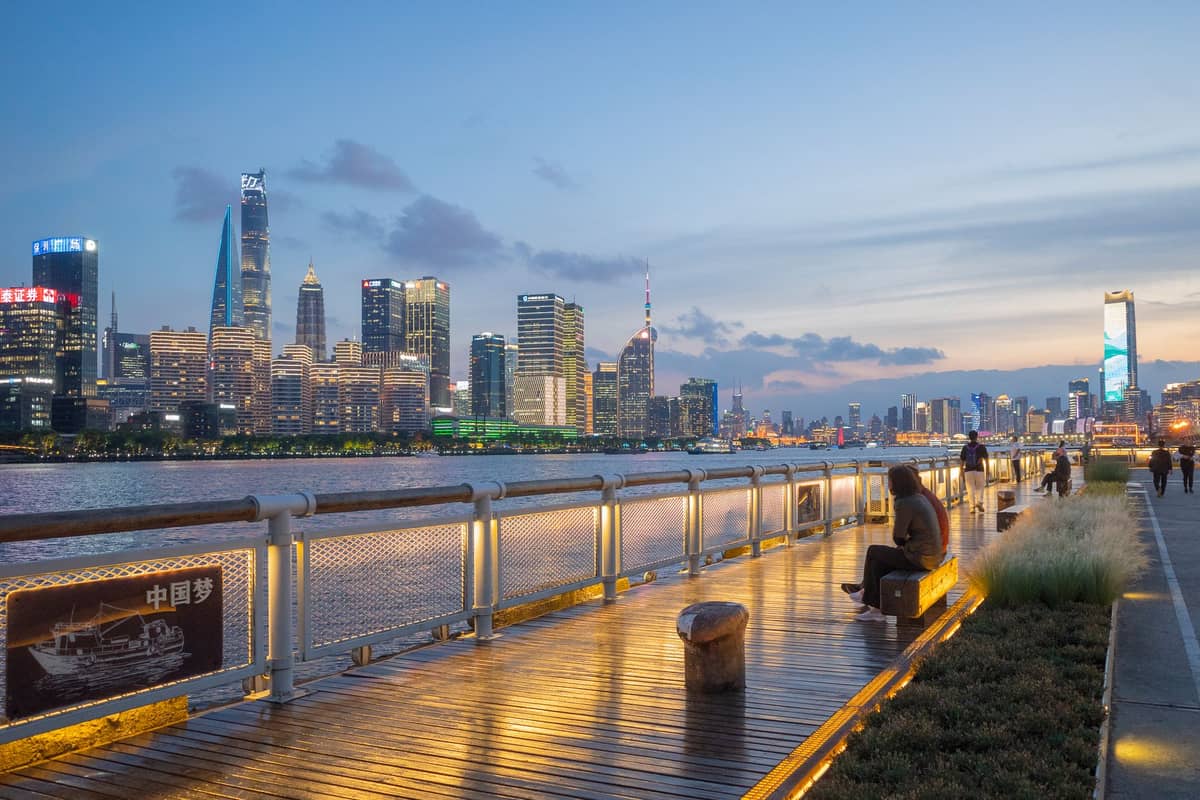
After nine at night, the skyline is at its most spectacular. The towers are fully illuminated, and the view back across the river toward the Bund becomes the image most people associate with modern Shanghai. The atmosphere is tourist-heavy in this zone but not unpleasant. Away from Lujiazui, the residential neighborhoods further inland along Line 6 have a quieter, more local character, with street-food vendors, small supermarkets, and morning markets that feel nothing like the financial showcase at the district's western tip.
💡 Local tip
For the classic Pudong skyline shot, position yourself on the Bund (Puxi side) rather than in Pudong itself. From the Lujiazui waterfront promenade you get the Bund's colonial facades as your backdrop, which is a different but equally compelling composition.
What to See and Do
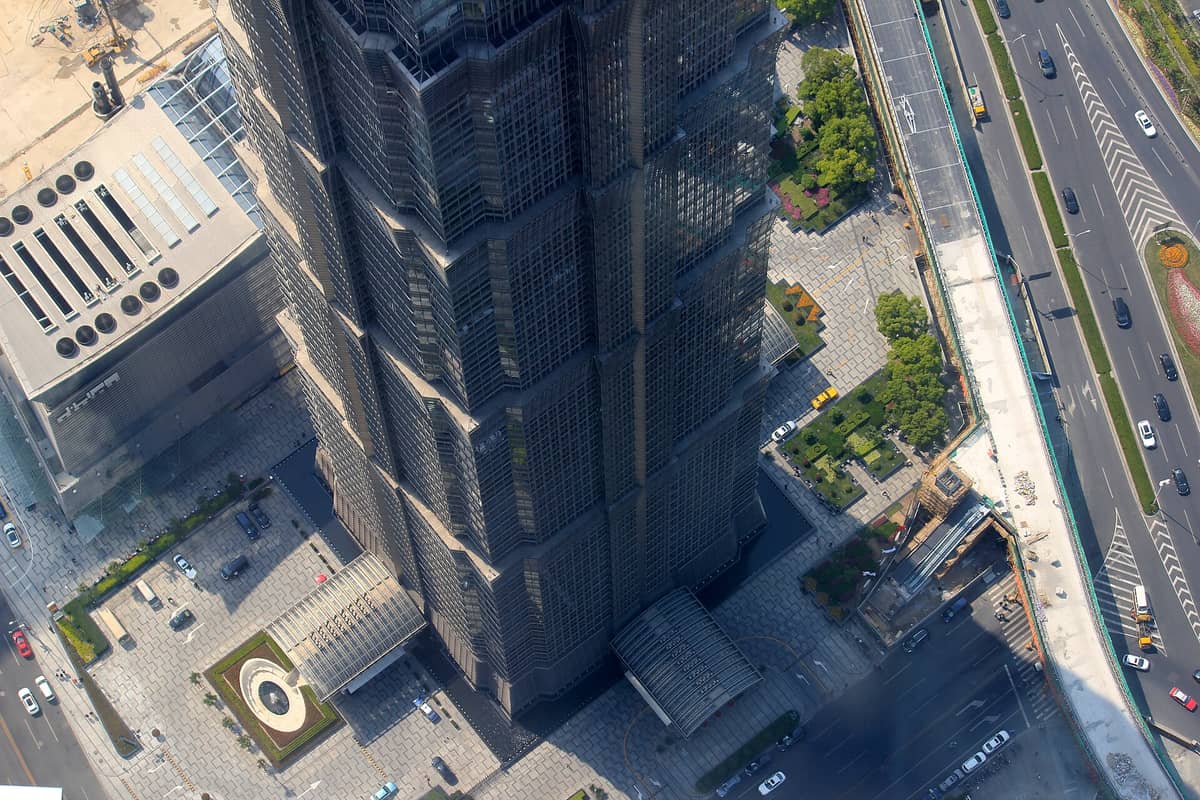
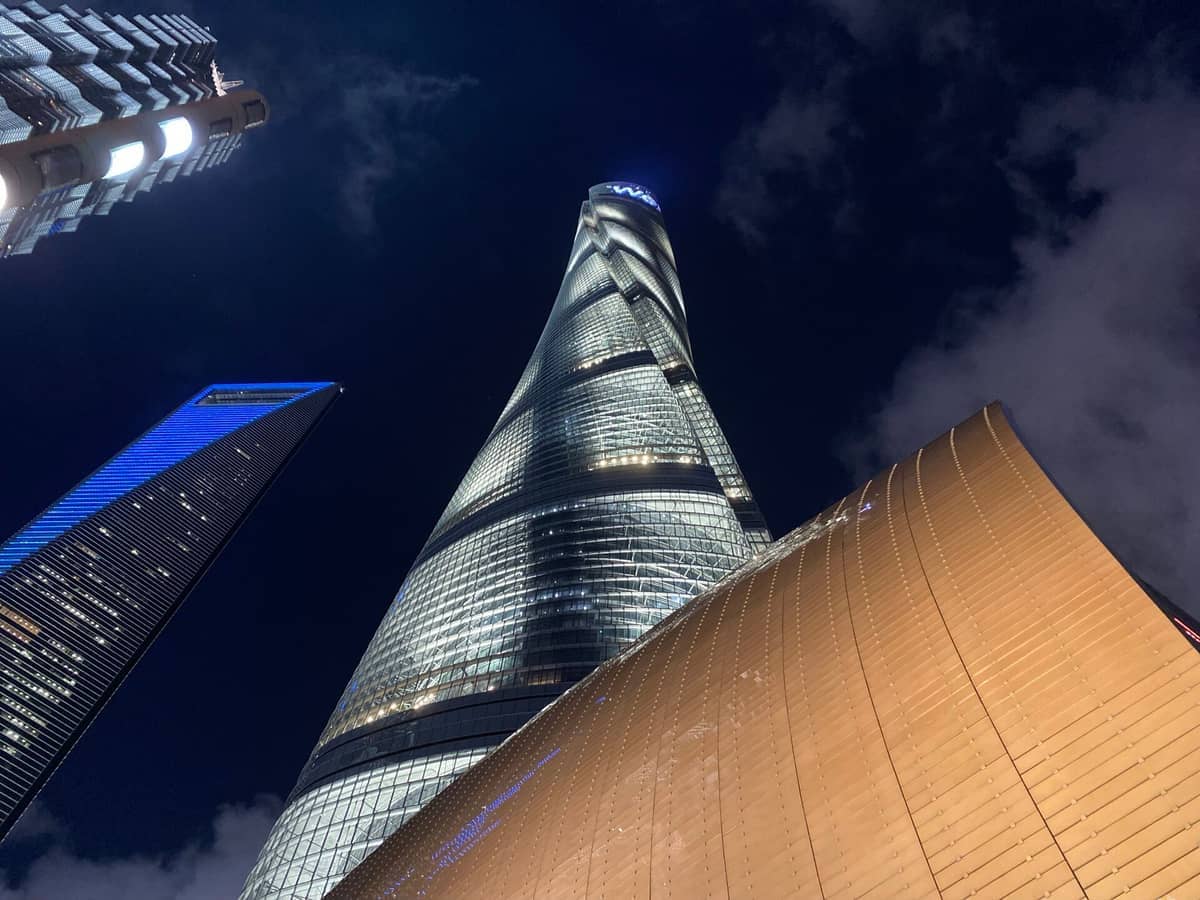
The obvious draw is the skyscraper cluster, and it genuinely delivers. Three towers form the core: the Shanghai Tower at 632 meters (China's tallest building as of the mid‑2020s), the Shanghai World Financial Center with its distinctive rectangular aperture at the top, and Jin Mao Tower with its pagoda-like stepped silhouette. All three offer observation decks, and the choice between them matters more than most guides acknowledge.
Shanghai Tower's observation deck on the 118th floor is the highest enclosed public observation deck in the world and sits inside a double-skin glass facade that creates a striking visual effect when looking down
The Shanghai World Financial Center's 'Skywalk' on the 100th floor features glass floor panels and the aperture opening that frames sky views
Jin Mao Tower offers slightly lower views but a dramatic atrium that drops 152 meters through the interior of the Grand Hyatt hotel — worth a visit even without going to the top
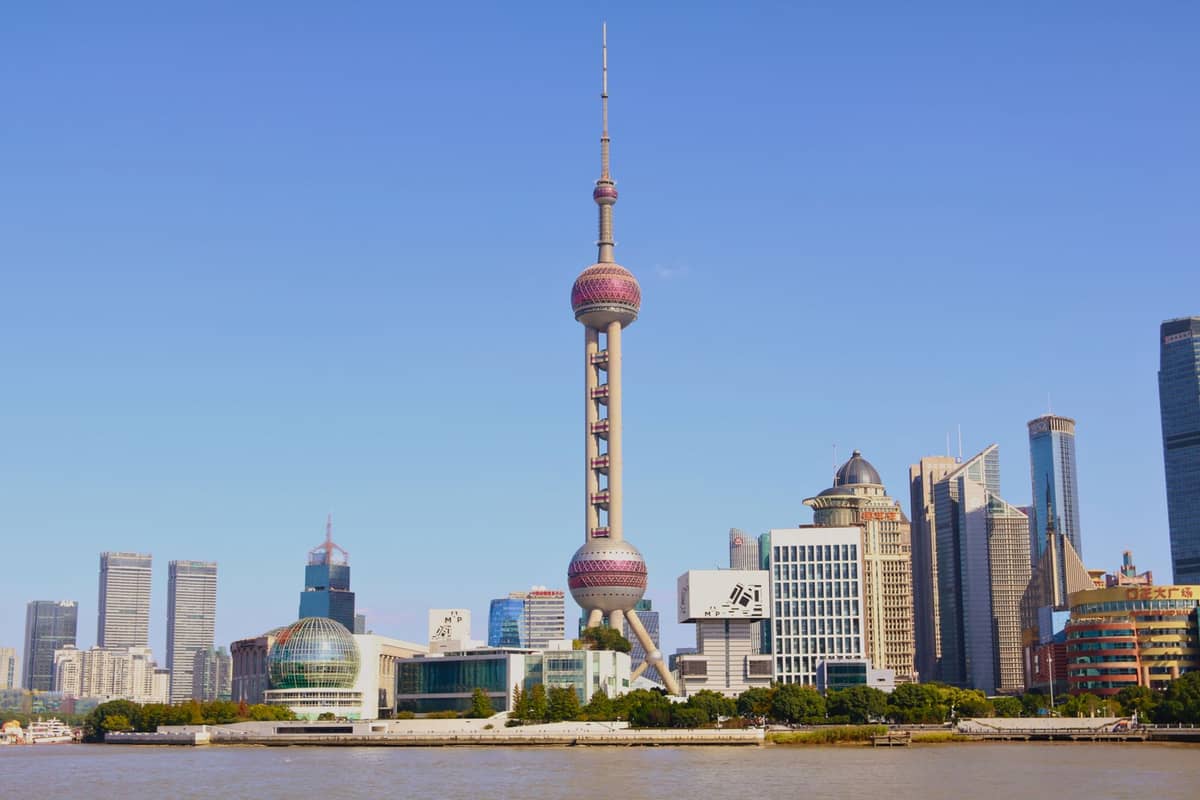
The Oriental Pearl Tower is the district's most recognizable shape, with its pink spheres and broadcast antenna visible from almost everywhere in central Shanghai. It is older than the three supertall towers and houses the Shanghai History Museum in its base, which is genuinely worth an hour and provides useful historical context for the whole city. The tower itself remains popular with domestic visitors, though international travelers often prefer the newer observation decks.
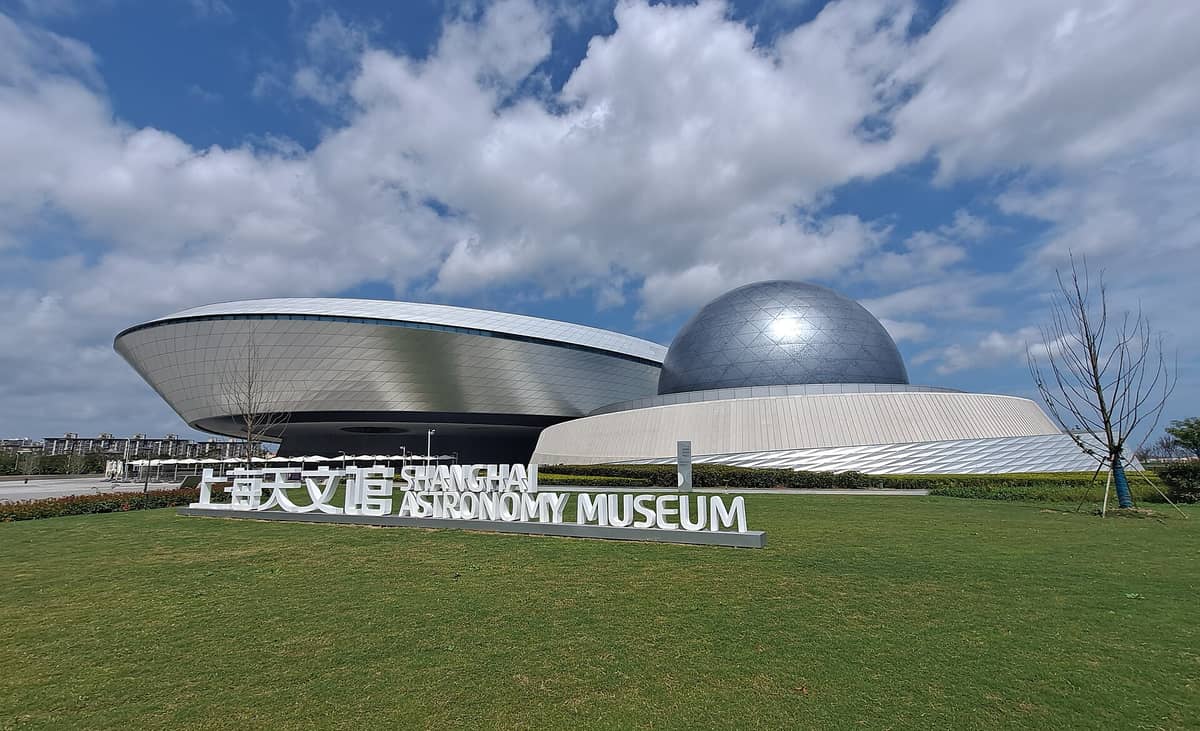
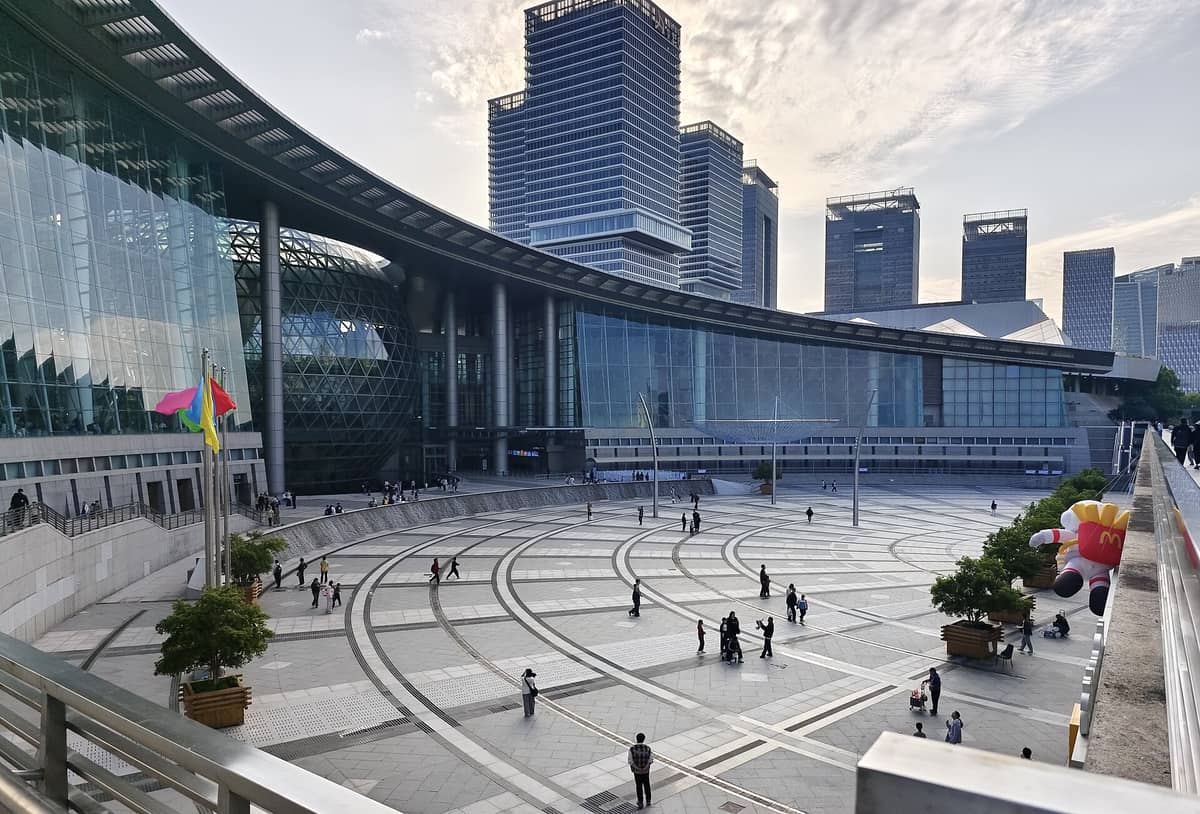
Beyond the towers, Pudong holds several institutions that belong on a serious Shanghai itinerary. The Shanghai Planetarium and the Shanghai Science and Technology Museum are both located along Century Avenue near the Science and Technology Museum metro station, and both are considerably better than their generic names suggest. The Planetarium in particular is architecturally striking and well-curated.
The Lujiazui Riverside Promenade is a free-access walkway along the western edge of Pudong offering unobstructed views of the Bund. It runs from near Dongchang Road ferry terminal northward around the Lujiazui peninsula. This is where the famous reverse-view photographs of the Bund are taken. The promenade connects to the Lujiazui Skywalk, an elevated pedestrian loop that circles the skyscraper cluster at second-floor level, passing over Lujiazui Ring Road and offering close-up perspectives on the towers' lower sections.
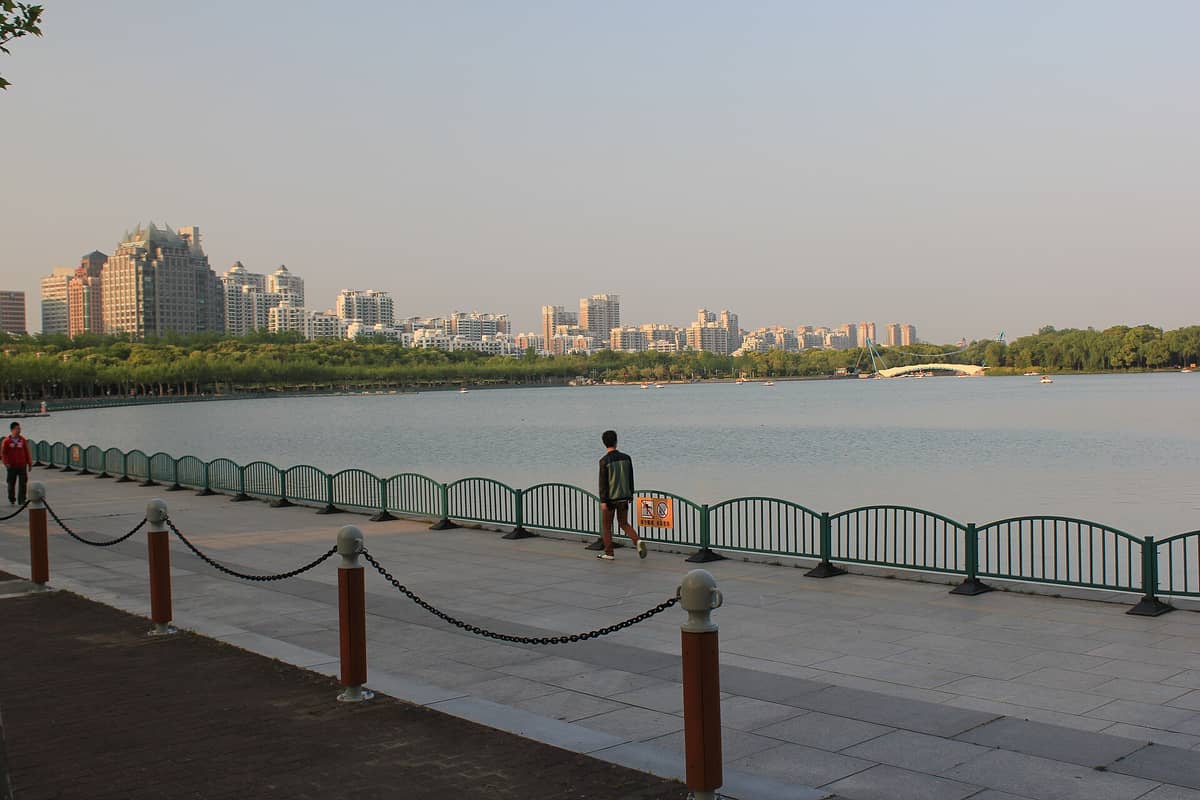
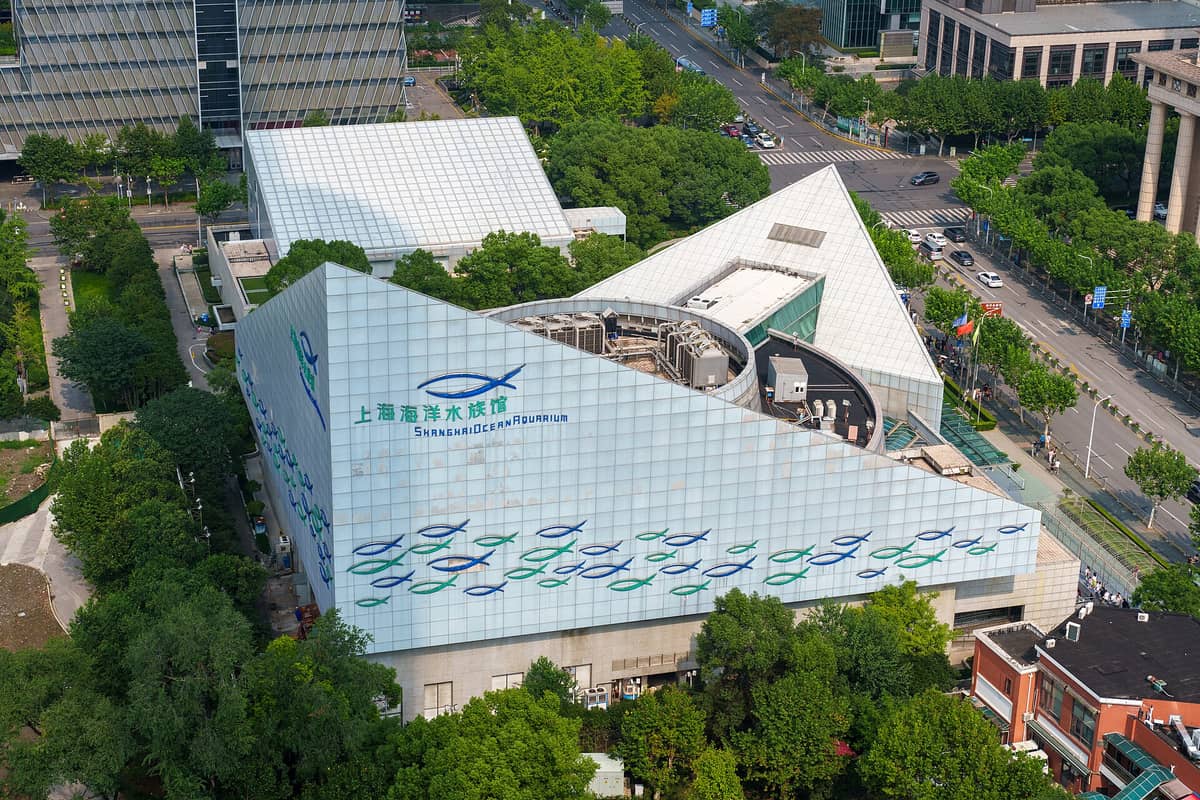
For visitors with more time, the Shanghai Ocean Aquarium adjacent to the Oriental Pearl Tower draws families and is considered one of the better aquariums in mainland China. Century Park, at the far southeastern end of Century Avenue, provides a rare large-scale green space in this part of the city, popular with picnickers and runners at weekends.
ℹ️ Good to know
Ticket prices and opening hours for observation decks and museums change regularly. Check official attraction websites before your visit, especially during national holidays when timed-entry systems and advance booking are often required.
Eating and Drinking
Pudong's food scene divides sharply between the tourist-oriented dining around Lujiazui and the more practical, local eating options further inland. In the immediate vicinity of the towers, expect hotel restaurants, international chains, and mall food courts — not unpleasant, but rarely the reason anyone visits Shanghai for food. The Super Brand Mall (Zhengda Guangchang) and Shanghai IFC both contain extensive dining floors with options from Japanese ramen to Cantonese dim sum to Western fast food.
The area around Century Avenue station and the Science and Technology Museum station has a denser concentration of everyday restaurants serving Shanghainese home-cooking, Sichuan food, and various regional Chinese cuisines at prices significantly lower than Lujiazui. These are restaurants designed for local office workers and residents, not tourists, which means ordering may require pointing at menus or using a translation app.
For street food and morning snacks, the residential zones off Line 6 stations have the most authentic options: scallion pancakes (congyoubing), soup dumplings (xiaolongbao), and rice porridge (zhou) sold from small storefronts before nine in the morning. If Shanghai street food and local specialties are a priority, the Shanghai food guide provides broader context, though the most celebrated food streets are in Puxi districts like the Former French Concession rather than in Pudong.
Bars in Pudong skew toward hotel rooftops and business-district watering holes rather than the independent bar scene found in Puxi. The cloud bars atop the Park Hyatt (in Jin Mao Tower) and the Grand Hyatt offer genuinely memorable experiences at premium prices. For a more casual drink with a skyline view, the riverside promenade area has a few outdoor terrace venues that operate in warmer months.
Getting There and Around
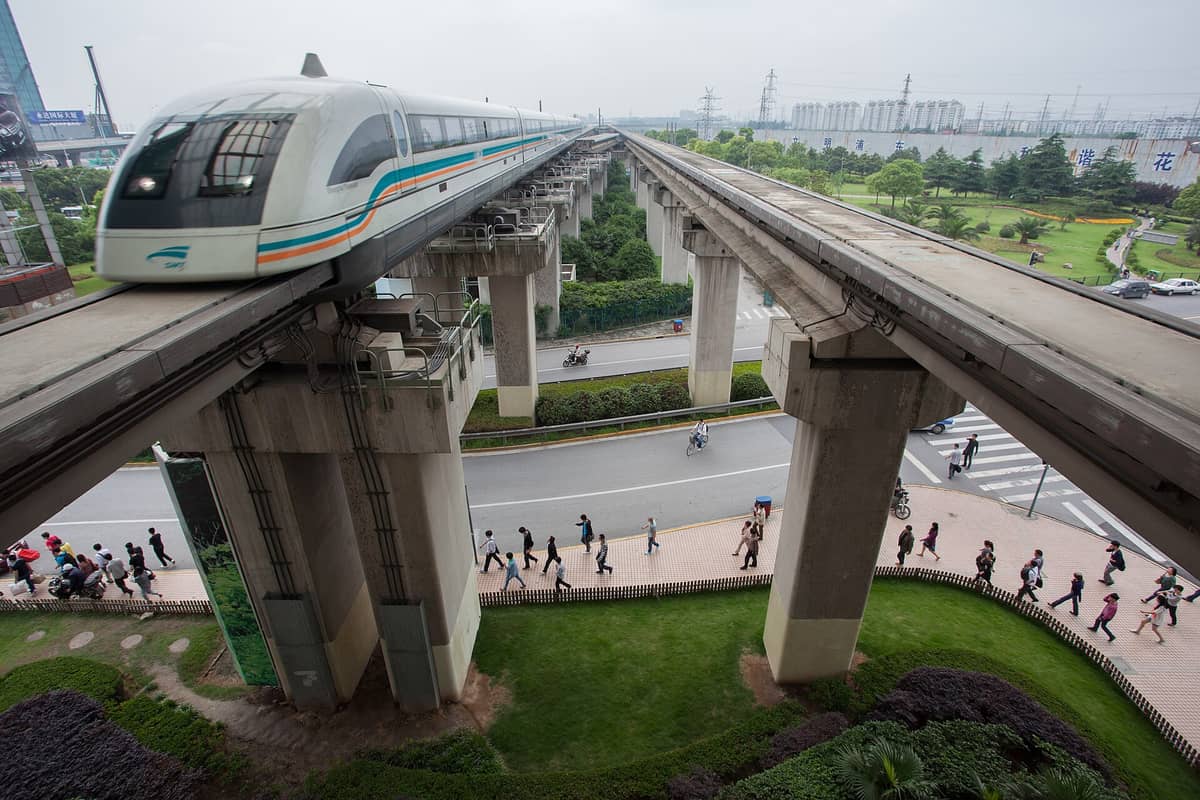
Metro Line 2 (the green line) is the primary connection between Pudong and the rest of Shanghai. Lujiazui Station on Line 2 drops you directly at the base of the skyscraper cluster with exits oriented toward the river promenade and the towers. The same line continues west to People's Square, Nanjing Road, and Jing'an Temple, making it straightforward to combine a Pudong tower visit with a day on the other side of the river. Line 2 also runs east all the way to Pudong International Airport, though the journey from the airport to Lujiazui takes roughly 60 to 75 minutes. Consider the Shanghai Maglev if speed matters: it covers the airport to Longyang Road in about 8 minutes at a standard fare of approximately ¥50, where you transfer to Line 2 for the remainder of the journey into the city core.
Line 6 (pink line) serves the residential and commercial zones deeper in Pudong, running roughly parallel to the coast before terminating near the waterfront at its southern end. It connects Century Avenue station with the Science and Technology Museum area and is useful for reaching neighborhoods away from the main tourist corridor. Line 4 touches the western edge of Pudong at Pudong Avenue station for those arriving from or heading toward the northern Puxi districts.
The most satisfying way to arrive in Lujiazui from Puxi is by ferry. The passenger ferry between Dongjiadu or the Jinling Road dock on the Puxi side and Dongchang Road dock in Pudong takes only a few minutes and costs around ¥2–3. The combination of crossing the Huangpu River at water level with the skyscrapers rising ahead of you is one of the more memorable urban transit experiences in Shanghai. It is a practical option, not a tourist boat.
Walking between Pudong attractions requires some planning. Lujiazui is not especially walkable compared to Puxi neighborhoods: the roads are wide, the towers are spaced apart, and distances feel longer on foot than they look on a map. From Lujiazui station it is about a 10-minute walk to the Oriental Pearl Tower and another 10 minutes to the river promenade. Century Avenue to Century Park is around a 10–15-minute metro ride rather than a practical walk. For navigation tips and transport options across the city, the guide to getting around Shanghai covers metro, taxi, and ride-hailing in detail.
⚠️ What to skip
The Lujiazui road network is confusing for pedestrians and cyclists. Several major intersections have no easy at-grade crossing and require using underpasses or the elevated Skywalk. Map apps occasionally suggest pedestrian routes that are technically possible but involve crossing eight lanes of traffic. Use the marked crossings and follow the underpasses.
Where to Stay
Staying in Pudong makes most sense for travelers arriving or departing through Pudong Airport, those whose primary purpose is the towers and skyline, or business travelers with meetings in Lujiazui. The accommodation options in the financial district are predominantly five-star and upper-tier business hotels, including properties inside or adjacent to the major towers. These deliver extraordinary views and high service standards at correspondingly high prices.
For most leisure travelers, however, staying in Puxi — particularly the Former French Concession, Jing'an, or the Bund area — puts you closer to Shanghai's older, more varied street life, restaurant scene, and cultural institutions. Pudong can be reached from those districts on Line 2 in 10 to 15 minutes, which is a manageable commute for a skyline evening or a half-day tower visit. The Shanghai accommodation guide provides a full comparison of neighborhoods for different travel styles and budgets.
Mid-range hotels exist in the area around the Science and Technology Museum station and along Century Avenue, catering primarily to domestic business travelers. These are functional rather than atmospheric but considerably more affordable than the tower-adjacent properties, and they sit on the metro line for easy access across the city.
Honest Assessment: Who Pudong is For
Pudong demands at least a half-day from any visitor to Shanghai, if only for the view from an observation deck and the experience of standing at the base of three of the world's tallest buildings simultaneously. The skyline from the Lujiazui waterfront promenade, with the Bund behind you and the river in between, is one of the defining urban panoramas on the planet and it earns that reputation.
That said, Pudong is not the neighborhood to choose if you want to immerse yourself in daily Shanghai life. The Lujiazui core can feel like a purpose-built exhibition of modernity rather than a lived city. Street-level interest is limited compared to the lanes of Xintiandi, the tree-lined blocks of the French Concession, or the markets of the Old Town. Travelers drawn to architecture, skylines, financial geography, and ambitious urban planning will find it genuinely fascinating. Those seeking neighborhood texture, independent restaurants, and walkable spontaneity should spend their nights in Puxi and treat Pudong as a focused excursion. For a wider view of how the districts fit together, the complete Shanghai activities guide helps with prioritization.
TL;DR
Pudong's Lujiazui district is unmissable for the Shanghai Tower, World Financial Center, Jin Mao Tower, and Oriental Pearl Tower — an unrivaled concentration of supertall architecture in one compact zone
The Lujiazui Riverside Promenade offers free access to riverfront views looking back toward the Bund, and the short Huangpu River ferry from Puxi is one of the most atmospheric ways to arrive
The Shanghai Science and Technology Museum along Century Avenue is worth a dedicated half-day, especially for families or those with broader cultural interests
Eating and nightlife in the tourist core is expensive and generic; better local food exists a few metro stops east, but the best of Shanghai's dining and bar scene remains in Puxi districts
Most leisure travelers are better off staying in Jing'an, the French Concession, or near the Bund and visiting Pudong on a day or evening excursion via an around 10–15-minute Line 2 metro ride
Three days is enough to cover Shanghai's essential contrasts: colonial waterfront, modern skyscrapers, art deco lanes, and some of the best urban food in China. This itinerary is built around the metro, organized by geography to minimize backtracking, and clear about what's worth your limited time.
Shanghai has one of the most diverse museum scenes in Asia, spanning 5,000 years of Chinese civilization, cutting-edge contemporary art, and world-class science. This guide covers the best museums in Shanghai by category, with practical tips on what to expect at each.
Shanghai rewards photographers at every turn, from the world-famous Bund skyline to laneway cafés draped in plane tree shade. This guide covers the 20 best photo spots in Shanghai, with specific advice on timing, angles, and what makes each location worth the trip.
Shanghai rewards walkers more than almost any other megacity in Asia. From the colonial grandeur of the Bund promenade to the plane-tree canopy of the French Concession and the regenerated industrial banks of Suzhou Creek, these self-guided routes are free, fully walkable, and rich with architectural and cultural detail. This guide gives you the routes, the logistics, and the practical detail to make the most of them.
Shanghai's temples are active places of worship with centuries of history behind them, not museum pieces. This guide covers the best Buddhist, Taoist, and Confucian temples in the city, from a golden shrine flanked by luxury malls to a 1,700-year-old complex with Shanghai's oldest surviving pagoda.
Shanghai is a city you can visit year-round, but when you go shapes everything from what you wear to how much you pay. This guide breaks down every season, the crowds, the climate quirks, and the festivals so you can plan with confidence.
Shanghai has one of the world's most dramatic skylines, and the city delivers it from every angle: glass-floored observation decks above the clouds, riverside promenades facing twin horizons, and rooftop bars with unobstructed Bund vistas. This guide covers the best spots to see it all, whether you're chasing the perfect photo at dusk or looking for the highest point in China.
Shanghai sits at the heart of one of China's best high-speed rail networks, putting ancient canal towns, mountain lakes, and imperial gardens within easy reach. This guide covers the top day trips from Shanghai with real costs, transport logistics, and a clear view of what's worth the journey.
Shanghai is one of Asia's most spectacular cities, and a surprising amount of it costs nothing to experience. This guide covers the best free attractions, from iconic waterfronts and heritage walks to museums with free-entry days and parks that locals actually use.
Shanghai has one of the world's most extensive metro systems, official taxi tariffs, a record-breaking Maglev train, and two major international airports. This guide breaks down every transport option with real fares, journey times, and what actually works best for travelers.
Shanghai rewards the curious traveller who looks beyond the Bund and Yu Garden. From a 1930s slaughterhouse turned art labyrinth to a basement full of Cold War propaganda posters, these are the places locals treasure and guidebooks overlook.
Shanghai sits at the top tier of Asia's luxury city-break destinations, with world-class hotels lining the Bund, a Michelin-starred restaurant scene that rivals Paris and Tokyo, and a shopping landscape anchored by flagship boutiques and heritage malls. This guide cuts through the noise to tell you exactly where to stay, eat, and spend your time, and when to go to get the most out of it.
Shanghai contains one of the world's most layered architectural landscapes: 52 colonial-era buildings on the Bund, one of the largest surviving Art Deco collections outside New York, and a Lujiazui skyline that rewrote the rulebook on supertall towers. This guide breaks it all down by era, district, and visiting logic.
Chinese New Year transforms Shanghai into a city of red lanterns, temple fairs, and reunion dinners, but it also brings closures, surging prices, and the world's largest annual human migration. This guide covers everything visitors need to know before arriving during Spring Festival.
Shanghai has quietly become one of Asia's most compelling contemporary art cities, with a scene distributed across state museums, private foundations, converted industrial spaces, and laneway galleries. This guide covers the essential venues across the city, from the West Bund riverfront to Suzhou Creek and the Bund.
Shanghai's food streets and night markets range from centuries-old snack courts near the City God Temple to massive outdoor markets running until 2am on weekends. This guide breaks down every major venue by location, hours, transport links, and what to actually order — so you spend less time searching and more time eating.
Shanghai delivers romance at every budget, from candlelit Bund rooftops and Huangpu River night cruises to slow afternoons in the French Concession. This guide breaks down the best couple experiences with real pricing, seasonal tips, and a clear view of what's worth your time.
Shanghai's hairy crab season runs from late September to early December, with distinct peak windows for female and male crabs. This guide covers the best restaurants, realistic price ranges, authenticity warnings, and practical booking tips to make the most of one of China's most celebrated annual eating events.
Autumn is widely considered the best season to visit Shanghai, but the three months play out very differently. This guide breaks down weather, crowds, seasonal food, key events, and practical logistics for September, October, and November so you can plan the right trip at the right time.
Spring is one of the most rewarding times to visit Shanghai, but each month feels different. This guide breaks down the weather, crowds, cherry blossom timing, and practical tips for March, April, and May so you can plan with confidence.
Shanghai at night is a different city entirely. The Bund glows across the river, French Concession bars fill up past midnight, and underground clubs don't peak until 2am. This guide breaks down where to go, when to arrive, what to pay, and what to skip.
Shanghai noodles are not one dish but an entire culinary category spanning delicate scallion oil noodles, rich braised pork belly noodles, and luxurious seasonal crab roe noodles. This guide breaks down every style worth knowing, with realistic price ranges, seasonal notes, and practical ordering tips for first-timers and returning visitors alike.
Shanghai has a reputation as a global financial powerhouse, but day-to-day costs are far more manageable than most visitors expect. From ¥3 metro rides to free museum admissions and ¥15 noodle bowls, this guide breaks down exactly how to explore one of the world's great cities without burning through your money.
Shanghai is one of Asia's safest major cities for tourists, but petty theft, overcharging, and a handful of persistent scams do catch visitors off guard. This guide breaks down exactly what to watch for, how to get around safely, and what to do if something goes wrong.
Shanghai is one of Asia's great shopping cities, with options ranging from luxury flagship stores and slick megamalls to fabric markets where tailors cut custom suits for a fraction of Western prices. This guide breaks down the best areas, what to expect, and how to avoid the traps.
Xiaolongbao are Shanghai's most iconic bite — thin-skinned, broth-filled, and deceptively tricky to eat without burning yourself. This guide covers where to find the best versions across the city, what to order by season, how much to pay, and the rookie mistakes that will ruin your first basket.
Shanghai is a city of 24.8 million people, 20 metro lines, and a learning curve that catches most first-timers off guard. This guide cuts through the noise with practical, specific advice on getting around, choosing the right season, understanding the neighborhoods, and avoiding the mistakes that waste your time and money.
Four ancient water towns sit within day-trip distance of Shanghai, each with a different character, price point, and crowd level. This guide cuts through the confusion with specific transport details, current ticket prices, and a ranking to help you choose the right one for your trip.
Shanghai rewards family travel more than most cities its size. From the immersive lands of Shanghai Disneyland to the dinosaur halls of the Natural History Museum, this guide covers the best activities for kids of all ages, when to visit, how to get around with children, and what to skip.
Shanghai is one of the most layered cities on earth, where Art Deco waterfront architecture stands opposite a forest of supertall skyscrapers, and century-old tea houses sit a short metro ride from world-class contemporary art museums. This guide covers the best things to do in Shanghai, organized by theme and neighborhood, with a clear view of what's worth your time and what to skip.
Shanghai cuisine is one of China's most distinct regional food traditions, built around sweetness, umami, and precision technique. This guide covers the dishes you should not leave without trying, where to find them, what to pay, and how to eat like someone who actually lives here.
Choosing where to stay in Shanghai shapes your entire trip. This guide breaks down the city's key neighborhoods by location, metro access, price range, and who each area suits best, so you can book with confidence.