Shanghai World Financial Center: The Full Visitor Guide to Pudong's Bottle-Opener Tower
Rising 492 metres above Lujiazui, the Shanghai World Financial Center is one of the most architecturally distinctive skyscrapers in China. Its 100th-floor sky bridge and glass-floor walkways deliver some of the most dramatic urban views in Asia. Here is everything you need to plan your visit, including the important renovation caveat you need to know before buying tickets.
Quick Facts
- Location
- No. 100 Century Avenue, Lujiazui, Pudong New Area, Shanghai 200120
- Getting There
- Lujiazui Station (Metro Lines 2 and 14), then a roughly 5-minute walk
- Time Needed
- 1.5 to 2.5 hours including queuing and travel between floors
- Cost
- Around ¥120 (94F only) or ¥180 (94F+97F+100F combo); verify current pricing before visiting
- Best for
- Architecture enthusiasts, skyline photographers, visitors who want an alternative to the Oriental Pearl Tower crowds
- Official website
- www.swfc-shanghai.com/?l=en
What Is the Shanghai World Financial Center?
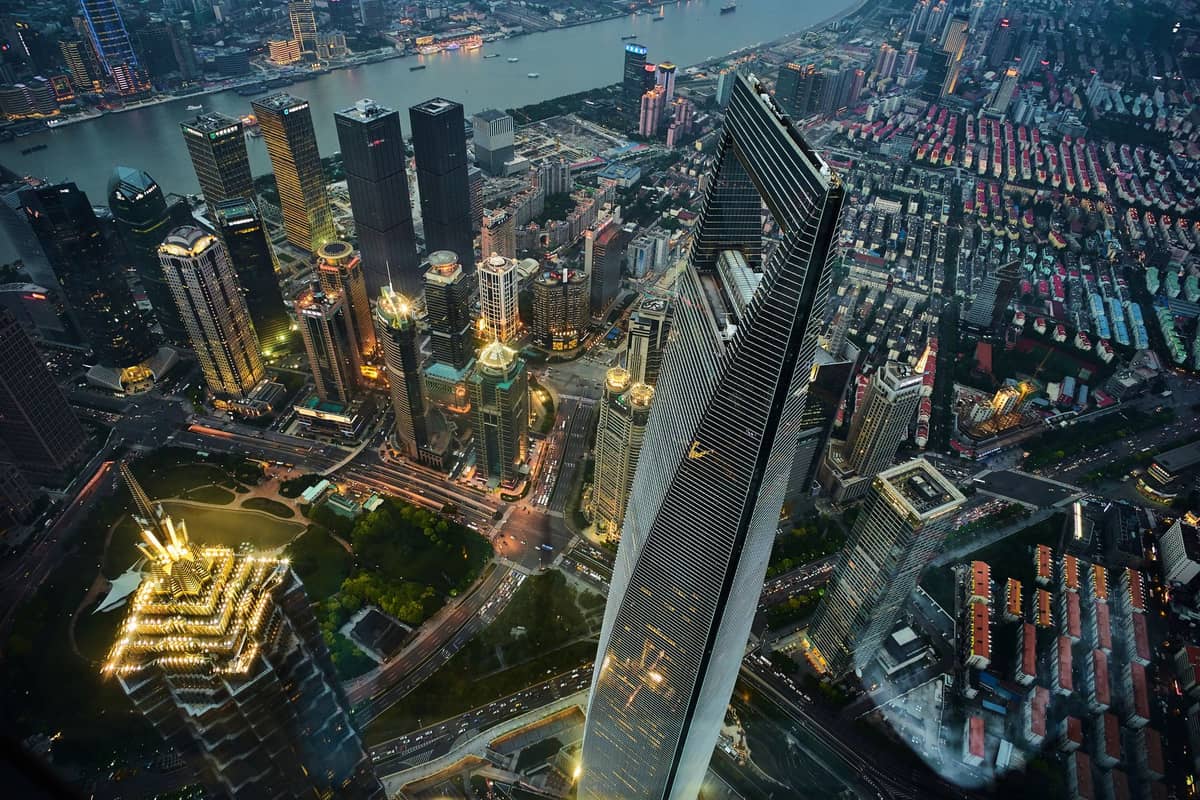
The Shanghai World Financial Center, known locally as 上海环球金融中心 and almost universally abbreviated to SWFC, is a 492-metre, 101-floor supertall skyscraper completed in 2008. Developed by Japan's Mori Building Co., Ltd., construction began in the mid-1990s but was interrupted by the Asian financial crisis, meaning the building took over a decade to realise. The result is one of the most carefully considered towers in Lujiazui's cluster: a tapering rectangular prism with a distinctive trapezoidal opening near the summit that Shanghainese residents have long nicknamed the 'bottle opener'.
That opening is more than a visual flourish. Originally designed as a circular aperture, it was modified to the current rectangular form partly to reduce wind load at altitude and partly in response to concerns that a circular hole might too closely resemble the rising sun on the Japanese flag, given that the developer is Japanese. The geometry you see today is a product of diplomacy as much as engineering.
⚠️ What to skip
IMPORTANT: Multiple travel sources published in 2025 and 2026 report that the SWFC observation decks have been closed for renovation since 2023, with no confirmed reopening date at the time of writing. Before purchasing tickets or making plans, confirm current status directly with the venue at swfc-shanghai.com or by contacting them. Do not rely solely on third-party booking platforms, which may continue selling tickets regardless of access status.
The Observation Decks: What You Can Expect When Open
Assuming normal operations, the SWFC offers three observation levels. The 94th floor (approximately 423 metres) is the entry point, a conventional enclosed deck with floor-to-ceiling glass on all sides. The 97th floor steps things up with a partially open-air section where you can feel the wind and hear the city faintly below, a sensory shift that catches most visitors off guard after the climate-controlled lower levels. The 100th floor is the headline act: a sky bridge that spans the trapezoidal opening in the building's apex, with a glass floor section that places nothing but air between you and the street grid around 470 metres below.
Standing on that glass section, the sensation is distinct from other Shanghai observation experiences. The Oriental Pearl Tower and Shanghai Tower are cylindrical, wrapping you in views that feel panoramic and continuous. The SWFC's bridge is linear, directional, and deliberately exposed. You face either the Huangpu River and the Bund to the west, or the sprawl of Pudong extending east toward the airport. The framing of the trapezoidal void amplifies the sense of height rather than insulating you from it.
For context on how these views compare with those from its immediate neighbours, see the guide to the best viewpoints in Shanghai, which covers all three Lujiazui towers and the Bund-side alternatives.
Tickets & tours
Hand-picked options from our booking partner. Prices are indicative; availability and final rates are confirmed when you complete your booking.
Shanghai city and Zhujiajiao water town private tour with lunch
From 371 €Instant confirmationFree cancellationShanghai private tour with iconic landmarks of the old and new city
From 284 €Instant confirmationFree cancellationShangai Yuyuan Garden entrance tickets
From 9 €Instant confirmationFree cancellation
How the Experience Changes by Time of Day
Midday visits, roughly 11:00 to 14:00, deliver the clearest visibility in good weather, but this is also when tour groups from cruise ships and domestic package tours tend to arrive in volume. The queues for high-speed elevators can stretch past 40 minutes on peak days, and the 100th-floor bridge becomes congested enough that getting a clean, unobstructed photograph requires patience.
Late afternoon, from around 15:30 to 17:30, is often the practical sweet spot. Crowds thin slightly, the light shifts from flat overhead white to a warmer southwesterly angle that catches the glass facades of the surrounding towers, and on clear autumn days the visibility can extend far across the Yangtze River delta plain. Bring a light layer even in warmer months: the 97th-floor semi-open section can be noticeably cooler than ground level.
Sunset and early evening visits produce the most photographed results. The city transitions from a silver-grey expanse to a sequence of illuminated grids, with the Bund's heritage buildings picked out in warm light against the river. By 20:00, the urban glow takes over completely. The downside is that evening visits compress your exit window if last admission is around 20:00 to 21:30, so check current times carefully before planning a sunset trip.
💡 Local tip
Photography tip: The glass-floor section on the 100th floor reflects overhead lighting, which creates glare in photographs. Crouch low, angle the lens slightly downward rather than straight through the glass, and shoot during lower-traffic moments when other visitors are not standing in the frame behind you.
Architectural Context: Where the SWFC Sits in Lujiazui
Lujiazui's skyline is often treated as a monolithic backdrop in photographs, but the three main towers each come from fundamentally different design philosophies. The Oriental Pearl Tower (1994) is the expressionist pioneer, its pink spheres a deliberate rejection of rectilinear orthodoxy. Jin Mao Tower (1999) layers postmodern references to Chinese pagoda architecture into a more traditional tapering form. The SWFC (2008) arrived last and leans toward structural minimalism, its near-flat faces and precise geometric cut standing in deliberate contrast to its neighbours.
Then there is Shanghai Tower, completed in 2015 and rising to 632 metres immediately adjacent to the SWFC. From the SWFC's upper floors, Shanghai Tower's spiralling glass curtain wall is close enough that you can study its construction detail rather than just its silhouette. This proximity makes the SWFC uniquely positioned: it is the only observation point in Lujiazui from which you can view Shanghai Tower as a foreground subject rather than a background one.
To understand Pudong's broader urban development and how Lujiazui came to look the way it does, the Shanghai architecture guide provides detailed historical context on the district's transformation from farmland to financial zone across three decades.
Getting There and Buying Tickets
The most straightforward approach from central Shanghai is Metro Line 2 or Line 14 to Lujiazui Station. From the station exits, the SWFC is visible immediately and takes about five minutes on foot, passing between Jin Mao Tower and the base of Shanghai Tower. The walk itself is worth a moment of attention: the scale shift from street level to tower summit is disorienting in a way photographs never quite capture.
Bus routes including 81, 82, 583, 799, 939 and 961 serve stops near the tower, useful if you are arriving from other parts of Pudong rather than crossing from the Puxi side. Taxis and Didi drop-offs are straightforward given the building's prominent location on Century Avenue.
When operating normally, the standard adult ticket for access to floors 94, 97, and 100 is approximately ¥180, with a ¥120 option covering only the 94th floor. Discounts have been available for children and seniors. However, all ticket pricing should be verified directly with the SWFC, either via the official website or at the venue box office, as rates and package combinations are periodically adjusted.
ℹ️ Good to know
When operating, published hours have ranged roughly between 08:00 and 23:00 depending on the source, with last admission typically 60 to 90 minutes before closing. Confirm current opening hours at swfc-shanghai.com before your visit, particularly if you are planning an evening trip.
Honest Assessment: Is This Worth Your Time in Shanghai?
The SWFC earns its place in any serious itinerary for a specific reason: the 100th-floor sky bridge is genuinely unlike any other observation experience in Shanghai. It is more vertigo-inducing than Shanghai Tower's enclosed 118th-floor deck, more architecturally interesting than the Oriental Pearl Tower's spheres, and considerably less crowded on most days than either. If you have already visited one Lujiazui tower on a previous trip, the SWFC is worth prioritising on a return visit.
That said, the renovation closure reported since 2023 is the defining factor for current planning purposes. If the decks remain closed, there is no observatory product to visit and no amount of architectural admiration from street level substitutes for the interior experience. Verify before you go.
If the SWFC is closed during your visit, the Shanghai Tower immediately next door offers the world's highest observation deck and remains an exceptional alternative. The Jin Mao Tower is also within easy walking distance in the same cluster.
Visitors with a fear of heights should note that the 100th-floor experience is specifically designed to maximise the perception of exposure. The glass floor sections and open-air elements are not subtle. This is not a knock against the building; it is what makes it worth visiting. But if exposure at altitude causes distress, the 94th-floor option provides the views without the more confronting elements.
Those less interested in tower experiences altogether may prefer to experience Lujiazui's skyline from the other direction. The Bund promenade provides the most recognisable external view of all three towers together, framed across the Huangpu River, without any queue or ticket.
Insider Tips
- Book tickets in advance through the official SWFC website or a reputable China-based travel platform rather than at the box office on busy weekend days, when in-person queues for both tickets and elevators can add 45 minutes to your visit time.
- The SWFC contains a Park Hyatt hotel occupying floors 79 to 93, directly below the observatory. The hotel lobby bar and restaurant offer elevated views in a less transient setting, which is worth knowing if the observation deck is at capacity or you want a more relaxed alternative to the tourist-facing floors.
- Autumn visits, roughly October through early November, combine the clearest air quality of the year with comfortable temperatures at the semi-open 97th-floor level. Shanghai's summer humidity and summer haze regularly reduce visibility, making the views less compelling despite better light.
- From the 100th-floor bridge, the clearest downward view toward the river is from the western face of the aperture, where the geometry of Lujiazui's roads and the curve of the Huangpu are most legible. Position yourself there first before the space fills.
- The SWFC stands immediately next to Shanghai Tower, which is taller but whose observation deck sits on the interior of a curved structure. The SWFC's linear bridge gives a sense of raw exposure that many visitors, even those who have been up Shanghai Tower, find more viscerally memorable.
Who Is Shanghai World Financial Center For?
- Architecture and design enthusiasts who want to study Lujiazui's tower cluster from the inside of one of its members
- Photographers seeking a distinctive angle on Shanghai Tower and the wider skyline that cannot be replicated from street level
- Repeat visitors to Shanghai who have already covered the Oriental Pearl Tower and want a structurally different observation experience
- Travellers with an interest in modern engineering who appreciate the context behind the building's unconventional apex geometry
- Evening visitors who want to combine a skyline sunset with Shanghai's illuminated night panorama in a single extended visit
Nearby Attractions
Other things to see while in Pudong:
- Century Park
Century Park is the largest ecological urban park in downtown Shanghai, stretching across Pudong's grid of glass towers and wide boulevards. Since May 2024, entry is free and the fences are gone, making it one of the most accessible green spaces in the city. Whether you come at dawn for tai chi or late afternoon for a lakeside stroll, the park rewards visitors who know how to read it.
- China Art Museum
The China Art Museum occupies the striking red former China Pavilion built for Expo 2010, making it one of the most architecturally dramatic museum experiences in Shanghai. Permanent collections are free, the scale is genuinely impressive, and most visitors are surprised by how much is on display across multiple floors.
- Jin Mao Tower
Standing 420.5 metres above Pudong's Lujiazui financial district, Jin Mao Tower is one of Shanghai's most architecturally distinctive skyscrapers. Its 88th-floor observatory delivers panoramic views across the Huangpu River and the historic Bund, while the building's pagoda-inspired silhouette remains one of the most recognisable on the city skyline.
- Lujiazui Riverside Promenade
The Lujiazui Riverside Promenade stretches roughly 2.5 km along Binjiang Avenue in Pudong, offering unobstructed views of the Bund from the opposite bank. It is open 24 hours, costs nothing to walk, and delivers one of the most dramatic urban skylines on earth at any time of day.