The Bund Promenade (外滩): Shanghai's Most Iconic Waterfront Walk
The Bund Promenade stretches 1.5 kilometres along the Huangpu River in central Shanghai, placing you between two of the world's most dramatic skylines: a row of early-20th-century colonial financial buildings on one side, and the glass-and-steel towers of Lujiazui on the other. Entry is free, access is around the clock, and no ticket or reservation is needed.
Quick Facts
- Location
- Zhongshan East 1st Road (中山东一路), Huangpu District, Shanghai
- Getting There
- East Nanjing Road Station (Metro Lines 2 & 10), 10–15 min walk east to the waterfront
- Time Needed
- 45 min (quick pass) to 2–3 hours (leisurely walk with stops)
- Cost
- Free — no ticket or reservation required
- Best for
- Architecture lovers, photographers, evening strollers, first-time visitors
What the Bund Promenade Actually Is
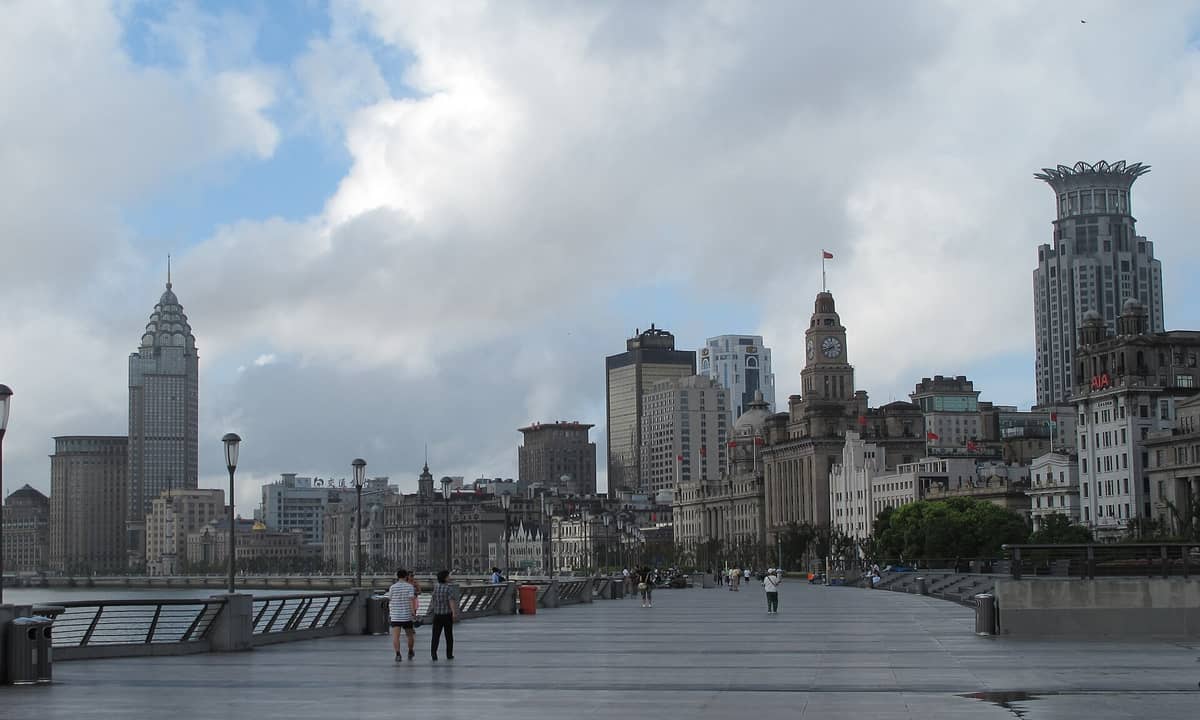
The Bund Promenade, known in Chinese as 外滩 (Waitan, literally 'outer bank'), is a free, publicly accessible waterfront walkway running approximately 1.5 kilometres along the west bank of the Huangpu River in Shanghai's Huangpu District. The promenade itself is a wide, paved esplanade open 24 hours a day, year-round. No ticket, no reservation, no ID check.
What makes it worth your time is the spatial drama. On your left as you face the river stands one of Asia's most intact rows of colonial-era architecture: neo-classical banks, art deco trading houses, and Beaux-Arts financial institutions built mostly between 1900 and 1937, when Shanghai was one of the wealthiest and most cosmopolitan ports on earth. On your right, across the Huangpu, the Lujiazui skyline of Pudong rises in sharp contrast: the Oriental Pearl Tower, the tapered Shanghai Tower (the tallest building in China at 632 metres), and the trapezoidal crown of the Shanghai World Financial Center. Standing between those two worlds is the essential Bund experience.
The promenade is part of the broader Bund area that anchors Shanghai's Huangpu waterfront. It connects naturally with nearby attractions and is a logical starting point for exploring the surrounding district on foot.
ℹ️ Good to know
The promenade itself is always free and open. Fees apply only to optional activities like Huangpu River cruises or paid observation decks in nearby towers. Don't pay anyone claiming to charge admission to walk the Bund.
How the Experience Changes by Time of Day
Early Morning: 6:00–9:00
This is the Bund that most visitors never see. Before 9am, the promenade belongs to older Shanghai residents doing tai chi in small groups, couples walking dogs, and a handful of joggers running laps. The tour groups haven't arrived, the selfie pods are unoccupied, and the stone balustrade along the river is free for you to lean on and think. The light on the Pudong skyline during this window is flat but clean, and the river traffic is already active: cargo barges, river ferries, and the occasional official vessel cutting through the brown-grey current.
The air in the morning carries a faint river smell, slightly brackish and industrial, which is honest rather than unpleasant. In autumn and spring, morning temperatures on the Bund can feel noticeably cooler than the streets behind it due to the river wind. Bring a layer if you're visiting between October and April.
Midday and Afternoon: 10:00–17:00
Peak crowd time. By mid-morning, tour groups arrive in waves and the promenade becomes genuinely packed, especially on weekends and public holidays. The viewing rails can fill with people three or four deep. Photography of the Pudong skyline without strangers in frame becomes nearly impossible unless you position yourself at the northern or southern ends of the walkway, which see fewer visitors. If you're visiting specifically for photographs and can only come during the day, aim for a Tuesday or Wednesday morning.
In summer (June through August), afternoon temperatures on the Bund can exceed 35°C. The promenade offers almost no shade. There are some benches, but they're sparsely placed and often taken. If you're heat-sensitive, limit your midday exposure and use the underpasses to cross to the shaded streets behind Zhongshan East 1st Road, where you can browse the ground floors of the heritage buildings or grab a drink.
⚠️ What to skip
Summer afternoons on the Bund can be brutally hot and humid with no shade. Bring water, wear sunscreen, and consider visiting after 5pm when temperatures drop and the crowd shifts from tour groups to locals and couples.
Evening and Night: 18:00–23:00
This is when most first-time visitors are told to come, and the recommendation holds up. After sunset, the historic buildings on the west side are lit from below, throwing warm amber light against the stone facades. Across the river, Lujiazui's towers illuminate in shifting patterns. The effect is genuinely spectacular and not something most cities can match. The landscape lighting on the heritage buildings and the Pudong towers typically runs from around 19:00 to 22:00 on weekdays and until approximately 23:00 on weekends and public holidays, though these hours should be verified closer to your visit as they are adjusted seasonally and for special events.
The tradeoff is crowd density. Between 19:00 and 21:00 on weekends, the Bund can feel shoulder-to-shoulder. This is not an exaggeration. Bringing a tripod for long-exposure photography is technically possible but logistically difficult in peak hours. Many experienced photographers come just after the crowds begin thinning, around 21:30, for cleaner shots with the lights still on. The atmosphere at night is lively but safe, with good lighting, consistent police presence, and active foot traffic until late.
Tickets & tours
Hand-picked options from our booking partner. Prices are indicative; availability and final rates are confirmed when you complete your booking.
Shanghai city and Zhujiajiao water town private tour with lunch
From 371 €Instant confirmationFree cancellationShanghai private tour with iconic landmarks of the old and new city
From 284 €Instant confirmationFree cancellationShangai Yuyuan Garden entrance tickets
From 9 €Instant confirmationFree cancellation
The Architecture: What You're Looking At
The row of buildings facing the Huangpu on the western side of the promenade is one of the most concentrated collections of early-20th-century commercial architecture in Asia. Built primarily by British, American, French, and Sino-foreign trading and financial interests during Shanghai's concession era, these structures were designed to project institutional permanence and global financial power. The materials were often imported: granite, Portland cement, terracotta tile. The styles range from Edwardian classicism and Beaux-Arts to a restrained Shanghai art deco that emerged in the 1930s.
Key structures worth identifying as you walk include the former Hong Kong and Shanghai Banking Corporation building (now a Pudong Development Bank branch), completed in 1923 with its famous bronze lions at the entrance, and the former Customs House (1927), whose clock tower still chimes over the waterfront. For a deeper dive into the architectural vocabulary of this district and the city at large, the Shanghai architecture guide covers the building types and their historical context in detail.
Most of the ground floors of these buildings now house banks, luxury retailers, or hotel lobbies. A few are open to visitors. The interiors that are accessible, particularly the former HSBC building's mosaic-domed banking hall, reward curiosity. The buildings themselves are privately tenanted, so access and hours vary by occupant.
Walking the Promenade: A Practical Orientation
The promenade runs roughly north to south along Zhongshan East 1st Road. If you arrive from East Nanjing Road Station (the most common approach), you'll exit onto Nanjing East Road and walk east through pedestrian shopping streets for about 10 to 15 minutes before reaching the waterfront. The transition is abrupt: you step from retail noise into the wide, open air of the Huangpu.
From the central access point near the Peace Hotel, you can walk north toward Suzhou Creek or south toward the old town area. The full 1.5-kilometre length takes about 30 to 40 minutes at a relaxed pace without stopping. Numbered information plaques mark the major buildings across the road. The promenade surface is smooth granite paving and is navigable by wheelchair and stroller at street level, with ramps at main access points. Some underpasses to reach the riverside from street level involve stairs, but surface crossings are available.
If you want to extend the walk north along the waterfront beyond the Bund's traditional boundary, the path continues toward the North Bund and the mouth of Suzhou Creek, offering less-crowded river views and a different architectural character. The Suzhou Creek walk connects into this territory and rewards anyone with extra time.
Getting There and Getting Around
The most direct metro option is East Nanjing Road Station, served by Lines 2 and 10. From there, follow the crowds or signage east along Nanjing East Road for roughly 10 to 15 minutes on foot. For the southern end of the promenade, Yuyuan Garden Station on Line 14 is closer. Multiple bus lines, including routes 33, 55, 65, 123, and 135, stop along Zhongshan East 1st Road adjacent to the promenade. Taxis and ride-hailing via Didi can drop you at the tunnel underpasses along Zhongshan East 1st Road, though traffic on this road during peak hours can add time.
If you're coming from Pudong and the Lujiazui area, the pedestrian tunnel under the Huangpu River (near the Bund Tourist Tunnel, a paid novelty ride) or the ferry service from Dongchang Road provide alternatives to crossing by metro. The ferry is inexpensive, takes a few minutes, and gives you a river-level view of both banks.
For those on a longer itinerary, a Huangpu River cruise offers a complementary perspective from the water itself, with operators departing from the Bund's southern end. Cruise tickets are separate and priced variably by operator and route length.
Honest Assessment: Is It Worth Your Time?
The Bund Promenade is not a hidden find or an underrated detour. It is one of the most visited spots in China, and at peak hours, the crowd management is the dominant experience. That said, the visual spectacle of standing between two radically different architectural eras separated by a working river is not replicated anywhere else in the world. It earns its reputation.
Who might want to skip it or limit their time here: travelers who are deeply allergic to crowds and have limited days in Shanghai, those visiting in July or August midday without heat tolerance, and anyone looking for a quiet or contemplative experience during a weekend evening. If you fall into any of those categories, an early weekday morning is the version of the Bund that actually delivers calm.
If this is your first visit to Shanghai, the Bund is a logical anchor for a broader itinerary. Pairing it with the Nanjing Road Pedestrian Street (a short walk west) and the riverside views from Lujiazui on the Pudong side gives you a full picture of how the city is physically organized. The guide to 3 days in Shanghai places the Bund in context alongside the rest of the city's major districts.
💡 Local tip
Photography tip: For the classic shot of the Pudong skyline reflected in the river, position yourself at the central balustrade section, shoot with a slightly elevated angle from the upper promenade level, and come just after sunset when there's still ambient sky light but the building illumination has kicked in. This 20-minute window is the sweet spot.
Insider Tips
- The northern end of the promenade, near the junction with Suzhou Creek, sees a fraction of the crowds of the central section. The view of both banks from here is nearly as good, and you can often find an unobstructed spot at the rail even on a busy Saturday evening.
- Landscape lighting on the heritage buildings and the Pudong towers typically runs later on weekends and public holidays (around 23:00) versus weekdays (around 22:00). If you're visiting on a Friday or Saturday, you have more window for the full illuminated skyline.
- The ground floor of the former HSBC building (now Pudong Development Bank) on Zhongshan East 1st Road contains a remarkable painted mosaic ceiling that most visitors never see. Entry during banking hours is technically public, though the space is a working bank branch, so behave accordingly.
- The tourist tunnel beneath the Huangpu is kitsch, but the regular commuter ferry from the Bund's southern end to Dongchang Road in Pudong costs very little and takes about 10 minutes. It's the most direct way to move between both waterfronts without the metro.
- If you're visiting during Chinese New Year, the Bund area hosts significant celebrations and crowds that make peak summer look manageable by comparison. Plan well in advance, arrive early, and be aware that surrounding streets may be partially closed.
Who Is The Bund Promenade For?
- First-time visitors to Shanghai who want to understand the city's spatial and historical layout in a single walk
- Architecture enthusiasts interested in colonial-era commercial building styles concentrated in one location
- Photographers targeting the contrast between 1920s–1930s facades and the contemporary Lujiazui skyline
- Couples and evening strollers looking for Shanghai's most atmospheric riverfront setting after dark
- Travelers combining the waterfront walk with the Nanjing Road area as part of a half-day itinerary
Nearby Attractions
Other things to see while in The Bund:
- Huangpu River Cruise
A cruise on the Huangpu River places you between two of the most photogenic waterfronts on earth: the colonial stone facades of the Bund on one bank and the science-fiction skyline of Lujiazui on the other. Whether you go at midday or after dark, the experience distills Shanghai's split identity into a single, slow-moving panorama.
- Rockbund Art Museum
Housed in the former Royal Asiatic Society building completed in 1933, Rockbund Art Museum brings serious contemporary art to one of Shanghai's most storied streets. From rotating exhibitions across multiple floors to a sixth-floor café with views toward the Huangpu River, it rewards visitors who want more than a walk along the waterfront.