Shanghai Architecture Guide: Art Deco, Skyscrapers & Colonial Heritage
Shanghai contains one of the world's most layered architectural landscapes: 52 colonial-era buildings on the Bund, one of the largest surviving Art Deco collections outside New York, and a Lujiazui skyline that rewrote the rulebook on supertall towers. This guide breaks it all down by era, district, and visiting logic.
Plan and book this trip
Tools from our partner Travelpayouts help you compare flights and hotels. If you book through them, we may earn a commission at no extra cost to you.
Flights
Hotels map
TL;DR
- The Bund stretches 1.5 km along the Huangpu River with around 52 Western-style buildings, but most are European Revival styles, not Art Deco as commonly claimed.
- Art Deco in Shanghai peaked in the 1920s-1930s and produced a uniquely Chinese fusion style. Explore it on a self-guided architecture walk through the Former French Concession and Jing'an.
- The Shanghai Tower's 118th-floor observation deck costs around ¥180 (standard adult) and is best visited on clear, low-pollution days — check air quality before you book.
- Roughly 30% of pre-1937 Art Deco stock has been demolished since 1980, making the surviving buildings genuine heritage assets worth seeking out deliberately.
- For the full skyline picture, pair a Bund walk with a Huangpu River cruise and an observation deck visit across the river in Lujiazui.
How Shanghai's Architectural Timeline Works
Understanding Shanghai's architecture requires treating the city as three distinct eras stacked on top of each other. First came the treaty-port period from the 1840s to the 1910s, when European colonial powers established concession territories and built banks, trading houses, and clubs in the European Revival styles of the day: Neoclassical, Romanesque, Gothic, Baroque. Second came the Republican period of the 1920s and 1930s, when Shanghai became one of Asia's wealthiest cities and architects fused international Art Deco with Chinese decorative motifs to create something distinctly local. Third came the post-1990 development boom, which planted a forest of supertall towers in Pudong's Lujiazui district that now forms one of the world's most recognizable skylines.
These three eras rarely overlap geographically, which makes navigating them straightforward. Colonial architecture concentrates on the Bund and in the former concession districts west of the old city. Art Deco survives in the Former French Concession, Jing'an, and scattered pockets of Huangpu. The supertalls cluster almost exclusively in Lujiazui, east of the Huangpu River in Pudong. You can spend a full day on each era without retracing your steps.
ℹ️ Good to know
Shanghai is a provincial-level municipality of the People's Republic of China, not a province. Its 16 districts span 6,340.5 km² with a permanent population of 24.80 million as of end 2024. The city sits at the mouth of the Yangtze River delta at approximately 31.23°N, 121.47°E.
The Bund: Colonial Grandeur and a Common Misconception
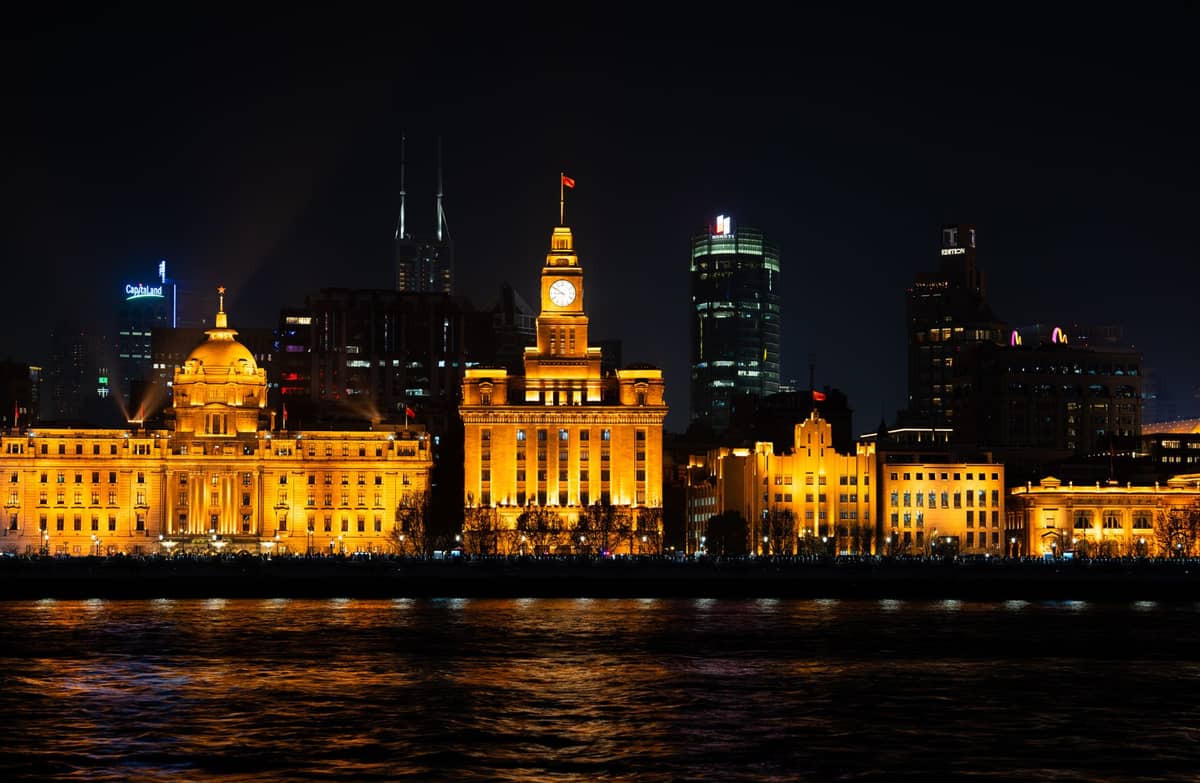
The Bund (外滩, Waitan) is the most visited stretch of architecture in the city, a 1.5 km protected waterfront on the west bank of the Huangpu River lined with around 52 Western-style buildings. Most were built between the 1870s and the 1930s by European and American financial institutions: banks, insurers, trading houses, and consulates that made Shanghai the commercial capital of East Asia. The styles are predominantly European Revival: the Hongkong and Shanghai Banking Corporation headquarters in Neoclassical, the Customs House in a mix of Neoclassical and Art Deco, the former British Consulate in Victorian Gothic. For a closer look at the waterfront promenade itself, the Bund promenade is worth reading up on before you visit.
Here is where the most persistent misconception needs correcting: the Bund is routinely described as an Art Deco showcase, but research by architectural historians suggests only around three to five of its buildings are genuinely Art Deco. The majority are in earlier European revival styles that predate the Art Deco movement. The Customs House (1927) and the Bank of China Building (1937) are the clearest Art Deco examples on the strip. The Bank of China building is particularly significant: it was the only Bund building designed by a Chinese architect, Lu Qianshou, and it deliberately incorporated pagoda-inspired forms into an otherwise Art Deco structure, an early and elegant example of the Chinese-Deco fusion that would define 1930s Shanghai.
⚠️ What to skip
Many walking tour descriptions and travel articles incorrectly label the entire Bund as 'Art Deco'. If architectural accuracy matters to you, look specifically for the Customs House clock tower and the Bank of China building rather than assuming everything on the strip qualifies.
The promenade itself is open year-round and free to walk. Evening visits are consistently the most rewarding: both the colonial facades on the west bank and the Lujiazui towers on the east bank illuminate after dark, and the reflection off the Huangpu River adds a visual dimension that daytime visits lack. Weekends between 19:00 and 21:00 draw the largest crowds. Weekday mornings before 09:00 are the calmest window. The nearest metro station is East Nanjing Road on Lines 2 and 10. For context on the broader district, the Bund district guide covers dining, adjacent sights, and orientation.
Art Deco Shanghai: Where to Find the Real Thing
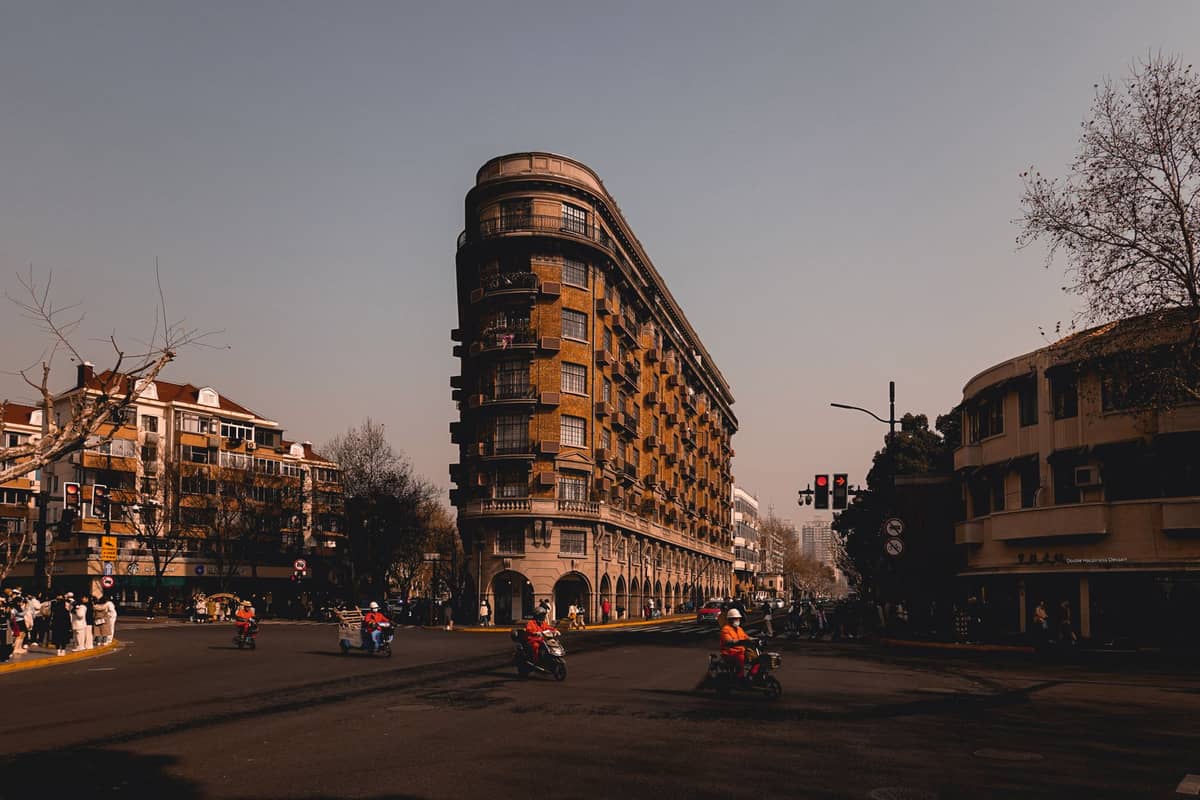
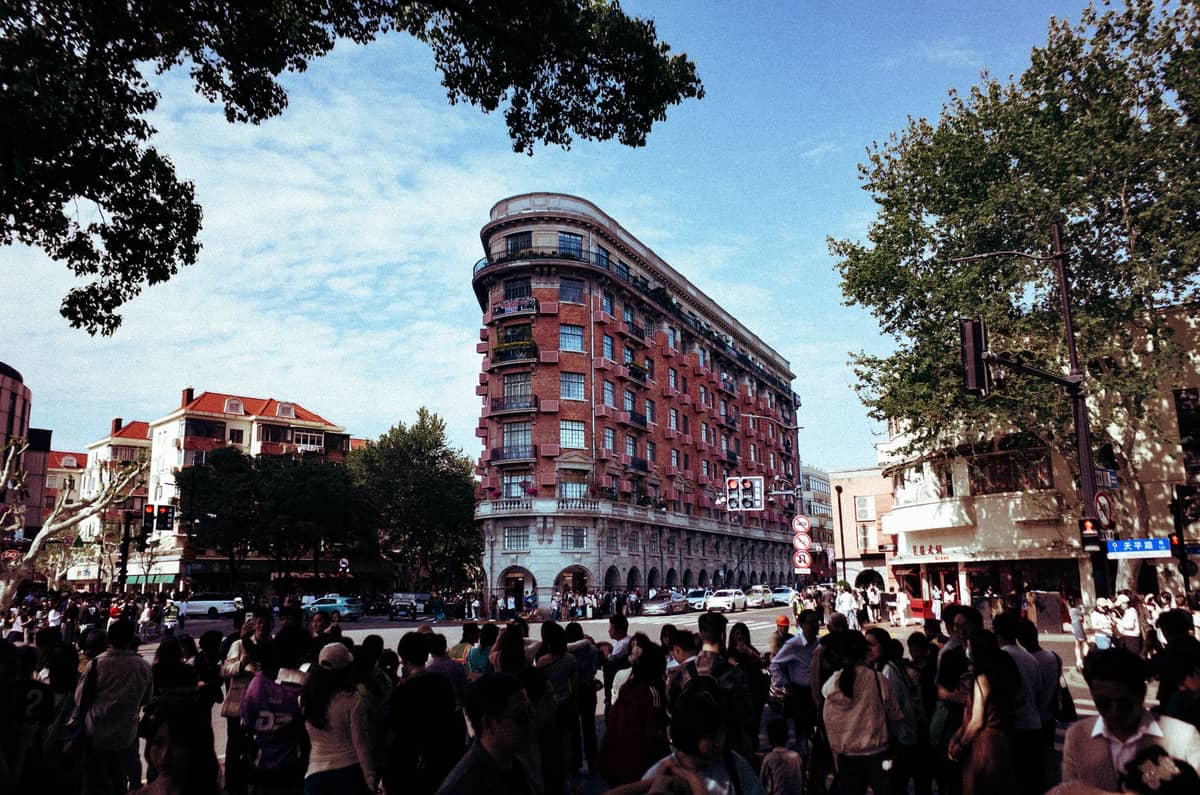
Shanghai's Art Deco period ran from roughly 1925 to 1941 and produced what many architectural historians consider one of the three largest surviving concentrations of the style in the world, alongside New York and Miami. The defining characteristics are streamlined geometric massing, stepped or ziggurat silhouettes, sunburst ornaments, zigzag friezes, and vertical emphasis. Shanghai added a local layer: dragons, lotus motifs, and Chinese lattice patterns woven into fundamentally Western structural forms. The result is an architectural language that does not exist anywhere else in quite the same way.
The urgency around seeing this is real. Surveys by the Shanghai Municipal Planning Bureau indicate that roughly 30% of the pre-1937 Art Deco stock has been demolished since 1980. What survives is distributed unevenly across several districts. Surveys by preservation groups identify the Former French Concession, Jing'an, and pockets of Huangpu as the densest concentrations. A common mistake is looking only on the Bund and missing the far richer Art Deco fabric one or two kilometers inland.
- Jing'an District Contains some of the best-preserved 1930s residential and commercial Art Deco blocks, including apartment buildings with intact lobbies and stairwells. The area around Nanjing West Road rewards slow walking.
- Former French Concession Wukang Road and the surrounding lanes have a concentration of Republican-era villas and low-rise Art Deco apartments. Many are now cafes or boutiques, making the interiors occasionally accessible.
- Peace Hotel (Sassoon House, 1929) On the Bund at the corner of East Nanjing Road, this is arguably the city's most celebrated Art Deco building. The bronze pyramid roof, the jazz bar, and the original interior detailing make it worth entering even if you are not staying.
- Paramount Ballroom (1933) On Yuyuan Road in Jing'an, this is one of the finest surviving Art Deco entertainment venues in Asia. The curved facade, neon signage, and tiered interior are intact. Still operating as a dance hall.
- Bank of China Building (1937) The only Bund building designed by a Chinese architect. Its stepped massing fuses Art Deco vocabulary with traditional Chinese roof forms in a way that influenced a generation of Shanghai architects.
It is also worth correcting a second common misconception: Art Deco in Shanghai was not imported wholesale by French architects. Research documents a diverse authorship that included American firms, British architects, and Chinese architects such as Robert Fan and Poy Gum Lee who studied abroad and returned to practice locally. The style was genuinely adopted and adapted rather than simply installed. Today, preservation groups note that 'Deco Echo' buildings, contemporary structures that reference Art Deco detailing, appear across multiple districts, suggesting the style remains an active design reference in the city rather than a purely historical artifact. For a structured walking itinerary through the key streets, the best self-guided walks in Shanghai guide includes an Art Deco-focused route.
Lujiazui Skyscrapers: The Three Towers Worth Understanding
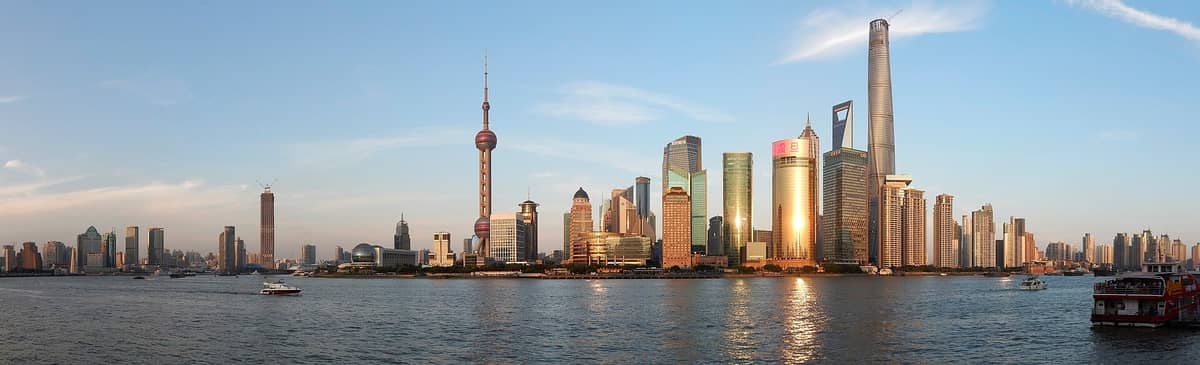
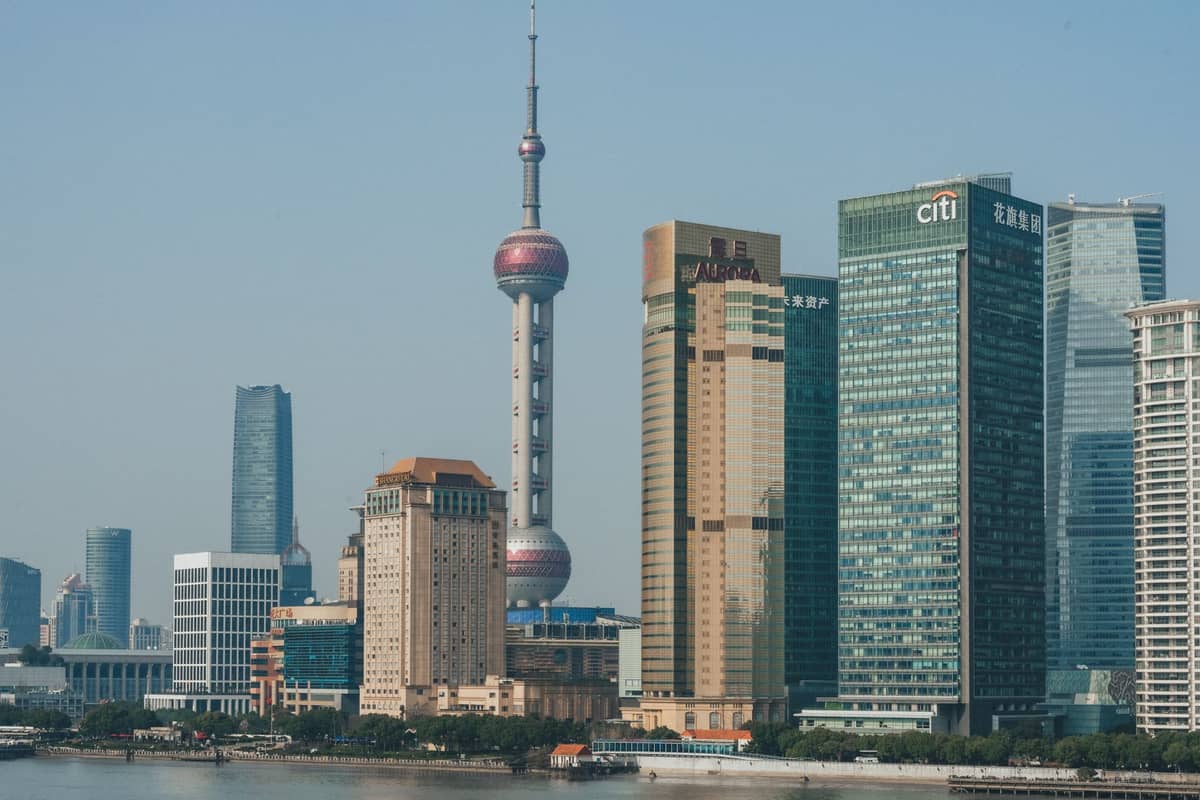
Pudong's Lujiazui financial district contains the three most architecturally significant skyscrapers in China's recent building history, each representing a different decade and a different philosophy. They are also, conveniently, within 500 meters of each other and visible from the Bund across the river.
- Jin Mao Tower (1999, 420.5m) Designed by American firm SOM, the Jin Mao interprets the pagoda form through a postmodern lens, with 13 setbacks that echo traditional timber tower proportions. Its 88 floors reflect the Chinese association of that number with good fortune. The observation deck on floor 88 offers views into the Grand Hyatt hotel atrium below, one of the more unusual indoor views in Shanghai.
- Shanghai World Financial Center (2008, 492m) The SWFC was controversial before it was built: its original circular aperture at the top was redesigned into a trapezoid after criticism that it resembled the rising sun emblem. The resulting shape is structurally logical (reducing wind load) but reads as awkward from certain angles. Its Sky Walk observation area on floors 94, 97, and 100 includes a glass-floored section that is genuinely vertiginous.
- Shanghai Tower (2015, 632m) Currently China's tallest building and the world's third-tallest completed tower. The twisted form, which rotates 120 degrees from base to top, reduces wind loads by around 24% compared to a conventional rectangular tower. The 118th-floor observation deck is open approximately 08:30-22:00 daily, with last admission around 21:30. Standard adult tickets are around ¥180, rising to approximately ¥199 during peak periods and public holidays. A combination ticket including the tuned mass damper exhibit runs around ¥268. Verify current prices at shanghaitower.com.cn before visiting.
✨ Pro tip
Observation deck visibility from all three towers depends heavily on air quality and weather. Summer afternoons (June-August) often produce haze that cuts visibility significantly. The clearest conditions typically occur on cold, dry days in October-November and March-April. Check the Shanghai air quality index the morning of your planned visit and consider rescheduling if PM2.5 is above 100. The Shanghai Tower's own website notes that hazy conditions substantially reduce the view from floor 118.
For the best view of all three towers simultaneously, the Bund promenade is the obvious vantage point, but the Lujiazui riverside promenade on the Pudong side offers a different perspective, looking back toward the Bund's colonial facades. The best views in Shanghai guide covers additional vantage points including rooftop bars and lesser-known observation terraces that avoid the queues at the main decks.
Architectural Walking Zones: Planning Your Route
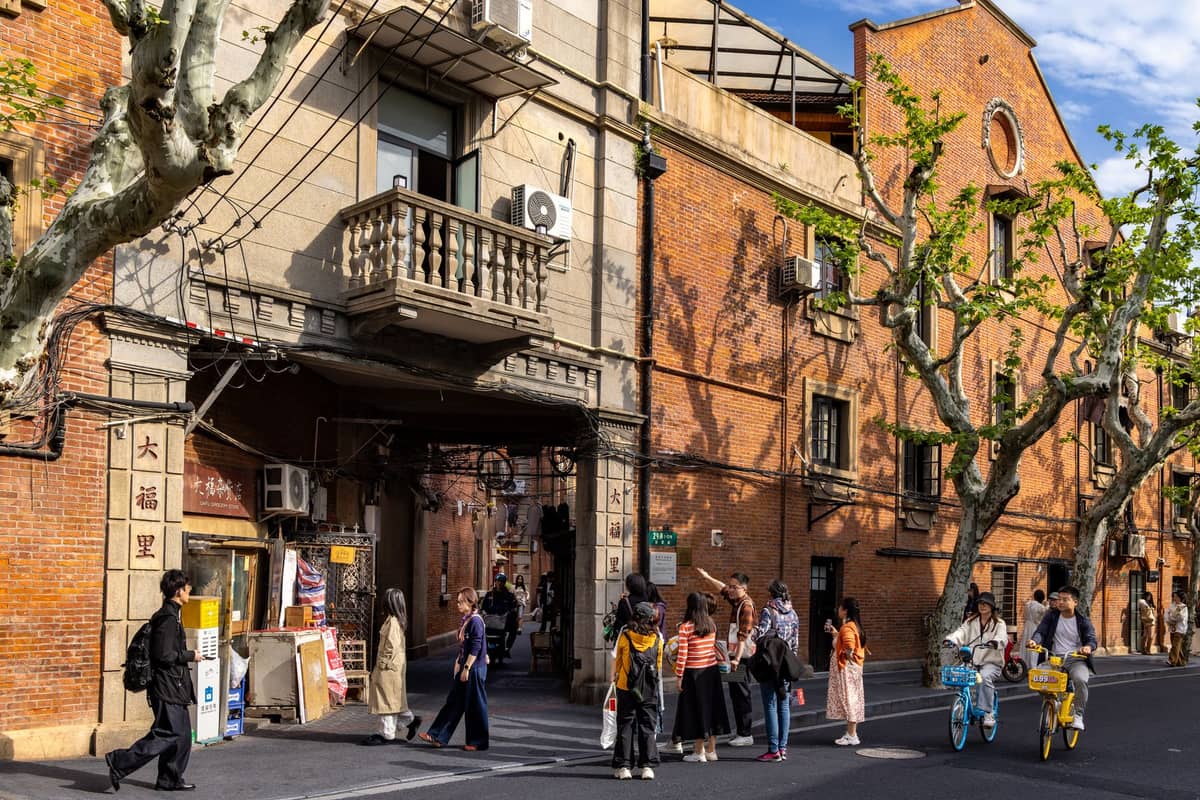
Shanghai's architectural sights are distributed across areas that are not walkable from each other without metro connections. The practical approach is to group visits by district and treat each as a half-day unit. Three zones cover the major ground.
Zone 1 covers the Bund and People's Square, accessible via metro Lines 2 and 10. This pairs the waterfront colonial facades with the Shanghai Museum and the Shanghai Urban Planning Exhibition Center, the latter of which contains a detailed scale model of the entire city and is genuinely useful for orienting yourself to the urban geography before exploring on foot.
Zone 2 covers the Former French Concession and Jing'an, best accessed via metro Lines 1 and 12. This is where the density of Art Deco and Republican-era residential architecture is highest. Wukang Road is the most photographed street in this zone, but the blocks between Huaihai Road and Fuxing Road contain arguably more intact streetscapes. Allow three to four hours to walk this area without rushing.
Zone 3 is Lujiazui in Pudong, reached via metro Line 2 to Lujiazui station or by ferry from the Bund (around ¥2, crossing time approximately 10 minutes). The ferry is the better choice if you have time: approaching the towers by water from the Bund replicates the visual experience that made this skyline famous. Budget two to three hours for the observation deck plus exterior walking in Lujiazui.
- Morning (08:00-09:30): Walk the Bund promenade before tour groups arrive. Light falls on the colonial facades from the east at this hour.
- Midday (10:00-13:00): Former French Concession Art Deco walk via metro to South Shaanxi Road or Changshu Road station.
- Afternoon (14:00-17:30): Ferry to Lujiazui or metro Line 2. Shanghai Tower observation deck. Exterior walk around the three towers.
- Evening (18:30-21:00): Return to the Bund by ferry for the illuminated skyline. Both banks light up fully after 19:00.
Practical Details: Costs, Timing, and What to Skip
The Bund promenade and its exterior facades are free. The Peace Hotel lobby is technically accessible to non-guests during the day, though you will be steered toward the bar or restaurant if you linger. Most colonial-era bank buildings on the Bund now operate as bank branches or hotel lobbies, and only a few allow unrestricted interior access. The Bund History Museum (inside the north end of the promenade tunnel) is small but free and worth the 20 minutes.
For skyscraper observation decks, the Shanghai Tower at ¥180 standard adult is the most expensive but also the highest and architecturally the most interesting building. The SWFC Sky Walk (floors 94-100) runs around ¥180 for the top-level combo ticket, and the Jin Mao Tower deck on floor 88 is typically the least expensive option at around ¥120-140. All prices are subject to change; verify at official sites before visiting. Combination tickets covering multiple towers exist but only make financial sense if you plan to visit all three on the same day, which is a lot of elevator time and can feel repetitive.
💡 Local tip
If budget is a constraint, skip the paid observation decks entirely and take the free Huangpu River ferry (around ¥2) between the Bund and Lujiazui. The midpoint of the crossing, standing on the open deck, gives you an unobstructed panoramic view of both banks simultaneously that no observation deck can replicate. The best light for this crossing is during the golden hour before sunset.
Getting around between these zones is straightforward on the Shanghai Metro, one of the world's largest rapid transit networks. Line 2 is the primary east-west spine connecting Pudong Airport, Lujiazui, People's Square, and Jing'an Temple. Fares within the central city typically run around ¥3-6 depending on distance. For a full orientation to moving around the city, the getting around Shanghai guide covers metro, taxi, ferry, and ride-hailing options in detail.
FAQ
Is the Bund in Shanghai really Art Deco?
Mostly no. The Bund's approximately 52 buildings are predominantly in earlier European Revival styles: Neoclassical, Baroque, Romanesque, and Gothic. Only around three to five buildings on the Bund are genuinely Art Deco, with the Customs House (1927) and the Bank of China Building (1937) being the clearest examples. Most travel descriptions oversimplify this. The larger Art Deco concentration is found inland in the Former French Concession and Jing'an districts.
How much does the Shanghai Tower observation deck cost?
Standard adult tickets are around ¥180 for the 118th-119th floor deck. Prices rise to approximately ¥199 during peak periods and public holidays. A combination ticket that includes the tuned mass damper and upper Sky 632 art space runs around ¥268. These prices change periodically; verify current rates at the official website shanghaitower.com.cn before visiting. The deck is open approximately 08:30-22:00 daily with last admission around 21:30.
What is the best time of day to walk the Bund?
Weekday mornings before 09:00 are the least crowded and offer east-facing light on the colonial facades. Evening visits between 19:00 and 21:00 are the most visually dramatic because both the Bund buildings and the Lujiazui towers illuminate after dark. Avoid weekend evenings if you are sensitive to crowds as the promenade becomes very congested.
Where is the best place to see Art Deco architecture in Shanghai?
The Former French Concession, particularly around Wukang Road, Huaihai Middle Road, and the streets between Fuxing Road and Julu Road, contains the densest surviving concentration of 1930s Art Deco and Republican-era residential architecture. In Jing'an, the area around Nanjing West Road and Yuyuan Road has notable commercial Art Deco buildings including the Paramount Ballroom (1933). The Bund alone is not representative of Shanghai's real Art Deco heritage.
Can you see the Shanghai skyline without paying for an observation deck?
Yes. The Bund promenade is free and gives an unobstructed view of the Lujiazui towers across the river. The Huangpu River ferry (around ¥2) between the Bund and Lujiazui offers a moving panorama from water level that is arguably more dramatic than any static deck view. Several rooftop bars in the Former French Concession and on the Bund itself offer elevated views without a dedicated admission charge, though drink minimums apply.