Shanghai Museum: China's Premier Ancient Art Collection, Explained
The Shanghai Museum's main permanent collection of ancient Chinese art is now at Shanghai Museum East on Century Avenue, with free timed admission. The original People's Square building hosts ticketed special exhibitions. The bronze, ceramic, and painting holdings remain among the most important in China.
Quick Facts
- Location
- 201 Renmin Avenue, Huangpu District, Shanghai 200003
- Getting There
- People’s Square Station (Metro Lines 1, 2, 8), Exit 1
- Time Needed
- 2–4 hours for permanent galleries; full day if a special exhibition is on
- Cost
- Free (permanent galleries); ticketed for special exhibitions (prices vary)
- Best for
- History enthusiasts, art collectors, first-time visitors to China, rainy-day culture
- Official website
- www.shanghaimuseum.net/mu/frontend/pg/m/en/index
What the Shanghai Museum Actually Is
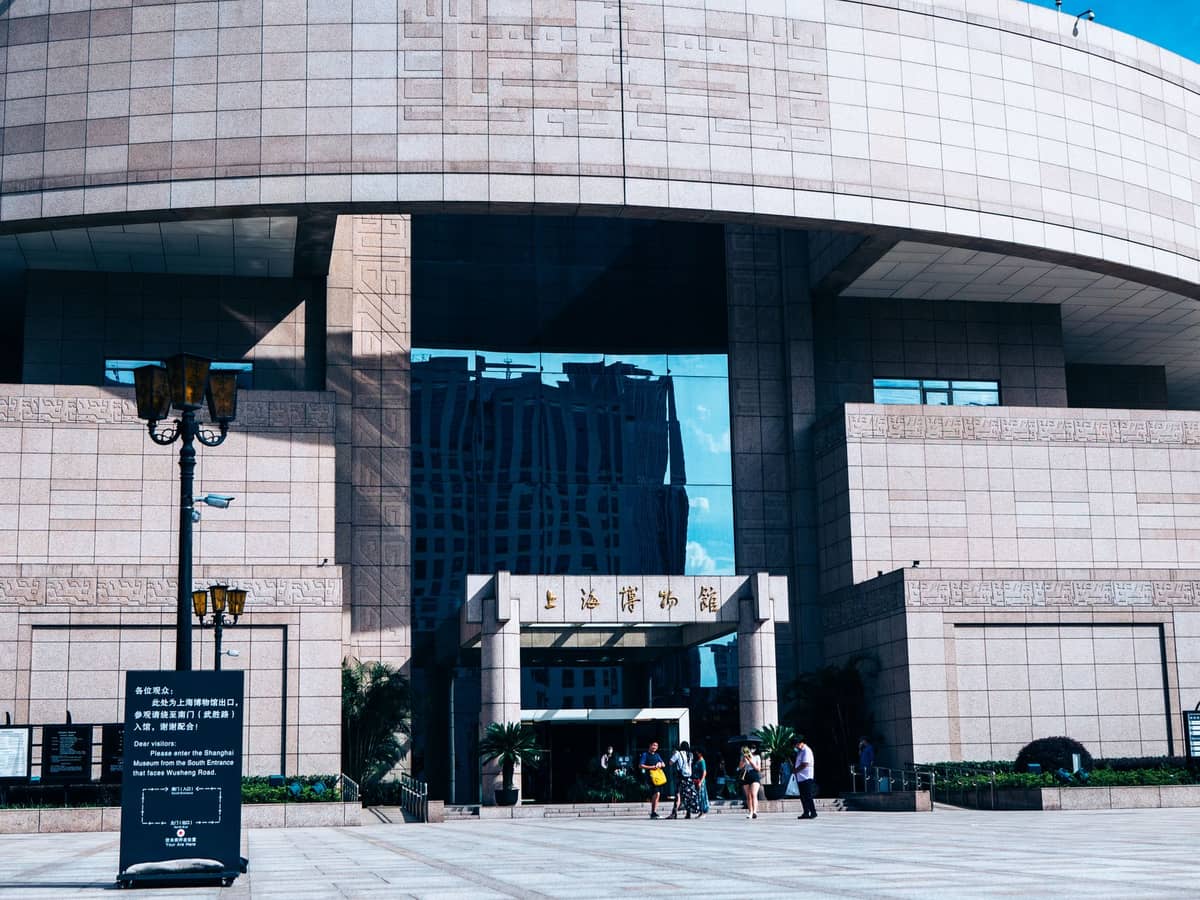
The Shanghai Museum (上海博物馆), located at 201 Renmin Avenue in the Huangpu District, is China's foremost comprehensive museum of ancient art. It sits on the southern edge of People's Square, occupying a purpose-built modern building completed in 1996 whose circular roof and square base were designed to echo the ancient Chinese cosmological concept of a round sky over a square earth. The symbolism is deliberate and worth noting before you walk in.
The permanent collection spans roughly 120,000 objects across multiple galleries, covering bronzes, ceramics, calligraphy, paintings, jade, coins, furniture, seals, and minority nationalities' art. This is not a colonial trophy collection or a curated tourist experience built around a single showpiece. It is a scholarly institution with deep holdings, and it behaves like one: lighting is restrained, labels are bilingual, and the flow between galleries rewards those who slow down. This is not a colonial trophy collection or a curated tourist experience built around a single showpiece. It is a scholarly institution with deep holdings, and it behaves like one: lighting is restrained, labels are bilingual, and the flow between galleries rewards those who slow down.
💡 Local tip
Permanent galleries are free, but you may still need to reserve or collect an entry ticket depending on the current admission policy. On busy days, arrive early or book ahead through the museum's official website or WeChat mini-program.
The Permanent Galleries: What to Prioritize
The Bronze Gallery on the ground floor is where most serious visitors spend the most time. The collection covers over three millennia of ritual bronze-casting, from Shang dynasty food vessels with their densely patterned taotie masks to elegant Zhou-period bells whose inscriptions document ancient political alliances. The objects are lit to show surface patination, and the quality of casting visible even on mid-sized pieces is striking. Allow at least 45 minutes here alone.
The Ceramics Gallery is equally significant. It traces the full arc of Chinese ceramic production from primitive Neolithic pottery through to the refined court wares of the Qing dynasty. The Song dynasty celadons, with their muted blue-grey glazes, and the cobalt-blue underglaze porcelain of the Yuan and Ming periods are the highlights that draw specialist attention. For most visitors, the sheer range across a single continuous display case makes the evolution of craft legible in a way that reading cannot replicate.
The Calligraphy and Painting galleries occupy upper floors and are quieter, often bypassed by visitors less familiar with the tradition. That makes them worth seeking out. Running script examples from the Jin dynasty masters, hanging scrolls of ink landscapes from the Song and Yuan periods, and the album leaves of Ming literati painters all hang in low-light rooms designed to protect the works. If you know nothing about Chinese calligraphy, the introductory panels in English do provide genuine context rather than superficial captions.
The Minority Nationalities Art Gallery, covering costumes, textiles, and ceremonial objects from across China's ethnic groups, is frequently overlooked. It offers a counterpoint to the Han-centric narrative of the other galleries and is worth thirty minutes. For context on Shanghai's broader cultural identity, pairing this visit with a walk through Tianzifang or a browse through the M50 Creative Park gives a more complete picture of how the city relates to its own history.
Tickets & tours
Hand-picked options from our booking partner. Prices are indicative; availability and final rates are confirmed when you complete your booking.
Shanghai city and Zhujiajiao water town private tour with lunch
From 371 €Instant confirmationFree cancellationShanghai private tour with iconic landmarks of the old and new city
From 284 €Instant confirmationFree cancellationShangai Yuyuan Garden entrance tickets
From 9 €Instant confirmationFree cancellation
Timing Your Visit: How the Experience Changes by Hour
The museum opens at 09:00 Tuesday through Sunday, with last entry at 15:00 and closing at 17:00. It is closed on Mondays, except during national holidays. During the current exhibition period, a day-and-evening session runs to 21:00, with last entry at 19:00, on select days.
Weekday mornings between 09:00 and 11:00 offer the most comfortable conditions. Crowd levels in the Bronze and Ceramics galleries are manageable, and the lighting in the ground-floor atrium catches the building's interior geometry well. By midday, school groups and tour buses arrive, and the central atrium becomes congested enough that reading object labels requires patience. On weekends, this crowd density arrives earlier, sometimes before 10:00.
Afternoon visits, particularly from 14:00 onward on weekdays, can be pleasant, though guided tour groups tend to cluster around the most famous objects in the Bronze and Ceramics galleries. Aiming for the upper-floor galleries first and working downward in the afternoon is a reasonable strategy when crowds are present.
ℹ️ Good to know
During summer extended hours (July 1–August 10), the museum stays open until 21:00. An early evening visit after 18:00 gives you notably more space in the galleries and a cooler walk across People's Square afterward.
Getting There and Navigating the Building
The most straightforward route is Metro Lines 1, 2, or 8 to People's Square Station. Use Exit 1, which deposits you on the north side of People's Square. Walk south across the square for roughly three to five minutes and the building's circular silhouette becomes visible ahead. The main entrance faces north across the square. There is no need for taxis for this destination unless you are traveling from a distant district.
People's Square Station is also the interchange for exploring central Shanghai more broadly. The People's Square area includes the Shanghai Urban Planning Exhibition Center and the Shanghai History Museum within walking distance, making this a sensible base for a full cultural day.
The building itself is wheelchair accessible, with ramps at the main entrance and elevators connecting all floors. Strollers can navigate the internal ramps between gallery levels. The cloakroom near the entrance is free to use and strongly recommended if you are carrying a large bag, as some narrow display corridors become awkward with backpacks.
Audio guides are available in multiple languages including English. The museum's official app also provides English-language content keyed to individual objects. Mobile data and signal inside the building are generally adequate for app use, though the official WeChat mini-program requires a China phone number to book tickets.
Special Exhibitions: What to Expect and What to Pay
Beyond the permanent galleries, the Shanghai Museum hosts major rotating special exhibitions that attract significant attention and require separate ticketed entry. Exhibition subjects in recent years have included ancient Egyptian civilization and themed loans from international partner institutions. Ticket pricing varies by exhibition and visitor category, with discounted rates typically available for students, seniors, and other groups.
Special exhibitions often sell out well in advance during peak tourist seasons (late April through May, October through November) and Chinese national holidays. Check the museum's official website before your visit to confirm what is showing and whether advance booking is available. Ticket prices are denominated in CNY and should be verified against current listings, as they change with each exhibition.
⚠️ What to skip
If a major special exhibition is running during your visit, factor in significant additional time: queue time for tickets, queue time to enter, and increased density throughout all galleries as visitor numbers spike museum-wide.
Honest Assessment: Who Gets the Most from This Visit
The Shanghai Museum rewards preparation. Visitors who arrive with some knowledge of Chinese dynastic history, ceramic traditions, or bronze-casting culture will leave with a substantially richer experience than those walking in cold. The English-language labels are informative but concise, and the objects themselves do not perform for the viewer. This is not an interactive museum with immersive technology. It is a serious art institution.
Travelers primarily interested in Shanghai's modern identity, its architecture and urban energy, may find the experience less engaging than a walk along the Bund promenade or an afternoon in the Former French Concession. Families with young children will find limited interactive elements in the permanent galleries, though the special exhibitions occasionally include more accessible formats.
Anyone with a serious interest in pre-modern Chinese art, cultural history, or material culture will find this museum exceptional relative to its peers. The depth of the bronze and ceramic holdings in particular is not replicated at any other institution in the city. As a free destination for permanent galleries, it also represents significant value in a city where cultural attraction costs add up quickly.
For travelers building a broader itinerary around Shanghai's cultural institutions, the museum fits naturally into a route covered in the best museums in Shanghai guide, and the surrounding area is also explored in the best self-guided walks in Shanghai.
Photography, Comfort, and Practical Details
Photography without flash is permitted in most permanent galleries. Tripods and monopods are generally not allowed inside the building. The low-light conditions in the Calligraphy and Painting galleries make it difficult to capture useful images without a phone with strong low-light capability. The Bronze Gallery, with its slightly brighter display lighting, yields the most photogenic results.
The museum café and museum shop are located on the ground floor near the exit. The shop stocks a respectable range of replica objects, art books, and design items tied to the collection. Quality varies but the ceramic replicas based on collection pieces are popular purchases. The café is functional but not a destination in itself.
Wear comfortable shoes. The building's floor surfaces are polished stone, which becomes slippery for those in smooth-soled footwear after hours of walking. The galleries are air-conditioned year-round, which is welcome in Shanghai's summers, but can feel cold in winter if you have been walking outside. A light layer is useful in any season.
Insider Tips
- If you are visiting during summer extended hours (July 1–August 10), arriving after 18:00 gives you the galleries in near-solitude. The bronze and ceramics rooms feel genuinely different without the daytime crowd.
- The Bronze Gallery display cases are arranged so that walking the full perimeter in order gives a chronological progression from Shang through Zhou. Many visitors cut across the room and miss the sequence. Follow the cases along the walls first.
- Free timed tickets for permanent galleries can be collected at the entrance on the day, but on busy weekends they may be limited. Book via the museum's WeChat mini-program or official website in advance to avoid the walk being wasted.
- The Minority Nationalities Art Gallery on an upper floor is reliably the quietest room in the building regardless of overall visitor numbers. It is a useful retreat if the main galleries feel too crowded.
- The museum shop carries a small selection of scholarly catalogs from past exhibitions at discounted prices. These are among the best-value purchases in the building and provide reference material that standard guidebooks do not replicate.
Who Is Shanghai Museum For?
- Travelers with a genuine interest in Chinese history, art, or archaeology who want depth over spectacle
- First-time visitors to China seeking cultural context before exploring the city
- Rainy-day or hot-midday refuge, given the free entry and air-conditioned galleries
- Independent travelers building a full cultural day around People's Square and its surrounding institutions
- Budget-conscious visitors who want a high-quality museum experience without an entry fee
Nearby Attractions
Combine your visit with:
- Chongming Island
Chongming Island sits at the mouth of the Yangtze River, a vast alluvial island that functions as Shanghai's rural counterweight. Wetland reserves, a national forest park, cycling paths through farmland, and virtually no high-rises make it a genuinely different Shanghai experience.
- ERA Acrobatics Show
Running nightly at Shanghai Circus World in Jing'an District, ERA2 – Spirit of Shanghai is the city's flagship acrobatics production. Expect gravity-defying stunts, dramatic lighting, and a 60-to-100-minute show that needs no translation. Here is everything you need to know before buying a ticket.
- Jade Buddha Temple
The Jade Buddha Temple (玉佛禅寺, Yùfó Chán Sì) is one of Shanghai's most significant active Buddhist monasteries, housing two exceptional jade Buddha statues brought from Burma in the late 19th century. Unlike many temples that have become purely ceremonial attractions, this one functions as a working monastery, with monks in residence and daily rituals that visitors can witness firsthand.
- Jinshan City Beach
Jinshan City Beach (金山城市沙滩景区) is a man-made coastal resort on Hangzhou Bay, about 60 km south of central Shanghai. It is the closest thing to a genuine beach day the city offers, with designated swimming zones, a long promenade, and seasonal facilities. This guide covers what to realistically expect, when to go, and how to get there.