Jinshan City Beach: Shanghai's Seaside Escape Explained
Jinshan City Beach (金山城市沙滩景区) is a man-made coastal resort on Hangzhou Bay, about 60 km south of central Shanghai. It is the closest thing to a genuine beach day the city offers, with designated swimming zones, a long promenade, and seasonal facilities. This guide covers what to realistically expect, when to go, and how to get there.
Quick Facts
- Location
- No. 7555 Huhang Highway, Jinshan District, Shanghai — approx. 60 km south of People's Square
- Getting There
- Metro Line 1 to Jinjiang Park Station, then Shimei Line or Weimei Line bus to Shihua Automobile Station, then ~15‑min taxi
- Time Needed
- 3–5 hours on-site; allow a full day including travel from central Shanghai
- Cost
- ~CNY 100/adult peak swimming season (June 20–Sept 10); ~CNY 60/adult off-season. Verify before visiting.
- Best for
- Families, swimmers, anyone needing a break from the city
What Jinshan City Beach Actually Is
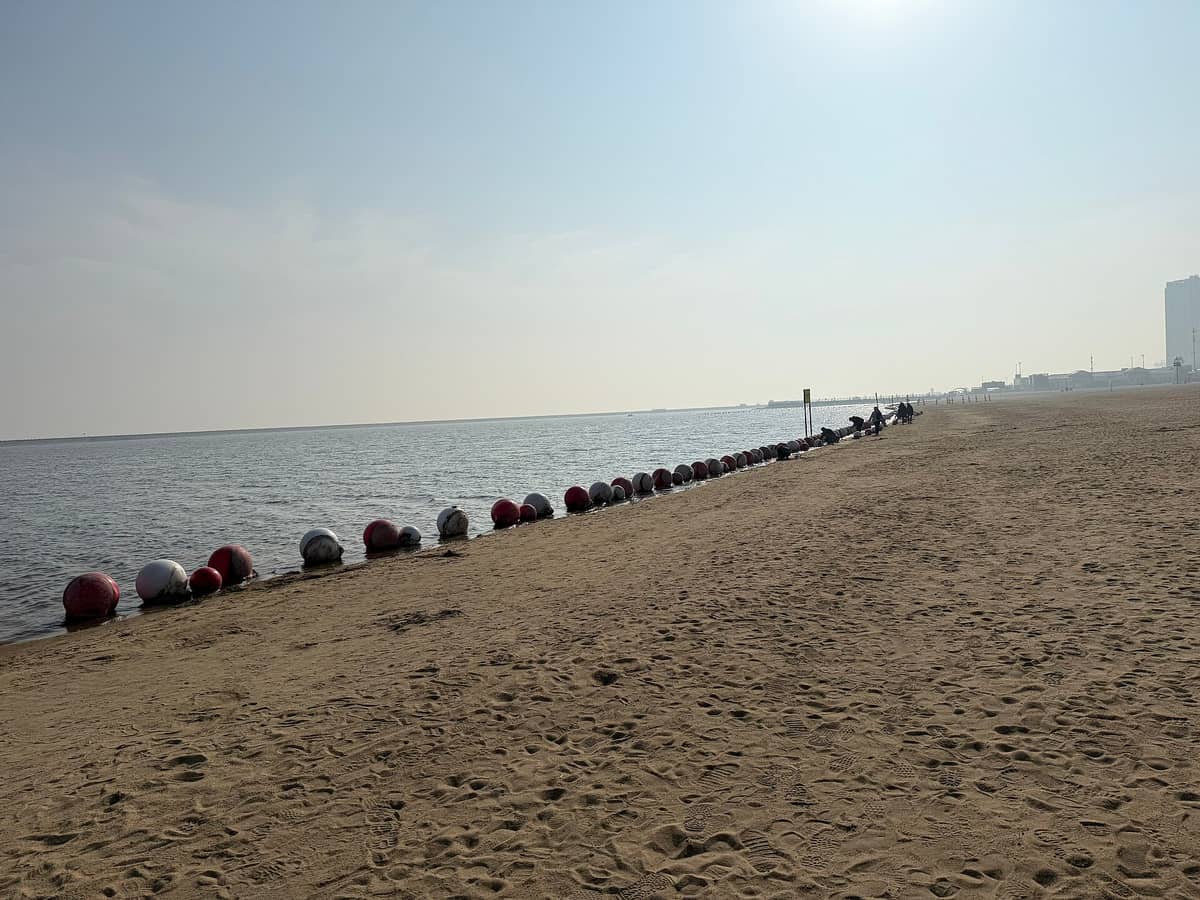
Shanghai Jinshan City Beach, officially known as 金山城市沙滩景区 (Jinshan City Beach Scenic Area), is a man-made seaside resort built along the northern shore of Hangzhou Bay. The beach was developed as part of Jinshan District's coastal leisure infrastructure and remains the closest proper sandy beach to Shanghai's urban core. It is not a natural stretch of coastline discovered by tourism — it was engineered, which matters for setting expectations.
The sand is golden and well-maintained, and the swim zone is officially managed with lifeguards during peak season. The shoreline is long enough that even on busy weekends in July, you can walk a few hundred metres and find breathing room. The water is Hangzhou Bay, not the open South China Sea — it is shallow near shore, generally calm, and on clear days you can see the faint outline of the opposite Zhejiang coast. The water colour is a turbid green-brown, not the turquoise of a tropical beach, and that is a truthful detail any first-time visitor should know before making the trip.
ℹ️ Good to know
Jinshan City Beach is a legitimate, enjoyable beach day out from Shanghai — but it is not a tropical destination. The water is murky and the surroundings are suburban. Come for the sand, the sea air, and the space. Do not come expecting crystal water or dramatic scenery.
When to Visit: Seasonal Hours and What Changes
The beach operates year-round, but the experience varies significantly by season. The official swimming season typically runs from June 20 to September 10, with extended hours of 08:30 to 21:30. This is when the site is fully operational: the swim zones are open, water sports rentals appear on the beach, food stalls cluster near the promenade, and weekend crowds peak hard. Arriving before 09:00 on a July or August Saturday is the single most effective thing you can do to enjoy the beach without fighting for sand space.
Outside swimming season, the scenic area is open 08:30 to 20:30 from March 1 through June 19 and again September 11 through November 30. From December through February, hours shorten to 08:30 to 17:30. In those off-season windows, admission drops to approximately CNY 60 for adults, and in some periods the beach-side area may be accessible at no charge, with tickets required mainly for specific facilities. Autumn visits — particularly October and early November — offer a quieter, more contemplative experience: the salt air carries a cooler edge, the promenade clears of families, and the light in the late afternoon is softer and better for photography.
⚠️ What to skip
Ticket prices and opening hours are revised seasonally. Always check the official Shanghai Municipal Government scenic spot page or the Jinshan District Government portal before visiting, as figures change between years.
Summer in Shanghai means temperatures above 32°C with high humidity, and the beach absorbs and radiates that heat intensely from midday onward. If you are visiting in July or August, the 08:30 opening is not just a way to beat crowds — it is genuinely more comfortable. The evening hours, from around 18:00 onward, also recover some relief as the sea breeze picks up and the harsh overhead light softens.
Tickets & tours
Hand-picked options from our booking partner. Prices are indicative; availability and final rates are confirmed when you complete your booking.
Shanghai city and Zhujiajiao water town private tour with lunch
From 371 €Instant confirmationFree cancellationShanghai private tour with iconic landmarks of the old and new city
From 284 €Instant confirmationFree cancellationShangai Yuyuan Garden entrance tickets
From 9 €Instant confirmationFree cancellation
Getting There: The Route in Plain Language
The journey from central Shanghai takes roughly 60 to 90 minutes depending on connections. The standard public transport route goes like this: take Shanghai Metro Line 1 south to Jinjiang Park Station, exit, and walk about one minute to Shanghai Southwest Bus Station. From there, board the Shimei Line or Weimei Line bus toward Shihua Automobile Station. Once at Shihua, a local taxi covers the remaining distance to the beach in around 15 minutes for approximately CNY 7.
If you are driving, the most direct route uses the S4 Expressway (exit at Jinshan New City) or a combination of G50/G60 connecting to G15 then S4 toward Jinshanwei. Driving allows more flexibility for timing and carrying beach gear, which matters if you have children. For those travelling with kids, it is worth reading through Shanghai with kids before planning a beach day — the guide covers practical logistics for family outings across the city.
Local buses including the Shangshi Line, Jinshan Route 2, and Jinshan Route 6 also serve stops within walking distance of the beach, though for visitors unfamiliar with the Jinshan area these can be harder to navigate without Mandarin. Didi (the Chinese ride-hailing app) works in this district and is a practical option for the final leg from any bus terminus, provided you have a China-compatible phone number and payment method set up.
💡 Local tip
Set up Didi before leaving central Shanghai, not at the bus station. Connectivity in Jinshan is fine, but troubleshooting an app registration while standing on a street corner adds unnecessary friction to the day.
The Beach Itself: What You See and Feel
The main promenade runs parallel to the shoreline and is paved and flat, making it accessible on foot for most visitors. Behind the beach, the resort zone includes showers, changing facilities, and food options that expand substantially during swimming season. The sand is pale, kept reasonably clean, and extends wide enough that there is meaningful space between towel groups even on busy days — though peak-season weekends in August are genuinely crowded and require realistic expectations.
The swim zones are roped and supervised during the official swimming season. Outside those designated areas, entering the water is not permitted and the boundary is enforced. The water at shin depth has a soft, sandy bottom. The smell of the sea here is faintly briny and flat — Hangzhou Bay is an estuary-influenced body of water, not an ocean beach with a sharp salt smell. Children find the shallow, calm conditions ideal, and the beach is genuinely well-suited to families with young kids who want supervised, safe swimming.
The promenade is best in the morning, when the light comes in low from the east across the bay and the air has not yet heated up. By noon, the exposed surface of the beach becomes uncomfortably hot underfoot without sandals, and shade is limited. Bring your own umbrella or plan around the food and rest areas in the resort zone.
Photography and Practical Logistics
The best light for photography falls in the first two hours after opening and in the hour before closing. Early morning shots along the empty promenade with the bay behind are the strongest compositional option the site offers. For general travel photography in and around Shanghai, the best photo spots in Shanghai guide covers the city's more famous viewpoints, but Jinshan's value is in offering a completely different visual register — wide, low, and coastal — compared to the skyline and street photography that dominates in town.
Accessibility on the promenade level is reasonable for wheelchairs and strollers — the paved surface is flat and wide. However, the sand itself and the beach approach areas are not wheelchair-friendly. Public transport access involves multiple transfers and walking segments that will be challenging for visitors with significant mobility limitations. Arriving by car or taxi is the more practical option for anyone with accessibility needs.
Bring cash as well as a mobile payment option (Alipay or WeChat Pay). Not every vendor in the resort zone accepts card payments, and smaller food stalls near the beach operate cash-only. Sunscreen, a hat, and water shoes are worth packing. The sand is not coarse or rocky but the approach from some sections involves occasional shell debris.
Context: Where Jinshan Beach Fits in Shanghai
Jinshan District is one of Shanghai's outer districts, positioned in the southwest of the municipality. It is industrial and suburban in character — the landscape between the city and the coast is not particularly scenic. Visitors who have explored the urban highlights and are looking for a day away from concrete will find the trip worthwhile, but it requires committing to travel time. For a different kind of day trip from the city, the Zhujiajiao water town offers a contrasting experience — historic canals and ancient architecture rather than shoreline — and is roughly comparable in travel time from the city centre.
For those interested in the broader range of Shanghai's outer districts, day trips from Shanghai covers the full picture of what is reachable in a day, including coastal, rural, and historic options. Jinshan Beach is the only one of those options that gives you actual sea swimming within the municipality.
It is worth noting that Jinshan Beach is sometimes grouped with other outdoor leisure spots in Shanghai, but it occupies a specific niche: it is the only place within Shanghai where supervised ocean swimming is available. Century Park in Pudong offers green space, and Chongming Island offers nature and wetlands, but neither provides a beach. For families with children who specifically want sand and swimming, Jinshan is the practical answer within the city limits.
Who Should Skip This
If you are visiting Shanghai for a short stay of two or three days and your priority is the city's architecture, food, and cultural sites, Jinshan Beach will likely feel like a detour that costs more time than it returns. The round trip from central Shanghai chews up at least two to three hours of travel, and the beach, while pleasant, is suburban in feel.
Visitors who arrive expecting a tropical-quality beach will be disappointed. The water is not clear, the surroundings are not scenic in a postcard sense, and the facilities, while functional, are not resort-level. Travellers returning from Hainan or Southeast Asian coastlines in the same trip will find the comparison unflattering. Come on its own terms and it delivers; come with inflated expectations and it does not.
Insider Tips
- Arrive at opening (08:30) on weekday mornings in summer for the best experience — you get the cool morning air, uncrowded sand, and the lifeguard zones to yourself before families begin arriving around 10:00.
- The taxi from Shihua Automobile Station to the beach is short and cheap (around CNY 7), but on summer weekends taxis can be scarce on the return journey. Arrange your return in advance or use Didi — do not count on flagging one down easily in the late afternoon.
- Off-season visits in October and November offer the quietest experience and lower admission. The water is too cold to swim, but the promenade walk and the sea air are genuinely enjoyable with far fewer people.
- Pack your own shade. Umbrellas and beach chairs are available for rent during swimming season, but supply is finite on peak days and they go fast. Bringing a compact beach umbrella is worth the extra luggage.
- The ticket office typically operates until around 16:30 even on days when the scenic area stays open later. Arriving after mid-afternoon may mean paying at the gate before they close sales — check current hours and arrive with time to spare.
Who Is Jinshan City Beach For?
- Families with young children who want safe, supervised swimming within Shanghai's city limits
- Shanghai residents or long-stay visitors looking for a half-day or full-day break from the urban environment
- Autumn travellers who want a quieter coastal walk with cooler temperatures and lower crowds
- Travellers on a budget seeking outdoor leisure — off-season admission is modest and the setting is spacious
- Anyone doing a themed Shanghai day trip focused on the city's more suburban and coastal side
Nearby Attractions
Combine your visit with:
- Chongming Island
Chongming Island sits at the mouth of the Yangtze River, a vast alluvial island that functions as Shanghai's rural counterweight. Wetland reserves, a national forest park, cycling paths through farmland, and virtually no high-rises make it a genuinely different Shanghai experience.
- ERA Acrobatics Show
Running nightly at Shanghai Circus World in Jing'an District, ERA2 – Spirit of Shanghai is the city's flagship acrobatics production. Expect gravity-defying stunts, dramatic lighting, and a 60-to-100-minute show that needs no translation. Here is everything you need to know before buying a ticket.
- Jade Buddha Temple
The Jade Buddha Temple (玉佛禅寺, Yùfó Chán Sì) is one of Shanghai's most significant active Buddhist monasteries, housing two exceptional jade Buddha statues brought from Burma in the late 19th century. Unlike many temples that have become purely ceremonial attractions, this one functions as a working monastery, with monks in residence and daily rituals that visitors can witness firsthand.
- M50 Creative Park
Built inside a former 1937 textile mill on the banks of Suzhou Creek, M50 Creative Park is Shanghai's most established contemporary art district. Over 100 galleries and studios occupy the preserved industrial buildings at 50 Moganshan Road, and entry to the grounds is free. Here is what to expect before you go.