Shanghai Urban Planning Exhibition Center: Shanghai's Future, Floor by Floor
The Shanghai Urban Planning Exhibition Center at People's Square puts the entire city under glass, literally. A multi-floor museum of city-shaping ambition, it's one of the few places in Shanghai where you can understand the full scale of what this metropolis is and where it intends to go. Entry is free, but advance reservation is required.
Quick Facts
- Location
- No. 100 Renmin Avenue, Huangpu District, near People's Square
- Getting There
- People's Square Station, Metro Lines 1, 2, and 8
- Time Needed
- 1.5 to 2.5 hours
- Cost
- Free, with mandatory real-name reservation via the official WeChat mini-program
- Best for
- Architecture lovers, urban planning enthusiasts, curious travelers, families
- Official website
- www.supec.org.cn/index-en.html?header=index
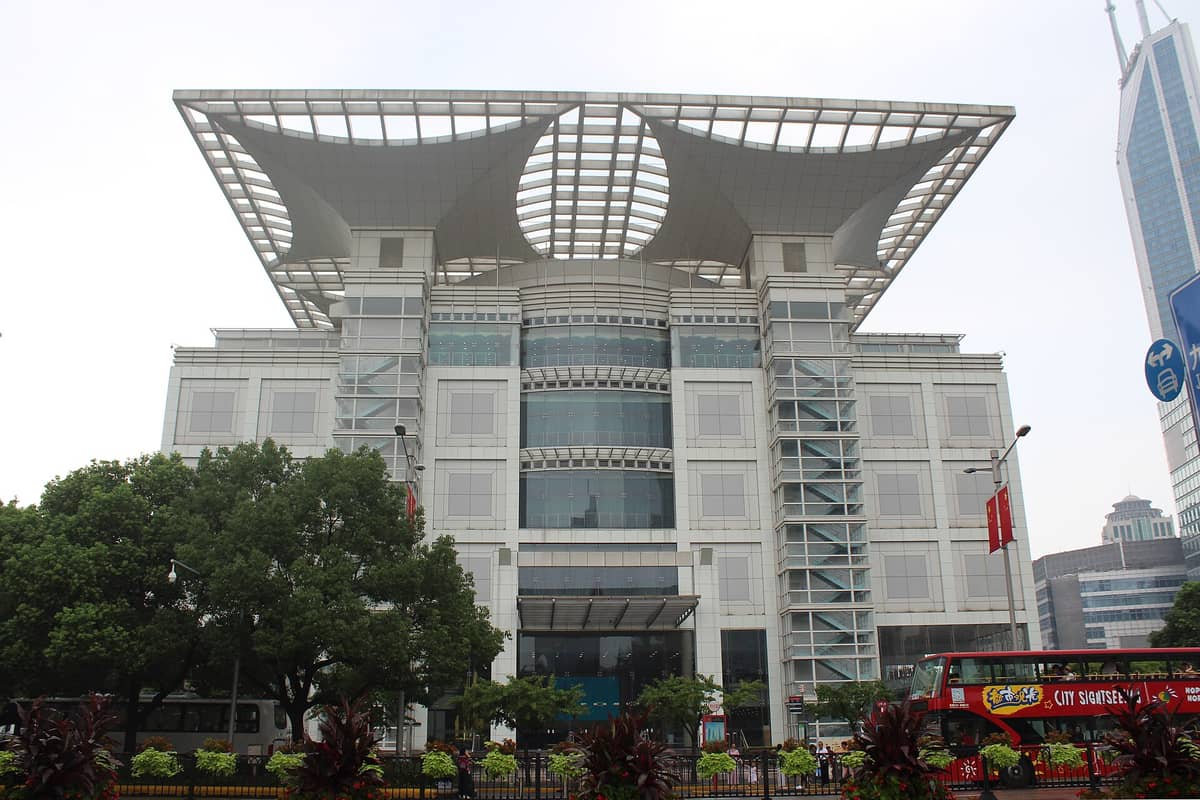
What Is the Shanghai Urban Planning Exhibition Center?
The Shanghai Urban Planning Exhibition Center (上海城市规划展示馆) is a public museum dedicated entirely to the planning, development, and projected future of Shanghai as a city. Opened on 25 February 2000, following a groundbreaking in April 1998, it occupies No. 100 Renmin Avenue in Huangpu District, near People's Square. After closing for a major renovation in December 2019, the center reopened on 9 August 2022 with updated exhibitions and a refreshed interior.
The building itself signals its purpose from the outside: a modern structure with a roof shape that echoes a blooming magnolia, Shanghai's city flower, rising above the civic plaza. Inside, the museum moves across multiple floors through themed exhibitions covering the city's geographic foundations, its urban history, ongoing infrastructure projects, and long-range development strategies. It is, by design, a government-operated institution, so the framing of Shanghai's growth is optimistic. That context is worth keeping in mind, though it does not diminish the genuine spectacle of what the museum contains.
⚠️ What to skip
Advance reservation is required. Tickets are free but must be booked via the official WeChat mini-program using a valid ID. Book at least a day ahead, especially on weekends and public holidays.
The Centerpiece: Shanghai's Scale Model
The single most talked-about feature of the Shanghai Urban Planning Exhibition Center is the enormous scale model of central Shanghai that occupies a full floor. The model represents the city's core districts in extraordinary detail, from the cluster of supertall towers in Lujiazui to the low-rise fabric of the Old Town in Nanshi. Elevated walkways allow visitors to circle the entire model and look down at the miniaturized skyline from above, which produces a disorienting but illuminating sense of the city's density and scale.
The model is lit to shift between day and night modes, and the night simulation, when the towers glow amber and blue against a dark base, tends to draw phones out of pockets almost universally. This is one of the better photography moments in the building, though the overhead lighting can create reflections on the model's surface if you shoot straight down. Angling from the side, or using the walkway curves, typically produces cleaner shots.
For visitors who want to understand how the skyline you see from the Bund promenade fits into the broader city structure, this model provides the spatial logic that street-level walking never quite delivers.
Tickets & tours
Hand-picked options from our booking partner. Prices are indicative; availability and final rates are confirmed when you complete your booking.
Shanghai city and Zhujiajiao water town private tour with lunch
From 371 €Instant confirmationFree cancellationShanghai private tour with iconic landmarks of the old and new city
From 284 €Instant confirmationFree cancellationShangai Yuyuan Garden entrance tickets
From 9 €Instant confirmationFree cancellation
Moving Through the Floors: What Each Level Offers
The post-renovation layout organizes the museum across several themed floors. Lower levels typically address Shanghai's geographic setting, its relationship to the Yangtze River delta, and the historical development of the city from a coastal market town into a global metropolis. Panels and displays cover the city's major urban transformations in the 20th century, including the era of the foreign concessions, the post-1949 restructuring, and the extraordinary pace of development that began in the 1990s.
Upper floors shift toward the future: infrastructure planning, transportation networks, ecological urban development strategies, and the ambitions framing Shanghai's growth into the 2030s and beyond. These sections are more technical and may appeal more to visitors with a professional or academic interest in city planning. For general visitors, the most engaging floors are those combining large-format visuals, interactive displays, and of course the scale model.
The building has elevators throughout, making all floors accessible. Allow at least 90 minutes for a thorough visit, and closer to two and a half hours if you want to read through the exhibition panels carefully. Audio guides and some English-language labeling are available, though the depth of English interpretation varies by section.
When to Go and How the Visit Changes by Time of Day
Weekday mornings between 9:00 and 11:00 are consistently the quietest windows. The museum draws a mix of school groups, architecture students, tourists, and local visitors, and by early afternoon on weekends the floor around the scale model in particular can become crowded enough to limit how long you can linger at the walkway rails. If you visit on a weekday, you will often find yourself nearly alone at the model, which makes for a completely different experience.
The museum is open Thursday to Tuesday from 9:00 to 17:00, with last entry at 16:00, and is closed on Wednesday except national holidays. An afternoon visit on a clear day produces nice light through the building's upper windows, though the interior illumination is artificial throughout most of the exhibition spaces. Weather outside matters less here than at almost any other Shanghai attraction, making this a practical option on rainy or very hot days. Shanghai summers run hot and humid, with averages above 25 degrees Celsius and highs frequently exceeding 32 degrees from June through August. Stepping into an air-conditioned museum for two hours is not just culturally enriching, it is also sensible.
💡 Local tip
Wednesday is the regular closing day, except on national and public holidays. Confirm before visiting, especially around the Golden Week periods in May and October when holiday scheduling can change closures.
Getting There and Booking Your Ticket
The museum sits at No. 100 Renmin Avenue in Huangpu District, directly on the east side of People's Square. Metro Lines 1, 2, and 8 all stop at People's Square Station, making this one of the most accessible cultural sites in the city. From the station, walk east along Renmin Avenue and the building is nearby. The area is well signposted in English.
People's Square itself is worth at least a brief detour. The Shanghai Museum is on the southern edge of the plaza, and the square itself functions as a civic lung in the middle of the city. The surrounding blocks include the city's main government buildings, the Shanghai Grand Theatre, and a cluster of commercial streets, so the planning center fits naturally into a half-day loop of central Shanghai.
Booking is handled through the museum's official WeChat mini-program. International visitors without a Chinese phone number may encounter friction here. Bring your passport or other valid ID, as the reservation is tied to your identification details and will be checked at entry.
Photography, Accessibility, and Practical Notes
Photography is permitted throughout the general exhibition areas. The scale model floor is the main draw for photos, and the elevated walkways give you multiple angles. The night-mode lighting cycle on the model runs on a timer, so if you want to catch it, watch for when the lights begin to dim and position yourself at the walkway before the transition completes. Wide-angle shots looking across the model work better than tight zooms, which tend to flatten the dimensional effect.
The building is equipped with elevators and is suitable for visitors with mobility considerations. Signage is in both Mandarin and English, and the post-renovation fit-out includes clear floor directories. Luggage storage is not available on-site, and large bags may need to be checked at entry. Comfortable walking shoes are sufficient since you are not covering large outdoor distances, but you will be on your feet across multiple floors for the full visit duration.
If you are putting together a broader architecture-focused itinerary, the planning center pairs well with a visit to the Power Station of Art on the West Bund for a contrast between civic planning optimism and the more ambiguous, critical register of contemporary art. Check our Shanghai architecture guide for a deeper itinerary across the city's built environment.
Honest Assessment: Who This Is For and Who Might Skip It
The Shanghai Urban Planning Exhibition Center is a genuinely worthwhile stop for anyone curious about how one of the world's most rapidly transformed cities thinks about itself. The scale model alone justifies the visit. The architectural history sections offer context that no amount of street-level wandering fully provides. And the admission price of nothing, paired with a central location, keeps the barrier to entry low.
That said, the museum's framing is unambiguously promotional. This is a city government institution, and its exhibitions present Shanghai's urban planning as an ongoing success story. There is little critical reflection on displacement, demolition of older neighborhoods, or the social consequences of large-scale development. Visitors looking for a balanced urban history, rather than a forward-looking promotional exhibition, may find the tone limiting.
Visitors with no particular interest in cities, architecture, or planning, or those traveling with very young children who need interactive and tactile exhibits, may find the attention required by the panel-heavy floors more than they bargained for. The scale model will likely hold anyone's attention for fifteen to twenty minutes. The rest of the museum requires genuine engagement with the subject matter.
For first-time visitors to Shanghai covering the city in three days or less, the planning center is a good add-on to a People's Square morning that also takes in the Shanghai Museum, rather than a standalone destination. See our 3 days in Shanghai itinerary for a practical way to sequence the central sights.
Insider Tips
- Book your WeChat reservation the evening before, not on the morning of your visit. Slots at popular times fill quickly, and same-day availability on weekends can be limited.
- The scale model runs a night-lighting cycle on a timer. Station yourself on the upper walkway and wait for the transition rather than trying to photograph both modes by rushing between levels.
- Wednesday closures are the rule, but national holidays are exceptions. The museum often stays open during Golden Week and other public holiday periods when demand is highest, so check the official site before assuming it is closed.
- If you do not use WeChat, arrive at the museum's entrance kiosk when it opens at 9:00 with your passport. Confirm availability and procedures with the museum beforehand since these can change.
- Pair this with the Shanghai Museum on the same morning. Both flank People's Square, both are free (with reservations), and together they give you a complete picture of Shanghai's past and projected future in one compact loop.
Who Is Shanghai Urban Planning Exhibition Center For?
- Architecture and urban design enthusiasts who want spatial context for the skyline they are seeing on the streets
- Repeat visitors to Shanghai who have covered the main sights and want something more substantive
- Rainy or very hot days when outdoor attractions are less comfortable
- Travelers on a tight budget looking for quality, free, English-friendly cultural experiences
- Students and professionals with an interest in East Asian urban development and city planning policy
Nearby Attractions
Combine your visit with:
- Chongming Island
Chongming Island sits at the mouth of the Yangtze River, a vast alluvial island that functions as Shanghai's rural counterweight. Wetland reserves, a national forest park, cycling paths through farmland, and virtually no high-rises make it a genuinely different Shanghai experience.
- ERA Acrobatics Show
Running nightly at Shanghai Circus World in Jing'an District, ERA2 – Spirit of Shanghai is the city's flagship acrobatics production. Expect gravity-defying stunts, dramatic lighting, and a 60-to-100-minute show that needs no translation. Here is everything you need to know before buying a ticket.
- Jade Buddha Temple
The Jade Buddha Temple (玉佛禅寺, Yùfó Chán Sì) is one of Shanghai's most significant active Buddhist monasteries, housing two exceptional jade Buddha statues brought from Burma in the late 19th century. Unlike many temples that have become purely ceremonial attractions, this one functions as a working monastery, with monks in residence and daily rituals that visitors can witness firsthand.
- Jinshan City Beach
Jinshan City Beach (金山城市沙滩景区) is a man-made coastal resort on Hangzhou Bay, about 60 km south of central Shanghai. It is the closest thing to a genuine beach day the city offers, with designated swimming zones, a long promenade, and seasonal facilities. This guide covers what to realistically expect, when to go, and how to get there.