Power Station of Art: Shanghai's Contemporary Art Museum in a Former Power Plant
Housed in the repurposed Nanshi Power Station on the Huangpu River, the Power Station of Art is mainland China's first state-run contemporary art museum. It anchors Shanghai's art calendar with rotating blockbuster exhibitions and a permanent collection that rewards serious attention.
Quick Facts
- Location
- No. 678 Miaojiang Road, Huangpu District, Shanghai, China
- Getting There
- Check local metro maps for the closest stop to Miaojiang Road, Huangpu District
- Time Needed
- 2–3 hours for a single major exhibition; 3–4 hours if exploring the full building
- Cost
- Generally free admission except for special exhibitions; concessions and free entry available for eligible groups including people with disabilities and some students (verify on official site before visiting)
- Best for
- Contemporary art enthusiasts, architecture lovers, rainy-day culture seekers
- Official website
- www.powerstationofart.com
What the Power Station of Art Actually Is
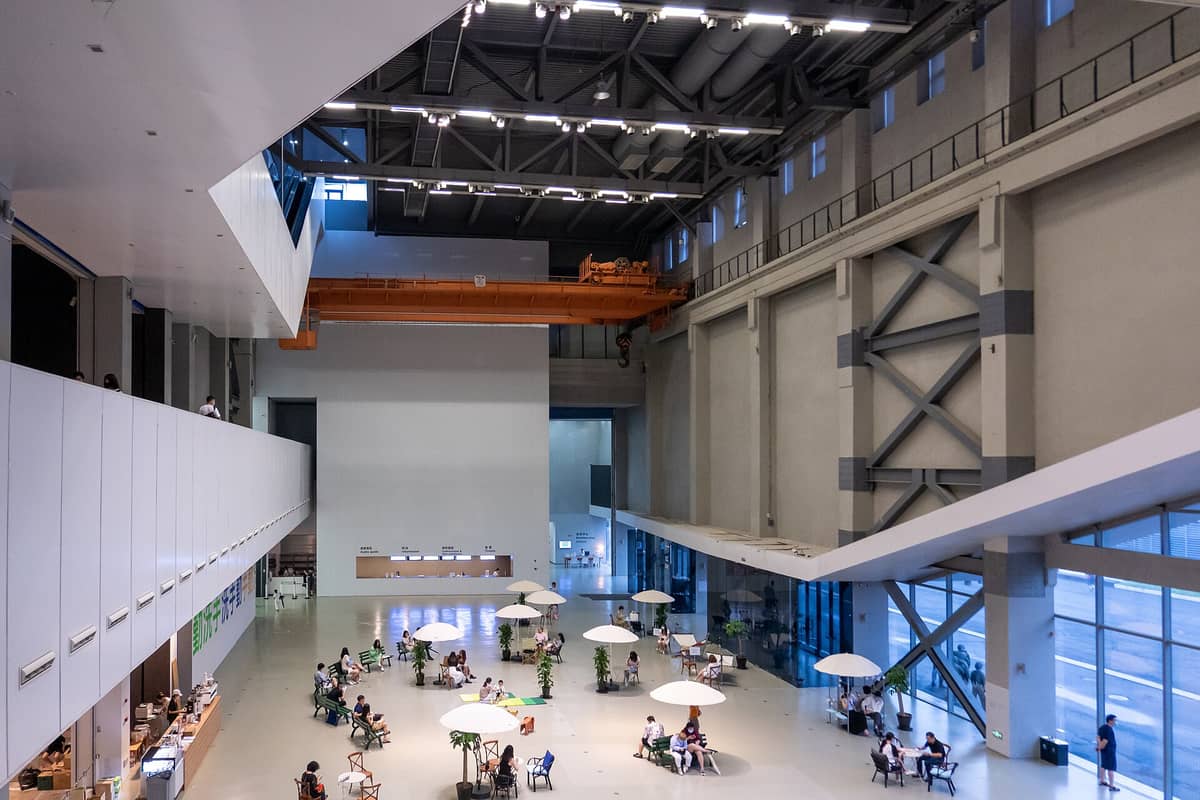
The Power Station of Art (上海当代艺术博物馆) is mainland China's first state-run contemporary art museum, and the sheer scale of the converted Nanshi Power Station building signals that immediately. The chimney alone rises roughly 165 metres and is visible from across the Huangpu River. Inside, former turbine halls have been transformed into exhibition spaces with ceiling heights that rival major Western institutions, giving curators room to stage ambitious, large-format installations that simply could not be mounted elsewhere in the city.
The museum opened in 2012, repurposing a coal-fired power plant that had supplied electricity to the Nanshi district. Rather than demolish the structure, the city preserved its industrial skeleton: exposed steel, raw concrete floors, and the original machinery footprint all remain visible in certain sections, creating a tension between the building's utilitarian past and the often provocative work displayed inside it.
ℹ️ Good to know
Opening hours: Tuesday to Sunday, 11:00–19:00 (last admission 18:00). Closed Mondays, open on national holidays. Ticket prices vary by exhibition — check the official site at powerstationofart.com before visiting, as some shows require paid tickets while others are free or have concessions.
The Building: Architecture Worth Examining Before You Go Inside
Most visitors arrive at the main entrance on Miaojiang Road, but it is worth walking around the exterior before entering. The riverfront elevation, facing the Huangpu, shows the full mass of the building: a horizontal industrial block topped by that landmark chimney. The adaptive reuse is considered a significant example of Chinese industrial heritage preservation, and the contrast between the power station's bulk and the glassy towers of Pudong across the water is one of the more photogenic juxtapositions in the city.
The surrounding area is part of a broader waterfront redevelopment corridor. Nearby, the Lujiazui Riverside Promenade and the general Huangpu River embankment have been upgraded for pedestrian use, meaning you can walk along the river before or after your museum visit without needing to cross traffic on a main road.
Inside, the spatial experience shifts dramatically between floors. Ground-level areas feel cavernous and slightly raw. Upper floors are more refined gallery spaces with better climate control — useful to know if you are visiting during Shanghai's humid summer months, when the difference between a properly air-conditioned upper gallery and a semi-open atrium space is significant.
Tickets & tours
Hand-picked options from our booking partner. Prices are indicative; availability and final rates are confirmed when you complete your booking.
Shanghai city and Zhujiajiao water town private tour with lunch
From 371 €Instant confirmationFree cancellationShanghai private tour with iconic landmarks of the old and new city
From 284 €Instant confirmationFree cancellationShangai Yuyuan Garden entrance tickets
From 9 €Instant confirmationFree cancellation
Exhibitions: What to Expect and How to Plan
The museum runs rotating temporary exhibitions rather than a static permanent display of highlights you can count on being there. This means planning matters more here than at many institutions. The Shanghai Biennale, one of Asia's most significant contemporary art events, is based here and typically runs every two years in autumn and winter. Outside Biennale years, the museum mounts major solo and thematic shows drawn from Chinese and international artists, ranging from large sculptural installations to video art and photography.
Exhibition text is provided in both Mandarin and English, which is not universal across Shanghai's museum landscape, making this a more accessible option for non-Mandarin readers than several comparable institutions. Audio guides are sometimes available for major shows, but availability is exhibition-specific, so confirm on the official site before visiting if that matters to your experience.
💡 Local tip
Check the museum's current exhibition schedule on powerstationofart.com before visiting. The quality and thematic range of shows varies considerably. A Biennale visit is a different experience from a quieter mid-year exhibition — both are worthwhile, but the crowds and energy differ substantially.
If you are building a Shanghai art itinerary around this visit, the Rockbund Art Museum near the Bund and M50 Creative Park in Putuo District are complementary stops with distinct characters. Our Shanghai contemporary art guide covers how these institutions fit together.
How the Experience Changes by Time of Day
Arriving close to the 11:00 opening gives you the best chance of moving through major exhibitions at your own pace. By mid-afternoon on weekends, the main halls fill with group visitors and school parties, which affects both noise levels and the contemplative quality of certain installation works. If you are visiting specifically to photograph the architecture or spend time with video art pieces that require sustained attention, mornings are preferable.
Late afternoon brings better natural light to the riverfront exterior, and the building's chimney photographs well against the softer pre-dusk sky. The area around the museum also quietens somewhat after the midday visitor peak, making the embankment walk more pleasant. The museum closes at 19:00, but last admission is 18:00, so a late visit is possible on weekdays when crowds thin earlier.
Practical Walkthrough: Getting There and Moving Around
The museum is located at No. 678 Miaojiang Road in Huangpu District. The Shanghai Metro network is the most reliable way to arrive; verify the closest line and station using the official Shentong Metro app or map before your visit, as service patterns and station names occasionally update. Ride-hailing via Didi is straightforward from central Shanghai and allows you to be dropped directly at the entrance, which is useful if you are travelling with luggage or visiting in summer heat.
For context on navigating the wider city, the getting around Shanghai guide covers metro, taxi and ride-hailing options in detail.
Inside the museum, the floor plan is distributed across multiple levels connected by elevators and staircases. Elevators are available, making the building accessible to visitors with mobility considerations. The official visit page confirms free admission for people with disabilities; bring relevant documentation. The building's scale means that comfortable shoes matter more here than at many compact gallery spaces — you will cover meaningful ground across multiple floors and potentially long exhibition halls.
⚠️ What to skip
The museum is closed every Monday. Visiting on a public holiday is possible (the museum opens on national holidays), but expect larger crowds than a typical weekday.
Honest Assessment: Is It Worth Your Time?
The Power Station of Art earns its place on a serious Shanghai itinerary, but with a caveat: the experience is heavily dependent on what is showing when you visit. During a strong Biennale edition or a well-curated international survey, the combination of the building's architectural drama and ambitious programming justifies two to three hours easily. During a transitional period between major shows, you may find fewer galleries open and the overall experience thinner.
The building itself is worth visiting once regardless of the exhibition content. The scale of the former turbine halls, the industrial textures, and the river views from upper-level terraces (when accessible) are a specific kind of cultural experience that Shanghai's newer, purpose-built institutions do not replicate.
Who might not get much from it: visitors with limited time who need guaranteed headline attractions, travellers with no interest in contemporary art as a category, or anyone visiting during a light programming period without checking the schedule first. If your Shanghai itinerary is already dense, check what is showing before committing an afternoon here.
For a broader overview of how this fits into Shanghai's wider cultural scene, see our guide to the best museums in Shanghai.
Insider Tips
- The chimney observation area and upper terrace spaces offer river views that few visitors bother to find — explore beyond the main exhibition floors if they are accessible during your visit.
- Free or concessionary admission categories include people with disabilities, and discounts commonly apply to students and teachers. Bring ID or documentation to confirm eligibility at the ticket desk.
- During the Shanghai Biennale (typically autumn and winter of even-numbered years), book any required tickets in advance — demand spikes significantly and the queue at the entrance can add 30–45 minutes to your visit.
- Photography policies vary by exhibition and sometimes by specific artwork. Check signage at the entrance to each gallery rather than assuming the same rules apply throughout the building.
- The museum shop near the entrance area carries design publications, artist catalogues, and locally produced items that are above average quality compared to typical tourist shops — worth browsing if you have time.
Who Is Power Station of Art For?
- Contemporary art enthusiasts looking for mainland China's most ambitious institutional programming
- Architecture and adaptive reuse fans interested in industrial heritage
- Visitors during the Shanghai Biennale seeking a major international art event
- Rainy-day seekers needing a full afternoon of indoor cultural content
- Photographers drawn to industrial architecture and riverfront settings
Nearby Attractions
Combine your visit with:
- Chongming Island
Chongming Island sits at the mouth of the Yangtze River, a vast alluvial island that functions as Shanghai's rural counterweight. Wetland reserves, a national forest park, cycling paths through farmland, and virtually no high-rises make it a genuinely different Shanghai experience.
- ERA Acrobatics Show
Running nightly at Shanghai Circus World in Jing'an District, ERA2 – Spirit of Shanghai is the city's flagship acrobatics production. Expect gravity-defying stunts, dramatic lighting, and a 60-to-100-minute show that needs no translation. Here is everything you need to know before buying a ticket.
- Jade Buddha Temple
The Jade Buddha Temple (玉佛禅寺, Yùfó Chán Sì) is one of Shanghai's most significant active Buddhist monasteries, housing two exceptional jade Buddha statues brought from Burma in the late 19th century. Unlike many temples that have become purely ceremonial attractions, this one functions as a working monastery, with monks in residence and daily rituals that visitors can witness firsthand.
- Jinshan City Beach
Jinshan City Beach (金山城市沙滩景区) is a man-made coastal resort on Hangzhou Bay, about 60 km south of central Shanghai. It is the closest thing to a genuine beach day the city offers, with designated swimming zones, a long promenade, and seasonal facilities. This guide covers what to realistically expect, when to go, and how to get there.