Shanghai Tower: What to Expect at China's Highest Observatory
At 632 meters, Shanghai Tower is the tallest building in China and home to the Top of Shanghai Observatory on the 118th floor. This guide covers what you actually see, when to go, how much it costs, and whether the experience is worth it for your itinerary.
Quick Facts
- Location
- No. 501 Yincheng Middle Road, Lujiazui, Pudong New Area, Shanghai
- Getting There
- Lujiazui Station, Metro Line 2 (5-min walk)
- Time Needed
- 1.5 to 2.5 hours including queuing and elevator rides
- Cost
- CNY 180 adults; CNY 120 students/seniors; CNY 90 children (1.0–1.4 m); free under 1.0 m (up to 2 per adult). Peak holiday pricing may reach CNY 199.
- Best for
- City panoramas, architecture enthusiasts, photography at dusk, first-time visitors to Shanghai
- Official website
- www.shanghaitower.com
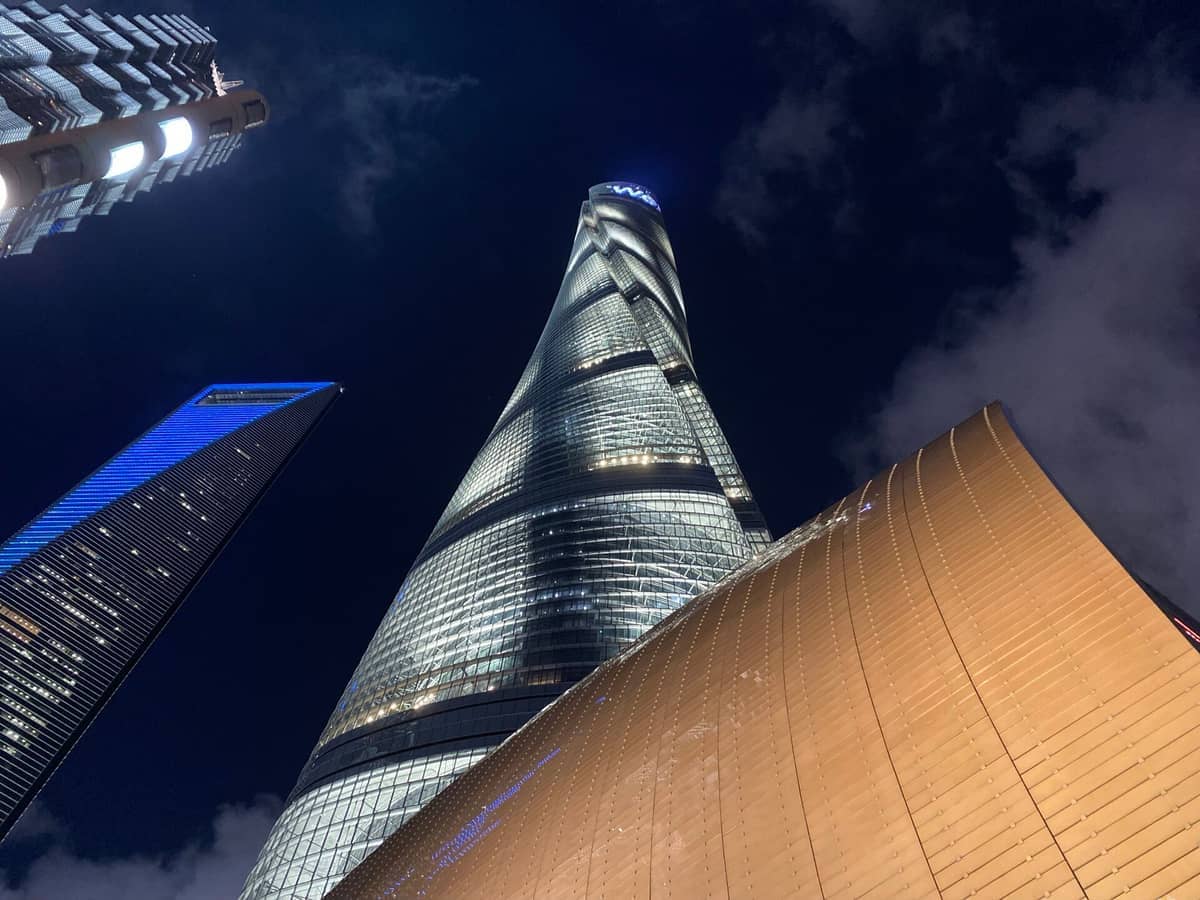
What Shanghai Tower Actually Is
Shanghai Tower, known in Chinese as 上海中心大厦, rises 632 meters above the Lujiazui financial district in Pudong, making it the tallest building in China and the third tallest in the world at the time of writing. Its 128 above-ground floors are wrapped in a spiraling glass facade that twists 120 degrees from base to crown, a design intended to reduce wind load by approximately 24 percent compared to a conventional rectangular tower. Construction began in 2008, the main structure was topped out in 2013, and the Top of Shanghai Observatory opened to the public in 2016.
The building is not just a viewing platform with a lobby attached. It functions as a vertical city: offices, luxury hotel floors, retail, conference facilities, and nine sky gardens are stacked through the structure. Visitors accessing the observatory typically enter from the northwest corner of the tower’s base at street level near the intersection of Huayuanshiqiao Road and Yincheng Middle Road, where the ticket hall and main “Top of Shanghai” signage are located. This is worth knowing in advance so you are not walking around the base looking for a door.
💡 Local tip
The observatory entrance is at basement level B1, signposted from the street as 'Top of Shanghai.' Look for signage near the corner of Huayuanshiqiao Road and Yincheng Middle Road. Don't approach from the main tower lobby — that is for office and hotel guests.
The View: What You See and How It Changes
From the 118th floor, the city unfolds in every direction without obstruction. Looking west across the Huangpu River, the Bund's row of neoclassical facades sits in the middle distance, surprisingly compact from this altitude. To the south and north, Shanghai's residential and commercial fabric stretches to the horizon, a low-rise gray grid occasionally interrupted by newer tower clusters. On a clear day you can see the Yangtze River estuary to the northeast. The floor-to-ceiling glass panels are angled slightly outward at the base, which creates a mild sensation of exposure that some visitors find more thrilling than standing on a conventional flat deck.
Directly below and beside the tower, the Jin Mao Tower and the Shanghai World Financial Center are so close that looking down at them is disorienting. From street level these are enormous structures; from Shanghai Tower's observatory, their rooftops appear unremarkably close. This vertical relationship is one of the more genuinely strange sensory experiences the tower offers, and it is something photographs rarely capture effectively.
Weather determines the quality of your visit more than any other factor. Shanghai sits at low coastal elevation in a humid subtropical climate and regularly produces haze, especially in summer and winter. On overcast or polluted days, visibility can drop to less than five kilometers, and the city below vanishes into gray murk. Autumn, specifically October and November, tends to bring the clearest air and mild temperatures, making it the most reliable season for panoramic views. Spring days in April and May can also be clear, though the city's spring humidity builds quickly. Check the air quality index before you book.
⚠️ What to skip
Haze and low cloud can completely obscure the view. Shanghai's air quality index (AQI) fluctuates significantly by season. Check a current AQI source the morning of your visit. If the index is above 150, the experience is likely to disappoint.
Tickets & tours
Hand-picked options from our booking partner. Prices are indicative; availability and final rates are confirmed when you complete your booking.
Shanghai city and Zhujiajiao water town private tour with lunch
From 371 €Instant confirmationFree cancellationShanghai private tour with iconic landmarks of the old and new city
From 284 €Instant confirmationFree cancellationShangai Yuyuan Garden entrance tickets
From 9 €Instant confirmationFree cancellation
Morning, Afternoon, or Dusk: Choosing Your Time
The observatory opens at 08:30 daily, and early arrivals on weekday mornings encounter the shortest queues and the cleanest light for photography. The Pudong skyline faces west, which means morning sun illuminates the Bund side of the river and casts the Lujiazui towers in partial shadow. If you are specifically shooting the Bund from above, morning gives you front-lit architecture on the far bank.
The hour around sunset is the single most popular time to visit, and for good reason. As the sky dims and the city lights activate, the contrast between the warm horizon and the emerging LED grid below produces a view that is genuinely spectacular. The Jin Mao Tower and the Oriental Pearl Tower illuminate simultaneously, and the Huangpu River reflects ribbons of neon from the tour boats below. Expect significant crowds in this window, especially on weekends. Queues for the elevators can extend 30 to 45 minutes during peak evening hours.
The observatory closes at 22:00, with last admission at 21:30. Visiting around 20:00 on a weekday offers a reasonable compromise: the city is fully lit, crowds are thinner than the sunset rush, and you have time to linger rather than being funneled through by the press of other visitors. Note that peak official holidays, including Golden Week in early October and Chinese New Year, bring substantially higher visitor numbers and may push ticket prices to approximately CNY 199.
Getting There
Shanghai Tower sits in the Lujiazui financial district in Pudong New Area, directly accessible from Lujiazui Station on Metro Line 2. The walk from the station exit to the tower's B1 entrance takes around five to eight minutes. Line 2 connects Lujiazui with People's Square in under ten minutes, and with Jing'an Temple in around 20 minutes, which makes the tower easy to combine with a morning or afternoon on the Puxi side of the river.
From Pudong International Airport, Metro Line 2 runs directly to Lujiazui in approximately 55 to 70 minutes for around CNY 7 to 8. If you have luggage, the Shanghai Maglev covers the airport-to-Longyang Road leg in about 8 minutes, after which you transfer to Line 2 toward the city center. Taxis from the airport to Lujiazui typically cost CNY 150 to 250 depending on traffic. Verify current fares before travel.
From the Bund side of the river, you can take the Bund Sightseeing Tunnel, a taxi, or simply cross using the pedestrian ferry for a low-cost alternative that offers river-level views of both banks. The Lujiazui Riverside Promenade is a short walk from the tower and works well as a warmup to the observatory visit or a decompression after it.
The Elevator and the Physical Experience of Ascending 632 Meters
The high-speed elevators connecting B1 with the 118th-floor observatory travel at approximately 18 meters per second, reaching the top in about 55 seconds. The elevator cabins have glass ceiling panels that display a light animation synchronized to the ascent, a theatrical addition that makes the ride feel faster and more dramatic than a blank metal box would. Your ears will notice the pressure change, much like a short aircraft descent, though it passes quickly.
The observation deck itself is enclosed, which means there is no wind exposure and no outdoor platform option. The glass is thick and slightly tinted. Some visitors find the enclosed format less viscerally exciting than open-air decks found at other towers globally, but the climate-controlled environment makes the experience comfortable regardless of season. On the 118th floor there is a small cafe and merchandise area. A second viewing level at the 119th floor offers a slightly different angle and is worth the additional few steps.
How Shanghai Tower Compares to Its Neighbors
Three major observatories cluster within a few hundred meters of each other in Lujiazui. The Shanghai World Financial Center (492 m) has an open-air slot at the top that many photographers prefer for its unobstructed shots of Shanghai Tower itself. The Jin Mao Tower (421 m) offers a narrower but more intimate observation ring and tends to be less crowded. The Oriental Pearl Tower's glass-floor sphere is iconic in a retro way, more associated with Shanghai's 1990s skyline era than with current architectural ambition.
Shanghai Tower is the tallest of the three and offers the broadest panorama, but it is also the most expensive and draws the largest crowds. If your priority is photography that includes the tower in frame rather than the view from inside it, the World Financial Center's observation deck may serve you better. If budget is a consideration, the Jin Mao observation ring costs significantly less. There is no single correct answer here; the choice depends on what kind of experience you are optimizing for.
ℹ️ Good to know
If you plan to visit multiple Lujiazui observatories, spread them across different days or times of day. Doing all three in one afternoon creates tower fatigue and the views begin to feel redundant. Each tower has a genuinely different character at a different altitude.
Practical Notes on Tickets, Accessibility, and Photography
Standard adult tickets cost CNY 180. Students and seniors with valid ID pay CNY 120. Children between 1.0 and 1.4 meters in height pay CNY 90 to 95, and children under 1.0 meters enter free, up to two free admissions per paying adult. On peak public holidays the adult price may rise to approximately CNY 190 to 199. Tickets can be purchased at the B1 entrance or through online ticketing platforms in advance, which is worth doing during Golden Week or major holiday periods to avoid extended waits.
The tower is fully accessible via elevators and ramps from the B1 entrance through to the main observatory levels. Staff assistance is available for mobility-impaired visitors. Prams and wheelchairs can be accommodated in the elevator system. This is one of the more accessibility-friendly observation experiences in Shanghai.
For photography, a standard wide-angle lens or a phone camera with a wide mode captures the full panorama comfortably. The glass has minimal internal reflection if you hold the lens close to the surface and use a lens hood or your hand to block ambient light behind you. Tripods are not permitted on the observatory floor. For Shanghai's best photo spots, the view from here at dusk ranks among the highest-impact shots in the city, though reaching that shot requires patience during busy periods.
Insider Tips
- Buy tickets online in advance through the official site or a verified platform if visiting during Chinese national holidays. Walk-up queues on Golden Week afternoons can exceed one hour before you even reach the elevator.
- The observatory glass has a very slight green tint. To minimize color cast in photos, shoot in RAW format if your camera supports it, or manually adjust white balance toward magenta in post-processing.
- The B1 entrance on Huayuanshiqiao Road is separate from the main tower lobby and is not immediately obvious from the street. Follow the 'Top of Shanghai' signs rather than walking toward the tower's primary glass doors.
- Visit on a weekday morning in October or November for the clearest air, shortest lines, and the best light on the Bund across the river. This combination rarely happens on a weekend.
- The elevator ride itself is a designed experience. Look up at the ceiling panel during ascent for the light animation, which shows a timeline of Shanghai's urban development projected against the glass as you climb.
Who Is Shanghai Tower For?
- First-time visitors to Shanghai who want a definitive aerial orientation of the city's layout
- Architecture and engineering enthusiasts interested in supertall building design and the Lujiazui skyline
- Photographers targeting the Shanghai skyline at dusk from above, with the Bund and river in the frame
- Families with children tall enough to be engaged by the ascent speed, the elevator experience, and the scale of the view
- Travelers visiting during autumn for clear-air panoramas across the Yangtze Delta
Nearby Attractions
Other things to see while in Pudong:
- Century Park
Century Park is the largest ecological urban park in downtown Shanghai, stretching across Pudong's grid of glass towers and wide boulevards. Since May 2024, entry is free and the fences are gone, making it one of the most accessible green spaces in the city. Whether you come at dawn for tai chi or late afternoon for a lakeside stroll, the park rewards visitors who know how to read it.
- China Art Museum
The China Art Museum occupies the striking red former China Pavilion built for Expo 2010, making it one of the most architecturally dramatic museum experiences in Shanghai. Permanent collections are free, the scale is genuinely impressive, and most visitors are surprised by how much is on display across multiple floors.
- Jin Mao Tower
Standing 420.5 metres above Pudong's Lujiazui financial district, Jin Mao Tower is one of Shanghai's most architecturally distinctive skyscrapers. Its 88th-floor observatory delivers panoramic views across the Huangpu River and the historic Bund, while the building's pagoda-inspired silhouette remains one of the most recognisable on the city skyline.
- Lujiazui Riverside Promenade
The Lujiazui Riverside Promenade stretches roughly 2.5 km along Binjiang Avenue in Pudong, offering unobstructed views of the Bund from the opposite bank. It is open 24 hours, costs nothing to walk, and delivers one of the most dramatic urban skylines on earth at any time of day.