Oriental Pearl Radio & Television Tower: What to Expect Before You Visit
The Oriental Pearl Tower is the defining landmark of Shanghai's Pudong skyline, a 468-metre structure whose pink-lit spheres have symbolised China's economic transformation since 1994. This guide covers what you actually see at each level, when to go, how much it costs, and whether it's worth your time.
Quick Facts
- Location
- No. 1 Century Avenue, Lujiazui, Pudong New Area, Shanghai 200120
- Getting There
- Lujiazui Station, Metro Line 2 (3-5 min walk)
- Time Needed
- 2 to 3 hours for most visitors
- Cost
- From CNY 35 (museum only) to CNY 199–399 for observation decks; children under 1 m free. Verify before visiting.
- Best for
- City panoramas, skyline photography, first-time visitors to Shanghai, families
- Official website
- http://orientalpearltower.com
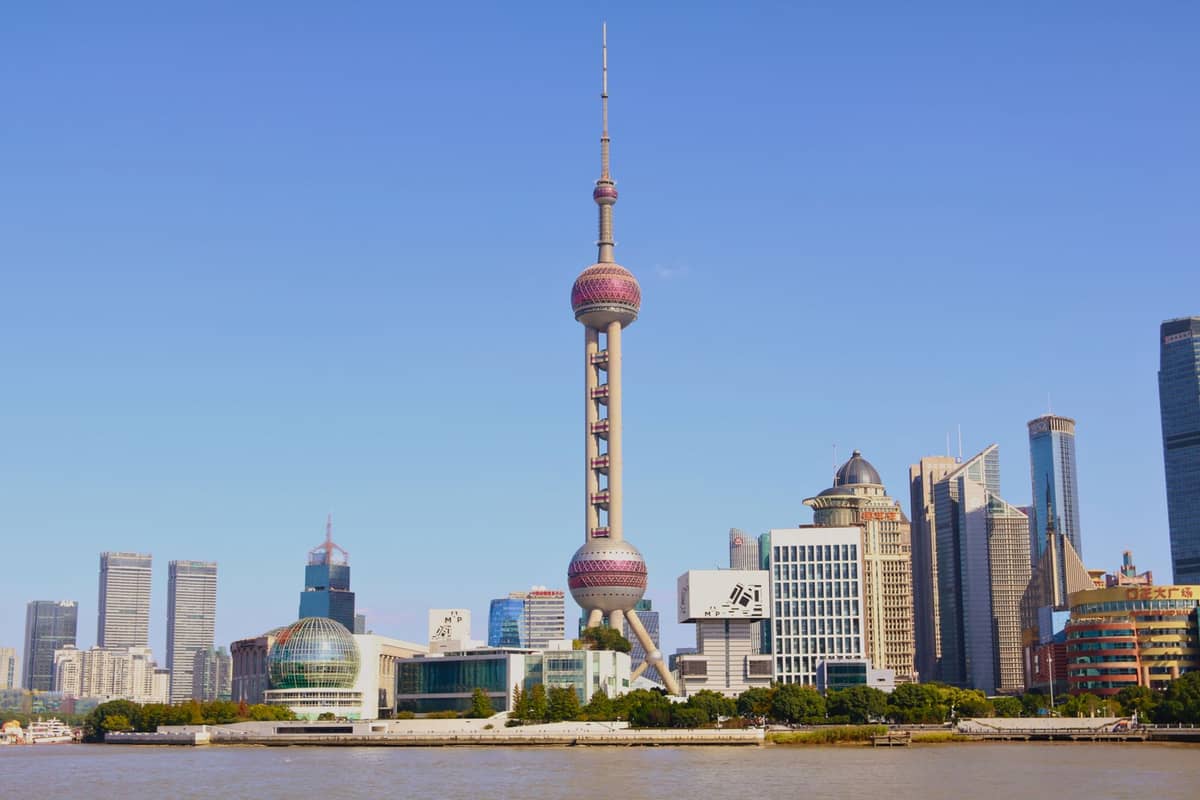
What the Oriental Pearl Tower Actually Is
The Oriental Pearl Radio and Television Tower (东方明珠广播电视塔) stands 468 metres tall on the western tip of Pudong, directly across the Huangpu River from the Bund. Construction began in 1991, and the tower opened to visitors in 1994, when this entire stretch of Pudong was little more than farmland and warehouses. Today it anchors one of the most recognisable urban skylines in Asia.
Architecturally, the tower is a stack of eleven spheres of varying sizes threaded along a central column, with the two largest spheres at roughly 259–263 metres and a smaller 'space capsule' deck at 351 metres. The designers, led by Shanghai's East China Architectural Design Institute, drew on classical Chinese aesthetics: the spheres are meant to evoke pearls rising from the waters of the Huangpu, a nod to a Tang dynasty poem about music over a river. Whether that symbolism lands for you or not, the structure is genuinely distinctive, and at night the LED lighting shifts through pinks, reds and whites that are visible across much of central Shanghai.
It is worth understanding where the tower fits in the current skyline before deciding whether to go up. The Shanghai Tower (632 m) and the Shanghai World Financial Center now surpass it in height, and both offer higher observation decks. The Oriental Pearl's main deck at 263 m is lower than its neighbours, which means the view from up there includes those towers looming close by rather than looking down on them.
ℹ️ Good to know
Opening hours are generally 09:00–21:00 daily, with last entry around 20:30. Confirm exact hours on the official site or by calling +86-21-58791888 before your visit, as these hours are subject to change.
The View: What You See From Each Level
The main observation sphere sits at around 263 metres and offers a 360-degree panorama across Pudong and westward over the Bund and the former French Concession. On a clear day you can see the curve of the Huangpu River and, further out, the low-rise residential districts giving way to industrial haze on the horizon. The glass-floor corridor at 259 metres sits just below the main deck: you stand on transparent glass looking straight down to street level, which produces the expected vertigo for most visitors. It is effective, though the crowds that stop to take photos can slow movement considerably.
The space capsule deck at 351 metres is included in the premium Ticket B and provides a noticeably higher vantage point. From here the Lujiazui cluster of towers feels close enough to read the signage on the Jin Mao Tower across the gap. The space capsule is smaller and receives fewer visitors than the main sphere, making it the quieter of the two experiences even when the rest of the tower is busy.
Haze is the single biggest variable. Shanghai's humid subtropical climate and urban air quality mean fully clear days are more common in October and November than in summer. On days with heavy haze, the view beyond Lujiazui becomes a grey wash, and distant districts disappear entirely. Checking a local air quality index app the morning of your visit is genuinely useful here.
Tickets & tours
Hand-picked options from our booking partner. Prices are indicative; availability and final rates are confirmed when you complete your booking.
Shanghai city and Zhujiajiao water town private tour with lunch
From 371 €Instant confirmationFree cancellationShanghai private tour with iconic landmarks of the old and new city
From 284 €Instant confirmationFree cancellationShangai Yuyuan Garden entrance tickets
From 9 €Instant confirmationFree cancellation
How the Experience Changes by Time of Day
Morning visits, particularly before 10:30, are the least crowded. The light comes in from the east over Pudong, which is good for photographing westward toward the Bund and the older city. The ticket hall has not yet filled, queues for elevators are short, and you can linger at windows without someone's elbow in your periphery.
Midday and early afternoon bring school groups, tour buses and the bulk of domestic tourist traffic. The observation decks become loud and the glass floor corridor turns into a slow-moving queue. If your schedule forces an afternoon visit, the space capsule level at 351 m is worth the additional ticket cost partly because fewer people choose it, giving you more room.
Sunset and the first hour after dark are the most popular time for a reason. Watching the city lights switch on across the Bund, the river traffic silhouetted against the glow, and the tower's own LED display beginning its colour cycle is genuinely impressive. The trade-off is that everyone else knows this. Expect longer waits from around 17:30 onward in peak season. Book tickets in advance through the official website or a reputable third-party platform if you want to visit in the evening during July, August or National Day week.
💡 Local tip
For the best balance of light and crowd levels, arrive between 09:00 and 10:00. You get low-angle morning light over the Bund, short elevator queues, and enough time to descend and explore the Lujiazui riverfront before the main tour groups arrive.
Tickets, Costs, and What Each Level Includes
The tower uses a tiered ticket system. The entry-level option (Ticket C, approximately CNY 35) covers only the Shanghai City History Development Museum at the base. This is a legitimately good museum with dioramas and artefacts covering Shanghai's urban development from the 19th century onward, and it makes sense as a standalone visit if sky-high views are not your priority.
Ticket A (approximately CNY 199 for adults, CNY 99 for children between 1 m and 1.4 m in height) adds the main observation sphere and glass floor corridor. Ticket B (approximately CNY 399 adult, CNY 199 child) adds the space capsule at 351 metres. Children under 1 metre enter free. A revolving restaurant combo is available for those who want to combine a meal with the view.
⚠️ What to skip
All prices listed here were verified in 2025–2026 and are subject to change. Check the official website or call +86-21-58791888 for current pricing before purchasing, especially if booking for groups or with children.
Online booking is available through the official site and major Chinese travel platforms. Buying online avoids the on-site ticket queue, which during peak periods can add 30 to 45 minutes before you even reach the elevator.
Getting There: Transit, Walking, and Orientation
The most straightforward route is Metro Line 2 to Lujiazui Station. From the station exits the tower is visible immediately, a 3 to 5 minute walk north along the riverside. Line 2 also connects directly to Pudong International Airport, with a metro journey of roughly 60 minutes, making a stop at the tower feasible as part of an airport arrival or departure if your schedule allows. For a broader look at navigating the city, the getting around Shanghai guide covers metro, taxi, and ride-hailing options in detail.
Arriving by river is an option worth considering. Several Huangpu River cruise routes pass the Lujiazui waterfront, giving you a low-angle view of the tower from the water before you ascend it. It adds time but provides a genuinely different perspective on the structure and its relationship to the Bund.
Taxis and Didi (China's main ride-hailing app) drop off at the base of the tower on Century Avenue. Note that Didi requires a Chinese mobile number and a payment method linked to Chinese platforms; sorting this out before arrival saves frustration.
The Shanghai City History Development Museum
The museum occupying the tower's base level is one of the more underrated stops in Pudong. It uses life-sized dioramas of early 20th century Shanghai streetscapes, reconstructed shop fronts and household interiors to convey what the city looked and felt like before the 1949 transformation. The quality of the reconstructions is high, with period signage, furnishings and atmospheric lighting that give it a texture absent from most municipal history museums.
If you have already visited the Shanghai History Museum at People's Square, there is some overlap in subject matter, but the diorama format here makes it distinctly more immersive. The CNY 35 ticket is good value. Allow 45 to 60 minutes to move through it properly without rushing.
Photography, Accessibility, and Practical Details
Photography through glass at observation decks always involves reflections. Pressing your lens hood directly against the window eliminates most of the interior glare. Early morning provides the most even light for westward shots toward the Bund; dusk gives you dramatic contrast but requires steadier technique or a higher ISO to compensate for low light inside the sphere. A wide-angle lens is more useful here than a telephoto because the view is broad and the points of interest are spread across a wide arc.
For an overview of where the tower fits among Shanghai's best vantage points, the best views in Shanghai guide compares the Oriental Pearl with the rooftop options across the river and on the Bund side.
Accessibility: high-speed elevators connect all main sightseeing levels, and the standard visitor route does not require stairs. The base museum and entrance areas are described in current attraction guides as wheelchair-accessible. Visitors with specific mobility needs are advised to contact the tower directly before visiting at +86-21-58791888 to confirm exact step-free routing, as detailed accessibility documentation is limited.
Dress comfortably for all-indoor conditions. The observation decks are climate-controlled, so extreme heat or cold outside does not materially affect the experience, though the outdoor viewing areas, if open, will reflect ambient conditions. There are food and drink outlets within the complex at standard tourist attraction pricing.
Is It Worth It? An Honest Assessment
The Oriental Pearl Tower is not the highest observation point in Shanghai, and if pure elevation is your goal, the Shanghai Tower or the World Financial Center both outperform it on that measure. What the Oriental Pearl offers that they do not is the view that includes those towers: Lujiazui's three signature skyscrapers form a cluster that looks best when you are standing among them rather than looking at them from outside. The perspective from 263 metres puts you level with the upper floors of the Jin Mao Tower and gives the financial district a density and scale you cannot feel from the Bund.
The tower is also the most recognisable structure in the skyline for many visitors, which gives the visit a landmark quality beyond just the view. For first-time visitors to Shanghai this is a reasonable choice. For repeat visitors who have already done the Bund promenade and want the highest possible vantage point, the Shanghai Tower's 118th-floor observation deck is a more dramatic experience.
People who have no interest in height or city panoramas will find little reason to pay the observation deck prices. The history museum at the base is the exception: it stands on its own merits and is worth the CNY 35 admission regardless of whether you go up. If your time in Pudong is limited, pairing the base museum visit with a walk along the Lujiazui Riverside Promenade gives you both the exterior of the tower and the wider financial district skyline without queuing for elevators.
Insider Tips
- Arrive at 09:00 on a weekday and go straight to the elevator rather than browsing the lobby retail. The first elevator batch of the day moves quickly, and you will have the observation sphere nearly to yourself for 20 to 30 minutes.
- Check the Shanghai air quality index (AQI) before going up. A hazy day with AQI above 100 can reduce visibility to just a few kilometres, which significantly diminishes the value of the observation deck ticket. The history museum at the base is an excellent backup plan on poor-visibility days.
- The glass floor corridor at 259 metres gets a traffic jam of people photographing straight down. Go on a Tuesday or Wednesday morning rather than a weekend if possible. The effect of the glass floor is real, but the photo itself is a cliché at this point.
- If you are visiting Pudong for a full day, combine the Oriental Pearl with the Shanghai Ocean Aquarium next door and the Lujiazui Riverside Promenade for a coherent half-day loop before crossing back to the Bund side in the afternoon.
- Buy tickets online in advance, especially for evening visits in July, August, and National Day Golden Week. On-site queues for evening tickets can extend 45 minutes or more, and online purchase often allows you to choose a time window that guarantees elevator access.
Who Is Oriental Pearl Radio & Television Tower For?
- First-time visitors to Shanghai wanting to orient themselves from above before exploring street level
- Families with children, who benefit from the interactive history museum at the base and the glass floor novelty
- Photographers planning evening skyline shots of the Bund, particularly during the first 30 minutes after sunset
- Travellers with only one or two days in the city who want a single landmark visit that combines a view, a museum, and an iconic exterior in one stop
- Architecture enthusiasts interested in Pudong's development as a planned financial district and the tower's role as its original anchor
Nearby Attractions
Other things to see while in Pudong:
- Century Park
Century Park is the largest ecological urban park in downtown Shanghai, stretching across Pudong's grid of glass towers and wide boulevards. Since May 2024, entry is free and the fences are gone, making it one of the most accessible green spaces in the city. Whether you come at dawn for tai chi or late afternoon for a lakeside stroll, the park rewards visitors who know how to read it.
- China Art Museum
The China Art Museum occupies the striking red former China Pavilion built for Expo 2010, making it one of the most architecturally dramatic museum experiences in Shanghai. Permanent collections are free, the scale is genuinely impressive, and most visitors are surprised by how much is on display across multiple floors.
- Jin Mao Tower
Standing 420.5 metres above Pudong's Lujiazui financial district, Jin Mao Tower is one of Shanghai's most architecturally distinctive skyscrapers. Its 88th-floor observatory delivers panoramic views across the Huangpu River and the historic Bund, while the building's pagoda-inspired silhouette remains one of the most recognisable on the city skyline.
- Lujiazui Riverside Promenade
The Lujiazui Riverside Promenade stretches roughly 2.5 km along Binjiang Avenue in Pudong, offering unobstructed views of the Bund from the opposite bank. It is open 24 hours, costs nothing to walk, and delivers one of the most dramatic urban skylines on earth at any time of day.