Shanghai Science and Technology Museum: A Complete Visitor's Guide
One of China's largest science museums, the Shanghai Science and Technology Museum sits at the heart of Pudong's Century Avenue, offering five floors of interactive exhibits across topics from biodiversity to space exploration. It draws school groups, families, and curious adults alike, making timing your visit essential.
Quick Facts
- Location
- 2000 Century Avenue, Pudong New Area, Shanghai
- Getting There
- Shanghai Science and Technology Museum Station (Metro Line 2)
- Time Needed
- 3–5 hours; a full day if you use the IMAX or dome theaters
- Cost
- ¥45 adults, ¥22 students/children; seniors and eligible disabled visitors free with valid certificate. Ticket sales 8:55 am–4:30 pm.
- Best for
- Families with children, science enthusiasts, rainy-day visits, travelers based in Pudong
- Official website
- en.sstm.org.cn
What the Shanghai Science and Technology Museum Actually Is
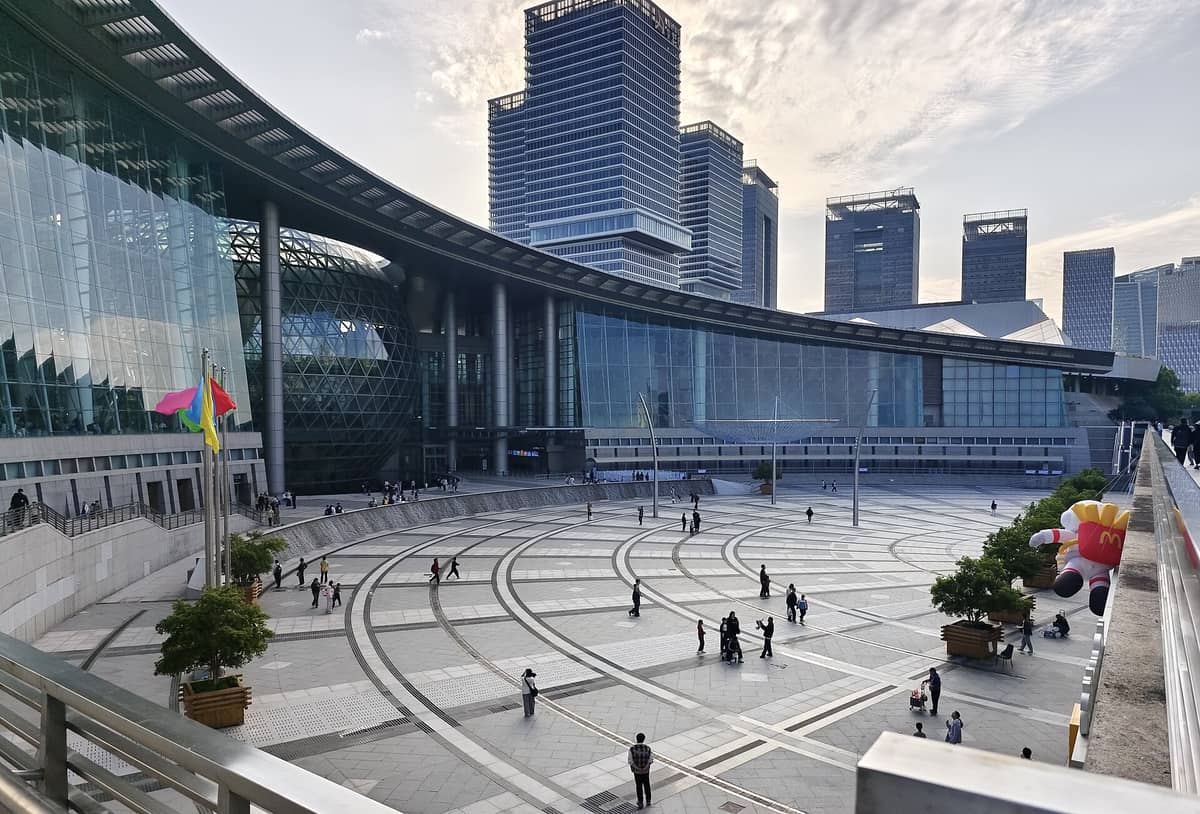
The Shanghai Science and Technology Museum (上海科技馆) at 2000 Century Avenue is one of the largest science museums in China, covering roughly 65,000 square meters of exhibition space across multiple themed zones. It is not a dry collection of display cases. The permanent galleries mix hands-on installations, live animal enclosures, working robotics demonstrations, and large-format cinema experiences into a single building that takes a full half-day to move through properly.
The museum is part of a broader institutional group that also operates the Shanghai Natural History Museum and the Shanghai Astronomy Museum (Lingang), though each operates as a separate venue with its own ticket. What you see at Century Avenue is the original flagship, opened to the public in 2001, and it still anchors the cultural identity of Pudong's planned civic core.
ℹ️ Good to know
Opening hours: Tuesday to Sunday, 9:00 am–5:15 pm. Closed Mondays, except on national holidays. Ticket sales close at 4:30 pm sharp, so plan to arrive well before then if you want meaningful time inside.
Getting There: The Easiest Museum Commute in Pudong
Metro Line 2 drops you directly at Shanghai Science and Technology Museum Station, which is named for the attraction itself. This is one of the clearest transit situations in the city: exit the station and the museum's main entrance is within a short walk across Century Park Square. Line 2 also connects directly with Lujiazui (one stop west), making it straightforward to combine this visit with a look at the Oriental Pearl Tower or the Lujiazui riverside on the same day.
If you are arriving from central Shanghai by taxi or ride-hailing, Century Avenue is a wide, well-signed arterial road and the museum's main façade is distinctive: a curving, glass-and-metal structure that references a sphere and ellipse in its silhouette. Journey times from People's Square are typically 20–35 minutes depending on traffic, longer during evening peak hours.
Travelers arriving at Pudong International Airport can reach the museum on Metro Line 2 by transferring at Guanglan Road to the main urban section of the line; this route includes Shanghai Science and Technology Museum Station on the way into the city, so a stop here en route is logistically efficient if you have luggage storage sorted. For context on navigating the broader metro network, see the guide to getting around Shanghai.
Tickets & tours
Hand-picked options from our booking partner. Prices are indicative; availability and final rates are confirmed when you complete your booking.
Shanghai city and Zhujiajiao water town private tour with lunch
From 371 €Instant confirmationFree cancellationShanghai private tour with iconic landmarks of the old and new city
From 284 €Instant confirmationFree cancellationShangai Yuyuan Garden entrance tickets
From 9 €Instant confirmationFree cancellation
The Exhibits: What to Prioritize
The museum organizes its content across themed permanent galleries covering topics including Earth's biodiversity, the human body, information technology, robotics, space exploration, and light phenomena. There are also IMAX and dome-screen theaters that require separate tickets purchased on-site. These cinemas regularly sell out on weekends and during school holidays, so if a film screening matters to you, buy those tickets as soon as you enter.
The biodiversity sections feature live tropical insects and reptiles behind glass, along with habitat dioramas of a quality that rivals dedicated natural history museums. Children slow down considerably in these zones, which is worth factoring into your timing. The robotics and AI exhibits attract older students and adults: demonstrations run on a schedule, and a crowd forms roughly 10 minutes before each slot, so position yourself early.
The space and astronomy wing covers China's own missions alongside broader solar system content, and the presentation is notably current compared to older science museums. This section tends to be quieter mid-morning on weekdays, making it a good starting point before school groups arrive in force.
💡 Local tip
Grab a bilingual exhibition map from the information desk near the main entrance. The layout is multi-level and not immediately intuitive. Without a map, it is easy to miss entire wings on the upper floors.
How the Experience Changes by Time of Day
Weekday mornings between 9:00 am and 11:00 am are the calmest window. The atrium is airy, voices echo rather than compete, and you can move between exhibits at your own pace. By 11:00 am on most days, school group bookings begin arriving in earnest. The noise level rises noticeably, particularly in the hands-on interactive halls where buttons, levers, and touch screens draw concentrated clusters of children.
Weekend afternoons are the most crowded period by a significant margin. If you visit on a Saturday or Sunday, arrive as close to 9:00 am as possible. The queues for theater screenings can extend to 30–40 minutes by midday. Families who arrive at opening frequently move through two or three major gallery wings before the crowds thicken.
Late afternoon, roughly 3:00 pm to 4:00 pm, sees some thinning as school groups depart, but this window is short before the 4:00 pm ticket sales cutoff makes new arrivals impossible. The museum does not rush visitors out immediately at 5:00 pm, but staff begin guiding people toward exits from around 4:45 pm onward.
Practical Details Worth Knowing Before You Go
The museum lists barrier-free facilities and baby care rooms on its official site, and the building is genuinely accessible: ramps and elevators connect all exhibition levels, and wide corridors accommodate strollers without difficulty. This is one of the more stroller-friendly major attractions in Shanghai.
A food court and café operate inside the building, which matters more than it sounds given that the nearest street-level dining options are a walk away. Quality is canteen-standard rather than destination dining, but it solves the midday energy problem for families without requiring everyone to pack up and leave.
Photography is permitted throughout the general exhibition areas without flash restrictions in most zones, though specific live animal enclosures may have signage asking visitors to avoid flash. The building's atrium, with its curved glass ceiling, makes for strong architectural shots in morning light when it streams through from the east.
⚠️ What to skip
Ticket prices and opening hours are time-sensitive. Always verify current details at en.sstm.org.cn before visiting, as the museum periodically adjusts for national holidays, maintenance closures, and special events.
How This Museum Fits Into Pudong
The Science and Technology Museum sits at the eastern end of Century Avenue, one of Pudong's signature planned boulevards. Century Park, Shanghai's largest urban park, is directly opposite, and the two make a natural pairing for families: spend the morning inside the museum, then cross to the park for an outdoor break. For visitors exploring Pudong's broader landscape, the Shanghai Planetarium in Lingang is operated by the same institution and represents a newer, architecturally striking addition to the same museum group, though it requires a separate trip to the southern edge of Pudong.
The Lujiazui skyline, including the Shanghai Tower and the World Financial Center, is about two metro stops west. A day that combines this museum with a skyline visit covers two of Pudong's strongest draws without excessive transit. For a broader look at the neighborhood's character and what else it offers, the Pudong area guide provides useful context.
Who This Museum Works For, and Who Should Reconsider
The Science and Technology Museum delivers most value to families with children roughly 6–16 years old, who can engage with the interactive elements at the right level. Science-oriented adults, particularly those interested in China's space program or emerging technology sectors, will also find material worth their time in the upper-level galleries.
Travelers who are primarily interested in Chinese history, art, or culture should redirect their limited time toward different institutions. The museum's content is international in scope and does not focus on specifically Chinese historical or artistic heritage. For that kind of depth, the Shanghai Museum on People's Square is a better use of half a day.
Solo adult travelers without a particular interest in science may find the experience incomplete relative to the time investment, especially on weekends when the volume of school groups changes the atmosphere substantially. If you are mapping out a broader Shanghai itinerary, the guide to the best museums in Shanghai can help you prioritize based on your specific interests.
Insider Tips
- IMAX and dome theater tickets sell out fast on weekends and public holidays. Head to the cinema ticket counter immediately upon entering, before exploring any exhibits, to secure a screening slot that fits your schedule.
- The robotics demonstration schedule is posted at the entrance to that gallery. If you arrive just as a demonstration ends, the next slot is typically 30–40 minutes later. Check the schedule on arrival and plan your route around it rather than hoping to wander past at the right moment.
- The museum's upper floors consistently have lighter crowds than the ground floor, even during peak hours. Start at the top and work downward if you want to see the more specialized exhibits with breathing room.
- Century Park directly across the street has a large artificial lake and open lawns. If you are visiting with young children who hit a wall midday, a 30-minute outdoor break in the park resets energy levels without requiring a full departure from the area.
- The official English-language website (en.sstm.org.cn) lists current special exhibitions and temporary closures. Some wing renovations have historically closed sections without prominent on-site warning, so checking before you travel saves disappointment.
Who Is Shanghai Science and Technology Museum For?
- Families with school-age children (ages 6–16) looking for a structured, full-day indoor activity
- Rainy or hot summer days when outdoor sightseeing in Shanghai's July–August heat becomes uncomfortable
- Travelers staying in Pudong who want a major attraction within easy metro reach
- Science and technology enthusiasts interested in China's space program and robotics developments
- Groups that include both young children and adults, given the range of complexity across different gallery levels
Nearby Attractions
Other things to see while in Pudong:
- Century Park
Century Park is the largest ecological urban park in downtown Shanghai, stretching across Pudong's grid of glass towers and wide boulevards. Since May 2024, entry is free and the fences are gone, making it one of the most accessible green spaces in the city. Whether you come at dawn for tai chi or late afternoon for a lakeside stroll, the park rewards visitors who know how to read it.
- China Art Museum
The China Art Museum occupies the striking red former China Pavilion built for Expo 2010, making it one of the most architecturally dramatic museum experiences in Shanghai. Permanent collections are free, the scale is genuinely impressive, and most visitors are surprised by how much is on display across multiple floors.
- Jin Mao Tower
Standing 420.5 metres above Pudong's Lujiazui financial district, Jin Mao Tower is one of Shanghai's most architecturally distinctive skyscrapers. Its 88th-floor observatory delivers panoramic views across the Huangpu River and the historic Bund, while the building's pagoda-inspired silhouette remains one of the most recognisable on the city skyline.
- Lujiazui Riverside Promenade
The Lujiazui Riverside Promenade stretches roughly 2.5 km along Binjiang Avenue in Pudong, offering unobstructed views of the Bund from the opposite bank. It is open 24 hours, costs nothing to walk, and delivers one of the most dramatic urban skylines on earth at any time of day.