Where to Stay in Shanghai: Best Areas & Hotels (2026 Guide)
Choosing where to stay in Shanghai shapes your entire trip. This guide breaks down the city's key neighborhoods by location, metro access, price range, and who each area suits best, so you can book with confidence.
Plan and book this trip
Tools from our partner Travelpayouts help you compare flights and hotels. If you book through them, we may earn a commission at no extra cost to you.
Flights
Hotels map
TL;DR
- Stay near the Bund or People's Square for the best metro access and sightseeing convenience, especially on a first visit.
- Shanghai hotels average around US$48-49/night overall; 3-star runs ~US$44, 4-star ~US$65, and 5-star ~US$157 per night.
- April and October are peak pricing months; September and winter months offer the cheapest rates, sometimes 30% lower.
- The metro covers every major visitor area for ¥3-9 per ride, making location less critical than in cities without strong transit. See our guide to getting around Shanghai for the full breakdown.
- Summer (July-August) brings 35°C+ heat and high humidity to dense central areas. Spring and autumn are significantly more comfortable for walking between neighborhoods.
How to Think About Location in Shanghai
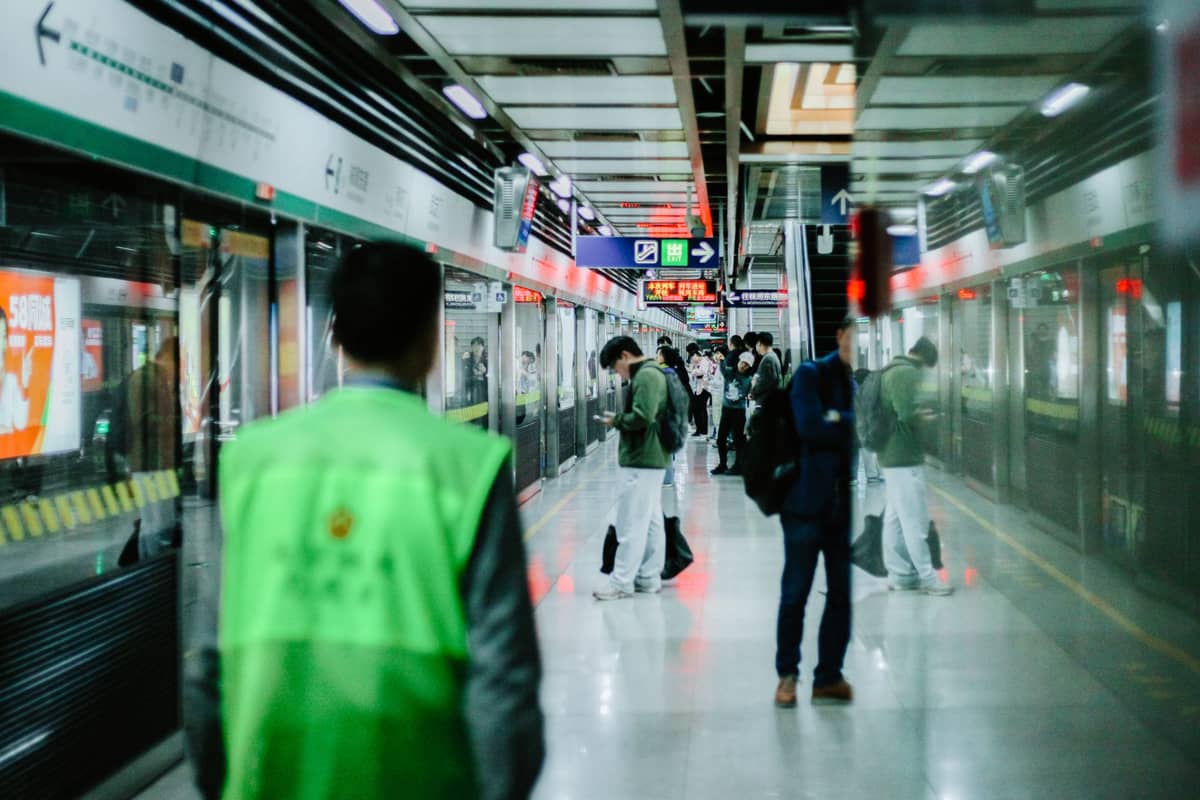
Shanghai is enormous: 6,340 km² across 16 districts, with a permanent population of 24.8 million. The good news for visitors is that nearly every area worth staying in is connected by the Shanghai Metro, one of the world's largest and most efficient rapid transit systems. Metro fares run ¥3-9 per ride (roughly US$0.40-1.25), so the cost of commuting between neighborhoods is negligible. What matters more is which district suits your travel style and which sights you plan to prioritize.
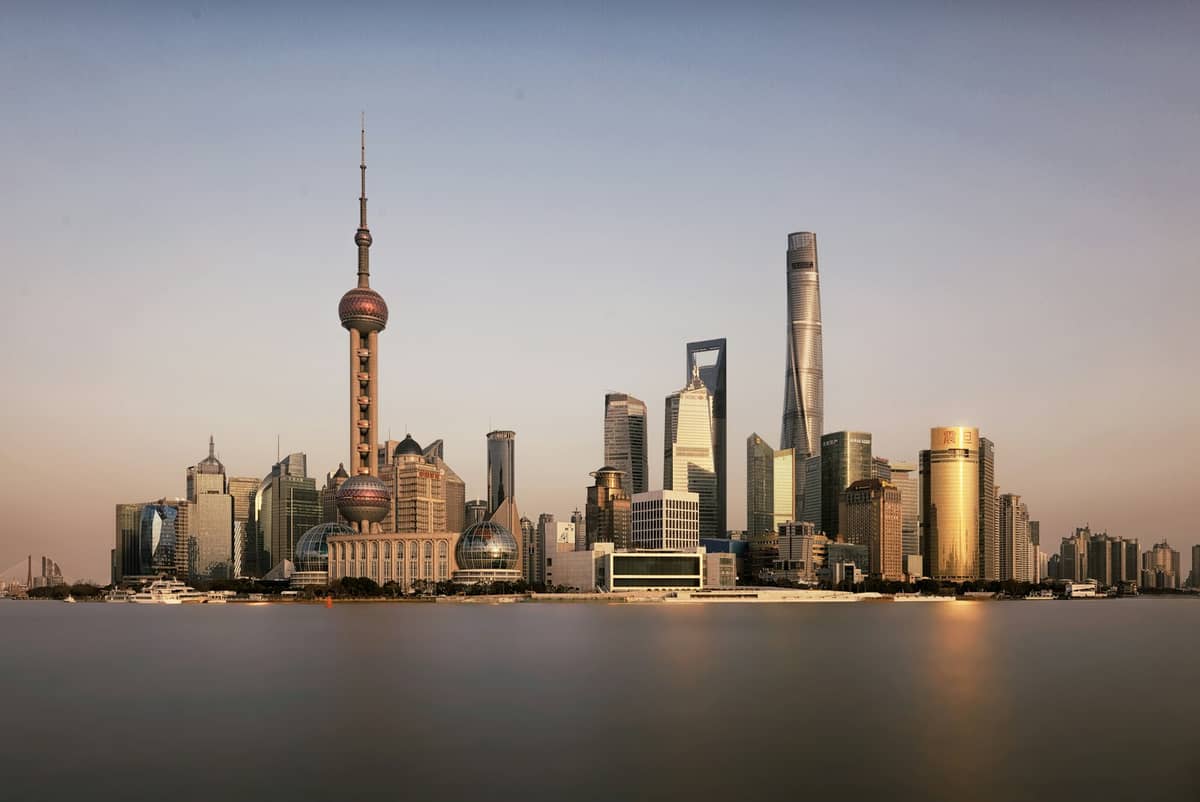
The city divides naturally along the Huangpu River. On the west bank: the historic Huangpu district (the Bund, Nanjing Road, People's Square), the upscale Former French Concession, and the commercial Jing'an district. On the east bank: Pudong, where you find Lujiazui's skyscrapers, Pudong International Airport, and Shanghai Disneyland in the city's southeast, reached via Disney Resort Station on Metro Line 11. First-time visitors almost always do better on the west bank, where the street life, restaurants, and historic sites are denser.
💡 Local tip
Staying near People's Square (Lines 1, 2, and 8) or East Nanjing Road (Lines 2 and 10) gives you the most transfer options. These hubs connect to virtually every other area in under 45 minutes, with no taxis required.
Best Areas to Stay in Shanghai
Here is an honest breakdown of the main visitor neighborhoods, what they offer, and who they suit best.
- The Bund & East Nanjing Road (Huangpu District) The most central option for first-timers. Nearest metro: East Nanjing Road Station (Lines 2 and 10), Exit 7, about a 5-10 minute walk to the waterfront promenade. Hotels range from budget hostels to luxury international brands. The area is heavily touristed, so expect crowds and premium pricing, especially in April-May and October. Best for: iconic views, walkability, easy airport access via Line 2.
- People's Square (Huangpu District) Served by Lines 1, 2, and 8, making it the best-connected single metro station in the city. Hotels here sit 1-3 minutes from the exits. Close to the Shanghai Museum, Nanjing Road shopping, and a short walk to the Bund. More business-oriented than atmospheric, but unbeatable for logistics.
- Jing'an (Jing'an District) Shanghai's upscale commercial core, with luxury hotels clustered around Jing'an Temple Station (Lines 2, 7, and 14). Exit 1 puts you 1-2 minutes from the temple and the surrounding malls. The area blends corporate hotels with good dining and a cleaner, less chaotic feel than the Bund corridor. Best for: business travelers, luxury stays, and shoppers targeting Nanjing West Road.
- Xintiandi & Former French Concession (Huangpu/Xuhui) Boutique hotels and design properties dominate here. Xintiandi Station (Lines 10 and 13), Exits 1 or 6, puts you 3-5 minutes from the restored shikumen lanes. The French Concession streets, lined with plane trees and 1930s architecture, are some of Shanghai's most pleasant for walking. Best for: couples, design-conscious travelers, and anyone who values atmosphere over pure convenience.
- Tianzifang & Dapuqiao (Xuhui District) Smaller boutique guesthouses and apartment rentals cluster near Dapuqiao Station (Line 9), Exit 1, about 3-5 minutes from the Tianzifang art lane complex. Quieter and more residential than Xintiandi. Best for: independent travelers who want a local feel without sacrificing central access.
- Lujiazui (Pudong New Area) The financial district east of the river is all towers and wide boulevards. Lujiazui Station (Line 2), Exits 1 or 3, places you 5-6 minutes from Shanghai Tower and the Oriental Pearl. Hotels here are mostly business-oriented, often expensive, and the area empties out at night. Best for: business visitors staying near Pudong offices, or travelers who specifically want Bund skyline views from their room. Not recommended as a base for general sightseeing.
- Shanghai Disneyland Area (Pudong) Disney Resort Station (Line 11, single exit) connects on-site and nearby hotels directly to the park in 1-2 minutes. Practical for families spending multiple days at the resort, but inconvenient for exploring the rest of the city, as the trip into central Shanghai takes 45-60 minutes.
⚠️ What to skip
Lujiazui looks impressive on a map but becomes a ghost town after business hours. If you plan to explore restaurants, bars, and street life in the evenings, staying in Pudong will cost you time and taxi fares every night.
Shanghai Hotel Prices: What to Budget
Based on aggregated booking data, Shanghai hotel prices span a wide range. The overall city average sits around US$48-49 per night, but that figure includes outer districts and off-peak months. In practice, staying centrally during peak season costs considerably more.
- Budget (under US$50/night) Hostels and basic 2-3 star properties. Concentrated around People's Square, Jing'an, and the Old Town. Expect small rooms, limited English, but perfectly functional locations. 3-star hotels average around US$44/night citywide.
- Mid-range (US$65-130/night) 4-star international brands and better Chinese chain hotels. These typically include decent breakfast, English-speaking staff, and reliable Wi-Fi. 4-star hotels average around US$65/night, though central and peak-season properties can reach US$120-130.
- Luxury (US$150+/night) 5-star hotels average around US$157/night but flagship properties at top addresses on the Bund or in Jing'an frequently run US$300-500+. The Peninsula, Waldorf Astoria, and Park Hyatt sit in this tier. Worth it if the Bund view or the service is the point of the trip.
Seasonal pricing matters enormously. April can push average rates to around US$140/night as spring draws heavy tourist and business traffic. September is consistently one of the cheapest months, averaging around US$46/night, with the bonus of mild autumn weather. For more on timing your visit, see our guide on the best time to visit Shanghai.
✨ Pro tip
Winter (December-February) is Shanghai's slowest tourist season, and hotel rates can drop 25-30% compared to spring peaks. The cold is real but manageable, and attractions like the Shanghai Museum and Yu Garden are far less crowded. For budget travelers, it is the smartest time to book centrally.
Getting to Your Hotel from the Airport
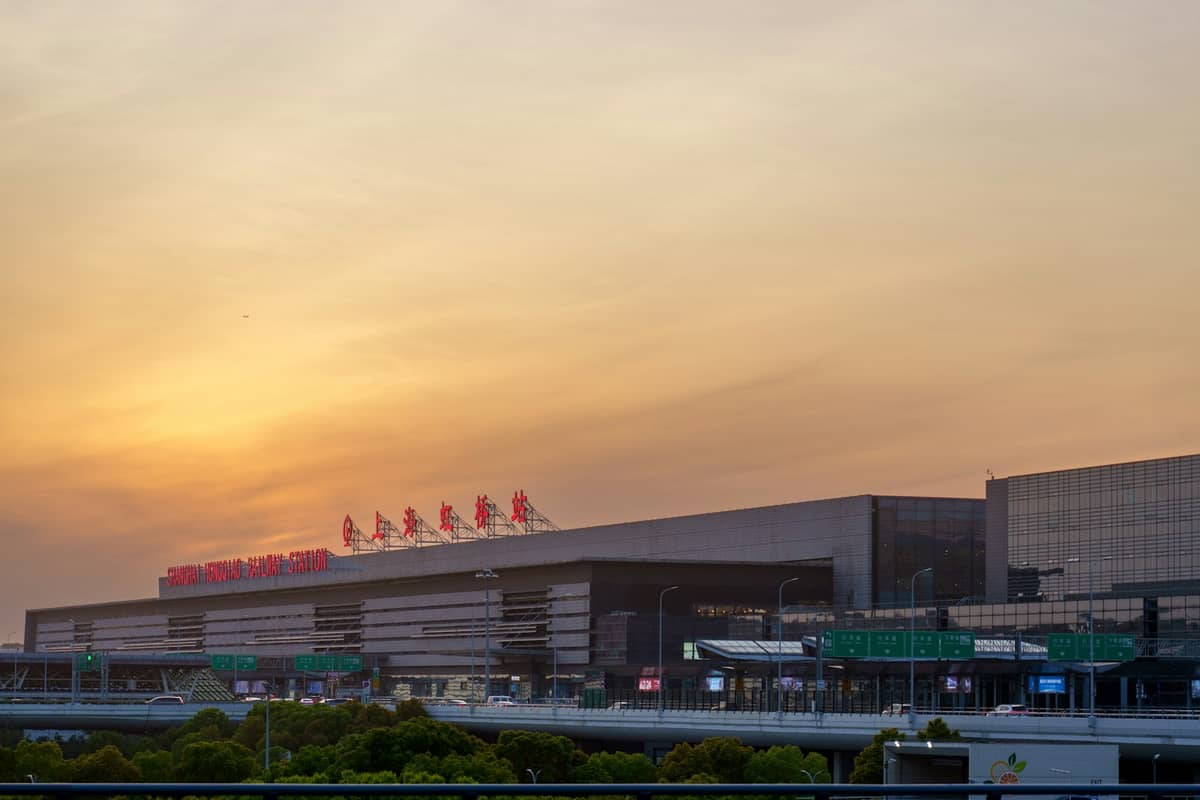
Shanghai has two airports serving different purposes. Pudong International Airport (PVG), about 30–40 km east of the city center by road, handles most long-haul international flights. Hongqiao International Airport (SHA), in the west, is primarily a domestic hub integrated with Hongqiao Railway Station.
From PVG, you have four realistic options. Metro Line 2 runs directly from the airport through Lujiazui, People's Square, and toward Jing'an Temple, taking roughly 60–70 minutes to central Shanghai for about ¥7. It is the cheapest option and perfectly fine with one bag. The Maglev train covers the stretch from PVG to Longyang Road Station in 7–8 minutes (standard fare ¥50, discounted to ¥40 with a same-day flight boarding pass), then you connect to Line 2 for the remainder of the journey, cutting total time to roughly 35–55 minutes. A taxi from PVG to central Shanghai (around People's Square or the Bund) typically runs ¥150-250 including highway tolls, taking 45-70 minutes depending on traffic. Didi Chuxing (China's dominant ride-hailing app) offers similar fares but requires a China-compatible phone number and payment method set up in advance.
ℹ️ Good to know
Metro fares, maglev schedules, and taxi surcharges change periodically. Verify current fares with the Shanghai Metro official site or airport transport boards before travel. Night surcharges apply to taxis after 23:00.
Practical Considerations Before You Book
A few factors trip up visitors who do not plan ahead. First, China's internet restrictions mean that many Western services, including Google Maps and WhatsApp, are not accessible without a VPN. Book hotels through platforms that work reliably in China, such as Trip.com, which integrates well with local systems and offers strong Shanghai inventory. Second, check that your hotel can legally accommodate foreign guests: some smaller guesthouses in residential areas are not registered to host foreign nationals, which creates problems at check-in. Larger hotels and international chains always accept foreign passports. Third, factor in common Shanghai scams and the practical realities of cashless payments, as Alipay and WeChat Pay dominate, though major hotels accept international credit cards.
Visa arrangements are time-sensitive and change frequently. Shanghai participates in 24-hour and 240-hour (10-day) transit visa-free policies for eligible nationalities arriving and departing from specified ports. If you qualify, this can allow a short visit without a full visa. Always verify current eligibility with China's National Immigration Administration before booking. Once logistics are sorted, the city itself rewards exploration well beyond the hotel room. Our full Shanghai itinerary guide covers what to prioritize across every district.
- Electricity: 220V / 50Hz. Plug types A, C, and I are widely used; many 4 and 5-star hotels provide multi-standard sockets.
- Tap water: treated to national standards but not recommended for drinking without boiling. Bottled water is inexpensive and widely available.
- Tipping: not expected in local restaurants or taxis. Upscale hotels may include a service charge automatically.
- Language: Mandarin is the working language. English signage and bilingual metro maps are standard across central districts. Shanghainese (Wu dialect) is spoken locally but visitors do not need to know it.
- Emergency numbers: Police 110, Fire 119, Medical 120. International dialing code for China: +86.
For travelers planning an extended stay or a multi-neighborhood approach, a self-guided walk is one of the best ways to ground yourself before committing to a base area. The best self-guided walks in Shanghai covers routes through the Bund, French Concession, and Jing'an that double as neighborhood research. Walking these areas first gives you a concrete sense of scale, atmosphere, and what staying in each district would actually feel like day to day.
Who Should Stay Where: A Quick Decision Guide
Your ideal base depends on what you are actually doing in the city. Here is a direct summary:
- First-time visitors Stay near People's Square, East Nanjing Road, or Jing'an Temple. You get maximum metro connectivity, proximity to the Bund, and easy access to the museums along Nanjing Road.
- Couples and design travelers The Former French Concession and Xintiandi offer the best atmosphere: wide tree-lined streets, boutique hotels, independent restaurants, and genuine character. Slightly less convenient but worth the trade-off for the right traveler.
- Business travelers Jing'an or Lujiazui depending on which side of the river your meetings are. Jing'an gives better evening options; Lujiazui is strictly practical.
- Families with young children Consider the Disneyland area if the park is central to your itinerary, but if you want to balance city sightseeing, a central west-bank hotel is more flexible. The Shanghai Natural History Museum and Century Park are both metro-accessible from any central district.
- Budget travelers Book in September through November or January through February for the best rates. Hostels near People's Square and the Old Town area offer the most value without sacrificing location.
For travelers spending multiple days, it can also be worth considering day trips outside the city. The water towns of Zhujiajiao and Qibao are easiest from west-bank bases, while day trips from Shanghai to Suzhou and Hangzhou depart from Hongqiao Railway Station, making Jing'an or Changning-area hotels a convenient overnight base if you plan an early departure.
FAQ
What is the best area to stay in Shanghai for first-time visitors?
People's Square or East Nanjing Road gives the best all-round base: it sits at the intersection of three metro lines, a 10-minute walk from the Bund, and close to the Shanghai Museum and Nanjing Road shopping. Hotels here range from budget to luxury. If you want more atmosphere and can accept a slightly longer metro commute, the Former French Concession is a strong alternative.
How much do hotels in Shanghai cost on average?
Citywide averages sit around US$48-49 per night overall. Budget 3-star hotels average around US$44/night, 4-star around US$65, and 5-star around US$157. Prices spike in April-May and October. September is consistently one of the cheapest months, around US$46/night on average. Winter rates can be 25-30% below spring peak prices.
Is Pudong (Lujiazui) a good place to stay in Shanghai?
Lujiazui is fine for business travelers with meetings in Pudong, and the views of the Bund from east-bank hotels are genuinely impressive. However, the area lacks evening atmosphere, restaurants, and street life compared to the west bank. For leisure travelers, it adds unnecessary commuting time to most sights. The Bund district or Jing'an are better general-purpose bases.
How do I get from Pudong Airport to central Shanghai hotels?
Metro Line 2 is the simplest option: it runs directly from PVG through Lujiazui, People's Square, and toward Jing'an Temple in about 60–70 minutes for around ¥7. The Maglev train (7–8 minutes to Longyang Road for ¥40–50) cuts time but requires a metro transfer, making the total journey around 35–55 minutes. Taxis and Didi typically cost ¥150–250 depending on traffic and tolls.
What time of year should I book a hotel in Shanghai?
April-May and October-November offer the most comfortable weather for exploring, but rates are highest in these periods, especially April. September offers mild autumn weather with some of the year's lowest hotel prices. Winter (December-February) is cheapest and least crowded, but temperatures drop to 4-7°C and the city can feel grey and damp. Summer (July-August) is the least comfortable season for walking: temperatures regularly exceed 35°C with high humidity.