Shanghai Ocean Aquarium: What to Expect Before You Go
Shanghai Ocean Aquarium (上海海洋水族馆) Shanghai Ocean Aquarium (上海海洋水族馆) sits in Lujiazui, next to the Oriental Pearl Tower. It houses thousands of aquatic species across themed zones, including a rare exhibition dedicated to endangered Chinese aquatic animals. Here is what the experience is actually like. It houses thousands of aquatic species across themed zones, including a rare exhibition dedicated to endangered Chinese freshwater animals. Here is what the experience is actually like.
Quick Facts
- Location
- No. 1388 Lujiazui Ring Road, Pudong New Area, Shanghai
- Getting There
- Metro Line 2, Lujiazui Station, Exit 2 (approx. 5-minute walk)
- Time Needed
- 2 to 3 hours
- Cost
- Adult approx. ¥160; Child (1–1.4m) approx. ¥110; Senior (65+) approx. ¥110; Under 1m free. Verify before visiting.
- Best for
- Families with children, first-time visitors to Lujiazui, rainy-day plans
- Official website
- www.sh-aquarium.com/en
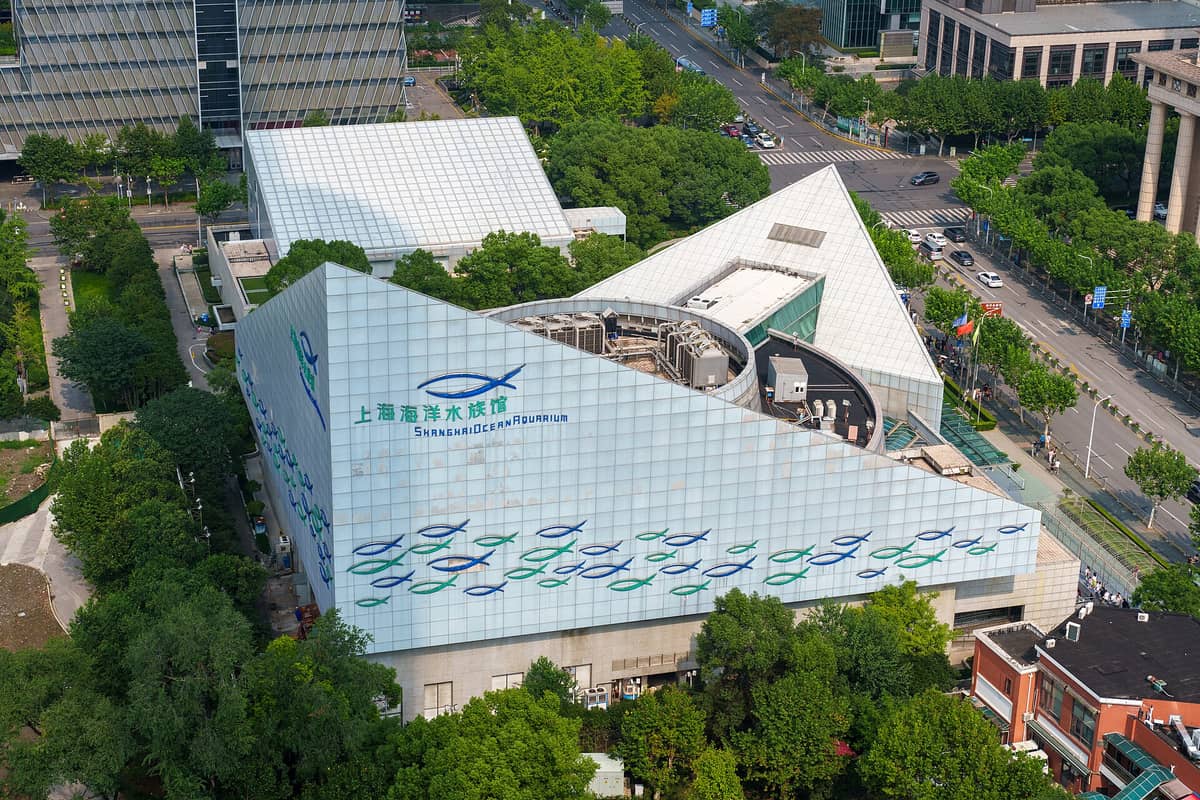
What Shanghai Ocean Aquarium Actually Is
The Shanghai Ocean Aquarium (official Chinese name: 上海海洋水族馆) is a large public aquarium located at No. 1388 Lujiazui Ring Road, in Pudong's Lujiazui financial district. It opened in 2002 and remains one of the most visited indoor attractions on the east side of the Huangpu River, drawing both domestic tourists and international visitors who pair it with a morning at the nearby waterfront.
The aquarium is positioned directly beside the Oriental Pearl Tower, which means the surrounding area is reliably crowded on weekends and holidays. The building itself is unremarkable from the outside, but inside it spans multiple floors and themed exhibition zones, covering ecosystems from the Amazon basin to the Antarctic coast. The flow is largely linear, so you are guided through habitats in sequence without backtracking.
ℹ️ Good to know
Regular hours are 09:00–18:00, with last admission at 17:30. Regular hours are 09:00–18:00, with last admission at 17:30. During July and August, hours extend to 09:00–21:00 (last admission 20:30). The aquarium operates year-round.
The Exhibition Zones: What You Will Actually See
The aquarium organizes its collection by geographic ecosystem rather than by species taxonomy, which makes the visit feel like a journey rather than a catalogue. You move through representations of China's freshwater rivers, the Amazon, Africa, the Australian coast, the Antarctic, and finally into the deep ocean levels. Each zone has its own lighting temperature and ambient sound design, which does add to the sense of transition between environments.
The highlight for many visitors, and the feature that distinguishes this aquarium from peers globally, is the dedicated exhibition area for endangered Chinese aquatic animals. Species on display have included the Chinese giant salamander, the Chinese sturgeon, and other freshwater species native to the Yangtze River system. Given that the Chinese sturgeon is critically endangered and rarely seen outside specialist conservation facilities, this section carries genuine weight beyond spectacle.
The tunnel walkway through the main ocean tank is the centrepiece of the deep-sea zone. The acrylic tunnel is long enough that you can stand still and watch large sharks, rays, and schools of fish pass overhead and on both sides. It is genuinely immersive and the kind of slow, quiet experience that most visitors, including adults traveling without children, find worthwhile. Arrive at the tunnel early in the morning or during a weekday afternoon and you may have stretches of it nearly to yourself. On a Saturday midday in peak season, expect a slow shuffle.
💡 Local tip
The tunnel walkway has a moving walkway that carries you through automatically, but there is also a standing lane alongside it. Use the standing lane if you want to linger — the moving belt keeps going whether you are ready to leave or not.
Tickets & tours
Hand-picked options from our booking partner. Prices are indicative; availability and final rates are confirmed when you complete your booking.
Shanghai city and Zhujiajiao water town private tour with lunch
From 371 €Instant confirmationFree cancellationShanghai private tour with iconic landmarks of the old and new city
From 284 €Instant confirmationFree cancellationShangai Yuyuan Garden entrance tickets
From 9 €Instant confirmationFree cancellation
How the Experience Changes by Time of Day
Arriving at opening time (09:00) is the single most effective thing you can do to improve your visit. The queues at ticket counters are shorter, the first zones are quiet enough to hear the ambient soundscapes properly, and the tunnel sees far less foot traffic. The crowd builds steadily through the morning and peaks between approximately 11:00 and 14:00, particularly on weekends.
The extended evening hours during summer (until 21:00) offer a second quieter window from roughly 19:00 onward. The overall visitor numbers drop, lighting in the deep-sea zones takes on a different quality without competing daylight from upper-floor skylights, and the pace feels more relaxed. If you are visiting in July or August and can shift your schedule, an early evening visit is worth considering.
Midday on Chinese public holidays is the hardest condition. The aquarium sits in the middle of Lujiazui, one of Shanghai's most visited districts for domestic tourism, and holiday crowds are substantial. If your only option is a national holiday midday visit, manage expectations accordingly: the tunnel will be slow, and some feeding demonstrations may be harder to view closely.
Getting There: The Practical Route
The simplest approach for most visitors is Metro Line 2 to Lujiazui Station. The simplest approach for most visitors is Metro Line 2 to Lujiazui Station. Take Gate 2 and walk approximately 200 meters north. The walk is straightforward and takes around five minutes in normal conditions. Line 2 connects Lujiazui directly westward to People's Square and Jing'an, and eastward toward Pudong International Airport. If you are coming from the airport on Line 2, factor in roughly 60 to 75 minutes of travel time. For more detail on navigating the metro system, see the . The walk is straightforward and takes around five minutes in normal conditions. Line 2 connects Lujiazui directly westward to People's Square and Jing'an, and eastward toward Pudong International Airport. If you are coming from the airport on Line 2, factor in roughly 60 to 75 minutes of travel time. For more detail on navigating the metro system, see the guide to getting around Shanghai.
Multiple bus routes serve the Lujiazui area. By taxi or Didi, simply give the driver the address: 1388 Lujiazui Ring Road (陆家嘴环路1388号), Pudong. On-site parking is available, but driving into Lujiazui on a weekend is not recommended given general traffic conditions in the area.
⚠️ What to skip
Lujiazui station has multiple exits and can be confusing on a first visit. Exit 2 points you toward the aquarium and the Oriental Pearl Tower. If you come out at the wrong exit, the surrounding elevated walkway system can make orientation harder than expected. Check your map before descending to street level.
Tickets and What to Book in Advance
Standard adult admission is approximately ¥160 (verify before visiting as prices are subject to change). Children between 1 meter and 1.4 meters tall pay approximately ¥110; children under 1 meter in height enter free when accompanied by a paying adult.
Tickets can be purchased at the door or through online platforms. Buying online in advance is worth doing during peak season, not because you are guaranteed a specific entry time, but because on-site queues at the ticket counter can add meaningful time to your visit on busy mornings. The official website at sh-aquarium.com has an English-language ticketing section.
💡 Local tip
Third-party booking platforms sometimes offer marginally discounted tickets, but cross-check against the official site before purchasing. The price difference is usually small and the official channel avoids any risk of invalid tickets.
Facilities, Accessibility, and What to Bring
The aquarium is well set up for families. The aquarium is well set up for families. Guest services, baggage deposit, and self-service lockers are available in the lobby, which is useful if you are coming from the airport or continuing to another attraction afterward.
The interior is climate-controlled year-round, which makes it a reliable choice on extremely hot summer days or during Shanghai's damp, cold January and February period. Comfortable walking shoes are all you need footwear-wise. The floors in the tunnel zones can be slightly slippery when wet from visitor foot traffic during rain days, so shoes with some grip are better than flat-soled sandals.
Photography is permitted throughout the aquarium without flash. The low-light conditions in the deep-sea zones make casual phone photography challenging without night mode; if image quality matters to you, use night mode or a camera with reasonable low-light performance. Flash photography is not only prohibited but actively counterproductive against the dark acrylic, producing only glare.
The aquarium sits at the edge of Lujiazui, which means it pairs naturally with a walk along the Lujiazui riverside promenade before or after your visit. The Bund is directly across the river and visible from the promenade, giving you the classic Shanghai skyline view without additional cost or effort.
Honest Assessment: Who Will Enjoy This and Who Might Not
Shanghai Ocean Aquarium is a well-organized, properly maintained facility with genuinely interesting content, particularly the Chinese endangered species exhibit and the tunnel. It is not the world's largest aquarium and it does not claim to be. For families with children under 12, it is one of the more reliable rainy-day options in Pudong and delivers good value for the ticket price.
Travelers with a strong interest in marine life who have already visited major aquariums in other cities may find the scope relatively familiar. If you are on a tight schedule with only a few days in Shanghai, weigh it against outdoor priorities: the experience inside is entirely indoor and does not engage with what makes Shanghai architecturally or historically distinctive. Those drawn to the city's urban character might prioritize a walk along the Bund promenade or a visit to Shanghai Museum instead.
Solo travelers who enjoy quiet, contemplative museum-style experiences will find the aquarium rewarding if they time the visit for early morning or a weekday afternoon. The tunnel section in particular offers a genuinely meditative few minutes when crowds are thin. For large groups or anyone with mobility difficulties beyond basic walking, the layout is manageable but be aware that some zones require navigating narrow corridor sections.
Insider Tips
- Book tickets online before you arrive during July, August, and Golden Week (early October). The on-site queue at the ticket counter can be longer on busy mornings.
- The standing lane alongside the tunnel moving walkway is the best spot in the building. Step out of the moving belt and stand still for five minutes — most of the crowd passes through on the belt, leaving you with a much less congested view.
- Evening visits during extended summer hours (after 19:00) are genuinely quieter than morning visits and the deep-sea lighting feels more atmospheric without daytime crowds pressing through.
- The Chinese endangered species zone is easy to rush past because it comes before the more visually dramatic ocean sections. Slow down here — the Chinese giant salamander and Chinese sturgeon are rarely on public display elsewhere and the conservation context is worth reading.
- Combine your visit with the Lujiazui riverside promenade immediately after. It costs nothing, takes about 30 minutes at a casual pace, and gives you the full Pudong skyline from the waterfront — a better photographic payoff than most paid viewpoints.
Who Is Shanghai Ocean Aquarium For?
- Families with children between toddler age and early teens
- Visitors looking for a reliable indoor option on a rainy or extremely hot day
- Anyone with a specific interest in Chinese freshwater species and conservation
- Travelers spending a full day in Lujiazui who want to balance outdoor sightseeing with an indoor attraction
- Groups with mixed ages where a single venue needs to satisfy both young children and adults
Nearby Attractions
Other things to see while in Pudong:
- Century Park
Century Park is the largest ecological urban park in downtown Shanghai, stretching across Pudong's grid of glass towers and wide boulevards. Since May 2024, entry is free and the fences are gone, making it one of the most accessible green spaces in the city. Whether you come at dawn for tai chi or late afternoon for a lakeside stroll, the park rewards visitors who know how to read it.
- China Art Museum
The China Art Museum occupies the striking red former China Pavilion built for Expo 2010, making it one of the most architecturally dramatic museum experiences in Shanghai. Permanent collections are free, the scale is genuinely impressive, and most visitors are surprised by how much is on display across multiple floors.
- Jin Mao Tower
Standing 420.5 metres above Pudong's Lujiazui financial district, Jin Mao Tower is one of Shanghai's most architecturally distinctive skyscrapers. Its 88th-floor observatory delivers panoramic views across the Huangpu River and the historic Bund, while the building's pagoda-inspired silhouette remains one of the most recognisable on the city skyline.
- Lujiazui Riverside Promenade
The Lujiazui Riverside Promenade stretches roughly 2.5 km along Binjiang Avenue in Pudong, offering unobstructed views of the Bund from the opposite bank. It is open 24 hours, costs nothing to walk, and delivers one of the most dramatic urban skylines on earth at any time of day.