Best Time to Visit Beijing: A Season-by-Season Breakdown
The best time to visit Beijing is April to May or September to October, when temperatures are comfortable and rainfall is low. But the full picture is more nuanced: holidays, air quality, and attraction hours all shift the calculation. This guide covers every season with specific temperatures, crowd forecasts, and booking advice.
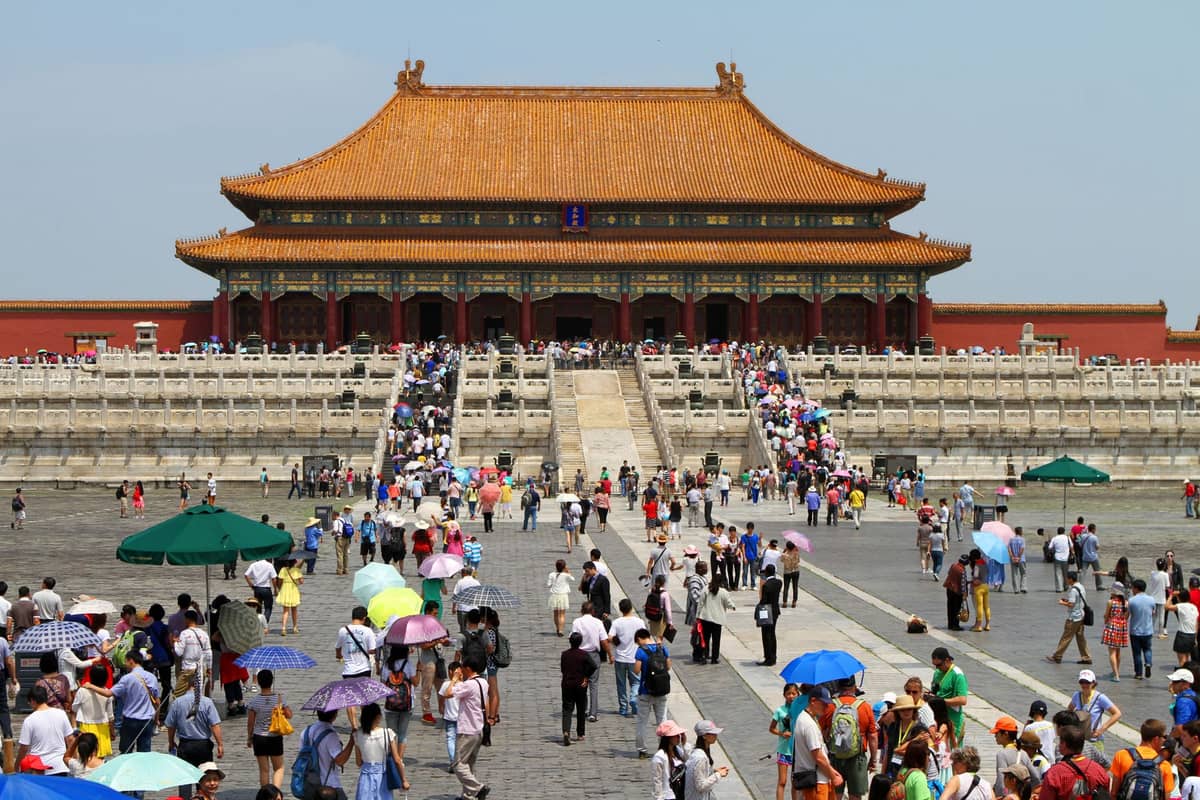
Plan and book this trip
Tools from our partner Travelpayouts help you compare flights and hotels. If you book through them, we may earn a commission at no extra cost to you.
Flights
Hotels map
TL;DR
- April–May and September–October offer the most comfortable weather for sightseeing, with average highs of 20–26°C and low rainfall.
- Avoid National Day Golden Week (October 1–7) and Spring Festival (mid-February) unless you plan far ahead: attractions see extreme crowds and transport books out weeks in advance.
- Summer (June–August) is hot, humid, and wet — July and August average around 176–182 mm of rain — but prices can dip outside the school-holiday peak.
- Winter (November–March) is cold and dry, with January overnight lows around −9°C, but crowds are thin, some attractions run discounted off-season rates, and the Great Wall in snow is genuinely spectacular.
- Check our top things to do in Beijing to match your activity list to the right season before booking.
Spring (April–May): The Consensus Best Time
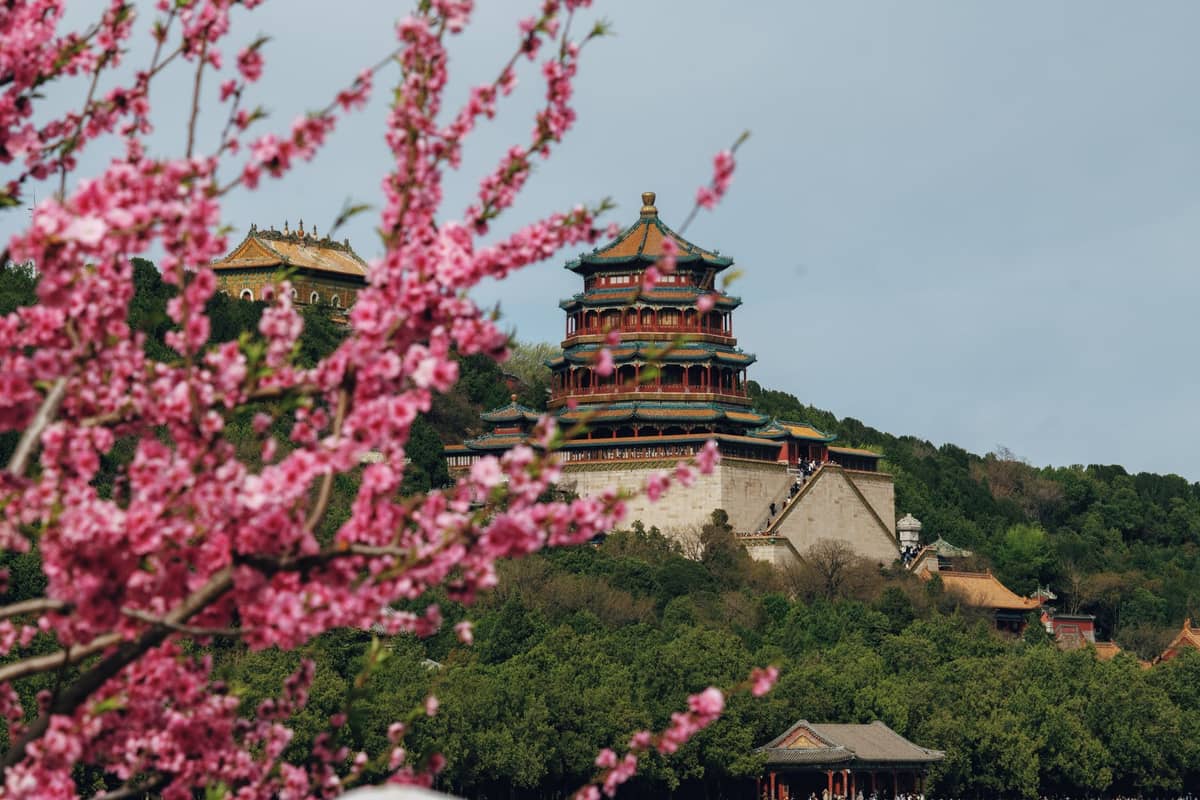
Spring is Beijing's most reliably pleasant season for travel, and the numbers support the reputation. Average daily highs climb from around 19.9°C in April to 26.4°C in May, with cool evenings that make long days of walking comfortable. Rainfall is low compared to summer, though March and April can bring dust storms off the Gobi Desert that reduce visibility and make outdoor photography frustrating on bad days.
By late April, cherry blossoms peak at Yuyuantan Park and Xiangshan Park sees spring greenery filling in fast. The Summer Palace charges peak-season rates from April 1 (CNY 30 for the main park), so factor that into your budget, but the grounds are beautiful and not yet overwhelmed. May is particularly good for the Mutianyu Great Wall, when the forested hillsides are fully green and foot traffic is manageable outside weekends.
⚠️ What to skip
Labor Day Golden Week (May 1–5 in 2026) is a major domestic travel period.
Outside the Labor Day holiday, late April and early May sit in a comfortable middle ground: school is in session across China, international tourist numbers haven't peaked yet, and the parks are genuinely enjoyable. If you only have one window for Beijing, this is it.
Autumn (September–October): Equally Good, With One Big Caveat
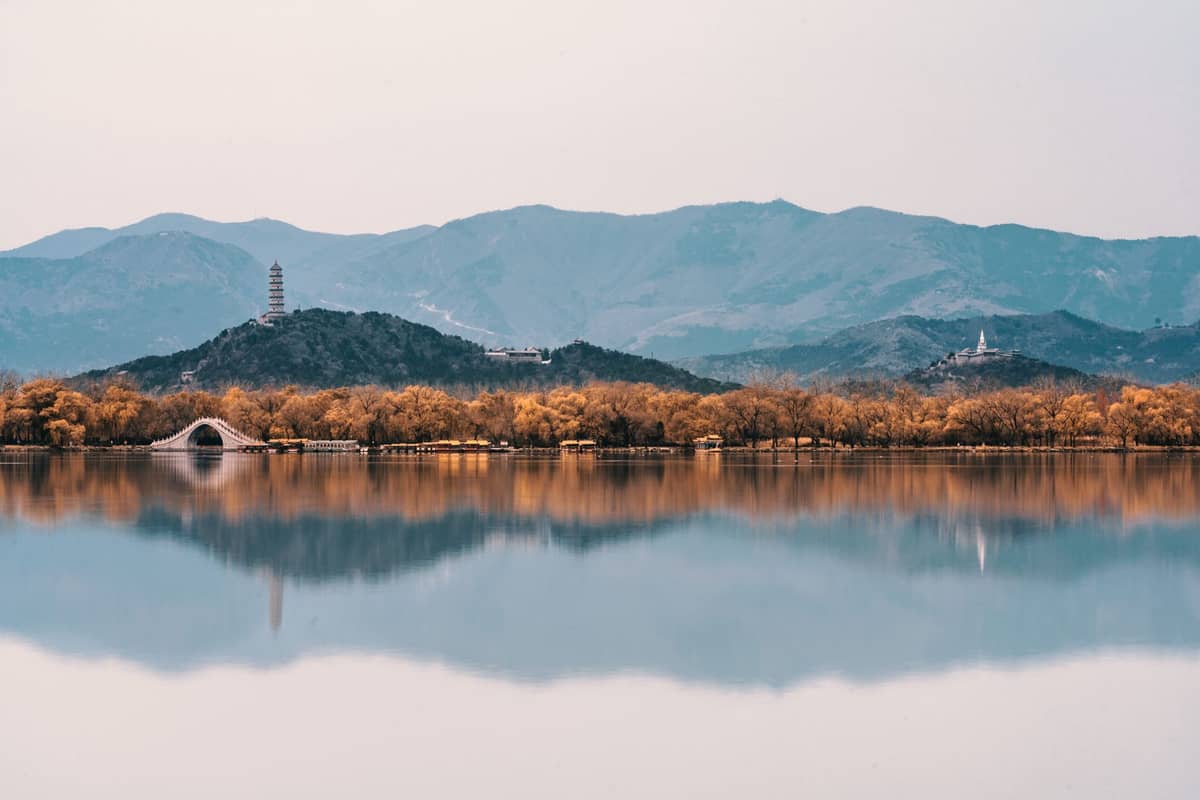
September and October rival spring for title of best month to visit. Average highs run 25.8°C in September dropping to around 19°C in October, with large day-to-night temperature swings that call for layering. The rainy season has ended, skies tend to be clearer than summer, and the autumn foliage at Xiangshan and Beihai Park turns vivid amber and red by mid-October.
The critical issue is National Day Golden Week, which runs October 1–7 in 2026. This is the single busiest travel period in China. Tiananmen Square and the Forbidden City implement timed-entry ticketing that sells out days in advance; the Badaling Great Wall caps daily visitors and queues can exceed two hours. If your travel dates are fixed around Golden Week, lean into the spectacle — the flag-raising ceremony at Tiananmen at dawn is worth experiencing once — but go in with realistic expectations about crowd sizes.
💡 Local tip
Target September 8–25 for the sweet spot of autumn travel: the weather is excellent, school holidays haven't started, and you're clear of both the Mid-Autumn Festival (September 25–27 in 2026) and National Day. This two-week window consistently offers the best combination of conditions and manageable crowds.
Late October after Golden Week is also underrated. Crowds fall away sharply after October 7, the foliage peaks around October 15–25, and you can walk through the hutongs near Nanluoguxiang or Houhai without fighting tour groups. Temperatures drop quickly though: pack a proper jacket for evenings from mid-October onward.
Summer (June–August): Hot, Wet, and Complicated
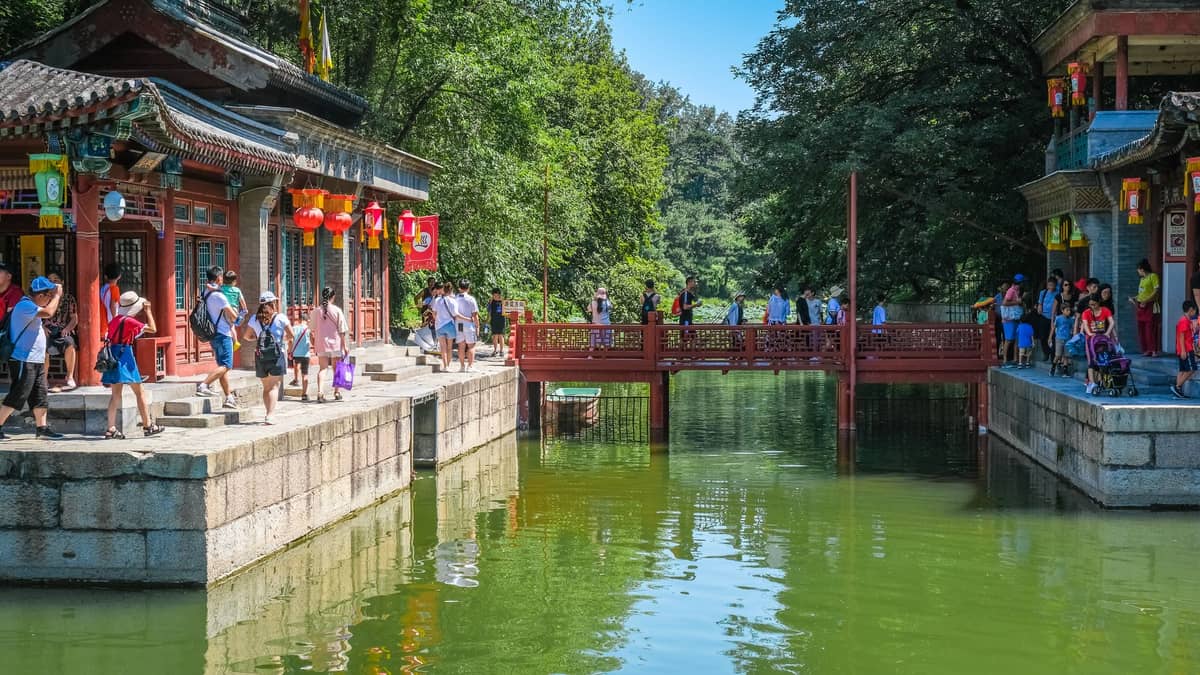
Beijing's summer gets a bad reputation, and some of it is deserved. July and August average 176–182 mm of rain each, concentrated in afternoon thunderstorms. Humidity is higher than visitors expect from a northern city, and daily highs regularly exceed 30°C. That said, the rain usually clears by early evening, and early mornings can be cool enough for comfortable sightseeing before the heat builds.
- What works in summer Indoor attractions like the National Museum of China, the Capital Museum, and the 798 Art District are well air-conditioned and less crowded than spring. Hotel rates outside school holidays (mid-July through August) can be lower than peak spring. Evening visits to Houhai or the Drum and Bell Tower area are atmospheric.
- What doesn't work in summer Long outdoor walks at the Great Wall in midday heat are genuinely unpleasant and potentially dangerous. Temple of Heaven and Summer Palace grounds offer little shade in peak sun. Air quality varies: some summer days are hazy, though Beijing's air quality has improved significantly over the past decade — check real-time monitoring before planning outdoor activities.
- Who should consider summer anyway Families traveling with school-age children have limited flexibility. Summer is workable with early starts (7:00–10:00 at outdoor sites), midday indoor breaks, and late afternoon returns outside. Budget travelers may find better hotel value in June compared to spring peak.
Winter (November–March): Cold, Quiet, and Underestimated
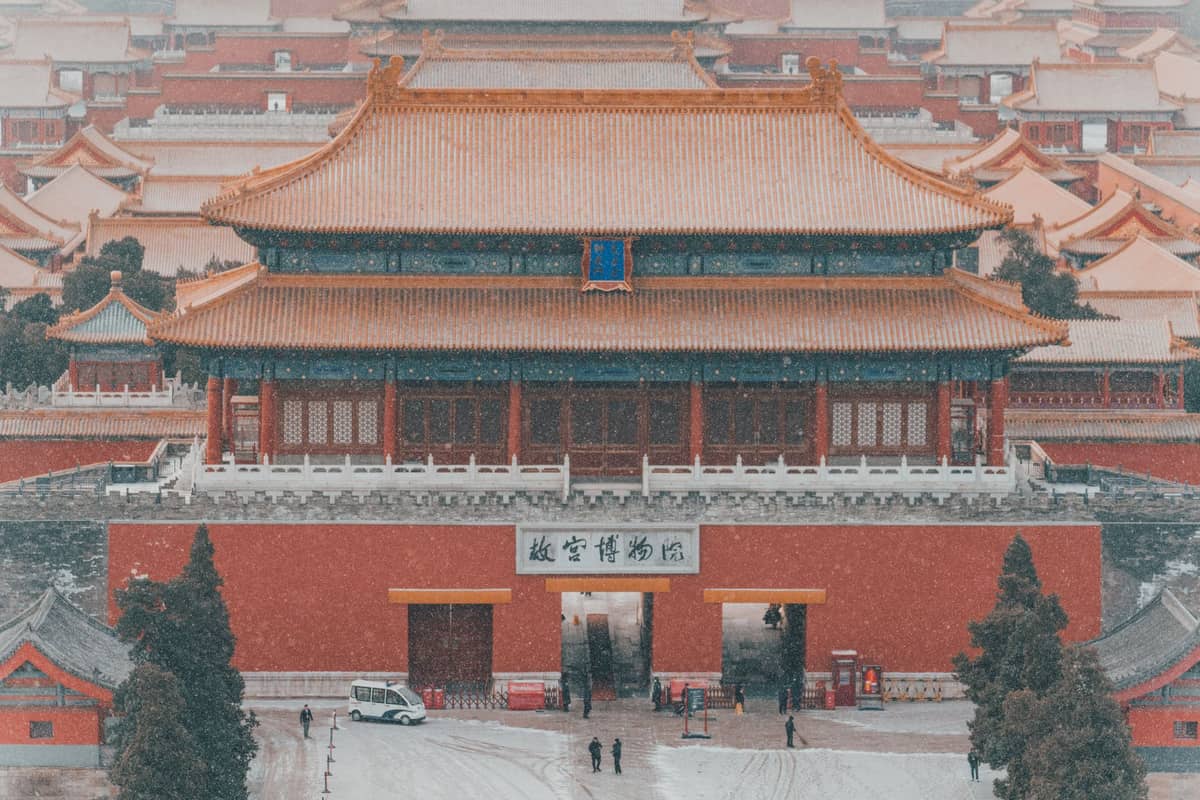
Winter in Beijing is cold. January averages −9.4°C overnight and only around 1.6°C during the day; cold waves can push temperatures well below that. The air is dry, which means less humidity and — on clear days after a cold front passes — some of the sharpest blue-sky photography conditions of the year. The Great Wall with a dusting of snow and an empty footpath is a genuinely different experience from the same site in October with 10,000 visitors.
Some practical advantages apply. The Summer Palace drops to CNY 20 (off-season rate, November 1–March 31) and the lake freezes for ice-skating in deep winter. The Lama Temple and Temple of Heaven have far shorter queues. Hotels in the mid-range bracket typically offer their lowest rates of the year in January and February outside Spring Festival. Indoor cultural experiences — Beijing opera, teahouses, museum visits — become more central to the itinerary and don't require strategic timing to beat crowds.
⚠️ What to skip
Spring Festival (Chinese New Year) 2026 runs from February 15–23, with the official Golden Week running February 15–23. This is the largest annual human migration in the world. Transport in and out of Beijing is extremely congested in both directions; many local restaurants and shops close; and popular attractions can swing between unusually quiet (many residents leave the city) and packed (returning families sightsee). Plan accordingly, and book any rail or air travel months in advance.
Winter is not for everyone. If your priority is comfortable outdoor exploration or Great Wall hikes, the cold is a real barrier. Dressing adequately means thermal base layers, a heavy coat, gloves, and insulated footwear — many visitors underestimate Beijing winters because the latitude is similar to Rome or New York, but the continental climate delivers much harsher cold than either.
Holiday Blackout Dates and Crowd Patterns
Understanding China's public holiday calendar is as important as understanding the weather when planning a Beijing trip. The country operates three major 'Golden Week' holiday periods, plus several shorter breaks, during which domestic tourism surges and infrastructure runs at capacity.
- Spring Festival / Chinese New Year (2026: February 15–23) Highest-risk period for transport disruption. Central Beijing can feel quiet as residents leave, but trains and flights are fully booked for weeks. Many independent restaurants close. Fireworks are a draw, but air quality can spike.
- Labor Day Golden Week (2026: May 1–5) Significant domestic travel surge. Top attractions require timed-entry tickets booked online days or weeks in advance. Hotel prices rise sharply in the 3–4 days around the peak.
- Mid-Autumn Festival (2026: September 25–27) Shorter holiday; less intense than Golden Week but notable. Parks and outdoor attractions see increased local visitors on the festival day itself.
- National Day Golden Week (2026: October 1–7) The most intense tourist period. Visitor caps at major sites, sold-out tickets, and infrastructure strain are the norm. Book 6–8 weeks ahead if traveling in this window.
For a deeper look at navigating the city across any season, the Beijing first-timer guide covers logistics including timed-entry booking systems, transport cards, and neighborhood priorities. If you're building a multi-day itinerary, the 3-day Beijing itinerary or the 5-day Beijing itinerary offer structured plans you can adapt to your chosen season.
Practical Planning: What Changes Season to Season
Beyond temperature, a handful of practical variables shift across the year and affect trip quality in ways that aren't obvious from a weather chart alone.
- Attraction hours The Summer Palace runs 6:00–20:00 in peak season (April 1–October 31) and 6:30–19:00 off-season. The Temple of Heaven park is open 6:00–22:00 year-round, but separately ticketed inner attractions operate Tuesday–Sunday 8:00–18:00 and close Mondays except on statutory holidays. Verify current hours through Beijing's official government ticketing page before visiting.
- Attraction pricing Peak and off-season pricing applies at several major parks. The Summer Palace main park ticket is CNY 30 in peak season and CNY 20 off-season. Other parks and inner palaces have separate ticketing structures that don't always follow the same schedule.
- Air quality Beijing's air quality has improved substantially over the past decade but is not uniform. Winter heating season (November–March) and summer humidity can trap pollutants. Spring and autumn generally see cleaner air, especially after rainfall or a cold front. Check a real-time monitor such as the Beijing Municipal Ecology and Environment Bureau readings or a reliable app before planning heavy outdoor days.
- Photography conditions The clearest skies tend to follow cold fronts in autumn and winter. Spring can offer beautiful light but dust haze is a real factor in March and early April. Summer haze and humidity affect long-distance shots. For photography-focused travel, late September and post-Golden Week October are consistently the strongest period.
✨ Pro tip
Timed-entry tickets for the Forbidden City must be booked through the official Palace Museum website (pm.cn) with a passport or ID number. Tickets often sell out 3–7 days in advance during peak periods. There is no reliable same-day option at the gate during spring and Golden Week. Check our guide to Forbidden City tickets for step-by-step booking instructions.
For day trips outside the city, season affects road and trail conditions significantly. The Jinshanling Great Wall and Mutianyu are both accessible year-round, but winter ice on the steps demands caution and appropriate footwear. The day trips from Beijing guide notes which sites are best avoided in heavy summer rain and which are most rewarding in autumn foliage season.
FAQ
What is the best time to visit Beijing for good weather?
April to May and September to early October offer the most comfortable conditions: temperatures between 19°C and 26°C, low rainfall, and generally clear skies. These windows are consistently the most popular among international visitors for good reason. Late October is also excellent if you avoid National Day Golden Week.
Is Beijing worth visiting in winter?
Yes, with the right expectations. January and February are Beijing's coldest months, with daytime highs around 1–5°C and overnight lows well below zero. However, crowds are dramatically thinner, some major parks charge off-season discounts, and the city has a different character. The Great Wall in snow — particularly Mutianyu or Jinshanling — is one of Beijing's most striking visual experiences. Pack proper thermal gear.
When should I avoid visiting Beijing?
Avoid National Day Golden Week (October 1–7) and Labor Day (May 1–5) unless you book everything months in advance and are comfortable with very large crowds. Spring Festival (Chinese New Year, mid-February in 2026) is problematic for transport: getting in and out of Beijing becomes genuinely difficult. Peak summer heat in late July and August is also challenging for intensive outdoor sightseeing.
How far in advance should I book Forbidden City tickets?
During peak periods (spring Golden Week, National Day, summer school holidays), book 5–7 days in advance minimum — the Palace Museum's official ticketing website often sells out within hours of slots opening. In low season (January, February outside Spring Festival, November), same-week booking is usually possible, though advance purchase is always safer.
Does Beijing have a rainy season?
Yes. The rainy season runs from June through August, with July and August the wettest months at around 176–182 mm of precipitation each. Rain typically falls as afternoon thunderstorms rather than all-day drizzle, so mornings are often clear. Outside this period, Beijing is relatively dry; winter in particular sees very little precipitation.