Xiangshan Park (Fragrant Hills): Beijing's Imperial Hillside Escape
Xiangshan Park, known in English as Fragrant Hills Park, is a 168-hectare imperial landscape garden in Haidian District where forested hillsides, Qing-dynasty pavilions, and sweeping Beijing views come together. It draws enormous crowds in autumn when the smoke tree leaves turn crimson, but rewards visitors year-round with quiet trails, temple ruins, and a welcome break from the city's flat, paved core.
Quick Facts
- Location
- 40 Xiangshan Street, Haidian District, Beijing
- Getting There
- Xiangshan Station, Beijing Subway Xijiao (Western Suburban) Line; also buses 318, 360, 505, 563, 698, 932
- Time Needed
- 3–5 hours for a full visit; half a day if hiking to the summit
- Cost
- Apr 1–Nov 15: CNY 10 standard, CNY 5 concession. Nov 16–Mar 31: CNY 5 standard, CNY 2.50 concession (park entrance ticket)
- Best for
- Autumn foliage, scenic hikes, imperial garden history, photography, escaping the urban core
- Official website
- http://www.xiangshanpark.com/en
What Is Xiangshan Park?
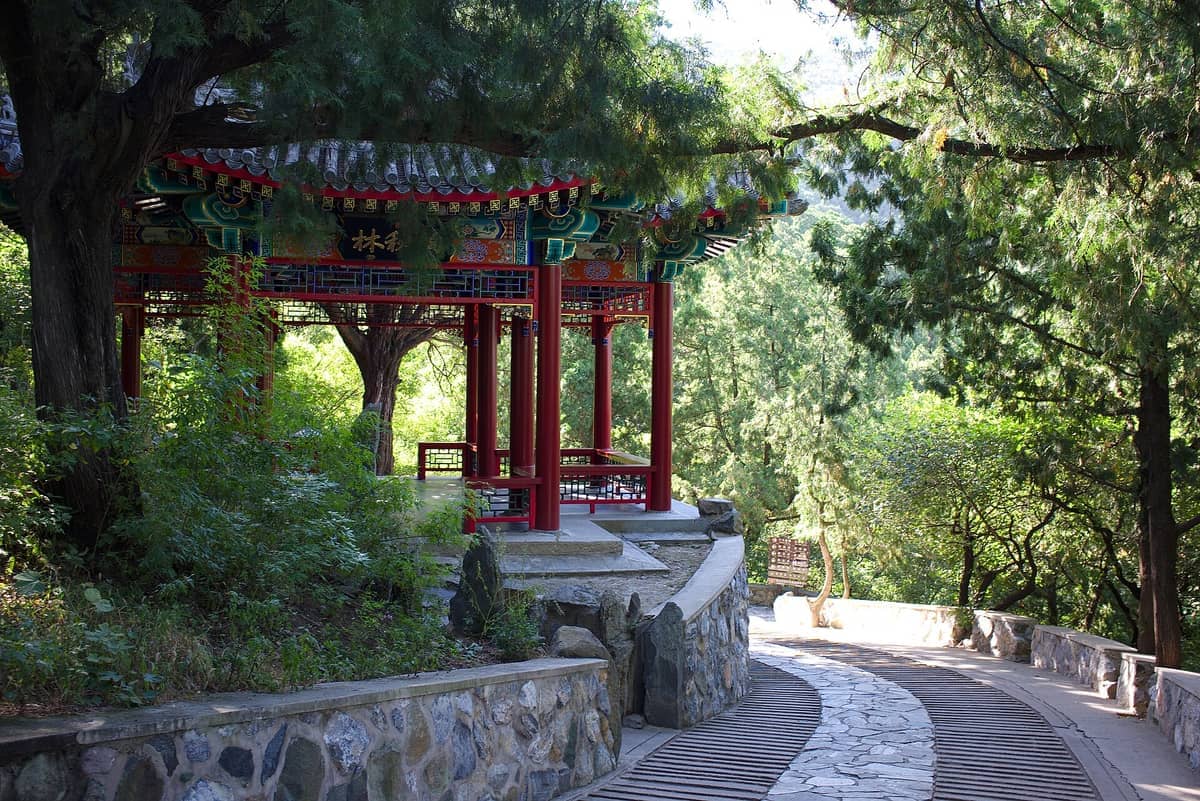
Xiangshan Park (香山公园, Xiāngshān Gōngyuán) sits at the eastern edge of Beijing's Western Hills, roughly 28 kilometers from the city center in Haidian District. At 168 hectares, it is substantial enough that most visitors only scratch the surface in a single visit. The park combines two distinct personalities: a manicured imperial garden at its lower levels, with restored pavilions, decorative gates, and ornamental ponds dating to the Qianlong era, and a genuinely wild hillside above, where rocky paths thread through dense groves of smoke trees (Cotinus coggygria) and oaks up to the Incense Burner Peak (香炉峰), at approximately 557 meters above sea level.
The park is not well-known outside China, which is actually to the international traveler's advantage outside of October. If you are planning a broader Haidian visit, it pairs naturally with the Summer Palace about 10 kilometers to the southeast. Both sites belong to Beijing's ring of imperial gardens, and together they represent the Qing court's approach to landscape as political theater: the mountains and water shaped, planted, and architecturally framed to project cosmic order.
⚠️ What to skip
Opening hours vary by season. April 1–November 15: 06:00–18:30 for admission, with the park closing at 19:30. November 16–March 31: 06:00–18:00 for admission, with the park closing at 19:00. Verify before visiting, as holiday periods can affect access.
Historical and Cultural Context
The site has served as an imperial retreat since the Jin dynasty (12th century), but it reached its architectural peak under the Qianlong Emperor of the Qing dynasty. In 1745, Qianlong formally designated the estate as Jingyi Garden (静宜园), one of the Three Hills and Five Gardens that once formed a vast imperial pleasure district across what is now Haidian. The garden received an extensive program of construction: halls, pagodas, archways, temples, and pavilions were added throughout his reign, many with literary names Qianlong inscribed himself.
Anglo-French forces burned much of the complex during the Second Opium War in 1860, the same campaign that devastated the Old Summer Palace nearby. Further damage came during the Boxer Rebellion in 1900. What survives today is a patchwork: some structures are careful reconstructions, others are original, and the ruined footprints of others are left visible as historical markers. The Zongjing Dajue Temple (宗镜大觉寺), the Chongzheng Nunnery, and the glazed-tile Spectacles Lake (眼镜湖) area show the imperial garden's original logic most clearly. Visitors who look at the stonework closely will notice differences in weathering that reveal which walls are centuries old and which were rebuilt in the 20th century.
For travelers serious about Beijing's imperial history across multiple sites, the broader imperial history guide provides the chronological framework that makes Xiangshan's layered past easier to read.
Tickets & tours
Hand-picked options from our booking partner. Prices are indicative; availability and final rates are confirmed when you complete your booking.
Small group tour of Tian'anmen Square and the Forbidden City
From 43 €Instant confirmationFree cancellationBeijing Summer Palace Entrance Ticket
From 7 €Instant confirmationFree cancellationMutianyu Great Wall and Summer Palace small-group tour from Beijing
From 171 €Instant confirmationFree cancellationPrivate Guided Tour to Temple of Heaven, Panda House and Summer Palace
From 67 €Instant confirmationFree cancellation
The Autumn Foliage Season: What to Expect Honestly
Every October, Xiangshan becomes one of the most photographed landscapes in northern China. The smoke trees shift from green through orange to deep crimson, and on clear days the color against a blue sky is genuinely extraordinary. This is not hype: the foliage density on the upper slopes is thick enough that the entire hillside appears to glow at the golden hour before sunset.
The honest caveat is the crowd situation. On weekend days during peak foliage, typically mid-October through early November depending on the year, visitor numbers can reach tens of thousands. The main path from the east gate to the cable car station becomes shoulder-to-shoulder dense by 9:00 AM. The summit experience on such days is less scenic contemplation and more managed shuffling. If the foliage season is your primary reason for visiting, arrive at opening time (06:00) on a weekday, or accept that the lower garden areas will be more enjoyable than the summit.
The peak color window is narrow, typically two to three weeks, and air quality affects the experience substantially. On hazy days, even the crimson upper slopes look muted and the city views from the summit are largely obscured. Check Beijing's air quality index before making the trip in autumn: a reading below 100 generally means acceptable views; above 150, the summit vistas are disappointing.
Reaching the Summit: Hiking vs. Cable Car
The hike from the east gate to Incense Burner Peak takes approximately 60 to 90 minutes at a moderate pace on the stone-paved main trail. The path gains elevation steadily; there are rest points with vendors selling water and snacks along the way. Sturdy walking shoes are adequate for the main trail, but some of the side paths involve uneven stone steps and loose gravel where ankle support matters. The descent on tired legs on those same stone steps can be harder than the ascent.
A cable car (gondola) operates between the park interior and a point near the summit ridge. As of publication, the cable car has a separate ticket cost beyond park admission; verify current pricing and operating status directly with the park, as maintenance closures are common. The cable car is the practical option for visitors with mobility limitations, but the park's hilly terrain throughout the lower grounds still presents significant accessibility challenges. Anyone requiring step-free access should contact the park directly at +86-10-62591222 before visiting, as the official listings do not provide comprehensive accessibility information.
💡 Local tip
The north gate area sees far fewer visitors than the main east gate. Entering from the north and working your way south and up gives you the first hour of the morning largely to yourself, even during the busy autumn season.
The Lower Garden: Pavilions, Temples, and Still Water
Many visitors move through the lower garden quickly on their way to the summit, which is a mistake at any time of year. The Spectacles Lake area in the southeastern section of the park is a pair of connected ponds framed by weeping willows and old stone bridges. In the early morning, before the tour groups arrive, the surface is still enough to reflect the surrounding trees and the distant hills behind them. The light is soft and directional at that hour, making it the park's best photography window.
The Zongjing Dajue Temple compound, reached via a stone-flagged path from the main garden area, is the most architecturally coherent surviving structure from the Jingyi Garden period. The main hall contains large gilded figures, and the surrounding courtyard has mature cypress trees that predate much of the surrounding reconstruction. Incense smoke drifts across the courtyard on busy mornings, mixing with the smell of damp stone and pine resin from the surrounding hillside.
Visitors with an interest in Beijing's temple landscape can compare this site to the better-known Lama Temple in Dongcheng, which represents a very different tradition, or to the Temple of Azure Clouds at the western edge of the Summer Palace district, which is stylistically closer to Xiangshan's mountain-temple character.
Seasonal Variations Beyond Autumn
Autumn receives almost all the attention, but the park has merit in other seasons. In late March and April, cherry and peach blossoms appear in the lower garden, and the trails are largely empty compared to October. The air is often clearer than in summer. Spring mornings carry birdsong from the dense tree cover and the smell of damp earth after overnight rain, with no visible haze on good days.
Summer is the least rewarding season. Beijing's July and August bring high humidity to the hillside, and the tree cover, while dense, provides only partial shade on the southern-facing slopes. The upper trails can feel airless on humid afternoons. Winter is undervisited but has a particular appeal after snow: the bare smoke tree branches against white ground and grey sky create a stark, monochrome landscape that is entirely different from the autumn spectacle and genuinely worth the cold. Winter admission at CNY 5 also makes it the best-value season.
For a broader seasonal planning perspective, the best time to visit Beijing guide covers how weather patterns across the city affect each major area.
Getting There and Practical Logistics
The most straightforward route is the Beijing Subway Xijiao (Western Suburban) Line to Xiangshan Station, from which the east gate is a short walk. Bus routes 318, 360, 505, 563, 698, and 932 also serve the area and stop at or near Xiangshan Park.
By taxi or ride-hailing app, the park is approximately 40 to 60 minutes from central Beijing depending on traffic, and longer during morning rush hours. Parking at the park itself is limited and fills early on autumn weekends; drivers regularly report long queues on peak foliage days. Public transit is the clear practical choice on high-traffic dates.
Plan for a half day minimum if you intend to hike to the summit and spend any time in the lower garden. A full day is appropriate if you want to explore the temple areas, take your time on the summit, and have a sit-down lunch at one of the park's food stalls before the afternoon crowds thin out. Bring water: the park's food vendors are concentrated at the lower levels and near the cable car, not on the upper hiking trails.
ℹ️ Good to know
Photography note: The summit provides a panoramic view across the Beijing plain. On clear days, the city skyline is visible to the east. A wide-angle lens or a phone with a panorama mode captures the full sweep of the foliage in autumn. For the lower garden ponds, a polarizing filter significantly reduces glare on the water surface.
Insider Tips
- The north gate entrance (北门) is used by a fraction of the visitors who enter through the main east gate. Starting from the north and looping south lets you move against the crowd flow during autumn peak season, reaching the summit before the cable car queues build.
- The park opens at 06:00, a full two hours before most Beijing tourist sites. An early start on a clear October weekday gives you the foliage, the light, and the summit views with perhaps a few dozen other visitors instead of thousands.
- The area around Spectacles Lake is the least crowded photogenic spot in the park even on busy autumn days, because most visitors head straight up the main trail. Spend time here before climbing.
- Beijing's air quality varies significantly day to day. Before an autumn summit hike specifically for the city views, check the AQI; on days above 150, the views are largely grey haze and the foliage alone justifies the climb only if the color is at peak.
- Winter admission (November 16 to March 31) drops to CNY 5, less than a cup of coffee, and a light snowfall transforms the park into something the autumn crowds never see. Layers and waterproof shoes are essential.
Who Is Xiangshan Park (Fragrant Hills) For?
- Photographers planning autumn foliage shots with city skyline backgrounds
- Hikers wanting a genuine hillside trail within Beijing's transit network
- Travelers interested in Qing-dynasty imperial garden history beyond the Forbidden City circuit
- Families with older children who can manage a 60 to 90 minute uphill walk
- Winter visitors looking for uncrowded parks with snow landscapes at low cost
Nearby Attractions
Other things to see while in Haidian District:
- Beijing Aquarium
Beijing Aquarium is one of the largest indoor aquariums in Asia, located within the grounds of Beijing Zoo in Haidian District. This guide covers what you'll actually see, how to plan your visit efficiently, and whether it's worth the ticket price for your specific travel style.
- Big Bell Temple (Dazhongsi)
Tucked along the North 3rd Ring West Road in Haidian, the Big Bell Temple Ancient Bell Museum houses one of the largest surviving bronze bells in the world. It is a serious museum experience, combining a working Qing-dynasty temple complex with a specialist collection of historic bells that draws scholars, photographers, and curious travelers in equal measure.
- Five Pagoda Temple (Wuta Temple)
Officially the Beijing Stone Carving Art Museum, the Five Pagoda Temple sits on the grounds of the former Ming-dynasty Zhenjue Temple in Haidian. It combines one of China's most distinctive Buddhist structures with an outdoor museum of stone carvings that rewards visitors who take time to look closely.
- Military Museum of the Chinese People's Revolution
The Military Museum of the Chinese People's Revolution stands at No. 9 Fuxing Road in Haidian District, presenting extensive collections across more than 40,000 square meters of exhibition space. It is one of the largest military history museums in China, admission is free, and it makes for a genuinely substantial half-day visit for anyone curious about modern Chinese history.