Summer Palace (Yiheyuan): Beijing's Imperial Garden on the Lake
The Summer Palace is Beijing's grandest surviving imperial garden, a UNESCO World Heritage Site combining a vast man-made lake, a lakeside hill crowned with Buddhist architecture, and nearly 3 kilometers of painted covered walkways. At 293 hectares, it rewards a full half-day and offers entirely different experiences depending on the season and hour you arrive.
Quick Facts
- Location
- No. 19, Xinjian Gongmen Road, Haidian District, Beijing
- Getting There
- Use a navigation app (e.g., Baidu Maps, Amap) for the best route from your hotel; several bus lines and a subway line serve the Haidian area near the palace
- Time Needed
- 3–5 hours minimum; a full day if you want to cover the entire grounds and take a boat on the lake
- Cost
- General admission: CNY 30 (peak season, Apr–Oct) / CNY 20 (off season). Combined ticket including interior attractions: CNY 60 / CNY 50. Verify before visiting.
- Best for
- Imperial history, landscape photography, morning walks, families, architecture enthusiasts
- Official website
- www.summerpalace.net.cn/en
What the Summer Palace Actually Is
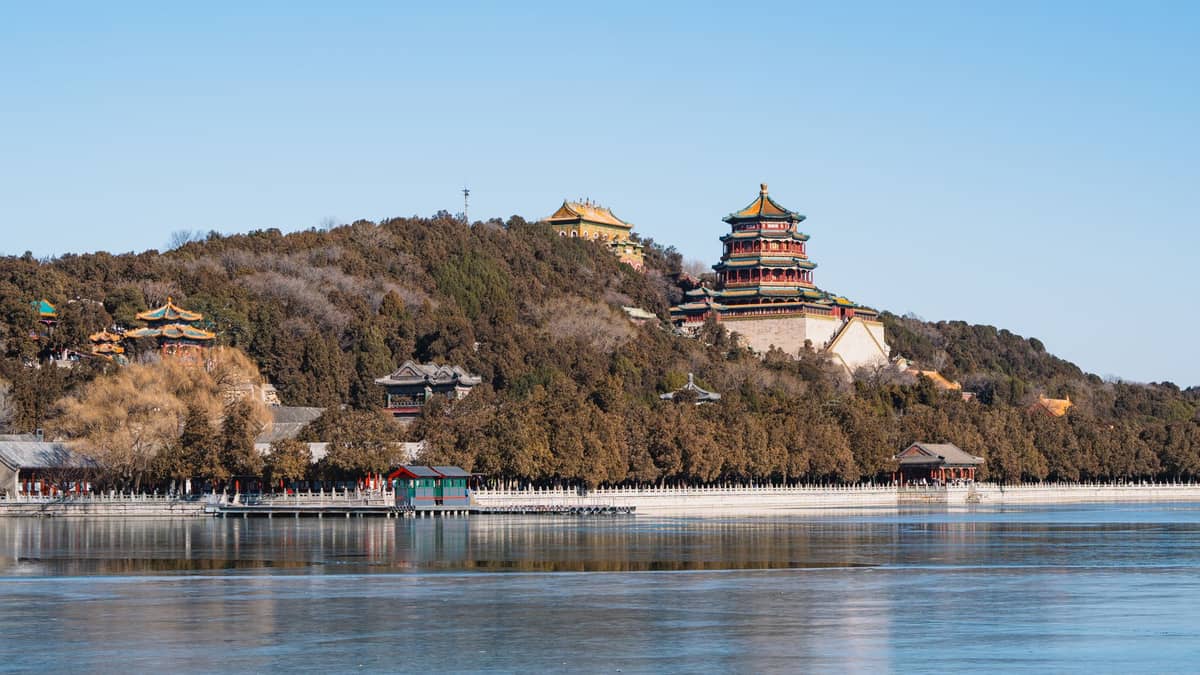
The Summer Palace (颐和园, Yíhéyuán) is not a single building. It is a 293-hectare designed landscape that the Qing dynasty court used as a seasonal retreat from the heat and formality of the Forbidden City. The site is dominated by Kunming Lake, an artificial body of water that accounts for roughly three-quarters of the total area, and by Longevity Hill rising directly behind the main palace zone on the northern shore. What visitors experience today is primarily the reconstruction ordered by Empress Dowager Cixi in the 1880s and 1890s, partly funded at the expense of the Qing naval budget, a historical irony that has given the palace a complicated legacy.
UNESCO inscribed the site in 1998 as part of the 'Summer Palace, an Imperial Garden in Beijing' World Heritage property, recognizing it as a masterpiece of Chinese landscape garden design in which natural scenery and human-made architecture are synthesized deliberately. The designation is not just ceremonial: the design philosophy here, where hills, water, pavilions, and plantings are composed as a single visual painting, is fundamentally different from European palace gardens and deserves attention before you arrive.
ℹ️ Good to know
Opening hours are seasonal. Peak season (April 1–October 31): park entrance 06:00–19:00, park closes 20:00. Off season (November 1–March 31): entrance 06:30–18:00, park closes 19:00. Interior attractions generally open later (08:00 peak, 08:30 off season); in the off season, separately charged attractions are closed on Mondays except during important festivals and holidays. Verify hours on the official site before visiting.
The Main Zones: How the Site Is Organized
First-time visitors often underestimate the scale and get caught in the most crowded northern lakefront strip without discovering the quieter eastern and southern reaches. The grounds divide into four broad areas worth understanding before you walk in.
The Court Zone at the eastern entrance contains the actual palace halls where Cixi conducted state affairs, including Renshou Hall (Hall of Benevolence and Longevity) and the residential quarters around Deheyuan, which houses a well-preserved private theater. These interiors are ticketed separately and are best visited early before groups arrive. The architecture here is formal, heavy with carved stonework, and noticeably different in atmosphere from the garden areas.
The Long Corridor (Changlang) runs along the northern shore of Kunming Lake for approximately 728 meters, connecting the court zone to the Buddhist temple complex on Longevity Hill. Every ceiling beam is painted with a scene from Chinese history, mythology, or landscape, totaling over 14,000 individual paintings. Walking its length in the morning, with the lake glittering to the south and the smell of cypress and pine drifting in, is one of Beijing's more genuinely distinctive experiences. In high summer, the corridor acts as shade and it fills quickly after 09:00.
Longevity Hill rises steeply above the corridor and is topped by the Tower of Buddhist Incense (Foxiang Ge), a four-story octagonal structure that serves as the visual anchor of the entire composition. The climb is steep in sections, and the path is stone-paved and can be slippery after rain. The reward is a view across Kunming Lake that explains precisely why Qing emperors chose this location. On clear autumn days, the lake reflects the sky in a way that makes photographs almost redundant.
The western and southern shores of Kunming Lake are where most casual visitors never go, and they offer the most peaceful experience of the site. The Nanhu Island causeway, the Jade Belt Bridge, and the Seventeen-Arch Bridge are accessible by foot or by rented rowboat. The southern shore is open farmland-style planting rather than manicured garden, which makes it feel genuinely different.
Tickets & tours
Hand-picked options from our booking partner. Prices are indicative; availability and final rates are confirmed when you complete your booking.
Beijing Summer Palace Entrance Ticket
From 7 €Instant confirmationFree cancellationMutianyu Great Wall and Summer Palace small-group tour from Beijing
From 171 €Instant confirmationFree cancellationPrivate Guided Tour to Temple of Heaven, Panda House and Summer Palace
From 67 €Instant confirmationFree cancellationForbidden City, Temple of Heaven and Summer Palace guided tour
From 294 €Instant confirmationFree cancellation
How the Experience Changes by Time of Day
Arriving at opening (06:00 in peak season) gives you something rare at a major Beijing attraction: near silence. Local residents use the park for tai chi, slow walking, and ballroom dancing in the open plazas by the East Gate and around the Long Corridor. The lake surface is often still at this hour, and the light on Longevity Hill is warm and low. If you have only one morning in Beijing for a major imperial site and have already seen the Forbidden City, this early-morning version of the Summer Palace is the more contemplative choice.
From around 09:00 onward, tour groups begin arriving, primarily through the East Gate. By 10:30 on weekends and during Chinese national holidays, the Long Corridor and the approach to the Tower of Buddhist Incense can be genuinely congested. The palace does not have a timed entry system for general admission, so crowding is unmanaged. If you are visiting on a Saturday in October, which is prime season and prime weekend, plan to be inside before 08:30.
Afternoons in summer are hot and humid, with temperatures regularly above 30°C. The lake provides some breeze along the northern shore, but the climb up Longevity Hill becomes uncomfortable after midday. Late afternoon, from around 15:30 to 17:00, sees a partial crowd thinning as groups depart on schedule, and the western light on the lake is photogenic. In autumn, afternoon visits in September and October are very pleasant.
💡 Local tip
Skip the boat dock nearest the main gate if queues are long. A second dock near the west of the Long Corridor often has shorter waits, and the paddle-boat and rowboat rental areas on the eastern lake can be quieter on weekday mornings.
Historical Context Worth Knowing Before You Go
The site's origins predate Cixi by several centuries. Qing Emperor Qianlong extensively developed the gardens between 1750 and 1764, creating what was then called the Garden of Clear Ripples (Qingyiyuan). Anglo-French forces looted and burned much of it in 1860 during the Second Opium War, an event that also destroyed the nearby Old Summer Palace (Yuanmingyuan), which was never rebuilt. Cixi's reconstruction in the 1880s produced largely what survives today, though Japanese and then Allied forces caused further damage in 1900. The layers of destruction and reconstruction are part of what the site is, not just incidental history.
Understanding this context changes what you see in the buildings. The stonework and timber construction are late Qing, not Ming or early Qing, so the craftsmanship reflects a dynasty already under pressure. Cixi, who is buried at the Eastern Qing Tombs northeast of the city, governed China from this palace for extended periods. If you want to understand her reign and the late Qing period more broadly, a visit to the National Museum of China in the weeks before or after will give context that the palace's on-site signage does not fully provide.
Practical Walkthrough: How to Spend Your Time
The East Gate (Donggongmen) is the main entrance and has the largest ticket hall. For a first visit, this is the logical starting point. After entering, the route past Renshou Hall and through the Deheyuan theater complex leads naturally westward to the Long Corridor, which should take 30–45 minutes including stops. From the western end of the corridor, the path up to the Tower of Buddhist Incense is clearly signed; allow 20–30 minutes for the climb and time at the top.
From the hill summit, descend the northern back hill path for a completely different environment: dense stone gullies with smaller pavilions and far fewer visitors. The back hill connects back to the lake via the Suzhou Street area, a reconstructed Qing-era market street that is one of the more theatrical elements of the site and fairly crowded near midday. If you have time and energy, cross the Seventeen-Arch Bridge to Nanhu Island, where a small temple sits at the center of the lake with views in all directions.
For the combined ticket, which covers interior attractions including Deheyuan and the Tower of Buddhist Incense, factor in at least four hours total. The basic admission ticket admits you to the park grounds and the Long Corridor but not the separately ticketed interior buildings. Many visitors find the park grounds alone satisfy them fully.
⚠️ What to skip
The grounds are very large and the terrain includes steep stone stairways on Longevity Hill. Comfortable, flat-soled shoes are important. Paths can be wet and slippery after rain. In summer, bring water and sun protection: shade is limited in the southern lake area and near the Seventeen-Arch Bridge.
Photography and Seasonal Conditions
Autumn (late September through mid-November) is widely regarded as the best period to photograph the Summer Palace. The willows along the Long Corridor turn yellow, the sky is often clear, and the lake takes on a deep blue-grey tone in low light. Spring brings cherry and peach blossoms in April near the eastern lakefront, which draw large crowds on weekends. For photography guidance covering the broader city, Beijing's photography guide covers the best vantage points and times across multiple sites.
The most photographed composition at the palace is the Seventeen-Arch Bridge shot from the southeastern shore at either end of the day, with its 150-meter span reflected in the lake. In late winter, around the time of the minor solar term called 'Great Cold' (Dahan), the setting sun aligns briefly with the bridge arches to produce a full illumination of all 544 stone lions that line the balustrades, a phenomenon known locally as 'golden light through the archways'. The exact dates vary by year.
Winter visits, while cold (typically between -5°C and 5°C), have genuine appeal when the lake freezes sufficiently for ice skating, which is organized with a dedicated rink area. The palace in snow, on the rare occasions Beijing gets significant snowfall, is extraordinary. Air quality in winter can vary significantly, so check a current air quality index before planning a winter photography visit.
Getting There and Around the Haidian Area
The Summer Palace is in Haidian District, in northwestern Beijing, roughly 12–15 km from central areas like Tiananmen. Journey times from central Beijing vary considerably by traffic and route, so using a transit app (Amap or Baidu Maps work well for public transport routes in Chinese) is recommended. If you are combining the palace with a visit to nearby Peking University's campus or the Old Summer Palace, all three are within a few kilometers of each other and can be combined logically in a single day in Haidian.
For travelers organizing their first few days in the city, the 3-day Beijing itinerary places the Summer Palace in the context of which attractions to prioritize. The guide to getting around Beijing covers subway, bus, and ride-hailing options in practical detail for the city as a whole.
Ride-hailing via DiDi is the most flexible option if you are traveling with children or luggage, and drop-off at the East Gate is straightforward. Taxis are available but DiDi's in-app payment integration is more convenient for visitors without Chinese cash. The North Gate (Beigongmen) has its own transit access and is the better arrival point if you intend to start on the back hill rather than the main palace buildings.
Who Will Not Enjoy This Attraction
The Summer Palace is not well suited to visitors with limited mobility. The Long Corridor is flat and accessible, but the climb to the Tower of Buddhist Incense involves steep stone staircases with no lift, and much of the back hill terrain is rough stone paths with significant changes in elevation. The official visitor materials do not specify comprehensive wheelchair-accessibility details for all routes, so visitors with mobility needs should contact the palace administration directly before visiting.
Visitors looking for a quick 60-minute tick-the-box experience will likely feel underwhelmed unless they come specifically for the Long Corridor and lake view and accept that as sufficient. The site is large enough that a rushed visit can feel disjointed. Those who want dense historical content from every exhibit will also find that on-site English signage, while present, is not as thorough as the Forbidden City's.
Insider Tips
- The North Gate (Beigongmen) is significantly less busy than the East Gate on weekends. If you enter from the north and walk south through the back hill first, you reverse the usual tourist flow and have the quieter areas to yourself in the morning.
- Boat rentals on Kunming Lake are available for rowboats and electric boats, but the ferry service that circles the lake is the most efficient way to cross to Nanhu Island if your energy is flagging after the Longevity Hill climb.
- The Deheyuan theater inside the court zone has preserved stage machinery and dressing rooms from the Qing period that receive far less attention than they deserve. If you have the combined ticket, this building is worth 30 minutes and is usually much less crowded than the Tower of Buddhist Incense.
- Avoid visiting on the first day after a major Chinese public holiday reopening, such as the first weekday after the week-long National Day Golden Week. Pent-up domestic tourism produces extraordinary crowds at this site specifically, which is a standard weekend destination for Beijing residents.
- Food inside the park is available but limited and overpriced. The snack options near Suzhou Street are functional. If you plan a full-day visit, bring your own snacks and water to avoid queues at the park kiosks near the main gate area.
Who Is Summer Palace (Yiheyuan) For?
- Imperial history enthusiasts wanting to understand the late Qing court beyond the Forbidden City
- Photographers: best in autumn for foliage and clear skies, and in early spring for lakeside blossoms
- Families with older children who can manage the hill climb and benefit from the boat rides
- Travelers with a full day in Haidian who can combine the palace with the Old Summer Palace or nearby university campuses
- Early-morning walkers and those who want a living, working green space rather than a purely museum-style experience
Nearby Attractions
Other things to see while in Haidian District:
- Beijing Aquarium
Beijing Aquarium is one of the largest indoor aquariums in Asia, located within the grounds of Beijing Zoo in Haidian District. This guide covers what you'll actually see, how to plan your visit efficiently, and whether it's worth the ticket price for your specific travel style.
- Big Bell Temple (Dazhongsi)
Tucked along the North 3rd Ring West Road in Haidian, the Big Bell Temple Ancient Bell Museum houses one of the largest surviving bronze bells in the world. It is a serious museum experience, combining a working Qing-dynasty temple complex with a specialist collection of historic bells that draws scholars, photographers, and curious travelers in equal measure.
- Five Pagoda Temple (Wuta Temple)
Officially the Beijing Stone Carving Art Museum, the Five Pagoda Temple sits on the grounds of the former Ming-dynasty Zhenjue Temple in Haidian. It combines one of China's most distinctive Buddhist structures with an outdoor museum of stone carvings that rewards visitors who take time to look closely.
- Military Museum of the Chinese People's Revolution
The Military Museum of the Chinese People's Revolution stands at No. 9 Fuxing Road in Haidian District, presenting extensive collections across more than 40,000 square meters of exhibition space. It is one of the largest military history museums in China, admission is free, and it makes for a genuinely substantial half-day visit for anyone curious about modern Chinese history.