Military Museum of the Chinese People's Revolution: What to Expect Before You Visit
The Military Museum of the Chinese People's Revolution stands at No. 9 Fuxing Road in Haidian District, presenting extensive collections across more than 40,000 square meters of exhibition space. It is one of the largest military history museums in China, admission is free, and it makes for a genuinely substantial half-day visit for anyone curious about modern Chinese history.
Quick Facts
- Location
- No. 9 Fuxing Road, Haidian District, Beijing 100038
- Getting There
- Beijing Subway Lines 1 and 9 to Military Museum Station; Bus 1 or 52 to Military Museum stop
- Time Needed
- 2–4 hours, depending on depth of interest
- Cost
- Free; online booking recommended—check the official site for current entry rules
- Best for
- Modern Chinese history, military hardware enthusiasts, architecture, families with older children
- Official website
- http://eng.jb.mil.cn
First Impressions: Scale and Symbolism
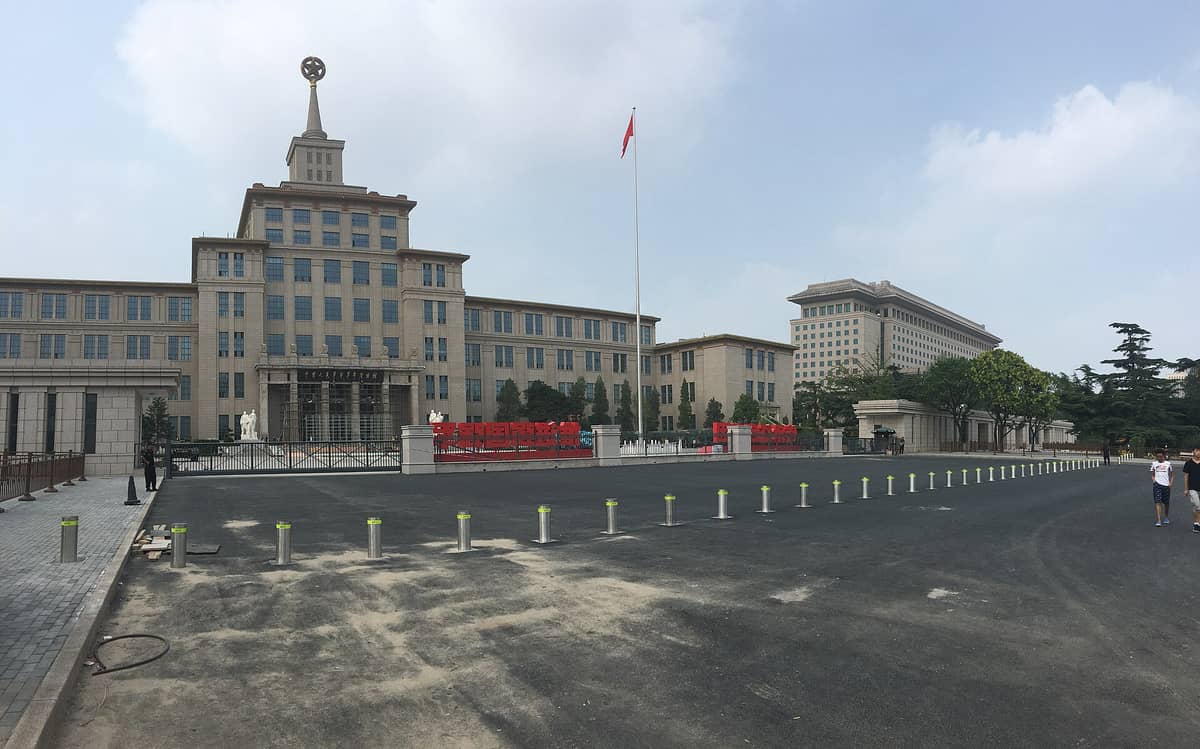
The Military Museum of the Chinese People's Revolution announces itself before you reach the entrance. The main building rises 94.7 meters above Fuxing Road, its facade finished in cream-colored stone with a prominent red star at the apex, visible from the subway exit. Constructed at extraordinary speed between October 1958 and July 1959, during the same period as Beijing's other monumental Soviet-influenced public buildings, it opened on 1 August 1960 to mark the anniversary of the founding of the People's Liberation Army.
The building complex is immense: the grounds cover more than 80,000 square meters, while current official figures give the exhibition building more than 150,000 square meters of floor area and nearly 60,000 square meters of exhibition space. Standing in front of the entrance plaza, the proportions make individual visitors feel small in a way that feels deliberately designed. Fighter jets and artillery pieces displayed outdoors serve as orientation anchors, and many visitors stop here before even entering, especially families with children who want to inspect the hardware up close.
ℹ️ Good to know
Online booking is available through the official website at http://eng.jb.mil.cn/ or the Chinese site at http://www.jb.mil.cn/; check the current entry rules before you visit. Contact: +86-10-66866244.
What the Museum Actually Contains
The collection covers the full arc of the Chinese Communist Party's military history, from peasant uprisings and the Long March through the Second Sino-Japanese War, the Chinese Civil War, the Korean War, and into the People's Republic era. This is not a neutral, academic presentation of military history in the Western museum tradition. The framing is explicitly ideological: the PLA's campaigns are narrated as righteous struggles, and visitors should understand that context before arriving. What the museum does offer, within that framework, is genuinely impressive material: weapons, uniforms, maps, personal effects, flags, vehicles, and documents, many of which are one-of-a-kind artifacts.
The outdoor equipment display, often described as one of the highlights, includes decommissioned aircraft, tanks, artillery pieces, and missile systems. Children tend to congregate here regardless of the season. Inside, the arrangement moves roughly chronologically through major hall divisions, though the exact layout of exhibitions can shift following renovations, so verify the current configuration on the official website before planning your route.
The museum also holds rotating special exhibitions alongside the permanent collection. These can cover recent PLA history, military technology, or commemorative themes tied to national anniversaries, and they are worth checking in advance if you have specific interests.
💡 Local tip
Label text in the permanent galleries is provided in both Chinese and English, though translation quality varies. Deeper context for many exhibits requires either a guided tour or supplementary reading beforehand.
Tickets & tours
Hand-picked options from our booking partner. Prices are indicative; availability and final rates are confirmed when you complete your booking.
Small group tour of Tian'anmen Square and the Forbidden City
From 43 €Instant confirmationFree cancellationBeijing Summer Palace Entrance Ticket
From 7 €Instant confirmationFree cancellationMutianyu Great Wall and Summer Palace small-group tour from Beijing
From 171 €Instant confirmationFree cancellationPrivate Guided Tour to Temple of Heaven, Panda House and Summer Palace
From 67 €Instant confirmationFree cancellation
The Architecture Itself Is Worth Attention
The building belongs to a group of ten major structures commissioned for the tenth anniversary of the People's Republic in 1959, known informally as the Ten Great Buildings. The others include the Great Hall of the People and the building that now houses the National Museum of China on Tiananmen Square. The Military Museum shares their characteristic aesthetic: monumental symmetry, heavy cornices, Soviet-influenced classical detailing adapted to Chinese motifs, and an explicit intention to project state power through physical form.
If you are interested in this architectural moment in Beijing's history, combining this visit with a stop at the National Museum of China on Tiananmen Square gives you a clear comparison between two of the most ambitious projects from the same campaign. The scale of ambition in both buildings, constructed within a single year, remains striking even to visitors unfamiliar with the political context.
Timing Your Visit
The museum is open Tuesday through Sunday, 09:00 to 17:00, with ticketing ending at 16:00. It is closed on Mondays, except during statutory national holidays.Plan to arrive no later than 09:30 if you want to cover the major halls without rushing; arriving after 14:00 on weekends means heavier domestic tourist traffic, louder halls, and longer queues at the outdoor exhibits.
Weekday mornings are the calmest windows. School groups visit frequently on weekday mornings during the academic year, which can crowd certain halls, but they tend to move in directed groups and clear sections fairly efficiently. The outdoor equipment area is most photogenic in morning light, when shadows from the aircraft and artillery fall clearly across the forecourt rather than washing out in midday glare.
Beijing's winters are cold and dry, with temperatures commonly dropping below freezing. The indoor galleries are heated, making the museum a genuinely good option on cold clear days when outdoor sightseeing is uncomfortable. Summer visits are feasible but the outdoor sections become very hot by midday, and air quality in Beijing varies significantly by season and weather conditions.
⚠️ What to skip
Photography rules at military-related institutions in China can be stricter than at civilian museums. Verify the current photography policy at the museum entrance or on the official website before your visit. Some areas may restrict photography entirely.
Getting There and Practical Logistics
Beijing Subway Lines 1 and 9 stop directly at Military Museum Station, placing you within a short walk of the entrance. Line 1 is one of the city's busiest and most useful corridors, connecting the museum to Tiananmen Square, Wangfujing, and the central business areas in both directions. Bus routes 1 and 52 also stop at the Military Museum stop on Fuxing Road.
For visitors building a western Haidian itinerary, the museum sits near the eastern edge of the district, making it a practical starting point before heading further west toward the Summer Palace or the Old Summer Palace. A taxi or ride-hailing app (DiDi is the standard platform) connects these sites in under 30 minutes depending on traffic.
The official visitor page notes self-service booking and visitor assistance options, but does not specify detailed wheelchair accessibility facilities. If mobility access is a priority, contact the museum directly at +86-10-66866244 before visiting to confirm current arrangements.
Who Will Get the Most from This Museum
Visitors with a genuine interest in 20th-century Chinese history, the Chinese Civil War, or Cold War-era military equipment will find the collection absorbing. The museum pairs naturally with a broader interest in Beijing's imperial and revolutionary history, and it sits within a city that rewards sequential visits to institutions covering different historical periods.
Families with older children, particularly those interested in aircraft and armored vehicles, tend to respond well to the outdoor display. Younger children may find the indoor narrative halls harder to engage with. For travelers building a full Haidian itinerary, the Beijing Planetarium and Beijing Zoo are both accessible from the same part of the district and offer contrast for mixed-interest groups.
Visitors who prefer politically neutral presentations of history, or who are uncomfortable with strongly ideological museum narratives, may find the framing of certain galleries difficult. This is not a limitation that invalidates the visit, but it is worth understanding before you arrive rather than being surprised by it inside. The artifacts themselves are significant regardless of the curatorial voice, and knowing the perspective in advance helps calibrate expectations.
Insider Tips
- Check the official English site (http://eng.jb.mil.cn/) for current visitor booking information before arriving; online booking is available.
- The outdoor equipment plaza is at its most photogenic in the first two hours after opening, when morning light falls on the aircraft and artillery at a low angle. By noon, the forecourt is fully shadowed by the building's main structure.
- The museum is large enough that attempting to cover every gallery in a single visit leads to fatigue without deeper understanding. Decide in advance whether your priority is the pre-1949 campaigns, the Korean War material, or the hardware and technology sections, and focus there.
- If you are visiting on a weekday, check whether school group bookings are scheduled for the same morning; the museum's official booking page sometimes indicates peak reservation periods. Groups move through quickly but can briefly fill individual halls.
- Combine this visit with a walk along Fuxing Road toward the central axis if you are interested in Beijing's 1950s architectural planning; the boulevard itself retains much of its original Soviet-influenced urban design character.
Who Is Military Museum of the Chinese People's Revolution For?
- Travelers with a focused interest in 20th-century Chinese military and political history
- Architecture enthusiasts exploring Beijing's 1959 Ten Great Buildings
- Families with older children who respond to large-scale military hardware
- Budget travelers: free admission makes this one of Beijing's most substantive no-cost experiences
- Visitors seeking indoor options on cold or poor air-quality days
Nearby Attractions
Other things to see while in Haidian District:
- Beijing Aquarium
Beijing Aquarium is one of the largest indoor aquariums in Asia, located within the grounds of Beijing Zoo in Haidian District. This guide covers what you'll actually see, how to plan your visit efficiently, and whether it's worth the ticket price for your specific travel style.
- Big Bell Temple (Dazhongsi)
Tucked along the North 3rd Ring West Road in Haidian, the Big Bell Temple Ancient Bell Museum houses one of the largest surviving bronze bells in the world. It is a serious museum experience, combining a working Qing-dynasty temple complex with a specialist collection of historic bells that draws scholars, photographers, and curious travelers in equal measure.
- Five Pagoda Temple (Wuta Temple)
Officially the Beijing Stone Carving Art Museum, the Five Pagoda Temple sits on the grounds of the former Ming-dynasty Zhenjue Temple in Haidian. It combines one of China's most distinctive Buddhist structures with an outdoor museum of stone carvings that rewards visitors who take time to look closely.
- Old Summer Palace (Yuanmingyuan Ruins Park)
Once the grandest imperial garden complex in the world, the Old Summer Palace was destroyed in 1860 and left as a deliberate ruin. Today its 350 hectares of fractured stonework, lotus-covered lakes, and wooded paths offer a completely different kind of Beijing experience: reflective, spacious, and quietly sobering.